THE JOURNAL · DMT SECTION
The DMT Library
Everything the research says about DMT, and everything it doesn't, in 84 dated guides. Chemistry, the brain, the experience people report, the history, ayahuasca, medicine and law.
- Guides
- 84
- Sources cited
- 1,302
- Checked
- 20 Oct 2026
Education only. No doses, no preparation, no sourcing, no advice to use. DMT is a controlled substance in Canada.
Browse the libraryNew to DMT? Start here Fact sheet (PDF) DMT around the world: the map Watch the documentary: DMT: The Molecule Beyond Reality Follow @dmtverse on Instagram01 · START HERE
Pick a path
Short routes through the library, in reading order.
Six articles, in order, for a first pass.
- 01What is DMT? The molecule, where it comes from, and what science actually knows13 min
- 02What does DMT feel like? What research records, from the first seconds to the hours after8 min
- 03How long does DMT last? What controlled studies measured, minute by minute8 min
- 04DMT myths, fact-checked: 15 popular claims and what the evidence actually shows9 min
- 05Ayahuasca vs DMT: how the Amazonian brew differs from the molecule11 min
- 065-MeO-DMT vs DMT: two related molecules with very different research records10 min
02 · THE MOLECULE
Two methyl groups from tryptamine
DMT belongs to a family of molecules built on the same indole skeleton. Small changes to that skeleton make a neurotransmitter, a mushroom compound or a different psychedelic. Choose one to see what changes.
C12H16N2
DMT
N,N-dimethyltryptamine, found in many plants and animals and the subject of this library.
Adds two methyl groups to the chain's nitrogen. Nothing on the ring.
PubChem record03 · COMPARE
Compare two molecules
DMT is often confused with 5-MeO-DMT, ayahuasca, psilocybin and LSD. Pick any two to set them side by side. Every cell restates what one of our guides already reports, with its source underneath. Research and law only: no amounts, no instructions.
Left column
Right column
| N,N-DMT | 5-MeO-DMT | |
|---|---|---|
| What it is | N,N-dimethyltryptamine: a simple tryptamine and a close chemical cousin of serotonin. | DMT with one extra methoxy group at position 5 of the ring. That small change makes it a different drug. |
| Where it comes from | Occurs in many plants and animals, including mammals. First made in a lab in 1931; reported in a plant in 1946. | A narrow known range: small amounts in a few plants, and the Sonoran Desert toad, the only animal known to secrete it. |
| Onset and peak in lab studies | Injected into a vein in controlled studies, effects began almost at once and peaked at about 2 to 3 minutes. | Acts for minutes. Our guide does not report a separate onset or peak time. |
| How long effects lasted in cited studies | Above placebo for 17 minutes in one study of 13 volunteers; negligible by 30 minutes in Strassman’s 1994 study. A review gives roughly 15 to 60 minutes across study designs. | Median 9 to 14 minutes per administration in the GH001 phase 2b trial of an inhaled formulation. A review gives 10 to 20 minutes as typical. |
| Main receptor targets | Mainly the serotonin 5-HT2A receptor (from animal and lab work). Also other serotonin receptors, TAAR1 and sigma-1, whose role in people is not known. | Binds the 5-HT1A receptor most strongly, 300 to 1,000 times more selectively than 5-HT2A in binding studies. It still acts at 5-HT2A. |
| Canada (CDSA) | Schedule III, item 7. The Controlled Substances Regulations in force since 1 October 2026 list it as a restricted drug; they do not make it legal. | Not named in the CDSA schedules (searched on Justice Laws). Health Canada says its sale is regulated under the Food and Drugs Act. Not scheduled does not mean approved or safe. |
| Source | Source: What is DMT?, How long does DMT last?, Is DMT legal in Canada?Read: What is DMT? | Source: 5-MeO-DMT vs DMTRead: 5-MeO-DMT vs DMT |
Durations come from different study designs and settings, so they are not a like-for-like comparison. They describe what researchers measured, not what anyone should expect or do.
04 · IN THE BODY
Fast in, fast out
What lab studies show about how DMT acts and why its effects are so short. Described from published research, never as guidance.
It reaches the brain fast
In hospital studies, blood levels and effects peaked within about two minutes (Strassman and Qualls, 1994).
05 · THE BRAIN
The alpha rhythm collapses
DMT's short action lets scientists record a whole psychedelic state in one session. The best-replicated finding is in the EEG. Brain-imaging results are younger and messier: when researchers pooled 11 datasets in 2026, some famous headline effects shrank (Girn et al., 2026).
06 · THE EXPERIENCE
A world first, then presences
In a 2026 study, 23 people were interviewed in fine detail after DMT given during brain scanning. Their accounts followed the same order (Sanders et al., 2026). These are subjective reports: they describe the experience, not what exists outside the brain.
- Body. Bodily effects usually came first.
- Senses. Then visual and auditory effects.
- Space. Then a sense of three-dimensional space, as multisensory integration developed.
- Presence. Perceived presences appeared only after that space had formed, and varied widely in form and complexity.
Who do people say they meet?
07 · MORE REAL THAN REAL
Why it feels realer than reality
Asked directly, 81% of people in one large self-selected survey said their DMT encounter felt more real than everyday reality (Davis et al., 2020). But the feeling fades in memory, and people describing drug-free “God encounters” rate theirs almost as real. Reality monitoring has never been measured under any psychedelic.
08 · HISTORY
2,500 years in twelve moments
2026
The first placebo-controlled trial of DMT alone for depression is published; pooled brain-imaging data temper the headlines.
Read more: 202609 · MYTHS
Six things the internet gets wrong
Never measured in humans. In rats, DMT rose at cardiac arrest with or without a pineal gland.
The evidenceIn 3,778 forum reports, “machine elves” were 2.9% of entity encounters.
The evidenceThat was found in rats. DMT has never been measured in a living human brain.
The evidenceIn one 1990s study, subjective effects showed no tolerance with repeated doses, but the body's responses did.
The evidenceTrials record sharp, short rises in blood pressure and heart rate; fear is common; ayahuasca interacts dangerously with many medicines.
The evidenceDrug-free “God encounters” were rated almost as real, and how real a memory feels is not evidence of what it shows.
The evidence
10 · THE EVIDENCE
Every claim carries its strength
- EstablishedShown in peer-reviewed studies and not seriously disputed.
- PreliminaryEarly, small, animal-only or indirect. Worth knowing, not settled.
- UnresolvedAn open question. Nobody knows yet.
Each guide links its sources, says how deeply each was read, and dates when it was checked. Read our editorial standards.
What’s established, and what’s still open
14 key claims from the library, each with the evidence label its own article gives. Filter by level, then follow the link to the evidence.
14 claims shown
- Established
Injected into a vein in Strassman’s 1994 studies, DMT’s effects peaked within about 2 minutes and were negligible by 30.
- Established
DMT markedly reduces the brain’s alpha rhythm in EEG recordings (13 volunteers, placebo-controlled).
- Established
DMT is detectable in human body fluids such as blood and urine.
- Established
LSD and psilocybin act through the 5-HT2A receptor: in human studies, a drug that blocks it blocked their effects.
- Established
5-MeO-DMT binds the 5-HT1A receptor most strongly, 300 to 1,000 times more selectively than 5-HT2A.
- Established
Tolerance to DMT’s psychological effects is weak or absent over short periods. No study the article found tested repeated use over days or weeks in people.
- Preliminary
In a placebo-controlled trial of DMT for depression, scores fell 7.35 points more with DMT than with placebo after two weeks.
- Preliminary
In one randomized trial of 29 people with treatment-resistant depression, depression scores were significantly lower with ayahuasca than with placebo at days 1, 2 and 7.
- Preliminary
Pooling 11 brain-scan datasets, the most prominent shared effect of psychedelics was increased connectivity between higher-order and sensory networks; reductions within networks were only weak to moderate.
- Preliminary
5-MeO-DMT’s pull toward the 5-HT1A receptor may explain why it brings comparatively little visual imagery.
- Unresolved
Whether the human brain releases DMT, at death or at any other time. DMT has never been measured in a living human brain.
- Unresolved
What DMT’s binding to the sigma-1 and TAAR1 receptors contributes in people.
- Unresolved
Whether LSD’s very slow release from the 5-HT2A receptor explains why its effects last longer.
- Unresolved
How often ayahuasca combined with serotonergic drugs actually causes serotonin syndrome. The mechanism itself is well understood.
11 · LISTEN
The library, read to you
44 guides have a 3-minute narrated version. Press play to listen here, or follow the podcast.
- 5-MeO-DMT vs DMT: two related molecules with very different research records2:38 · AI-narrated summary
- Andrew Gallimore’s “reality switch” idea: what it claims about DMT, and how it could be tested2:41 · AI-narrated summary
- Ayahuasca benefits: what research has and has not shown2:53 · AI-narrated summary
- Ayahuasca documentaries and films: a sourced guide to what each one shows2:49 · AI-narrated summary
- Ayahuasca meaning: where the word comes from, how to say it, and its other names2:43 · AI-narrated summary
- Ayahuasca vs DMT: how the Amazonian brew differs from the molecule2:35 · AI-narrated summary
12 · LATEST RESEARCH
The newest DMT research
Listed automatically from Europe PMC and the trial registries, refreshed daily. A listing is not a summary of findings or advice.
13 · ASK THE GUIDE
Ask our alien guide
Tap a question and the guide answers from these pages, with links to its sources. Education only: it won't give doses or advice to use.
14 · COMMON QUESTIONS
Quick answers
The 12 questions people ask most about DMT, answered from our guides. Each answer restates a dated, sourced guide; tap through for the evidence.
What is DMT?
DMT (N,N-dimethyltryptamine) is a natural psychedelic compound from the tryptamine family, a close chemical cousin of serotonin. It occurs in many plants and animals and acts mainly on the brain’s serotonin 5-HT2A receptor. In lab studies its effects last minutes rather than hours. Read the full guide: What is DMT?
Is DMT legal in Canada?
No. DMT is item 7 of Schedule III of the Controlled Drugs and Substances Act, so possessing, trafficking in, importing, exporting or producing it is an offence unless the regulations or a ministerial exemption allow it. Narrow authorized routes exist: clinical trials, the Special Access Program and section 56 exemptions. Read the full guide: Is DMT legal in Canada?
Does the pineal gland make DMT?
There is no good evidence that it does. In 2019, rats with the pineal gland removed still had DMT in the cortex at levels no lower than rats with it. No one has measured DMT made by a human pineal gland. The idea is unsupported, which is not the same as disproven. Read the full guide: Is DMT in the pineal gland?
How long does DMT last?
In controlled studies, injected DMT peaked at about 2 to 3 minutes and faded within roughly 15 to 30 minutes; inhaled DMT in clinical trials lasted around 10 to 20 minutes. These are lab averages, not predictions or guidance. Read the full guide: How long does DMT last?
What is the difference between DMT and ayahuasca?
DMT is a single molecule. Ayahuasca is a traditional Amazonian brew that contains DMT along with β-carbolines that block the enzyme MAO-A, which is why it lasts hours instead of minutes. That MAO inhibition makes combinations with SSRIs and other serotonergic drugs dangerous. Read the full guide: Ayahuasca vs DMT
Is DMT addictive?
The research does not show DMT to be addictive in the usual sense, but the evidence is thin. Lab studies found no tolerance to its psychological effects, while it raised heart rate and blood pressure. This is general information, not medical advice. Read the full guide: Is DMT addictive?
Where does DMT come from in nature?
DMT is made from tryptophan, a common amino acid: many plants and animals turn it into tryptamine and then add two methyl groups. Reviews describe a wide variety of species making it, mammals included. Why plants make it is not known. Read the full guide: Where does DMT come from in nature?
What does DMT feel like?
In research reports it feels sudden and overwhelming: a bodily rush, fast, brightly coloured geometric visuals, a sense of entering another space and, for many but not all, a presence. Emotions range from joy to fear. These are self-reports, mostly from experienced volunteers. Read the full guide: What does DMT feel like?
Does the human brain make DMT?
Nobody knows yet. Careful studies have found small amounts of DMT in human blood, urine and spinal fluid, but no one has ever measured DMT in a living human brain. The best direct brain measurements come from rats. Read the full guide: Does the brain make DMT?
Is there DMT in magic mushrooms?
No. Magic mushrooms contain psilocybin and psilocin, not N,N-DMT. The confusion comes from chemistry: psilocin is 4-hydroxy-DMT, the DMT molecule with one extra oxygen-containing group. In lab studies the timing differs sharply, minutes for injected DMT and hours for psilocybin. Read the full guide: Is there DMT in magic mushrooms?
What is a DMT “breakthrough”?
It is a community term, not a medical one, for the point at which ordinary experience is replaced by a sense of having arrived somewhere else, often called “hyperspace”. Researchers don’t measure it directly; they rate intensity, and a 2026 interview study describes immersion as a continuum rather than a switch. Read the full guide: What is a DMT breakthrough?
What is 5-MeO-DMT?
5-MeO-DMT is a different, short-acting tryptamine found in the Sonoran Desert toad’s secretion and in small amounts in some plants. It binds most strongly to the 5-HT1A receptor, and studies describe a loss of the sense of self with little visual imagery. It is not an approved medicine. Read the full guide: What is 5-MeO-DMT?
15 · THE LIBRARY
All 84 guides
84 guides
The basics
What DMT is, what the name means, and how it compares with the molecules it is most often confused with.
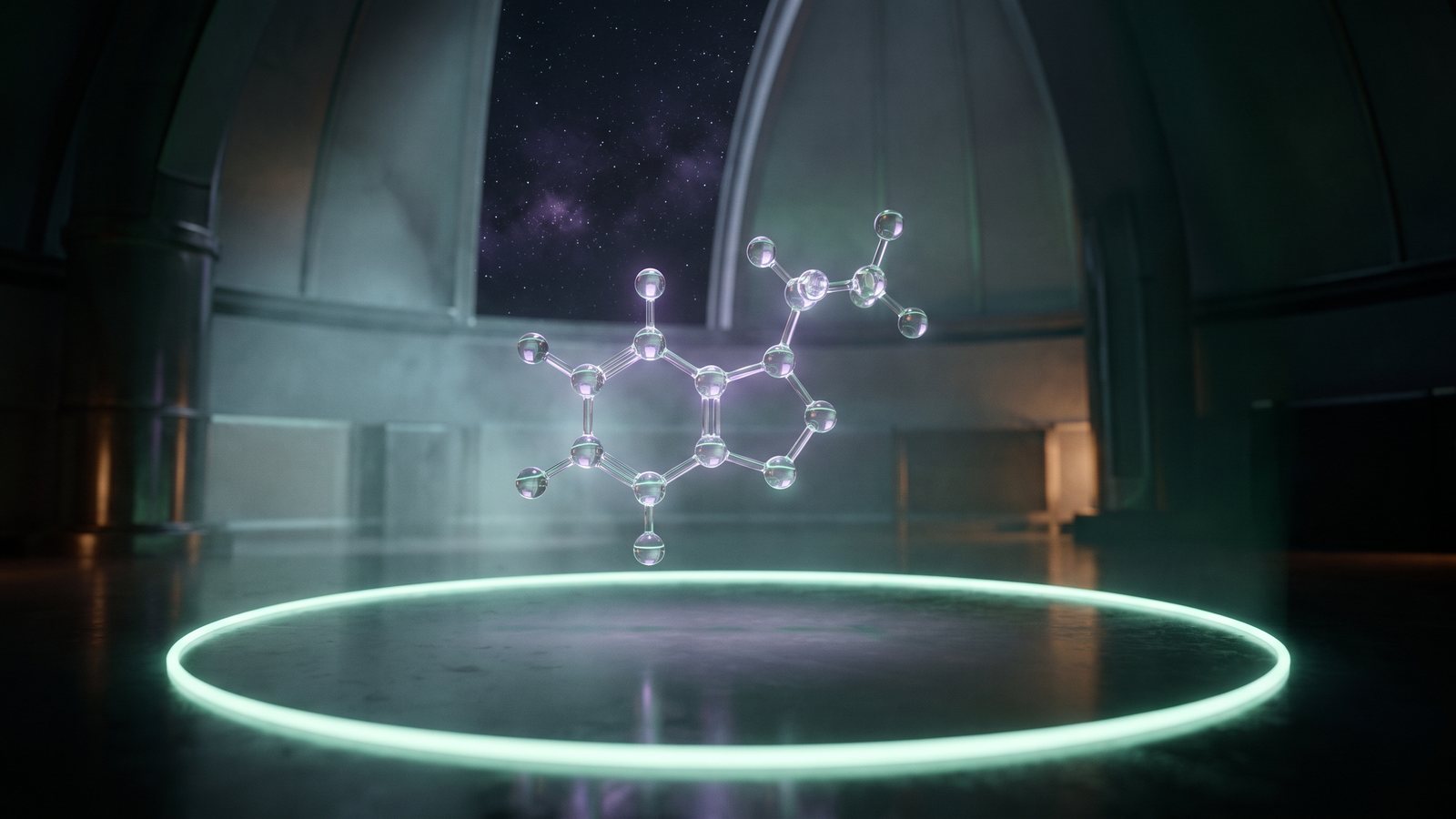 13 MIN READWhat is DMT? The molecule, where it comes from, and what science actually knowsWhat is DMT? The DMT meaning, what it does and where it comes from: a clear, sourced guide to the natural psychedelic, its effects, the brain and Canadian law.
 7 MIN READWhere does DMT come from? The natural history of a molecule made by plants, animals and perhaps peopleWhere does DMT come from? How plants and animals make it from tryptophan, why plants may make such compounds, the human evidence, and what archaeology shows.
 8 MIN READWhy is DMT called “the spirit molecule”? The book behind the nickname, and what science makes of itWhy is DMT called the spirit molecule? The nickname comes from Rick Strassman’s 2000 book. What he meant, how his view changed, and what science supports.
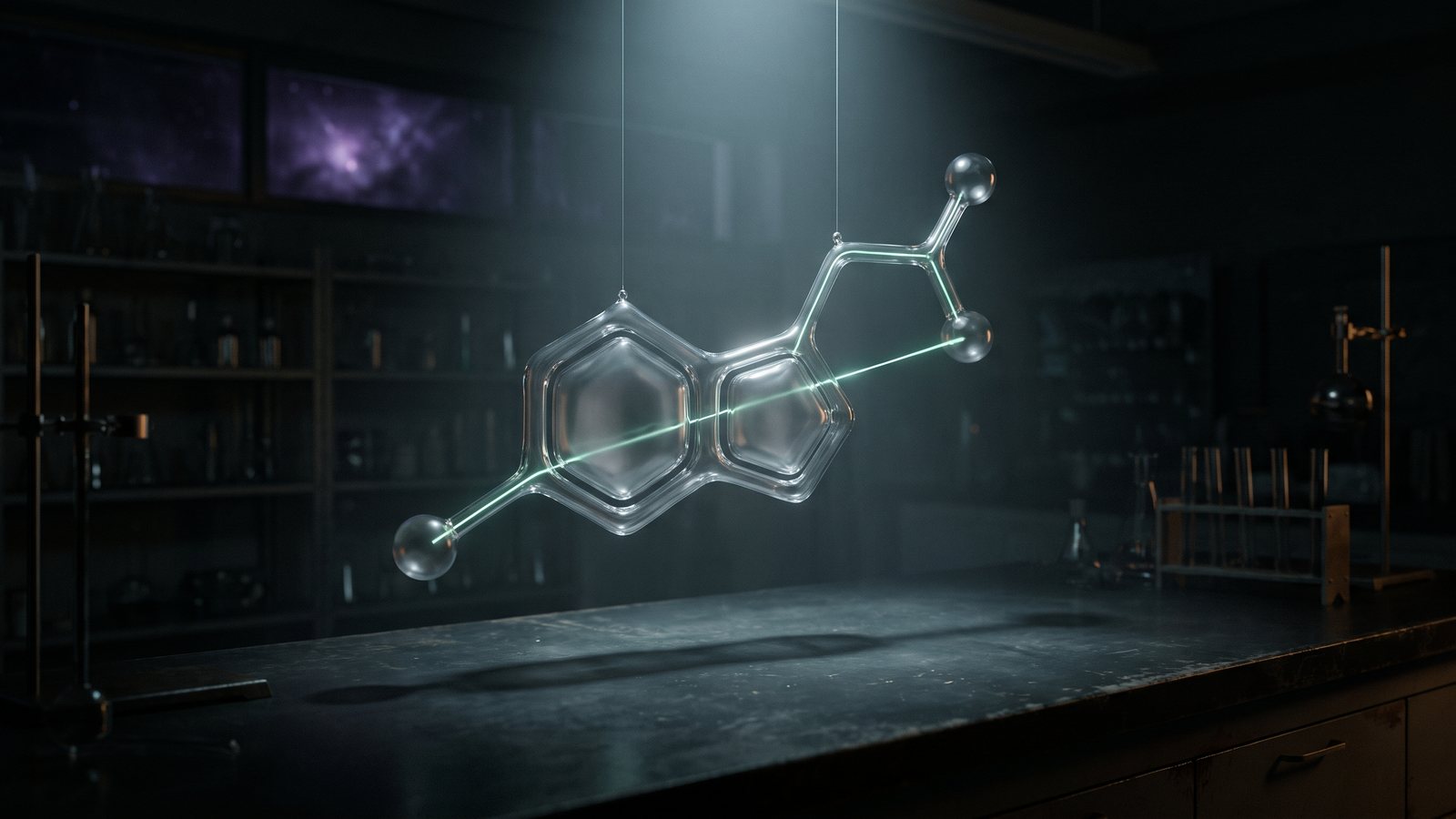 7 MIN READDMT’s chemical structure, explained: one indole ring, a short chain and two methyl groupsDimethyltryptamine (dimethyl tryptamine, DMT) explained: its chemical structure, the indole ring and N,N-dimethyl group, compared with serotonin and psilocin.
 8 MIN READWhat does DMT feel like? What research records, from the first seconds to the hours afterWhat does DMT feel like? What six studies record: the fast onset, body rush, visuals, other spaces, presences, fear and joy, and where self-reports fall short.
 8 MIN READHow long does DMT last? What controlled studies measured, minute by minuteHow long does DMT last? What controlled studies measured for injected, inhaled and ayahuasca DMT: onset, peak, half-life, after-effects and what is unknown.
 9 MIN READDMT myths, fact-checked: 15 popular claims and what the evidence actually showsDMT myths fact-checked: the pineal gland at death, machine elves, “no tolerance”, natural means safe and 11 more claims, each with a verdict and a source.
 11 MIN READIs DMT addictive? Dependence, tolerance and what bad DMT trips look like in researchIs DMT addictive? What animal studies, the Global Drug Survey and lab trials show on dependence, tolerance, heart effects and bad DMT trips, with Canadian help.
 10 MIN READ5-MeO-DMT vs DMT: two related molecules with very different research records5-MeO-DMT vs DMT: the methoxy group, 5-HT1A vs 5-HT2A, the Sonoran Desert toad, effects and risks in studies, GH001 trials and Canadian law, with sources.
 9 MIN READWhat is 5-MeO-DMT? The molecule, the research and the law in CanadaWhat is 5-MeO-DMT? The toad and plant tryptamine explained: 5-HT1A action, reported effects and risks, GH001 trials, toad ethics and Canadian law, sourced.
 9 MIN READBufo alvarius: the Sonoran Desert toad, its secretion, its conservation and the lawBufo alvarius, now Incilius alvarius: the Sonoran Desert toad's biology, why its secretion holds 5-MeO-DMT not DMT, conservation worries, cane toads and law.
 8 MIN READWhat is bufotenin? The 5-hydroxy cousin of DMT and psilocin, explainedBufotenin (bufotenine, 5-HO-DMT) explained: its chemistry beside DMT and psilocin, its toad and snuff history, whether it is psychedelic, and the law.
 9 MIN READYopo (Anadenanthera peregrina): the cohoba tree, its history and its chemistryYopo (Anadenanthera peregrina), checked: the tree and its range, Taíno cohoba and Orinoco yopo, what seed analyses found, bufotenine risks and Canadian law.
 7 MIN READIs there DMT in magic mushrooms? Psilocybin, psilocin and the DMT confusionIs there a DMT mushroom? No: magic mushrooms contain psilocybin and psilocin (4-HO-DMT), not DMT. How the molecules relate and how studies compare the two.
 6 MIN READDMT street names and other names: slang, chemical names, and how to say itDMT street name list from drug agencies (Dimitri, businessman’s trip, changa and more), plus its chemical names, how to say it, and why DMT is not acid.
 8 MIN READDMT vs LSD: is DMT like acid, and how do the two really differ?DMT vs acid: DMT is not LSD. Compare their chemistry, discovery, receptors, minutes-vs-hours timing in studies, reported effects, risks and the law in Canada.
 10 MIN READDMT vs ketamine: a classic psychedelic and a dissociative, side by sideDMT vs ketamine compared: 5-HT2A psychedelic vs NMDA-blocking dissociative, what lab studies found, near-death research, Spravato in Canada and the risks.
 11 MIN READAyahuasca vs DMT: how the Amazonian brew differs from the moleculeAyahuasca vs DMT: why the brew works by mouth, how timing, purging and heart effects differ, what trials show, the SSRI danger, and the law in Canada.
 9 MIN READPsilocybin, LSD and DMT: how the classic psychedelics differPsilocybin vs LSD vs DMT compared: origin, chemistry, 5-HT2A pharmacology, discovery, reported duration in studies, Canadian schedule, and what is unknown.
 10 MIN READSalvia vs DMT: two short, intense hallucinogens that work in different waysSalvia vs DMT compared: kappa-opioid vs 5-HT2A pharmacology, what controlled studies report, measured duration, risks and their different Canadian schedules.
 17 MIN READWhat Does DMT Look Like? A Practical Safety GuideWhat does DMT look like? From white or yellow crystals to herbal blends and amber vape liquids, learn why appearance alone can't confirm identity or safety.
Brain and body
Receptors, enzymes, brain imaging and the long argument over whether the human brain makes DMT itself.
 9 MIN READPineal gland activation: what the science says about “activating” or “decalcifying” itPineal gland activation claims checked: what the gland does, calcification and fluoride studies, and whether meditation, frequencies or diets change it.
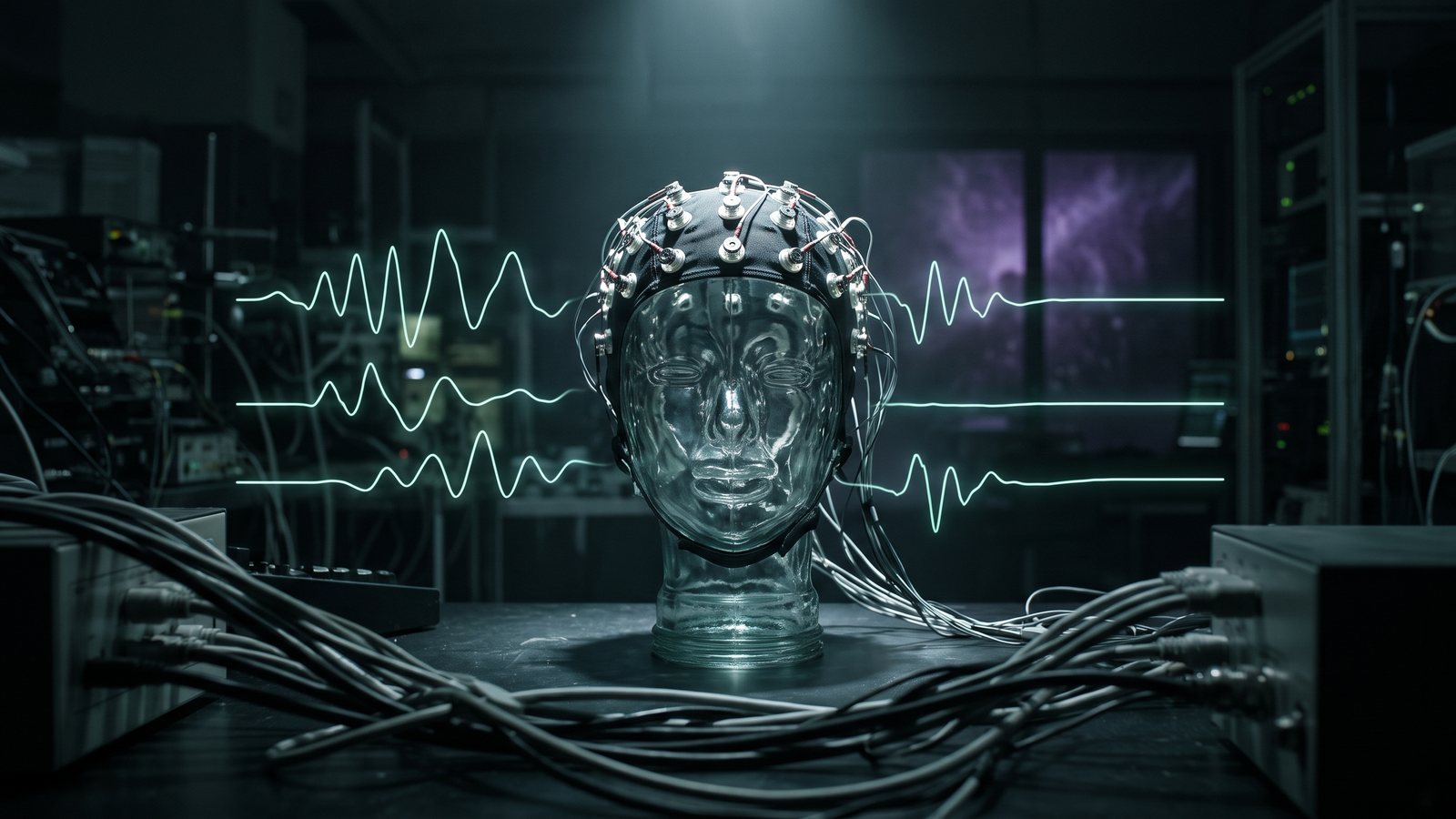 8 MIN READWhat happens in the brain on DMT? EEG, fMRI and the limits of the evidenceDMT brain research explained: the alpha-rhythm collapse, travelling waves, EEG-fMRI network changes, a 2026 mega-analysis and why entropy claims need care.
 7 MIN READDoes DMT shut down the default mode network? What the scans actually showDMT default mode network claims checked: what the DMN is, what psilocybin and DMT scans found, and why a 2026 pooled study says ‘dissolves the DMN’ overreaches.
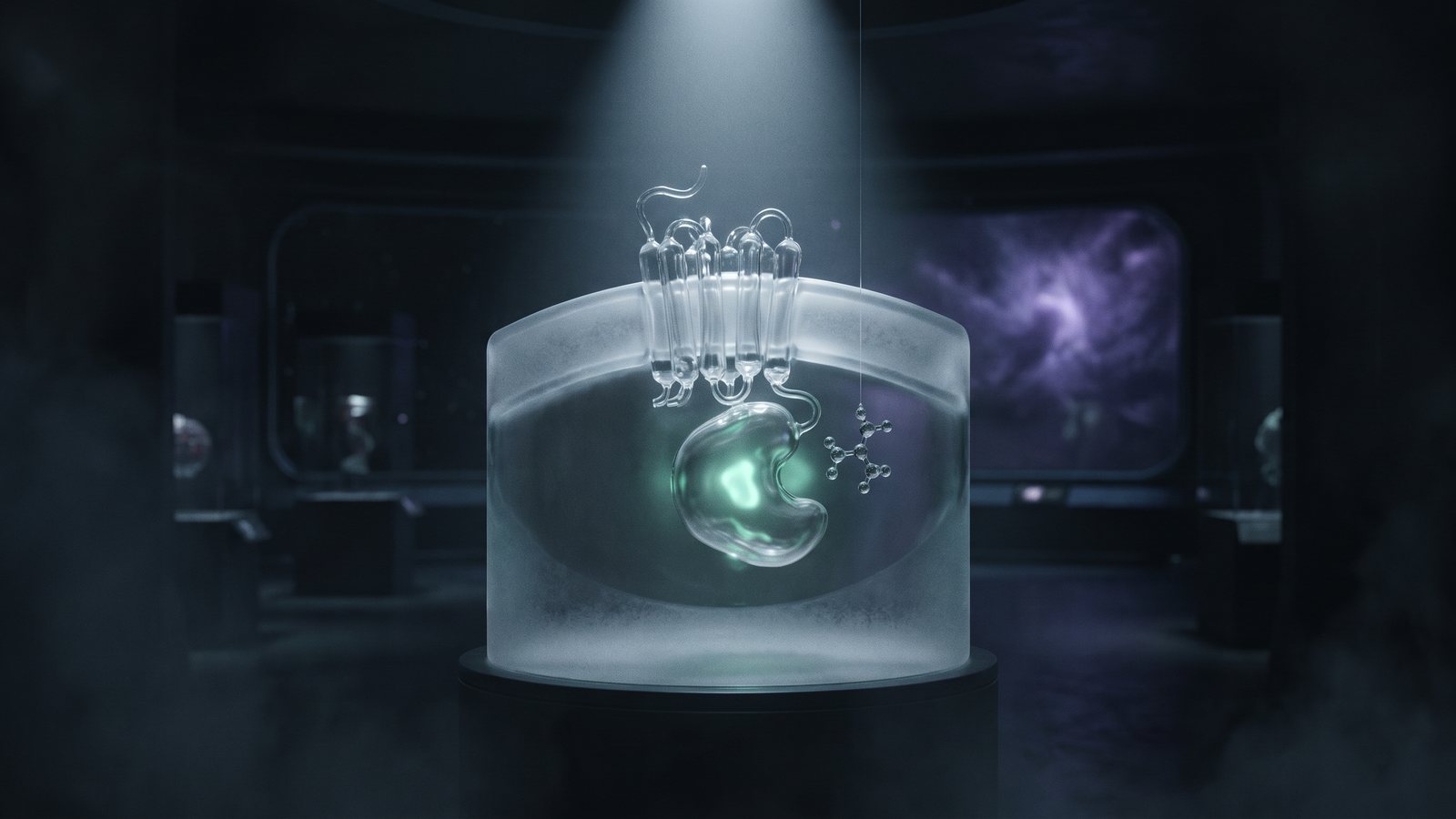 7 MIN READDMT and the 5-HT2A receptor: how strong is the evidence that it is the main switch?Does DMT affect serotonin? The 5-HT2A evidence weighed: knockout mice, ketanserin studies, the missing human blocking test and the intracellular idea.
 7 MIN READDMT and the sigma-1 receptor: what the 2009 discovery does and doesn’t showDMT sigma-1 receptor research explained: the 2009 Science finding, why the concentration gap matters, and which protective claims come only from cells and rats.
 8 MIN READWhy DMT breaks down so fast: MAO-A, its metabolites and a half-life of minutesDMT and MAO explained: how monoamine oxidase A clears DMT in minutes, what it turns into, why swallowed DMT alone is inactive, and why MAO inhibitors are risky.
 9 MIN READDoes the human brain make DMT? What has been measured, and what hasn’tDoes the brain make DMT? What 69 body-fluid studies, INMT in human brain tissue and rat experiments show, and why no one has measured it in a living brain.
 7 MIN READIs DMT made in the pineal gland? The “third eye” claim, checkedThe DMT gland claim, checked: where the pineal third-eye idea came from, what the 2013 and 2019 rat studies found, and why unsupported isn’t disproven.
 10 MIN READThe pineal gland and the “third eye”: what the gland really does, and which claims hold upPineal gland third eye claims checked: what the gland does, where the idea came from, the lizard third eye, and what studies show on calcification and fluoride.
 8 MIN READThe 2019 DMT rat brain study, explained: what it measured and what it didn’tThe 2019 DMT rat brain study explained: 36 rats, cortex levels near serotonin’s, a rise after cardiac arrest, the method’s limits, and what headlines got wrong.
 8 MIN READINMT: the enzyme said to make DMT, and why knockout studies put it in doubtThe INMT enzyme explained: Axelrod’s 1961 discovery, where INMT is found in the body, the 2023 knockout rats, 2025 knockout mice, and what else may make DMT.
 8 MIN READIs DMT neuroprotective? What cell and animal studies show, and what they don’tIs DMT neuroprotective? Rat plasticity, sigma-1 cell studies, hypoxia and stroke-model research explained: all preclinical, and not a proven benefit for people.
The experience, studied
What people report, from breakthroughs to entities, and what researchers can and cannot say about it.
 7 MIN READDMT and music: what research says about sound, song and psychedelic experienceDMT and music: Shipibo icaros, Santo Daime hymns, LSD and psilocybin music studies, trial playlists, and the ringing sounds people report hearing on DMT.
 9 MIN READWhat is a DMT “breakthrough”? The word, the rating scales and the researchWhat does a DMT breakthrough mean? Where the word comes from, how researchers rate intensity on the Hallucinogen Rating Scale, and what immersion studies show.
 9 MIN READDMT entity encounters: what researchers have recordedDMT entity encounters: what surveys, field studies and brain scans recorded about geometry, other worlds and “machine elves”, and what is still unknown.
 8 MIN READDMT entity types explained: a field guide to the beings people report, and the theories behind themDMT entities field guide: feminine figures, deities, aliens, jesters and elves, how often each is reported, why culture shapes them, and the main explanations.
 8 MIN READMachine elves: where the phrase came from, and how rare elves really are in DMT reportsMachine elves explained: where Terence McKenna's phrase came from, how rarely elves appear in DMT studies (2.9% of encounters), and how labels shape reports.
 7 MIN READThe waiting room, the dome and the chrysanthemum: DMT’s vocabulary explainedWhat is the DMT waiting room? The dome, the chrysanthemum, the carrier wave and hyperspace explained: where the words come from and how often reports use them.
 7 MIN READCan breathwork or meditation release DMT? What has actually been measuredDoes meditation release DMT? No study has measured it. What breathwork does to CO2 and blood flow, why it can feel psychedelic, and its known safety concerns.
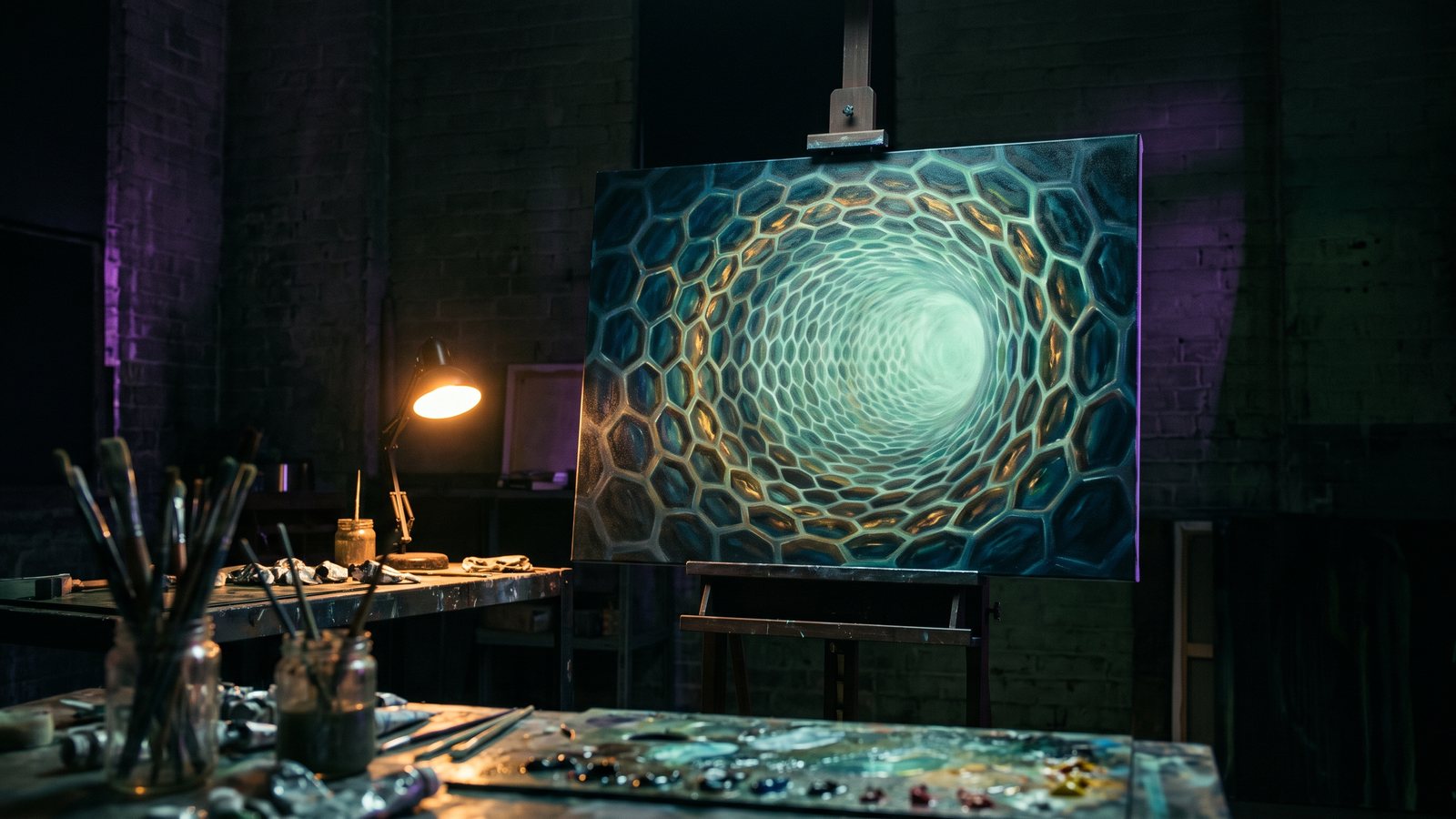 9 MIN READDMT art: how reported visions have been painted, modelled and simulatedDMT art explained: the geometry and colours people report, Klüver’s form constants, Pablo Amaringo’s ayahuasca paintings, visionary art and AI simulations.
 9 MIN READWhy does DMT feel “more real than real”? What the science of realness can and cannot explainWhy does DMT feel real, even more real than life? What surveys found, how the brain decides what is real, why insight can mislead, and what is still untested.
 10 MIN READDMT and God: what research on religious and mystical experiences actually measuredDMT god experiences in research: what a 4,285-person survey found, how mystical experience is measured, religious use, the “God molecule” myth and the limits.
 8 MIN READDMT and “ego death”: what ego dissolution is, how it is measured, and what the studies foundDMT ego death explained: what ego dissolution means, how the Ego Dissolution Inventory measures it, what EEG studies found, and how it relates to fear.
 11 MIN READWhat is ego death? The meaning, where the term came from, and what research saysWhat is ego death? Its meaning in simple terms, where the phrase came from, what psychedelic and meditation studies found, and why it can feel frightening.
 8 MIN READDMT time dilation: why minutes can feel like ages, and what research actually measuredDMT time dilation, checked: what DMT reports and interviews say about time, what psilocybin and LSD timing tests found, and what has never been measured.
 9 MIN READWhat is DMT hyperspace? The spaces people describe, what research has mapped, and the lockout mythWhat is DMT hyperspace? How 3,778 reports and a 2026 lab study describe the spaces people enter, and what tolerance research says about hyperspace lockout.
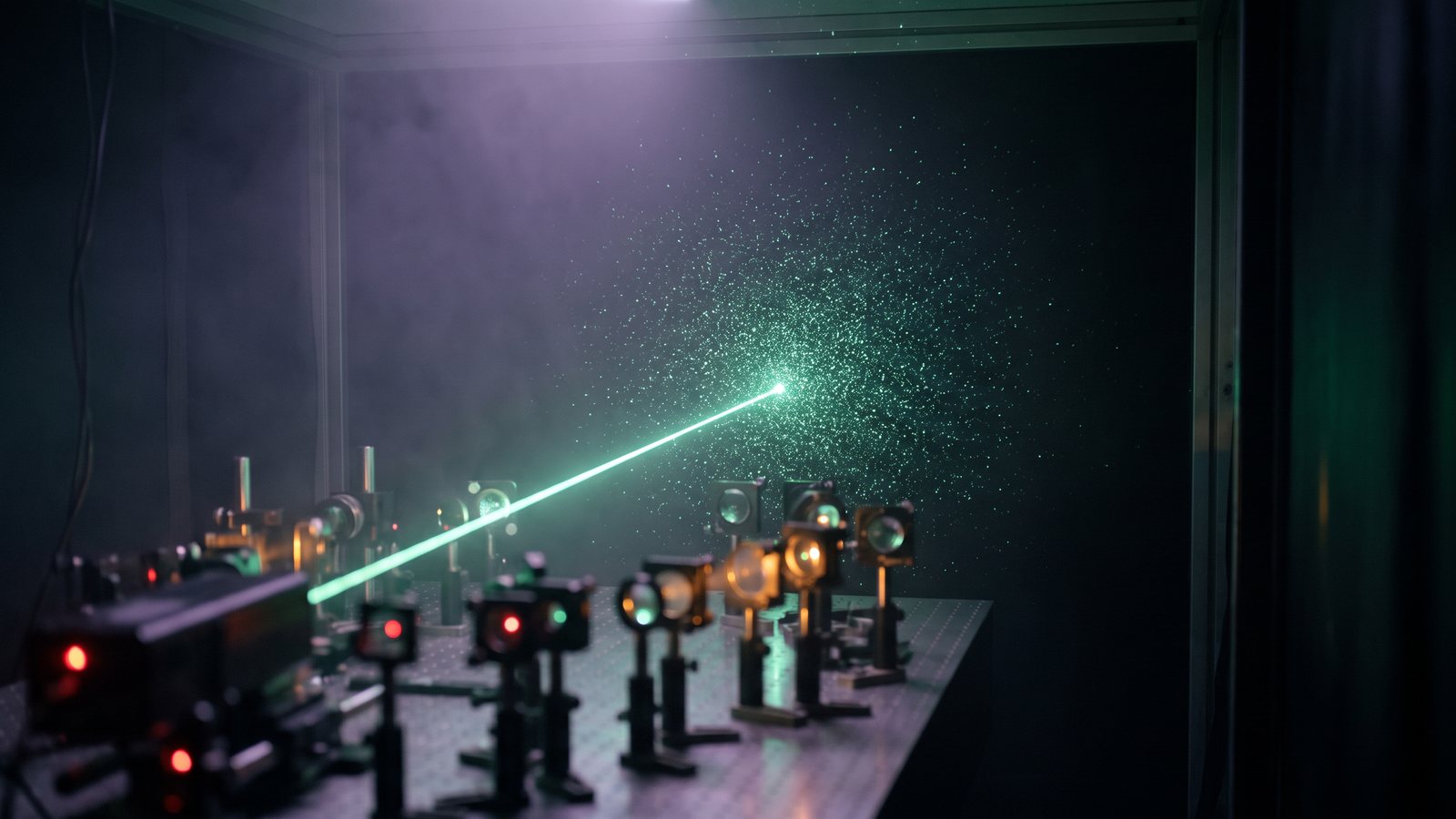 7 MIN READThe DMT laser experiment: does a laser reveal the “code of reality”?The DMT laser experiment says a laser on a wall reveals hidden code. Where the idea began, why it is untested, and what speckle physics and vision science say.
 7 MIN READDoes DMT change you? What studies of lasting effects measured, and how much they can tell usDoes DMT change you? What studies of DMT and ayahuasca measured about lasting changes in belief, personality and mood, and why study design matters so much.
 7 MIN READDMT and near-death experiences: the same outline, with different contentsDMT near death experience research, compared: a questionnaire overlap, interviews that diverge, dying-brain gamma surges and a hidden-target test, rated.
 9 MIN READDoes the brain release DMT when you die? What the evidence showsDoes your brain release DMT when you die? Fact-checking the dying, dreaming and pineal gland claims: rat studies, human data, and what has never been measured.
 7 MIN READDMT and dreams: is the DMT state like dreaming, and does your body release it in sleep?DMT and dreams: what EEG, REM and lucid-dream research shows, why “DMT is released when you sleep” is unsupported, and what has never been measured.
 22 MIN READDMT Trip Simulation: How Close Can It Really Get?DMT trip simulation: how close can videos and VR get? Explore common visual motifs, timelines, entity archetypes, safety warnings, and realism limits.
History and people
From 2,500-year-old snuff tubes to a 1931 Canadian lab, Budapest in 1956, New Mexico in the 1990s and the podcasts of today.
 8 MIN READThe history of DMT: from Andean snuff tubes to modern clinical trialsThe history of DMT, checked against primary sources: ancient Andean snuff residues, Manske's 1931 synthesis, Szára in 1956, the 1971 UN treaty and the trials.
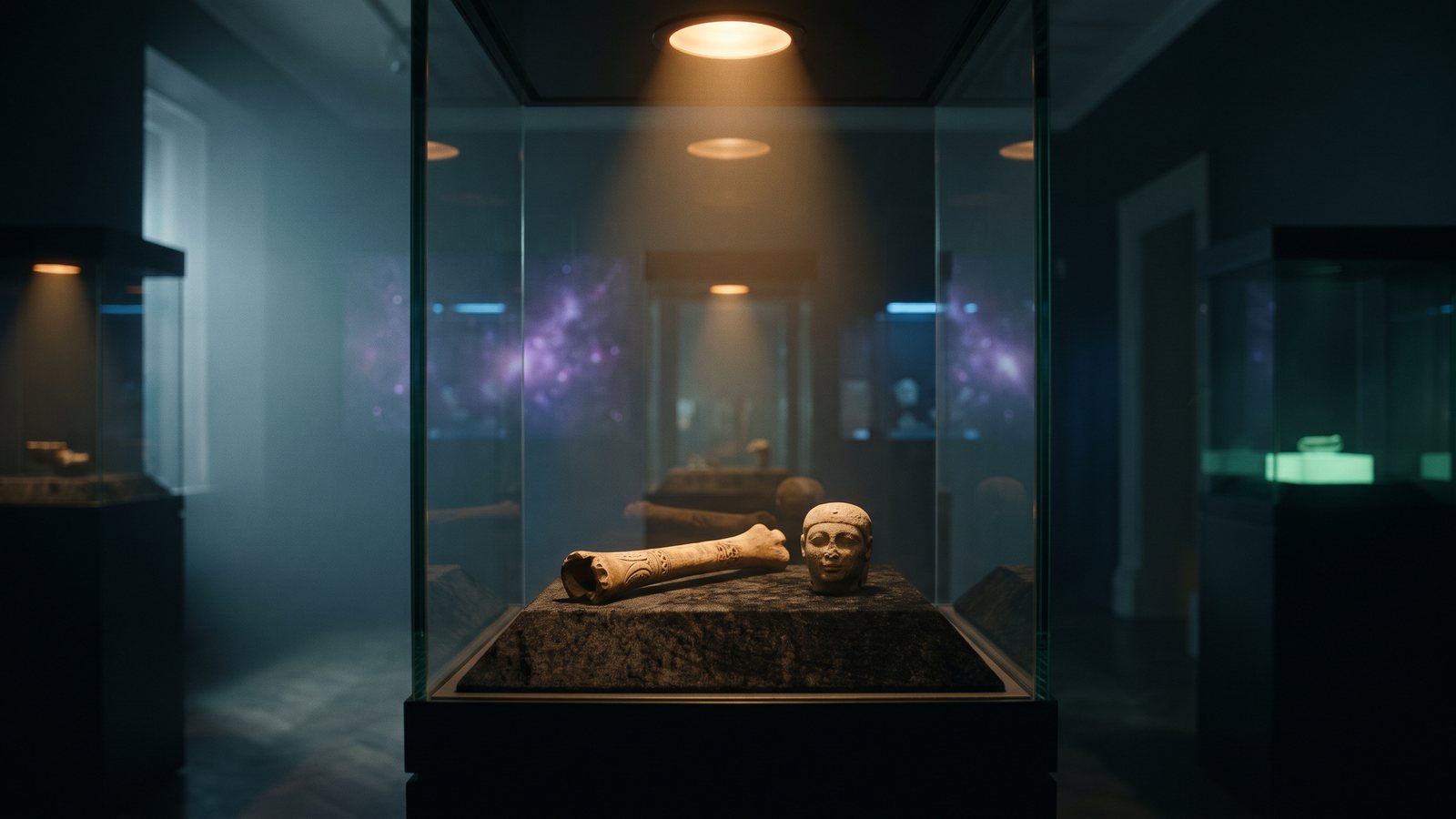 9 MIN READAncient DMT: what snuff tubes, ritual bundles and residue chemistry really showAncient DMT, checked: the Chavín bone snuff tubes, a 1,000-year-old Bolivian ritual bundle, Andean snuff finds, and what residue chemistry can and can’t prove.
 8 MIN READStephen Szára and DMT: the Budapest experiments of 1956 and what came afterStephen Szara (Szára) first described DMT's effects in people in 1956: his Budapest self-experiment, the patient studies in context, and his US research career.
 9 MIN READRick Strassman’s DMT research at the University of New Mexico: design, findings and why it endedThe Rick Strassman DMT study at UNM, 1990–95: how it was designed, what the 1994 and 1996 papers found, why the work ended, and how his views changed.
 8 MIN READDMT: The Spirit Molecule, the book and the film: what they claimed and what research foundDMT The Spirit Molecule, the 2000 book and the 2010 documentary: what each claimed, how they shaped DMT culture, and which ideas later research did not support.
 7 MIN READTerence McKenna and DMT: the documented story, the influence and how researchers read himTerence McKenna and DMT: his first experience in 1965, the 1971 La Chorrera trip with Dennis, his books and talks, and how researchers treat his descriptions.
 9 MIN READWho was Terence McKenna? His life, books, big ideas and deathWho was Terence McKenna? A checked biography: Paonia and Berkeley, La Chorrera, his books by year, the Timewave and 2012, and his 2000 death from brain cancer.
 7 MIN READHow DMT went mainstream: from counterculture to Joe Rogan, documentaries and celebrity interviewsJoe Rogan, DMT and the mainstream: how a 1960s counterculture drug reached books, a 2010 film, podcasts and celebrity interviews, and what the survey data show.
 9 MIN READAndrew Gallimore’s “reality switch” idea: what it claims about DMT, and how it could be testedAndrew Gallimore’s DMT ideas, explained neutrally: his papers and books, the extended-state proposal, a 2026 preprint on testing entities, and its critics.
 7 MIN READDMT research today: who is studying DMT, how, and what they still don’t knowDMT research today: the labs at Imperial, Basel, UC San Diego, Brazil, Yale and Johns Hopkins, 26 registered trials, why most are phase I, and open questions.
Ayahuasca and culture
The brew, the churches that use it and the questions its global spread raises.
 10 MIN READWhat is ayahuasca? The Amazonian brew, its contested history, and what science knowsWhat is ayahuasca? The Amazonian brew explained: the debate over how old it is, how MAO inhibition lets DMT act, what trials found, and the interaction risks.
 7 MIN READAyahuasca meaning: where the word comes from, how to say it, and its other namesAyahuasca meaning, explained: the Quechua roots behind “vine of the dead” or “of the soul”, how dictionaries say it, and names like yagé, caapi and hoasca.
 11 MIN READBanisteriopsis caapi, the ayahuasca vine: botany, history, harmine and what the research showsBanisteriopsis caapi explained: the Amazonian ayahuasca vine’s botany and names, Spruce and Schultes, harmine and harmaline, and what research has found.
 9 MIN READWhat does ayahuasca feel like? What studies of the ayahuasca experience foundWhat does ayahuasca feel like? What lab trials, brain scans and surveys found about the ayahuasca experience: visions, nausea, fear, emotion and after-effects.
 9 MIN READAyahuasca benefits: what research has and has not shownAyahuasca benefits checked against the research: what trials and studies found for depression, addiction, grief and church members, and why it is early.
 8 MIN READHow long does ayahuasca last? Onset, peak and after-effects in published studiesHow long does ayahuasca last? What lab studies measured: onset in 30-60 minutes, a peak at 1.5-2 hours, effects over by about 4 hours, and what lingers after.
 7 MIN READAyahuasca documentaries and films: a sourced guide to what each one showsAn ayahuasca documentary guide: seven notable films from 2004 to 2019, with year, director, what each covers, and whether it promotes, questions or observes.
 7 MIN READCelebrities and ayahuasca: what Aaron Rodgers, Will Smith and others have saidAyahuasca celebrities, from Aaron Rodgers to Will Smith and Megan Fox: what each one said in their own words, where, and why fame is not medical evidence.
 7 MIN READAyahuasca vs magic mushrooms: a brew and a fungus, comparedAyahuasca vs mushrooms: a DMT brew vs a psilocybin fungus. Compare timing in studies, depression trials, ritual history, MAOI risks and the law in Canada.
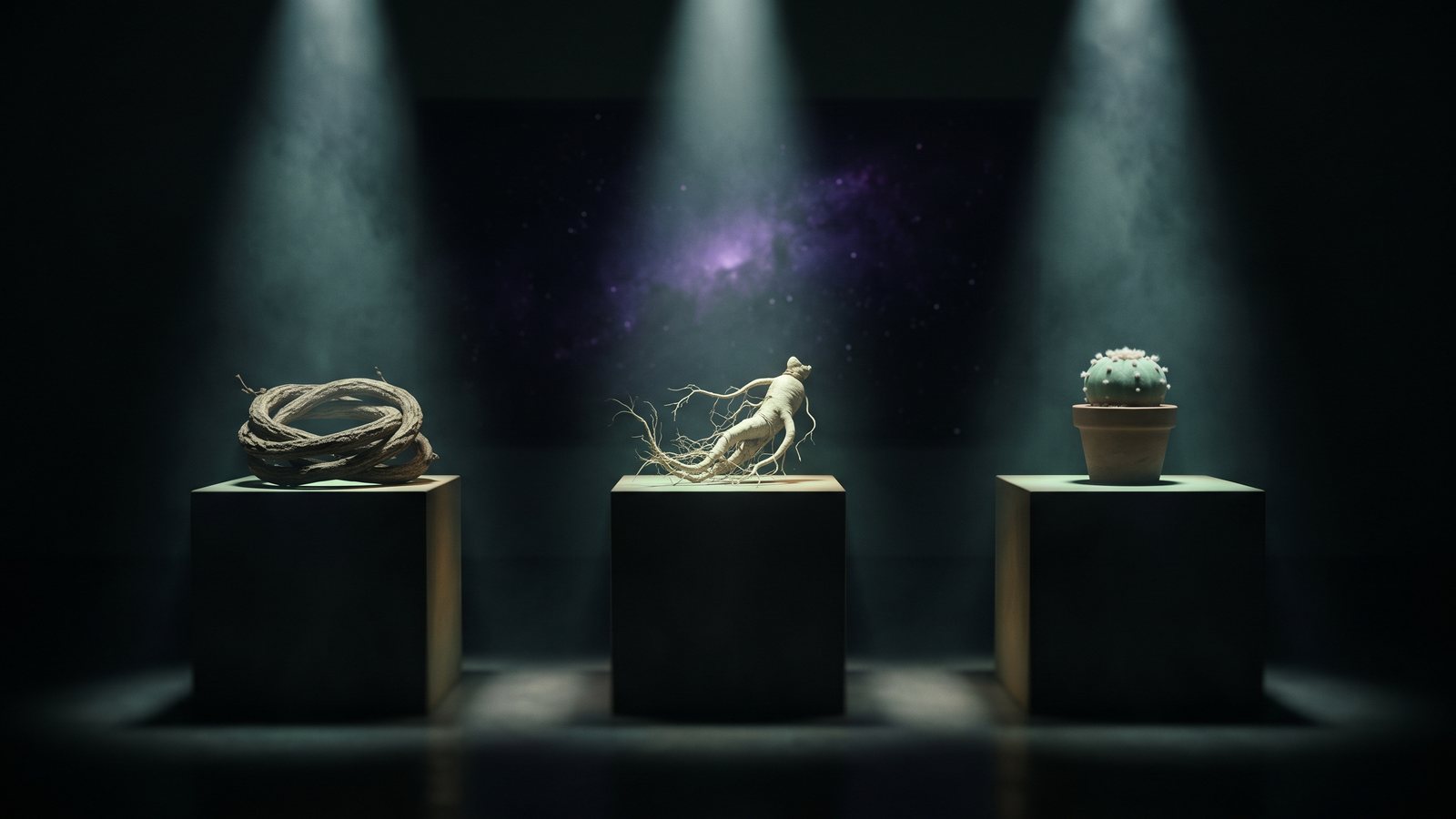 8 MIN READAyahuasca, ibogaine and peyote: how three traditional psychedelics differ in chemistry, culture, law and riskAyahuasca vs ibogaine vs peyote: their active compounds, receptor targets, traditions, Canadian law, research and risks, including ibogaine’s heart danger.
 10 MIN READSanto Daime and the União do Vegetal: the ayahuasca churches, their beliefs and the court casesSanto Daime and the União do Vegetal explained: their founders, beliefs and sacrament, the US court cases of 2006 and 2009, and Canada’s section 56 exemptions.
 9 MIN READWhat happens at an ayahuasca ceremony? What anthropologists and researchers have documentedWhat happens at an ayahuasca ceremony, by the research: Shipibo healing songs, Brazilian church rituals, modern retreats, the documented risks and Canadian law.
 9 MIN READWhat is jurema? Mimosa tenuiflora, the jurema tradition and its chemistryJurema (Mimosa tenuiflora, or Mimosa hostilis), checked: the plant, the jurema tradition of northeastern Brazil, its DMT chemistry, ayahuasca and Canadian law.
 8 MIN READWachuma vs ayahuasca: how the San Pedro cactus and the Amazonian brew compareWachuma vs ayahuasca: the San Pedro cactus and the Amazonian brew compared on plants, mescaline vs DMT, Chavín archaeology, research, risks and Canadian law.
Medicine, law and safety
Clinical trials, extended-state research, the law in Canada and elsewhere, and the risks. Every registered DMT, 5-MeO-DMT and ayahuasca study is in our DMT clinical trials tracker, refreshed daily from ClinicalTrials.gov.
 10 MIN READDMT therapy: what the clinical trials have tested, found and not yet shownWhat is DMT therapy? Trials for depression and anxiety, what a supervised session involves, results with sample sizes, safety data and the Canadian position.
 9 MIN READIs DMT legal in Canada? What the federal law says in 2026Is DMT legal in Canada? Its Schedule III listing, maximum penalties, ayahuasca and section 56, research routes, 5-MeO-DMT and the BC pilot, from official text.
 17 MIN READDMT Toronto: Effects, Risks, Legal Status, Harm Reduction & TreatmentExplore a detailed guide on DMT in Toronto, covering effects, legal status, health risks, harm reduction, and local treatment resources for safe, informed decisions.
 19 MIN READDMT Near Me Toronto: Legal, Safer Options for 2026DMT near me Toronto: learn Canadian law, scam risks, legal alternatives like ketamine therapy, costs, and how to find reputable psychedelic DMT.
 13 MIN READBefore You buy 5 meo dmt: A 2026 Legal Safety GuideUnderstand the legal and safety complexities before you buy 5 MeO DMT. Learn about regulations, purity, and health risks for informed decisions.
 14 MIN READDMT Dispensary Guide: Safety, Testing & Canada LawExplore what a DMT dispensary truly offers, understand product differences, legal issues in Canada, and how to recognize safe practices before considering purchase.
 26 MIN READHow to Make DMT? What You Need to Know FirstUnderstand DMT's chemistry, risks, and legal status with this expert guide: insightful harm reduction and scientific overview without illegal synthesis details.