THE SHROOMVERSE JOURNAL ✳ 14 MIN READ
DMT myths, fact-checked: 15 popular claims and what the evidence actually shows
Topic: DMT
Published Updated
Listen: the 3-minute version
AI-narrated summary of this article
Short answer, checked 20 October 2026
Most popular DMT myths stretch a real finding past what it shows. DMT has been measured in living rat brains, not human ones, and in rats the pineal gland was not the source. Machine elves are about 3% of reported encounters, not the norm. “No tolerance” rests on one 1996 study. And natural does not mean safe or legal: DMT raises heart rate and blood pressure, fear is common, and it is a Schedule III controlled substance in Canada.
THE SHORT VERSION · SWIPE
On this page 9 sections
DMT attracts myths the way few molecules do. Some began as honest hypotheses that were never tested; some are real findings in rats retold as facts about people; some simply grew in the retelling. This article takes fifteen of the most repeated claims, gives each a verdict and a source, and explains the reasoning. For the basics, start with our pillar, what is DMT.
How to read the verdicts
False: the evidence contradicts it. Unsupported: there is no good evidence for it, which is not the same as proof against it. Misleading: there is a real finding underneath, but the claim as usually told goes beyond it. Unresolved: a genuinely open question. Each explanation also carries our usual evidence label: established, preliminary or unresolved. This article gives no amounts and no instructions, and describes no effect as a benefit. DMT is a controlled substance in Canada.
The 15 DMT myths at a glance
| Claim | Verdict | Main source |
|---|---|---|
| 1. The pineal gland floods the brain with DMT when you die | Unsupported | Dean et al., 2019; Nichols, 2018 |
| 2. The pineal gland releases DMT at birth and in dreams | Unsupported | Nichols, 2018 |
| 3. The human brain makes as much DMT as serotonin | Misleading | Dean et al., 2019; Barker, 2018 |
| 4. Scientists know which enzyme makes DMT | Unresolved | Glynos et al., 2023; Hatzipantelis et al., 2025 |
| 5. Your brain releases DMT for seven minutes after death | Unsupported | Borjigin et al., 2013; Xu et al., 2023 |
| 6. Everyone meets machine elves | False | Lawrence et al., 2022 |
| 7. Everyone, or about half of people, meets entities | Misleading | Lawrence 2022; Michael 2021; Davis 2020 |
| 8. It feels more real than reality, so it must be real | Unsupported | Griffiths et al., 2019; Sanders et al., 2026 |
| 9. DMT explains near-death experiences | Misleading | Timmermann et al., 2018; Michael et al., 2025 |
| 10. You can’t build tolerance to DMT | Misleading | Strassman et al., 1996; Erne et al., 2025 |
| 11. DMT grows new brain cells and binds the BDNF receptor | Misleading | Ly et al., 2018; Moliner et al., 2023 |
| 12. DMT is in every plant | Misleading | Cameron and Olson, 2018; Carbonaro and Gatch, 2016 |
| 13. DMT is natural, so it’s safe | False | Strassman and Qualls, 1994; Davis et al., 2020; CAMH |
| 14. DMT is natural, so it’s legal | False | Controlled Drugs and Substances Act |
| 15. Strassman gave DMT to 400 people until the government shut him down | False | Strassman, book page |
Myths about DMT in the brain and body
1. “The pineal gland floods the brain with DMT when you die”
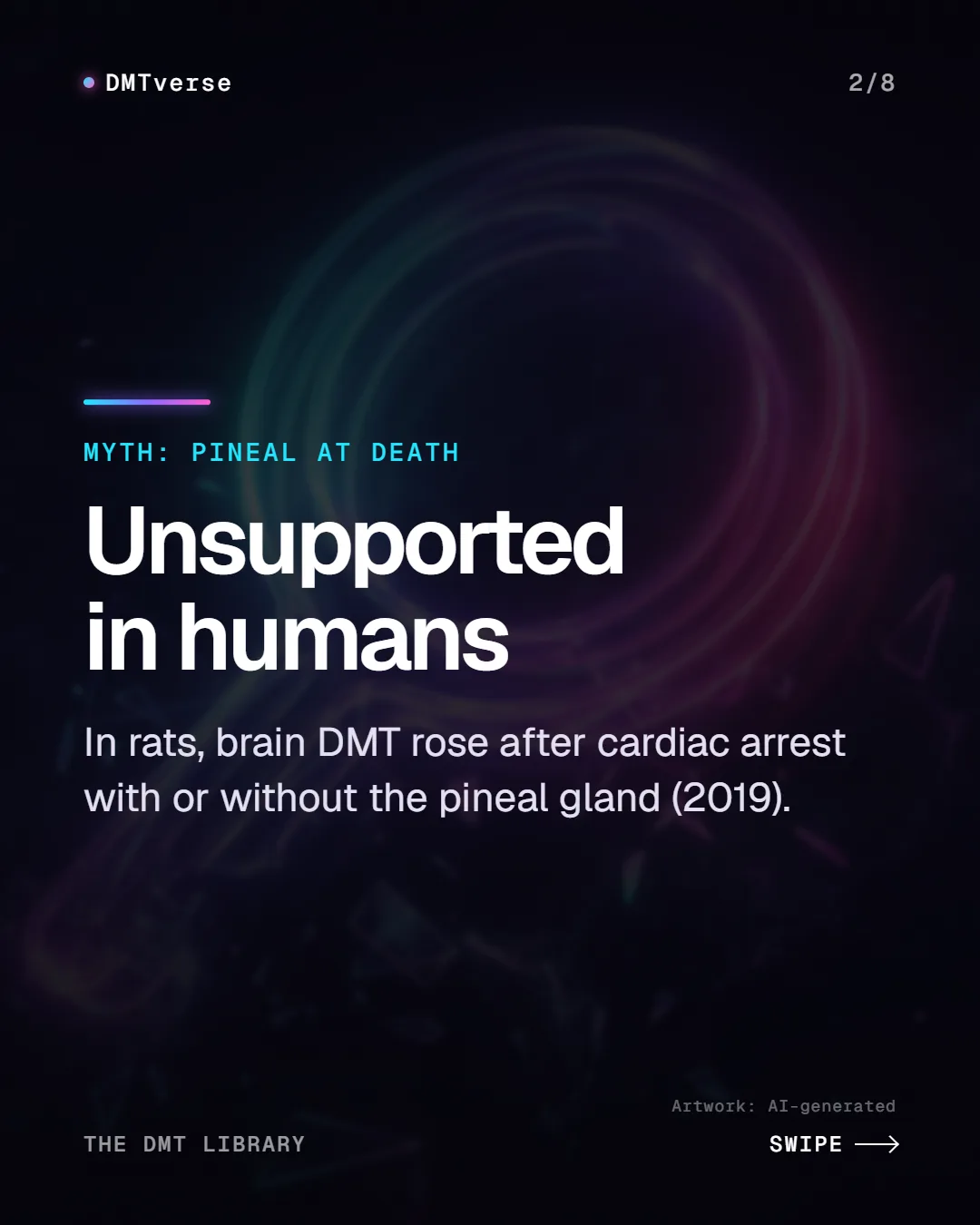
Verdict: unsupported. The only measurement of DMT rising around death comes from rats. In 2019, DMT in the visual cortex of rats rose after experimentally induced cardiac arrest, and it did so whether or not the pineal gland had been removed (Dean et al., 2019). That moves the source away from the pineal, not towards it. Evidence: preliminary.
A 2018 review concluded that the pineal-release idea is not consistent with the evidence: the gland is tiny, its main job is making melatonin, and the minute amounts of DMT detected in brain are not enough to produce psychoactive effects (Nichols, 2018). No one has measured DMT in a living human brain at death or at any other time (Barker, 2018). Evidence: unresolved in humans. More in does the brain release DMT when you die.
2. “The pineal gland releases DMT at birth and in dreams”
Verdict: unsupported. Nichols lists secretion of DMT by the pineal at birth and during dreaming among the ideas the evidence does not support (Nichols, 2018). Part of the story traces to Rick Strassman’s 2000 book, whose preface lists among its “highly speculative” proposals that pineal DMT release 49 days after conception marks the entrance of the spirit into the fetus (Strassman, book page). In his own 1994 study, DMT left melatonin, the pineal hormone, unaffected (Strassman and Qualls, 1994). Evidence: unresolved, with no human data either way. See why DMT is called the spirit molecule and DMT and dreams.
3. “The human brain makes as much DMT as serotonin”
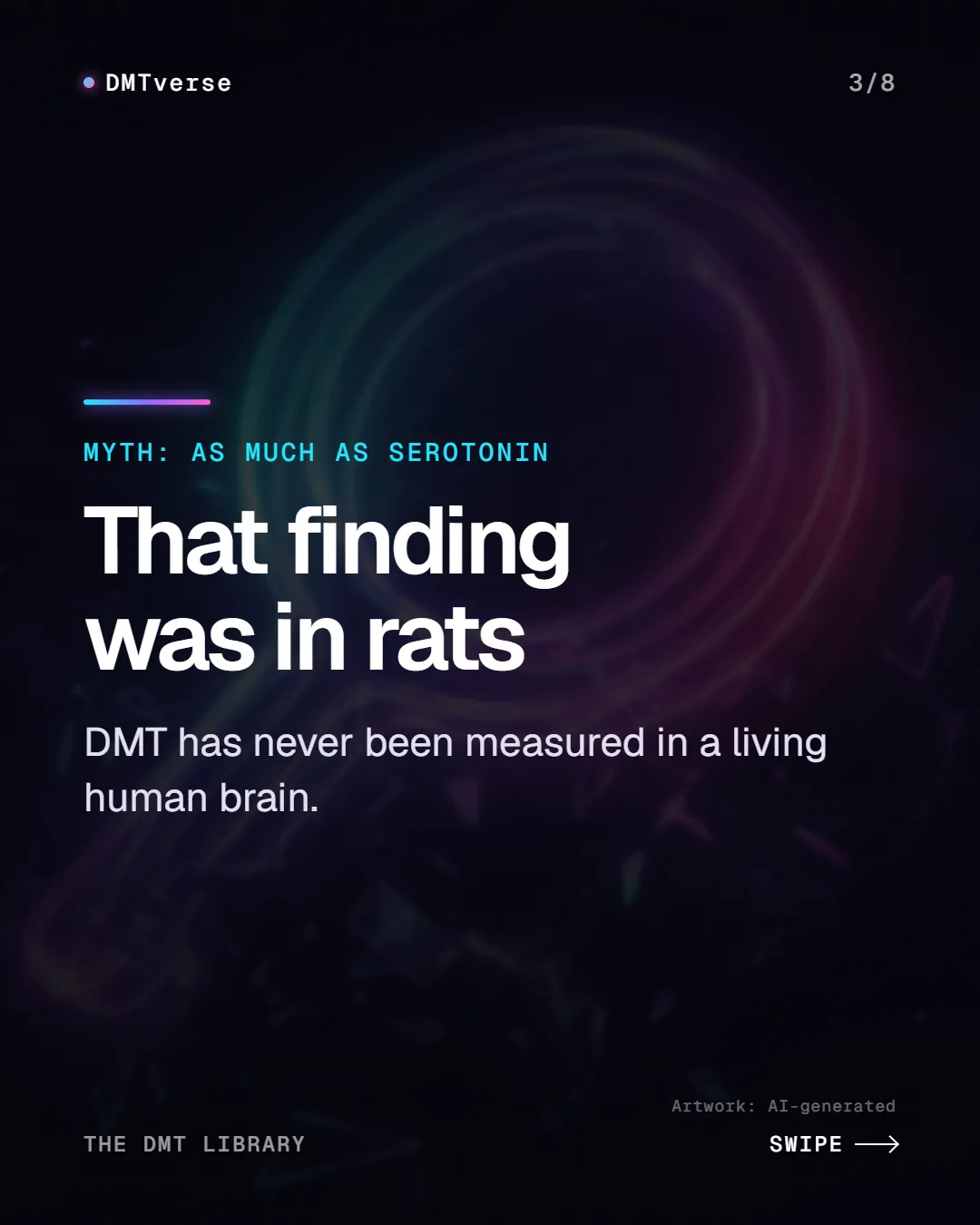
Verdict: misleading. The comparison is real but comes from rats: extracellular DMT in rat cortex was “similar to those of canonical monoamine neurotransmitters including serotonin” (Dean et al., 2019). The same authors only “raise the possibility” that this happens in humans. Evidence: preliminary.
In people, DMT has been detected in blood, urine and spinal fluid, but there have been no efforts to measure it in the human brain (Barker, 2018), and a 2022 review notes that only a handful of studies have tried to detect DMT in the human brain at all, and only indirectly, through cerebrospinal fluid (Barker, 2022). Evidence: unresolved in humans. See does the brain make DMT and the rat brain study explained.
4. “Scientists know which enzyme makes DMT”
Verdict: unresolved. Textbooks credit an enzyme called INMT. But rats bred without INMT still showed tryptamine-methylating activity in brain and lung, and the products were not the expected ones (Glynos et al., 2023), and mice without INMT showed no obvious drop in their own psychedelic tryptamine levels (Hatzipantelis et al., 2025). Both teams suggest another pathway may exist in rodents. Evidence: unresolved. See INMT, the enzyme linked to DMT.
5. “Your brain releases DMT for seven minutes after death”
Verdict: unsupported. We found no study that measured a seven-minute window of DMT release in dying people, and we could not trace the figure to any research.
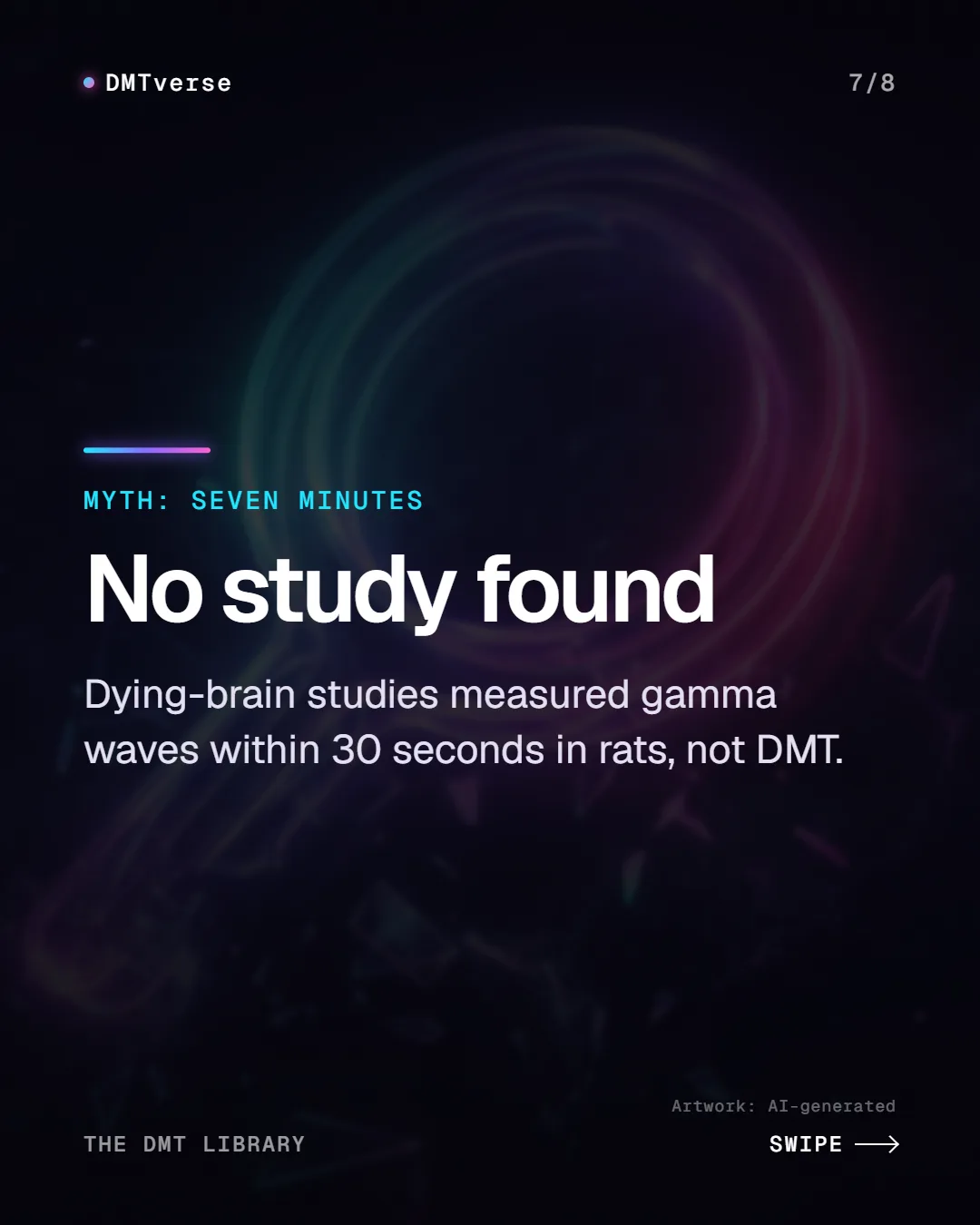
The real findings it may be built on are about electrical activity, not DMT. In rats, a surge of synchronised gamma waves appeared within the first 30 seconds after cardiac arrest (Borjigin et al., 2013); in four dying patients whose ventilation was withdrawn, two showed a similar gamma surge (Xu et al., 2023). Neither study, as described in its abstract, measured DMT, and nobody can know from brain waves alone what, if anything, was experienced. Evidence: preliminary for the gamma surges; the seven-minute DMT claim has no source we could find.
Myths about the DMT experience
6. “Everyone meets machine elves”
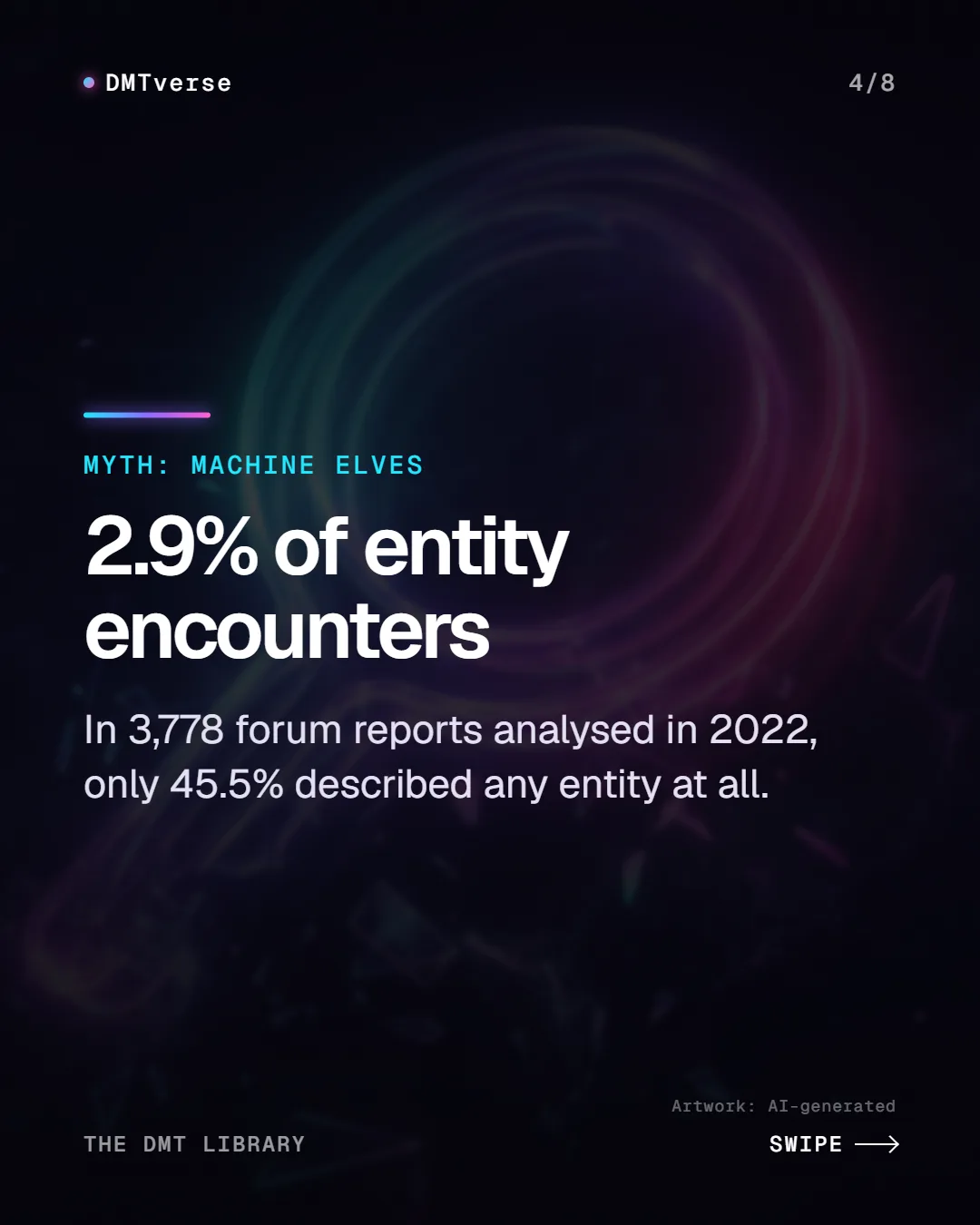
Verdict: false. The largest analysis of written reports coded 3,778 experiences posted to an online forum over ten years. Machine elves made up 2.9% of entity encounters, within a broader “mythological beings” group of 8.4% (Lawrence et al., 2022). Feminine beings (24.2%), deities (17.0%) and aliens (16.3%) were all far more common. The authors were coding self-selected posts, so the true mix in any population is unknown. Evidence: preliminary. See what machine elves means.
7. “Everyone, or about half of people, meets entities”
Verdict: misleading. The answer depends on who is asked and how. In the forum analysis, 45.5% of experiences described an entity (Lawrence et al., 2022); in a lab interview study, presences featured in 17 of 23 interviews (Sanders et al., 2026); in a home field study of experienced users, 94% (Michael et al., 2021); and in a survey of 2,561 people, 100%, because it recruited people who had had an encounter (Davis et al., 2020). There is no single rate. Evidence: preliminary. See DMT entity encounters: what the research says.
8. “It feels more real than reality, so it must be real”
Verdict: unsupported. A feeling of realness is a report about an experience, not a measurement of the world. In a 2019 survey, people who described drug-free “God encounters” rated them as more real than everyday consciousness at 72.7 out of 100, close to the 77.5 given for DMT encounters (Griffiths et al., 2019). And realness is not universal: in a 2026 lab study, 22% of participants described the experience as real and 9% as unreal (Sanders et al., 2026). Whether anything encountered exists outside the brain is unresolved; the feeling alone cannot settle it. See why DMT feels more real than reality.
9. “DMT explains near-death experiences”
Verdict: misleading. The two overlap. In a placebo-controlled study of 13 volunteers, DMT significantly raised scores on a near-death experience scale (Timmermann et al., 2018), and in a 2025 comparison, 95% of 36 DMT participants reported at least one classic near-death theme. But the same comparison found that five classic near-death features were entirely absent from DMT reports and that detailed content diverged (Michael et al., 2025). Similar is not the same as explained, and there is no human evidence that DMT is released at death (myth 1). Evidence: preliminary. See DMT and near-death experiences.
Myths about tolerance and the brain
10. “You can’t build tolerance to DMT”
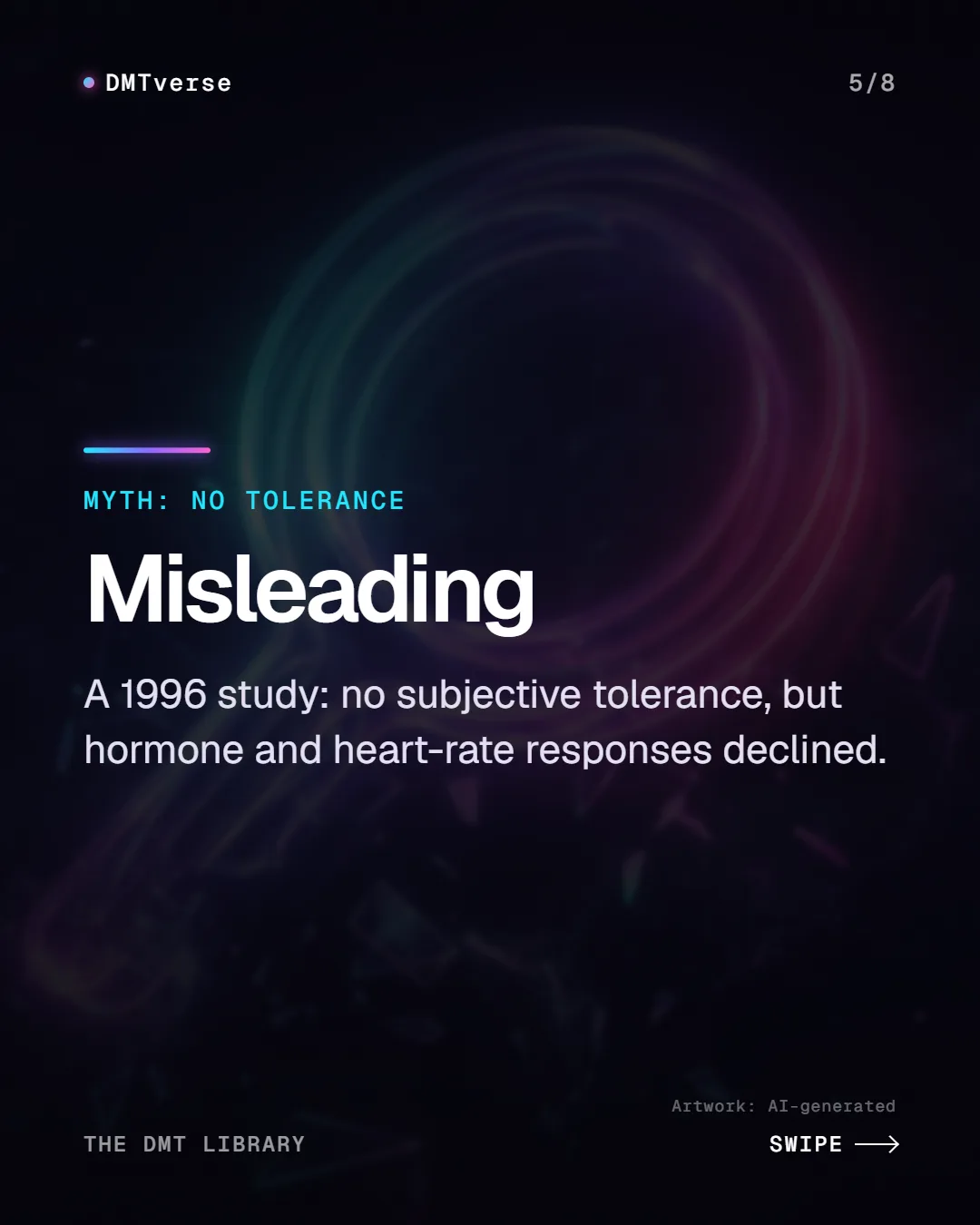
Verdict: misleading. It rests on one real result. In a 1996 double-blind study, 13 experienced volunteers received four closely spaced doses (dose not reproduced here): tolerance to the subjective “psychedelic” effects did not occur, but hormone and heart-rate responses decreased with each repeat (Strassman et al., 1996). Newer studies giving DMT as a continuous infusion found that subjective effects reached a plateau after about 30 minutes (Vogt et al., 2023), and one reported “moderate acute tolerance” (Erne et al., 2025). Evidence: preliminary, from small studies of healthy volunteers. More in is DMT addictive.
11. “DMT grows new brain cells and binds the BDNF receptor”
Verdict: misleading. A 2018 study found that psychedelics, DMT among them, increased the growth of neuron branches and spines in cultured neurons and in rats (Ly et al., 2018). That is structural plasticity (neurons growing new connections) in animals and cells, not new brain cells in people. Evidence: preliminary.
The widely cited 2023 paper showing psychedelics binding TrkB, the receptor for the growth factor BDNF, tested LSD and psilocin, not DMT (Moliner et al., 2023). A separate claim, that DMT works through the sigma-1 receptor, rests on cell and mouse work (Fontanilla et al., 2009), and DMT acts there only at concentrations far above those it needs at 5-HT2A (Barker, 2018). Evidence: preliminary. See is DMT neuroprotective and DMT and the sigma-1 receptor.
Myths about “natural”
12. “DMT is in every plant”
Verdict: misleading. Reviews describe DMT as produced by “a wide variety of plant and animal species” (Cameron and Olson, 2018) and as “widely found in plants and animals” (Carbonaro and Gatch, 2016). Wide is not universal: neither review says every plant contains it, and we found no source that does. We deliberately do not list which plants contain it. Evidence: established that it is widespread; the “every plant” version has no source.
13. “DMT is natural, so it’s safe”
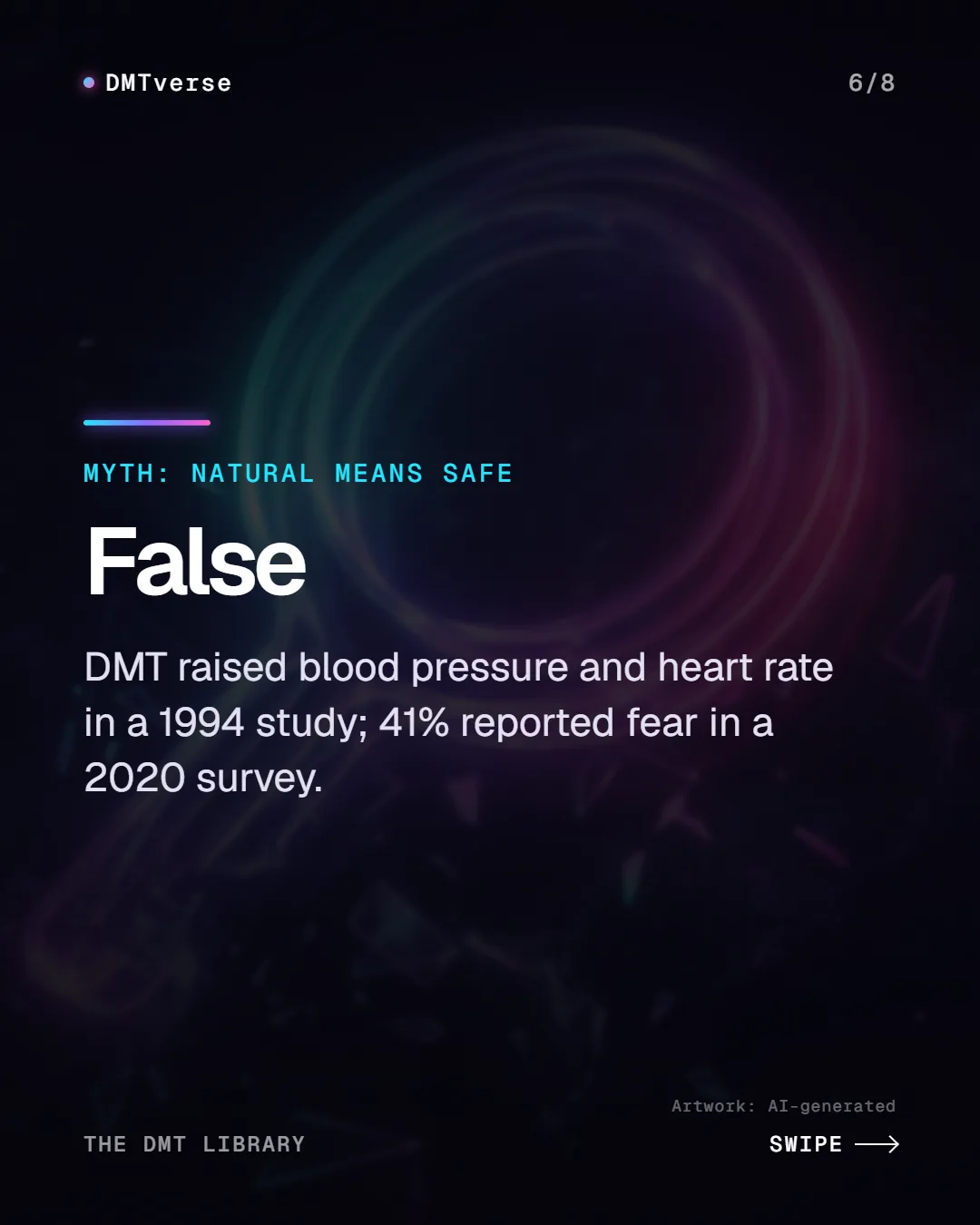
Verdict: false. Natural origin says nothing about risk. In a 1994 controlled study, DMT raised blood pressure, heart rate, pupil size and body temperature, rising with the dose (Strassman and Qualls, 1994). In a 2020 survey, 41% of respondents reported fear during their most memorable encounter (Davis et al., 2020). A 2016 review notes intense cardiovascular effects when given intravenously at high doses (Carbonaro and Gatch, 2016). Evidence: established.
Canada’s Centre for Addiction and Mental Health warns that most hallucinogens are illegal and unregulated, may contain toxins or not contain the drug they are sold as, and can leave people disoriented, with poor judgment and more likely to take risks (CAMH). Controlled studies screened and supervised their volunteers, so they do not describe risk outside a hospital. Evidence: established.
If someone is in danger
Call 911 for immediate danger or urgent medical help, including if someone is unconscious, not breathing or having a seizure. In Ontario, the Ontario Poison Centre is at 1-800-268-9017; every province has a poison centre, listed by SickKids (AboutKidsHealth). If you or someone you know is thinking about suicide, call or text 9-8-8, 24 hours a day (Government of Canada). See also our safety page and how to help someone having a bad trip.
14. “DMT is natural, so it’s legal”
Verdict: false in Canada. N,N-dimethyltryptamine and any salt of it is item 7 of Schedule III of the Controlled Drugs and Substances Act, which prohibits possession except as authorized under the regulations and separately prohibits trafficking and production, with exemptions possible under section 56 (CDSA). We read the consolidation current to 30 September 2026. The schedule entry describes the molecule by structure and makes no exception for DMT that occurs in nature. Evidence: established. This is general information, not legal advice; see is DMT legal in Canada.
A myth about the history
15. “Strassman gave DMT to 400 people until the government shut him down”
Verdict: false on both counts, by Strassman’s own account. On his website he writes that over the five years of his University of New Mexico project he gave approximately 400 doses of DMT to 60 volunteers, not 400 people, and that “problems inside and outside of the research environment” led to the end of the studies in 1995 (Strassman, book page). He does not describe a government shutdown there. These are his own figures and his own explanation. Evidence: established for what he has published; the detailed causes are his account. See Rick Strassman’s DMT study.
Why do DMT myths spread?
- Rat findings get retold as human facts. The best brain data on DMT come from rats (myths 1, 3 and 5).
- Hypotheses outlive their caveats. Ideas offered as speculation in a 2000 book are now repeated as findings (myth 2).
- One study becomes a rule. A single 1996 tolerance result (Strassman et al., 1996) became “no tolerance” (myth 10).
- Vivid minorities become the norm. Machine elves are memorable, not typical (myth 6).
- “Natural” sounds reassuring. It says nothing about safety or law (Strassman and Qualls, 1994; CDSA) (myths 13 and 14).
What we still don’t know
- Whether the living human brain makes DMT in meaningful amounts, at death or at any time (unresolved).
- Which enzyme makes DMT in mammals (unresolved).
- How tolerance to DMT develops over longer or repeated exposure in people (unresolved).
- Why some people meet entities and others do not, and how expectation shapes it (unresolved).
- Whether any of DMT’s plasticity findings in cells and rats apply to people (unresolved).
Common questions
Does the brain release DMT when you die?
There is no human evidence that it does. In rats, DMT in the visual cortex rose after experimentally induced cardiac arrest, with or without the pineal gland. DMT has never been measured in a living human brain.
Is the pineal gland the source of DMT?
Not as far as the evidence shows. A 2018 review found the pineal-release idea inconsistent with the evidence, and in a 2019 rat study, removing the pineal gland made no difference to DMT levels in the cortex.
Does everyone see machine elves on DMT?
No. In an analysis of 3,778 online reports, machine elves made up 2.9% of entity encounters, and only 45.5% of the experiences described an entity at all.
Is it true there is no tolerance to DMT?
Not quite. A 1996 study found no tolerance to subjective effects across four closely spaced doses, but hormone and heart-rate responses declined. Newer infusion studies found effects plateauing and reported moderate acute tolerance.
Is DMT safe because it is natural?
No. DMT raises heart rate and blood pressure, fear is commonly reported, and unregulated drugs may not be what they are sold as. Natural origin does not make a substance safe.
Is DMT legal in Canada because it occurs in nature?
No. DMT is listed in Schedule III of the Controlled Drugs and Substances Act, with no exception for natural DMT. This is general information, not legal advice.
Where does the “seven minutes after death” DMT claim come from?
We could not trace it to any study. Research on dying brains has measured electrical activity, such as a gamma-wave surge within 30 seconds of cardiac arrest in rats, not DMT.
Shroomverse sells mushroom products. This article is general information about common claims about DMT. It is not medical, legal or purchasing advice, and it does not recommend any product.
SOURCES
- Biosynthesis and Extracellular Concentrations of N,N-dimethyltryptamine (DMT) in Mammalian Brain (Dean JG, et al., Scientific Reports 9:9333, 2019), Springer Nature (peer-reviewed, open access); PMC6597727. Accessed . Abstract read via Europe PMC. Rat cortical DMT similar to monoamine neurotransmitters including serotonin, with or without pineal; rise after experimental cardiac arrest independent of pineal; authors “raise the possibility” for humans.
- N,N-dimethyltryptamine and the pineal gland: Separating fact from myth (Nichols DE, Journal of Psychopharmacology 32(1):30–36, 2018), SAGE (peer-reviewed review). Accessed . Abstract read via Europe PMC. Pineal secretion of DMT at birth, during dreaming and near death not consistent with the evidence; minute brain concentrations insufficient for psychoactive effects.
- N,N-Dimethyltryptamine (DMT), an Endogenous Hallucinogen: Past, Present, and Future Research to Determine Its Role and Function (Barker SA, Frontiers in Neuroscience 12:536, 2018), Frontiers (peer-reviewed, open access); PMC6088236. Accessed . Full text read via Europe PMC. No efforts to quantify DMT in human brain; DMT detected in human body fluids; sigma-1 activity at high concentration compared with 5-HT2A.
- Administration of N,N-dimethyltryptamine (DMT) in psychedelic therapeutics and research and the study of endogenous DMT (Barker SA, Psychopharmacology 239(6):1749–1763, 2022), Springer (peer-reviewed review, open access); PMC8782705. Accessed . Full text read via Europe PMC: only a handful of studies have attempted to detect endogenous DMT in human brain, indirectly through cerebrospinal fluid; about 70 studies reported DMT in human blood and urine.
- Indolethylamine N-methyltransferase (INMT) is not essential for endogenous tryptamine-dependent methylation activity in rats (Glynos NG, et al., Scientific Reports 13:280, 2023), Springer Nature (peer-reviewed, open access). Accessed . Abstract read via Europe PMC. INMT-knockout rats; tryptamine methylation activity persisted; products neither NMT nor DMT; alternative pathway suggested.
- Indolethylamine N-Methyltransferase Deletion Impacts Mouse Behavior without Disrupting Endogenous Psychedelic Tryptamine Production (Hatzipantelis CJ, et al., ACS Chemical Neuroscience 16(20):4011–4024, 2025), American Chemical Society (peer-reviewed). Accessed . Abstract read via Europe PMC. INMT-knockout mice: no major abnormalities in reproduction or growth, behavioural changes, no obvious decrease in endogenous psychedelic levels; alternative pathways suggested in rodents.
- Surge of neurophysiological coherence and connectivity in the dying brain (Borjigin J, et al., PNAS 110(35):14432–14437, 2013), National Academy of Sciences (peer-reviewed). Accessed . Abstract read via Europe PMC. Rats; transient surge of synchronous gamma oscillations within the first 30 s after cardiac arrest. EEG only; DMT not measured in the abstract.
- Surge of neurophysiological coupling and connectivity of gamma oscillations in the dying human brain (Xu G, et al., PNAS 120(19):e2216268120, 2023), National Academy of Sciences (peer-reviewed). Accessed . Abstract read via Europe PMC. Four comatose dying patients; two showed a gamma surge after ventilatory support was withdrawn. EEG and ECG only.
- Phenomenology and content of the inhaled N,N-dimethyltryptamine (N,N-DMT) experience (Lawrence DW, et al., Scientific Reports 12:8562, 2022), Springer Nature (peer-reviewed, open access); PMC9130218. Accessed . Full text read via Europe PMC. 3,778 forum experiences; entity in 45.5%; feminine 24.2%, deities 17.0%, aliens 16.3%, mythological 8.4% of encounters (including machine elves, 2.9%).
- An Encounter With the Other: A Thematic and Content Analysis of DMT Experiences From a Naturalistic Field Study (Michael P, Luke D, Robinson O, Frontiers in Psychology 12:720717, 2021), Frontiers (peer-reviewed, open access); PMC8716686. Accessed . Abstract and full text read via Europe PMC. 36 home sessions with experienced users; beings in 94% of reports.
- Survey of entity encounter experiences occasioned by inhaled N,N-dimethyltryptamine (Davis AK, et al., Journal of Psychopharmacology 34(9):1008–1020, 2020), SAGE (peer-reviewed). Accessed . Abstract read via Europe PMC. 2,561 respondents describing their most memorable encounter (all had had one, by design); 41% reported fear.
- Micro-phenomenology of immersion and perceived presences under DMT (Sanders JW, et al., Neuroscience of Consciousness, niag015, 2026), Oxford University Press (peer-reviewed, open access); PMC13366535. Accessed . Full text read via Europe PMC. 23 participants; presences in 17 interviews; feeling of reality real 22%, unreal 9%.
- Dose-response study of N,N-dimethyltryptamine in humans. I. Neuroendocrine, autonomic, and cardiovascular effects (Strassman RJ, Qualls CR, Archives of General Psychiatry 51(2):85–97, 1994), American Medical Association (peer-reviewed). Accessed . Abstract read via Europe PMC. 11 experienced users; dose-dependent rises in blood pressure, heart rate, pupil diameter and rectal temperature; melatonin unaffected. Doses not reproduced here.
- Differential tolerance to biological and subjective effects of four closely spaced doses of N,N-dimethyltryptamine in humans (Strassman RJ, Qualls CR, Berg LM, Biological Psychiatry 39(9):784–795, 1996), Elsevier (peer-reviewed). Accessed . Abstract read via Europe PMC. 13 experienced users, randomized double-blind; no tolerance to subjective effects; ACTH, prolactin, cortisol and heart-rate responses decreased; blood pressure did not. Dose not reproduced here.
- Acute effects of intravenous DMT in a randomized placebo-controlled study in healthy participants (Vogt SB, et al., Translational Psychiatry 13:172, 2023), Springer Nature (peer-reviewed, open access). Accessed . Abstract read via Europe PMC. 27 healthy participants, double-blind crossover; infusion effects reached plateaus after 30 min. Doses not reproduced here.
- Acute dose-dependent effects and self-guided titration of continuous N,N-dimethyltryptamine infusions in a double-blind placebo-controlled study in healthy participants (Erne L, et al., Neuropsychopharmacology 50(6):1008–1016, 2025), Springer Nature (peer-reviewed). Accessed . Abstract read via Europe PMC. 22 healthy participants; effects plateaued after 30 min; “moderate acute tolerance” observed. Doses not reproduced here.
- Dark Classics in Chemical Neuroscience: N,N-Dimethyltryptamine (DMT) (Cameron LP, Olson DE, ACS Chemical Neuroscience 9(10):2344–2357, 2018), American Chemical Society (peer-reviewed). Accessed . Abstract read via Europe PMC. DMT produced by “a wide variety of plant and animal species”.
- Neuropharmacology of N,N-dimethyltryptamine (Carbonaro TM, Gatch MB, Brain Research Bulletin 126(Pt 1):74–88, 2016), Elsevier (peer-reviewed review). Accessed . Abstract read via Europe PMC. DMT “widely found in plants and animals”; intense cardiovascular effects when given intravenously in large doses.
- DMT Models the Near-Death Experience (Timmermann C, et al., Frontiers in Psychology 9:1424, 2018), Frontiers (peer-reviewed, open access); PMC6107838. Accessed . Abstract read via Europe PMC. 13 healthy participants, placebo-controlled; significant increases in near-death features.
- An encounter with death: a comparative thematic and content analysis of naturalistic DMT experiences and the near-death experience (Michael P, Luke D, Robinson O, Frontiers in Psychology 16:1532937, 2025), Frontiers (peer-reviewed, open access); PMC11920758. Accessed . Abstract read via Europe PMC. 95% of 36 DMT participants reported at least one canonical near-death theme; five classic features absent; content diverges.
- Survey of subjective “God encounter experiences” (Griffiths RR, et al., PLoS One 14:e0214377, 2019), PLOS (peer-reviewed, open access); PMC6478303. Accessed . Full text read via Europe PMC. More real than everyday consciousness: 72.7 non-drug vs 77.5 DMT (0–100).
- Psychedelics Promote Structural and Functional Neural Plasticity (Ly C, et al., Cell Reports 23(11):3170–3182, 2018), Cell Press (peer-reviewed, open access). Accessed . Abstract read via Europe PMC. Serotonergic psychedelics increased neuritogenesis and/or spinogenesis in vitro and in vivo (rodents).
- Psychedelics promote plasticity by directly binding to BDNF receptor TrkB (Moliner R, et al., Nature Neuroscience 26(6):1032–1041, 2023), Springer Nature (peer-reviewed). Accessed . Abstract read via Europe PMC. LSD and psilocin bound TrkB; DMT not among the compounds named.
- The Hallucinogen N,N-Dimethyltryptamine (DMT) Is an Endogenous Sigma-1 Receptor Regulator (Fontanilla D, et al., Science 323(5916):934–937, 2009), American Association for the Advancement of Science (peer-reviewed). Accessed . Abstract read via Europe PMC. Cell and mouse experiments; DMT bound sigma-1; hypermobility in wild-type but not knockout mice.
- DMT: The Spirit Molecule (book page, with preface text), Rick Strassman MD (author’s website). Accessed . Full page read. About 400 doses to 60 volunteers over five years; studies ended 1995 after problems inside and outside the research environment; preface’s speculative 49-day pineal proposal.
- Controlled Drugs and Substances Act (S.C. 1996, c. 19), Schedule III and sections 4, 5, 7 and 56, Government of Canada, Justice Laws Website. Accessed . Full text read; Schedule III item 7 (DMT and any salt); consolidation current to 2026-09-30.
- Hallucinogens, Centre for Addiction and Mental Health (CAMH). Accessed . Page read. Most hallucinogens illegal and unregulated, may include toxins or not contain the drug sold; disorientation, poor judgment and risk-taking.
- Mental health support: get help, Government of Canada, Public Health Agency of Canada. Accessed . Page read. Call 9-1-1 in immediate danger; call or text 9-8-8, 24/7.
- Poison information centres in Canada, AboutKidsHealth, The Hospital for Sick Children (SickKids). Accessed . Page read. Ontario toll-free 1-800-268-9017; call 911 if someone is unconscious, not breathing or having a seizure.
CHANGES
- : Linked glossary definitions.
- : Published. All sources opened and checked on this date. One candidate myth (how Szára first obtained DMT) was left out because two sources conflict.
- : Editorial review: shorter, direct short answer; split the longest verdict paragraphs so each carries one evidence label; clarified the machine-elves figures (2.9% within an 8.4% mythological group); defined structural plasticity; more specific SEO title.
- : Added source links beside figures and legal statements.



