THE SHROOMVERSE JOURNAL ✳ 13 MIN READ
Why DMT breaks down so fast: MAO-A, its metabolites and a half-life of minutes
Topic: DMT
Published Updated
Short answer, checked 20 October 2026
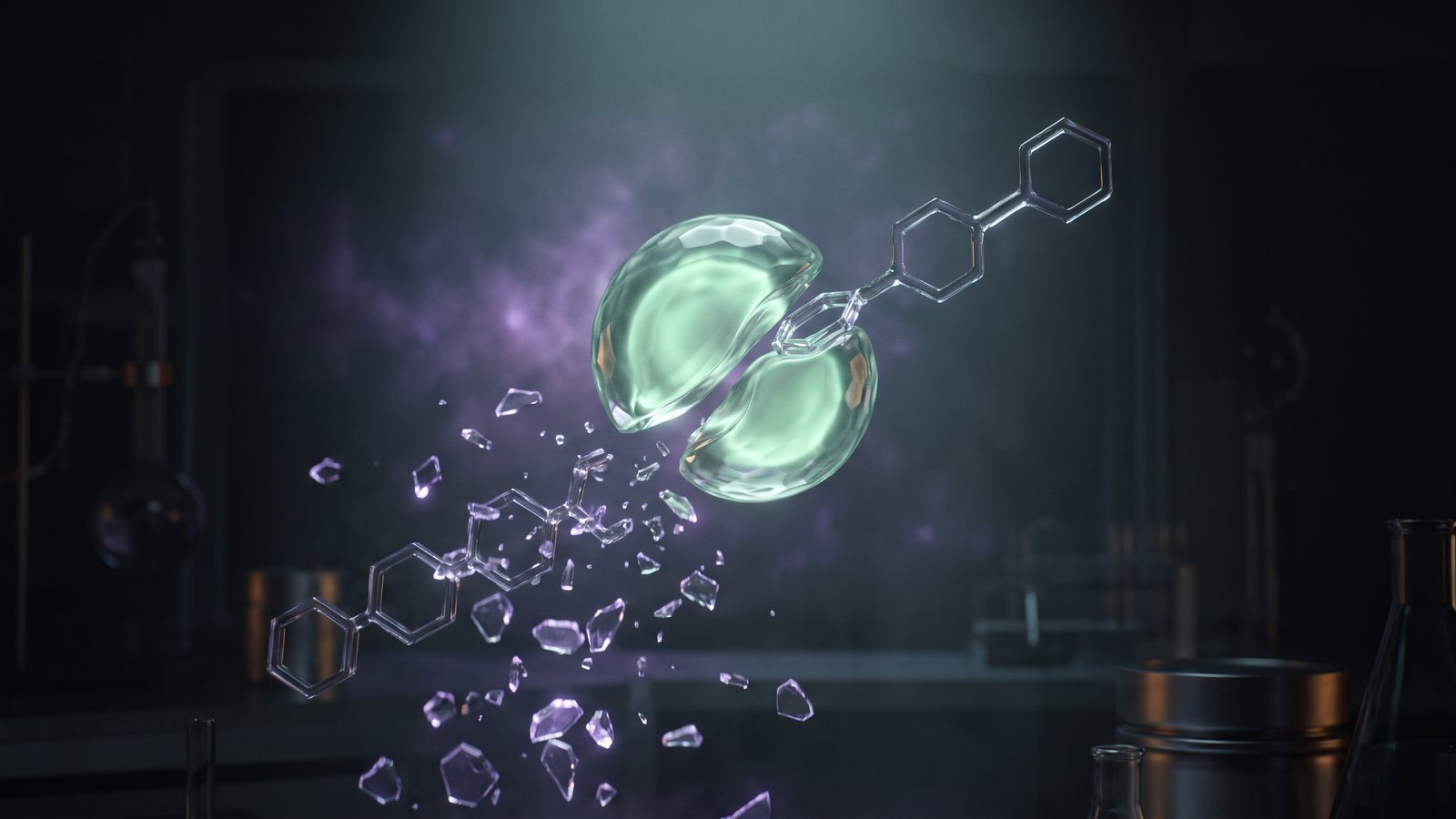
DMT is cleared by an enzyme called monoamine oxidase A (MAO-A), which turns most of it into an inactive product, indole-3-acetic acid. The process is fast: in a 2026 Basel study, half of the DMT was gone from the blood in about six to seven minutes. Swallowed on its own, DMT is broken down before it can reach the brain, so it has no effect. Ayahuasca is different because it also contains compounds that block MAO. That same blocking is why MAO inhibition can interact dangerously with some medicines, other drugs and certain foods.
THE SHORT VERSION · SWIPE
On this page 8 sections
Most psychedelics last hours. DMT given by injection in a lab is largely over within half an hour. The reason is not mysterious: one enzyme, present in the gut, liver and many other tissues, takes DMT apart very quickly. Understanding that enzyme explains three things at once: why DMT is so short, why it does nothing when swallowed alone, and why ayahuasca carries interaction risks that injected DMT in a lab does not.
Education only, not guidance
This article explains published pharmacology. It gives no amounts, no combinations, no plant pairings and no preparation detail, and it does not describe any effect as a benefit. DMT is a controlled substance in Canada. Evidence labels used below: established (shown in peer-reviewed studies and not seriously disputed), preliminary (early, small, animal-only or indirect) and unresolved (an open question).
What is MAO, and how does it clear DMT?
Monoamine oxidase (MAO) is a family of enzymes that break down monoamines, a group of small signalling molecules that includes serotonin, noradrenaline and dopamine. There are two forms, MAO-A and MAO-B, and medicines have been developed to block each: a review of antidepressant MAO inhibitors describes both the older irreversible drugs and newer selective, reversible ones such as an MAO-A inhibitor and an MAO-B inhibitor (Shulman et al., 2013). Evidence: established.
DMT is a monoamine too, built on the same indole skeleton as serotonin. A 2018 review states that the primary route of metabolism for DMT is MAO-A, and that tryptamine and N-methyltryptamine, the molecules on the way to DMT in the body, are also MAO substrates (Barker, 2018). The same review cites further confirmation: pretreating experimental subjects with MAO-inhibiting drugs changed how DMT was handled, and a version of DMT with heavier hydrogen atoms (deuterium) at the sites MAO-A attacks lasted longer, because the enzyme works on it more slowly (Barker, 2018). Evidence: established.
What does DMT turn into? The metabolites
MAO-A converts DMT into indole-3-acetic acid (IAA), which is both the most abundant metabolite of DMT and a common end product of related tryptamines. The second most abundant metabolite is DMT-N-oxide, made by a different route; smaller amounts of N-methyltryptamine also appear. When MAO is inhibited, the balance shifts toward DMT-N-oxide and N-methyltryptamine (Barker, 2018). A modelling study of intravenous DMT in 13 healthy volunteers likewise described elimination leading to the formation of IAA as the major metabolite (Eckernäs et al., 2022).
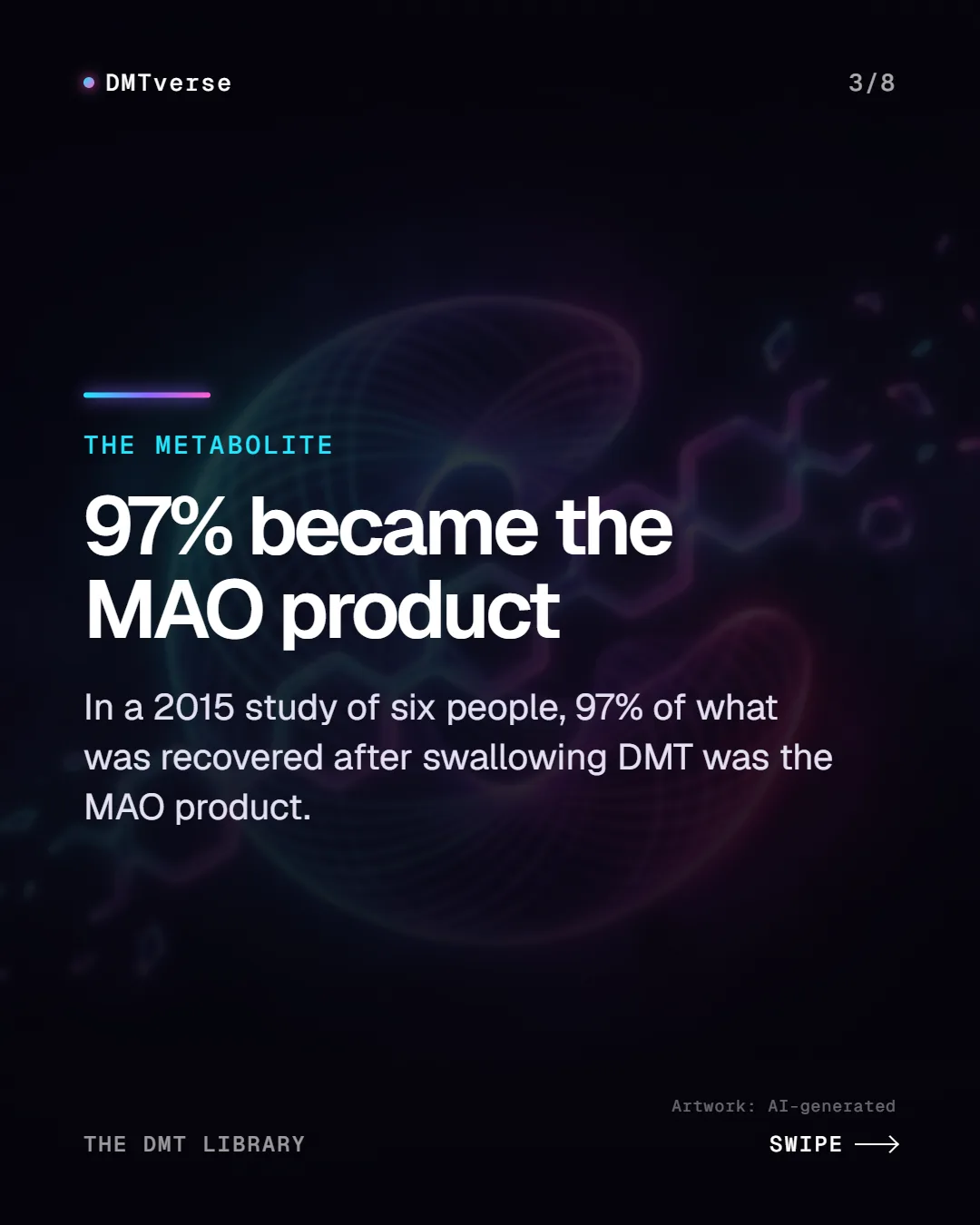
The clearest human data come from a small 2015 study (Riba et al., 2015). Six people who already used DMT gave 24-hour urine samples in two separate sessions. In one, the study design had them swallow DMT; in the other, they smoked it (dose not reproduced here). The researchers then measured what came out:
| Session | Felt effects? | Unchanged DMT | DMT-N-oxide | IAA (MAO product) |
|---|---|---|---|---|
| Swallowed | No psychotropic effects | None recovered | 3% | 97% |
| Smoked | Fully psychoactive | 10% | 28% | 63% |
The authors read this as a shift: when DMT is swallowed, the highly efficient MAO-dependent route dominates; in the smoked session, more DMT escaped that route and a less efficient pathway handled by cytochrome P450 (CYP) enzymes took a larger share. People whose urine showed a lower ratio of IAA to DMT-N-oxide reported stronger effects. They describe this as analogous to what happens in preparations that combine DMT with an MAO inhibitor (Riba et al., 2015). Urine recovery is an indirect measure and the sample was six people. Evidence: established for MAO-A as the main route; preliminary for the exact percentages.
How fast is DMT cleared? The half-life
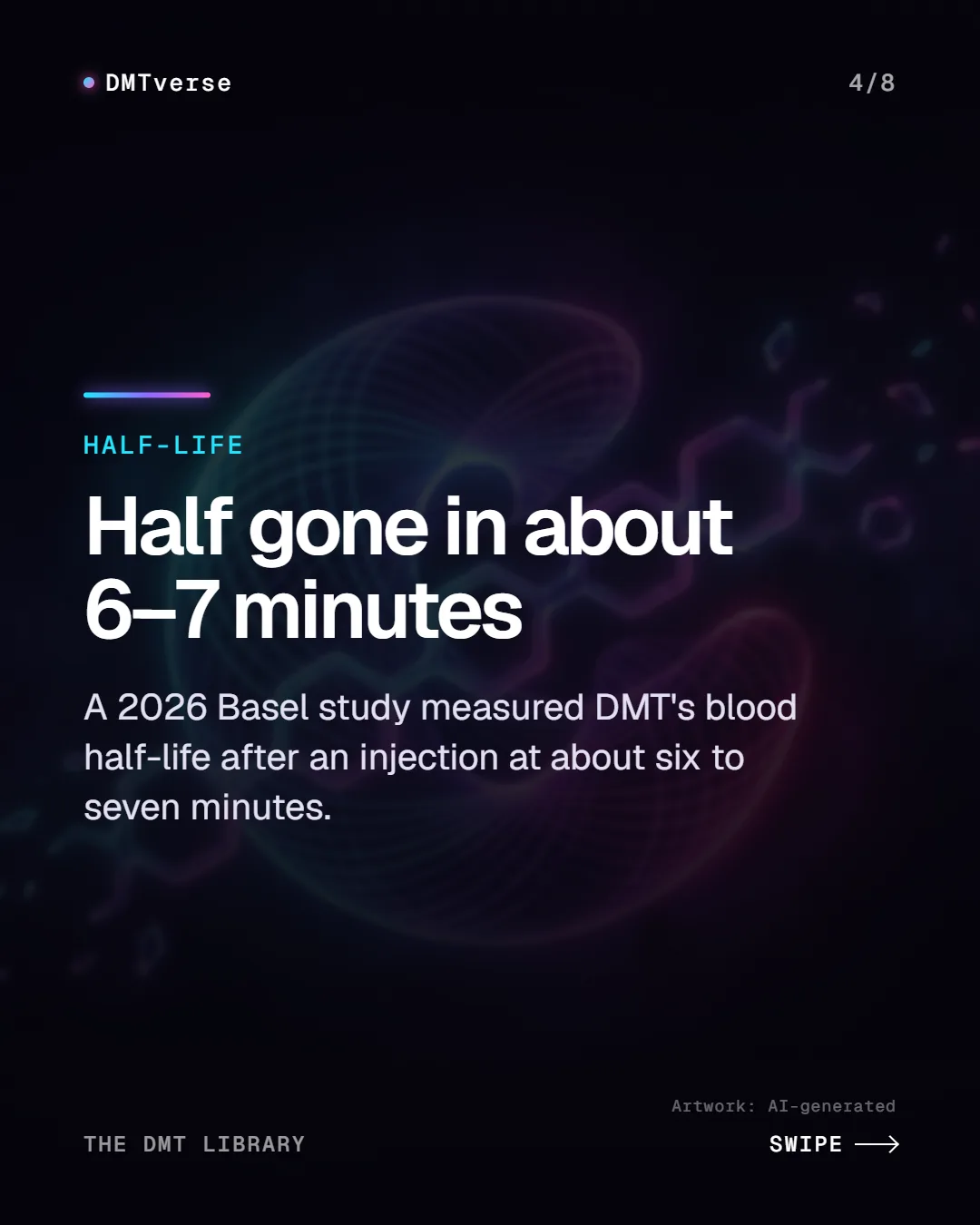
A half-life is the time it takes for the concentration of a drug in the blood to fall by half. For DMT it is measured in minutes. In a 2026 University Hospital Basel study in healthy volunteers, intravenous bolus doses produced effects that peaked within the first 2 minutes and subsided completely within 12 to 30 minutes, “consistent with the short elimination half-life of approximately 6-7 min” (Erne et al., 2026). The study had a double-blind, randomized, placebo-controlled arm of 20 people and a separate open-label arm of 16. Evidence: established for the order of magnitude.
An earlier Basel trial of 27 healthy volunteers, which gave DMT as continuous infusions, found that after an infusion stopped, all effects subsided within 15 minutes. It described two phases of elimination: an early half-life of about 5 to 6 minutes, then a slower late phase of about 14 to 16 minutes after 15 to 20 minutes (Vogt et al., 2023). That matches the 1990s American work, in which the psychological effects of intravenous DMT peaked at 90 to 120 seconds and were almost completely resolved by 30 minutes, in 12 experienced volunteers (Strassman et al., 1994).
Why so fast? A population model of 13 volunteers estimated DMT clearance at 26 litres per minute, which the authors call “a high value indicating elimination of DMT to be independent of blood flow” (Eckernäs et al., 2022). Put simply, the body removes DMT about as fast as blood can deliver it to the places that break it down. One caution: these are blood measurements. Nobody has measured how fast DMT leaves the living human brain. Evidence: established for blood; unresolved for the brain.
- DMT enters the bloodstream (in the studies above, by injection or infusion under medical supervision).
- Effects begin within seconds and peak within about 2 minutes of a bolus.
- MAO-A converts most DMT to indole-3-acetic acid, an inactive product; a smaller share becomes DMT-N-oxide.
- Blood levels halve roughly every six to seven minutes after a bolus.
- In these studies, effects were over within about 12 to 30 minutes.
Why does swallowed DMT do nothing on its own?
Because MAO gets to it first. Anything swallowed passes through the gut wall and the liver before it reaches the rest of the body, a stage called first-pass metabolism. A 1984 analysis concluded that DMT is inactive by mouth because MAO in the gut and other internal organs breaks it down (McKenna, Towers and Abbott, 1984). The 2018 review agrees that because of rapid metabolism outside the brain, DMT is converted to inactive metabolites before enough can reach the brain, and that it is orally active only together with an MAO inhibitor (Barker, 2018).
The 2015 urine study is the direct human evidence: after DMT was swallowed, no one felt any psychotropic effect, no unchanged DMT was recovered, and 97% of what was recovered was the MAO product (Riba et al., 2015). Evidence: established. It is also why traces of DMT made inside the body would not behave like a lab injection: the enzyme that clears it is everywhere too. Whether the body makes DMT at all is covered in does the brain make DMT?.
Why does that make ayahuasca pharmacologically different?
Ayahuasca is a traditional Amazonian brew that contains DMT together with a second group of compounds, the β-carboline alkaloids. The 1984 study found that β-carbolines strongly and reversibly inhibit MAO, that ayahuasca samples were extremely effective MAO inhibitors in a test-tube assay, and proposed that this protects DMT from breakdown and makes it orally active (McKenna, Towers and Abbott, 1984). A later double-blind, placebo-controlled study in 18 experienced volunteers found negligible levels of the main β-carboline in the blood and concluded that it acts mainly in the gut and liver, where MAO inhibition “would suffice to prevent first-pass metabolism of DMT” and let it reach the circulation and the brain (Riba et al., 2003). Evidence: established in outline.
That one change reshapes the whole experience. In the 2003 study, ayahuasca’s effects peaked between 1.5 and 2 hours after it was taken, and DMT blood levels peaked at about the same time (Riba et al., 2003), compared with about 2 minutes for injected DMT. Ayahuasca is therefore not “DMT, slower”: it is a mixture whose other ingredients change how the body handles DMT and many other substances. We deliberately do not describe which plants are used or how. Our ayahuasca vs DMT comparison covers timing, body effects and law in more detail.
| Feature | Intravenous DMT (lab studies) | Ayahuasca (lab studies) |
|---|---|---|
| What blocks MAO-A? | Nothing: MAO-A clears DMT fast | β-carboline alkaloids in the brew inhibit MAO |
| Peak effects | Within about 2 minutes | About 1.5 to 2 hours |
| MAO inhibition involved? | No | Yes, which brings drug and food interaction risks |
| Sources | Erne 2026; Barker 2018 | McKenna 1984; Riba 2003; Callaway and Grob 1998 |
Why does MAO inhibition create serious interaction risks?
MAO does not only clear DMT. It also clears serotonin, noradrenaline, dopamine and tyramine, a compound found in some foods. Blocking it therefore changes how the body handles many other substances. That is why prescription MAO-inhibitor antidepressants come with dietary recommendations and warnings about combining them with serotonin and noradrenaline drugs (Shulman et al., 2013). Evidence: established.
- Serotonin toxicity. Researchers warned in 1998 that combining ayahuasca’s MAO-inhibiting alkaloids with SSRI antidepressants “may induce a serotonin syndrome with potentially grave outcome” (Callaway and Grob, 1998).
- Tyramine and blood pressure. A 2024 review notes that the MAO inhibitors in ayahuasca prevent the breakdown of tyramine, and that dangerously high tyramine can cause a hypertensive crisis (White et al., 2024).
- Other drugs. A 2026 review of 219 publications on MAO inhibitors and psychoactive substances reports suspected serotonin toxicity with MAO inhibitors plus amphetamine, dextromethorphan, MDMA, meperidine, methadone and tramadol, and dangerous blood-pressure rises with stimulants such as amphetamine, methamphetamine and cocaine (Rached et al., 2026).
- DMT itself. The same review lists agitation, delirium or confusion, mania or psychosis and rhabdomyolysis (muscle breakdown) among adverse events reported when MAO inhibitors were combined with DMT, and fatalities reported with combinations involving 5-MeO-DMT, a different molecule (Rached et al., 2026).
Some balance matters here. Much of that evidence is case reports and, in the 2026 review, includes user-submitted forum reports, so it shows what can happen rather than how often (Rached et al., 2026). The 2024 review calls serotonin syndrome with ayahuasca a theoretical concern and found serious adverse effects rarely reported in healthy people in controlled settings (White et al., 2024). On food, one pharmacologist argues that modern food production has greatly reduced tyramine in most foods and that fears about MAO-inhibitor diets have been overstated, while stressing that sensitivity varies between people and care is still required (Gillman, 2018). Evidence: established for the mechanism; preliminary for how common serious harm is.
Medicines and MAO inhibition
Many common medicines act on serotonin or noradrenaline, including several antidepressants, some pain medicines and some cough suppressants. Do not stop, start or change a prescribed medicine on your own. If you take any medicine and have questions about interactions, ask a prescriber or pharmacist. This article is not medical advice.
If someone is in danger
Call 911 for immediate danger or urgent medical help, including if someone is unconscious, not breathing or having a seizure. In Ontario, the Ontario Poison Centre is at 1-800-268-9017; every province has a poison centre, listed by SickKids (AboutKidsHealth). If you or someone you know is thinking about suicide, call or text 9-8-8, 24 hours a day (Government of Canada). See also our safety page.
What is still unknown?
- How fast DMT is cleared from the living human brain, as opposed to the blood; it has not been measured (unresolved).
- How much MAO-A in different tissues, and differences between people, change DMT’s time course (unresolved).
- How often serious interactions with MAO inhibition happen in practice; case reports show they can, but not how often (unresolved).
- The exact share of each metabolite in larger, more varied groups than the six people in the 2015 urine study (preliminary).
The fair summary: DMT is short-acting because MAO-A breaks it down quickly and efficiently, and that same enzyme stands between a swallowed dose and the brain. Ayahuasca works by mouth because its other ingredients block MAO, which is also why it brings interaction risks that DMT on its own does not. For DMT’s time course in detail, read how long does DMT last; for the bigger picture, start with what is DMT.
Common questions
What enzyme breaks down DMT?
Mainly monoamine oxidase A (MAO-A), which turns DMT into indole-3-acetic acid, an inactive product. A smaller share becomes DMT-N-oxide through a different route.
What is the half-life of DMT?
In a 2026 Basel study of intravenous DMT in healthy volunteers, the elimination half-life in blood was about six to seven minutes. An earlier Basel infusion study found an early half-life of about 5 to 6 minutes followed by a slower late phase. How fast DMT leaves the brain has not been measured.
Why is DMT not active when swallowed?
MAO in the gut and liver breaks it down before it can reach the brain. In a 2015 study, people who swallowed DMT felt nothing, no unchanged DMT was recovered in their urine, and 97% of the recovered compounds were the MAO breakdown product.
Why does ayahuasca work by mouth when DMT does not?
Ayahuasca also contains β-carboline alkaloids that reversibly inhibit MAO, mainly in the gut and liver. That lets DMT pass into the circulation, and it also stretches the time course to hours. This is pharmacology, not a recipe; we give no plant or preparation details.
Why are MAO inhibitors risky with other drugs?
MAO also clears serotonin, noradrenaline, dopamine and tyramine. Blocking it can let these build up. Researchers warn of serotonin syndrome with SSRI antidepressants, and case reports describe dangerous reactions with several other drugs. Talk to a prescriber or pharmacist about any medicine.
What is the tyramine or “cheese” reaction?
Tyramine, found in some foods, is normally cleared by MAO. With MAO blocked, high tyramine can raise blood pressure sharply, a hypertensive crisis. A 2018 review argues modern foods contain much less tyramine than in the past, but sensitivity varies, so care is still needed.
Does a fast half-life make DMT safe?
No. A short half-life describes how quickly blood levels fall, not whether something is safe, and it says nothing about interactions or about what an unregulated substance actually contains. In an emergency in Canada, call 911.
Shroomverse sells mushroom products. This article is general information about how the body breaks down DMT and about MAO inhibition. It is not medical, legal or purchasing advice, and it does not recommend any product.
SOURCES
- N, N-Dimethyltryptamine (DMT), an Endogenous Hallucinogen: Past, Present, and Future Research to Determine Its Role and Function (Barker SA, Frontiers in Neuroscience 12:536, 2018), Frontiers (peer-reviewed, open access); full text via Europe PMC, PMC6088236. Accessed . Full text read (Europe PMC). Supports MAO-A as DMT’s primary metabolic route; IAA as the most abundant metabolite and DMT-N-oxide second; NMT and tryptamine as MAO substrates; the shift toward DMT-N-oxide and NMT under MAO inhibition; confirmation from MAOI pretreatment and the longer-lasting deuterated DMT; DMT not orally active because of peripheral metabolism, and active orally only with an MAO inhibitor.
- Metabolism and urinary disposition of N,N-dimethyltryptamine after oral and smoked administration: a comparative study (Riba J, McIlhenny EH, Bouso JC, Barker SA, Drug Testing and Analysis 7(5):401–406, 2015), Wiley (peer-reviewed). Accessed . Abstract read (Europe PMC). Six DMT users, two sessions; after oral intake no psychotropic effects and no DMT in urine, IAA 97% and DMT-NO 3%; smoked session fully psychoactive with DMT 10%, DMT-NO 28%, IAA 63%; inverse correlation of IAA/DMT-NO ratio with effects; shift from MAO- to CYP-dependent metabolism. Dose not reproduced.
- Dose-dependent pharmacokinetics and acute effects of intravenous bolus N,N-dimethyltryptamine: double-blind, randomized versus open-label dose-escalation administration study in healthy participants (Erne L, et al., Translational Psychiatry 16:213, 2026), Springer Nature (peer-reviewed, open access); PMC13039932. Accessed . Abstract read (Europe PMC). 20 participants randomized double-blind plus 16 open-label; peak within 2 min, effects subsided within 12–30 min, elimination half-life about 6–7 min. Doses not reproduced.
- Acute effects of intravenous DMT in a randomized placebo-controlled study in healthy participants (Vogt SB, et al., Translational Psychiatry 13:172, 2023), Springer Nature (peer-reviewed, open access); PMC10206108. Accessed . Abstract read (Europe PMC). 27 healthy participants, double-blind crossover; effects subsided within 15 min of stopping infusion; early half-life 5.0–5.8 min and late half-life 14–16 min after 15–20 min. Regimens not reproduced.
- Dose-response study of N,N-dimethyltryptamine in humans. II. Subjective effects and preliminary results of a new rating scale (Strassman RJ, Qualls CR, Uhlenhuth EH, Kellner R, Archives of General Psychiatry 51(2):98–108, 1994), American Medical Association (peer-reviewed). Accessed . Abstract read (Europe PMC). 12 experienced volunteers; effects began almost immediately, peaked at 90–120 seconds and were almost completely resolved by 30 minutes. Doses not reproduced.
- Population pharmacokinetic/pharmacodynamic modeling of the psychedelic experience induced by N,N-dimethyltryptamine – Implications for dose considerations (Eckernäs E, et al., Clinical and Translational Science 15(12):2928–2937, 2022), Wiley (peer-reviewed, open access); PMC9747126. Accessed . Abstract read (Europe PMC). 13 healthy subjects; two-compartment model with elimination forming IAA as the major metabolite; clearance 26 L/min, described as independent of blood flow. Dose simulations not reproduced.
- Monoamine oxidase inhibitors in South American hallucinogenic plants: tryptamine and beta-carboline constituents of ayahuasca (McKenna DJ, Towers GH, Abbott F, Journal of Ethnopharmacology 10(2):195–223, 1984), Elsevier (peer-reviewed). Accessed . Abstract read (Europe PMC). DMT inactive orally due to visceral MAO; beta-carbolines highly active reversible MAO inhibitors; ayahuasca an extremely effective MAO inhibitor in vitro. Paraphrased, not quoted, under the house rule on McKenna quotations. Plant names and quantities in the paper deliberately not reproduced.
- Human pharmacology of ayahuasca: subjective and cardiovascular effects, monoamine metabolite excretion, and pharmacokinetics (Riba J, et al., Journal of Pharmacology and Experimental Therapeutics 306(1):73–83, 2003), American Society for Pharmacology and Experimental Therapeutics (peer-reviewed). Accessed . Abstract read (Europe PMC). Double-blind, placebo-controlled; 18 experienced volunteers; effects peaked at 1.5–2 h with DMT Tmax at 1.5 h; negligible harmine plasma levels suggest a gut and liver site of MAO inhibition sufficient to prevent first-pass metabolism of DMT. Doses not reproduced.
- Ayahuasca preparations and serotonin reuptake inhibitors: a potential combination for severe adverse interactions (Callaway JC, Grob CS, Journal of Psychoactive Drugs 30(4):367–369, 1998), Taylor & Francis (peer-reviewed). Accessed . Abstract read (Europe PMC). Warning that MAO-inhibiting harmala alkaloids combined with SSRIs may induce serotonin syndrome with a potentially grave outcome.
- Ayahuasca and Dimethyltryptamine Adverse Events and Toxicity Analysis: A Systematic Thematic Review (White E, Kennedy T, Ruffell S, Perkins D, Sarris J, International Journal of Toxicology 43(3):327–339, 2024), SAGE (peer-reviewed, open access); full text via Europe PMC, PMC11088222. Accessed . Abstract and full-text passages read. MAOIs in ayahuasca prevent the breakdown of tyramine and monoamines; dangerously high tyramine can cause hypertensive crisis; serotonin syndrome described as a theoretical concern; serious adverse effects rarely reported in healthy populations in controlled settings.
- Safety and Efficacy of Monoamine Oxidase Inhibitors in Patients Who Use Psychoactive Substances: Potential Drug Interactions and Substance Use Disorder Treatment Data (Rached G, et al., CNS Drugs 40(3):359–417, 2026), Springer (peer-reviewed). Accessed . Abstract read (Europe PMC). Narrative review of 219 publications plus 28 user forum reports; suspected serotonin toxicity with MAOIs plus amphetamine, dextromethorphan, MDMA, meperidine, methadone, tramadol; hypertensive events with tyramine-rich alcohol and stimulants; agitation, delirium, mania/psychosis and rhabdomyolysis with DMT; fatalities including combinations with 5-MeO-DMT.
- A reassessment of the safety profile of monoamine oxidase inhibitors: elucidating tired old tyramine myths (Gillman PK, Journal of Neural Transmission 125(11):1707–1717, 2018), Springer (peer-reviewed). Accessed . Abstract read (Europe PMC). Modern foods mostly contain much less tyramine; pressor risk previously overstated; variability in sensitivity means care is still required.
- Current place of monoamine oxidase inhibitors in the treatment of depression (Shulman KI, Herrmann N, Walker SE, CNS Drugs 27(10):789–797, 2013), Springer (peer-reviewed). Accessed . Abstract read (Europe PMC). Irreversible and newer selective reversible MAOIs (an MAO-A and an MAO-B inhibitor); dietary restrictions and drug interactions with serotonin and noradrenaline agents.
- Mental health support: get help, Government of Canada, Public Health Agency of Canada. Accessed . Page read. Source for calling 9-1-1 in immediate danger or for urgent medical support, and the 9-8-8 Suicide Crisis Helpline (call or text, 24/7).
- Poison information centres in Canada, AboutKidsHealth, The Hospital for Sick Children (SickKids). Accessed . Page read. Source for the provincial poison centre list, including Ontario toll-free 1-800-268-9017.
CHANGES
- : Linked glossary definitions.
- : Published. All sources opened and checked on this date (Europe PMC abstracts and open full text; Government of Canada and SickKids pages).
- : Editorial review: replaced two direct quotations from the 1984 McKenna, Towers and Abbott paper with paraphrase; removed a line that framed plants as DMT sources; pointed the body-chemistry link to the endogenous DMT article; H2s tightened.



