THE SHROOMVERSE JOURNAL ✳ 13 MIN READ
How long does ayahuasca last? Onset, peak and after-effects in published studies
Topic: DMT
Published
Short answer, checked 21 October 2026
How long does ayahuasca last? In controlled lab studies, about 4 hours: effects began 30 to 60 minutes after it was taken, peaked at about 1 to 2 hours and had resolved by about 4 hours. That is far longer than smoked or injected DMT, which lasts minutes, because ayahuasca’s other compounds block the enzyme MAO-A. Some body changes lasted longer, and how long it can be detected in tests is poorly studied. These are averages from small groups of screened volunteers, not a prediction for any one person.
THE SHORT VERSION · SWIPE
On this page 9 sections
Ayahuasca is a traditional Amazonian brew that contains DMT together with other active compounds. This article answers one question from published research: how long do its effects last, and what happens in the body afterwards? Each factual paragraph ends with an evidence label, so you can see how solid each figure is.
Education only, not guidance
This article describes published research. It gives no amounts, no instructions and no advice on use, and it does not describe any effect as a benefit. DMT is a controlled substance in Canada; see is DMT legal in Canada. In an emergency, call 911. Evidence labels: established (shown in peer-reviewed studies and not seriously disputed), preliminary (early, small, animal-only or indirect) and unresolved (an open question).
How long does ayahuasca last?
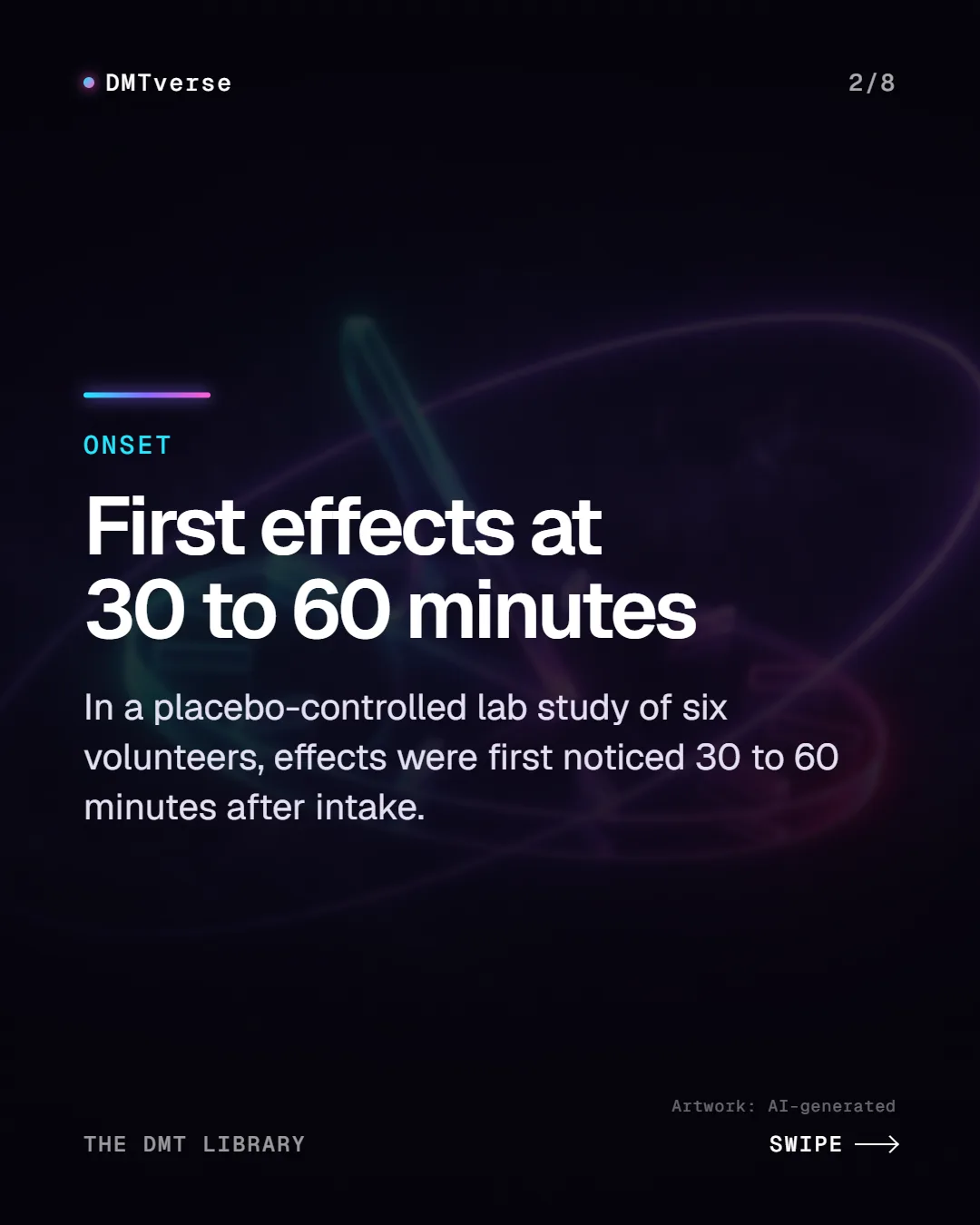
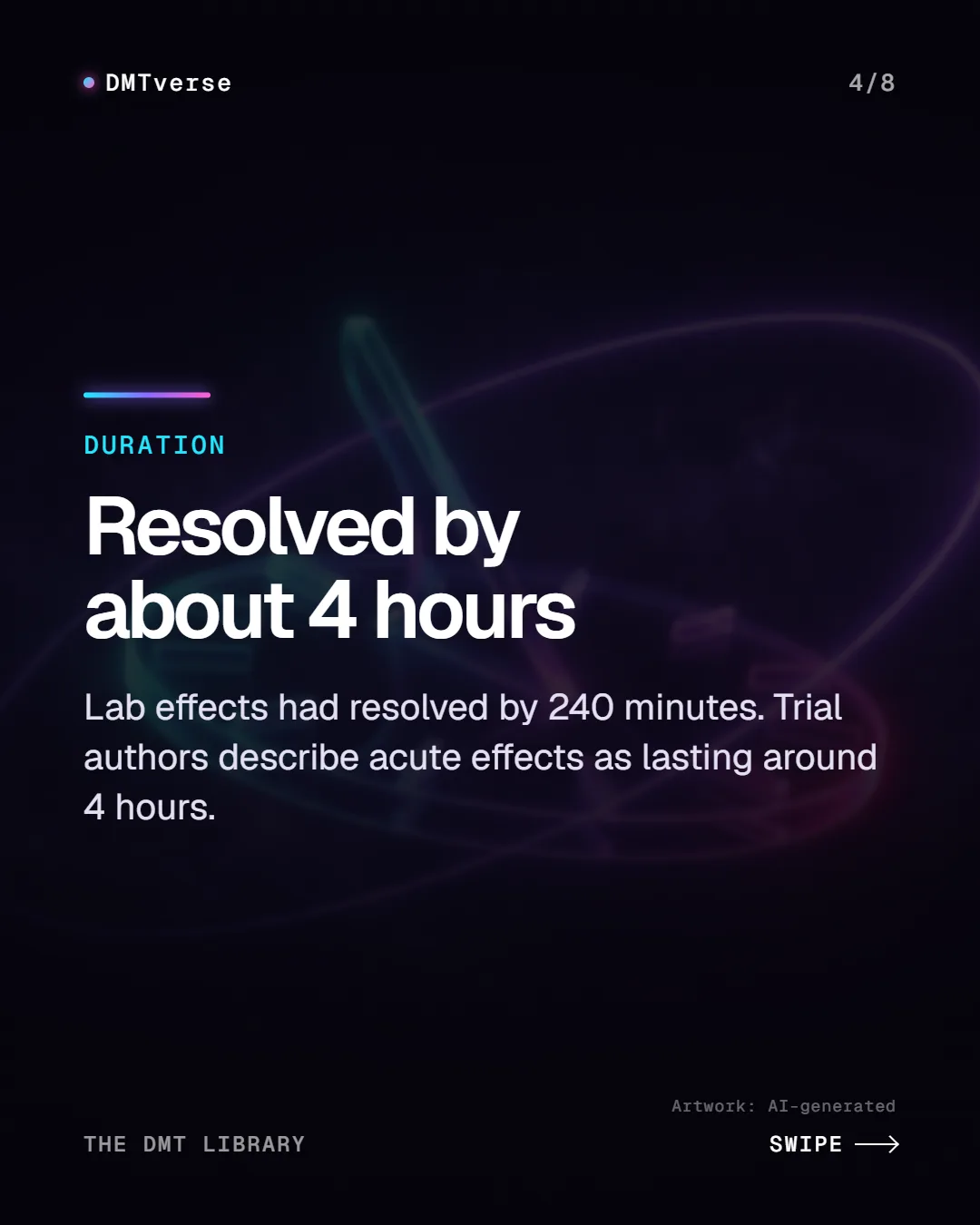
About four hours for the main psychological effects, in the lab studies that measured it. In a placebo-controlled study of six healthy men with previous experience of the brew, effects were first noticed after 30 to 60 minutes, peaked between 60 and 120 minutes and had resolved by 240 minutes, that is, 4 hours (Riba et al., 2001). The volunteers took freeze-dried ayahuasca in capsules at three increasing amounts (dose not reproduced here). Evidence: established for the broad shape; the sample was very small.
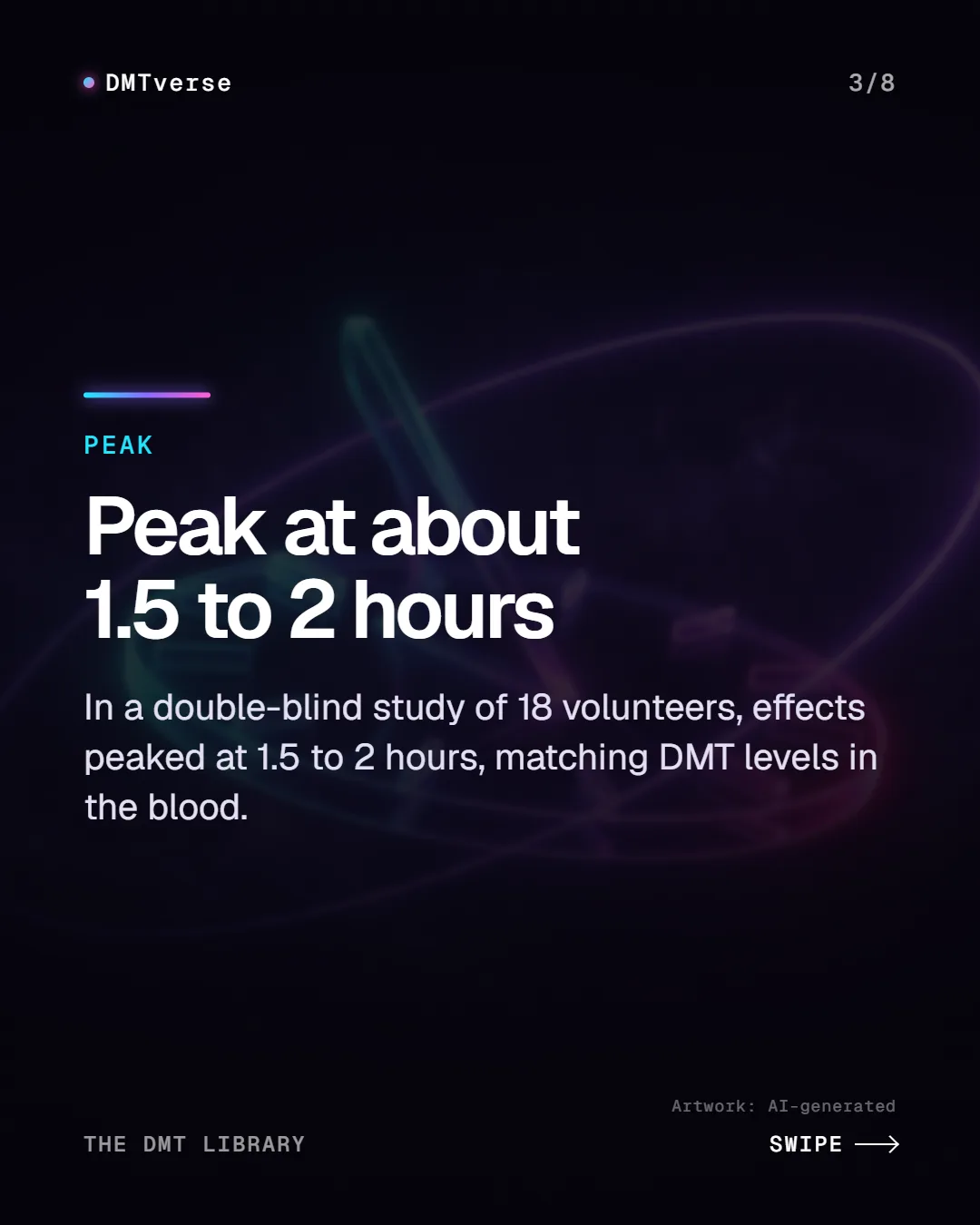
A larger double-blind study of 18 volunteers found the same pattern: subjective effects peaked between 1.5 and 2 hours after intake (Riba et al., 2003). The authors of the first randomized ayahuasca trial for depression describe the acute effects as lasting “around 4 h”, while their supervised sessions ran for about 8 hours in total (Palhano-Fontes et al., 2019). Evidence: established for healthy, screened volunteers in a lab.
Lab capsules are standardized. Traditional and ceremonial brews vary in strength and in the balance of their ingredients, so these figures describe the studies, not every brew or every person. Evidence: unresolved for non-laboratory settings.
What is the ayahuasca timeline, from onset to after-effects?
- 30–60 minutesFirst psychological effects noticed (onset).Source Riba et al., 2001
- About 75 minutesDiastolic blood pressure significantly raised at the higher of two amounts tested.Source Riba et al., 2003
- 1–2 hoursPeak of subjective effects; DMT in the blood peaks at about 1.5 hours, at the same time.Source Riba et al., 2001; Riba et al., 2003
- About 107 minutesAverage DMT blood peak in 15 volunteers given the brew in a ceremonial setting.Source Callaway et al., 1999
- Around 2 hoursLargest changes in some immune-cell counts.Source dos Santos et al., 2011
- By about 4 hoursPsychological effects resolved in the 2001 study; trial authors describe acute effects as lasting around 4 hours.Source Riba et al., 2001; Palhano-Fontes et al., 2019
- That nightAfter daytime intake, less REM (dreaming) sleep but no worse self-rated sleep quality.Source Barbanoj et al., 2008
- 24 hoursImmune-cell changes back to baseline; urine collections in metabolism studies end.Source dos Santos et al., 2011; Riba et al., 2012
Two of these timings come from blood measurements. In the 2003 study, the time at which DMT reached its highest level in the blood matched the peak of subjective effects (Riba et al., 2003). In a study of 15 volunteers who drank the brew in a ceremonial context, peak effects again coincided with high levels of the brew’s alkaloids, especially DMT (Callaway et al., 1999). Evidence: established.
Ayahuasca onset: how long before it starts?
In the 2001 study, the first effects were noted 30 to 60 minutes after intake (Riba et al., 2001). The slow start reflects the route: the brew is swallowed, and its DMT has to get past the gut and liver before it reaches the blood and brain (Riba et al., 2003). Evidence: established.
When does ayahuasca peak?
Between about 1 and 2 hours. The 2001 study recorded the peak at 60 to 120 minutes and the 2003 study at 1.5 to 2 hours (Riba et al., 2001; Riba et al., 2003). Volunteers in the 2003 study reported perceptual changes and higher ratings of positive mood and activation; the 2001 volunteers most often reported altered body sensations and nausea, and one of six withdrew after an intensely unpleasant reaction with anxiety and brief disorientation. Evidence: established for timing; preliminary for the mix of effects, given the small samples.
Why does ayahuasca last hours when DMT lasts minutes?
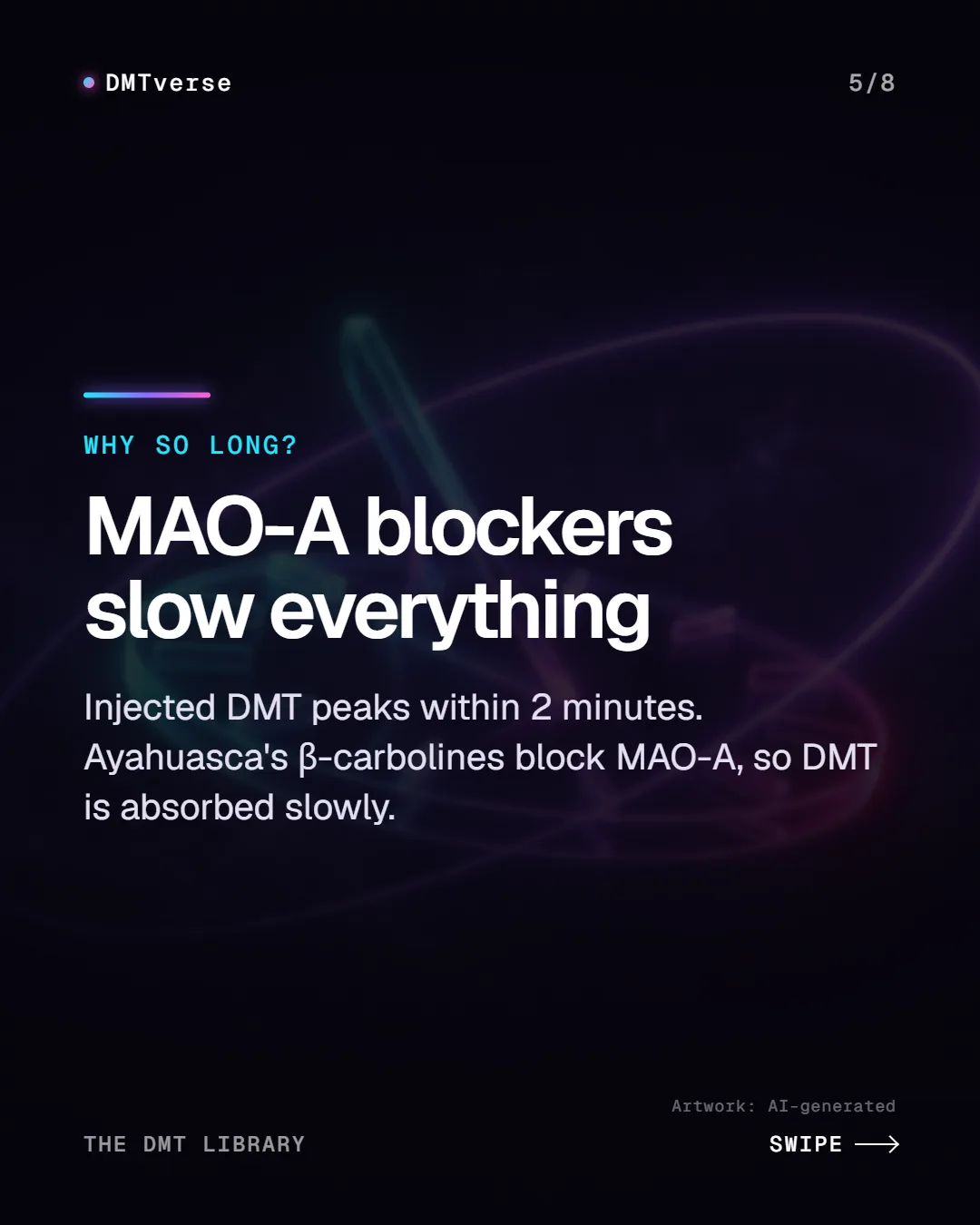
Injected DMT is very short-acting. In a double-blind study of 11 experienced volunteers, peak DMT blood levels and effects came within 2 minutes of injection and were negligible by 30 minutes (Strassman and Qualls, 1994). Swallowed on its own, DMT does nothing noticeable: in a study of six DMT users, oral DMT produced no psychoactive effects and no DMT was recovered in urine, while smoked DMT was fully psychoactive (Riba et al., 2015). Evidence: established.
The difference is an enzyme, monoamine oxidase A (MAO-A), which breaks DMT down very efficiently. Ayahuasca also contains β-carboline alkaloids (harmine, harmaline and tetrahydroharmine) that inhibit MAO. The 2003 study found negligible harmine in the blood and concluded that it acts mainly in the gut and liver, where blocking MAO is enough to let DMT reach the circulation and the brain (Riba et al., 2003). Harmine and harmaline reversibly inhibit MAO-A, while tetrahydroharmine weakly inhibits serotonin uptake (Callaway et al., 1999). Evidence: established in outline.
Because DMT is absorbed slowly from the gut rather than arriving all at once in the blood, the effects build over an hour or more and fade over several. Our article on why DMT breaks down so fast explains MAO in detail, and how long does DMT last covers the minute-by-minute DMT studies. The same MAO inhibition is why ayahuasca carries serious interaction risks with some medicines; what is ayahuasca sets those out. Evidence: established for the mechanism; the exact absorption profile is preliminary.
| Feature | Injected DMT | Ayahuasca |
|---|---|---|
| Onset | Within about 2 minutes | 30–60 minutes |
| Peak | Within about 2 minutes | About 1–2 hours |
| Effects over | Negligible by 30 minutes | Resolved by about 4 hours |
| MAO-A blocked? | No | Yes, by β-carbolines in the brew |
| Sources | Strassman and Qualls, 1994 | Riba 2001; Riba 2003; Callaway 1999 |
What lingers after the effects wear off?
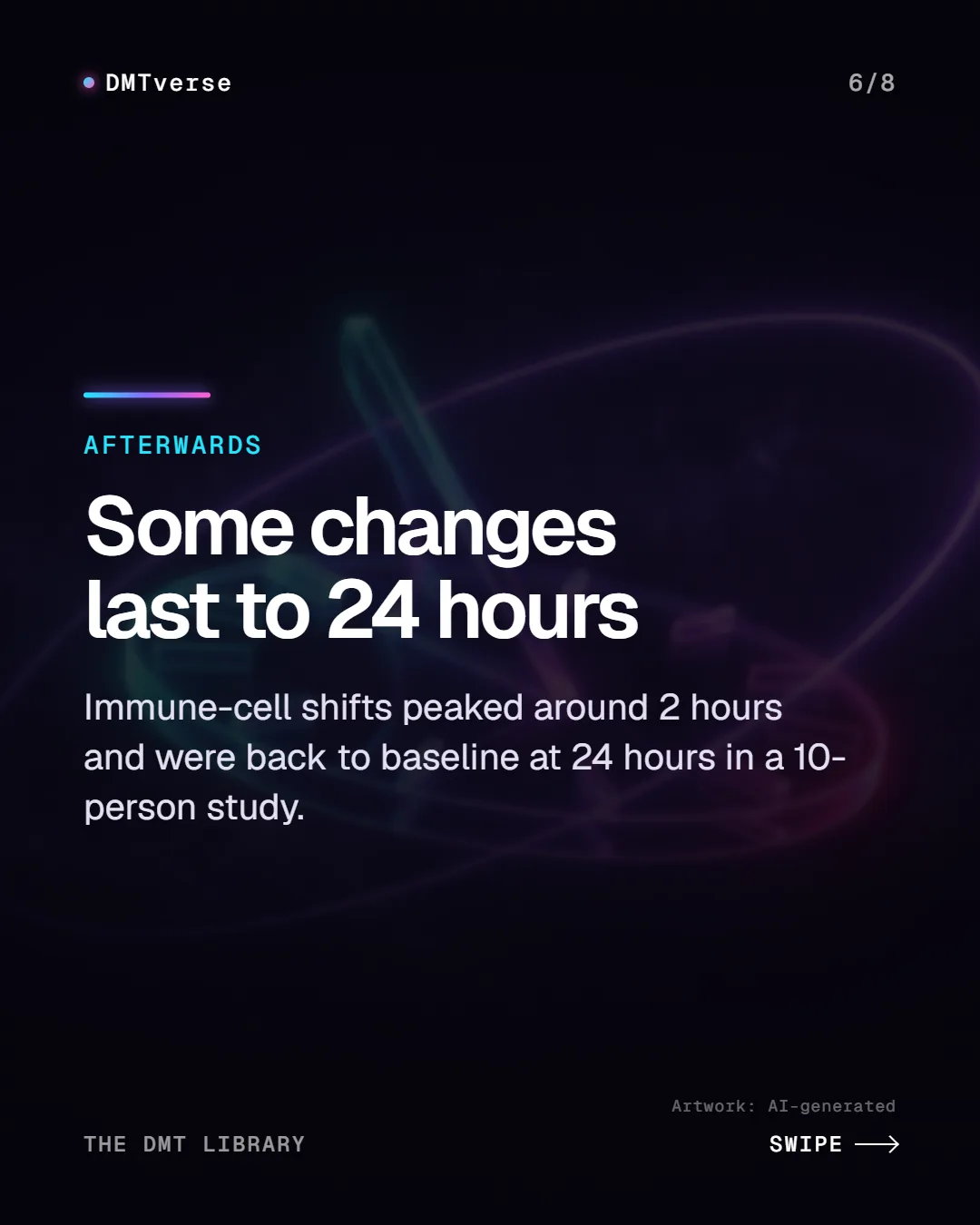
Some body changes outlast the psychological effects. In a double-blind study of 10 healthy volunteers comparing ayahuasca with placebo and with amphetamine, ayahuasca raised the hormones prolactin and cortisol and shifted some immune-cell counts. Those immune changes were largest around 2 hours and back to baseline at 24 hours (dos Santos et al., 2011). What these short-lived shifts mean for health is not known. Evidence: preliminary.
Sleep is affected too. In a study of 22 healthy men given ayahuasca during the day, their sleep that night was not rated as worse and was not measurably disrupted, unlike after amphetamine. But overnight recordings showed less REM sleep, the stage most linked to dreaming, and more deep slow-wave activity early in the night (Barbanoj et al., 2008). Evidence: preliminary, from one study of men.
Vomiting and nausea belong to the acute phase rather than the after-effects. In the randomized depression trial, 57% of people given ayahuasca vomited against 0% on placebo, and 71% reported nausea against 26% (Palhano-Fontes et al., 2019). How people feel in the days and weeks after is a separate question; see what research shows about ayahuasca for the trial and survey findings, with their limits. Evidence: established that vomiting is common in studies.
Does a second session in the same day last longer?
One study tested this as part of its design. Nine experienced volunteers received either placebo then ayahuasca, or ayahuasca twice, four hours apart, with measurements for 12 hours. Blood DMT and subjective effects were higher after two consecutive doses; once adjusted for blood DMT levels, there was no clear tolerance or sensitization, though growth hormone responses dropped after the second dose (dos Santos et al., 2012). Evidence: preliminary, from nine people.
How long does ayahuasca stay in your system?
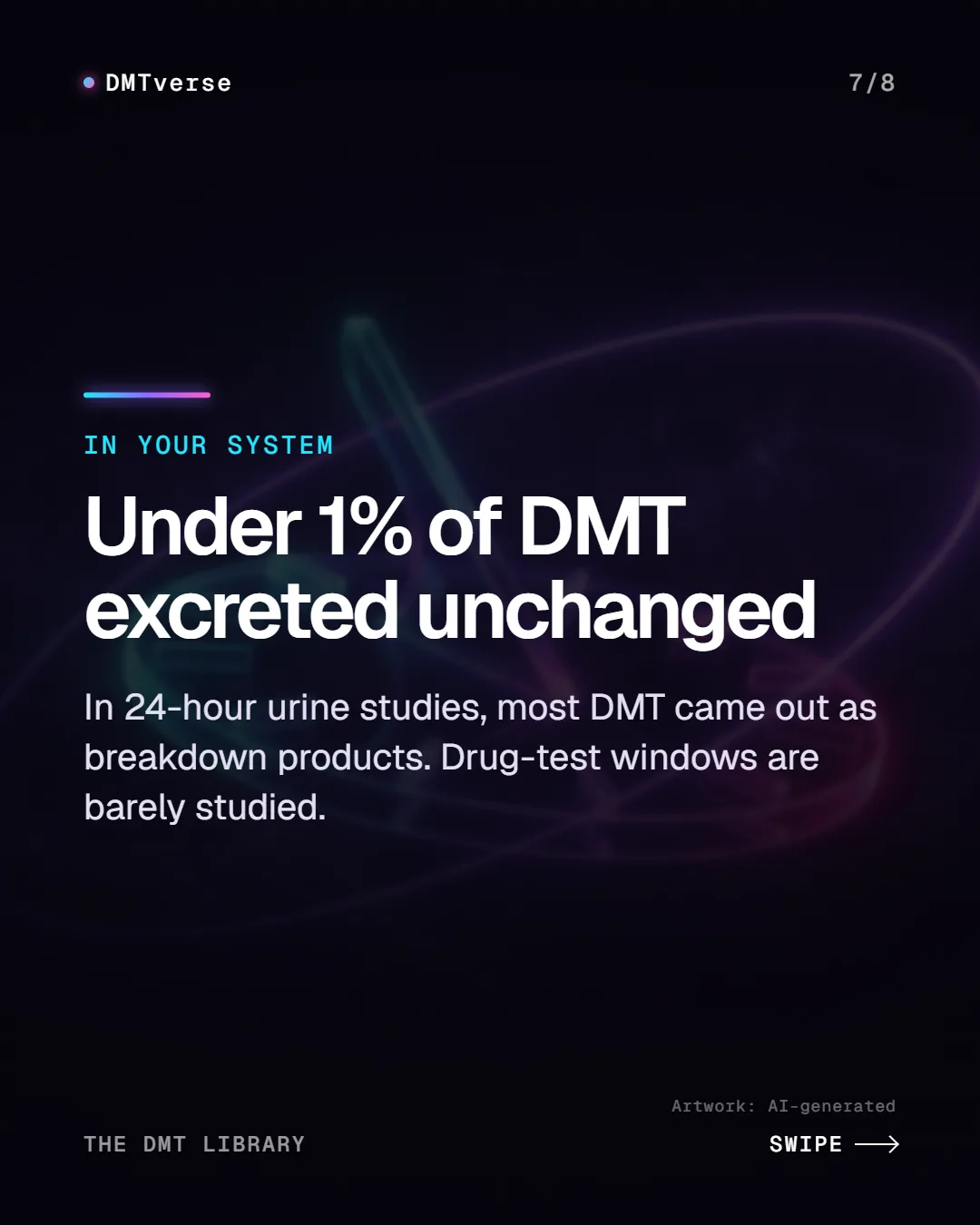
The metabolism studies give a partial answer. In 24-hour urine samples from 10 healthy men, less than 1% of the DMT taken in ayahuasca came out unchanged. About half was recovered as indole-3-acetic acid, the product of MAO breakdown, and about 10% as DMT-N-oxide; in total, 68% of the DMT was accounted for (Riba et al., 2012). In other words, almost none of the DMT left the body unchanged; how long traces remain beyond 24 hours was not measured. Evidence: established for this design.
An earlier method study analysed urine from three people given ayahuasca. It found very little unchanged DMT despite the MAO inhibition, DMT-N-oxide as the main DMT metabolite, and tetrahydroharmine as the main β-carboline excreted (McIlhenny et al., 2011). The same team published a method that measures 14 ayahuasca compounds and their breakdown products in blood, designed for clinical research (McIlhenny et al., 2012). Evidence: established as laboratory methods.
Hair is the other matrix studied. A Chinese forensic lab validated a method for DMT in hair and applied it to 28 cases involving ayahuasca use (Liu et al., 2021). A 2026 Brazilian method measured DMT and three β-carbolines in hair from six people, and generally found the β-carbolines at higher levels than DMT (Santos et al., 2026). Neither abstract states how long after use the compounds remain detectable. Evidence: preliminary.
What we could not find: any published study of how long ayahuasca use shows up on standard workplace, roadside or clinical drug screens, or a measured detection window in urine, blood or hair. Specialist laboratory tests can detect these compounds, but the evidence on timing is thin. Evidence: unresolved.
What can change how long ayahuasca lasts?
- The brew itself. Lab studies used standardized freeze-dried capsules; brews outside the lab vary, and studies show effects track DMT blood levels (Riba et al., 2003; Callaway et al., 1999).
- Amount. In the 2001 study, effects increased with the amount given (Riba et al., 2001); we do not reproduce any amount.
- A second administration. In one nine-person study, blood DMT and effects were higher after a second dose given four hours later (dos Santos et al., 2012).
- The person. Every figure here comes from small groups of healthy, screened, mostly male volunteers with previous psychedelic experience, so it may not reflect anyone else.
That last point matters most. People with heart conditions, psychiatric histories or relevant medicines are usually screened out of these studies, so their time course and risks are largely unmeasured (Riba et al., 2003). Evidence: unresolved for anyone outside study populations.
What if something goes wrong, and where can you get help in Canada?
Long duration means a long period of altered perception, nausea and vomiting, and raised blood pressure, as the studies above recorded (Riba et al., 2003; Palhano-Fontes et al., 2019). Because the brew blocks MAO, combining it with some medicines, including common antidepressants, can be dangerous; our ayahuasca vs DMT article covers the interaction research. Evidence: established for the measured effects.
If someone is in danger
Call 911 for immediate danger or urgent medical help, including if someone is unconscious, not breathing or having a seizure. In Ontario, the Ontario Poison Centre is at 1-800-268-9017; every province has a poison centre, listed by SickKids (AboutKidsHealth). If you or someone you know is thinking about suicide, call or text 9-8-8, 24 hours a day (Government of Canada). See also our safety page and how to help someone having a bad trip.
What we still don’t know
- How long effects last with non-standardized ceremonial brews, outside the lab.
- How long ayahuasca compounds remain detectable on routine drug tests, in urine, blood or hair.
- Whether the timeline differs for women, older adults or people taking medicines, who are under-represented in studies.
- What the short-lived hormone, immune and sleep changes mean for health, if anything.
For the wider picture, start with our pillar guide, what is DMT.
Common questions
How long does ayahuasca last?
In controlled lab studies, effects began after 30 to 60 minutes, peaked at about 1 to 2 hours and had resolved by about 4 hours. Trial authors describe the acute effects as lasting around 4 hours. These are averages from small groups of screened volunteers, not a prediction for any one person.
How long does it take for ayahuasca to kick in?
In a placebo-controlled lab study, the first effects were noticed 30 to 60 minutes after intake. The delay is because the brew is swallowed and its DMT has to get past the gut and liver before reaching the blood and brain.
Why does ayahuasca last longer than DMT?
Ayahuasca contains β-carboline alkaloids that block the enzyme MAO-A, which would otherwise destroy DMT in the gut and liver. DMT is absorbed slowly and peaks in the blood at about 1.5 hours. Injected DMT, by contrast, peaks within 2 minutes and is negligible by 30 minutes.
How long does ayahuasca stay in your system?
In 24-hour urine studies, less than 1% of the DMT came out unchanged; most was recovered as breakdown products such as indole-3-acetic acid and DMT-N-oxide. Lab methods can detect ayahuasca compounds in urine, blood and hair, but we found no published study of detection windows on standard drug tests.
Does ayahuasca show up on a drug test?
Specialist laboratory methods can detect DMT, the β-carbolines and their metabolites in urine, blood and hair. We found no published study of whether standard workplace or roadside screens detect ayahuasca, or for how long, so the evidence is thin.
Are there after-effects the next day?
In one study, some hormone and immune-cell changes peaked around 2 hours and returned to baseline at 24 hours. In another, daytime ayahuasca reduced REM sleep that night without worse self-rated sleep. What these short-lived changes mean for health is not known.
When does ayahuasca peak?
Between about 1 and 2 hours after intake in lab studies. In a double-blind study of 18 volunteers, subjective effects peaked at 1.5 to 2 hours, matching the peak of DMT in the blood at about 1.5 hours.
Shroomverse sells mushroom products. This article is general information about the time course of ayahuasca in published research. It is not medical, legal or purchasing advice, and it does not recommend any product.
SOURCES
- Subjective effects and tolerability of the South American psychoactive beverage Ayahuasca in healthy volunteers (Riba J, et al., Psychopharmacology 154(1):85–95, 2001), Springer (peer-reviewed). Accessed . Abstract read via Europe PMC. Single-blind, placebo-controlled crossover; six healthy male volunteers with prior experience; three increasing amounts of freeze-dried encapsulated ayahuasca (doses not reproduced); effects first noted after 30–60 min, peaked at 60–120 min, resolved by 240 min; dose-dependent effects; altered body sensations and nausea most frequent; one volunteer withdrew after an intensely dysphoric reaction.
- Human pharmacology of ayahuasca: subjective and cardiovascular effects, monoamine metabolite excretion, and pharmacokinetics (Riba J, et al., Journal of Pharmacology and Experimental Therapeutics 306(1):73–83, 2003), American Society for Pharmacology and Experimental Therapeutics (peer-reviewed). Accessed . Abstract read via Europe PMC. Double-blind, placebo-controlled; 18 volunteers with prior psychedelic experience; effects peaked at 1.5–2 h; DMT Tmax 1.5 h coinciding with peak effects; diastolic blood pressure up 9 mm Hg at 75 min at the higher amount; negligible harmine plasma levels suggesting gut and liver MAO inhibition that prevents first-pass metabolism of DMT. Doses not reproduced.
- Pharmacokinetics of Hoasca alkaloids in healthy humans (Callaway JC, et al., Journal of Ethnopharmacology 65(3):243–256, 1999), Elsevier (peer-reviewed). Accessed . Abstract read via Europe PMC. 15 volunteers, ceremonial context; harmine and harmaline reversibly inhibit MAO-A, tetrahydroharmine weakly inhibits serotonin uptake; peak psychoactivity coincided with high alkaloid levels; DMT average Tmax 107.5 min.
- Autonomic, neuroendocrine, and immunological effects of ayahuasca: a comparative study with d-amphetamine (dos Santos RG, et al., Journal of Clinical Psychopharmacology 31(6):717–726, 2011), Wolters Kluwer (peer-reviewed). Accessed . Abstract read via Europe PMC. Double-blind randomized crossover, 10 healthy volunteers, ayahuasca vs placebo vs amphetamine; prolactin and cortisol increased; lymphocyte subpopulation changes maximal around 2 h and back to baseline at 24 h. Doses not reproduced.
- Pharmacology of ayahuasca administered in two repeated doses (dos Santos RG, et al., Psychopharmacology 219(4):1039–1053, 2012), Springer (peer-reviewed). Accessed . Abstract read via Europe PMC. Double-blind, crossover, placebo-controlled; nine experienced volunteers; placebo then ayahuasca, or two ayahuasca doses 4 h apart; measures to 12 h; higher DMT and effects after two doses; no clear tolerance or sensitization when standardized by plasma DMT; growth hormone tolerance. Doses not reproduced.
- Rapid antidepressant effects of the psychedelic ayahuasca in treatment-resistant depression: a randomized placebo-controlled trial (Palhano-Fontes F, et al., Psychological Medicine 49(4):655–663, 2019), Cambridge University Press (peer-reviewed, open access); full text via Europe PMC, PMC6378413. Accessed . Full text read. Authors describe acute effects of ayahuasca as lasting around 4 h (citing earlier work); dosing sessions lasted about 8 h; vomiting 57% vs 0% and nausea 71% vs 26%; 29 patients.
- Daytime Ayahuasca administration modulates REM and slow-wave sleep in healthy volunteers (Barbanoj MJ, et al., Psychopharmacology 196(2):315–326, 2008), Springer (peer-reviewed). Accessed . Abstract read via Europe PMC. 22 healthy male volunteers; placebo, ayahuasca and amphetamine; ayahuasca did not worsen subjective sleep quality or disrupt sleep initiation or maintenance; reduced REM sleep; increased slow-wave power in the first night cycle. Doses not reproduced.
- Metabolism and disposition of N,N-dimethyltryptamine and harmala alkaloids after oral administration of ayahuasca (Riba J, McIlhenny EH, Valle M, Bouso JC, Barker SA, Drug Testing and Analysis 4(7-8):610–616, 2012), Wiley (peer-reviewed). Accessed . Abstract read via Europe PMC. 24-hour urine from 10 healthy male volunteers; under 1% of DMT excreted unchanged; about 50% as indole-3-acetic acid; DMT-N-oxide 10%; total recovery 68%; evidence of MAO-independent routes. Doses not reproduced.
- Methodology for and the determination of the major constituents and metabolites of the Amazonian botanical medicine ayahuasca in human urine (McIlhenny EH, et al., Biomedical Chromatography 25(9):970–984, 2011), Wiley (peer-reviewed). Accessed . Abstract read via Europe PMC. Urine from three individuals; DMT-N-oxide the major DMT metabolite; very little DMT detected despite MAO inhibition; tetrahydroharmine the major harmala alkaloid excreted.
- Methodology for determining major constituents of ayahuasca and their metabolites in blood (McIlhenny EH, et al., Biomedical Chromatography 26(3):301–313, 2012), Wiley (peer-reviewed). Accessed . Abstract read via Europe PMC. A single method for 14 major ayahuasca alkaloids and metabolites in blood, intended for clinical research. No detection window reported.
- Metabolism and urinary disposition of N,N-dimethyltryptamine after oral and smoked administration: a comparative study (Riba J, McIlhenny EH, Bouso JC, Barker SA, Drug Testing and Analysis 7(5):401–406, 2015), Wiley (peer-reviewed). Accessed . Abstract read via Europe PMC. Six DMT users, two sessions; oral DMT alone produced no psychotropic effects and no DMT in urine; smoked DMT fully psychoactive. Study design described only; doses not reproduced.
- Dose-response study of N,N-dimethyltryptamine in humans. I. Neuroendocrine, autonomic, and cardiovascular effects (Strassman RJ, Qualls CR, Archives of General Psychiatry 51(2):85–97, 1994), American Medical Association (peer-reviewed). Accessed . Abstract read via Europe PMC. Double-blind, saline placebo-controlled, randomized; 11 experienced hallucinogen users; peak DMT blood levels and subjective effects within 2 min, negligible at 30 min. Doses not reproduced.
- Analysis of 28 hair samples from users of the hallucinogenic beverage ayahuasca (Liu M, et al., Forensic Science International 323:110790, 2021), Elsevier (peer-reviewed). Accessed . Abstract read via Europe PMC. Validated UPLC-MS/MS method for DMT in hair, applied to 28 forensic cases. No detection window stated in the abstract.
- A dispersive liquid-liquid microextraction method for the determination of ayahuasca alkaloids (N,N-dimethyltryptamine and β-carbolines) in human hair (Santos FP, et al., Talanta 303:129455, 2026), Elsevier (peer-reviewed). Accessed . Abstract read via Europe PMC. LC-MS/MS method for DMT, harmine, harmaline and tetrahydroharmine in hair; six authentic samples; β-carbolines generally at higher concentrations than DMT. No detection window stated in the abstract.
- Mental health support: get help, Government of Canada, Public Health Agency of Canada. Accessed . Read. Source for calling 9-1-1 in immediate danger or for urgent medical support, and the 9-8-8 line (call or text, 24 hours a day, 7 days a week).
- Poison information centres in Canada, AboutKidsHealth, The Hospital for Sick Children (SickKids). Accessed . Read. Source for the provincial poison centre list, including the Ontario toll-free number 1-800-268-9017.
CHANGES
- : Linked glossary definitions.
- : Published. All sources opened and checked on this date via the Europe PMC REST API (abstracts; Palhano-Fontes 2019 in open full text) and the Government of Canada and SickKids help pages.
- : Editorial review: summary now opens with the search question; rechecked Riba 2001, Riba 2012 and Barbanoj 2008 abstracts; softened the urine-study conclusion to what the 24-hour design shows; replaced an unsourced harmaline legal claim with a link to the sourced Canadian law article.



