
THE SHROOMVERSE JOURNAL ✳ 15 MIN READ
Psilocybin, LSD and DMT: how the classic psychedelics differ
Topic: Psilocybin research
Published Updated
Listen: the 3-minute version
AI-narrated summary of this article
Short answer, checked 4 October 2026
Psilocybin, LSD and DMT are all classic serotonergic psychedelics: they act on the serotonin 5-HT2A receptor. They differ in origin (psilocybin from fungi, LSD first made in a lab from ergot chemistry, DMT in many plants and animals), in chemical family, in how many other receptors they touch, and in how long effects last in clinical studies: minutes for intravenous DMT, hours for psilocybin, longer for LSD. In Canada all three are listed in Schedule III of the Controlled Drugs and Substances Act.
THE SHORT VERSION · SWIPE
On this page 9 sections
People often ask about psilocybin vs LSD, and DMT usually gets lumped in with them. The three belong to one family, the classic psychedelics, and researchers treat them as close relatives. They are still different molecules with different origins, histories, receptor profiles, time courses and research records. This guide sets them side by side, says where the evidence is firm, and says what nobody yet knows.
Education only, not guidance
This is a comparison of published science and law. It gives no amounts, no instructions and no advice on use, and it does not present any psychedelic effect as a benefit. Psychedelics can cause serious distress and are controlled substances in Canada. Our safety page is the place to start for risks, and in an emergency call 911. Evidence labels used below: established (shown in peer-reviewed studies and not seriously disputed), preliminary (early, small or indirect) and unresolved (an open question).
How do psilocybin, LSD and DMT compare at a glance?
The table summarises the main differences. Each row is explained, with sources, in the sections that follow.
| Psilocybin | LSD | DMT | |
|---|---|---|---|
| Where it comes from | Made by fungi, including Psilocybe mushrooms. The body converts it to psilocin, the form that acts. | First made in a laboratory in 1938, during research on ergot alkaloids. | Made by many plants and animals, including mammals. A principal active component of ayahuasca. |
| Chemical family | Tryptamine (an indole with a side chain). Structurally 4-phosphoryloxy-DMT. | Ergoline, a lysergamide. A different indole family from the tryptamines. | Simple tryptamine. Its structure is embedded in both psilocybin and LSD. |
| Main receptor target | Serotonin 5-HT2A receptor (agonist or partial agonist), via psilocin. | Serotonin 5-HT2A receptor (agonist or partial agonist). | Serotonin 5-HT2A receptor, per one review “primarily”. |
| Other receptor activity noted | Other serotonin receptors; psilocin also interacts with the serotonin transporter in lab assays. | Broadest: also adrenergic and dopaminergic receptors; very slow to leave 5-HT2A in lab tests. | Sigma-1 and TAAR1 receptors reported; their role is unresolved. |
| Discovery | Reported by Hofmann and colleagues in March 1958 from Psilocybe mexicana. | Made in 1938; psychoactive effects recognised in 1943. | Made in 1931; reported in a plant in 1946; psychoactive effects reported in 1956. |
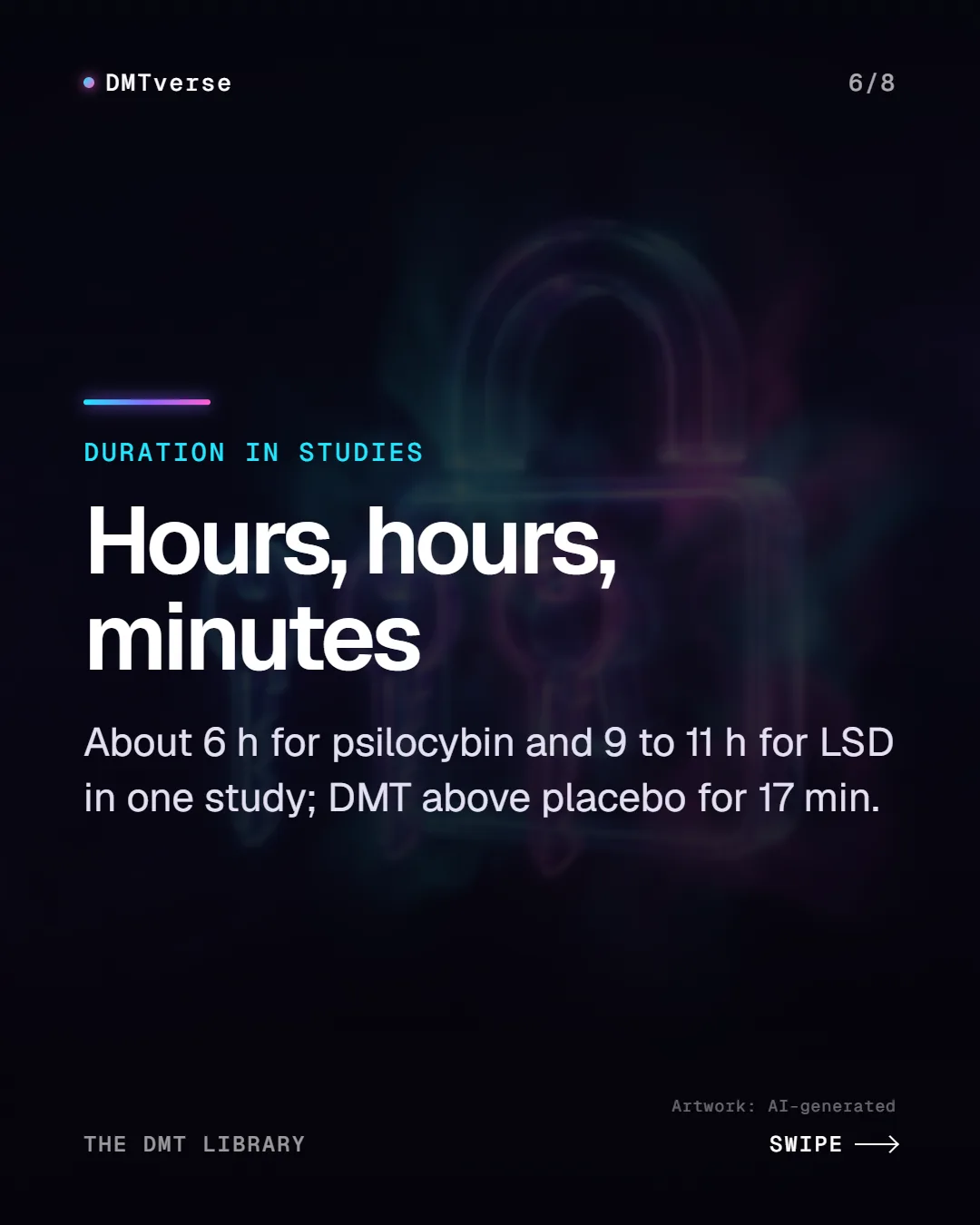
| Reported duration in clinical studies | About 6 hours on average in one healthy-volunteer study. | About 9 to 11 hours on average in the same study. | Under about 20 minutes in one intravenous study. |
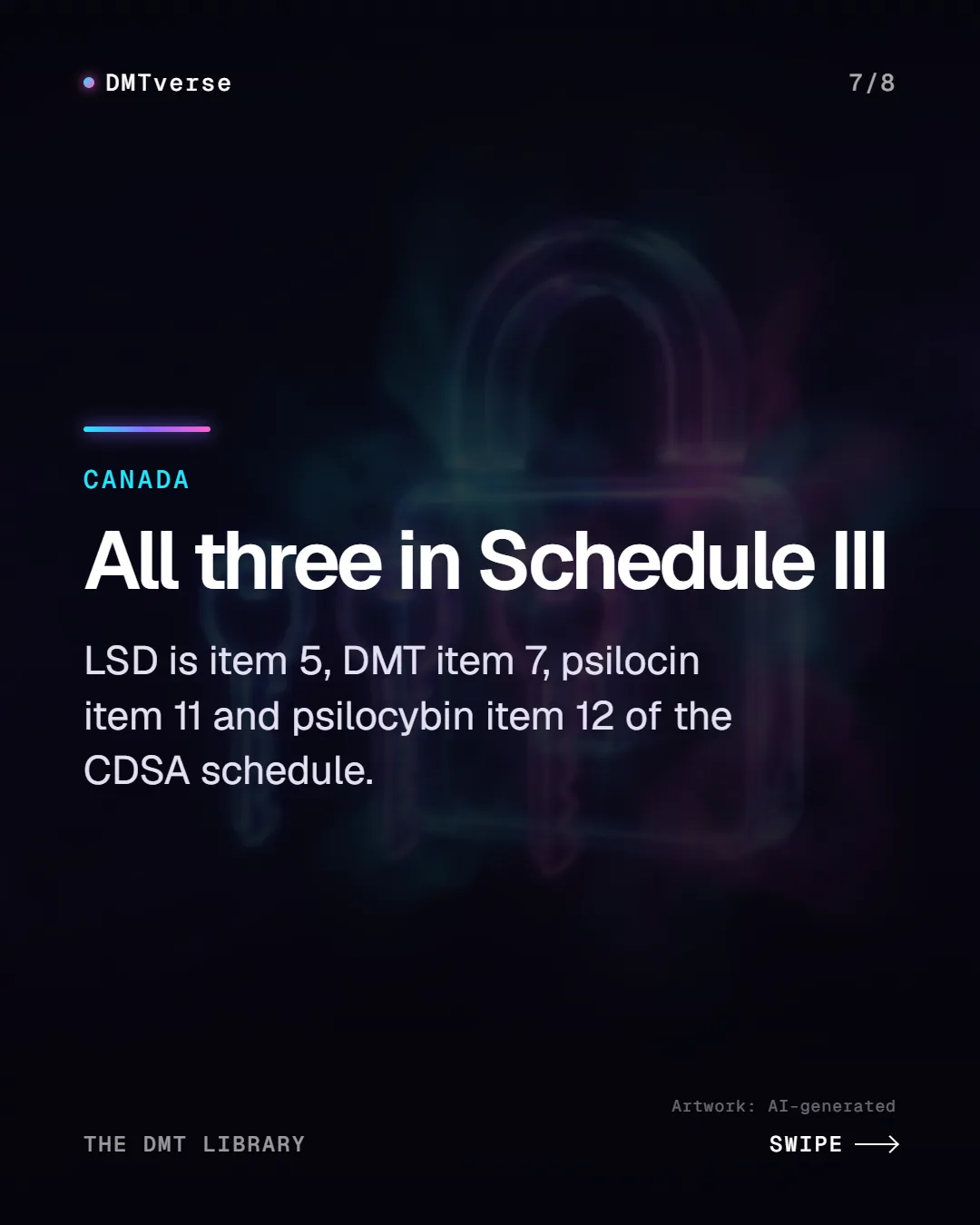
| Canada (CDSA, as of 4 October 2026) | Schedule III (psilocybin is item 12, psilocin item 11). | Schedule III (item 5). | Schedule III (item 7). |
Where do they come from, and are they chemically related?
Yes, closely, though not identically. A pharmacology review sorts the classic hallucinogens into two chemical groups. One is the indoleamines, which places LSD (an ergoline) together with psilocybin, psilocin and DMT (indolealkylamines) (Halberstadt and Geyer, 2011). The other group is the phenylalkylamines such as mescaline, which this guide does not cover. Evidence: established.
Psilocybin: a fungal tryptamine that acts as a prodrug
Psilocybin was first reported from a mushroom (Hofmann et al., 1958). It carries a phosphate group. In the body that group is removed to give psilocin, and psilocin is the main pharmacologically active substance, which makes psilocybin a prodrug (Lowe et al., 2021). The Canadian schedule lists the two separately, with psilocin written as a 4-hydroxy version of the DMT skeleton and psilocybin as its 4-phosphoryloxy version (CDSA, Schedule III). For the mushroom side of the story, see what is psilocybin and what are magic mushrooms.
LSD: an ergoline made in the lab
LSD was first synthesised in 1938 by the Swiss chemist Albert Hofmann at Sandoz in Basel, as part of research on ergot alkaloids, compounds from the ergot fungus Claviceps purpurea (Omidian and Omidian, 2025). In the Canadian schedule it is written as N,N-diethyllysergamide (CDSA, Schedule III). Its ergoline structure is what separates it from the other two (Halberstadt and Geyer, 2011). Evidence: established.
DMT: the simplest of the three, and made by living things everywhere
A 2018 chemistry review calls DMT “the archetype for all indole-containing serotonergic psychedelics”, with its structure embedded within LSD and psilocybin. Unlike those two, DMT is produced by a wide variety of plant and animal species, and it is one of the few psychedelic compounds made by mammals (Cameron and Olson, 2018). Why mammals make it is unresolved. The same review says its biological function in human physiology “remains a mystery”, and a historical review argues it can at least be considered a putative neurotransmitter, while calling for more research (Barker, 2018).
How do they work at the 5-HT2A receptor, and what differs?
What they share
A major 2016 review concluded there is a consensus that psychedelics are agonists (drugs that switch a receptor on) or partial agonists at serotonin 5-HT2A receptors in the brain, with particular importance for those on certain cortical neurons (Nichols, 2016). Two human studies support this for two of the three. In healthy volunteers, the general subjective effects of LSD were fully blocked by ketanserin, a drug that blocks 5-HT2A receptors (Preller et al., 2017). The effects of psilocybin were blocked dose-dependently by the same drug (Vollenweider et al., 1998). Evidence: established for LSD and psilocybin.
For DMT, a review says its behavioural effects “appear to be primarily acting via 5-HT2A receptors” while noting that it interacts with a variety of other receptors (Barker, 2018). Rodent blocking studies support it, and in people the closest test, with ayahuasca, found that blocking 5-HT2A weakened the effects (DMT and the 5-HT2A receptor). We found no published human blocking study of DMT itself, so for people we label this preliminary; in animal and lab work it is established.
What differs
A lab comparison of receptor binding found that LSD binds the 5-HT2A receptor more tightly than psilocin or DMT, and that binding strength across tryptamines tracked their reported potency. LSD also interacted with adrenergic and dopaminergic receptors, which the tryptamines in that study did not. Psilocin and DMT, by contrast, interacted with the serotonin transporter (Rickli et al., 2016). A second review describes the indoleamines as relatively non-selective across serotonin receptors, with evidence that non-5-HT2 sites contribute to some effects in animals (Halberstadt and Geyer, 2011). Evidence: established as lab findings, preliminary for what they mean in people.
A 2017 structural study of LSD bound to a serotonin receptor found that LSD dissociates exceptionally slowly from the 5-HT2A receptor and its close relative 5-HT2B. Simulations suggested a “lid” formed by a loop of the receptor may explain this (Wacker et al., 2017). A 2026 review notes that these compounds differ in receptor binding kinetics, metabolism and duration of action, and groups DMT as short acting and LSD as long acting (Bhat et al., 2026). Whether slow release from the receptor accounts for LSD’s longer reported time course is not settled in the sources we read (unresolved).
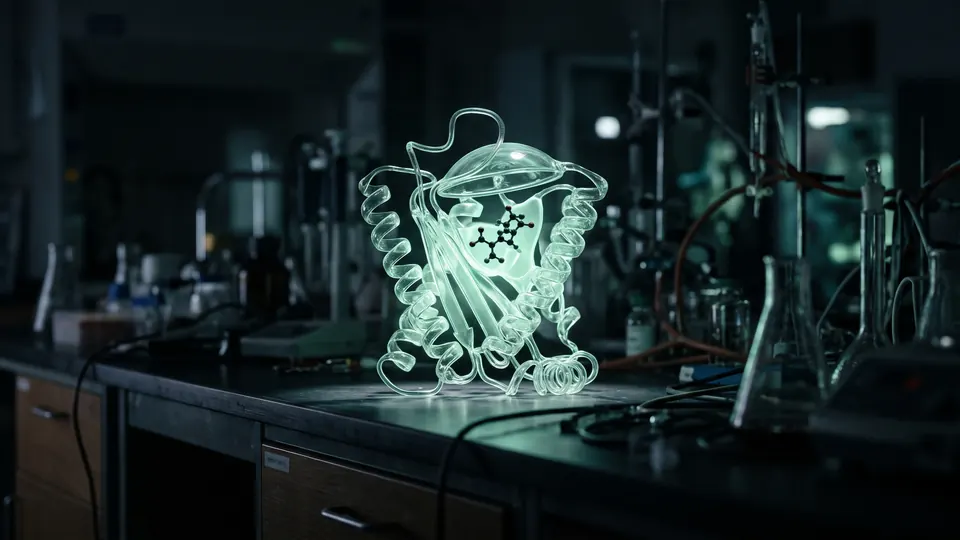
For DMT, two other receptors keep appearing. DMT is an agonist at the trace amine-associated receptor TAAR1 and binds sigma-1 receptors, but the same review says other psychedelics and non-psychedelics do too, and that research is not yet enough to say what role these play (Barker, 2018). Evidence: unresolved.
When was each one discovered?
- 1931: DMT is first synthesised by the Canadian chemist Richard Manske, but is not tested for effects in people at the time (Barker, 2018).
- 1938: LSD is first synthesised by Albert Hofmann at Sandoz (Omidian and Omidian, 2025).
- 1943: Hofmann discovers LSD’s potent psychoactive effects, accidentally (Nichols, 2018; Omidian and Omidian, 2025).
- 1946: Oswaldo Gonçalves de Lima reports DMT occurring naturally in a plant (Barker, 2018); in 1959 Pachter and colleagues publish a chemistry paper on the indole alkaloids of the same plant (Pachter et al., 1959).
- 1953: serotonin is found in the mammalian brain. Its structural resemblance to LSD soon led to ideas that serotonin was involved in the action of LSD (Nichols, 2018).
- 1956: Stephen Szára reports DMT’s hallucinogenic effects in people. Sources disagree on how he obtained his DMT: his 2021 obituary says he synthesized it (Wirz-Justice, 2021), while a 2018 review says he extracted it from a plant (Barker, 2018).
- 1958: Hofmann and colleagues publish psilocybin as the active compound of the Mexican mushroom Psilocybe mexicana (Hofmann et al., 1958; Lowe et al., 2021).
Two cautions. The dates above describe Western science. DMT-containing plants, ayahuasca among them, have been used for centuries (Cameron and Olson, 2018), and psilocybin mushrooms had a long ceremonial history before 1958. We cover it, with sources, in our history of magic mushrooms and history of DMT; Szára’s work has its own article. Second, in 2018 a review noted that US clinical research with LSD ended around 1970, when it was formally placed in Schedule 1 there, and that clinical research had begun again in Europe within the previous five years (Nichols, 2018). The pause shaped how much each compound has been studied.
How long are the effects reported to last in clinical studies?
Only in general terms, and only as a description of controlled research. In one double-blind study of 28 healthy volunteers, psilocybin effects lasted on average about 5.6 to 6.5 hours depending on the level given. LSD effects lasted about 9.3 to 11 hours on average. Individual durations varied widely, from under 3 hours to over 16 (Holze et al., 2022). Evidence: established for that comparison.
DMT in the lab is a different shape of experience. In a study of 13 volunteers given DMT intravenously, rated intensity stayed significantly above placebo for 17 minutes and peaked 2 to 3 minutes after the injection (Timmermann et al., 2019). A 2026 systematic review of pharmacokinetic studies notes that sessions with intravenous DMT were substantially shorter than those with LSD and psilocybin (Hampsey et al., 2026). DMT given by injection is also cleared from the body rapidly (Barker, 2018). Evidence: established for intravenous DMT in lab conditions.
These figures are averages from healthy volunteers under supervision, using specific routes of administration. They are not a prediction for anyone, and they are not a guide to use.

What do they share, and what differs, in research?
What the research suggests they share
- The same main target. All three act at 5-HT2A (see above).
- Very similar subjective effects in a head-to-head test of two of them. When LSD and the higher of two psilocybin levels were compared, the authors found their subjective effects “do not differ beyond the effect duration” and that any differences were dose-dependent rather than substance-dependent (Holze et al., 2022). Evidence: established for LSD vs psilocybin in healthy volunteers.
- Changes in brain rhythms. Brain-imaging studies found that intravenous psilocybin and LSD reduced oscillatory power in areas of the default mode network (Nichols, 2016). Intravenous DMT markedly reduced alpha and beta oscillatory power and increased signal diversity (Timmermann et al., 2019). Evidence: preliminary, from small imaging studies.
Where the research record differs
- Body effects. In the same LSD vs psilocybin study, psilocybin raised blood pressure more, and LSD raised heart rate more (Holze et al., 2022).
- Time course. Duration is the clearest difference, and it shapes how each can be studied (see above).
- Volume of trials. A search of ClinicalTrials.gov (data timestamp 2 October 2026) returned about 300 interventional studies for psilocybin, 64 for “lysergic acid diethylamide OR LSD” and 51 for dimethyltryptamine. The counts include modified versions of these molecules, combination studies and a few unrelated matches, so read them as an order of magnitude, not a count (ClinicalTrials.gov). Evidence: preliminary.
- Question asked. Much recent clinical research is on whether psilocybin has any use for specific conditions, and results so far are early or mixed. See our summary of the psilocybin depression trials. A comparison of what each compound might do for any condition is beyond what these studies can show.
Are psilocybin, LSD and DMT legal in Canada?
As of 4 October 2026, all three are controlled substances. The Controlled Drugs and Substances Act (CDSA) lists them in Schedule III: LSD is item 5, DMT is item 7, psilocin is item 11 and psilocybin is item 12. The consolidation we read was current to 21 September 2026 (Justice Laws, CDSA). Check the official page for any later change.
What Schedule III means in practice: the Act prohibits possessing a Schedule III substance except as authorised under the regulations, and separately prohibits trafficking in it and producing it (production, like possession, is barred except as authorised under the regulations) (Justice Laws, CDSA, sections 4, 5 and 7). The Act also lets the federal Minister of Health exempt a person, a class of persons or a substance from its provisions where that is necessary for a medical or scientific purpose or is otherwise in the public interest (Justice Laws, CDSA, section 56). That is one route by which research can be authorised.
Two clarifications. Schedule numbers are not comparable between countries: the United States places LSD in its own Schedule 1, a different system (Nichols, 2018). And a schedule listing is about legal control, not about whether any approved medicine exists. For how the law came about, see how magic mushrooms became illegal in Canada. This is general information, not legal advice.
What we still don’t know
- Why the time courses differ so much. Receptor kinetics and metabolism are both discussed, but the sources we read do not settle it (unresolved).
- What non-5-HT2A receptors add in people. Evidence for LSD’s dopamine and adrenergic activity and DMT’s TAAR1 and sigma-1 activity comes mostly from lab and animal work (unresolved).
- Why mammals make DMT, and what it does in the body (unresolved).
- Whether findings from healthy volunteers in controlled settings apply to other people or settings (unresolved).
- How all three compare in a single study. We found a head-to-head test of LSD and psilocybin but none comparing all three, and DMT studies use a very different route and time scale (unresolved).
- How much of the difference between LSD and psilocybin is the molecule rather than the amount. The one head-to-head study suggests it is mostly amount and duration, but it is one study of 28 people (preliminary).
The honest summary is that these three are more alike in what they do at 5-HT2A than they are in their histories, chemistry and time courses, and that several basic questions remain open. Check the date on this page, because this field moves quickly. Next, read what are magic mushrooms or our look at whether psilocybin rewires the brain.
Common questions
What is the difference between psilocybin and LSD?
Psilocybin is a tryptamine made by fungi that the body converts to psilocin. LSD is an ergoline first made in a lab in 1938 from ergot chemistry. Both act mainly at the serotonin 5-HT2A receptor. LSD binds more tightly and touches more other receptors, and in one head-to-head study LSD effects lasted longer than psilocybin effects (roughly 9 to 11 hours vs about 6 on average).
Is DMT the same as psilocybin?
No, but they are related. DMT is a simple tryptamine whose structure sits inside psilocybin, which is a modified version of it. DMT is made by many plants and animals, while psilocybin is made by fungi. In lab studies, intravenous DMT acts for minutes, not hours.
Do psilocybin, LSD and DMT work through the same receptor?
Mainly, yes. Researchers agree classic psychedelics act as agonists or partial agonists at serotonin 5-HT2A receptors. Human blocking studies back this for LSD and psilocybin. LSD in particular also interacts with other receptors, and what those add in people is unresolved.
How long do the effects of each last in studies?
In clinical studies of healthy volunteers: about 6 hours on average for psilocybin and about 9 to 11 hours for LSD in one comparison, with wide individual variation. Intravenous DMT effects stayed above placebo for about 17 minutes in one study. These are lab descriptions, not predictions or guidance.
Are psilocybin, LSD and DMT legal in Canada?
As of 4 October 2026 all three are listed in Schedule III of the Controlled Drugs and Substances Act, so possession, trafficking and production are prohibited unless authorised under the regulations. The Minister of Health can grant exemptions for medical or scientific purposes. Check the Justice Laws site for the current text. This is not legal advice.
Are they safe?
No psychedelic is risk-free. Controlled studies report effects on heart rate and blood pressure, and the experiences themselves can be distressing. Our safety page covers risks and where to get help. In an emergency, call 911.
Shroomverse sells mushroom products. This article is general information about mushroom chemistry and natural history. It is not medical, legal or identification advice, and it does not recommend any product.
SOURCES
- Controlled Drugs and Substances Act (S.C. 1996, c. 19), full text, Schedule III and sections 4, 5, 7 and 56, Government of Canada, Justice Laws Website. Accessed . Source for Schedule III items 5 (LSD), 7 (DMT), 11 (psilocin) and 12 (psilocybin) and their chemical names; the possession, trafficking and production provisions; the ministerial exemption in section 56; and the “current to 2026-09-21” consolidation date.
- Psychedelics (Nichols DE, Pharmacological Reviews 68(2):264–355, 2016), American Society for Pharmacology and Experimental Therapeutics; full text via PubMed Central, PMC4813425. Accessed . Consensus that psychedelics are agonists or partial agonists at 5-HT2A receptors; imaging finding of reduced default-mode-network oscillatory power after intravenous psilocybin and LSD.
- Dark Classics in Chemical Neuroscience: Lysergic Acid Diethylamide (LSD) (Nichols DE, ACS Chemical Neuroscience 9(10):2331–2343, 2018), American Chemical Society (peer-reviewed). Accessed . Abstract consulted; full text not open. Source for the 1943 discovery of LSD's effects, serotonin in the brain in 1953, and LSD's US Schedule 1 placement and the end and restart of clinical research.
- Dark Classics in Chemical Neuroscience: N,N-Dimethyltryptamine (DMT) (Cameron LP, Olson DE, ACS Chemical Neuroscience 9(10):2344–2357, 2018), American Chemical Society (peer-reviewed). Accessed . Abstract consulted; full text not open. Source for DMT as archetype, ubiquity in plants and animals, ayahuasca, endogenous production and unknown biological function.
- N,N-Dimethyltryptamine (DMT), an Endogenous Hallucinogen: Past, Present, and Future Research to Determine Its Role and Function (Barker SA, Frontiers in Neuroscience 12:536, 2018), Frontiers (peer-reviewed, open access); full text via PubMed Central, PMC6088236. Accessed . Source for DMT's 1931 synthesis, 1946 plant discovery and 1956 human effects (its statement that Szára extracted DMT from a plant conflicts with Wirz-Justice 2021); receptor binding (5-HT2A, TAAR1, sigma-1); rapid clearance after injection; and the putative neurotransmitter proposal.
- Direct comparison of the acute effects of lysergic acid diethylamide and psilocybin in a double-blind placebo-controlled study in healthy subjects (Holze F, et al., Neuropsychopharmacology 47(6):1180–1187, 2022), Springer Nature (peer-reviewed, open access); full text via PubMed Central, PMC9018810. Accessed . Source for effect durations (Table 1), similar subjective effects beyond duration, and the blood pressure and heart rate differences. Amounts given in the study are deliberately not reproduced here.
- Neural correlates of the DMT experience assessed with multivariate EEG (Timmermann C, et al., Scientific Reports 9:16324, 2019), Springer Nature (peer-reviewed, open access); full text via PubMed Central, PMC6864083. Accessed . Intravenous DMT in 13 volunteers: intensity above placebo for 17 minutes, peak at 2 to 3 minutes; EEG alpha and beta power reduced and signal diversity increased.
- Receptor interaction profiles of novel psychoactive tryptamines compared with classic hallucinogens (Rickli A, Moning OD, Hoener MC, Liechti ME, European Neuropsychopharmacology 26(8):1327–1337, 2016), Elsevier (peer-reviewed). Accessed . Abstract consulted; full text not open. LSD vs psilocin and DMT binding at 5-HT2A, adrenergic and dopaminergic receptors, and the serotonin transporter.
- Crystal Structure of an LSD-Bound Human Serotonin Receptor (Wacker D, et al., Cell 168(3):377–389, 2017), Cell Press (peer-reviewed). Accessed . Abstract consulted; full text not open. LSD's exceptionally slow dissociation from 5-HT2B and 5-HT2A receptors and the proposed “lid”.
- Multiple receptors contribute to the behavioral effects of indoleamine hallucinogens (Halberstadt AL, Geyer MA, Neuropharmacology 61(3):364–381, 2011), Elsevier (peer-reviewed); full text via PubMed Central, PMC3110631. Accessed . Chemical classification of the classic hallucinogens (ergoline LSD; DMT, psilocin and psilocybin as indolealkylamines); relatively non-selective receptor profile of indoleamines; non-5-HT2 contributions in animals.
- The Fabric of Meaning and Subjective Effects in LSD-Induced States Depend on Serotonin 2A Receptor Activation (Preller KH, et al., Current Biology 27(3):451–457, 2017), Cell Press (peer-reviewed). Accessed . Abstract consulted; full text not open. General subjective LSD effects fully blocked by the 5-HT2A antagonist ketanserin.
- Psilocybin induces schizophrenia-like psychosis in humans via a serotonin-2 agonist action (Vollenweider FX, et al., NeuroReport 9(17):3897–3902, 1998), Lippincott Williams & Wilkins (peer-reviewed). Accessed . Abstract consulted; full text not open. Cited only for psilocybin's effects being blocked dose-dependently by ketanserin.
- Clinical Research on Lysergic Acid Diethylamide (LSD) in Psychiatry and Neuroscience (Omidian H, Omidian A, Pharmaceuticals 18(4):499, 2025), MDPI (peer-reviewed, open access); full text via PubMed Central, PMC12030196. Accessed . LSD first synthesised in 1938 by Albert Hofmann at Sandoz during ergot alkaloid research; 1943 rediscovery of its effects.
- The Therapeutic Potential of Psilocybin (Lowe H, et al., Molecules 26(10):2948, 2021), MDPI (peer-reviewed, open access); full text via PubMed Central, PMC8156539. Accessed . Cited only for chemistry and history: mushrooms as principal natural source; psilocybin as a prodrug of psilocin, the main active substance; Hofmann and colleagues' work in 1958.
- Psilocybin, ein psychotroper Wirkstoff aus dem mexikanischen Rauschpilz Psilocybe mexicana Heim (Hofmann A, Heim R, Brack A, Kobel H, Experientia 14(3):107–109, March 1958), Springer (peer-reviewed). Accessed . Bibliographic record consulted (Crossref); cited for its date and subject only.
- A systematic review of the pharmacokinetics of classical serotonergic psychedelic compounds in healthy adult subjects (Hampsey E, et al., Journal of Psychopharmacology 40(8):1213–1223, 2026), SAGE (peer-reviewed, open access); full text via PubMed Central, PMC13415903. Accessed . Intravenous DMT sessions substantially shorter than LSD and psilocybin sessions.
- Short- and Long-Acting Psychedelics: Structure–Activity Relationships, Pharmacology, and Implications for Neuropsychiatric Therapeutics (Bhat A, et al., ACS Chemical Neuroscience 17(12):2278–2301, 2026), American Chemical Society (peer-reviewed, open access); full text via PubMed Central, PMC13281395. Accessed . Abstract consulted. Differences in binding kinetics, metabolism and duration; DMT grouped as short acting and LSD as long acting.
- Indole alkaloids of four plant species (Pachter IJ, Zacharias DE, Ribeiro O, Journal of Organic Chemistry 24(9):1285–1287, 1959); full title shortened here, American Chemical Society. Accessed . Bibliographic record only, checked on Crossref on this date (September 1959). Cited only as a 1959 paper on the indole alkaloids of the plant Gonçalves de Lima studied; full text not read and findings not described.
- In memoriam: Stephen I. Szára, D.Sc., M.D. (1923–2021) (Wirz-Justice A, Neuropsychopharmacology 47(2):614–615, 2022), Springer Nature (open access); full text via Europe PMC, PMC8674227. Accessed . Full text read on this date. States that Szára synthesized DMT after Sandoz declined to send LSD, and that he was the first to study its psychotropic effects.
- ClinicalTrials.gov API v2: interventional studies by intervention term (data timestamp 2 October 2026), U.S. National Library of Medicine, ClinicalTrials.gov. Accessed . The link shows the psilocybin query (296 interventional studies). The same endpoint with the terms “lysergic acid diethylamide OR LSD” (64) and “dimethyltryptamine” (51) gave the other counts. Counts include analogues and a few unrelated matches.
CHANGES
- : Linked glossary definitions.
- : Evidence label for DMT and 5-HT2A made consistent across the library: established in animal and lab work, preliminary in people; linked the detailed article.
- : Published. Sources opened and checked on this date, including the Canadian schedule positions in the Controlled Drugs and Substances Act consolidation current to 21 September 2026.
- : Editorial review: the 1956 entry no longer states as fact that Szára extracted DMT from a plant; it now gives the conflict between his obituary and a 2018 review, as our other DMT articles do, with the obituary and the 1959 Pachter paper added as sources (both checked today); 1946 entry names Gonçalves de Lima; agonist defined; glossary and sibling DMT history links added.



