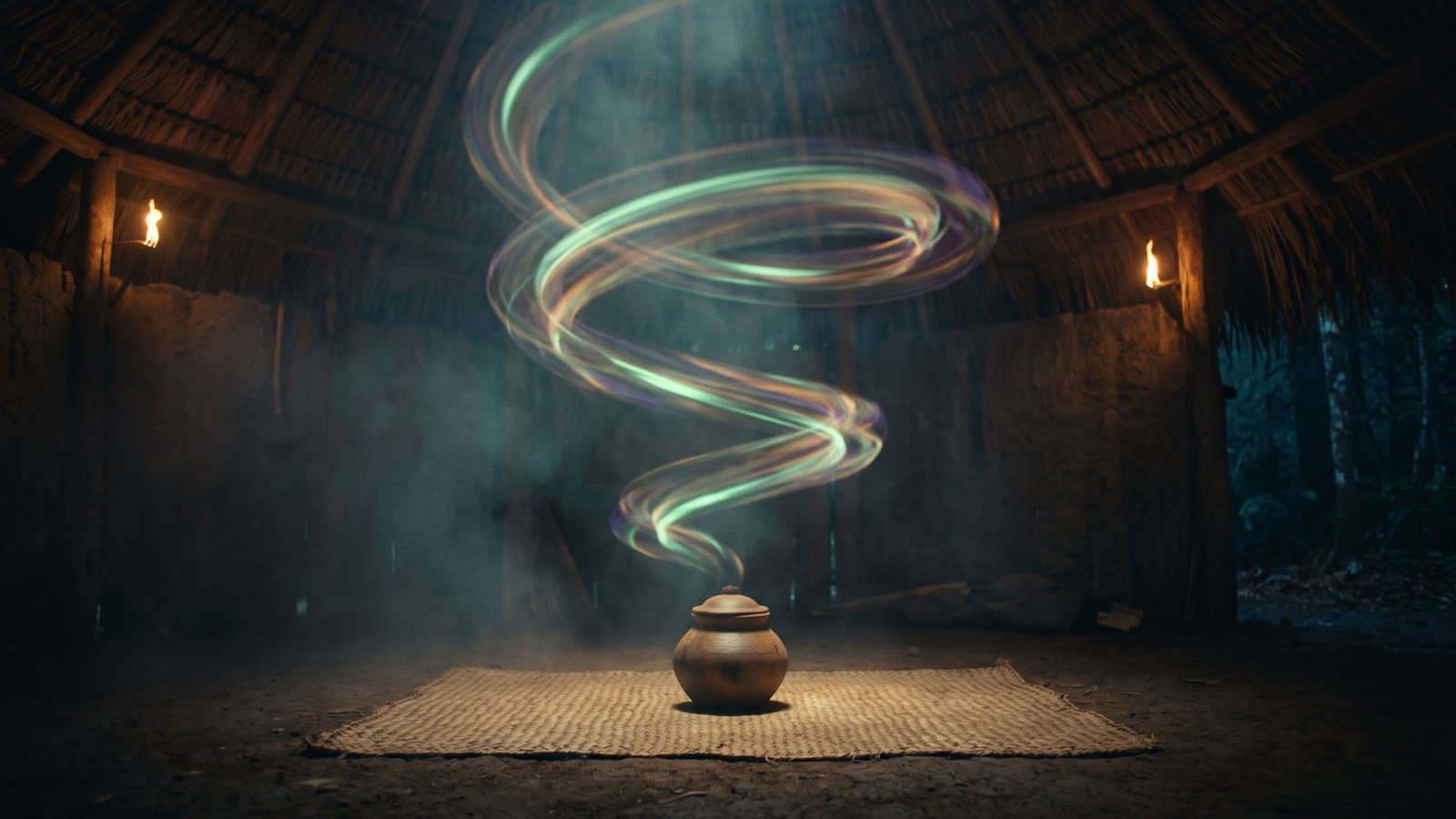
THE SHROOMVERSE JOURNAL ✳ 14 MIN READ
What does ayahuasca feel like? What studies of the ayahuasca experience found
Topic: DMT
Published Updated
Listen: the 3-minute version
AI-narrated summary of this article
Short answer, checked 21 October 2026
What does ayahuasca feel like? In placebo-controlled lab studies, volunteers reported changes in perception, mood, thinking and the body that began 30 to 60 minutes after drinking, peaked at about 1 to 2 hours and faded by about 4. Vivid imagery with the eyes closed is the best-studied feature; nausea and vomiting are common. Surveys and field studies of ceremony participants describe frightening phases, memories resurfacing and, for about half or more, an experience of personal death. Reports range from pleasant to deeply distressing. Lab volunteers were few and screened; survey respondents chose to take part.
THE SHORT VERSION · SWIPE
On this page 12 sections
Search for “ayahuasca journey” or “ayahuasca trip” and you find thousands of personal stories. This article looks at what researchers have actually measured instead: what volunteers rated in placebo-controlled studies, what brain imaging found about the visions, how often nausea and vomiting occur, and what field studies and surveys of ceremony participants report. For what ayahuasca is and where it comes from, start with what is ayahuasca; for the wider DMT background, see our pillar, what is DMT.
Education only, not guidance
This article describes published research. It gives no amounts, no preparation, no places and no advice on use, and it does not present any effect as a benefit or a goal. Ayahuasca contains DMT, a controlled substance in Canada. Evidence labels used below: established (shown in peer-reviewed studies and not seriously disputed), preliminary (early, small, self-selected or indirect) and unresolved (an open question). Personal accounts are labelled as reports.
What does ayahuasca feel like, according to research?
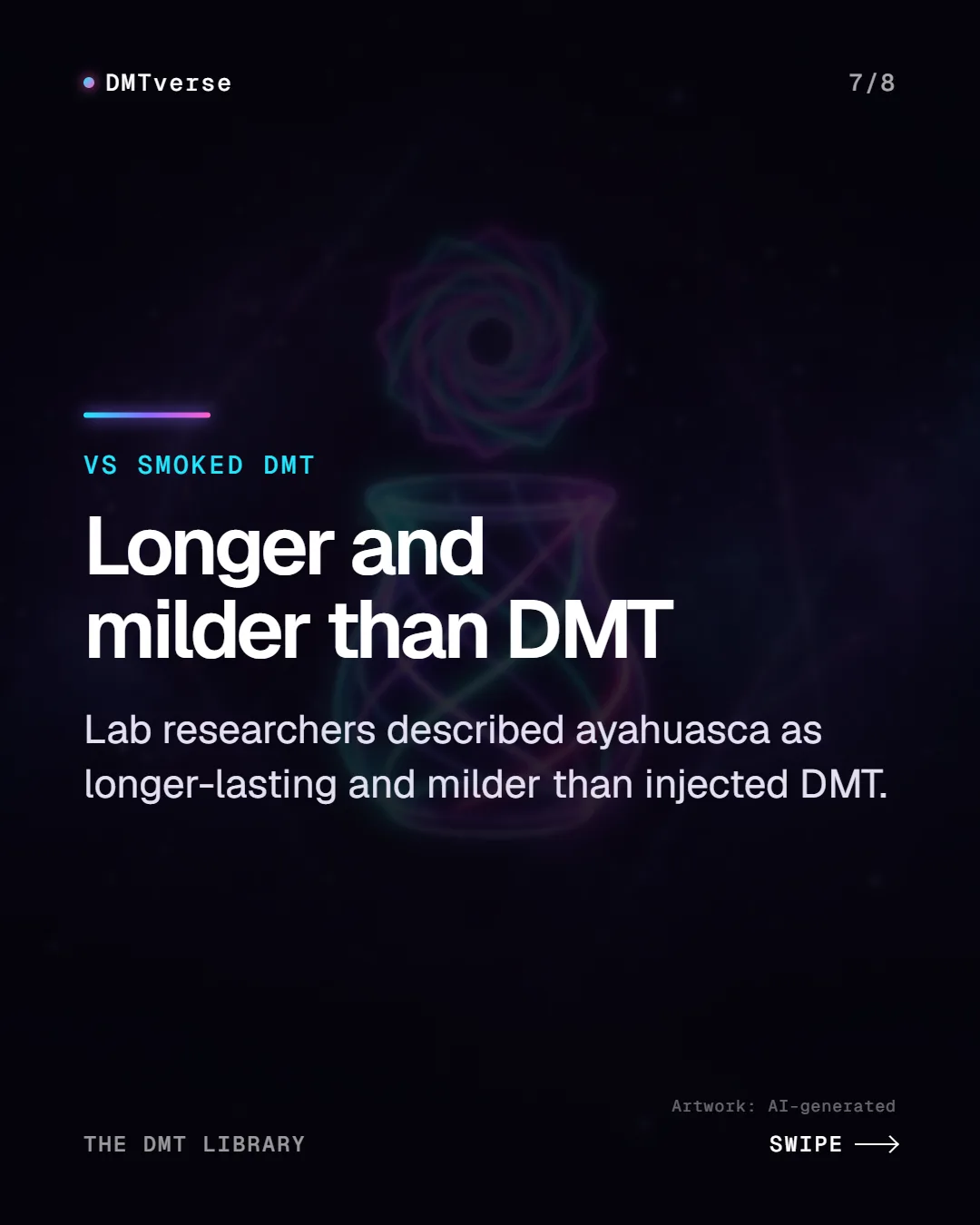
The first placebo-controlled study of its subjective effects, published in 2001, concluded that ayahuasca changes four areas at once: perception, emotion, thinking and bodily sensation. The authors described a mix of stimulant-like and visual effects that lasted longer and felt milder than those reported for injected DMT (Riba et al., 2001). A larger 2003 trial found perceptual changes alongside higher ratings of positive mood and of activation, or feeling energised (Riba et al., 2003). Both studies used volunteers who had taken psychedelics before. Evidence: established for these lab measures.
Outside the lab, the picture is wider and harder to pin down. Ceremonies add music, group settings, beliefs and long nights, and people who answer surveys are not a random sample of everyone who has taken ayahuasca. The sections below keep those sources apart.
How do researchers study the ayahuasca experience?
| Type of study | What it adds | Example in this article | Main limit |
|---|---|---|---|
| Placebo-controlled lab trial | Ratings compared with a dummy drink | Riba 2001 (6 people), Riba 2003 (18) | Small groups of experienced, screened volunteers |
| Brain imaging | Links brain activity to reported visions | de Araujo 2012 (9), Valle 2016 (12) | Very small; one had no placebo condition |
| Observational church study | Measures members in their usual ritual | Ramaekers 2023 (24 Santo Daime members) | No placebo; people chose how much to drink |
| Qualitative or ethnographic study | Detailed accounts and the role of culture | Kjellgren 2009 (25), Fotiou and Gearin 2019, Dupuis 2022 | Interpretive; cannot give rates for all users |
| Online or retreat survey | Large numbers, rare experiences | Bouso 2022 (10,836), Pontual 2022 (2,751) | Self-selected; relies on memory |
A key lab tool is the Hallucinogen Rating Scale (HRS), a questionnaire first built for DMT studies that scores several areas of experience, including bodily feeling, emotion, thinking, perception and overall intensity. Our article on what DMT feels like explains how it was developed. Evidence: established as a widely used research scale.
How does an ayahuasca trip unfold over time?
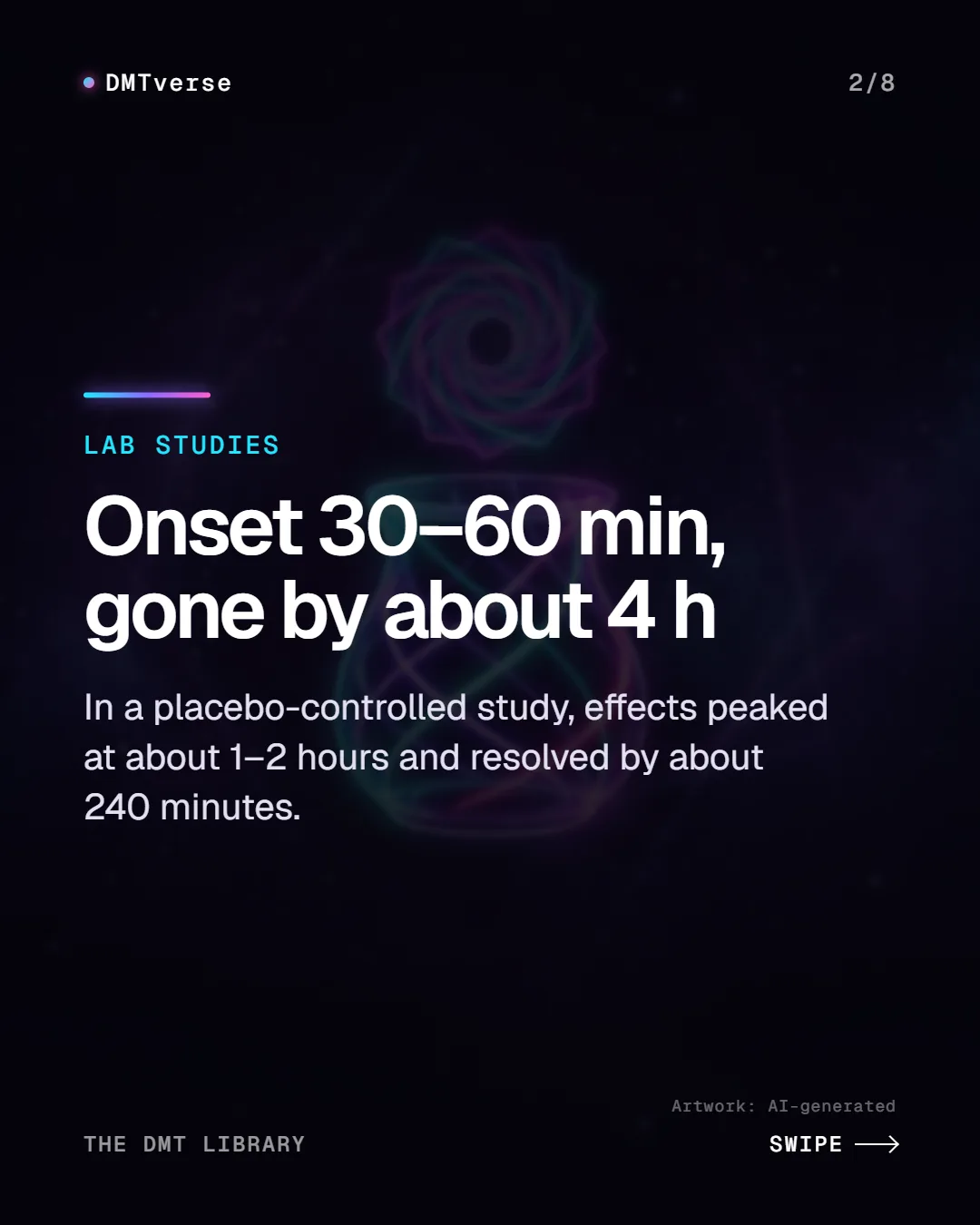
- Onset: in the 2001 lab study, the first psychological effects were noticed 30 to 60 minutes after the dose (Riba et al., 2001).
- Peak: effects peaked between about 60 and 120 minutes (Riba et al., 2001); in the 2003 trial the peak in ratings matched the peak of DMT in the blood, at about 1.5 hours (Riba et al., 2003).
- Resolution: in the 2001 study, psychological effects had resolved by about 240 minutes (Riba et al., 2001).
Those timings come from capsules of freeze-dried ayahuasca given to small groups of volunteers (Riba et al., 2001; Riba et al., 2003). Ceremonies can last much longer because of their structure, not the pharmacology alone. The full timeline, with after-effects and detection, is in how long does ayahuasca last. Evidence: established for lab conditions.
What did placebo-controlled studies measure?
In the 2001 study, six healthy men with previous ayahuasca experience took three increasing amounts and a placebo in a single-blind crossover design (doses not reproduced here). Ayahuasca raised scores on five of the six HRS subscales, on drug-effect scales and on ratings of “liking”, “good effects” and “high”. The most frequent unpleasant bodily effects were altered physical sensations and nausea (Riba et al., 2001). Evidence: established, from a very small group.
Not everyone found it pleasant. Five of the six volunteers rated the overall experience as pleasant and satisfactory; the sixth had an intensely dysphoric (distressing) reaction with brief disorientation and anxiety at the middle amount and chose to leave the study (Riba et al., 2001). In the 2003 trial, with 18 volunteers, diastolic blood pressure rose at the higher amount (Riba et al., 2003); heart and blood pressure effects are covered in ayahuasca vs DMT. Evidence: established for these volunteers.
What are ayahuasca visions like?
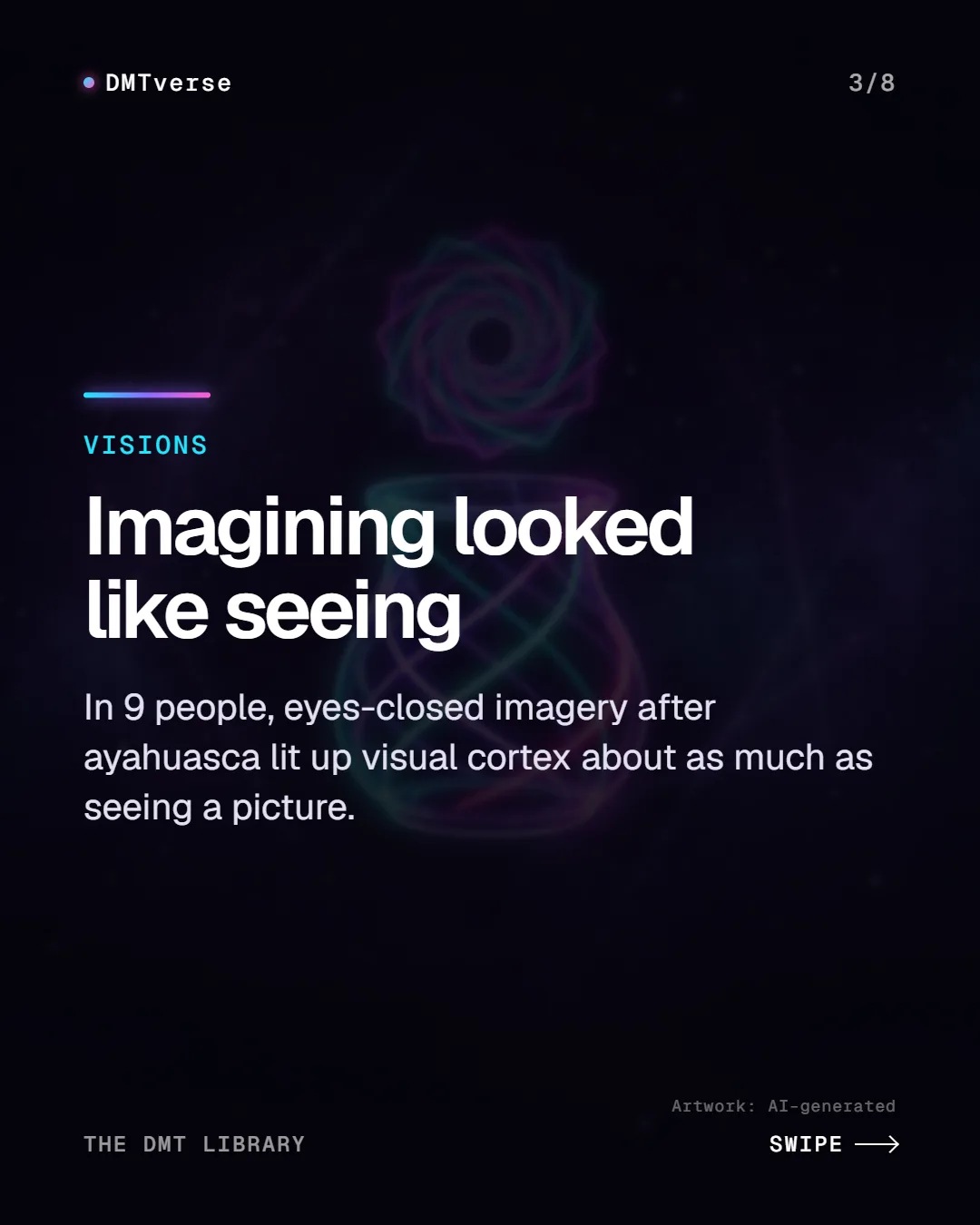
Visions with the eyes closed, sometimes called “seeings”, are the most studied feature. In a 2012 brain-imaging (fMRI) study, nine people were scanned while imagining pictures with their eyes shut, once before and once after drinking ayahuasca, with no placebo condition. After ayahuasca, activity in the primary visual cortex during imagery rose to levels comparable with actually seeing a picture with the eyes open, and the size of the rise tracked each person’s reported perceptual changes (de Araujo et al., 2012). Evidence: preliminary (small, no placebo).
A 2016 double-blind, placebo-controlled study of 12 experienced volunteers recorded brain rhythms (EEG). Ayahuasca lowered alpha rhythms over the back of the brain, and the lower they went, the more intense the visual imagery people reported. Pre-treatment with ketanserin, a drug that blocks the 5-HT2A receptor, reduced these brain changes and weakened the overall experience (Valle et al., 2016). This points to DMT acting on that receptor as a main driver of the visions. Evidence: preliminary to established (one well-controlled small study).
Members of a Santo Daime church were tested on a sober day and on a ritual day in a 2023 observational study of 24 people. Feelings of boundlessness, visual restructuring and ego dissolution rose most, and tracked peak DMT levels in the blood. Measured mental-imagery skills did not clearly change (Ramaekers et al., 2023). Evidence: preliminary (no placebo). For the churches themselves, see Santo Daime and the UDV.
Do the visions depend on culture and setting?
An anthropologist who spent time at an Amazonian healing centre argues that what people see is partly learned. Cultural background, guidance from facilitators and conversations with other participants shaped not only how people interpreted their visions but also their content (Dupuis, 2022). This is one ethnographic study, not a measurement. Evidence: preliminary.
Why does ayahuasca cause vomiting, and what is “the purge”?
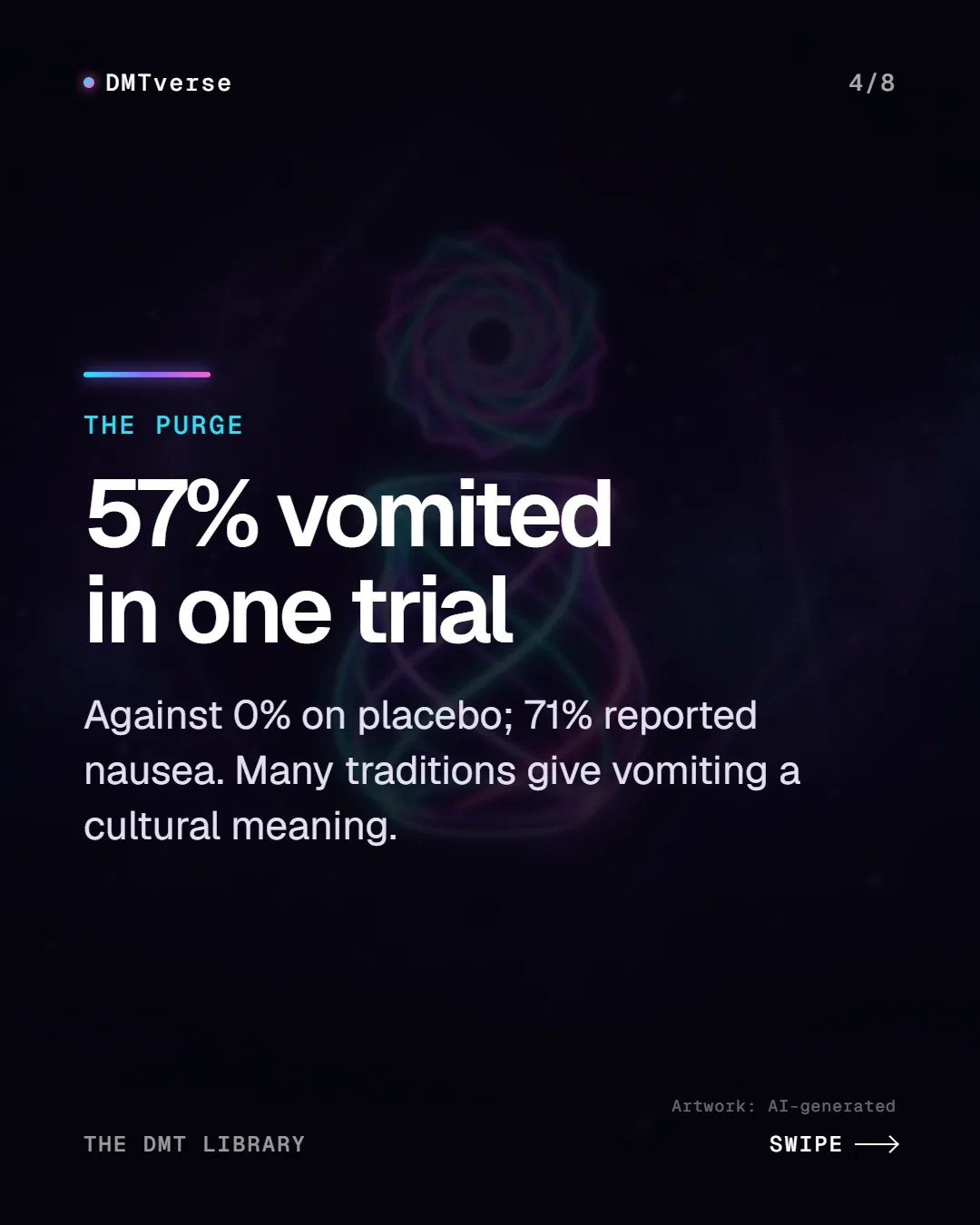
Nausea and vomiting are among the most common physical effects. In a randomised, placebo-controlled trial in 29 people with treatment-resistant depression, 71% of those given ayahuasca reported nausea (26% on placebo) and 57% vomited (none on placebo) (Palhano-Fontes et al., 2019). In the self-selected Global Ayahuasca Survey of 10,836 people, 69.9% reported acute physical adverse effects, mainly vomiting (Bouso et al., 2022). Evidence: established that vomiting is common.
Many participants and healers see it differently. Drawing on ethnographic work with 227 people interviewed or surveyed between 2003 and 2015, two anthropologists describe purging as integral to how ayahuasca has been used across and beyond Amazonia, and argue it should not be dismissed as a mere side effect (Fotiou and Gearin, 2019). That is an interpretation of meaning, not evidence of a health effect. The trial authors also note that vomiting is traditionally seen as part of a purging process (Palhano-Fontes et al., 2019). Evidence: established as a reported cultural view.
What does the ayahuasca experience feel like emotionally?
Accounts often describe a sequence. In a 2009 qualitative study, 25 Northern Europeans who had taken part in group sessions wrote anonymous descriptions. Researchers grouped them into themes including a contracting, frightening state, a sudden transformation of the experience and then expansive states that participants described as transcendental (Kjellgren et al., 2009). These are written reports from a small, self-selected group. Evidence: preliminary.
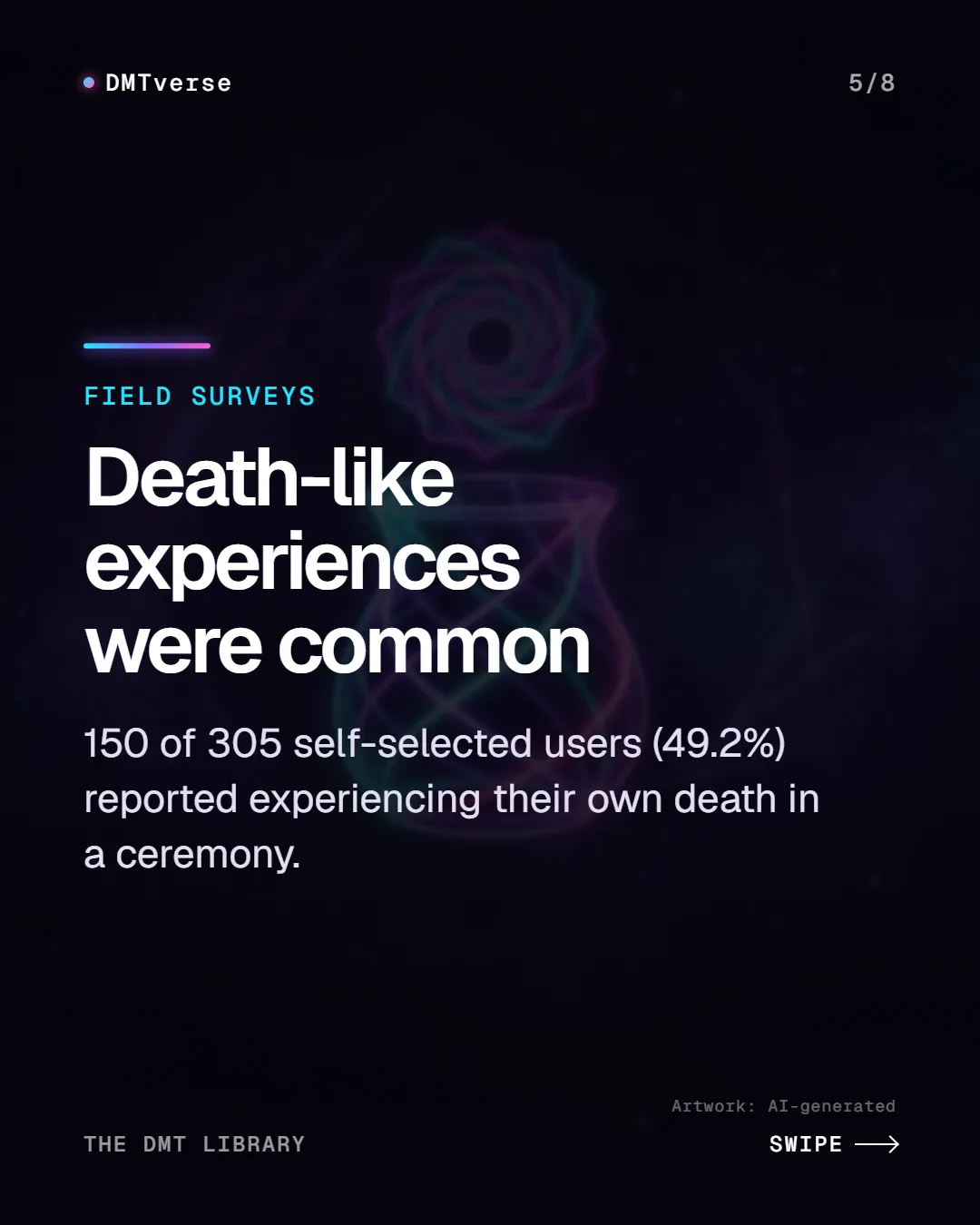
Some features are surprisingly common in reports. In two online surveys, 36 of 54 experienced users (66.7%) and 150 of 305 users (49.2%) said they had experienced their own death during an ayahuasca ceremony, usually rated as intense (David et al., 2023). In a study of 339 people at three ceremony centres, 42% of non-veterans who reported a past adverse life event said they re-experienced one under ayahuasca; for those who reported a past sexual assault, the figure was 33% (Weiss et al., 2023). Evidence: preliminary (self-selected, self-report).
In a 2019 online survey of people describing their most memorable “God encounter” experience, 435 attributed it to ayahuasca. Most respondents across groups described vivid memories of communicating with something they rated as conscious, benevolent and intelligent, and the ayahuasca group tended to give the highest ratings of positive features (Griffiths et al., 2019). The survey only recruited people who had such an encounter. Evidence: preliminary.
Can an ayahuasca journey be frightening?
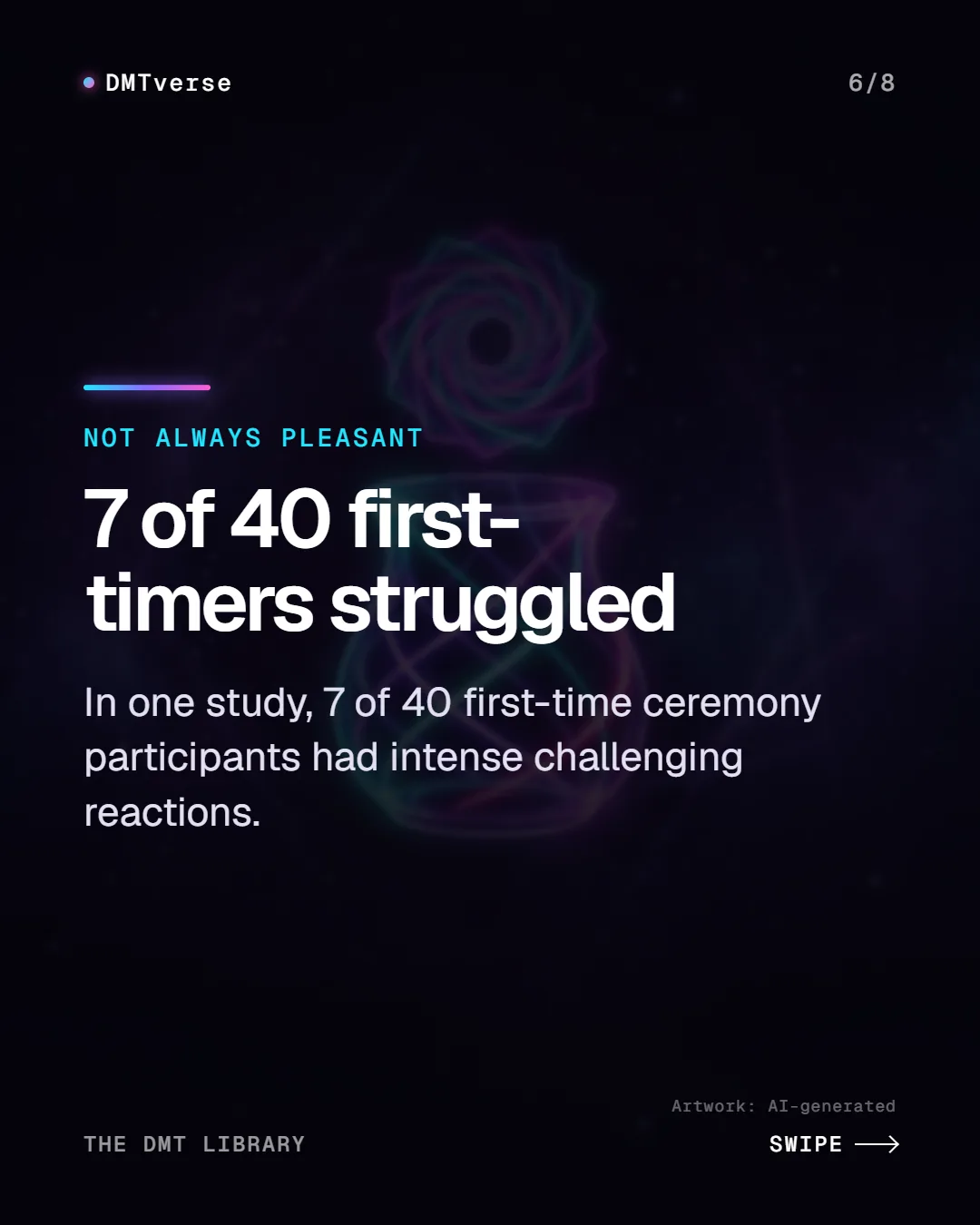
Yes, reports and trials both say so. In the depression trial, every patient reported feeling safe, yet the authors wrote that the session “was not necessarily a pleasant experience” and was accompanied for some by “much psychological distress” (Palhano-Fontes et al., 2019). In a prospective study of 40 first-time ceremony participants, 7 reported intense challenging psychological effects; four of those seven already met criteria for a psychiatric disorder beforehand, and the authors say a poor setting, with weak guiding and screening, contributed to some reactions (Gómez-Sousa et al., 2021). Evidence: preliminary.
Setting appears to matter. In an online survey of 2,751 members of the UDV, Santo Daime and neo-shamanic groups, people who rated their ceremonial setting better on every dimension reported fewer challenging experiences; four setting dimensions explained 41% of the variation in challenging-experience scores (Pontual et al., 2022). That is a correlation in a self-selected sample, not proof that a setting prevents distress. Evidence: preliminary.
Interactions with medicines are a documented risk
Ayahuasca contains compounds that block the enzyme MAO-A. Researchers warned as early as 1998 that combining it with SSRI antidepressants may cause serotonin syndrome, with a potentially grave outcome (Callaway and Grob, 1998). Other medicines can also interact. Our article on why DMT breaks down so fast explains the mechanism. Anyone taking medication should talk to a doctor or pharmacist; this is not advice on use.
If someone is in danger
Call 911 for immediate danger or urgent medical help, including if someone is unconscious, not breathing or having a seizure. In Ontario, the Ontario Poison Centre is at 1-800-268-9017; every province has a poison centre, listed by SickKids (AboutKidsHealth). If you or someone you know is thinking about suicide, call or text 9-8-8, 24 hours a day (Government of Canada). See also our safety page and how to help someone having a bad trip.
Is ayahuasca like DMT? How the two experiences compare
Ayahuasca’s main psychoactive compound is DMT, but the experience differs. The 2001 lab study described ayahuasca’s effects as longer and milder than those reported for injected DMT (Riba et al., 2001), largely because the brew’s other compounds let swallowed DMT act slowly over hours, as explained in ayahuasca vs DMT. Smoked or injected DMT tends to be described as sudden and overwhelming, peaking within minutes; see what DMT feels like. Evidence: established for duration; intensity comparisons are across separate studies.
Content may overlap more than timing. In the 2019 encounter survey, the ayahuasca group and a group that mostly smoked DMT differed on only 3 of 21 items describing the encounter itself (Griffiths et al., 2019). That comparison covers one kind of experience in self-selected respondents. For a comparison with psilocybin instead, see ayahuasca vs magic mushrooms. Evidence: preliminary.
How do people feel after ayahuasca?
Reported after-effects vary widely. In the Global Ayahuasca Survey, 55.9% reported adverse mental health effects in the weeks or months afterwards; about 88% of them regarded these as part of a positive process, and about 12% sought professional support. These effects were linked with anxiety disorders, physical health conditions and a stronger acute spiritual experience, and were less likely with use in religious settings (Bouso et al., 2022). Evidence: preliminary (self-selected, self-reported).
Many surveys also record changes that respondents describe as positive. Those findings, with their designs and limits, are covered in ayahuasca benefits: what research shows rather than repeated here. A personal account of feeling better or worse afterwards is a report, not proof that ayahuasca caused the change. Evidence: unresolved for causation.
What we still don’t know
- How the experience feels for people who are not experienced, screened volunteers or keen survey respondents. Most data come from those two groups (unresolved).
- How much of what people see comes from the drug and how much from culture, music and guidance. Ethnography suggests a lot from context (preliminary).
- How often frightening experiences happen across all users. Rates differ by study design and setting (unresolved).
- Whether vomiting has any role beyond being an effect of the brew. That claim is cultural and untested (unresolved).
- Why some people report distress for weeks afterwards and others do not (unresolved).
The fair summary: ayahuasca reliably changes perception, mood and bodily feeling for some hours, with vivid eyes-closed imagery and frequent nausea. Beyond the lab, reports of fear, death-like experiences and resurfacing memories are common in self-selected samples. None of this tells any one person what they would feel, and none of it is a reason to take it.
Common questions
What does ayahuasca feel like?
In lab studies, it changed perception, mood, thinking and bodily sensation for about four hours, with vivid eyes-closed imagery and frequent nausea. Field reports add frightening phases, resurfacing memories and experiences of personal death. Reports range from pleasant to very distressing.
How long does an ayahuasca trip last?
In lab studies, effects began 30 to 60 minutes after the dose, peaked at about 1 to 2 hours and had resolved by about 4 hours. Ceremonies can last longer. See our article on how long ayahuasca lasts.
What do people see on ayahuasca?
Mostly vivid imagery with the eyes closed. In a small brain-imaging study, imagining a picture after ayahuasca activated the visual cortex about as much as seeing one. Ethnographic work suggests culture and guidance shape what people see.
Why does ayahuasca cause vomiting?
Vomiting is common: 57% of trial participants given ayahuasca vomited, against none on placebo. Many traditions treat it as a purge with meaning, but that is a cultural view, not a tested health effect.
Is ayahuasca like DMT?
Ayahuasca contains DMT, but its effects were described in the lab as longer and milder than injected DMT. A survey found ayahuasca and smoked-DMT encounter reports differed on only 3 of 21 items.
Can an ayahuasca experience be bad?
Yes. A trial reported much psychological distress for some patients, 7 of 40 first-time ceremony participants in one study had intense challenging reactions, and surveys link poorer settings with more challenging experiences.
How do you feel after ayahuasca?
It varies. In a large self-selected survey, 55.9% reported adverse mental health effects in the following weeks or months; most saw them as part of a positive process, and about 12% sought professional support.
Shroomverse sells mushroom products. This article is general information about published research on the ayahuasca experience. It is not medical, legal or purchasing advice, and it does not recommend any product.
SOURCES
- Subjective effects and tolerability of the South American psychoactive beverage Ayahuasca in healthy volunteers (Riba J, et al., Psychopharmacology 154:85–95, 2001), Springer (peer-reviewed). Accessed . Abstract read via Europe PMC. Six experienced male volunteers, single-blind placebo-controlled crossover; increases on five of six HRS subscales, ARCI scales and liking/good effects/high; onset 30–60 min, peak 60–120 min, resolved by 240 min; altered physical sensations and nausea most frequent somatic-dysphoric effects; five of six rated it pleasant, one intensely dysphoric and withdrew; longer and milder than reported for intravenous DMT. Doses not reproduced.
- Human pharmacology of ayahuasca: subjective and cardiovascular effects, monoamine metabolite excretion, and pharmacokinetics (Riba J, Valle M, Urbano G, Yritia M, Morte A, Barbanoj MJ, Journal of Pharmacology and Experimental Therapeutics 306(1):73–83, 2003), American Society for Pharmacology and Experimental Therapeutics (peer-reviewed). Accessed . Abstract read via Europe PMC. 18 experienced volunteers, double-blind placebo-controlled; perceptual modifications, higher positive mood and activation; peak 1.5–2 h coinciding with DMT Tmax of 1.5 h; diastolic rise at the high dose. Doses not reproduced.
- Seeing with the eyes shut: neural basis of enhanced imagery following Ayahuasca ingestion (de Araujo DB, et al., Human Brain Mapping 33(11):2550–2560, 2012), Wiley (peer-reviewed, open access); PMC6870240. Accessed . Abstract via Europe PMC and full text via PMC read. Nine participants in the final dataset, scanned before and after intake (no placebo); primary visual cortex activation during eyes-closed imagery comparable to viewing natural images; correlated with individual perceptual changes.
- Inhibition of alpha oscillations through serotonin-2A receptor activation underlies the visual effects of ayahuasca in humans (Valle M, et al., European Neuropsychopharmacology 26(7):1161–1175, 2016), Elsevier (peer-reviewed). Accessed . Abstract read via Europe PMC. 12 experienced volunteers, double-blind randomised placebo-controlled with ketanserin; ayahuasca lowered delta, theta and alpha power; parieto-occipital alpha inversely correlated with visual imagery intensity; ketanserin reduced neurophysiological changes and attenuated subjective effects.
- Altered State of Consciousness and Mental Imagery as a Function of N,N-dimethyltryptamine Concentration in Ritualistic Ayahuasca Users (Ramaekers JG, et al., Journal of Cognitive Neuroscience 35(9):1382–1393, 2023), MIT Press (peer-reviewed). Accessed . Abstract read via Europe PMC. 24 Santo Daime members, observational baseline-controlled (sober vs ritual day, self-selected volume); oceanic boundlessness, visual restructuralization and EDI increased most and correlated with peak DMT; mental imagery measures did not noticeably differ.
- The socialization of hallucinations: Cultural priors, social interactions, and contextual factors in the use of psychedelics (Dupuis D, Transcultural Psychiatry 59(5):625–637, 2022), SAGE (peer-reviewed, open access); PMC9660275. Accessed . Abstract read via Europe PMC. Ethnography at an Amazonian shamanic centre; argues cultural background and social interactions shape both the relationship to and the content of visual and auditory imagery.
- Rapid antidepressant effects of the psychedelic ayahuasca in treatment-resistant depression: a randomized placebo-controlled trial (Palhano-Fontes F, et al., Psychological Medicine 49(4):655–663, 2019), Cambridge University Press (peer-reviewed, open access); PMC6378413. Accessed . Abstract and full text read via Europe PMC. 29 patients, double-blind; nausea 71% vs 26%, vomiting 57% vs 0%; all patients felt safe but the session “was not necessarily a pleasant experience”, with “much psychological distress” for some; vomiting traditionally seen as part of a purging process. Not used here for efficacy claims.
- Adverse effects of ayahuasca: Results from the Global Ayahuasca Survey (Bouso JC, et al., PLOS Global Public Health 2(11):e0000438, 2022), PLOS (peer-reviewed, open access); PMC10021266. Accessed . Abstract read via Europe PMC. Self-selected online survey, n = 10,836; 69.9% acute physical adverse effects (mainly vomiting); 55.9% adverse mental health effects in following weeks or months, ~88% saw them as part of a positive process, ~12% sought professional support; associations with anxiety disorders, physical conditions, strength of spiritual experience; negative association with religious settings.
- Purging and the body in the therapeutic use of ayahuasca (Fotiou E, Gearin AK, Social Science & Medicine 239:112532, 2019), Elsevier (peer-reviewed). Accessed . Abstract read via Europe PMC. Literature review plus ethnography (2003–2015, 227 people interviewed or surveyed); purging integral to therapeutic use across and beyond Amazonia; authors argue it should not be dismissed as a side effect. Used only as an interpretive, cultural view.
- Experiences of encounters with ayahuasca, “the vine of the soul” (Kjellgren A, Eriksson A, Norlander T, Journal of Psychoactive Drugs 41(4):309–315, 2009), Taylor & Francis (peer-reviewed). Accessed . Abstract read via Europe PMC. 25 Northern European participants of group sessions wrote anonymous descriptions; themes included a contractile frightening state, sudden transformation and limitless expansive transcendental states. The authors' therapeutic suggestions are not reproduced.
- Ayahuasca-induced personal death experiences: prevalence, characteristics, and impact on attitudes toward death, life, and the environment (David J, et al., Frontiers in Psychiatry 14:1287961, 2023), Frontiers (peer-reviewed, open access); PMC10758466. Accessed . Abstract and full text read via Europe PMC. Two online cross-sectional studies; study 1: 36 of 54 experienced users (66.7%); study 2: 150 of 305 (49.2%) reported personal death experiences, typically intense. Associations with attitudes not presented as benefits here.
- Prevalence and therapeutic impact of adverse life event reexperiencing under ceremonial ayahuasca (Weiss B, Wingert A, Erritzoe D, Campbell WK, Scientific Reports 13:9438, 2023), Springer Nature (peer-reviewed, open access); PMC10256717. Accessed . Abstract and full text read via Europe PMC. 33 veterans and 306 non-veterans at three ceremony centres, self-report at three time points; among non-veterans endorsing a past adverse life event, 42% re-experienced one during ceremony; 33% of those reporting past sexual assault re-experienced it.
- Acute Psychological Adverse Reactions in First-Time Ritual Ayahuasca Users: A Prospective Case Series (Gómez-Sousa M, et al., Journal of Clinical Psychopharmacology 41(2):163–171, 2021), Wolters Kluwer (peer-reviewed). Accessed . Abstract read via Europe PMC. 7 of 40 first-time ceremony participants reported intense challenging psychological effects; 4 of 7 met criteria for a psychiatric disorder beforehand; inappropriate setting (poor guiding skills and screening) contributed to some reactions.
- The influence of ceremonial settings on mystical and challenging experiences occasioned by ayahuasca: A survey among ritualistic and religious ayahuasca users (Pontual AAD, et al., Frontiers in Psychology 13:857372, 2022), Frontiers (peer-reviewed, open access); PMC9335152. Accessed . Abstract read via Europe PMC. Online cross-sectional survey, n = 2,751 (UDV, Santo Daime, neo-shamanic); every setting dimension negatively correlated with challenging-experience ratings; four dimensions explained 41% of variance in CEQ ratings.
- Survey of subjective “God encounter experiences”: Comparisons among naturally occurring experiences and those occasioned by the classic psychedelics psilocybin, LSD, ayahuasca, or DMT (Griffiths RR, Hurwitz ES, Davis AK, Johnson MW, Jesse R, PLoS One 14(4):e0214377, 2019), PLOS (peer-reviewed, open access); PMC6478303. Accessed . Abstract and full text read via Europe PMC. Self-selected online survey, 435 ayahuasca and 606 DMT respondents (DMT group primarily smoked); entity attributes conscious, benevolent, intelligent; ayahuasca group tended to highest positive ratings; ayahuasca and DMT groups differed on only 3 of 21 encounter items.
- Ayahuasca preparations and serotonin reuptake inhibitors: a potential combination for severe adverse interactions (Callaway JC, Grob CS, Journal of Psychoactive Drugs 30(4):367–369, 1998), Taylor & Francis (peer-reviewed). Accessed . Abstract read via Europe PMC. MAO-inhibiting harmala alkaloids plus SSRIs may induce serotonin syndrome with a potentially grave outcome; caution with certain pharmaceutical drugs.
- Mental health support: get help, Government of Canada, Public Health Agency of Canada. Accessed . Page read 21 October 2026. Supports calling 9-1-1 in immediate danger or for urgent medical support, and calling or texting 9-8-8, 24 hours a day, 7 days a week.
- Poison information centres in Canada, AboutKidsHealth, The Hospital for Sick Children (SickKids). Accessed . Page read 21 October 2026. Supports Ontario toll-free 1-800-268-9017 and calling 911 if someone is unconscious, not breathing or having a seizure.
CHANGES
- : Published. Sources opened and checked on this date.
- : Added source links beside figures and legal statements.



