THE SHROOMVERSE JOURNAL ✳ 14 MIN READ
Does the human brain make DMT? What has been measured, and what hasn’t
Topic: DMT
Published Updated
Short answer, checked 20 October 2026
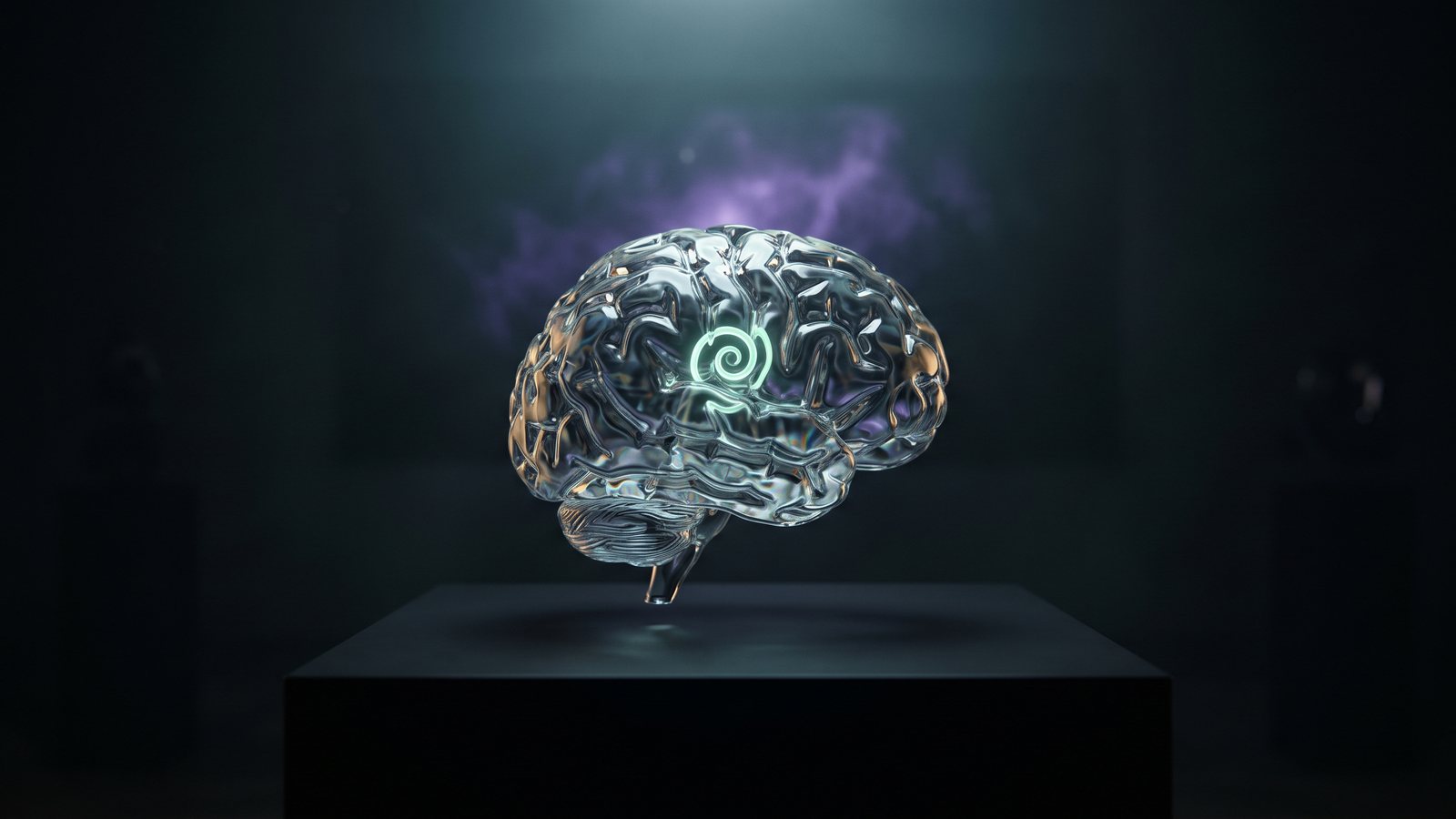
Nobody knows yet. The human body appears to make small amounts of DMT: careful mass-spectrometry studies have found it in human blood, urine and spinal fluid. But no one has ever measured DMT in a living human brain, so whether the brain itself makes meaningful amounts is unknown. Human brain tissue from autopsies carries the messenger RNA for INMT, the enzyme long credited with making DMT, yet knockout studies in rats and mice have put that enzyme in doubt. The best direct brain measurements come from rats.
THE SHORT VERSION · SWIPE
On this page 10 sections
“Your brain makes DMT” is one of the most repeated lines in psychedelic culture. It sounds like a settled fact. It is really three separate questions stacked on top of each other: does the human body make DMT at all, does the human brain make it, and does it make enough to matter? Each has a different answer and a different quality of evidence.
This article works through the human evidence piece by piece: the decades of body-fluid studies, the enzyme messages found in human brain tissue, the rat experiments that people quote as if they were human data, and the gaps that nobody has filled. For the basics of the molecule itself, start with our pillar guide, what is DMT.
Education only, not guidance
This article describes published research. It gives no amounts, no instructions and no advice on use, and it does not describe any effect as a benefit. DMT is a controlled substance in Canada. For risks and help, see our safety page; in an emergency, call 911. Evidence labels used below: established (shown in peer-reviewed studies and not seriously disputed), preliminary (early, small, animal-only or indirect) and unresolved (an open question).
What does “the brain makes DMT” actually claim?
Endogenous means made inside the body rather than taken in from outside. For DMT the classic pathway runs from the dietary amino acid tryptophan to tryptamine, through an enzyme called aromatic L-amino acid decarboxylase (AADC), and then from tryptamine to DMT through two methylation steps long credited to a second enzyme, indolethylamine N-methyltransferase (INMT) (Barker, 2018). So the claim “the brain makes DMT” needs three things to be true: the raw material and enzymes are present in the brain, DMT actually forms there, and it is present in amounts that could do something. Evidence: established for the textbook pathway as a description; whether it runs in the human brain is unresolved.
- Is DMT made anywhere in the human body? This is answered by measuring it in blood, urine and spinal fluid.
- Is it made in the human brain? This needs evidence from brain tissue or from fluid sampled in the brain.
- Is there enough to matter? This needs a measured concentration and a known function, neither of which exists for the human brain.
What did 55 years of body-fluid studies find?
Scientists started looking for DMT in people in the 1950s, partly because of the “transmethylation hypothesis”, the idea that conditions such as schizophrenia might involve the body making its own hallucinogens. That basic premise remains unproven, but the research led to the discovery of an enzyme that methylates tryptamines (Barker, 2022). Endogenous DMT was first reported in human blood and urine in 1965, according to a 2023 paper’s history of the field (Glynos et al., 2023). Evidence: established as history.
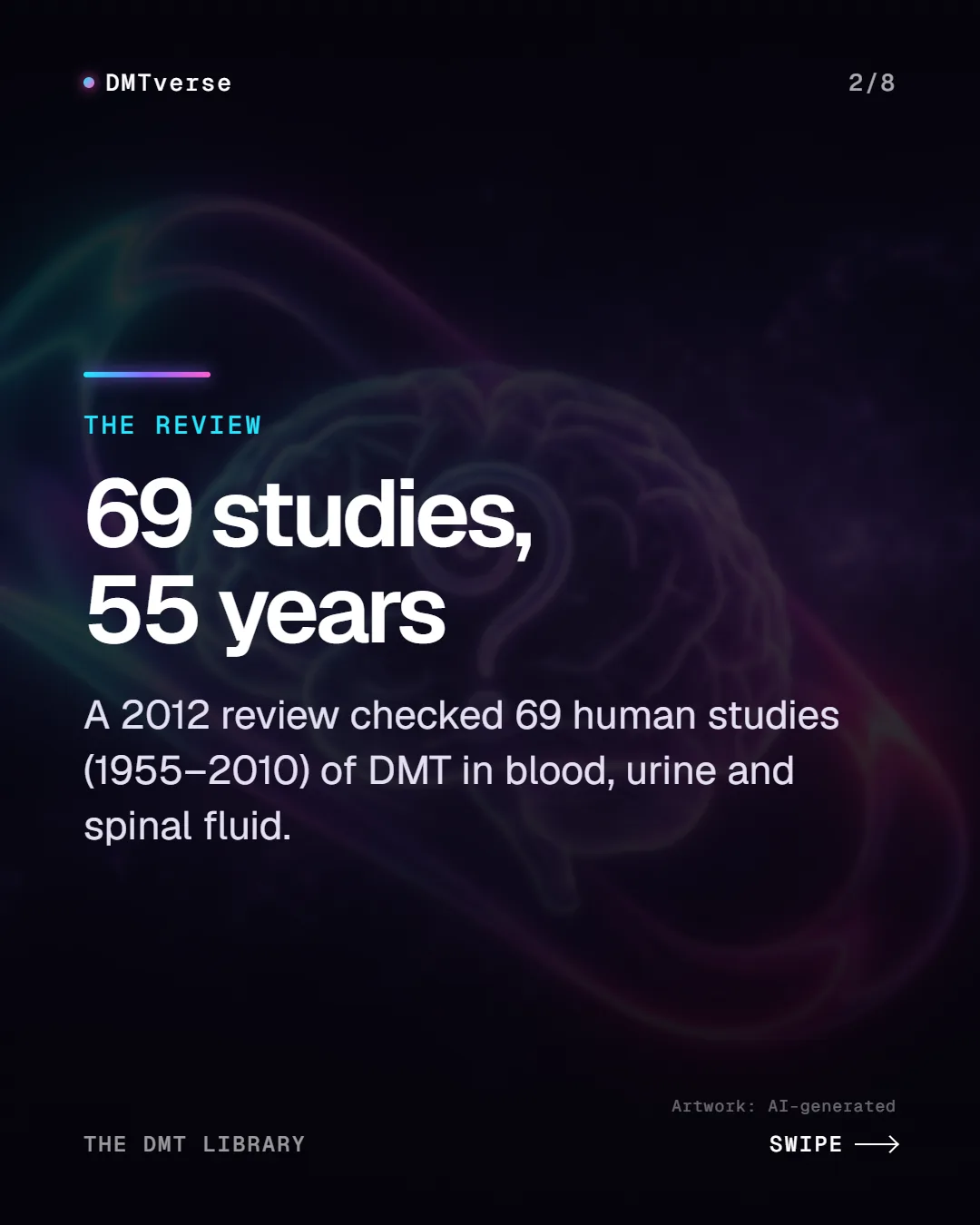
In 2012, three researchers critically reviewed 69 published studies, from 1955 to 2010, that reported DMT and two related compounds (bufotenine and 5-MeO-DMT) in human blood, urine or cerebrospinal fluid. They looked at the methods and the criteria each study used to decide that DMT was really there (Barker et al., 2012). The lead author later summarised the verdict (Barker, 2018):
- Many early studies probably misidentified the compound, so their often high reported levels, and any links to psychiatric diagnoses, were probably in error.
- Where DMT was properly identified, healthy control groups had it too, sometimes at higher levels, so it was neither necessary nor sufficient for any diagnosis.
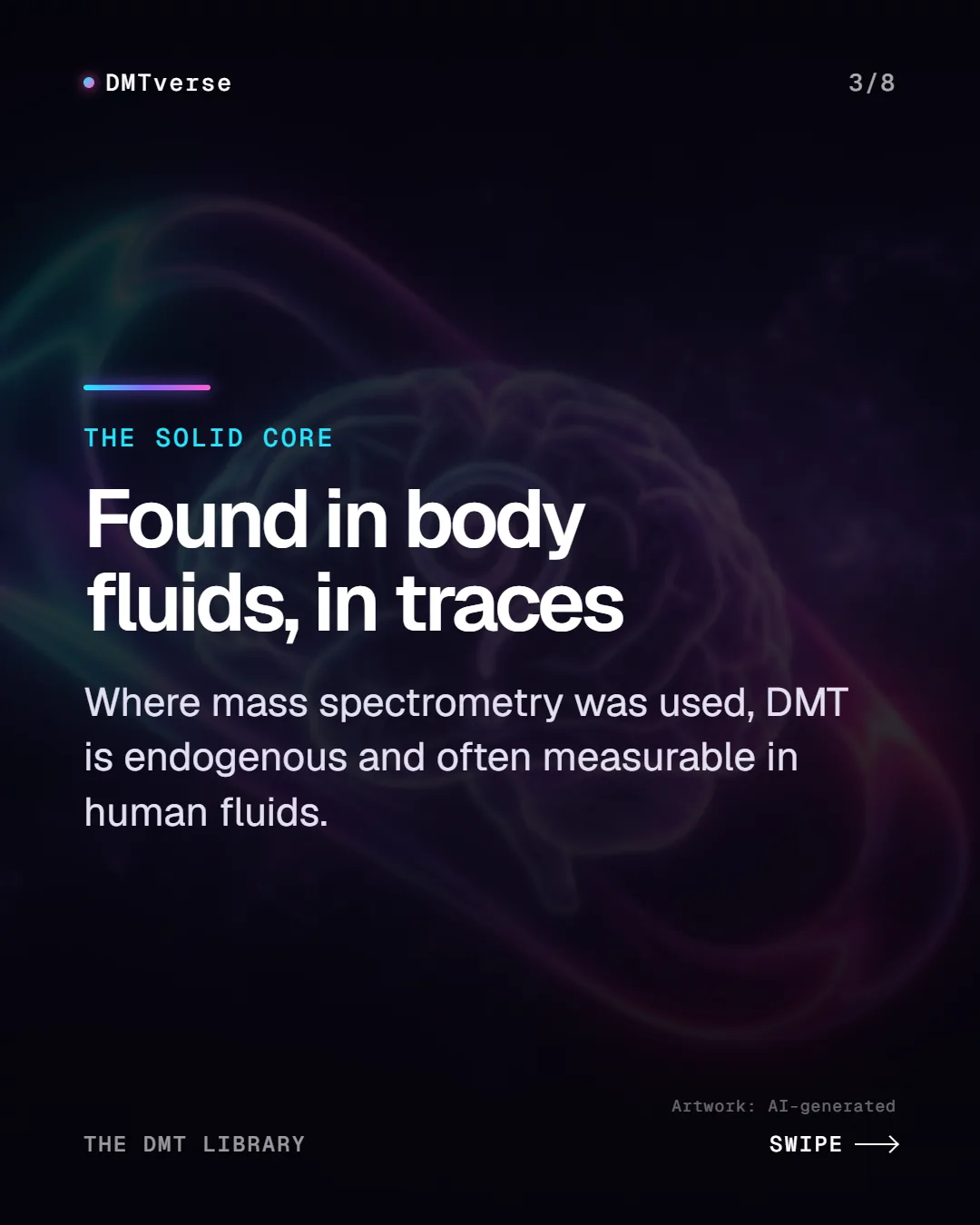
- Where mass spectrometry evidence was provided, DMT is endogenous and can often be measured in human body fluids.
That third point is the solid core of the human evidence: with modern identification methods, DMT does turn up in people. But the amounts are small. A 2019 paper notes that studies of human body fluids have reported DMT only in trace amounts, “calling into question any physiological role” (Dean et al., 2019). And as of 2018, no study had tried to link human DMT levels in blood, urine or saliva to body events such as daily rhythms, sex or age (Barker, 2018). Evidence: established that DMT is detectable in human fluids; preliminary on what the levels mean.
Why detection is not the same as production in the brain
Finding DMT in blood or urine shows that it is present in the body, but not where it was made. It could come from the lungs, the gut, the brain or elsewhere, and urine collected over a day blurs any timing. That is why the next two kinds of evidence, spinal fluid and brain tissue, matter so much.
Has DMT been found in human spinal fluid?
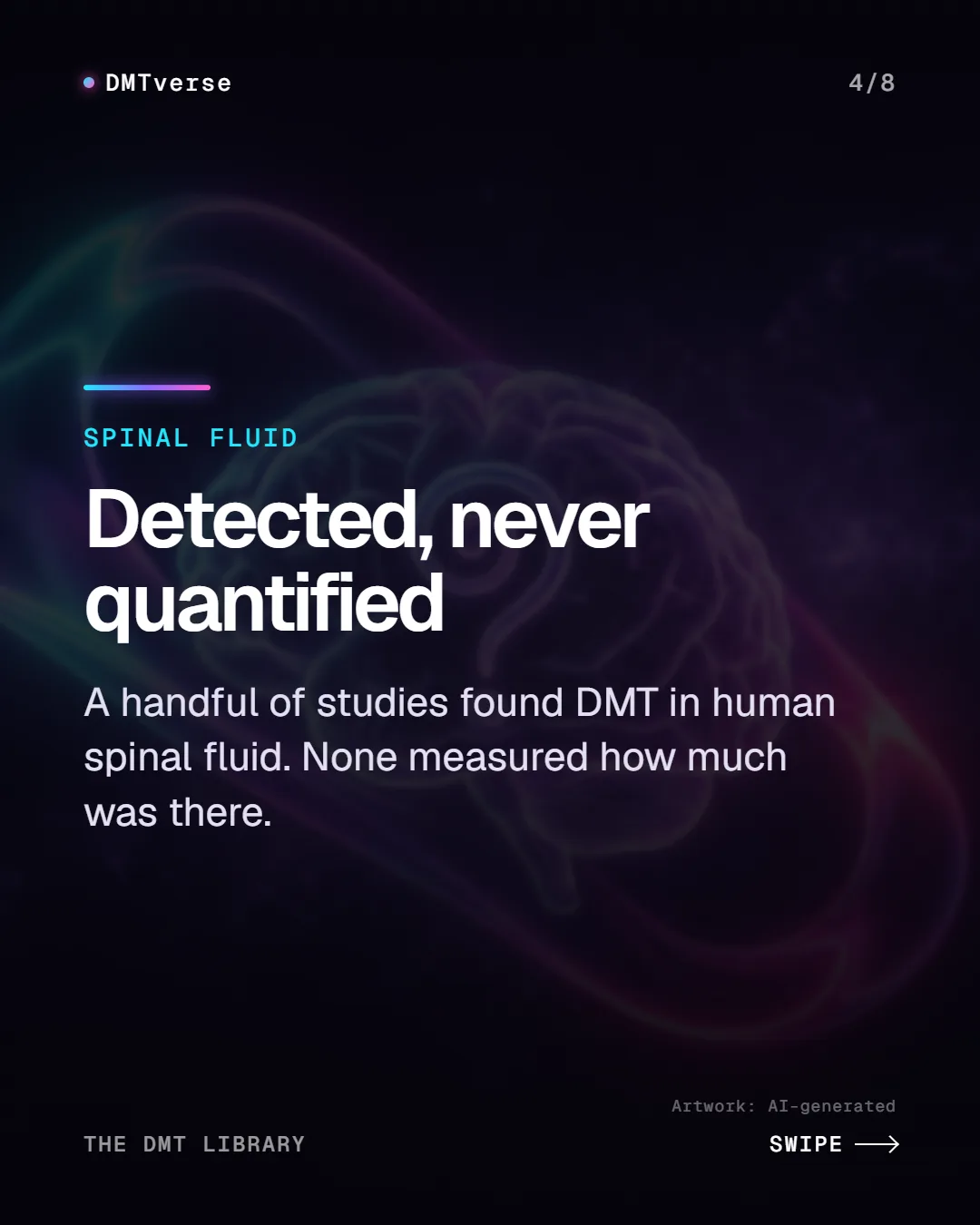
Yes, but only in a handful of studies, and none measured how much. Cerebrospinal fluid (CSF) bathes the brain and spinal cord, so it is the closest anyone has come to sampling the human brain chemically. A 2022 review notes that only a handful of studies have tried to detect endogenous DMT in the human brain, and all did so indirectly, through CSF (Barker, 2022). The 2018 review adds that those CSF studies made no effort to quantify the DMT they detected (Barker, 2018). Evidence: preliminary. Detection in CSF fits with brain production but does not prove it, because substances can reach CSF from the blood.
Does human brain tissue have the machinery to make DMT?
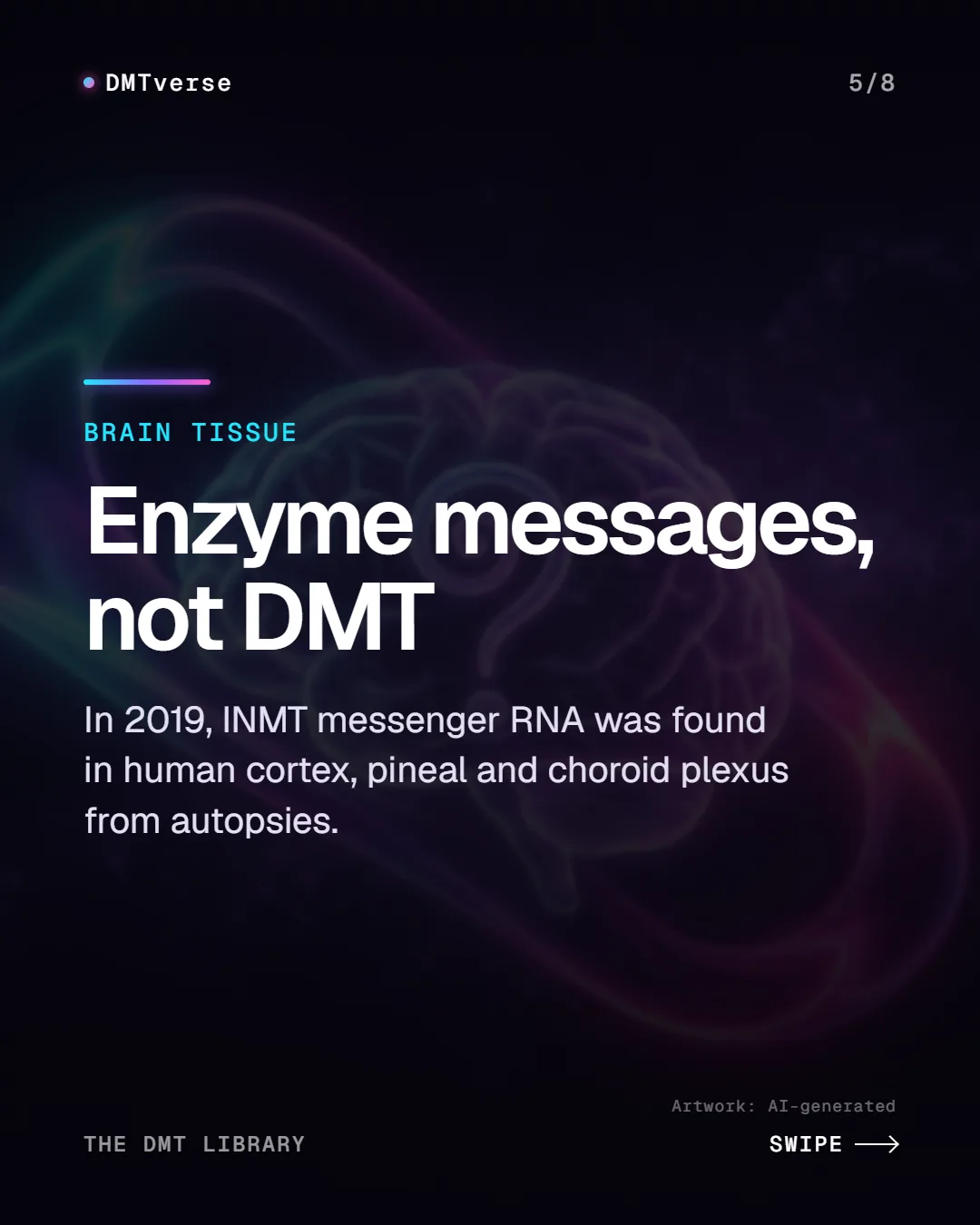
For a long time the answer looked like no. When the human INMT gene was cloned in 1999, a Northern blot survey of 35 tissues found its messenger RNA in most tissues (Thompson et al., 1999); later authors note that this survey did not detect it in human brain (Dean et al., 2019). That fed a popular idea that any DMT in the brain must be made in the body and carried there. Evidence: established as the historical finding.
There were hints the other way. In 1972, Juan Saavedra and Julius Axelrod reported an enzyme in rat and human brain that converts tryptamine into N-methyltryptamine and DMT (Saavedra and Axelrod, 1972). Other early studies reported INMT activity in parts of the human brain such as the frontal cortex, and a 2011 study found INMT protein in the pineal gland, spinal cord and retina of monkeys (Barker, 2018). Evidence: preliminary. Early enzyme-activity assays used crude tissue extracts, which cannot pin activity on one specific enzyme (Glynos et al., 2023).
The clearest human finding came in 2019. Using a sensitive staining method called RNAscope in situ hybridisation, a University of Michigan team detected INMT messenger RNA in human medial frontal cortex, human pineal gland and human choroid plexus (the tissue that makes CSF). The human samples were archived, de-identified autopsy tissue (Dean et al., 2019). The authors explain the change from 1999: Northern blots are less sensitive and give no information on which cells carry the message. Evidence: preliminary. It is one lab’s staining result in post-mortem tissue.
Three cautions apply. Messenger RNA is the instruction for making a protein, not the protein, and not proof the protein is active. INMT also methylates other molecules, including histamine and sulfur- and selenium-containing compounds, so its presence does not show that DMT is being made (Dean et al., 2019). And the 2019 study checked whether INMT and AADC sat in the same cells only in rat tissue, not in human tissue. Our INMT enzyme explainer covers the enzyme in depth. Evidence: established for these limits.
Has anyone measured DMT in a living human brain?
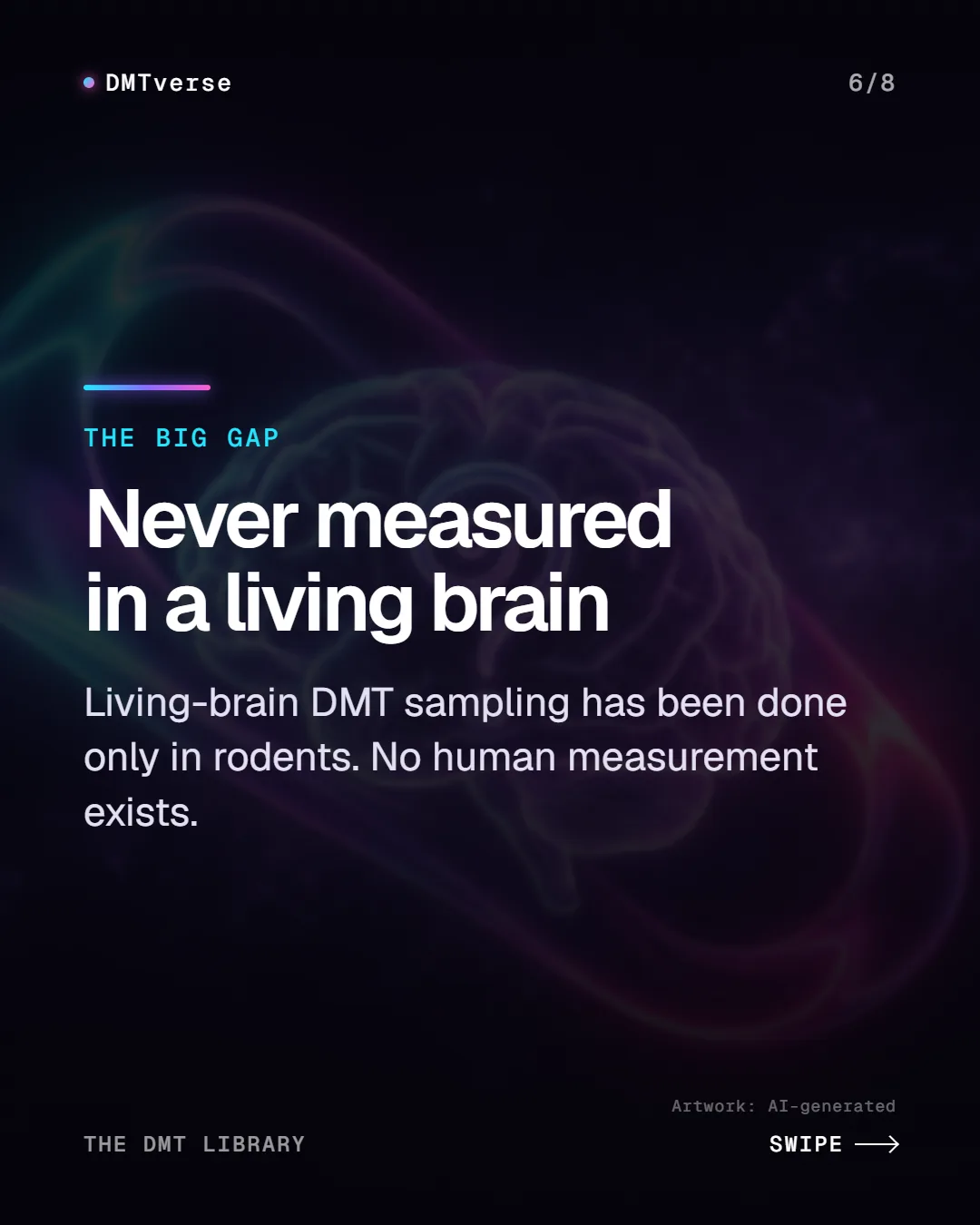
No. This is the single most important fact on this page. As of the 2018 review, there had been no efforts to quantify DMT in the human brain (Barker, 2018), and the 2022 review describes the human brain evidence as limited to indirect CSF detection (Barker, 2022). A 2023 paper states plainly that sampling of DMT in the living brain “has been restricted to rodent studies” (Glynos et al., 2023). Evidence: established. A Europe PMC search we ran on 20 October 2026 surfaced no later study reporting such a measurement among its most relevant results.
Part of the reason is method. The rodent technique, microdialysis, involves surgically implanting a probe that passes through brain tissue and collecting fluid from a freely moving animal for hours or days (Dean et al., 2019). Measuring whole brain tissue after death has its own problem: one researcher argues that DMT may be lost when tissue is processed, which may explain why whole-brain measurements in rodents have given widely differing results (Barker, 2022). Evidence: established for the method; the tissue-loss explanation is one researcher’s view.
What do the rat and mouse studies add?
Much of what is quoted as “the brain makes DMT” comes from rats. In 2013, DMT was detected for the first time in fluid sampled near the rat pineal gland, using a mass-spectrometry method that tracked 23 compounds (Barker et al., 2013). In 2019, DMT was measured in the visual cortex of 36 living rats, averaging 0.56 nanomolar (billionths of a mole per litre) in rats with a pineal gland and 1.02 in rats without one, in the same low range as serotonin, dopamine and noradrenaline measured by the same sampling method (Dean et al., 2019). The numbers, the method and the limits are unpacked in our rat brain study explainer. Evidence: preliminary. Rats only, and the 2019 measurements come from one lab.
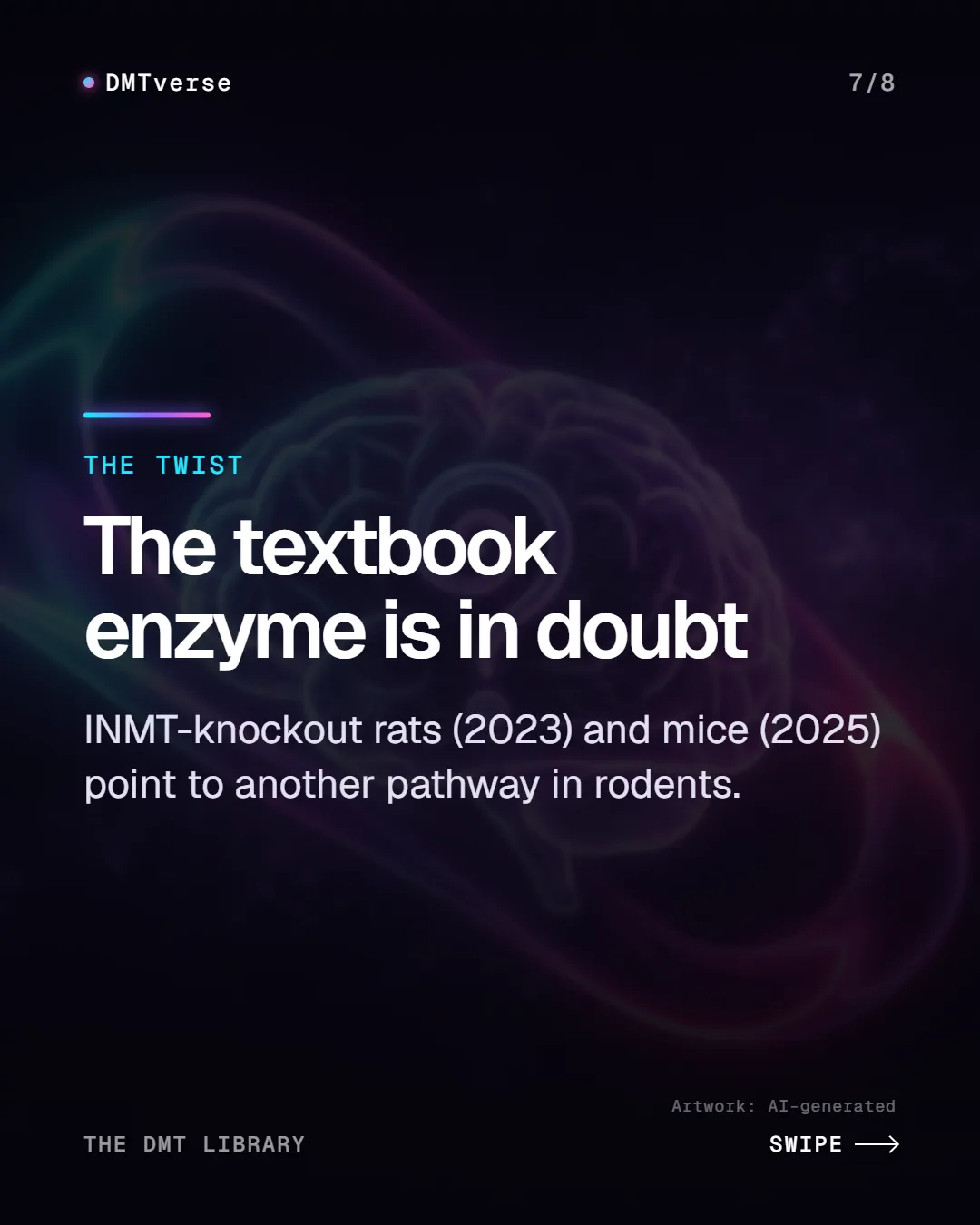
Then came the twist. In 2023, the same Michigan group made rats with the INMT gene knocked out. Brain and lung tissue from those rats methylated tryptamine just as well as normal tissue, but the products were neither N-methyltryptamine nor DMT, and rat INMT by itself could not make them (Glynos et al., 2023). In 2025, a separate team made INMT-knockout mice and found no obvious drop in their endogenous psychedelic tryptamine levels, “suggesting that psychedelics might be produced by alternative biosynthetic pathways in rodents” (Hatzipantelis et al., 2025). Evidence: preliminary. In rodents, the textbook enzyme does not look necessary; which enzyme does the job is unknown.
| Question | Humans | Rats and mice |
|---|---|---|
| DMT detected in body fluids? | Yes, in blood, urine and CSF, in trace amounts (Barker et al., 2012; Dean et al., 2019) | Yes, in several studies (Glynos et al., 2023) |
| Measured in the living brain? | Never (Barker, 2018; Glynos et al., 2023) | Yes, by microdialysis in rat cortex (Dean et al., 2019) |
| Amount quantified in the brain? | No; CSF studies did not quantify (Barker, 2018) | Yes, low nanomolar in rat cortex (Dean et al., 2019) |
| INMT message in brain tissue? | Yes, autopsy cortex, pineal and choroid plexus (Dean et al., 2019) | Yes, with AADC in the same cells (Dean et al., 2019) |
| Is INMT needed to make DMT? | Not tested | Apparently not (Glynos et al., 2023; Hatzipantelis et al., 2025) |
Is there enough DMT in the brain to matter?
This is where researchers genuinely disagree. Pharmacologist David Nichols argues that the very small concentrations detected in the brain are not enough to produce psychoactive effects (Nichols, 2018). Steven Barker, a long-time endogenous-DMT researcher, argues that rat cortical levels sit in the normal range for established neurotransmitters, and that if DMT is packed into vesicles like other transmitters, local concentrations could be higher than the averages suggest (Barker, 2022). Both are arguing from the same thin data, mostly from rats. Evidence: unresolved.
Both sides agree on one thing: a normal everyday role, if there is one, would not be to produce psychedelic experiences. Barker writes that DMT’s primary homeostatic role does not involve routine creation of the profound effects seen when it is given from outside (Barker, 2022). The idea that DMT may be a neurotransmitter dates to a 1976 paper arguing it met the criteria of the time (Barker, 2018), and the 2019 authors suggested cortical cells carrying both enzymes might be “DMT-producing neurons”, while noting a role for them still had to be explored (Dean et al., 2019). Evidence: unresolved. A proposed role is not a demonstrated one.
Newer hypotheses keep the question open. In 2025, Barker proposed that DMT may be the brain’s missing natural partner for 5-HT2A receptors that sit inside nerve cells rather than on their surface, and reported that rat brain DMT levels have been shown to rise with stress (Barker, 2025). That is a hypothesis from one researcher, not a demonstrated fact in any species; the receptor side is covered in DMT and the 5-HT2A receptor. Evidence: unresolved.
Which popular claims go too far?
“The human body makes DMT”
Fair, with qualifiers: DMT has been identified with mass spectrometry in human body fluids, in trace amounts (Barker, 2018). Where it is made is not known.
“Your brain makes DMT”
Not shown in humans. Human brain tissue carries INMT messenger RNA (Dean et al., 2019), but DMT has never been measured in a living human brain (Glynos et al., 2023).
“Brain DMT levels equal serotonin”
Rats only, and roughly half: in rats without a pineal gland, average cortical DMT was about half the serotonin level in the same samples (Dean et al., 2019).
“The pineal gland makes your DMT”
Unsupported. Removing it did not lower cortical DMT in rats (Dean et al., 2019). See is DMT in the pineal gland?
“INMT makes DMT”
In doubt in rodents: knockout rats and mice did not lose it (Glynos et al., 2023; Hatzipantelis et al., 2025).
Each panel restates the evidence given in the sections above.
The claim that the dying brain floods with DMT is a separate question again, examined in our fact-check, does the brain release DMT when you die?. In short: a rise was measured in rats after induced cardiac arrest, and never in a human (Dean et al., 2019). Evidence: preliminary for rats; unresolved for humans.
What would it take to settle the question?
- A quantified measurement of DMT in living human brain tissue or fluid, with modern mass-spectrometry identification (never done).
- Repeated sampling of human body fluids over the day, linked to sleep, stress or other body events (not done as of 2018, per Barker).
- Identification of the enzyme or enzymes that make DMT, now that INMT-knockout rodents still appear to have it (unresolved).
- Independent replication of the rat cortex measurements by another laboratory with a different method (not found in the sources we read).
- A demonstrated function for endogenous DMT in any species, rather than a proposed one (unresolved).
The fair summary in one line: DMT is probably made somewhere in the human body in small amounts, the human brain has at least some of the instructions for the enzyme long credited with making it, and nobody yet knows whether the living human brain makes meaningful DMT or what it would do there.
Common questions
Does the brain make DMT?
In rats, DMT has been measured in the living brain. In humans, it has never been measured in a living brain. Human brain tissue from autopsies carries the messenger RNA for INMT, an enzyme long credited with making DMT, and DMT has been detected in human body fluids, but whether the human brain makes meaningful amounts is unknown.
Is DMT naturally produced in the human body?
Probably, in small amounts. A 2012 review of 69 studies concluded that where mass spectrometry was used, DMT is endogenous and can often be measured in human body fluids. Many older studies that reported high levels probably misidentified the compound.
Has DMT been found in human spinal fluid?
Yes, in a handful of studies of cerebrospinal fluid, but none of them measured how much DMT was present. Those studies are the closest anyone has come to sampling the human brain for DMT.
Do human brains have the enzyme that makes DMT?
A 2019 study found the messenger RNA for INMT in human cortex, pineal gland and choroid plexus from autopsy tissue. But messenger RNA is not proof of an active enzyme, INMT methylates other molecules too, and knockout studies in rats and mice suggest INMT may not be what makes DMT in rodents.
Is DMT a neurotransmitter?
It has been proposed as one since the 1970s, and rat cortex levels fall in the range of known neurotransmitters. But no function for endogenous DMT has been demonstrated in any species, so calling it a neurotransmitter is a hypothesis, not an established fact.
How much DMT is in the human brain?
Nobody knows. It has never been quantified in the human brain. Human body-fluid studies report only trace amounts, and one pharmacologist argues brain levels are too small to have psychoactive effects, while another researcher argues local levels could be higher than averages suggest.
Does the pineal gland make DMT in humans?
There is no human measurement. Human pineal tissue carries INMT messenger RNA, but in rats, removing the pineal gland did not lower DMT in the cortex. The pineal-as-source idea is unsupported, which is not the same as disproven.
Shroomverse sells mushroom products. This article is general information about research on whether the human body and brain make DMT. It is not medical, legal or purchasing advice, and it does not recommend any product.
SOURCES
- A critical review of reports of endogenous psychedelic N,N-dimethyltryptamines in humans: 1955–2010 (Barker SA, McIlhenny EH, Strassman R, Drug Testing and Analysis 4(7-8):617–635, 2012), Wiley (peer-reviewed); abstract via Europe PMC. Accessed . Abstract read. Supports the critical review of 69 studies of DMT, bufotenine and 5-MeO-DMT in human blood, urine and/or cerebrospinal fluid from 1955 to 2010, assessing methods and identification criteria. The three conclusions are taken from Barker 2018’s summary.
- N,N-Dimethyltryptamine (DMT), an Endogenous Hallucinogen: Past, Present, and Future Research to Determine Its Role and Function (Barker SA, Frontiers in Neuroscience 12:536, 2018), Frontiers (peer-reviewed, open access); full text via Europe PMC, PMC6088236. Accessed . Full text read. Supports the AADC and INMT pathway; the summary of the 69-study review (early errors, controls, MS-confirmed endogenous DMT); no study linking fluid levels to body events; CSF studies made no effort to quantify; no efforts to quantify DMT in human brain; INMT activity in human frontal cortex and other regions in early studies; INMT protein in monkey pineal, spinal cord and retina (Cozzi 2011); Christian 1976 neurotransmitter criteria.
- Administration of N,N-dimethyltryptamine (DMT) in psychedelic therapeutics and research and the study of endogenous DMT (Barker SA, Psychopharmacology 239:1749–1763, 2022), Springer (peer-reviewed, open access); full text via Europe PMC, PMC8782705. Accessed . Full text read (endogenous DMT section). Supports the transmethylation hypothesis remaining unproven and leading to INMT’s discovery; only a handful of human brain studies, all indirect via CSF; widely differing rodent whole-brain results and the author’s view that DMT may be lost in tissue processing; his argument on vesicles and local concentrations; and his statement that DMT’s homeostatic role does not involve routine psychedelic effects.
- N,N-dimethyltryptamine (DMT) in rodent brain: Concentrations, distribution, and recent pharmacological data (Barker SA, Progress in Neuro-Psychopharmacology and Biological Psychiatry 137:111259, 2025), Elsevier (peer-reviewed); abstract via Europe PMC. Accessed . Abstract read. Supports the proposal that DMT is the missing endogenous ligand for intracellular 5-HT2A receptors, and the statement that rat brain DMT levels have been shown to rise with stress. Cited as one researcher’s hypothesis.
- Biosynthesis and Extracellular Concentrations of N,N-dimethyltryptamine (DMT) in Mammalian Brain (Dean JG, Liu T, Huff S, et al., Scientific Reports 9:9333, 2019), Springer Nature (peer-reviewed, open access); full text via Europe PMC, PMC6597727. Accessed . Full text read. Supports INMT mRNA by RNAscope in human medial frontal cortex, pineal and choroid plexus from archived de-identified autopsy tissue; the Northern-blot explanation; trace amounts in human fluids; INMT’s other substrates (histamine, sulfur compounds, selenium); colocalization tested in rat only; 36 rats with cortical DMT comparable to monoamines; DMT about half of 5-HT in pinealectomized rats; ‘D-neurons’ proposal; rise after cardiac arrest in rats.
- Indolethylamine N-methyltransferase (INMT) is not essential for endogenous tryptamine-dependent methylation activity in rats (Glynos NG, Carter L, Lee SJ, et al., Scientific Reports 13:280, 2023), Springer Nature (peer-reviewed, open access); full text via Europe PMC, PMC9822953. Accessed . Full text read. Supports endogenous DMT first confirmed in human blood and urine in 1965; in vivo brain sampling restricted to rodents; INMT-knockout rats with equal tryptamine-methylating activity whose products were neither NMT nor DMT; rat INMT not sufficient; limits of early crude-extract assays.
- Indolethylamine N-Methyltransferase Deletion Impacts Mouse Behavior without Disrupting Endogenous Psychedelic Tryptamine Production (Hatzipantelis CJ, et al., ACS Chemical Neuroscience 16(20):4011–4024, 2025), American Chemical Society (peer-reviewed); abstract via Europe PMC. Accessed . Abstract read (full text not available through Europe PMC on this date). Supports INMT-knockout mice with no obvious decrease in endogenous psychedelic levels and the quoted suggestion of alternative pathways in rodents. Which tryptamines were measured was not checked in full text.
- N,N-dimethyltryptamine and the pineal gland: Separating fact from myth (Nichols DE, Journal of Psychopharmacology 32(1):30–36, 2018), SAGE (peer-reviewed); abstract via Europe PMC. Accessed . Abstract read. Supports the view that very small DMT concentrations detected in the brain are not sufficient to produce psychoactive effects.
- Psychotomimetic N-methylated tryptamines: formation in brain in vivo and in vitro (Saavedra JM, Axelrod J, Science 175(4028):1365–1366, 1972), American Association for the Advancement of Science (peer-reviewed); abstract via Europe PMC. Accessed . Abstract read; record checked on Crossref. Supports an enzyme converting tryptamine and NMT to NMT and DMT being present in rat and human brain.
- Human indolethylamine N-methyltransferase: cDNA cloning and expression, gene cloning, and chromosomal localization (Thompson MA, Moon E, Kim UJ, Xu J, Siciliano MJ, Weinshilboum RM, Genomics 61(3):285–297, 1999), Elsevier (peer-reviewed); abstract via Europe PMC. Accessed . Abstract read; record checked on Crossref. Supports cloning of human INMT and the Northern blot of 35 tissues showing mRNA in most tissues. The non-detection in human brain is as described by Dean et al. 2019.
CHANGES
- : Linked glossary definitions.
- : Published. All sources opened and checked on this date.
- : Editorial review: summary now opens with a direct answer; AADC and nanomolar defined; rat cortex averages (0.56 and 1.02 nanomolar) added so figures match the rat study and pineal articles; linked the 5-HT2A article from the intracellular-receptor hypothesis.



