THE SHROOMVERSE JOURNAL ✳ 12 MIN READ
DMT and music: what research says about sound, song and psychedelic experience
Topic: DMT
Published
Short answer, checked 24 October 2026
DMT music research is thin: a 2026 review of music-and-psychedelic studies found work on LSD, psilocybin and ayahuasca, but none on DMT alone. What exists comes from three places. Ayahuasca traditions are built around song, from Shipibo-Konibo healers’ icaros to the hymns Santo Daime congregations sing in unison. LSD and psilocybin studies found that music can heighten emotion and imagery. And people report sounds under DMT itself: in 3,778 online reports, 15.4% described a ringing-type sound. None of this is advice on using music with any drug.
THE SHORT VERSION · SWIPE
On this page 8 sections
Music turns up everywhere DMT does: in the songs of Amazonian healers, in the hymns of Brazilian ayahuasca churches, in the playlists of clinical trials and in a whole genre of dance music. Yet almost no laboratory study has asked what music does during a DMT experience. This article separates what has been measured from what has only been described.
Education only, not guidance
This article describes published research and cultural history. It gives no amounts, no instructions, no music recommendations and no advice on use. DMT is a controlled substance in Canada. For risks, see our safety page. Evidence labels used below: established (shown in peer-reviewed studies and not seriously disputed), preliminary (early, small, self-selected or indirect) and unresolved (an open question).
Has anyone studied DMT and music directly?
Not in the way LSD and psilocybin have been studied. A 2026 scoping review gathered 19 quantitative papers from 10 studies, with 330 people in total, on music and psychedelics in therapeutic or controlled settings. The drugs studied were LSD, psilocybin and ayahuasca; no study of DMT on its own met the criteria (Rowe et al., 2026). Evidence: established that the gap exists.
A second 2026 review of 36 clinical-trial articles found that ayahuasca and DMT stood out as the substances most often studied without music. Three trials said outright that no music was used: two ayahuasca trials, one to isolate the drug’s own effects and one to keep the room quiet and neutral, and a 2022 DMT study that gave no reason (Cruz et al., 2026). The authors called this striking, given how central music and chanting are to ayahuasca rituals.
Other DMT studies were built around silence by design. In the 2019 Imperial College EEG study, volunteers lay semi-supine with eye shades and eyes closed, and the methods describe no music (Timmermann et al., 2019). In a 2026 interview study, 23 participants were blindfolded inside a brain scanner (Sanders et al., 2026). So the sounds reported in these studies came from the experience, not from a playlist.
Why is song central to ayahuasca traditions?
Ayahuasca is a brew that contains DMT, and in the traditions that use it, music is not background. It structures the ceremony. Our guide to what happens at an ayahuasca ceremony covers the different formats; here the focus is the singing.
Icaros: the healer’s songs
A 2024 review describes icaros in Peruvian Amazonian practice as one of the healer’s primary tools: single melodies without harmony, built from a few repeated phrases, that healers sing, hum or whistle, often with a rattle (Efthimiou et al., 2024). A 2026 study of Shipibo-Konibo medicinal song worked from recordings of two healers (onanya) made in October 2024, translated with the singers and other Indigenous researchers. It argues that, in Shipibo-Konibo understanding, the songs do things rather than describe them: they heal, diagnose and call on spiritual forces (Favaron Peyón and Zariquiey, 2026). Evidence: established as ethnography.
One study asked listeners. Researchers interviewed addiction-treatment patients at Centro Takiwasi in Peru about hearing icaros during ayahuasca ceremonies. Patients said the songs changed their emotions and the course of the experience, helped them feel safe, and guided them through difficult memories (Graham, Saucedo and Politi, 2022). Evidence: preliminary; one treatment centre, qualitative interviews.
Hinos: the hymns of Santo Daime
In the Brazilian Santo Daime church, ceremonies centre on the joint singing of hymns (hinos) in a ritual hall called the salão. A 2021 analysis describes the music as sung in unison to three basic rhythms, the march, the waltz and the mazurka, mainly with guitar and maraca, and led by a woman lead singer (puxadora). Dancing ceremonies typically run eight to twelve hours (Hartogsohn, 2021). The same paper argues that the words of the hymns, full of Christian figures and family imagery, shape the visions members report. Evidence: established for the description; the effect on visions is the author’s interpretation.
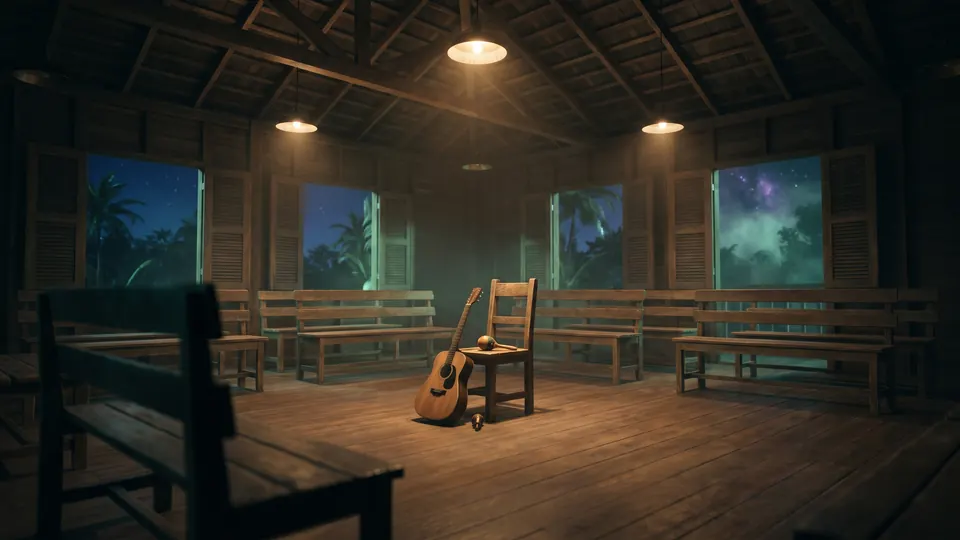
Ritual music has also been used as a test stimulus. In a 2020 Brazilian study, nine experienced participants in a shamanic ayahuasca ritual heard 20-second musical excerpts and reproduced their length. Music alone distorted their timing, and the distortion was smaller after ayahuasca, the opposite of what other hallucinogen studies had found (Campagnoli et al., 2020). Evidence: preliminary; nine people.
What did lab studies find about music on LSD and psilocybin?
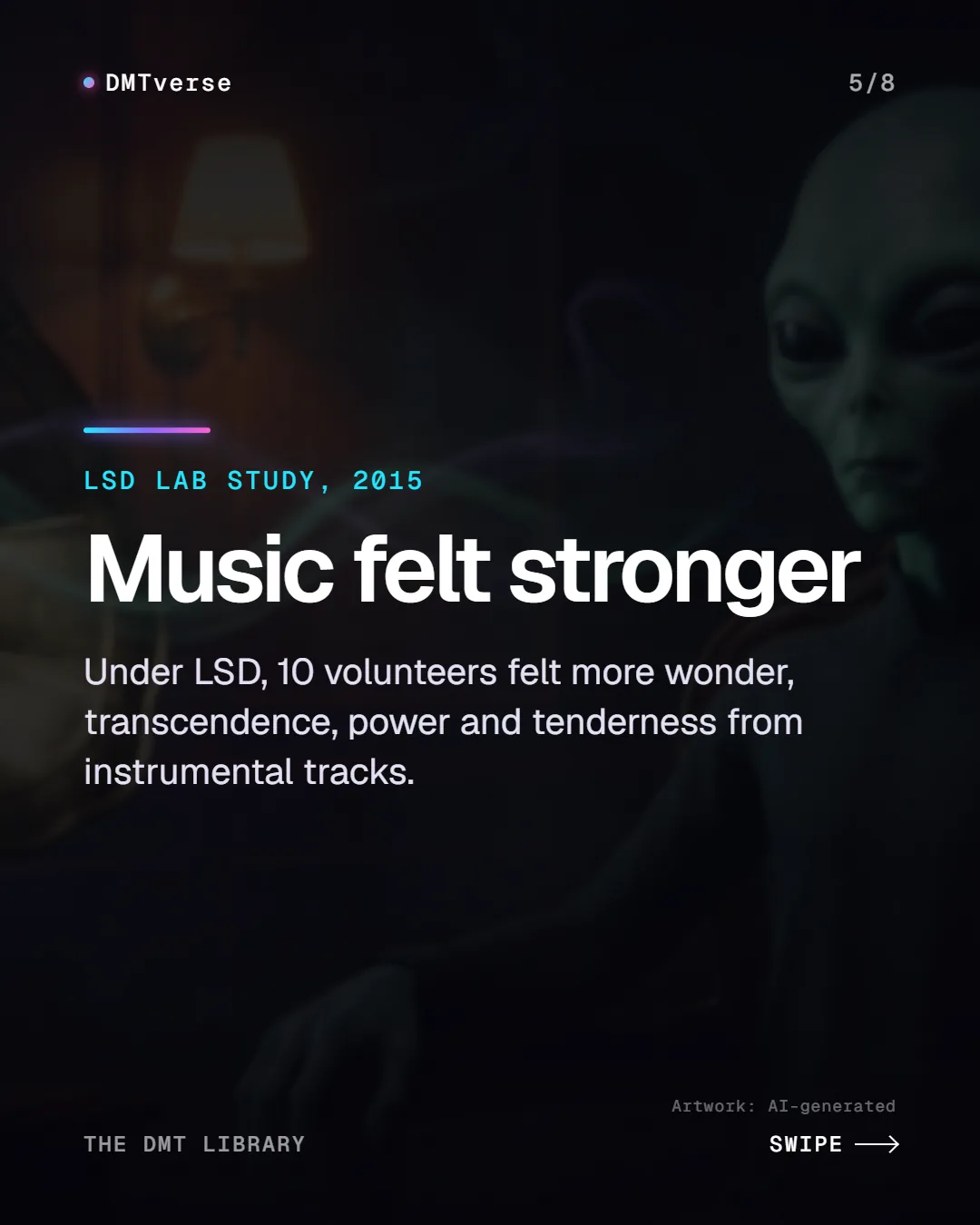
The controlled research comes from other psychedelics. In 2015, ten volunteers rated their emotional response to instrumental tracks on a placebo day and an LSD day; under LSD, emotions such as wonder, transcendence, power and tenderness were stronger (Kaelen et al., 2015). A 2016 brain-imaging study of 12 volunteers found that LSD and music together increased communication between the parahippocampal cortex and the visual cortex, which tracked reports of richer eyes-closed imagery, including autobiographical memories (Kaelen et al., 2016). Evidence: preliminary; small samples.
In psilocybin therapy for treatment-resistant depression, interviews with 19 patients found that music could be welcome, bringing meaningful emotion, guidance and a sense of safety, or unwelcome, stirring unpleasant imagery and resistance. How patients experienced the music predicted reductions in depression one week later, while general drug intensity did not (Kaelen et al., 2018). In a 10-person psilocybin study for quitting smoking, mystical-experience scores tended to be higher with overtone-based music than Western classical, and six of ten participants chose the overtone music for their third session (Strickland et al., 2021). Evidence: preliminary.
| Study | Drug | People | Main finding | DMT? |
|---|---|---|---|---|
| Kaelen 2015 | LSD | 10 | Stronger music-evoked emotion, especially wonder and transcendence | No |
| Kaelen 2016 | LSD | 12 | Music plus LSD boosted brain links tied to eyes-closed imagery | No |
| Kaelen 2018 | Psilocybin | 19 patients | Music experience predicted depression change at one week | No |
| Strickland 2021 | Psilocybin | 10 | Overtone music chosen by 6 of 10 over Western classical | No |
| Campagnoli 2020 | Ayahuasca | 9 | Less time distortion for music excerpts after ayahuasca | In the brew |
| Lawrence 2022 | DMT | 3,778 reports | Music mentioned in 10.8%; not measured as a variable | Yes, reports only |
Taken together, the 2026 scoping review concluded that music seems to shape the psychedelic experience by amplifying emotion, recruiting brain networks involved in meaning and visual imagery, and increasing a measure of brain-signal complexity, while warning of small samples and inconsistent methods (Rowe et al., 2026). Whether any of this applies to DMT, with its much shorter experience, is untested.
Why do clinical trials use playlists?
Music is part of what researchers call “setting”, the environment around a psychedelic experience (see set and setting: origins and research). The 2026 review traces today’s trial protocols to therapists of the 1960s and 1970s, who saw music as a way to release emotion and support peak experiences (Rowe et al., 2026). Among 36 recent trial articles, 25 reported using at least one playlist, 8 did not mention music and 3 stated it was not used, and there was no standard protocol (Cruz et al., 2026). Evidence: established that practice varies.
Outside trials, the Canadian Psychedelic Survey, run in January 2022, asked 1,849 people about music in mostly non-clinical use. 91.3% had used psychedelics with music, but only 10% agreed that such music should be unfamiliar and 22% that it should have no understandable lyrics, two common clinical guidelines. In the DMT and 5-MeO-DMT group (385 people), answers split almost evenly: 24.9% preferred music, 25.5% preferred none, 24.7% preferred a mix, and 24.9% had never combined them (Gloeckler et al., 2024). The authors linked the weaker preference to DMT’s rapid onset and short duration. Evidence: preliminary; a self-selected survey that groups two different drugs.
What do people hear on DMT?
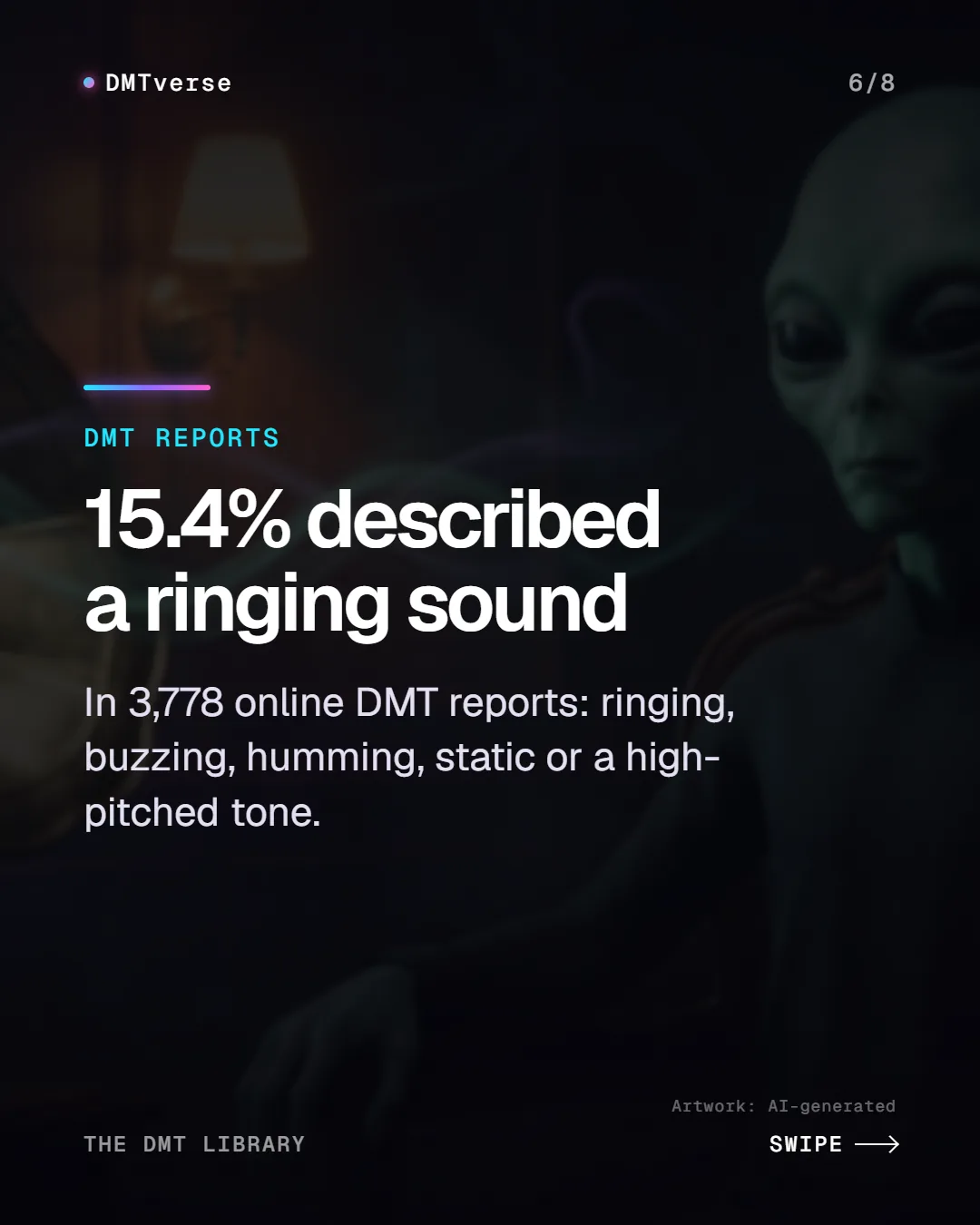
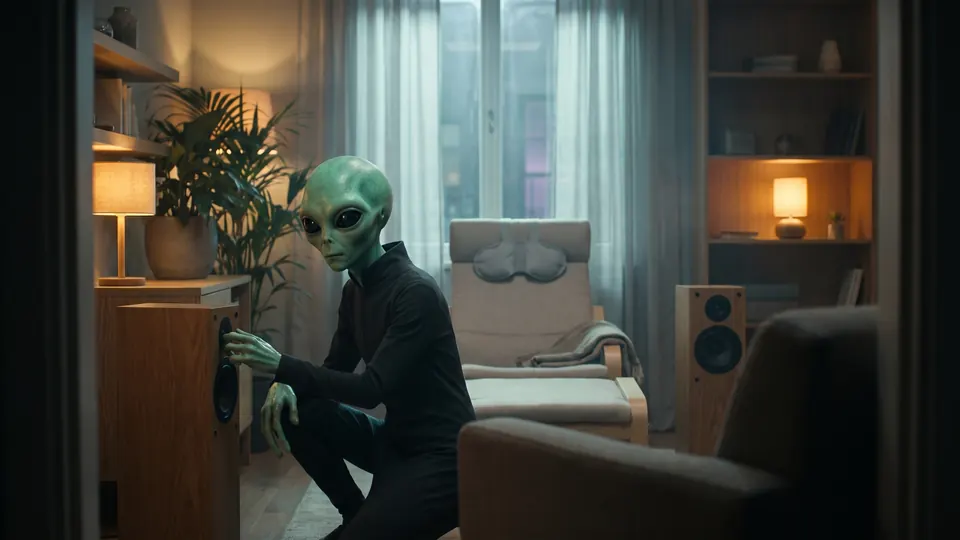
Sound is a regular part of DMT reports. A 2022 analysis of 3,778 Reddit experience reports found an auditory ringing-type sound in 15.4%, described with words such as ringing, buzzing, humming, static, droning, pulsing or a high-pitched tone. A felt body vibration, buzz or tingling appeared in 27.2%. Music being played was mentioned in 10.8% of reports, and in 7.1% of entity encounters the beings were described as dancing, singing or partying (Lawrence et al., 2022). Evidence: preliminary; the percentages count only what writers chose to mention.
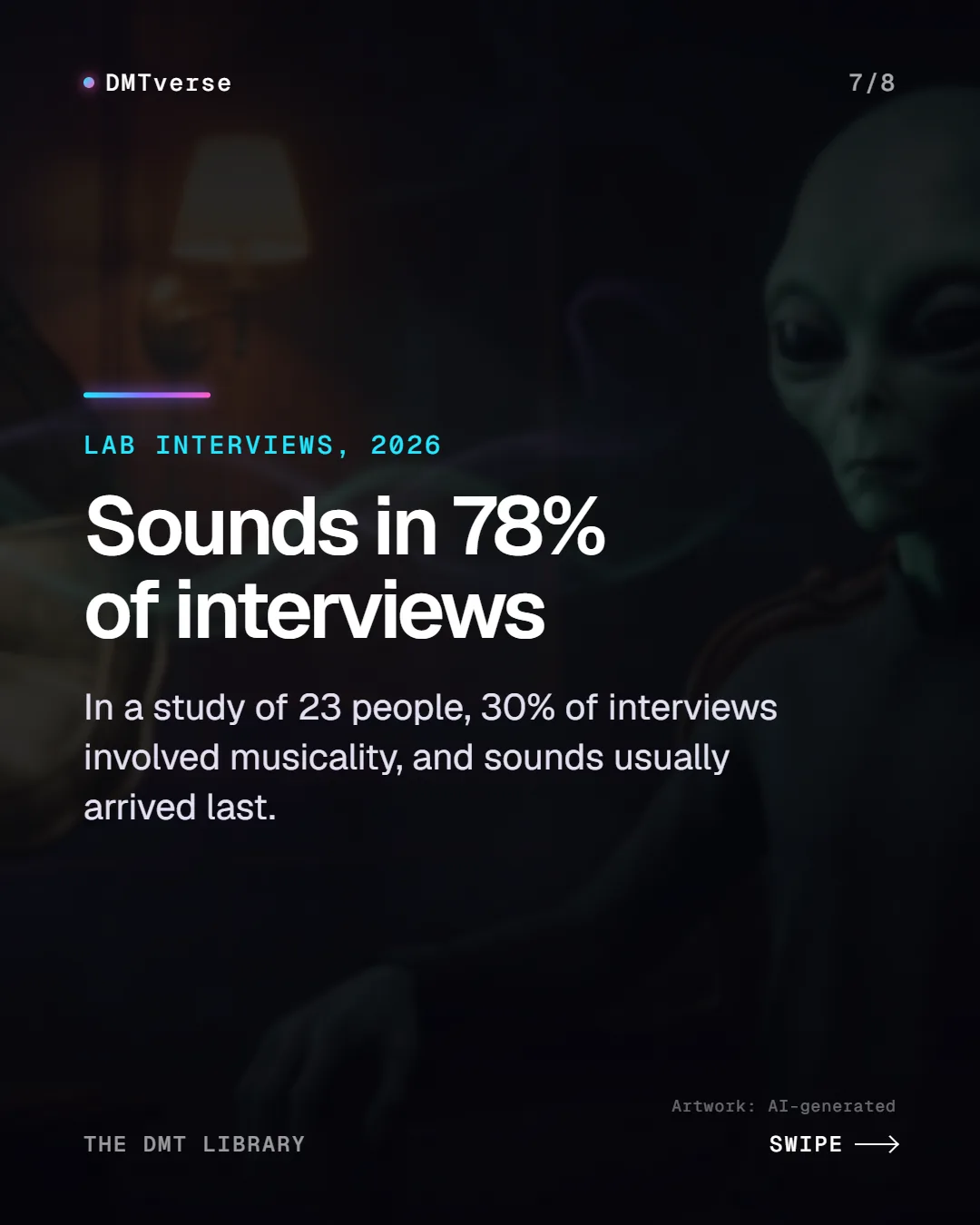
The 2026 interview study gives more detail. Auditory experiences were described in 78% of interviews, varying in pitch, timbre and volume, and 30% involved musicality, a distinction between structured music and mere sound. Participants separated plain sounds, such as buzzing or ringing, from the sounds of recognisable things, such as chanting or laughter. Sounds usually arrived last, after bodily and visual effects (Sanders et al., 2026). Evidence: preliminary; 23 people in a lab.
Online, this buzz is sometimes called a “carrier wave”. That phrase does not appear in either study; researchers code it as a ringing, buzzing or humming sound. For the wider picture, see what DMT feels like.
Where does psychedelic music fit in?
Scholars treat music and psychedelics as long intertwined. A 2024 review traces the link from Indigenous rituals in the Americas and Africa to modern therapy, with a section on ayahuasca and the Santo Daime church and another on the development of psychedelic music (Jerotic, Vuust and Kringelbach, 2024). Psychedelic trance, or psytrance, has its own scholarship, including Graham St John’s 2012 book on its global culture (St John, 2012). These are cultural histories, not evidence about what music does during a DMT experience.
If someone is in danger
Call 911 for immediate danger or urgent medical help, including if someone is unconscious, not breathing or having a seizure. In Ontario, the Ontario Poison Centre is at 1-800-268-9017; every province has a poison centre, listed by SickKids (AboutKidsHealth). If you or someone you know is thinking about suicide, call or text 9-8-8, 24 hours a day (Government of Canada). See also our safety page and how to help someone having a bad trip.
What we still don’t know
- Whether music changes the emotion, imagery or meaning of a DMT experience in a controlled study; none has been published (unresolved).
- Whether findings from hours-long LSD and psilocybin sessions carry over to an experience that lasts minutes (unresolved).
- What produces the ringing and buzzing sounds people report, and whether they relate to the brain-rhythm changes seen in EEG studies (unresolved).
- How much of the effect of icaros and hymns comes from the music, the words, the community or the ritual as a whole; studies so far are interviews and ethnography (unresolved).
- Whether traditional songs travel well outside their culture, and on whose terms; the 2024 review raises this as an ethical question for future research (unresolved).
The fair summary: song is central to ayahuasca traditions, and music measurably shapes LSD and psilocybin experiences in small studies. For DMT itself, the evidence is reports of sound, not experiments with music. For more, read what is DMT, what is ayahuasca and DMT art and visionary art.
Common questions
Has any study tested music during a DMT experience?
Not as a measured variable. A 2026 scoping review found music studies with LSD, psilocybin and ayahuasca, but none with DMT on its own, and one 2022 DMT trial stated that no music was used. Laboratory DMT studies have usually used eye shades or blindfolds in a quiet room.
What are icaros?
Icaros are songs sung by Amazonian healers, including Shipibo-Konibo onanya in Peru, during ayahuasca ceremonies. Researchers describe them as single melodies built from repeated phrases, sung, hummed or whistled. Shipibo-Konibo healers understand them as acts that heal and diagnose, not just songs.
What music is used in Santo Daime?
Hymns called hinos, sung in unison by the congregation to three rhythms (march, waltz and mazurka), mainly with guitar and maraca. Dancing ceremonies can last eight to twelve hours. Researchers argue that the hymns’ words shape what members experience.
What sounds do people report hearing on DMT?
Most often a ringing, buzzing or humming sound, reported in 15.4% of 3,778 online reports. In a 2026 interview study, 78% described sounds, and 30% described something like structured music, sometimes chanting or laughter.
Why do psychedelic trials use music?
Music is treated as part of the setting. In a 2018 psilocybin study, how patients experienced the music predicted improvement in depression a week later. Practice varies: in one review, 25 of 36 trial articles reported playlists and 3 said no music was used.
Is psytrance connected to DMT?
Psytrance is a psychedelic dance-music culture with its own academic literature. That literature is cultural history; no study has measured what such music does during a DMT experience.
Shroomverse sells mushroom products. This article is general information about research and culture around DMT, ayahuasca and music. It is not medical, legal or purchasing advice, and it does not recommend any product or any music for use with drugs.
SOURCES
- Psychedelic Therapy and the Role of Music: A Scoping Review of Quantitative Evidence on Subjective and Objective Outcomes (Rowe T, Hurzeler T, Towers E, Louie E, Morley KC, Brain and Behavior 16:e71533, 2026), Wiley (peer-reviewed, open access); full text via Europe PMC, PMC13297023. Accessed . Full text read. 19 papers from 10 studies, total sample 330; compounds studied LSD, psilocybin and ayahuasca, none on MDMA; DMT was a search term but no DMT-only study included; three proposed routes (emotion, meaning and imagery networks, entropy); protocols traced to Bonny and Pahnke 1972.
- Music Playlist Use in Clinical Trials of Psychedelic Assisted Psychotherapy: A Systematic Review (Cruz L, Beserra FR, Freind JMK, Rodrigues SE, Mograbi DC, Journal of Clinical Psychology 82:1263–1270, 2026), Wiley (peer-reviewed, open access); full text via Europe PMC, PMC13441328. Accessed . Full text read. 36 articles: 18 psilocybin, 1 psilocybin vs escitalopram, 11 MDMA, 5 ayahuasca/DMT, 1 LSD; 25 used a playlist, 8 did not mention music, 3 stated none (Sanches 2016 and Dos Santos 2021, ayahuasca; D’Souza 2022, DMT, no reason given); ayahuasca/DMT most often studied without music.
- Neural correlates of the DMT experience assessed with multivariate EEG (Timmermann C, et al., Scientific Reports 9:16324, 2019), Springer Nature (peer-reviewed, open access); full text via Europe PMC, PMC6864083. Accessed . Full text read for methods: semi-supine, eyes closed, eye shades; the text describes no music. Dose not reproduced here.
- Micro-phenomenology of immersion and perceived presences under DMT (Sanders JW, et al., Neuroscience of Consciousness, niag015, 2026), Oxford University Press (peer-reviewed, open access); full text via Europe PMC, PMC13366535. Accessed . Full text read. 23 participants, blindfolded in fMRI-EEG; auditory 78% (pitch 35%, timbre 65%, volume 30%, musicality 30%); ‘sounds’ (buzzing, ringing) vs ‘sounds of’ (chanting, laughter); bodily effects first, visual second, auditory last. Dose not reproduced here.
- Phenomenology and content of the inhaled N,N-dimethyltryptamine (N,N-DMT) experience (Lawrence DW, Carhart-Harris R, Griffiths R, Timmermann C, Scientific Reports 12:8562, 2022), Springer Nature (peer-reviewed, open access); full text via Europe PMC, PMC9130218. Accessed . Full text read. 3,778 Reddit reports; auditory ringing-type sound 15.4% with descriptors (ringing, buzzing, vibrating, humming, static, droning, pulsing, high-pitched tone); body vibration, buzz or tingling 27.2%; music reportedly used 10.8%; entities dancing, singing, partying 7.1% of encounters. ‘Carrier wave’ not used. Doses not reproduced here.
- LSD enhances the emotional response to music (Kaelen M, Barrett FS, Roseman L, et al., Psychopharmacology 232:3607–3614, 2015), Springer (peer-reviewed). Accessed . Abstract read via Europe PMC. 10 healthy volunteers, placebo day then LSD day, five instrumental tracks; GEMS-9 emotions enhanced, especially wonder, transcendence, power and tenderness.
- LSD modulates music-induced imagery via changes in parahippocampal connectivity (Kaelen M, Roseman L, Kahan J, et al., European Neuropsychopharmacology 26:1099–1109, 2016), Elsevier (peer-reviewed). Accessed . Abstract read via Europe PMC. 12 healthy volunteers, placebo-controlled fMRI; music × LSD increased parahippocampal-visual cortex connectivity, correlated with enhanced eyes-closed imagery including autobiographical imagery. Dose not reproduced here.
- The hidden therapist: evidence for a central role of music in psychedelic therapy (Kaelen M, Giribaldi B, Raine J, et al., Psychopharmacology 235:505–519, 2018), Springer (peer-reviewed, open access); full text via Europe PMC, PMC5893695. Accessed . Abstract read via Europe PMC. 19 patients, psilocybin for treatment-resistant depression; welcome and unwelcome influences of music; music experience predicted depression reduction at one week, general drug intensity did not.
- Set and Setting: A Randomized Study of Different Musical Genres in Supporting Psychedelic Therapy (Strickland JC, Garcia-Romeu A, Johnson MW, ACS Pharmacology & Translational Science 4:472–478, 2021), American Chemical Society (peer-reviewed); PMC8033606. Accessed . Abstract read via Europe PMC. 10 participants, smoking cessation; Western classical vs overtone-based sessions; mystical scores tended higher with overtone music; 6 of 10 chose overtone music for a third session. Doses not reproduced here.
- Preferences and Attitudes Toward Music in Nonclinical Uses of Psychedelics (Gloeckler SG, Lehmann A, de la Salle S, Greenway KT, Lucas P, Psychedelic Medicine 2:201–209, 2024), Mary Ann Liebert (peer-reviewed, open access); full text via PMC11658380. Accessed . Full text read. Canadian Psychedelic Survey, January 2022; 1,849 respondents; 91.3% used psychedelics with music; 10% agreed music should be unfamiliar, 22% without understandable lyrics; DMT/5-MeO-DMT (n = 385): 24.7% combination, 24.9% music, 25.5% no music, 24.9% never used with music; authors link softer preference to rapid onset.
- The Role of Music in Psychedelic-Assisted Therapy: A Comparative Analysis of Neuroscientific Research, Indigenous Entheogenic Ritual, and Contemporary Care Models (Efthimiou AA, Cardinale AM, Kepa A, Psychedelic Medicine 2:221–233, 2024), Mary Ann Liebert (peer-reviewed, open access); full text via PMC11658384. Accessed . Full text read. Description of icaros (monophonic, two or three repeated phrases, sung, hummed or whistled, with rattling) and Santo Daime hinos; ethics of using Indigenous music in new settings. Its icaros EEG claim is not used here because the cited reference does not match.
- Set and Setting in the Santo Daime (Hartogsohn I, Frontiers in Pharmacology 12:651037, 2021), Frontiers (peer-reviewed, open access); full text via Europe PMC, PMC8129555. Accessed . Full text read. Hinos sung jointly in the salão; unison singing; march, waltz and mazurka; guitar and maraca; female lead singer (puxadora); dancing works of eight to twelve hours; hymn content shaping visions. No lyrics reproduced here.
- Experiences of Listening to Icaros during Ayahuasca Ceremonies at Centro Takiwasi: An Interpretive Phenomenological Analysis (Graham OJ, Saucedo GR, Politi M, Anthropology of Consciousness 34(1):35–67, 2022), Wiley / American Anthropological Association (peer-reviewed). Accessed . Abstract read via the Crossref record. Addiction-rehabilitation patients; icaros modulated emotions and the altered state, helped patients feel safe and guided them through difficult memories.
- Word, Vision, and Bond: The Ontology and Performativity of Shipibo-Konibo Medicinal Song (Favaron Peyón PM, Zariquiey R, Lexis 50(1):417–457, 2026), Pontificia Universidad Católica del Perú (peer-reviewed). Accessed . Spanish abstract read via the Crossref record. Healing songs of two onanya recorded in October 2024 during ayahuasca ceremonies; collaborative translation; songs as performative acts that heal, diagnose and summon forces.
- Subjective time under altered states of consciousness in ayahuasca users in shamanistic rituals involving music (Campagnoli APS, Pereira LAS, Bueno JLO, Brazilian Journal of Medical and Biological Research 53:e9278, 2020), Associação Brasileira de Divulgação Científica (peer-reviewed, open access); PMC7307892. Accessed . Abstract read via Europe PMC. Nine volunteers in a ritual; 20-second musical stimuli reproduced; music alone distorted timing; less distortion after ayahuasca, unlike other hallucinogen studies. Amounts not reproduced here.
- Psychedelia: The interplay of music and psychedelics (Jerotic K, Vuust P, Kringelbach ML, Annals of the New York Academy of Sciences 1531:12–28, 2024), Wiley (peer-reviewed). Accessed . Abstract read via Europe PMC. Review from shamanic rituals of the Americas and Africa to therapy; sections on ayahuasca and Santo Daime and on the development of psychedelic music.
- Global Tribe: Technology, Spirituality and Psytrance (St John G, Equinox Publishing, 2012), Equinox Publishing. Accessed . Bibliographic record checked on Crossref; cited for title, author and year only.
- Mental health support: get help, Government of Canada. Accessed . Checked on 20 October 2026 for our DMT articles; canada.ca did not load from our checker on 24 October, so the earlier check stands. Call 9-1-1 in immediate danger or for urgent medical support; call or text 9-8-8, 24 hours a day, 7 days a week.
- Poison information centres in Canada, AboutKidsHealth, The Hospital for Sick Children (SickKids). Accessed . Page read. Ontario toll-free 1-800-268-9017; call 911 if a child is unconscious, not breathing or having a seizure; the page now also lists a Canada-wide line.
CHANGES
- : Published. Every source opened and checked on this date via Europe PMC abstracts and full text, PMC and Crossref records.



