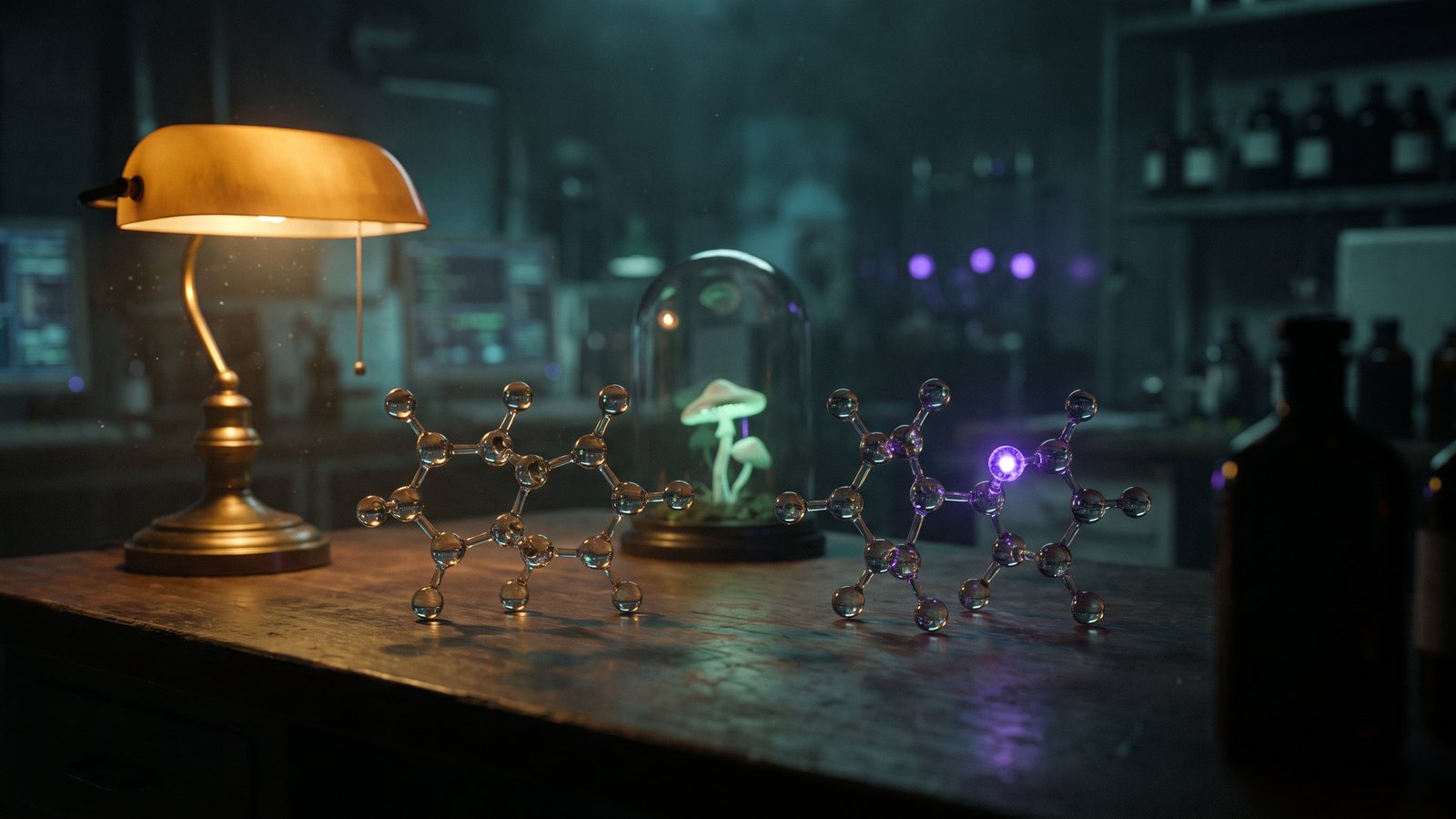
THE SHROOMVERSE JOURNAL ✳ 11 MIN READ
Is there DMT in magic mushrooms? Psilocybin, psilocin and the DMT confusion
Topic: DMT
Published Updated
Listen: the 3-minute version
AI-narrated summary of this article
Short answer, checked 20 October 2026
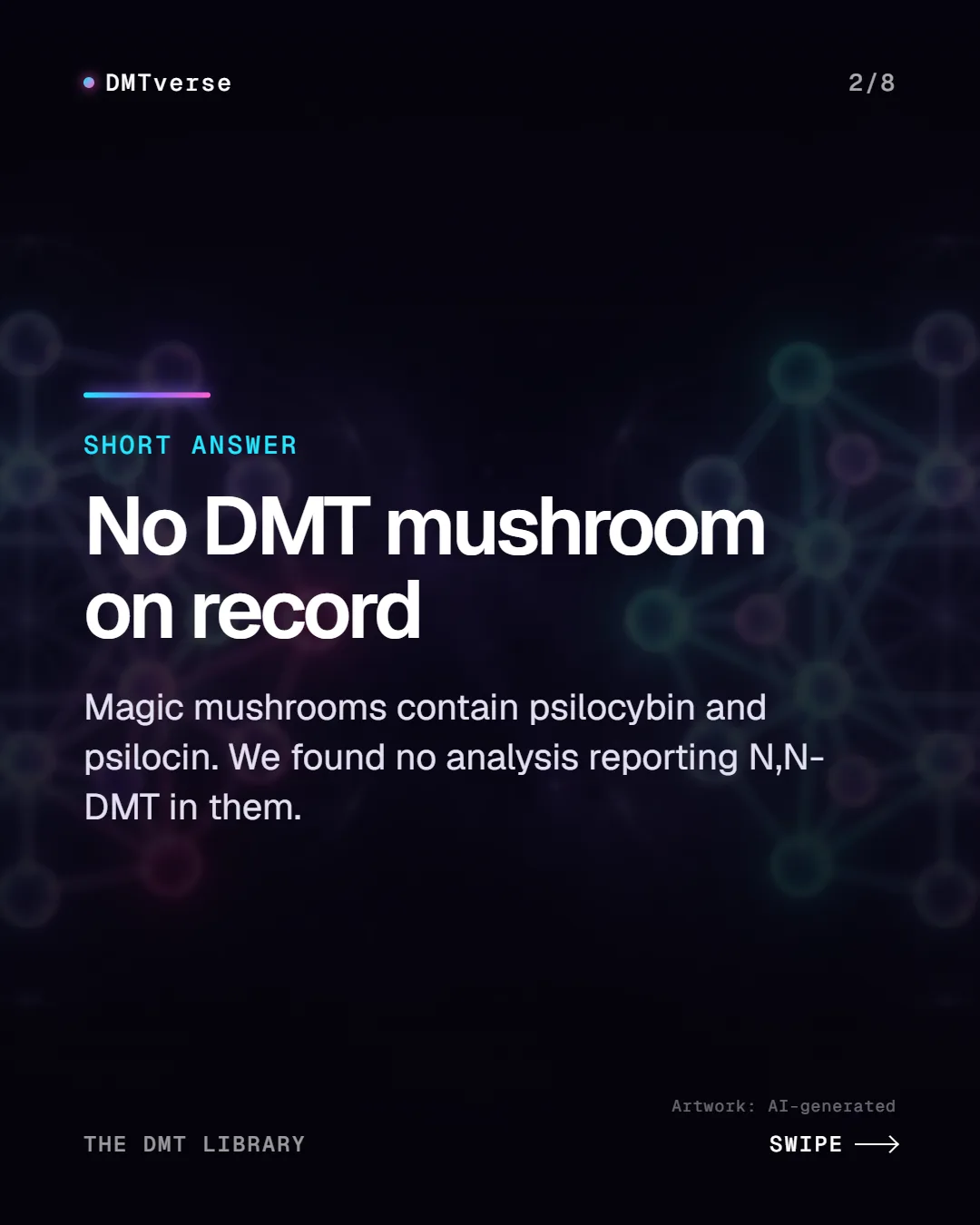
There is no “DMT mushroom”: magic mushrooms contain psilocybin and psilocin, not N,N-DMT. The confusion is understandable, because psilocin is 4-hydroxy-DMT (4-HO-DMT), the DMT molecule with one extra oxygen-containing group, and psilocybin is a phosphate-carrying version of psilocin. In lab studies the experiences also differ sharply in timing: minutes for injected DMT, hours for psilocybin. In Canada all three molecules are Schedule III controlled substances.
THE SHORT VERSION · SWIPE
On this page 10 sections
People search “DMT mushroom” and “DMT vs mushrooms” because the two are often mentioned in the same breath. This guide answers the chemical question first, then looks at what fungal analyses have measured, how psilocybin and DMT compare in published studies, and where the popular idea that mushrooms “contain DMT” comes from. Each factual paragraph ends with an evidence label.
Education only, not guidance
This article compares published chemistry, research and law. It gives no amounts, no instructions and no advice on use, and it does not present any effect as a benefit. Psilocybin, psilocin and DMT are controlled substances in Canada. In an emergency, call 911. Evidence labels: established (shown in peer-reviewed studies and not seriously disputed), preliminary (early, small, self-selected or indirect) and unresolved (an open question).
Is there such a thing as a DMT mushroom?
Not in the research we found. The psychoactive compounds of Psilocybe mushrooms are psilocybin and psilocin. A 2021 study describes psilocybin, psilocin, baeocystin, norbaeocystin and aeruginascin as the tryptamines that typically occur in most Psilocybe species (Gotvaldová et al., 2021). A 2025 analysis of 42 strains from nine species measured eight tryptophan-derived compounds; N,N-DMT was not among the reference compounds it measured (Cohen et al., 2025). Evidence: established for what mushrooms contain.
Be precise about what that second point means. Most fungal analyses look for the compounds they expect, so “not measured” is not the same as “proven absent”. We did not find a published analysis that reports N,N-DMT in a Psilocybe mushroom. If one appears, this article will be updated. Evidence: unresolved for trace amounts; established that DMT is not a recognised mushroom compound.
Is psilocybin DMT? How the molecules relate
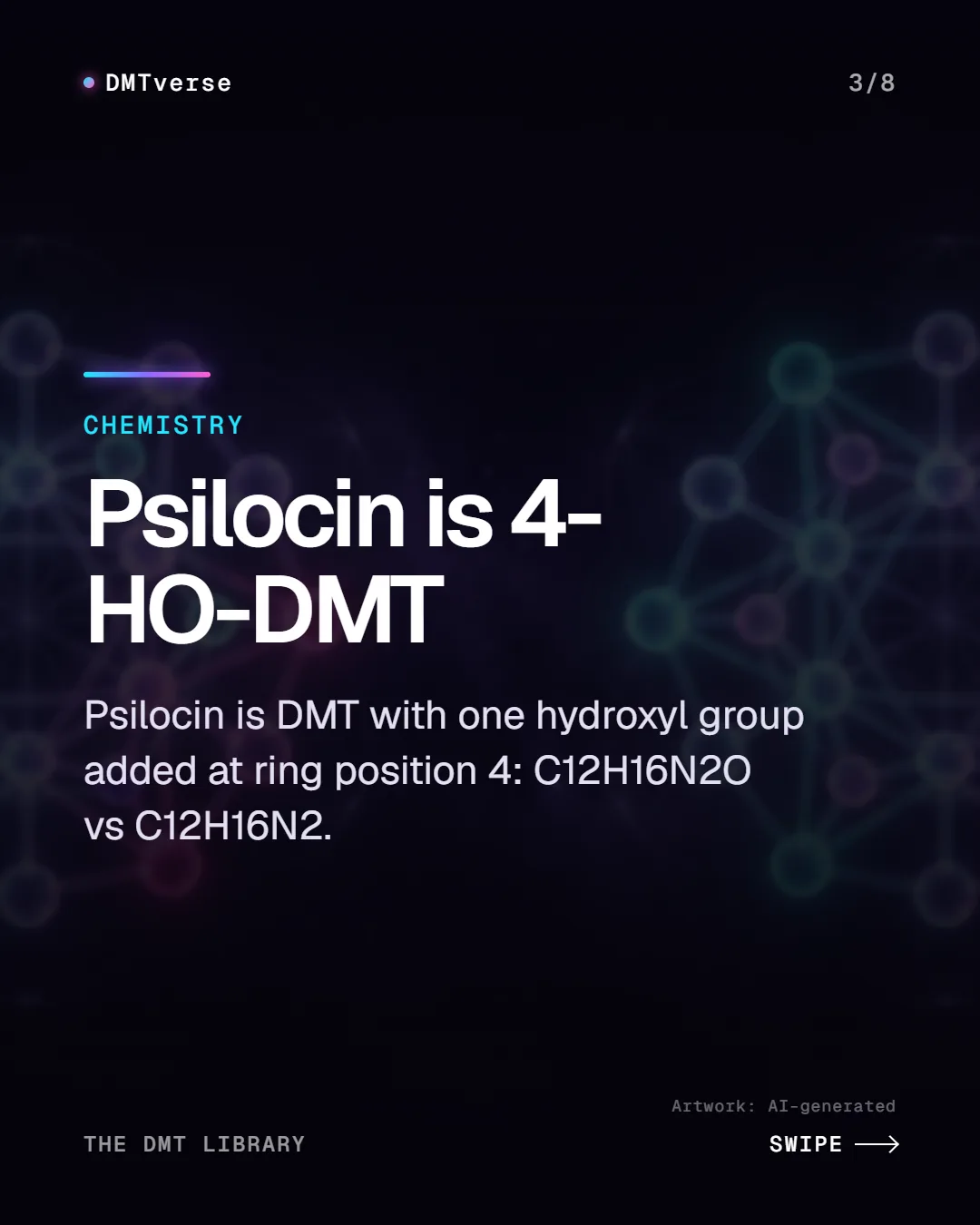
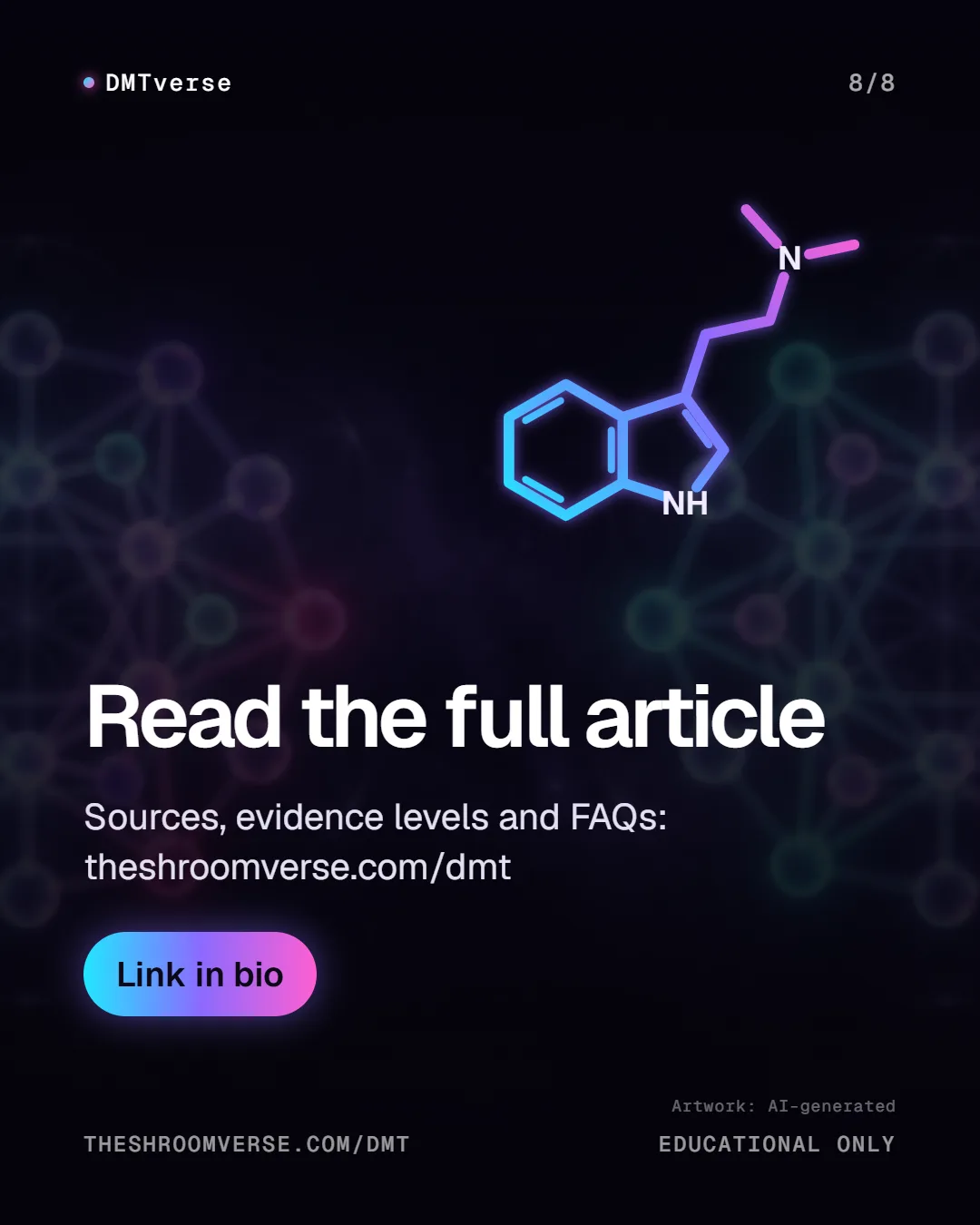
No, but they are close relatives. All three are tryptamines that share one skeleton: an indole ring (a fused pair of carbon rings, one containing nitrogen) with a two-carbon chain ending in a nitrogen that carries two methyl groups. N,N-DMT stops there: its formula is C12H16N2 (PubChem, DMT). Psilocin adds a hydroxyl group (an oxygen bonded to a hydrogen) at position 4 of the ring, giving C12H16N2O (PubChem, psilocin). That is why chemists call it 4-hydroxy-DMT, or 4-HO-DMT (Cohen et al., 2025). Evidence: established.
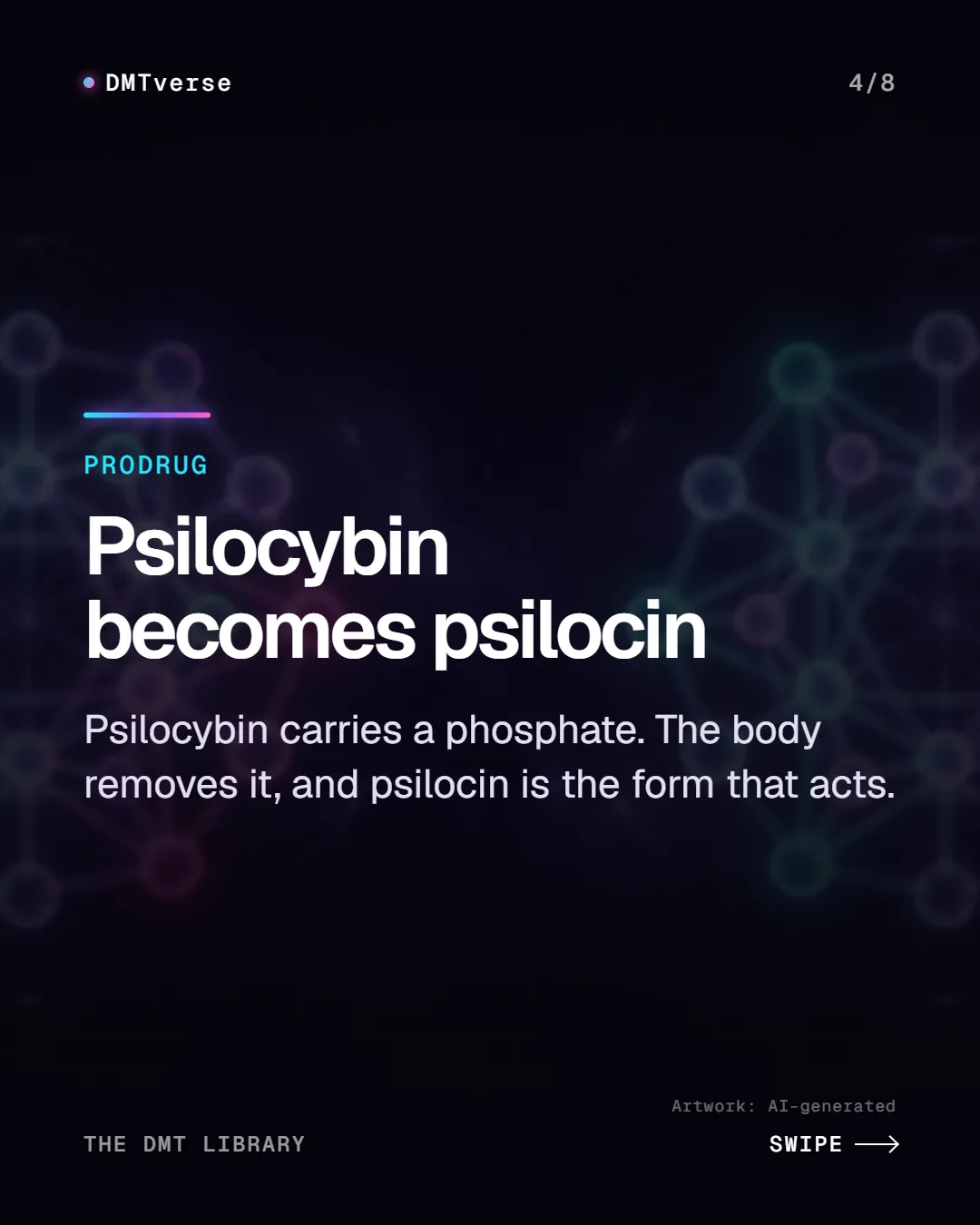
Psilocybin goes one step further: the hydroxyl at position 4 carries a phosphate group, giving C12H17N2O4P (PubChem, psilocybin). In the body, psilocybin loses that phosphate and becomes psilocin, which is the form that acts in the brain. That makes psilocybin a prodrug (Cohen et al., 2025). Our psilocin vs psilocybin guide covers that pair in detail. Evidence: established.
| Molecule | Other names | What sits at ring position 4 | Formula | Canada (CDSA) |
|---|---|---|---|---|
| N,N-DMT | DMT, N,N-dimethyltryptamine | Nothing (a hydrogen) | C12H16N2 | Schedule III, item 7 |
| Psilocin | 4-HO-DMT, 4-hydroxy-DMT | Hydroxyl group | C12H16N2O | Schedule III, item 11 |
| Psilocybin | 4-PO-DMT, 4-phosphoryloxy-DMT | Phosphate on the oxygen | C12H17N2O4P | Schedule III, item 12 |
Canada’s drug law writes the family resemblance into its chemical names. DMT is 3-[(2-dimethylamino)ethyl]indole, psilocin is 3-[2-(dimethylamino)ethyl]-4-hydroxyindole, and psilocybin is 3-[2-(dimethylamino)ethyl]-4-phosphoryloxyindole (Justice Laws, CDSA). For the DMT molecule drawn part by part, see our DMT chemical structure guide. Evidence: established.
Do mushrooms make DMT on the way to psilocybin?
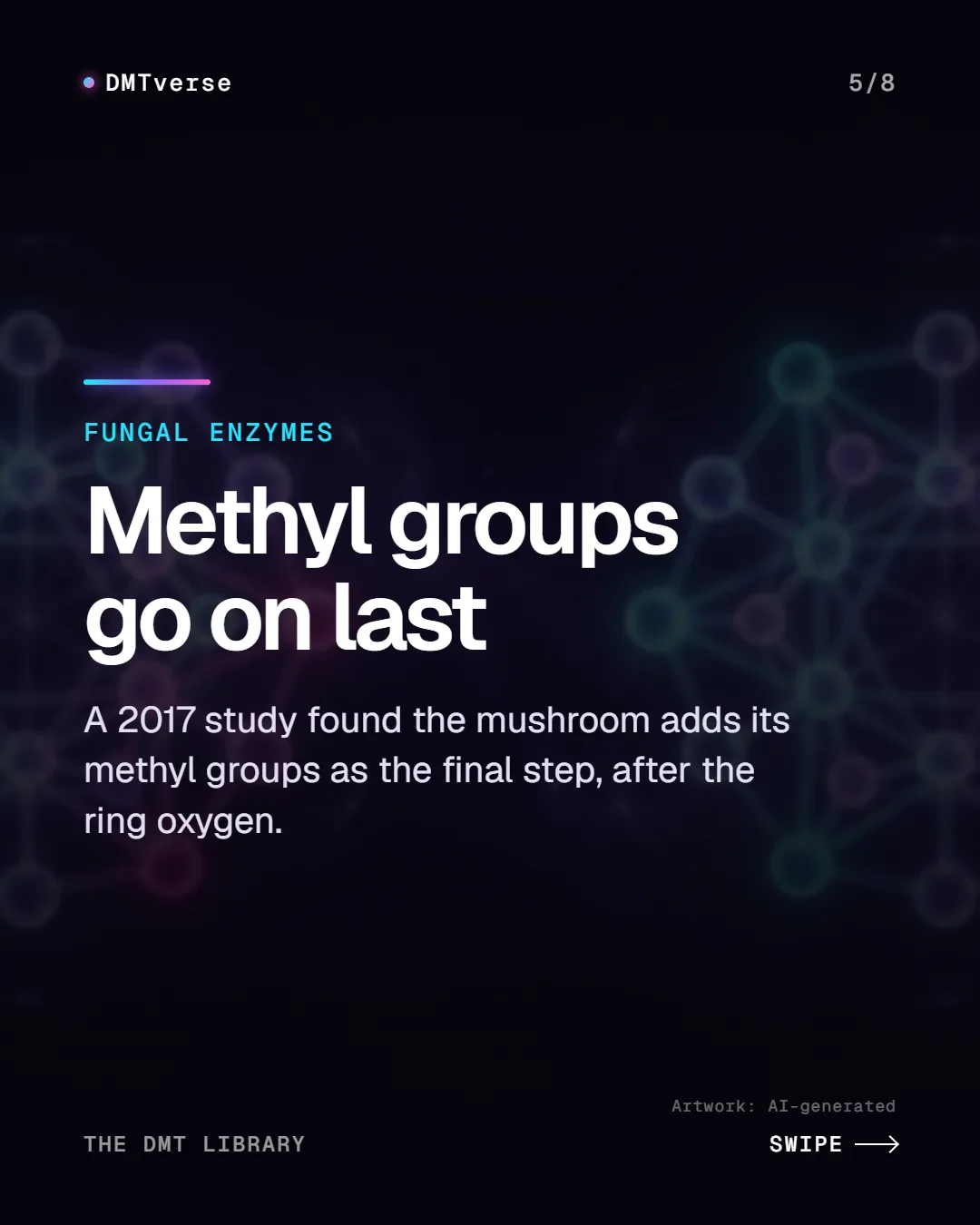
Not according to the enzyme work. In 2017, a research team characterised four enzymes that build psilocybin in Psilocybe. One, PsiD, turns the amino acid tryptophan into tryptamine; another, PsiK, attaches the phosphate; a third, PsiM, adds the methyl groups to the nitrogen “as the terminal biosynthetic step”. Combining PsiD, PsiK and PsiM made psilocybin in the lab from a form of tryptophan that already carried the oxygen at position 4 (Fricke et al., 2017). Evidence: established for the enzymes.
Because the two methyl groups go on last, after the ring has its oxygen and phosphate, the route described does not pass through plain DMT. The paper did not test for DMT, so this is an inference from the order of steps, not a measurement. Evidence: preliminary.
DMT vs mushrooms: how do onset and duration compare in studies?
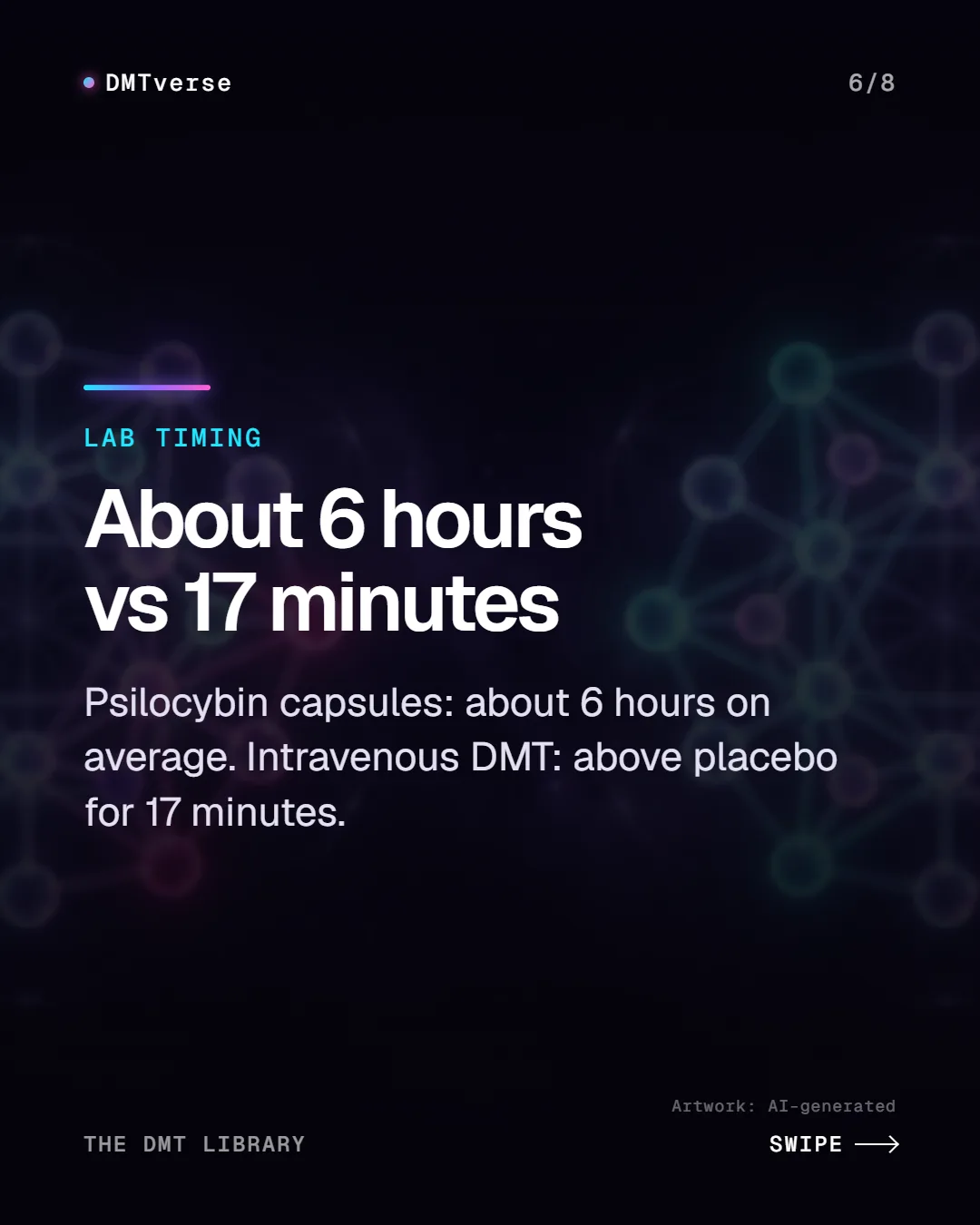
This is the clearest difference, and it comes from controlled research, not guidance. In a double-blind study of 28 healthy volunteers, psilocybin was given as capsules. Effects began after about 50 minutes on average, peaked after about two hours, and lasted about 5.6 to 6.5 hours depending on the dose level, with wide individual variation (Holze et al., 2022). Evidence: established for that design.
DMT in the lab runs on minutes. In Rick Strassman’s 1994 double-blind study, DMT was injected into a vein in 11 experienced volunteers; peak blood levels and effects came within 2 minutes and were negligible by 30 minutes (Strassman and Qualls, 1994). In a 2019 study of 13 volunteers, also intravenous, effects peaked 2 to 3 minutes after the injection and stayed above placebo for 17 minutes (Timmermann et al., 2019). Evidence: established for intravenous DMT in lab conditions.
Why so different? DMT is broken down very quickly in the body, mainly by the enzyme monoamine oxidase A (MAO-A), and a review gives a typical range of roughly 15 to 60 minutes for its effects across study designs (Barker, 2018). For detail, see how long does DMT last and how long do magic mushrooms last. Evidence: established.
Psilocybin, higher dose level
About 6.5 hours (390 minutes) on average, range 3.7 to 12 hours (Holze et al., 2022).
Intravenous DMT
Effects above placebo for 17 minutes, peak at 2 to 3 minutes (Timmermann et al., 2019).
Different studies, people and designs: psilocybin capsules in 28 healthy volunteers (Holze et al., 2022) and intravenous DMT in 13 volunteers (Timmermann et al., 2019). Descriptions of research, not predictions.
Does a DMT “breakthrough” feel like a mushroom experience?
In user and research language, a DMT breakthrough is a rapid, deep immersion. The 2019 study describes how, at high doses, the experience “rapidly progresses into a deep and profound immersion”, sometimes called a breakthrough, often with a sense of entering another world that feels no less real (Timmermann et al., 2019). The psilocybin studies cited here do not use the word, and in them effects built up over about an hour. Evidence: established for how the term is used.
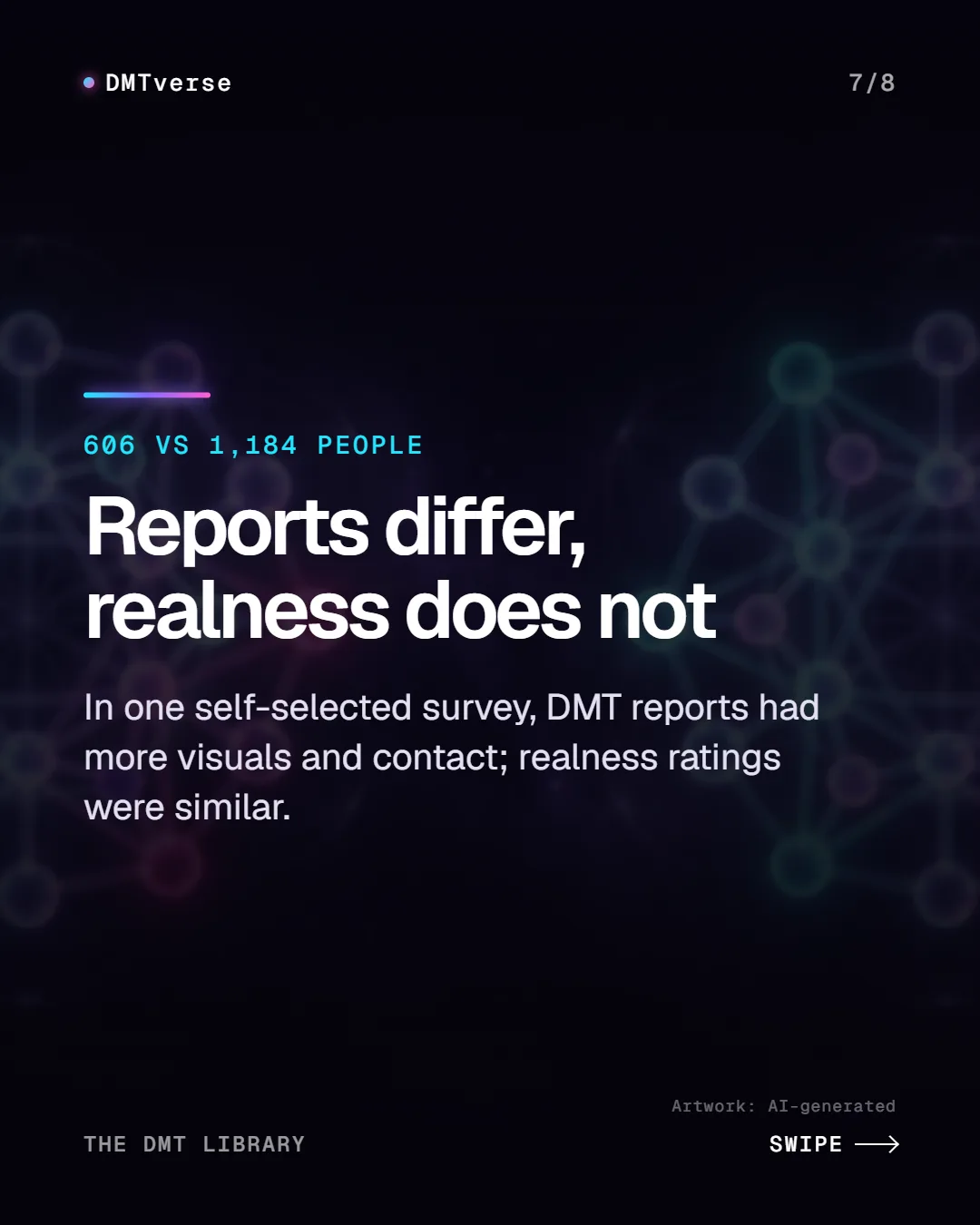
One large survey lets us compare reports directly, with limits. A 2019 online study asked people to describe their single most memorable “God encounter” experience. Among them were 1,184 people describing a psilocybin experience and 606 describing a DMT experience (Griffiths et al., 2019). Everyone was self-selected and recalling one experience, often years later. Evidence: preliminary.
- Visual interaction with what was encountered: 72% of the psilocybin group vs 83% of the DMT group, a significant difference.
- Any communication with what was encountered: 64% vs 80%, also significant.
- Rating the encounter as more real than everyday reality: 74.7 vs 77.5 out of 100, not significantly different.
- The DMT group scored significantly higher on mystical-experience measures such as transcendence of time and space, and more often met the authors’ criteria for a “complete” mystical experience.
Those figures come from the study’s tables (Griffiths et al., 2019). They describe people who had a God-encounter experience and chose to report it, so they cannot show how typical any of this is. The authors also found the four psychedelic groups more alike than different overall. Evidence: preliminary.
Where does the myth that mushrooms “contain DMT” come from?
Mostly from names. Psilocin’s chemical nickname, 4-HO-DMT, contains the letters “DMT”, and psilocybin is often written 4-PO-DMT (Cohen et al., 2025). Read quickly, that sounds like “DMT plus something”. Chemically, the extra group makes a different molecule, with its own formula and its own entry in Canada’s drug schedule (Justice Laws, CDSA). Evidence: established.
The family resemblance is real, and the molecules are often discussed together as classic psychedelics; our psilocybin, LSD and DMT comparison sets out how they act on the brain and how their histories differ. DMT also occurs in a wide range of plants and animals (Barker, 2018), which may make it seem likely to turn up in fungi too; see where does DMT come from in nature. Evidence: established.
One more source of confusion is colour. When psilocybin-rich tissue is injured, psilocybin is dephosphorylated to psilocin, and the change shows as a bluish-turquoise colour (Cohen et al., 2025). The chemistry involves psilocybin and psilocin, not DMT; why do magic mushrooms turn blue explains it. Evidence: established.
Is DMT a mushroom, or made from one?
No. DMT is a molecule, not an organism, and it is not a mushroom compound. It was first made in a laboratory in 1931, reported in plants in 1946, and is produced by a wide range of plants and animals, including mammals (Barker, 2018). Psilocybin, by contrast, is a fungal product, made by the Psilocybe enzymes described above (Fricke et al., 2017). For the molecule itself, start with what is DMT; for the mushroom compound, read what is psilocybin. Evidence: established.
What is the legal status, and where can you get help in Canada?
All three are controlled. Schedule III of the Controlled Drugs and Substances Act lists DMT as item 7, psilocin as item 11 and psilocybin as item 12, each with its salts, in the consolidation current to 30 September 2026 that we read on 20 October 2026 (Justice Laws, CDSA). See is DMT legal in Canada and are magic mushrooms legal in Canada. This is general information, not legal advice. Evidence: established.
If someone is in danger
Call 911 for immediate danger or urgent medical help, including if someone is unconscious, not breathing or having a seizure. For poisoning advice, call the Canada-wide Poison Control line, 1-844-POISON-X (1-844-764-7669); in Ontario, the Ontario Poison Centre is at 1-800-268-9017 (AboutKidsHealth). If you or someone you know is thinking about suicide, call or text 9-8-8, 24 hours a day (Government of Canada). See also our safety page and how to help someone having a bad trip.
What is still unknown?
- Whether any Psilocybe mushroom holds trace N,N-DMT; the analyses we read did not measure it.
- Whether the enzyme PsiM can methylate plain tryptamine inside the mushroom, outside the route described in 2017.
- How psilocybin and DMT experiences compare in the same people under controlled conditions; we found no head-to-head trial.
- How much the large differences in reports reflect timing, setting and expectation rather than the molecules themselves.
Common questions
Is there DMT in magic mushrooms?
Not as far as published research shows. Magic mushrooms contain psilocybin and psilocin, plus related compounds such as baeocystin, norbaeocystin and aeruginascin. N,N-DMT is not a recognised mushroom compound, and we found no analysis reporting it in Psilocybe.
Is psilocybin DMT?
No, but it is a close relative. Psilocin, the active form, is 4-hydroxy-DMT: the DMT molecule with a hydroxyl group at position 4 of the ring. Psilocybin is psilocin with a phosphate attached, and the body converts it to psilocin.
What is 4-HO-DMT?
4-HO-DMT is a chemical name for psilocin, the main active compound of magic mushrooms. Its formula is C12H16N2O, one oxygen more than DMT’s C12H16N2. In Canada, psilocin is Schedule III, item 11.
Is DMT a mushroom?
No. DMT is a molecule, not an organism. It was first made in a laboratory in 1931 and occurs naturally in many plants and animals, including mammals. Mushrooms make psilocybin instead.
DMT vs mushrooms: what is the main difference?
Chemically, the mushroom compounds carry an extra oxygen-containing group at position 4. In lab studies, the timing differs most: intravenous DMT peaks within minutes and fades within about half an hour, while psilocybin capsules took about 50 minutes to start and lasted about six hours on average.
Why do people think mushrooms contain DMT?
Mostly because psilocin and psilocybin have the chemical nicknames 4-HO-DMT and 4-PO-DMT, and because the three are often discussed together as classic psychedelics. The names describe a shared skeleton, not shared contents.
Is the DMT breakthrough the same as a mushroom trip?
Researchers describe a DMT breakthrough as a rapid, deep immersion, often with a sense of entering another world. In one self-selected survey, people describing DMT encounters reported visual interaction and communication more often than people describing psilocybin encounters, though the groups rated how real it felt about the same.
Shroomverse sells mushroom products. This article is general information about the chemistry of magic mushrooms and DMT and how published studies compare them. It is not medical, legal or purchasing advice, and it does not recommend any product.
SOURCES
- Stability of psilocybin and its four analogs in the biomass of the psychotropic mushroom Psilocybe cubensis (Gotvaldová K, et al., Drug Testing and Analysis 13(2):439–446, 2021; online November 2020), Wiley (peer-reviewed). Accessed . Abstract read via Europe PMC. Psilocybin, psilocin, baeocystin, norbaeocystin and aeruginascin as tryptamines typically occurring in most Psilocybe species. Concentration figures deliberately not reproduced.
- Comprehensive analysis of 42 psilocybin-producing fungal strains reveals metabolite diversity and species-specific clusters (Cohen J, et al., Scientific Reports 15:13822, 2025), Springer Nature (peer-reviewed, open access); full text via Europe PMC, PMC12015540. Accessed . Full text read. 42 strains of 9 species; 8 tryptophan-derived indolamines quantified; reference standards were psilocybin (4-PO-DMT), psilocin (4-hydroxy DMT), norpsilocin, baeocystin, norbaeocystin, aeruginascin, tryptophan and tryptamine (no N,N-DMT standard); psilocybin as prodrug dephosphorylated to psilocin after ingestion; dephosphorylation on tissue injury seen as a bluish-turquoise colour. Extraction methods deliberately not reproduced.
- Enzymatic Synthesis of Psilocybin (Fricke J, Blei F, Hoffmeister D, Angewandte Chemie International Edition 56(40):12352–12355, 2017), Wiley (peer-reviewed). Accessed . Abstract read via Europe PMC. Four enzymes: PsiD (L-tryptophan decarboxylase), PsiK (phosphotransfer), PsiM (iterative N-methylation as the terminal step), PsiH (monooxygenase); psilocybin made enzymatically from 4-hydroxy-L-tryptophan with PsiD, PsiK and PsiM. The paper does not test for DMT; our inference is labelled as such.
- N,N-Dimethyltryptamine, compound summary (CID 6089), U.S. National Library of Medicine, PubChem. Accessed . Formula C12H16N2, read through the PubChem REST interface.
- Psilocin, compound summary (CID 4980), U.S. National Library of Medicine, PubChem. Accessed . Formula C12H16N2O; IUPAC name 3-[2-(dimethylamino)ethyl]-1H-indol-4-ol, read through the PubChem REST interface.
- Psilocybin, compound summary (CID 10624), U.S. National Library of Medicine, PubChem. Accessed . Formula C12H17N2O4P; IUPAC name [3-[2-(dimethylamino)ethyl]-1H-indol-4-yl] dihydrogen phosphate, read through the PubChem REST interface.
- Controlled Drugs and Substances Act (S.C. 1996, c. 19), full text, Schedule III, Government of Canada, Justice Laws Website. Accessed . Act current to 2026-09-30, last amended 2026-07-18. Schedule III items 7 (DMT), 11 (psilocin) and 12 (psilocybin), each with its chemical name and salts.
- Direct comparison of the acute effects of lysergic acid diethylamide and psilocybin in a double-blind placebo-controlled study in healthy subjects (Holze F, et al., Neuropsychopharmacology 47(6):1180–1187, 2022), Springer Nature (peer-reviewed, open access); full text via Europe PMC, PMC9018810. Accessed . Full text read (Table 1). 28 healthy volunteers, psilocybin as capsules; time to onset 0.8 h, time to maximal effect 2.1–2.3 h, effect duration 5.6 and 6.5 h (range 2.5–12 h) at the two dose levels. Amounts given deliberately not reproduced.
- Dose-response study of N,N-dimethyltryptamine in humans. I. Neuroendocrine, autonomic, and cardiovascular effects (Strassman RJ, Qualls CR, Archives of General Psychiatry 51(2):85–97, 1994), American Medical Association (peer-reviewed). Accessed . Abstract read via Europe PMC. Double-blind, saline placebo-controlled, randomized; intravenous; 11 experienced hallucinogen users; peak blood levels and subjective effects within 2 minutes, negligible at 30 minutes. Doses deliberately not reproduced.
- Neural correlates of the DMT experience assessed with multivariate EEG (Timmermann C, et al., Scientific Reports 9:16324, 2019), Springer Nature (peer-reviewed, open access); full text via Europe PMC, PMC6864083. Accessed . Full text read. Intravenous DMT in 13 volunteers; intensity above placebo for 17 minutes, peak 2–3 minutes; at high doses a rapid, deep immersion “sometimes described as a ‘breakthrough’”, often with a sense of entering another but no less real world.
- N,N-Dimethyltryptamine (DMT), an Endogenous Hallucinogen: Past, Present, and Future Research to Determine Its Role and Function (Barker SA, Frontiers in Neuroscience 12:536, 2018), Frontiers (peer-reviewed, open access); full text via Europe PMC, PMC6088236. Accessed . Full text read. 1931 synthesis; DMT in a wide range of plant and animal species and 1946 report in plants; production by plants and animals including mammals; rapid breakdown mainly by MAO-A; effects short-lived, about 15–60 minutes depending on route.
- Survey of subjective “God encounter experiences”: Comparisons among naturally occurring experiences and those occasioned by the classic psychedelics psilocybin, LSD, ayahuasca, or DMT (Griffiths RR, Hurwitz ES, Davis AK, Johnson MW, Jesse R, PLoS One 14:e0214377, 2019), PLOS (peer-reviewed, open access); full text via Europe PMC, PMC6478303. Accessed . Full text read (Tables 2, 4 and 6). 1,184 psilocybin and 606 DMT respondents, self-selected, single most memorable encounter; DMT group mainly smoked DMT; visual 72% vs 83%, any communication 64% vs 80% (significant); more real than everyday 74.7 vs 77.5 (not significant); DMT higher on transcendence of time and space, ineffability, total mystical score and complete mystical experiences; similarities among groups most striking.
- Poison information centres in Canada, AboutKidsHealth, The Hospital for Sick Children (SickKids). Accessed . Source for 1-844-POISON-X (1-844-764-7669), the Ontario Poison Centre toll-free line 1-800-268-9017, and calling 911 if someone is unconscious, not breathing or having a seizure.
- Mental health support: get help, Government of Canada, Public Health Agency of Canada. Accessed . Source for calling 9-1-1 in immediate danger and the 9-8-8 line (call or text, 24 hours a day, 7 days a week).
CHANGES
- : Linked glossary definitions.
- : Published. Sources opened and checked on this date, including Schedule III of the Controlled Drugs and Substances Act consolidation current to 30 September 2026.
- : Editorial review: tryptamine skeleton wording clarified and the indole ring defined; route wording outside study designs removed (“once swallowed”, the survey group’s route). Holze (Table 1 durations and range), Strassman 1994, Timmermann 2019 and Griffiths 2019 re-checked on Europe PMC; no figures changed.



