
THE SHROOMVERSE JOURNAL ✳ 11 MIN READ
Ayahuasca meaning: where the word comes from, how to say it, and its other names
Topic: DMT
Published Updated
Listen: the 3-minute version
AI-narrated summary of this article
The short answer (checked 20 October 2026)
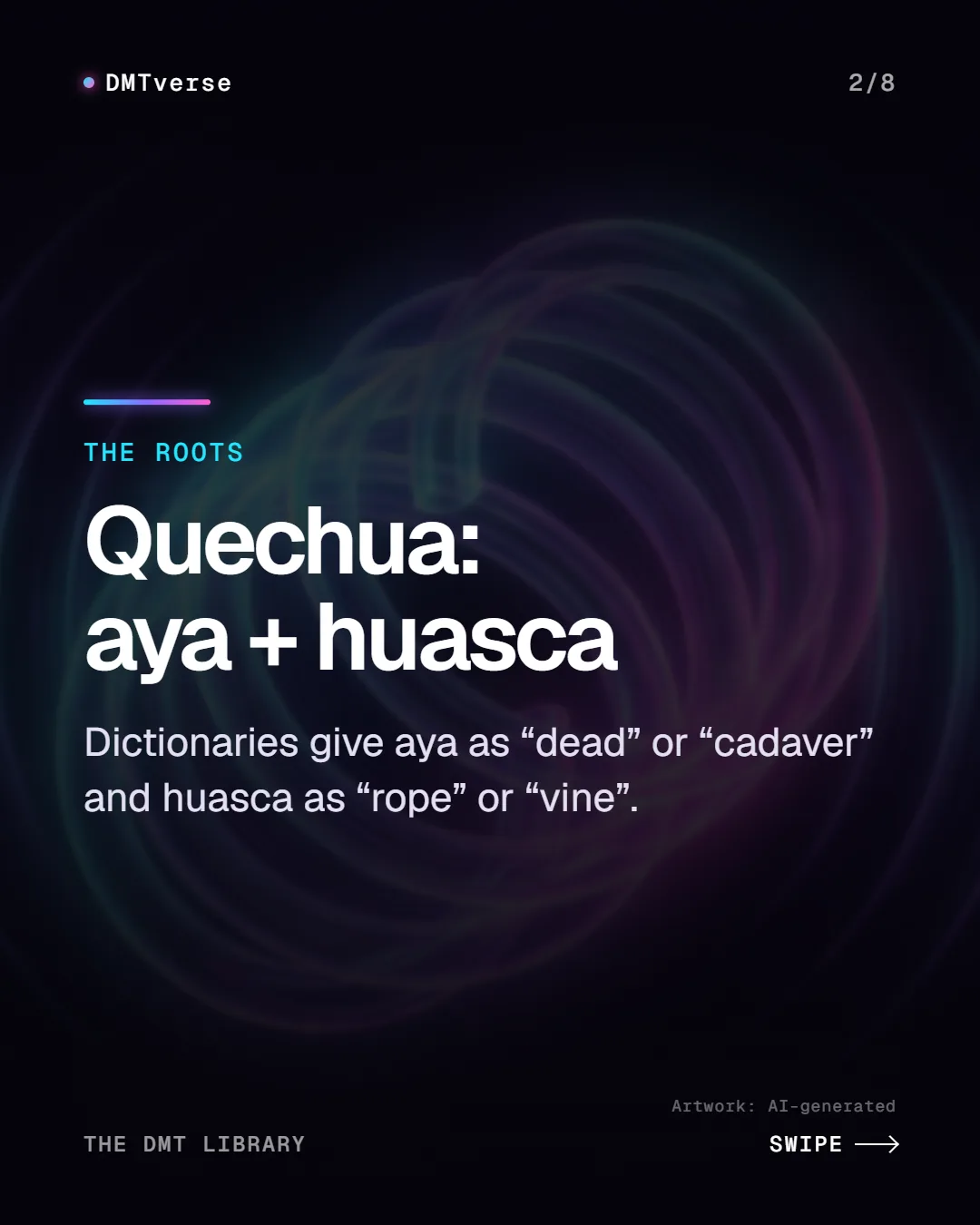
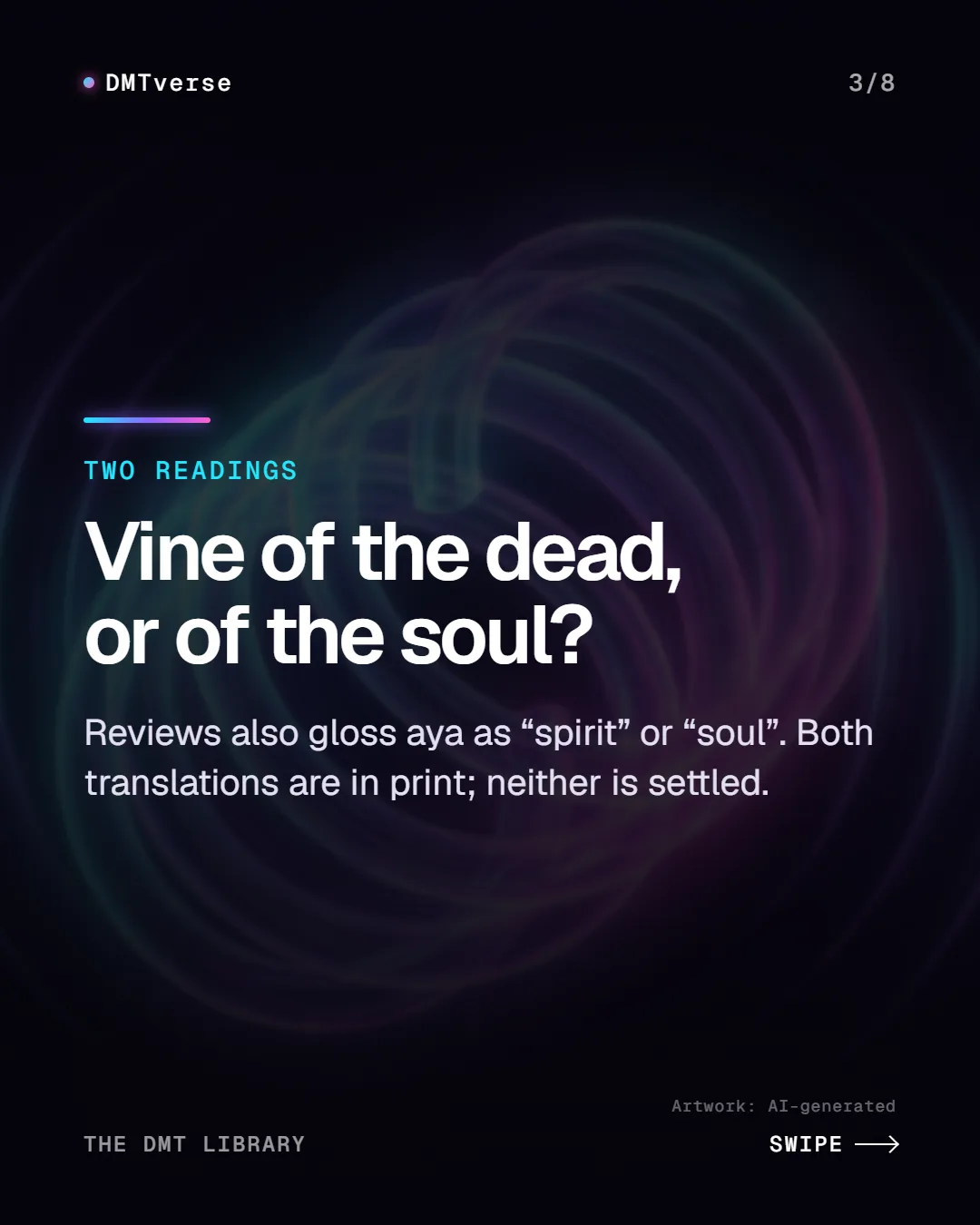
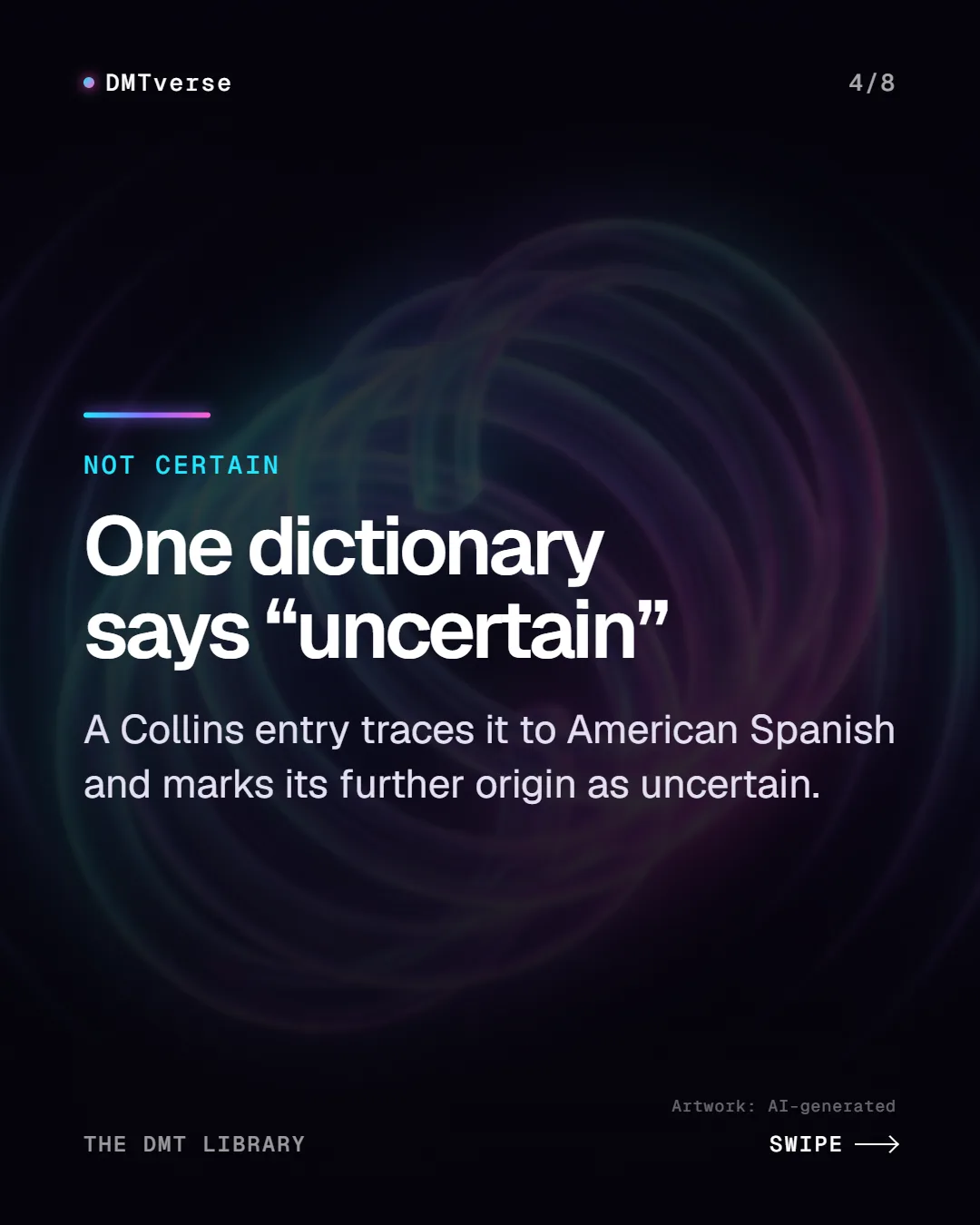
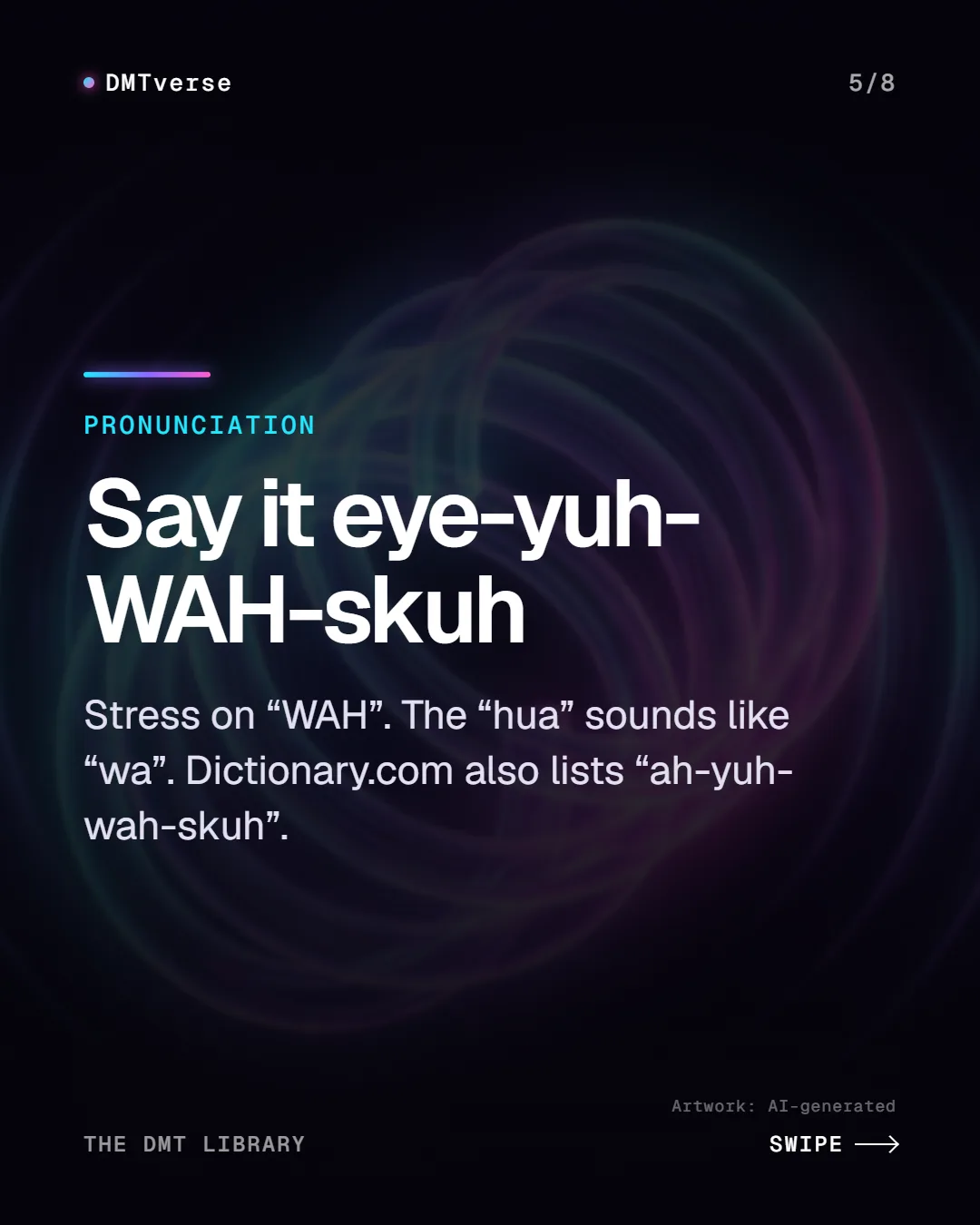
The ayahuasca meaning most sources give is “vine of the dead” or “vine of the soul”: the word comes through Latin American Spanish from Quechua aya (dead, corpse, spirit or soul) and huasca or waska (rope or vine). Dictionaries say it “eye-yuh-WAH-skuh” or “ah-yuh-WAH-skuh”; the “hua” sounds like “wa”. The same drink has many other names, including yagé, caapi, oni and camaranti among Amazonian peoples, and Daime and hoasca in Brazilian churches. One dictionary marks the deeper origin as uncertain, so the neat translation is a common reading rather than a settled fact.
THE SHORT VERSION · SWIPE
On this page 8 sections
Ayahuasca is a word many people read long before they hear it. It looks unfamiliar, it is spelled several ways, and it travels with a crowd of other names. This guide covers the word only: what it means, where it came from, how dictionaries pronounce it and what other peoples and groups call the same drink. It is a language and history piece. It gives no information on use, preparation or sourcing.
For what ayahuasca actually is, its chemistry and its contested history, see what is ayahuasca. Every pronunciation and date below comes from a dictionary or paper we opened while writing, and where sources disagree we say so.
Ayahuasca meaning: what does the word mean?
In English dictionaries, ayahuasca names a psychoactive drink from South America. Merriam-Webster defines it as a psychoactive beverage containing dimethyltryptamine (DMT) (Merriam-Webster, ayahuasca). Cambridge calls it a drug made from South American plants, used in some religious ceremonies (Cambridge, ayahuasca). Some entries also use the word for the vine the drink is named after, which tells you the word can mean the plant as well as the brew. Evidence: established.
The literal meaning comes from Quechua, an Indigenous language that a 2023 history describes as the lingua franca of part of the Amazon (Lima and Marinho, 2023). Dictionary.com gives the origin as Latin American Spanish (Ecuador, Peru), from Quechua aya, “dead”, and huasca, “rope” (Dictionary.com, ayahuasca). Webster’s New World, quoted on Collins, gives “literally, vine of the dead”, from aya, “cadaver”, and huasca, “vine” (Collins, ayahuasca). Evidence: established that dictionaries give this origin.
Is it “vine of the dead” or “vine of the soul”?
Both readings appear, because aya can be glossed in more than one way. A 2023 review says the Quechua aya and waska translate to “spirit” or “soul” and “vine” or “rope”, giving names like “the vine of the soul or dead” (Ruffell et al., 2023). A 2024 review glosses aya as “soul” or “dead spirit” and offers both “vine of the souls” and “vine of the dead” (dos Santos and Hallak, 2024). A 2023 history paper gives only “vine of the dead” (Lima and Marinho, 2023). Evidence: established that both translations are in print.
Which is “right” is a question of emphasis rather than error. The dictionaries we read lean towards death (“dead”, “cadaver”), and the research reviews add “spirit” and “soul”. Neither English phrase is a perfect fit for a Quechua idea. Evidence: unresolved. We did not consult a Quechua dictionary or a Quechua speaker, so we report the glosses and do not choose between them.
Is the origin certain?
Not completely. Collins carries three entries with three levels of confidence. Its British entry says only “C20: from Quechua”. The Webster’s New World entry gives the full “vine of the dead” breakdown. A third entry, from Random House material, traces the word to American Spanish and marks its further origin as uncertain (Collins, ayahuasca). Merriam-Webster also stops at American Spanish (Merriam-Webster, ayahuasca). Evidence: established that the dictionaries differ.
The dates differ too. Merriam-Webster gives the first known use of ayahuasca in English as 1870, while the Collins British entry places it in the 20th century (Merriam-Webster, ayahuasca; Collins, ayahuasca). Merriam-Webster’s date is the more specific claim, but neither page shows the text behind it. Evidence: unresolved.
How do you pronounce ayahuasca?
Say it in four beats, with the stress on the third: eye-yuh-WAH-skuh. The “hua” is not “hoo-ah”: every dictionary below gives it a “w” sound. The first syllable can be “eye” or “ah”, and both are listed as correct.
| Dictionary | IPA or notation as printed | Plain respelling |
|---|---|---|
| Cambridge (UK and US) | /ˌaɪ.jəˈwɑː.skə/ | eye-yuh-WAH-skuh |
| Merriam-Webster | ˌī-yə-ˈ(h)wä-skə | eye-yuh-WAH-skuh (the “h” before “wah” is optional) |
| Dictionary.com (American) | /ˌɑ jəˈwɑ skə/ | ah-yuh-wah-skuh (Dictionary.com’s own respelling) |
| Collins (British), on Dictionary.com and Collins | /ˌaɪəˈwɑːskə/ | eye-uh-WAH-skuh |
| Webster’s New World (American), on Collins | /ˌɑjɑˈwɑskɑ/ | ah-yah-WAHS-kah |
Read together, the entries agree on the important parts: the stress on “WAH”, the “w” sound, and a soft “skuh” or “skah” ending. The Webster’s New World form, with full “ah” vowels, sounds closest to how the word is spelled. Merriam-Webster’s medical entry also lists a rare variant spelling, ayahuasco (Merriam-Webster, ayahuasca). We did not open a Canadian dictionary, so we cannot say which form Canadian references prefer. Evidence: established for what the dictionaries print.
What are the other names for ayahuasca?
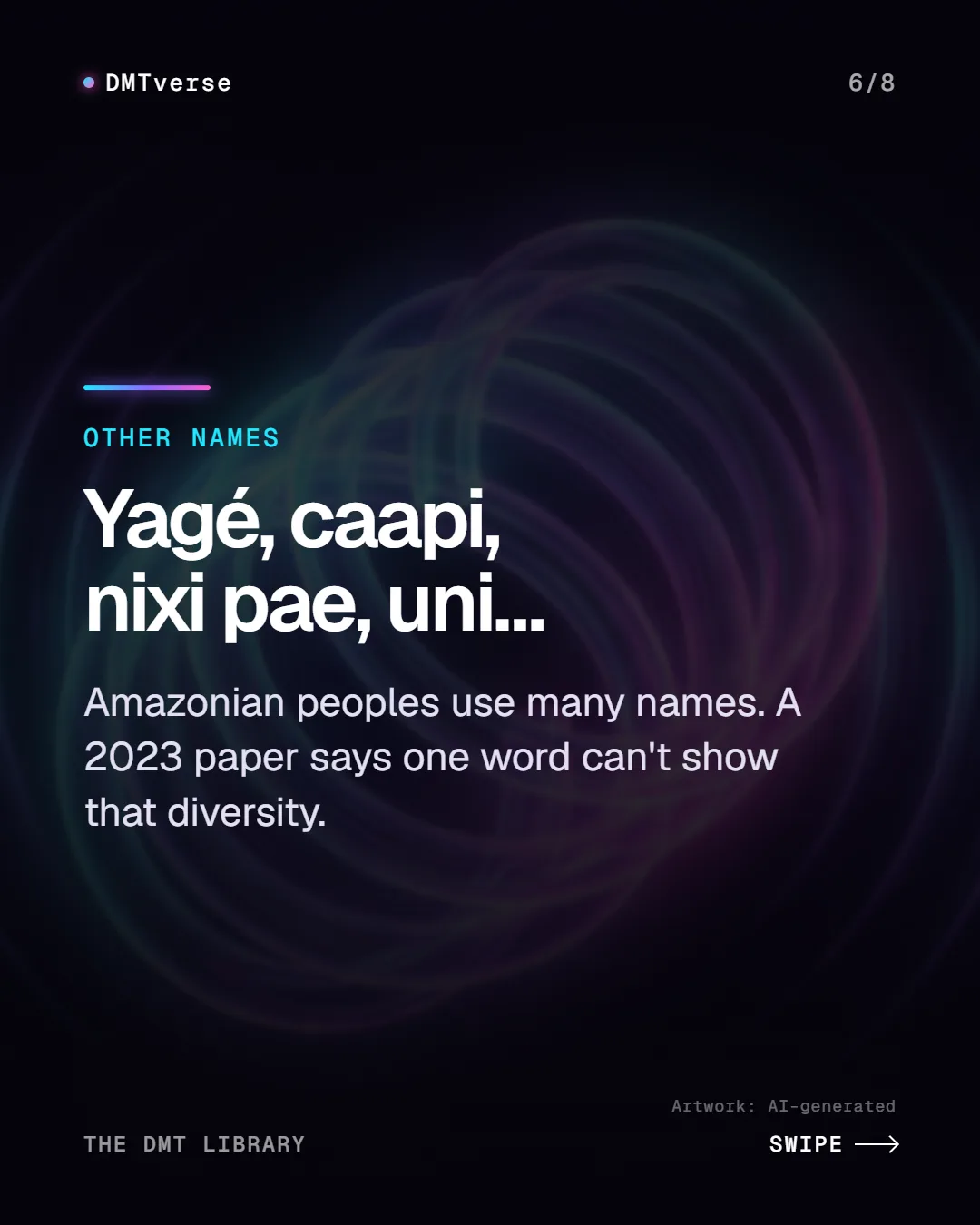
Ayahuasca is only one name, and it is the Quechua one. A 2023 history of early ayahuasca research notes that Indigenous peoples of the Amazon know the drink by other names and prepare it in different ways. It warns that the single term now popular in science “does not represent the diversity” of uses and meanings that Indigenous peoples have given it (Lima and Marinho, 2023). Evidence: established.
| Name | Who uses it | Source |
|---|---|---|
| Ayahuasca, ayawaska | Quechua; ayawaska is the spelling used in a 2026 study of the Shipibo-Konibo | Lima and Marinho, 2023; Favaron et al., 2026 |
| Yagé (yagê, yajé) | Siona and others in Colombia and Ecuador | Lima and Marinho, 2023; Merriam-Webster |
| Caapi (gaapi) | Baniwa; gaapi among the Desana and neighbouring peoples of the Uaupés River | Lima and Marinho, 2023 |
| Kamarampi, camaranti | Asháninka | Lima and Marinho, 2023; Favaron et al., 2026 |
| Kamalãpi | Manchineri | Lima and Marinho, 2023 |
| Nixi pae | Kaxinawá | Lima and Marinho, 2023 |
| Uni, oni | Yawanawá (uni); oni appears in a study of the Shipibo-Konibo | Lima and Marinho, 2023; Favaron et al., 2026 |
| Daime | Santo Daime and related Brazilian churches | Mukasey, 2009; Lima and Marinho, 2023 |
| Hoasca, vegetal | União do Vegetal (UDV) | Gonzales v. O Centro, 2006; Lima and Marinho, 2023 |
Two caveats. The table pairs each name with the group the sources name; many names are shared across neighbouring peoples, and spellings vary. The Asháninka “kamarampi” and the “camaranti” in a 2026 Shipibo study may be the same word in different spellings; we could not confirm that (Favaron et al., 2026). Evidence: established for the names; the pairings are the sources’ own.
What does yagé mean, and how do you say it?
Yagé is the name you will meet most in Colombian sources and in older English writing. Merriam-Webster defines yage simply as ayahuasca, lists the spellings yagé, yaje and yajé, and traces it to American Spanish yagé, yajé or yahé, “perhaps borrowed from a language in the Tukanoan family”, spoken in southeastern Colombia and nearby parts of Peru, Ecuador and Brazil. It dates the first known English use to 1886 (Merriam-Webster, yage). Evidence: established for the dictionary entry.
Dictionary.com instead gives “first recorded in 1920–25”, from Latin American Spanish of Colombia and Ecuador, “apparently from an Indigenous language of southeastern Colombia or northeastern Peru” (Dictionary.com, yage). Collins’ British entry says “C20: from Colombian Spanish” (Collins, yagé). Evidence: established that the word is Spanish-mediated and Indigenous in origin; its exact source language and date are unresolved.
Pronunciations vary more than for ayahuasca. Merriam-Webster gives ˈyä-ˌhā and Dictionary.com “yah-hay” (YAH-hay), the Spanish “j” sound. The Collins British entry gives /ˈjɑːɡeɪ/ (YAH-gay), and the Webster’s New World entry on Collins gives /ˈjɑʒeɪ/ (YAH-zhay) (Merriam-Webster, yage; Dictionary.com, yage; Collins, yagé). YAH-hay is the form two American dictionaries share. Evidence: established for what the dictionaries print.
What do caapi, hoasca and Daime mean?
Caapi is an older name in science. The 2023 history paper reports that when researchers studied the drink in the 1930s and 1940s, it was better known as yagê or caapi than as ayahuasca. It also describes how, among peoples of the Uaupés River in the upper Rio Negro, including the Desana, Gaapi is a divinity in the creation story and the plant gaapi stands for it (Lima and Marinho, 2023). Evidence: established as the paper’s account.
Daime is the name used by the Santo Daime church. A 2009 US federal court ruling records the church’s founding account: its founder was told in a vision to call the tea Daime, “a Portuguese word meaning ‘give me’”, as in the prayers “give me light”, “give me strength”, “give me wisdom” (Church of the Holy Light of the Queen v. Mukasey, 2009). Evidence: established as the church’s own account, recorded by a court.
Hoasca is the União do Vegetal’s name for the tea. The US Supreme Court’s 2006 syllabus describes UDV members receiving communion by drinking hoasca, a tea that contains DMT (Gonzales v. O Centro, 2006). The UDV’s US branch says its own name means “the union of the plants” (UDV USA). The churches’ history and court cases are in Santo Daime and the UDV. Evidence: established as self-description and court record.
A name is not a description
Different names do not always mean the same contents. The 2023 review notes that many preparations are called ayahuasca even though they may lack the key components the name implies, so the label alone tells you little about what is in a cup. For why the combination matters chemically, see ayahuasca vs DMT. Evidence labels on this page: established (in dictionaries, records or peer-reviewed papers and not disputed), preliminary (early or indirect) and unresolved (an open question).
How do researchers define ayahuasca?
In research papers, the word has a narrower, chemical meaning: a brew that contains DMT together with β-carboline alkaloids, the compounds that stop the body breaking DMT down too fast. A 2024 review adds that the drink is used by more than 70 Indigenous groups from 20 language families across Brazil, Colombia, Peru, Venezuela, Bolivia and Ecuador (dos Santos and Hallak, 2024). Evidence: established for the chemistry; the group count is the review’s.
That is why the word matters. Ayahuasca and DMT are related but not the same: one is a single molecule, the other a combination with its own timing and risks. Our pillar article what is DMT explains the molecule; why DMT breaks down so fast explains the enzyme the brew blocks; and ayahuasca benefits: what research shows covers the studies, with their limits.
What we could not check
- A Quechua dictionary or a Quechua speaker. The “dead” versus “soul” question is reported from dictionaries and reviews, not settled by us.
- The source behind Merriam-Webster’s 1870 date for ayahuasca and 1886 date for yage.
- Whether kamarampi and camaranti are spellings of one word.
- Canadian dictionaries, and an Oxford Learner’s entry for ayahuasca (none exists on its website).
Common questions
What does ayahuasca mean?
Most sources translate it as “vine of the dead” or “vine of the soul”. It comes through Latin American Spanish from Quechua aya, glossed as dead, corpse, spirit or soul, and huasca or waska, rope or vine. One dictionary entry marks the deeper origin as uncertain.
How do you pronounce ayahuasca?
Eye-yuh-WAH-skuh, with the stress on “WAH”. Cambridge gives /ˌaɪ.jəˈwɑː.skə/ for both British and American English. Dictionary.com also lists “ah-yuh-wah-skuh”, so the first syllable can be “eye” or “ah”.
What language does the word ayahuasca come from?
Quechua, an Indigenous language of South America, by way of Latin American Spanish. Dictionary.com names Ecuadorian and Peruvian Spanish as the route into English.
Is yagé the same as ayahuasca?
Yes, as a word: Merriam-Webster defines yage simply as ayahuasca. It is the name used more in Colombia and Ecuador and probably comes from a Tukanoan language. Two American dictionaries say it “YAH-hay”.
What does hoasca mean?
Hoasca is the name the União do Vegetal church uses for its sacramental tea, which the US Supreme Court described in 2006 as containing DMT. The church’s own name means “the union of the plants”.
What does Daime mean?
Daime is Portuguese for “give me”, as in the prayers “give me light” and “give me strength”. It is the Santo Daime church’s name for the tea, according to the church’s founding account recorded in a 2009 US court ruling.
Is ayahuasca the same as DMT?
No. DMT is a single molecule; ayahuasca is a brew that contains DMT together with β-carboline alkaloids that block the enzyme that would otherwise break DMT down. Our ayahuasca vs DMT article compares them.
Shroomverse sells mushroom products. This article is general information about the word ayahuasca and its other names. It is not medical, legal or purchasing advice, and it does not recommend any product.
SOURCES
- ayahuasca (entry, including the medical entry), Merriam-Webster. Accessed . Full entry read: pronunciation ˌī-yə-ˈ(h)wä-skə, definition as a psychoactive beverage containing DMT, etymology “American Spanish”, first known use 1870, medical variant “ayahuasco”.
- ayahuasca (entry), Dictionary.com. Accessed . Full entry read: American respelling “ah-yuh-wah-skuh” /ˌɑ jəˈwɑ skə/; Collins British /ˌaɪəˈwɑːskə/; origin from Latin American Spanish (Ecuador, Peru), from Quechua aya “dead” + huasca “rope”.
- ayahuasca (entries), Collins English Dictionary, HarperCollins. Accessed . Full page read: British entry “C20: from Quechua”; Webster’s New World entry /ˌɑjɑˈwɑskɑ/, “AmSp < Quechua, lit., vine of the dead < aya, cadaver + huasca, vine”; Random House-based entry “‹ AmerSp; further orig. uncert.”
- ayahuasca (entry), Cambridge Dictionary. Accessed . UK and US IPA /ˌaɪ.jəˈwɑː.skə/ and the definition as a drug made from South American plants used in some religious ceremonies.
- yage (entry), Merriam-Webster. Accessed . Pronunciation ˈyä-ˌhā; definition “ayahuasca”; variants yagé, yaje, yajé; etymology from American Spanish, perhaps from a Tukanoan-family language; first known use 1886.
- yage (entry), Dictionary.com. Accessed . Respelling “yah-hay” /ˈjɑ heɪ/; first recorded 1920–25; from Latin American Spanish (Colombia, Ecuador), apparently from an Indigenous language of SE Colombia or NE Peru.
- yagé (entries), Collins English Dictionary, HarperCollins. Accessed . British /ˈjɑːɡeɪ/, “another name for ayahuasca”, “C20: from Colombian Spanish”; Webster’s New World /ˈjɑʒeɪ/.
- Ayahuasca: A review of historical, pharmacological, and therapeutic aspects (Ruffell SGD, et al., PCN Reports 2(4):e146, 2023), Wiley (peer-reviewed, open access); PMC11114307. Accessed . Full text read via Europe PMC. Quechua aya and waska translated as “spirit” or “soul” and “vine” or “rope”, giving “vine of the soul or dead”; many preparations called ayahuasca lack key components.
- Reports by explorers and travelers and the first scientific studies on ayahuasca (dating from 1850 to 1950) within the current debate on the “psychedelic renaissance” (Lima VM, Marinho MGSMC, História, Ciências, Saúde-Manguinhos 30:e2023023, 2023), Fundação Oswaldo Cruz (peer-reviewed, open access); PMC10395591. Accessed . Full text read via Europe PMC (English and Portuguese). Quechua origin, “vine of the dead”; Indigenous names yagê (Siona), caapi (Baniwa), kamarampi (Asháninka), kamalãpi (Manchineri), nixi pae (Kaxinawá), uni (Yawanawá); church names daime, hoasca, vegetal; known as yagê or caapi in 1930s–40s research; gaapi among Tukanoan peoples; the generic term does not represent Indigenous diversity.
- Ayahuasca: pharmacology, safety, and therapeutic effects (dos Santos RG, Hallak JEC, CNS Spectrums 30(1):e2, 2024), Cambridge University Press (peer-reviewed, open access); PMC13064705. Accessed . Full text read via Europe PMC. Etymology: aya “soul” or “dead spirit”, waska “rope” or “vine”; “vine of the souls” or “vine of the dead”; used by more than 70 Indigenous groups from 20 language families in six countries. Plant names in the paper deliberately not reproduced.
- Oni pae mera: Ayawaska among the Shipibo-Konibo and the crisis of western universalism (Favaron P, Williams M, Bédard D, Journal of Psychedelic Studies 10(2):173–188, 2026), Akadémiai Kiadó (peer-reviewed). Accessed . Abstract read via Crossref. Names ayawaska, yage, oni, caapi, camaranti; 15 years of fieldwork among the Shipibo-Konibo (Ucayali, Peru).
- Gonzales v. O Centro Espírita Beneficente União do Vegetal, No. 04-1084 (US Supreme Court, 2006), syllabus, Legal Information Institute, Cornell Law School. Accessed . Syllabus read. UDV members receive communion by drinking hoasca, a tea that contains DMT.
- Church of the Holy Light of the Queen v. Mukasey, 615 F. Supp. 2d 1210 (D. Or. 2009), Caselaw Access Project (static.case.law). Accessed . Opinion read. Daime “a Portuguese word meaning ‘give me’”, with the prayer examples; the founding account as recorded by the court.
- União do Vegetal (home page), União do Vegetal, United States (official website). Accessed . Read. “União do Vegetal literally means ‘the union of the plants’”; the tea is known as hoasca.
- Wikidata entities for the article’s “about” markup: ayahuasca (Q380436), dimethyltryptamine (Q407217), Wikidata. Accessed . Both IDs checked through the Wikidata API.
CHANGES
- : Linked glossary definitions.
- : Published. All sources opened and checked on this date.
- : Editorial review: primary keyword added to the first H2; missing evidence labels added to the pronunciation and yagé paragraphs. Ruffell 2023, dos Santos and Hallak 2024 (full text) and Favaron 2026 (Crossref abstract) re-checked; no facts changed.



