THE SHROOMVERSE JOURNAL ✳ 20 MIN READ
What is DMT? The molecule, where it comes from, and what science actually knows
Topic: DMT
Published Updated
Listen: the 3-minute version
AI-narrated summary of this article
Short answer, checked 20 October 2026
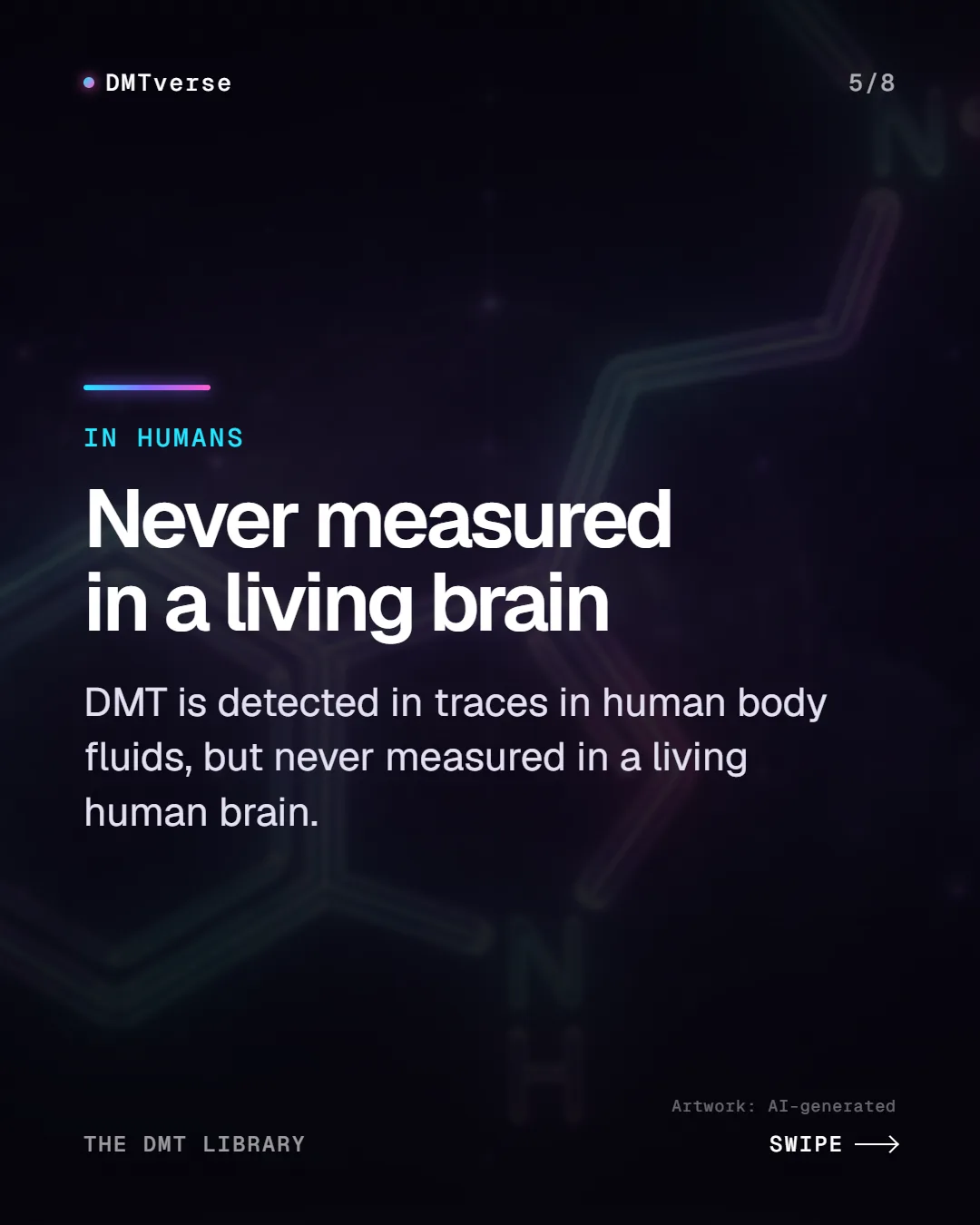
DMT (N,N-dimethyltryptamine) is a natural psychedelic compound from the tryptamine family, a close chemical cousin of serotonin. It occurs in many plants and animals, acts mainly on the brain’s serotonin 5-HT2A receptor, and in lab studies its effects last minutes rather than hours. In Canada it is a Schedule III controlled substance. One big question is still open: DMT has been measured in living rat brain and detected in human body fluids, but never measured in a living human brain.
THE SHORT VERSION · SWIPE
On this page 15 sections
DMT is a small molecule with an outsized reputation. This guide sticks to what published research shows: what DMT is made of, where it occurs, how bodies make it, how it acts in the brain, what people report, and where it stands in Canadian law. Each factual paragraph ends with an evidence label, so you can see how solid the ground is.
Education only, not guidance
This article describes published research and law. It gives no amounts, no instructions and no advice on use, and it does not describe any effect as a benefit. DMT is a controlled substance in Canada. In an emergency, call 911. Evidence labels: established (shown in peer-reviewed studies and not seriously disputed), preliminary (early, small, animal-only or indirect) and unresolved (an open question).
What is DMT, chemically?
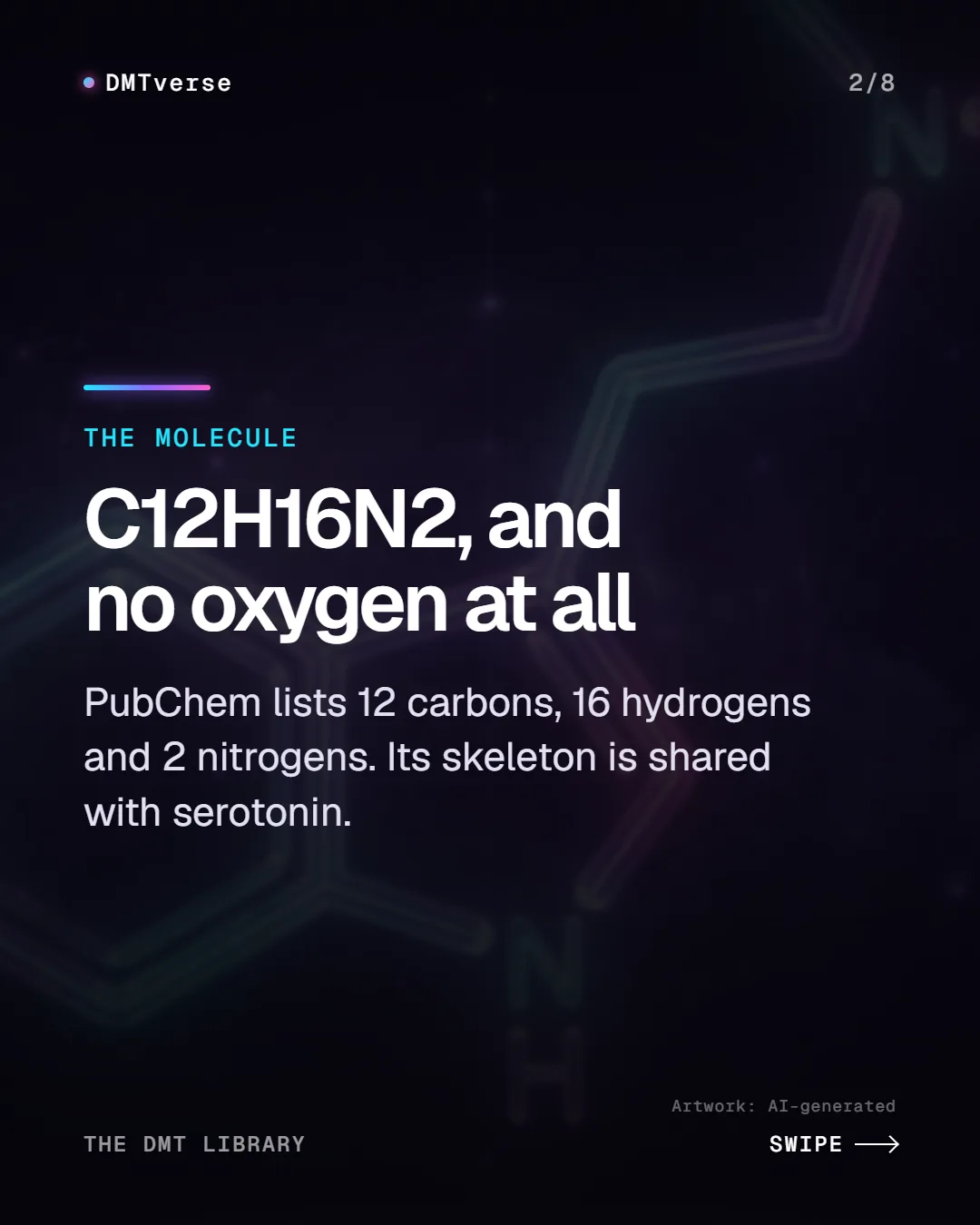
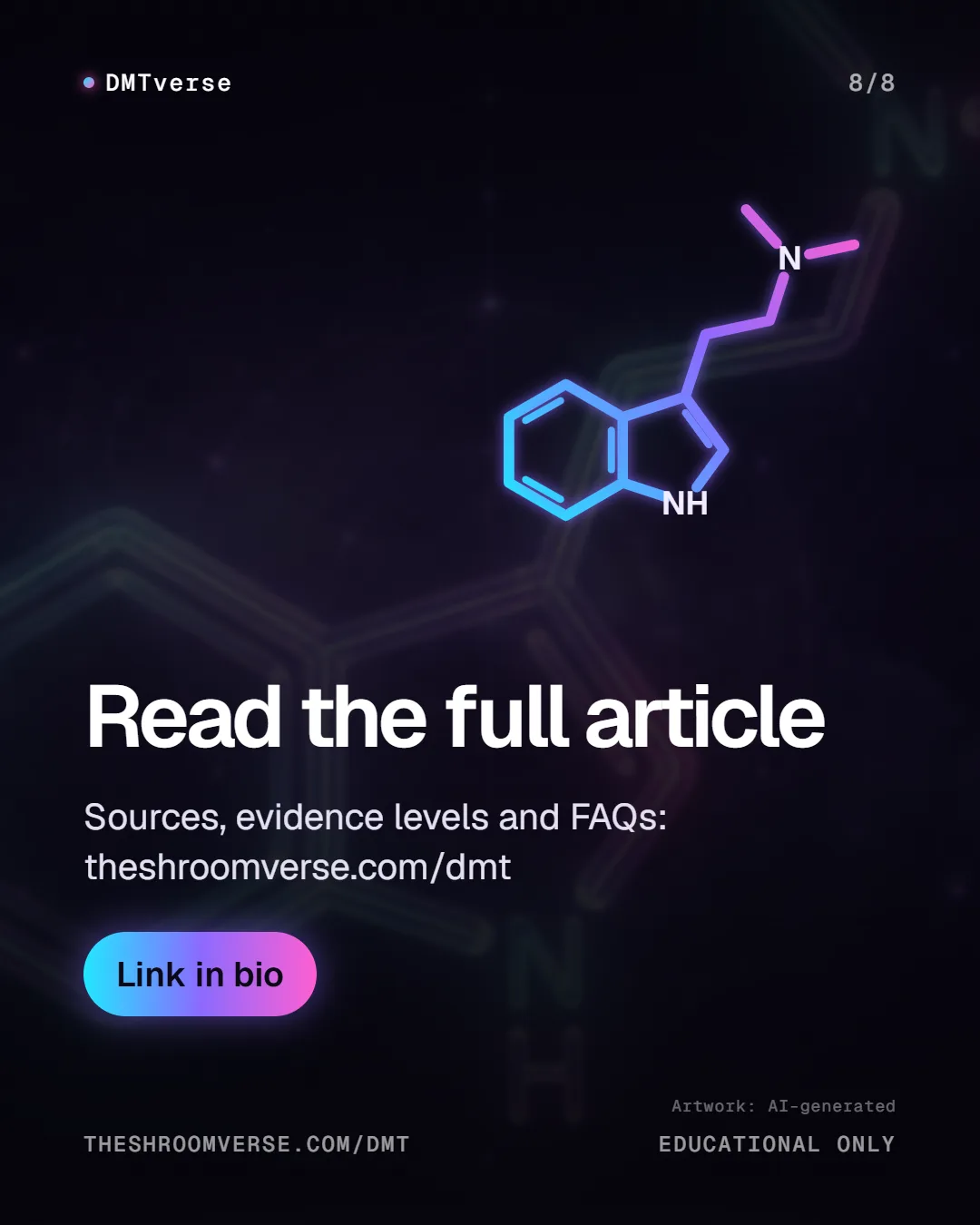
DMT stands for N,N-dimethyltryptamine. PubChem, the US National Library of Medicine’s chemistry database, gives its formula as C12H16N2: twelve carbon atoms, sixteen hydrogens and two nitrogens, with no oxygen at all (PubChem, DMT). Canada’s drug law describes the same molecule as 3-[(2-dimethylamino)ethyl]indole (CDSA, Schedule III).
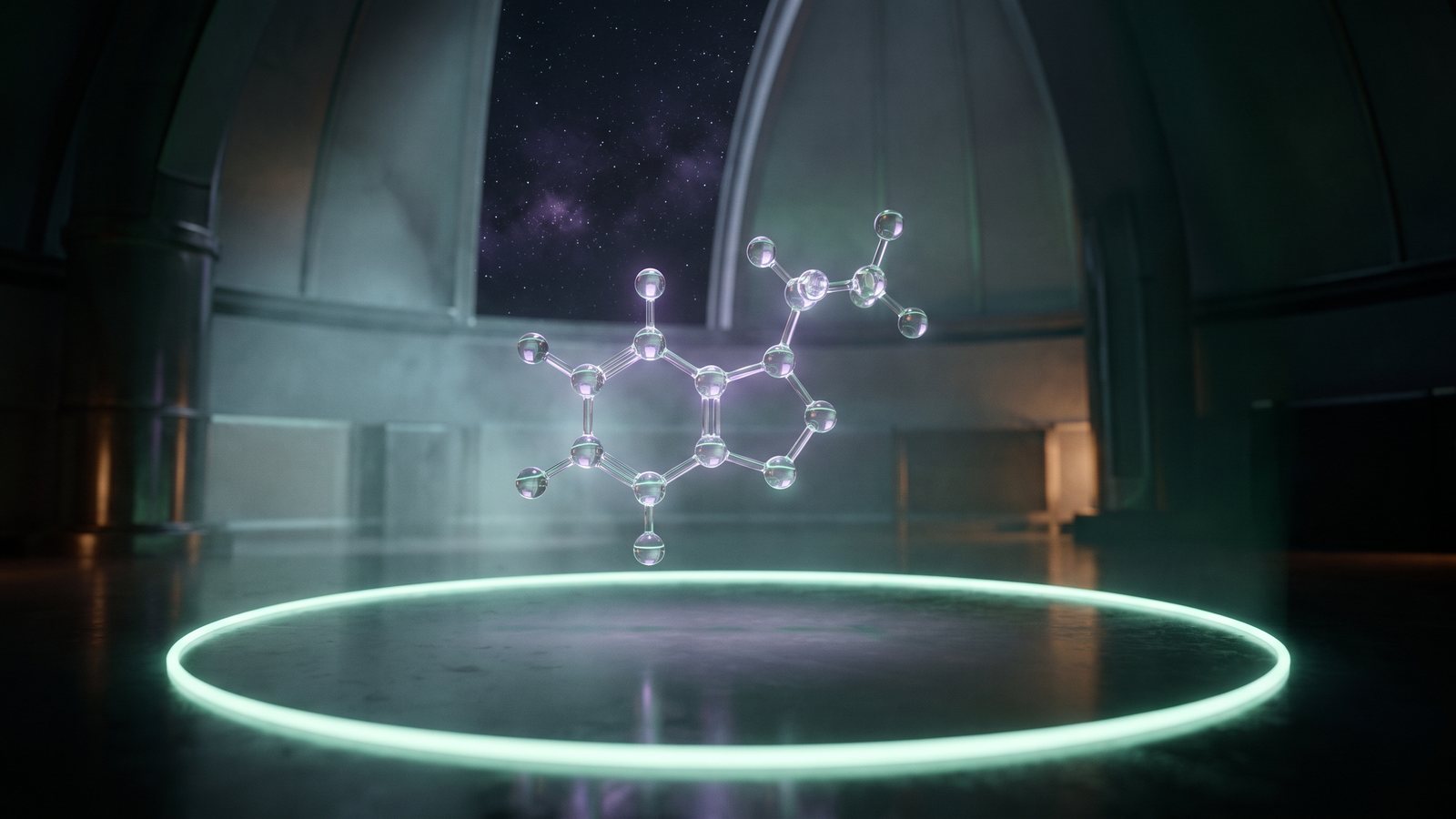
That name is a description of the shape. DMT is built on an indole, a pair of fused rings that also appears in the amino acid tryptophan. Attached to the indole is a short two-carbon chain ending in a nitrogen, and on that nitrogen sit two methyl groups (the “dimethyl”). Remove the two methyl groups and you have plain tryptamine, the parent compound of the whole tryptamine family. So when people ask “what is in DMT”, the chemical answer is: an indole ring, an ethylamine chain and two methyl groups, nothing else. Our DMT chemical structure guide walks through the drawing atom by atom.
Its link to serotonin is close. Serotonin (5-hydroxytryptamine) has the same indole-plus-chain skeleton, with an extra hydroxyl group on the ring and no methyl groups on the nitrogen (PubChem, serotonin). DMT and the other serotonergic psychedelics share structural and functional features with serotonin and act on serotonin receptors (Dean et al., 2019). A 2018 review calls DMT “the archetype for all indole-containing serotonergic psychedelics” (Cameron and Olson, 2018). Evidence: established.
| Molecule | Formula | What sits on the indole skeleton |
|---|---|---|
| Tryptamine | C10H12N2 | Ethylamine chain with a bare nitrogen. The parent compound. |
| Serotonin (5-HT) | C10H12N2O | Same chain, plus a hydroxyl group on the ring. A neurotransmitter. |
| DMT | C12H16N2 | Same chain, with two methyl groups on the nitrogen and no hydroxyl. |
Is DMT natural, and where does it come from?
Yes. DMT is a natural product. Unlike LSD or psilocybin, it is “ubiquitous, being produced by a wide variety of plant and animal species”, and it is one of the few psychedelic compounds produced by mammals (Cameron and Olson, 2018). Its occurrence in plants was first reported in 1946 by the microbiologist Oswaldo Gonçalves de Lima (Barker, 2018). Evidence: established.
In animals, DMT has been reported in a range of species, rats included, and in humans (Dean et al., 2019). The enzymes thought to make it have been found in rat, rabbit and primate tissue, and in human tissue too (Barker, 2018). DMT is also one of the main active components of ayahuasca, a brew with centuries of traditional use (Cameron and Olson, 2018); see ayahuasca vs DMT for how the two differ. We deliberately do not list which plants contain it. Evidence: established.
How does the body make DMT?
The textbook pathway in mammals has two stages, both starting from tryptophan, a common amino acid in the diet (Barker, 2018):
- Tryptophan loses its carboxyl group to become tryptamine. The enzyme that does this is aromatic L-amino acid decarboxylase (AADC), the same enzyme the body uses on the way to serotonin and dopamine.
- Tryptamine gains one methyl group to become N-methyltryptamine (NMT). The enzyme credited with this is indolethylamine N-methyltransferase (INMT), which takes the methyl group from a donor molecule called S-adenosylmethionine (SAM).
- NMT gains a second methyl group to become DMT, again attributed to INMT.
- DMT is broken down quickly, mainly by the enzyme monoamine oxidase A (MAO-A), into indoleacetic acid. Its second most abundant breakdown product is DMT-N-oxide.
The pathway rests on older work. In 1961 Julius Axelrod reported an enzyme that converts tryptamine to DMT, found mainly in rabbit lung (Axelrod, 1961). In 1972 Juan Saavedra and Axelrod showed tryptamine placed in living rat brain being converted to NMT and DMT (Barker, 2018). One caution: AADC and INMT also act on other molecules, so finding the enzymes in a tissue does not prove DMT is being made there. Evidence: established for these experiments; INMT’s role is questioned below.
The INMT puzzle: is that really the enzyme?
This is where the story gets less tidy. In 2023, a team built rats with the INMT gene knocked out. Brain and lung tissue from those rats showed the same tryptamine-methylating activity as normal rats, but the products were neither NMT nor DMT, and rat INMT on its own was not sufficient to make them. The authors concluded that rats may use an alternative pathway (Glynos et al., 2023).
In 2025, a second team created INMT-knockout mice. The mice grew and reproduced normally and showed behavioural differences, but they had no obvious drop in their own psychedelic tryptamine levels, again “suggesting that psychedelics might be produced by alternative biosynthetic pathways in rodents” (Hatzipantelis et al., 2025). Evidence: the tryptophan-to-tryptamine step is established; that INMT is the enzyme that makes DMT in mammals is now unresolved.
What did the rat-brain studies find?
Microdialysis is a way of sampling the fluid around brain cells in a living, freely moving animal through a fine probe. In 2013, a lab method that could detect 23 related compounds at once was applied to fluid sampled near the rat pineal gland, and it detected DMT there for the first time (Barker et al., 2013). That study confirmed DMT was present but did not measure how much (Barker, 2018).
A 2019 study went further (Dean et al., 2019). In summary:
- Using a sensitive staining method, the team found the messenger RNA for INMT in the cerebral cortex, pineal gland and choroid plexus of both rats and humans. The human tissue came from archived autopsy samples.
- In rat brain, INMT and AADC messenger RNA were found in the same cells, including in the visual cortex and hippocampus. In rat lung, heart, kidney and adrenal gland, the two rarely overlapped.
- In 36 living rats (25 with the pineal gland intact and 11 with it surgically removed), DMT was measured in visual-cortex fluid. Baseline levels averaged about 1 nanomolar in rats without a pineal gland, comparable to serotonin, dopamine and noradrenaline measured the same way.
- Removing the pineal gland made no significant difference, which suggests the cortex itself may be a source and challenges the popular idea that DMT comes mainly from the pineal gland.
- DMT rose after experimentally induced cardiac arrest in the rats.
The authors concluded that the rat brain “is capable of synthesizing and releasing DMT at concentrations comparable to known monoamine neurotransmitters” and that this may also occur in humans (Dean et al., 2019). Note the limits in their own discussion: INMT-deficient animals would be needed to prove INMT makes the DMT, and the later knockout studies above suggest it may not. Evidence: preliminary. It is one lab’s animal finding, not yet independently replicated in the sources we read.
How strong is the evidence that the human body makes DMT?
Weaker than many online claims suggest. A 2012 critical review examined 69 published studies, from 1955 to 2010, that reported DMT and two related compounds in human blood, urine or cerebrospinal fluid (Barker et al., 2012). A later summary of that review reached three conclusions (Barker, 2018):
- Many early studies probably misidentified the compound, so their often high reported levels and any links to psychiatric diagnoses were probably wrong.
- Where properly identified, DMT showed up in healthy controls too, sometimes at higher levels, so it was neither necessary nor sufficient for any diagnosis.
- Where mass spectrometry evidence was provided, DMT is endogenous and can often be measured in human body fluids.
What is missing matters as much. The few studies that found DMT in human cerebrospinal fluid did not measure how much was there, and nobody has tried to quantify DMT in the human brain (Barker, 2018). Studies of human body fluids have reported only trace amounts (Dean et al., 2019). Evidence: established that DMT is detectable in people.
So the human case rests on detection in body fluids and on INMT messages in autopsy brain tissue, not on measurement in a living brain. Whether the human brain makes meaningful amounts, and what DMT would do there, is open; a 2018 review calls its function in human physiology “a mystery” (Cameron and Olson, 2018). Our article on whether the brain makes DMT goes deeper. Evidence: unresolved.
Who discovered DMT? A short history
- 1931Canadian chemist Richard Manske publishes a synthesis of the methyltryptamines in the Canadian Journal of Research. DMT is not tested in people at the time.Source Manske, 1931; Barker, 2018
- 1946Oswaldo Gonçalves de Lima reports DMT occurring naturally in plants.Source Barker, 2018
- 1956Hungarian chemist and psychiatrist Stephen Szára reports DMT’s effects in people, after testing it on himself, and links them to serotonin metabolism.Source Szára, 1956; Barker, 2018
- 1961Julius Axelrod reports an enzyme that makes DMT from tryptamine, found mainly in rabbit lung.Source Axelrod, 1961
- 1972Saavedra and Axelrod show DMT forming in living rat brain.Source Barker, 2018
- 1994Rick Strassman and a co-author publish a randomized, double-blind, placebo-controlled dose-response study of intravenous DMT in 11 experienced volunteers.Source Strassman and Qualls, 1994
- 2009DMT is reported to bind and activate the sigma-1 receptor.Source Fontanilla et al., 2009
- 2013DMT detected in fluid sampled from living rat pineal gland.Source Barker et al., 2013
- 2019DMT measured in living rat cortex at neurotransmitter-like levels.Source Dean et al., 2019
- 2023–2025INMT-knockout rats and mice suggest another enzyme pathway may make DMT.Source Glynos et al., 2023; Hatzipantelis et al., 2025
Manske’s 1931 paper is titled “A synthesis of the methyltryptamines and some derivatives” (Manske, 1931). Szára’s 1956 report appeared in the journal Experientia under a title connecting DMT’s “psychotic effect” to serotonin metabolism (Szára, 1956), which reflects the era: in the 1950s, researchers wondered whether conditions such as schizophrenia might involve the body producing its own hallucinogens. More than 60 studies chased that idea without finding a clear, repeatable link (Barker, 2018). These dates cover laboratory science only; traditional use of DMT-containing brews is far older. Evidence: established.
What does DMT do in the brain?
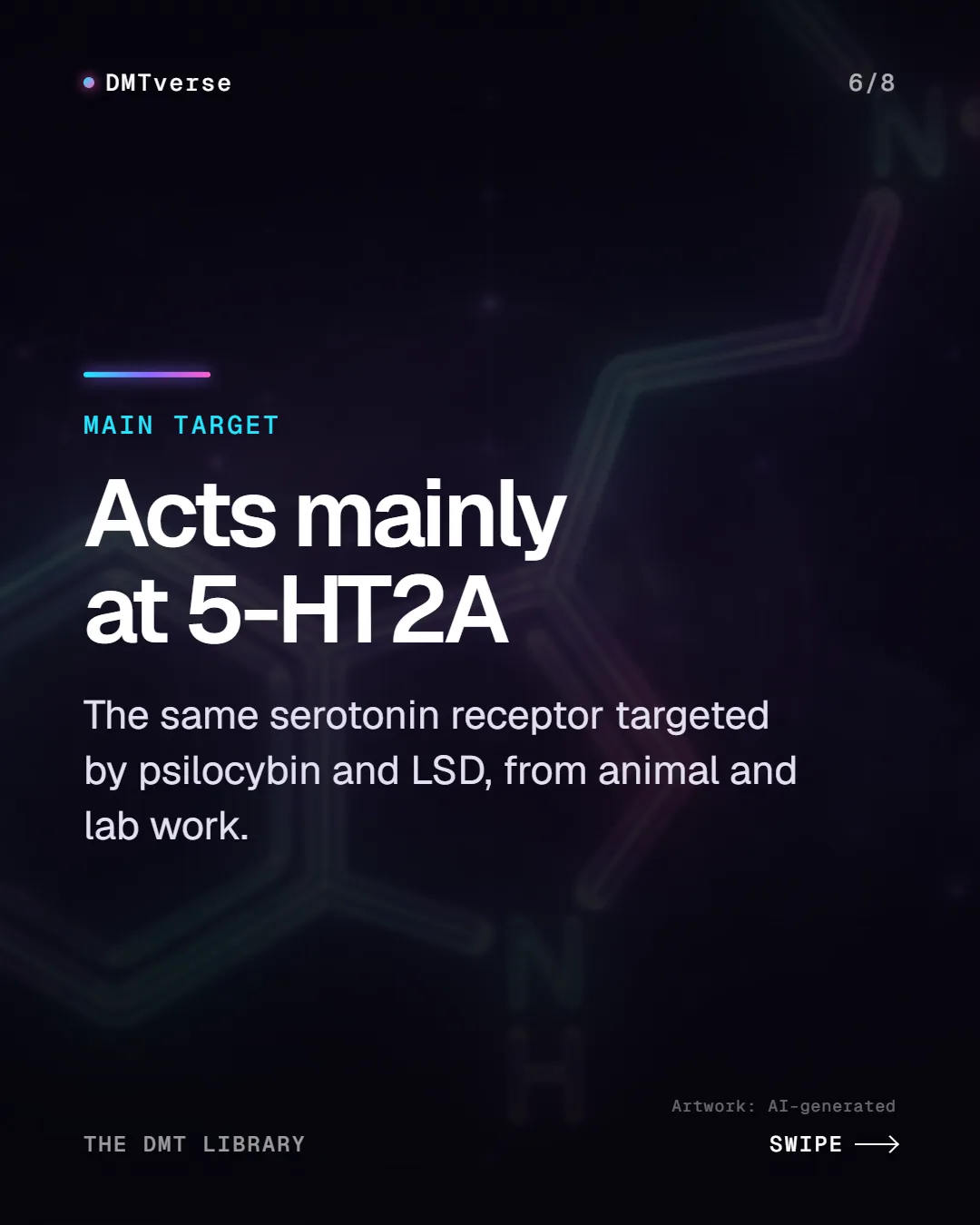
Mainly through the serotonin 5-HT2A receptor, the same receptor targeted by psilocybin and LSD. A review describes DMT’s subjective effects as appearing “to be primarily acting via 5-HT2A receptors”, and cites mouse work in which a typical psychedelic-like behaviour in response to DMT occurred in normal mice but not in mice lacking 5-HT2A (Barker, 2018). Evidence: established in animal and lab work; preliminary in people, because we found no published human blocking study of DMT itself (the closest, with ayahuasca, found that blocking 5-HT2A weakened the effects; see DMT and the 5-HT2A receptor).
It is not the whole story. DMT binds many other serotonin receptors, and it also acts at trace amine-associated receptor 1 (TAAR1), a receptor for trace amounts of amine messengers (Barker, 2018). A 2009 study reported that DMT binds the sigma-1 receptor, a protein found widely in the nervous system and body. DMT made normal mice more active but not mice lacking sigma-1, and the authors proposed DMT as a natural activator of it (Fontanilla et al., 2009). Evidence: preliminary.
Keep that in proportion. DMT binds sigma-1 only at much higher concentrations than it needs at 5-HT2A, and many other compounds, psychedelic or not, bind there too (Barker, 2018). What sigma-1 and TAAR1 contribute in people is not known. Evidence: unresolved.
One small study shows how much is still unexplained. In a double-blind study of 12 volunteers, blocking a different serotonin receptor, 5-HT1A, with the drug pindolol made DMT’s effects stronger rather than weaker (Zahid et al., 2026). Pindolol also acts on the heart, so the result needs repeating. Evidence: preliminary.
For a side-by-side look at how DMT, psilocybin and LSD differ at the receptor and in timing, see psilocybin, LSD and DMT: how they differ.
How long do DMT’s effects last?
Minutes, not hours. In Strassman’s 1994 study, in which DMT was injected into a vein, peak blood levels and effects came within 2 minutes and were negligible by 30 minutes (Strassman and Qualls, 1994). Across study designs, a review gives a range of roughly 15 to 60 minutes (Barker, 2018). Evidence: established.
The reason is speed of breakdown: the enzyme MAO-A clears DMT from the body very quickly (Barker, 2018). Ayahuasca is a different case because of its other ingredients. These are descriptions of research, not predictions or guidance; how long does DMT last covers the timing studies in detail. Evidence: established.
What do people report during a DMT experience?
Reports return to the same features: fast-moving geometric visuals, a sense of being somewhere else entirely, changes in the sense of self and, for many but not all, encounters with beings. In a 2022 analysis of 3,778 experiences posted to an online forum, 45.5% described an entity. The famous “machine elves” were a small minority, 2.9% of encounters (Lawrence et al., 2022). Evidence: preliminary.
It is not always pleasant. In a 2020 survey of 2,561 people describing their most memorable encounter, 41% reported fear (Davis et al., 2020). Both samples were self-selected people who chose to describe their experience. Such reports tell us what the experience is like, not what, if anything, exists outside the brain. Evidence: preliminary.
A 2026 lab study interviewed 23 participants in fine detail after DMT given during brain scanning. Bodily effects tended to come first, then the senses and a sense of space, and presences appeared only after that space had formed (Sanders et al., 2026). Evidence: preliminary. For more, see what does DMT feel like and DMT entity encounters: what the research says.
What does brain imaging show during DMT?
DMT’s short action lets scientists record a whole psychedelic state in one session. In a 13-person EEG (brain-wave) study at Imperial College London, the brain’s dominant resting rhythm, alpha, collapsed, and the more intense the experience, the bigger the collapse (Timmermann et al., 2019). A field study of 35 people in natural settings also found reduced alpha-band activity (Pallavicini et al., 2021). Evidence: preliminary, from small samples, though two independent studies agree.
Combined EEG and fMRI scanning later showed the largest increases in connectivity in “transmodal” cortex, the high-level regions that integrate information and are richest in 5-HT2A receptors (Timmermann et al., 2023). Evidence: preliminary.
Some caution is due. When researchers pooled 11 psychedelic brain-imaging datasets in 2026, the often-repeated idea that psychedelics “dissolve” the brain’s default mode network shrank to weak, selective effects. The most robust signature was more coupling between high-level and sensory networks (Girn et al., 2026). The leading theory, that psychedelics loosen the brain’s high-level assumptions about the world, is a well-developed hypothesis, not a proven mechanism (Carhart-Harris and Friston, 2019). Evidence: unresolved.
Why does DMT feel “more real than real”?
When asked directly, 81% of people in the 2020 survey said their encounter felt more real than everyday reality. On a 0–100 scale they rated its realness 77.3 for the moment itself, but 63.2 when thinking about it at the time of the survey (Davis et al., 2020). In the open-ended forum reports, by contrast, almost no one mentioned realness unprompted (Lawrence et al., 2022). How you ask changes the answer. Evidence: preliminary.
The feeling is also not unique to DMT. In a 2019 survey, people who described a “God encounter” without any drug rated it almost as real (72.7) as people describing a DMT encounter (77.5) (Griffiths et al., 2019). One reading is that the brain adds a sense of “this is real” to experience, separately from its content. Evidence: preliminary.
Neuroscientists have begun to map how the brain judges whether something is real. A 2025 scanning study points to a graded signal in a visual area, the fusiform gyrus, that interacts with a frontal network making the yes-or-no call (Dijkstra et al., 2025). Researchers have proposed testing this “reality monitoring” under psychedelics (Stoliker et al., 2024), but a Europe PMC search on 20 October 2026 found no study that has measured it under any psychedelic. Evidence: unresolved.
Is DMT legal in Canada?
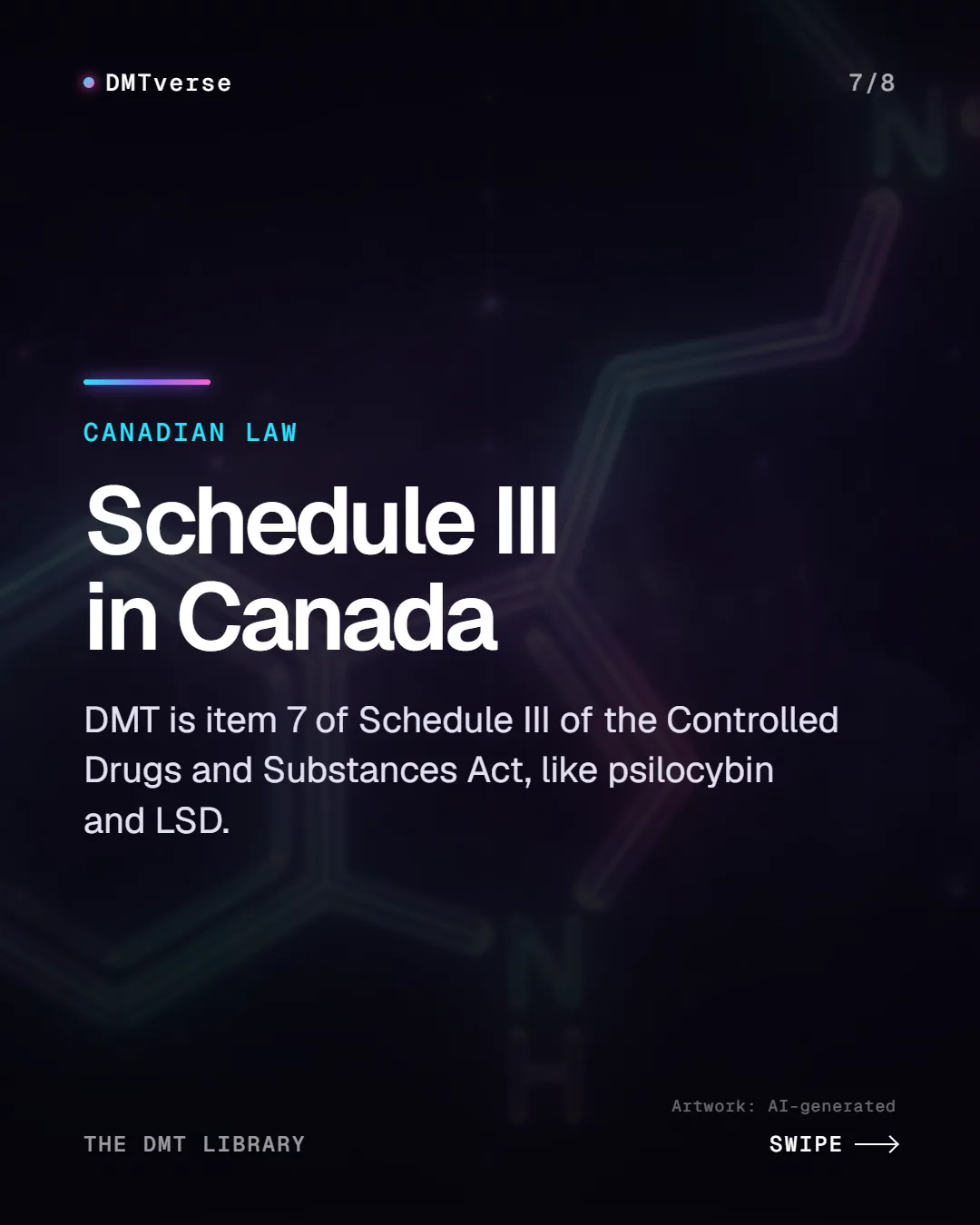
No. N,N-dimethyltryptamine and any salt of it is item 7 of Schedule III of the Controlled Drugs and Substances Act, the same schedule as psilocybin and LSD. The Act prohibits possessing a Schedule III substance except as authorized under the regulations, and separately prohibits trafficking and production (Justice Laws, CDSA). Evidence: established.
The federal Minister of Health can grant exemptions for medical or scientific purposes under section 56. The schedule entry has no exception for DMT that occurs in nature or in the body. The consolidation we read on 20 October 2026 was current to 30 September 2026 (Justice Laws, CDSA). This is general information, not legal advice; see is DMT legal in Canada for more. Evidence: established.
What are the risks, and where can you get help in Canada?
In the 1994 study, DMT raised blood pressure, heart rate and body temperature (Strassman and Qualls, 1994). Canada’s Centre for Addiction and Mental Health (CAMH) warns that most hallucinogens are illegal and unregulated, may contain toxins or not contain the drug they are sold as, and can leave people disoriented, with poor judgment and more likely to take risks (CAMH). Ayahuasca combines DMT with other active compounds and has its own risks, outside this article’s scope. Evidence: established.
The psychological side matters too, beyond the fear many people report. Rarely, hallucinogens and cannabis have been reported as the trigger for chronic depersonalization, a condition in which the self or the world feels unreal for months. In one survey of 394 people with the condition, cannabis and hallucinogens were the two most commonly reported triggers. No DMT-specific figure exists, and some people may have been vulnerable beforehand (Simeon et al., 2009). Evidence: preliminary.
If someone is in danger
Call 911 for immediate danger or urgent medical help, including if someone is unconscious, not breathing or having a seizure. In Ontario, the Ontario Poison Centre is at 1-800-268-9017; every province has a poison centre, listed by SickKids (AboutKidsHealth). If you or someone you know is thinking about suicide, call or text 9-8-8, 24 hours a day (Government of Canada). See also our safety page and how to help someone having a bad trip.
What we still don’t know
- Which enzyme or enzymes make DMT in mammals.
- Whether the living human brain makes meaningful amounts.
- What DMT does in the body under normal conditions; a neurotransmitter role and sigma-1 effects are ideas, not findings in people.
- Whether the 2019 rat findings replicate in other labs and species.
- Why the experience so often feels more real than everyday life.
- Whether expectations shape who or what people meet; no controlled DMT study we found has tested it.
To separate the popular claims from the evidence, read DMT myths, fact-checked. For the mushroom side of the same chemistry, see what is psilocybin.
Common questions
What is DMT?
DMT, short for N,N-dimethyltryptamine, is a natural psychedelic from the tryptamine family, closely related to serotonin. It occurs in many plants and animals, acts mainly at the serotonin 5-HT2A receptor, and in lab studies its effects last minutes rather than hours. In Canada it is a Schedule III controlled substance.
What is in DMT?
Chemically, DMT is C12H16N2: an indole ring with a two-carbon chain ending in a nitrogen that carries two methyl groups. Take away the methyl groups and you get tryptamine; add a hydroxyl group to tryptamine’s ring and you get serotonin. A substance sold as DMT on the unregulated market may contain something else entirely.
Is DMT natural?
Yes. DMT has been found in a wide variety of plant and animal species and is one of the few psychedelics made by mammals. Natural origin does not make it safe or legal: in Canada it is a Schedule III controlled substance.
Where does DMT come from in the body?
In the classic pathway, the amino acid tryptophan is turned into tryptamine by the enzyme AADC, then methylated twice, a step long credited to the enzyme INMT. A 2019 study measured DMT in living rat cortex at levels similar to serotonin. In humans, DMT has been detected in body fluids, but never measured in the living brain.
Does the pineal gland make DMT?
DMT was detected in fluid sampled near the rat pineal gland in 2013, and human pineal tissue carries the message for INMT. But in 2019, rats with the pineal gland removed had similar DMT levels in the cortex, which suggests the pineal is not the main source in rats. In humans, it is unknown.
What does DMT feel like?
People describe fast-moving geometric visuals, a sense of being somewhere else, changes in the sense of self and, in many reports, encounters with beings. In one analysis of 3,778 online reports, 45.5% described an entity; “machine elves” were 2.9% of encounters. Fear is also common. These are subjective reports, not evidence about anything outside the brain.
Why does DMT feel more real than reality?
Nobody knows yet. In a 2020 survey, 81% said their encounter felt more real than everyday reality, but people describing drug-free “God encounters” rated theirs almost as real. The brain’s sense of what is real may be a separate judgment from what is experienced, and it has never been measured under a psychedelic.
Is DMT legal in Canada?
No. DMT is item 7 of Schedule III of the Controlled Drugs and Substances Act. Possession, trafficking and production are prohibited unless authorized under the regulations, and the Minister of Health can grant section 56 exemptions for medical or scientific purposes. This is not legal advice.
Is DMT an opioid?
No. DMT is a tryptamine psychedelic that acts mainly on the brain’s serotonin 5-HT2A receptor. Opioids such as fentanyl and oxycodone are a different class: Health Canada says they affect the part of the brain that controls breathing, which is why an opioid overdose slows breathing. Canadian law lists them separately, opioids in Schedule I and DMT in Schedule III. If someone’s breathing is slow, weak or stopped, call 911.
Shroomverse sells mushroom products. This article is general information about the chemistry, natural history and law of DMT. It is not medical, legal or purchasing advice, and it does not recommend any product.
SOURCES
- Opioid overdose, Health Canada. Accessed . Page read 21 October 2026. Supports: opioid drugs affect the part of the brain that controls breathing; in an overdose, breathing slows; signs include slow, weak or no breathing; fentanyl, carfentanil and oxycodone named.
- Controlled Drugs and Substances Act (S.C. 1996, c. 19), full text, Schedule III and sections 4, 5, 7 and 56, Government of Canada, Justice Laws Website. Accessed . Schedule III item 7: N,N-dimethyltryptamine (DMT), 3-[(2-dimethylamino)ethyl]indole, and any salt; possession, trafficking and production prohibitions; section 56 exemptions. Re-read 21 October 2026: Schedule I item 1 (opium poppy derivatives, including codeine and morphine) and item 16 (fentanyls). Consolidation current to 2026-09-30, last amended 2026-07-18.
- N,N-Dimethyltryptamine, compound summary (CID 6089), U.S. National Library of Medicine, PubChem. Accessed . Molecular formula C12H16N2 and IUPAC name 2-(1H-indol-3-yl)-N,N-dimethylethanamine (read through the PubChem REST interface). Tryptamine (CID 1150, C10H12N2) was checked the same way.
- Serotonin, compound summary (CID 5202), U.S. National Library of Medicine, PubChem. Accessed . Molecular formula C10H12N2O and IUPAC name 3-(2-aminoethyl)-1H-indol-5-ol, used for the structural comparison with DMT.
- N,N-Dimethyltryptamine (DMT), an Endogenous Hallucinogen: Past, Present, and Future Research to Determine Its Role and Function (Barker SA, Frontiers in Neuroscience 12:536, 2018), Frontiers (peer-reviewed, open access); full text via Europe PMC, PMC6088236. Accessed . Full text read. Source for the 1931, 1946, 1956, 1961 and 1972 history; the AADC and INMT pathway and MAO-A breakdown; the summary of the 69-study review; no quantification of DMT in human brain or CSF; 5-HT2A, TAAR1 and sigma-1 binding; short duration and lack of oral activity on its own.
- Dark Classics in Chemical Neuroscience: N,N-Dimethyltryptamine (DMT) (Cameron LP, Olson DE, ACS Chemical Neuroscience 9(10):2344–2357, 2018), American Chemical Society (peer-reviewed). Accessed . Abstract read via Europe PMC. DMT as the archetype indole psychedelic; produced by a wide variety of plant and animal species; one of the few psychedelics made by mammals; ayahuasca; biological function a mystery.
- Biosynthesis and Extracellular Concentrations of N,N-dimethyltryptamine (DMT) in Mammalian Brain (Dean JG, et al., Scientific Reports 9:9333, 2019), Springer Nature (peer-reviewed, open access); full text via Europe PMC, PMC6597727. Accessed . Full text read. INMT mRNA in rat and human cortex, pineal and choroid plexus (human tissue from autopsy archives); INMT and AADC colocalized in rat brain but rarely in periphery; 36 rats (25 pineal-intact, 11 pinealectomized); baseline cortical DMT averaging 1.02 nM without pineal, comparable to monoamine neurotransmitters; no pineal effect; rise after cardiac arrest; trace amounts in human fluids.
- LC/MS/MS analysis of the endogenous dimethyltryptamine hallucinogens, their precursors, and major metabolites in rat pineal gland microdialysate (Barker SA, Borjigin J, Lomnicka I, Strassman R, Biomedical Chromatography 27(12):1690–1700, 2013), Wiley (peer-reviewed). Accessed . Abstract read via Europe PMC. Method covering 23 compounds; first report of DMT in rat pineal microdialysate (qualitative only).
- A critical review of reports of endogenous psychedelic N,N-dimethyltryptamines in humans: 1955–2010 (Barker SA, McIlhenny EH, Strassman R, Drug Testing and Analysis 4(7-8):617–635, 2012), Wiley (peer-reviewed). Accessed . Abstract read via Europe PMC: critical review of 69 studies of DMT and related compounds in human blood, urine and CSF. Conclusions as summarized in Barker 2018.
- Indolethylamine N-methyltransferase (INMT) is not essential for endogenous tryptamine-dependent methylation activity in rats (Glynos NG, et al., Scientific Reports 13:280, 2023), Springer Nature (peer-reviewed, open access). Accessed . Abstract read via Europe PMC. INMT-knockout rats: equal tryptamine-dependent activity, products neither NMT nor DMT; rat INMT not sufficient; suggests an alternative pathway.
- Indolethylamine N-Methyltransferase Deletion Impacts Mouse Behavior without Disrupting Endogenous Psychedelic Tryptamine Production (Hatzipantelis CJ, et al., ACS Chemical Neuroscience 16(20):4011–4024, 2025), American Chemical Society (peer-reviewed). Accessed . Abstract read via Europe PMC. INMT-knockout mice: normal reproduction and growth, behavioural changes, no obvious decrease in endogenous psychedelic levels.
- A synthesis of the methyltryptamines and some derivatives (Manske RHF, Canadian Journal of Research 5(5):592–600, 1931), Canadian Science Publishing (NRC Research Press). Accessed . Bibliographic record checked on Crossref; cited for title, date and author only. Its content is not described here.
- Dimethyltryptamin: its metabolism in man; the relation of its psychotic effect to the serotonin metabolism (Szára S, Experientia 12(11):441–442, 1956), Springer (peer-reviewed). Accessed . Bibliographic record checked on Crossref; cited for title and date. The self-experiment is described from Barker 2018.
- Dose-Response Study of N,N-Dimethyltryptamine in Humans (Strassman RJ, Qualls CR, Archives of General Psychiatry 51(2):85–97, 1994), American Medical Association (peer-reviewed). Accessed . Abstract read via Europe PMC. Double-blind, saline placebo-controlled, randomized; 11 experienced hallucinogen users; peak blood levels and effects within 2 minutes, negligible at 30; dose-dependent rises in blood pressure, heart rate, pupil diameter and temperature. Doses deliberately not reproduced.
- The Hallucinogen N,N-Dimethyltryptamine (DMT) Is an Endogenous Sigma-1 Receptor Regulator (Fontanilla D, et al., Science 323(5916):934–937, 2009), American Association for the Advancement of Science (peer-reviewed). Accessed . Abstract read via Europe PMC. DMT bound sigma-1 receptors; hypermobility in wild-type but not sigma-1 knockout mice; proposed as an endogenous sigma-1 agonist.
- Hallucinogens, Centre for Addiction and Mental Health (CAMH). Accessed . Page carries a 2004, 2009 copyright, so it is an older overview. Source for hallucinogens being illegal and unregulated, possibly containing toxins or other drugs, and causing disorientation, poor judgment and risk-taking.
- Mental health support: get help, Government of Canada, Public Health Agency of Canada. Accessed . Source for calling 9-1-1 in immediate danger or for urgent medical support, and the 9-8-8 Suicide Crisis Helpline (call or text, 24/7).
- Poison information centres in Canada, AboutKidsHealth, The Hospital for Sick Children (SickKids). Accessed . Source for the provincial poison centre list, including Ontario toll-free 1-800-268-9017, and for calling 911 if someone is unconscious, not breathing or having a seizure.
- 5-HT1A receptor blockade potentiates the subjective effects of DMT (Zahid Z, et al., Journal of Psychopharmacology 40(8):1261–1269, 2026), SAGE (peer-reviewed). Accessed . Abstract read. Double-blind, randomized, placebo-controlled within-subjects design, 12 experienced volunteers; pindolol pretreatment intensified DMT's subjective effects (dose not reproduced here). Pindolol is also a beta-blocker. Title and details checked on Crossref 2026-10-20.
- Phenomenology and content of the inhaled N,N-dimethyltryptamine (N,N-DMT) experience (Lawrence DW, Carhart-Harris R, Griffiths R, Timmermann C, Scientific Reports 12:8562, 2022), Springer Nature (peer-reviewed, open access); full text via PubMed Central, PMC9130218. Accessed . Full text read. 3,778 forum experiences; entity in 45.5%; machine elves 2.9% of encounters; realness almost never mentioned unprompted.
- Survey of entity encounter experiences occasioned by inhaled N,N-dimethyltryptamine: Phenomenology, interpretation, and enduring effects (Davis AK, Clifton JM, Weaver EG, Hurwitz ES, Johnson MW, Griffiths RR, Journal of Psychopharmacology 34(9):1008–1020, 2020), SAGE (peer-reviewed). Accessed . Abstract read via Europe PMC on 2026-10-20 (full text not open): 2,561 respondents, self-selected, most memorable encounter; 41% reported fear. The 81% 'more real than everyday reality' figure is also reported by Michael et al. 2021 (open access). The realness ratings (77.3 during vs 63.2 now) come from a full-text reading for the DMTverse evidence ledger on 2026-10-01.
- Micro-phenomenology of immersion and perceived presences under DMT (Sanders JW, Millière R, Demšar E, Daily ZG, Erritzoe D, Carhart-Harris R, Timmermann C, Neuroscience of Consciousness, niag015, 2026), Oxford University Press (peer-reviewed, open access); PMC13366535. Accessed . Full text read. 23 participants interviewed after DMT during fMRI-EEG; presences appeared after body, senses and space had formed.
- Neural correlates of the DMT experience assessed with multivariate EEG (Timmermann C, et al., Scientific Reports 9:16324, 2019), Springer Nature (peer-reviewed, open access); full text via PubMed Central, PMC6864083. Accessed . Full text read. Alpha power collapsed and the collapse tracked intensity; 13 participants, single-blind, fixed order.
- Neural and subjective effects of inhaled N,N-dimethyltryptamine in natural settings (Pallavicini C, et al., Journal of Psychopharmacology 35(4):406–420, 2021), SAGE (peer-reviewed). Accessed . Abstract read. Naturalistic EEG study of 35 people; decreased alpha-band synchrony and metastability. Title and details checked on Crossref 2026-10-20.
- Human brain effects of DMT assessed via EEG-fMRI (Timmermann C, et al., PNAS 120(13):e2218949120, 2023), National Academy of Sciences (peer-reviewed); full text via PubMed Central, PMC10068756. Accessed . Full text read. Largest connectivity increases in transmodal, 5-HT2A-rich cortex; fMRI sample of 16.
- An international mega-analysis of psychedelic drug effects on brain circuit function (Girn M, et al., Nature Medicine 32(4):1543–1554, 2026), Springer Nature (peer-reviewed). Accessed . Abstract read. Pooled 11 resting-state fMRI datasets across five psychedelics; within-network reductions weak and selective; most robust signature was increased transmodal–sensory coupling. Title checked on Crossref 2026-10-20.
- REBUS and the Anarchic Brain: Toward a Unified Model of the Brain Action of Psychedelics (Carhart-Harris RL, Friston KJ, Pharmacological Reviews 71(3):316–344, 2019), American Society for Pharmacology and Experimental Therapeutics (peer-reviewed, open access); full text via PubMed Central, PMC6588209. Accessed . Abstract read. Theoretical framework, cited as a hypothesis.
- Survey of subjective “God encounter experiences”: Comparisons among naturally occurring experiences and those occasioned by the classic psychedelics psilocybin, LSD, ayahuasca, or DMT (Griffiths RR, Hurwitz ES, Davis AK, Johnson MW, Jesse R, PLoS One 14:e0214377, 2019), PLOS (peer-reviewed, open access); PMC6478303. Accessed . Full text read. Realness of the encounter: 72.7 for non-drug encounters vs 77.5 for DMT; self-selected online samples.
- A neural basis for distinguishing imagination from reality (Dijkstra N, et al., Neuron 113(15):2536–2542, 2025), Cell Press (peer-reviewed). Accessed . Full text read. fMRI, 26 participants; judgments of reality track the strength of fusiform gyrus activity, which interacts with a frontal network encoding binary reality judgments. Title checked on Crossref 2026-10-20.
- Neural mechanisms of psychedelic visual imagery (Stoliker D, et al., Molecular Psychiatry 30(4):1259–1266, 2024), Springer Nature (peer-reviewed). Accessed . Full text read 2026-10-01 (psilocybin fMRI study of visual imagery that raises reality monitoring); a Europe PMC search on 2026-10-20 for reality monitoring with psychedelics (38 hits) found no study measuring it under a psychedelic. Title checked on Crossref 2026-10-20.
- Is Depersonalization Disorder Initiated by Illicit Drug Use Any Different? (Simeon D, et al., Journal of Clinical Psychiatry 70(10):1358–1364, 2009), Physicians Postgraduate Press (peer-reviewed). Accessed . Abstract read. Internet survey of 394 adults with depersonalization/derealization; cannabis and hallucinogens the two most common precipitating drugs, followed by ecstasy. No DMT-specific data. Title checked on Crossref 2026-10-20.
- Enzymatic formation of psychotomimetic metabolites from normally occurring compounds (Axelrod J, Science 134(3475):343, 1961), American Association for the Advancement of Science (peer-reviewed). Accessed . Abstract read via Europe PMC. An enzyme N-methylating tryptamine to DMT and serotonin to bufotenine, highly localized in rabbit lung. Barker 2018 describes the discovery as in rat brain; the original abstract says rabbit lung.
CHANGES
- : Added an FAQ answering whether DMT is an opioid (search demand), with Health Canada's opioid overdose page and the CDSA schedules.
- : Linked glossary definitions.
- : Evidence label for DMT acting mainly through 5-HT2A made consistent across the library: established in animal and lab work, preliminary in people.
- : Title, description and one H2 reworded for the searches “dmt what is it”, “dmt meaning” and “dmt what does it do”. No change to the facts.
- : Published. Sources opened and checked on this date, including Schedule III of the Controlled Drugs and Substances Act consolidation current to 30 September 2026.
- : Corrected the 1961 Axelrod finding to rabbit lung, from the original paper. Added sections on what people report, brain imaging and why DMT feels “more real than real”, a 5-HT1A finding, two risk notes and two open questions, from the DMTverse evidence ledger; claims re-checked against Europe PMC abstracts and Crossref records on 20 October 2026, except the Davis 2020 realness ratings, which rest on a full-text reading on 1 October 2026.
- : Editorial review: rewrote the short answer as a direct definition; removed repeated Strassman, ayahuasca and fear passages so each fact appears once; split long paragraphs and added evidence labels; dropped the unsourced “simplest psychedelic” and “within a minute or two” wording; removed oral-activity wording; added links to the structure, timing, feel, brain, legal and myths articles.



