THE SHROOMVERSE JOURNAL ✳ 16 MIN READ
DMT vs ketamine: a classic psychedelic and a dissociative, side by side
Topic: DMT
Published
Short answer, checked 21 October 2026
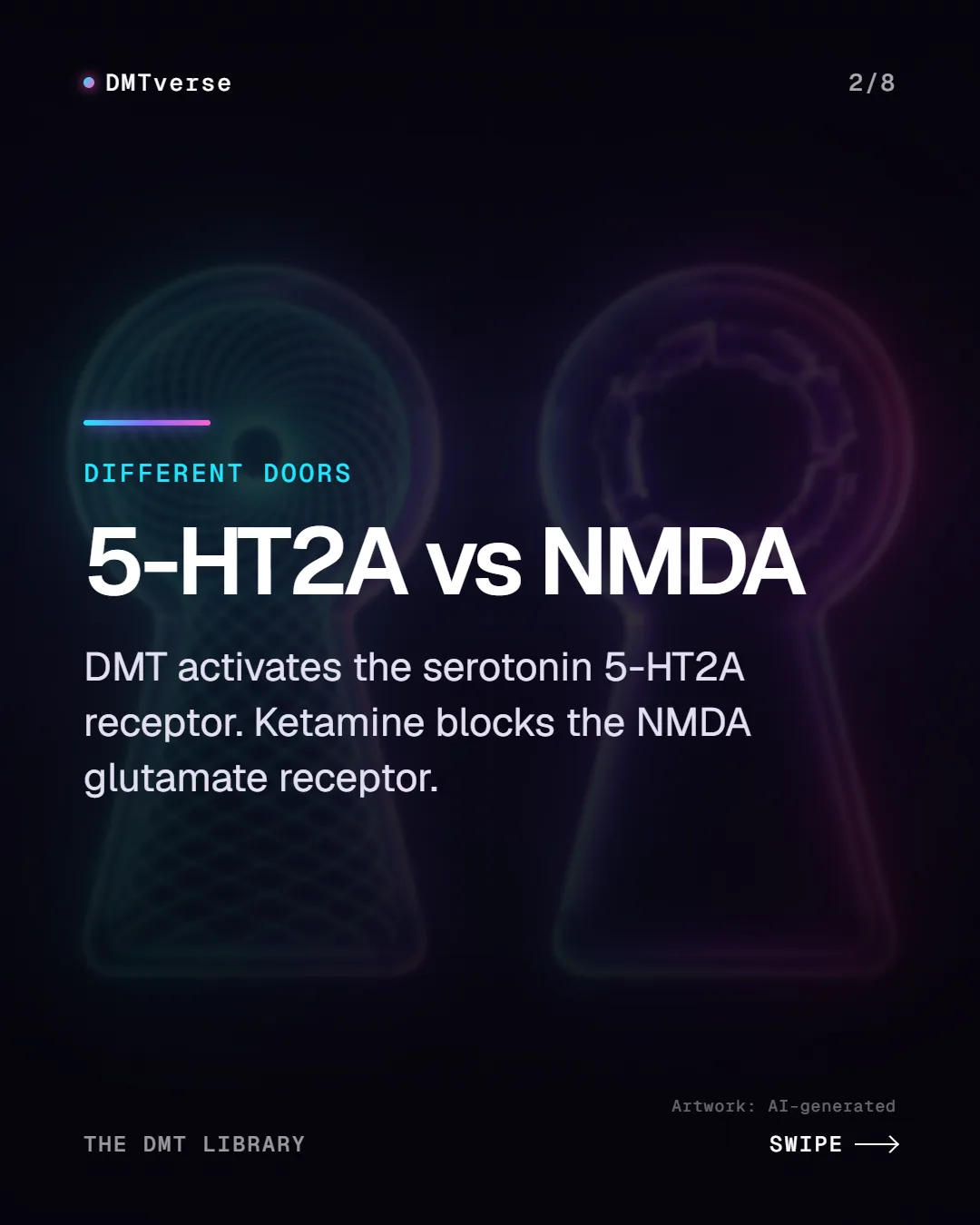
DMT vs ketamine: they work through two different brain systems. DMT is a classic psychedelic that acts mainly at the serotonin 5-HT2A receptor. Ketamine is a dissociative anesthetic that blocks the brain’s NMDA glutamate receptor. In the one double-blind study we found that gave both to the same people, overall intensity was similar but the profiles differed. In Canada, one form of ketamine (esketamine, brand name Spravato) is approved for depression; DMT is approved for no use and is still in early trials.
THE SHORT VERSION · SWIPE
On this page 11 sections
People compare DMT and ketamine because both can produce sudden, overwhelming changes in perception, reports of leaving the body and, for some, experiences that resemble dying. Both are also studied for depression. Under the surface they work through different brain systems, carry different risks and sit in different places in Canadian law and medicine. For DMT on its own, start with what is DMT.
Education only, not guidance
This article describes published research, product monographs and law. It gives no amounts, no instructions and no advice on use, and it does not present any effect as a benefit or rank one drug above the other. Evidence labels used below: established (shown consistently in peer-reviewed studies or official documents), preliminary (early, small or indirect) and unresolved (an open question). It is not medical or legal advice.
DMT vs ketamine: how do they compare at a glance?
The table sums up the main differences. Each row is explained, with sources, in the sections below. It compares what studies and official documents report, not which drug is “stronger” or “better” for anyone.
| DMT (N,N-dimethyltryptamine) | Ketamine (and esketamine) | |
|---|---|---|
| Drug class | Classic serotonergic psychedelic (a tryptamine). | Dissociative anesthetic, derived from phencyclidine (PCP). |
| Main target | Serotonin 5-HT2A receptor (agonist: it activates it). | NMDA glutamate receptor (antagonist: it blocks it). |
| Same-person lab comparison | Stronger thought-disorder-like effects and inappropriate affect. | Stronger body-perception disturbances, attention deficits and catatonia-like movement effects. |
| Time course in studies | Peak at 90 to 120 seconds; almost resolved by 30 minutes (intravenous, lab). | Dissociation from esketamine generally began and ended on the day of dosing; patients are monitored for at least 2 hours. |
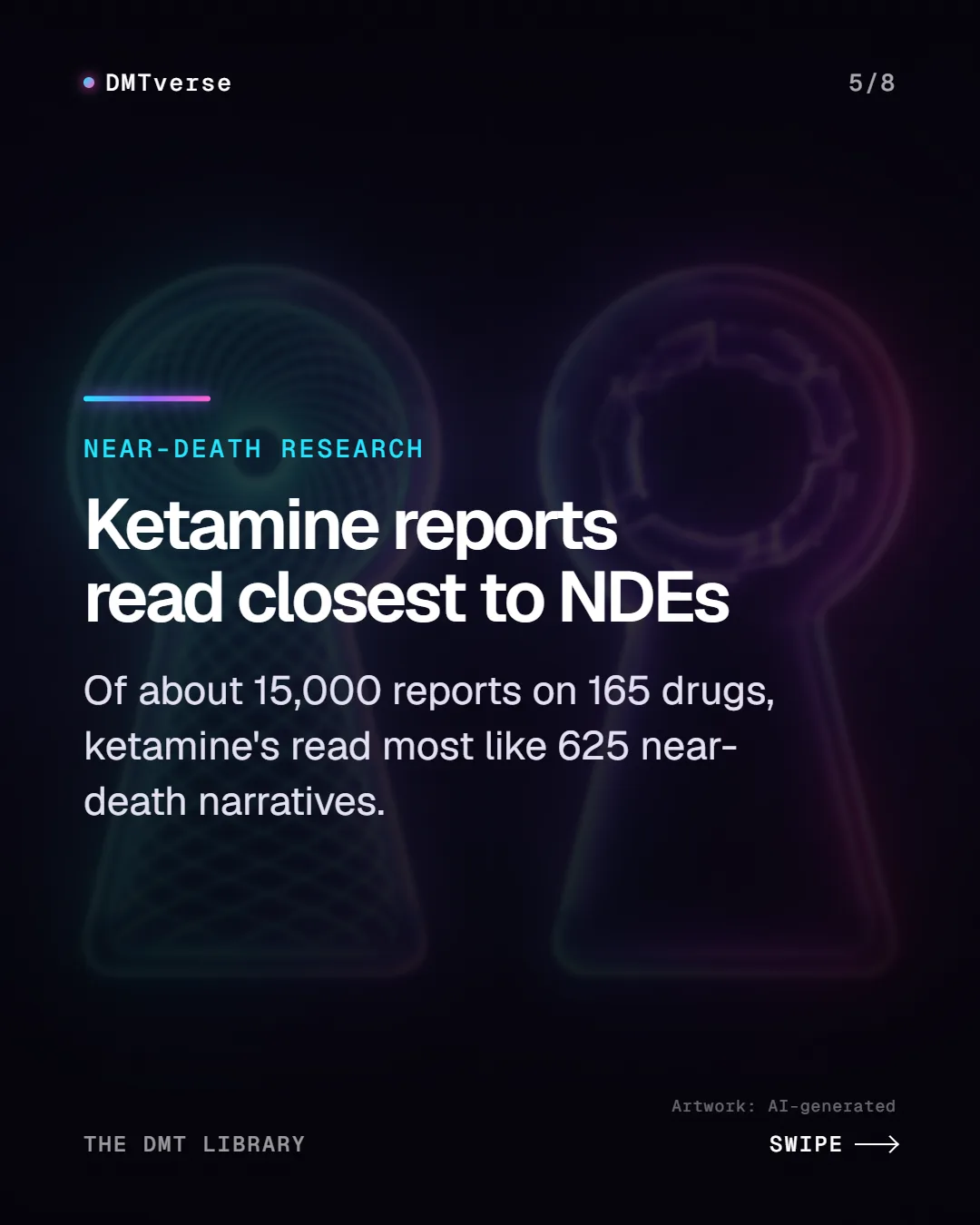
| Near-death research | All 13 volunteers passed a near-death scale threshold in one lab study. | Reports most similar to near-death narratives in a study of about 15,000 reports. |
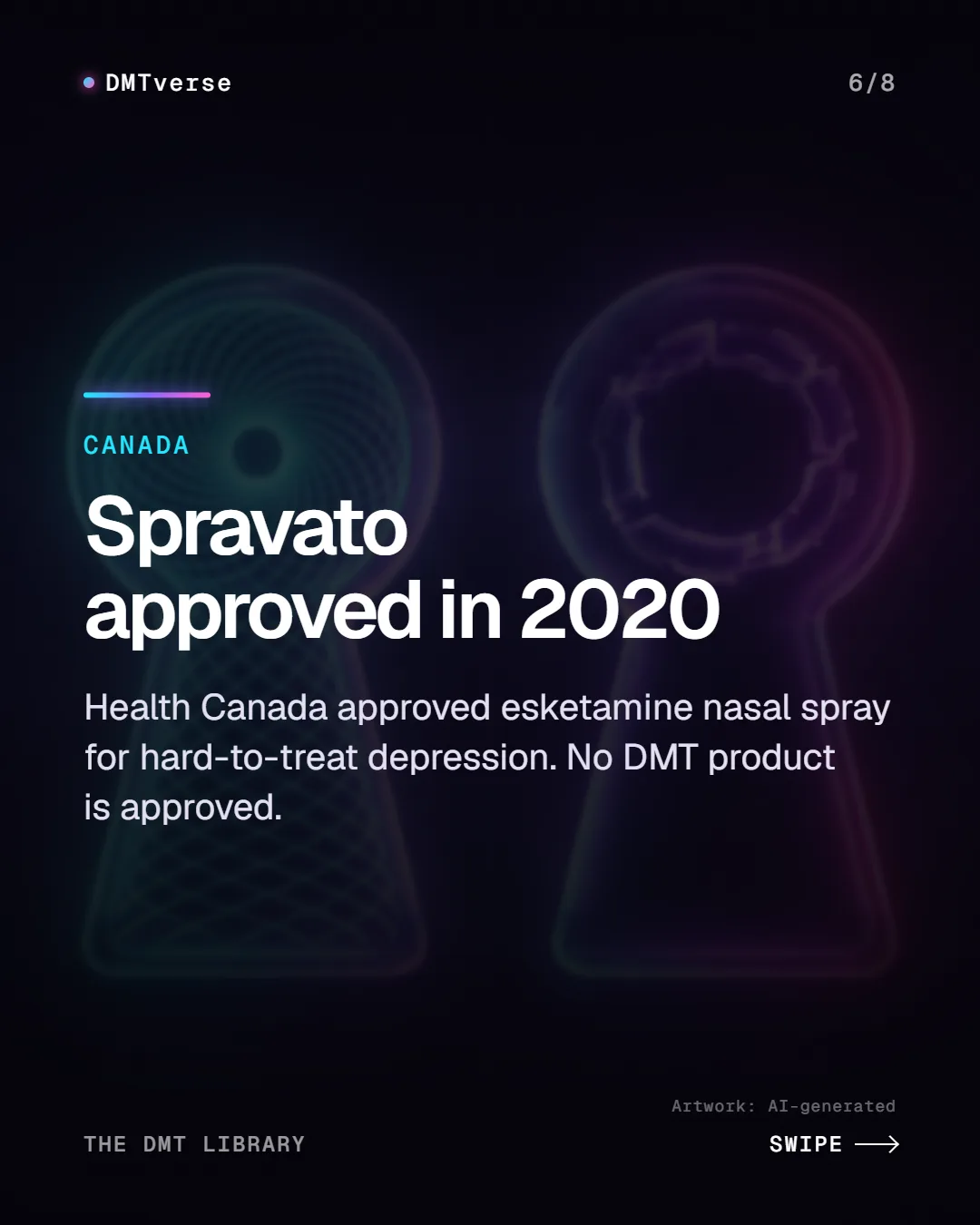
| Approved medicine in Canada | None. No product in the Drug Product Database. | Esketamine (Spravato) for depression since 2020; ketamine (Ketalar) as an anesthetic. |
| Best-documented chronic harms | Little data on repeated use outside studies. | Bladder damage (cystitis), dependence, memory problems with frequent use. |
| CDSA schedule | Schedule III, item 7. | Schedule I, under item 14 (phencyclidine). |
How do DMT and ketamine work in the brain?
DMT: a serotonin 5-HT2A agonist
DMT belongs to the classic psychedelics, the family that includes psilocybin and LSD. Researchers describe it as a serotonin 5-HT2A agonist, meaning it binds to and activates that receptor (Gouzoulis-Mayfrank et al., 2005), and as an endogenous one, meaning the body makes small amounts of it (Martial et al., 2019). Evidence: established. The receptor story is told in DMT and the 5-HT2A receptor.
Ketamine: an NMDA receptor blocker
Ketamine works on a different chemical messenger, glutamate. A 1994 Yale paper describes it as a derivative of phencyclidine, a “dissociative anesthetic” and a noncompetitive antagonist of the NMDA receptor, one of the main glutamate receptors (Krystal et al., 1994). An antagonist blocks a receptor rather than activating it. Esketamine is one of the two mirror-image forms that make up ordinary ketamine. Health Canada’s monograph calls it a non-competitive NMDA antagonist and says how it acts in depression is unknown (Spravato product monograph). Evidence: established.
“Dissociative” has a specific origin. The Canadian Ketalar monograph says the anesthetic state ketamine produces has been termed “dissociative anesthesia” because it appears to interrupt association pathways in the brain before it blocks body sensation (Ketalar product monograph). Evidence: established as the official description.
Is ketamine a psychedelic?
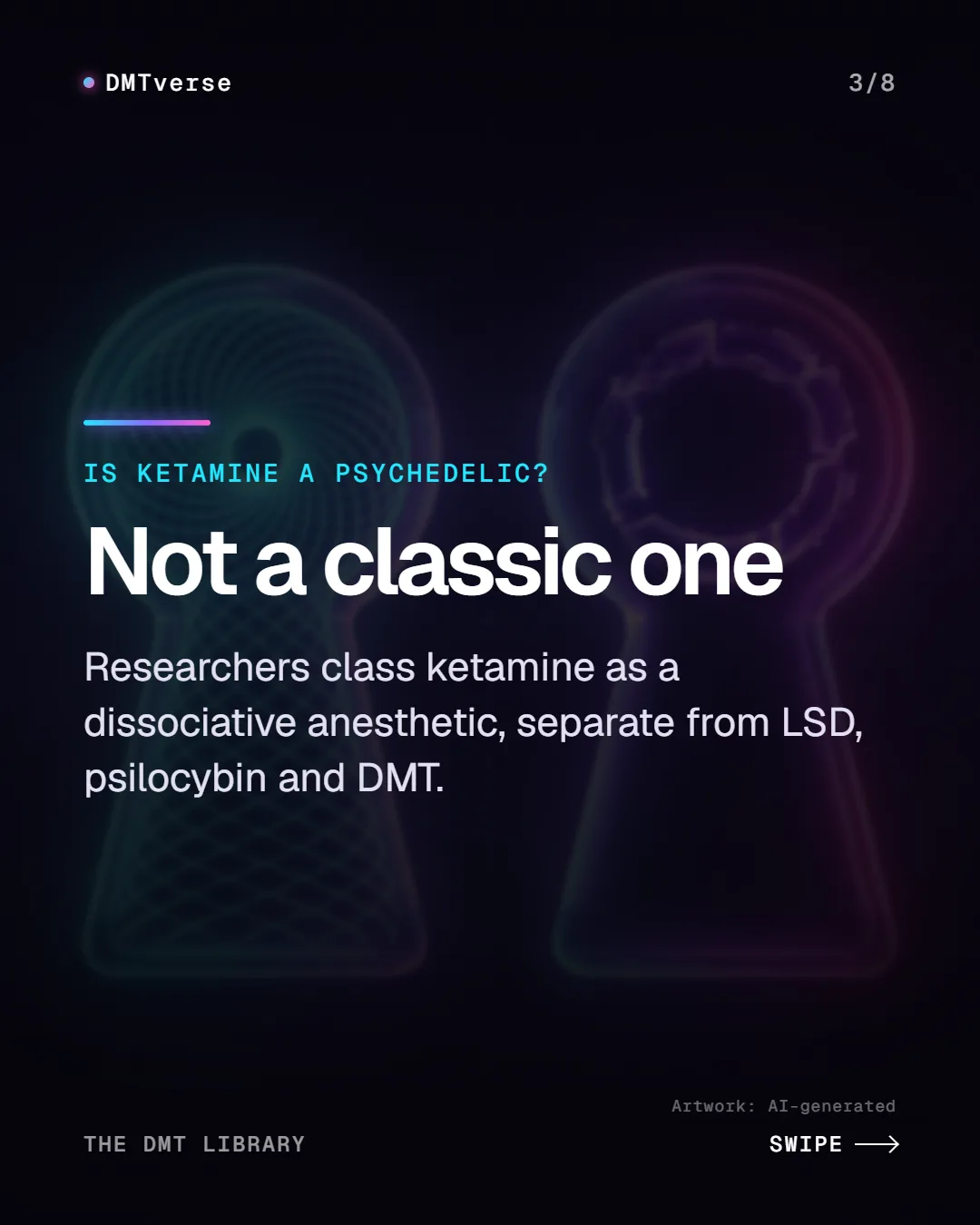
Not in the classic sense. Researchers group both drugs as hallucinogens, but they keep them in separate classes: “glutamate antagonists” such as PCP and ketamine on one side, and “serotonergic hallucinogens” such as LSD, psilocybin and DMT on the other (Gouzoulis-Mayfrank et al., 2005). In everyday writing ketamine is sometimes called a psychedelic because it alters perception, but its mechanism is not the 5-HT2A route that defines the classic group. Evidence: established for the mechanism; the label is a matter of usage.
So in the “ketamine vs psychedelics” debate, the main difference is the receptor, not how unusual the experience feels. Our three-way guide to psilocybin, LSD and DMT covers the classic group in more depth.
What happened when researchers gave both to the same people?
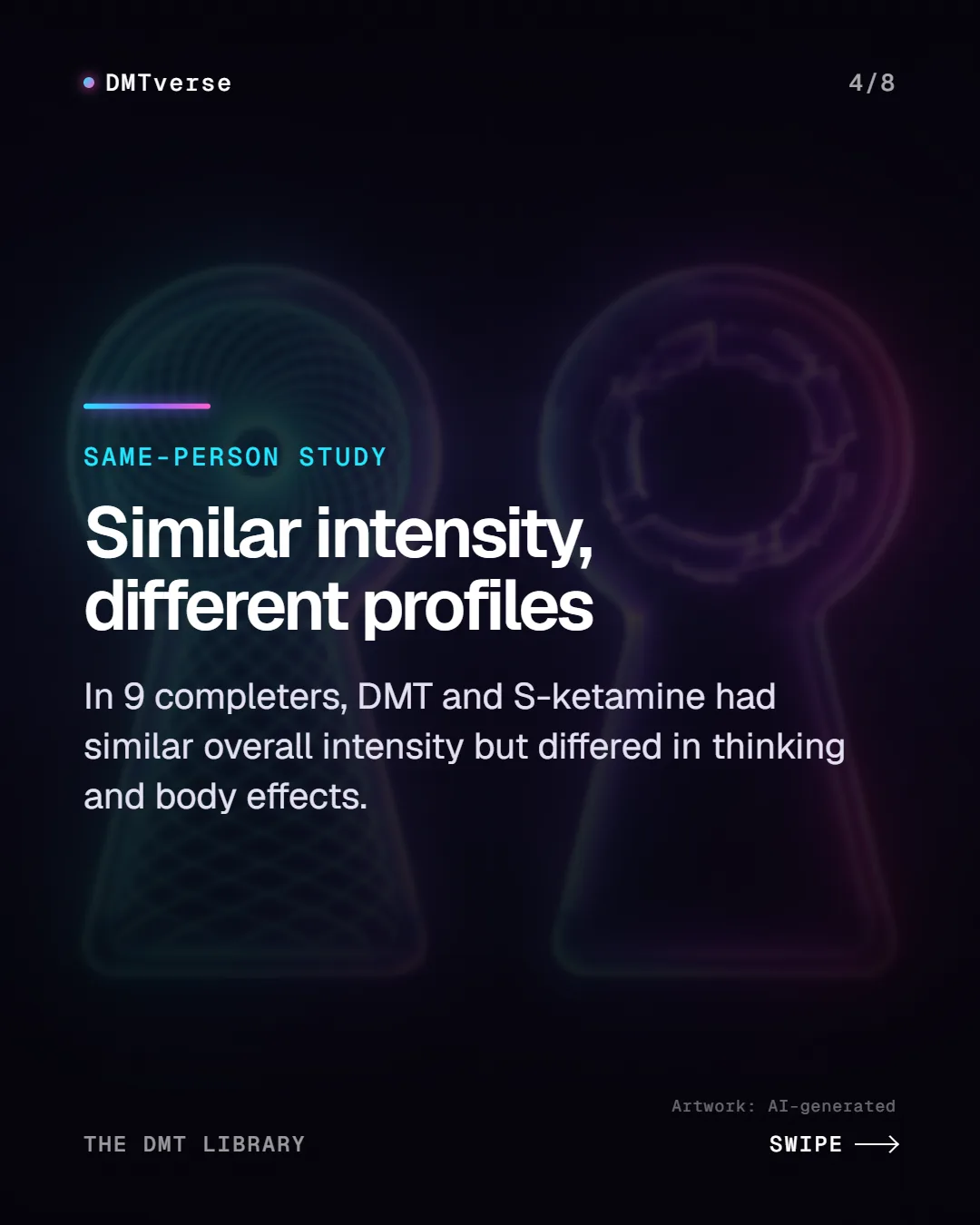
A German team ran the only direct comparison we found. In a double-blind crossover study (each volunteer received both drugs on different days, without knowing which), 15 healthy volunteers were enrolled and 9 completed both drugs at both doses. Overall intensity was similar. Effects resembling the “positive” symptoms of psychosis, especially disordered thinking and inappropriate emotion, were stronger after DMT. Effects resembling “negative” symptoms, attention problems, disturbed body perception and catatonia-like movement changes were stronger after S-ketamine (esketamine) (Gouzoulis-Mayfrank et al., 2005). Evidence: preliminary, from 9 people.
The same programme measured the brain and reflexes. S-ketamine increased prepulse inhibition, a measure of how the brain filters a startle sound, while DMT had no significant effect on it (Heekeren et al., 2007). In a brain-imaging study of 14 volunteers, DMT reduced activity in visual and hearing areas during an alertness task, while S-ketamine increased activity in other regions; the authors call their conclusions preliminary (Daumann et al., 2010). Evidence: preliminary.
These studies used both drugs as laboratory models of psychosis in screened, healthy volunteers. They describe how the states differ under controlled conditions. They do not describe what either drug does to anyone outside a study.
What do the DMT and ketamine experiences have in common?
What each looks like in lab reports
In early-1990s New Mexico studies, intravenous DMT brought a brief, overwhelming “rush” and a sense of loss of control, then a dissociated state in which euphoria alternated or coexisted with anxiety. Visual effects were a rapidly moving, brightly coloured display, and the effects “completely replaced” ongoing mental experience (Strassman et al., 1994). Evidence: established, from 12 experienced volunteers.
In a randomized, double-blind, placebo-controlled study of 19 healthy volunteers, ketamine produced changes in perception, symptoms similar to dissociative states, effects resembling both positive and negative symptoms of schizophrenia, and impaired memory for words recalled later (Krystal et al., 1994). Evidence: established. More on the DMT side is in what does DMT feel like.
The near-death experience comparison
Both drugs appear in research on near-death experiences (NDEs), the reports some people give after coming close to death. In a placebo-controlled lab study, 13 healthy volunteers rated their DMT experience on a standard NDE scale. All of them scored at or above the usual threshold for an NDE, though one also reached it after placebo, and NDE-like features rose significantly compared with placebo. Scores were linked to ego dissolution and mystical-type experience, and the profiles overlapped with those of people who had real NDEs (Timmermann et al., 2018). Evidence: preliminary, from 13 people.
A larger language study compared about 15,000 written drug reports covering 165 substances with 625 NDE narratives. Ketamine reports were consistently the most similar to NDEs, followed by salvia and then a series of serotonergic psychedelics including DMT (Martial et al., 2019). The authors suggested ketamine as a reversible experimental model of NDEs. Evidence: preliminary, because the reports were self-selected and unverified.
A 2025 case report described a 73-year-old woman who met NDE scale criteria after being anesthetized with ketamine for emergency intubation, with peacefulness, encounters with entities and a bright light (Fritz et al., 2025). She was also severely short of oxygen, so the case cannot separate the drug from the medical crisis. Evidence: preliminary, one case. The full picture is in DMT and near-death experiences and does the brain release DMT when you die.
Ego death on ketamine and DMT
“Ego death” is a popular phrase; researchers say ego dissolution, a compromised sense of self, which the developers of the main scale describe as a key feature of the psychedelic experience (Nour et al., 2016). In the DMT near-death study, NDE scores tracked ego dissolution (Timmermann et al., 2018). For ketamine, a 2026 study of 10 healthy volunteers found that changes in glutamate in a brain region called the nucleus accumbens were linked to “anxious ego dissolution” on a standard questionnaire (Gubser et al., 2026). Evidence: preliminary. See DMT ego death for what the term does and does not mean.
How long do DMT and ketamine last in studies?
Both act quickly, but the measured times come from specific study and clinical conditions and cannot be applied to anyone else. Our guide to how long DMT lasts covers the DMT timing studies in detail.
- DMT, intravenous in a lab: effects began almost at once, peaked at 90 to 120 seconds and were almost completely resolved by 30 minutes (Strassman et al., 1994). An inhaled-DMT trial describes a short duration of action, about 10 to 20 minutes (Falchi-Carvalho et al., 2025).
- Ketamine as an anesthetic: the Canadian monograph says an intravenous anesthetic dose usually works within 30 seconds and the anesthetic effect usually lasts five to ten minutes. Emergence reactions afterwards, such as vivid dreams, confusion or hallucinations, ordinarily last no more than a few hours (Ketalar product monograph).
- Esketamine nasal spray: blood pressure rises peak at about 40 minutes, dissociative effects generally start and resolve on the day of dosing, and patients must be monitored for at least 2 hours until clinically stable (Spravato product monograph).
Where do DMT and ketamine stand as medicines?
Ketamine: approved forms in Canada
Health Canada approved Spravato (esketamine nasal spray) on 20 May 2020, by prescription only (Health Canada, decision summary). The current monograph lists two uses in adults: with an SSRI or SNRI antidepressant, for major depression that has not responded to at least two antidepressants in the current episode, and short-term with an oral antidepressant when a depressive episode needs urgent psychiatric care (Spravato product monograph). Ordinary ketamine (Ketalar) is approved in Canada as an anesthetic only (Ketalar product monograph). Evidence: established.
Spravato is available only through a controlled distribution program, and patients use the spray under the direct supervision of a health care professional (Spravato product monograph). An early randomized ketamine depression trial, in 18 people with treatment-resistant depression, found improvement within 110 minutes of one infusion compared with placebo (Zarate et al., 2006). Evidence: established for the approval conditions; preliminary for that single small trial. Our guide to psilocybin vs ketamine therapy in Canada covers the trials and coverage in detail.
Blinding is a known problem, because the effects are obvious. In a 2023 trial of 40 surgical patients with depression, ketamine given while they were under general anesthesia, so no one could tell what they had received, was no better than placebo over the next three days (Lii et al., 2023). Evidence: preliminary, one small trial.
DMT: early trials, no approval
No DMT product appears in Health Canada’s Drug Product Database (Drug Product Database query). The most cited patient study is a Brazilian open-label trial, meaning there was no placebo group, in which 14 people with treatment-resistant depression inhaled DMT and showed lower depression scores a week later, with no serious adverse events (Falchi-Carvalho et al., 2025). Without a control group, that cannot show the drug caused the change. Evidence: preliminary. The wider trial picture is in DMT therapy research.
One study compared the two head to head for depression-like behaviour, but in mice: in a stress model, DMT and S-ketamine had similar effects, and some DMT effects lasted longer (de Sousa-Silva et al., 2026). Mouse results often do not carry over to people. Evidence: preliminary, in mice.
What are the known risks of DMT and ketamine?
In an emergency in Canada
Call 911 if someone is in immediate danger, unconscious, having a seizure or chest pain, or cannot be kept safe (Government of Canada). For poisoning questions in Ontario, the Ontario Poison Centre answers 24 hours a day at 1-800-268-9017 (Ontario Poison Centre). If someone is thinking about suicide, call or text 9-8-8, available 24/7 (Government of Canada). See also our safety page and our guide on how to help someone having a bad trip.
Ketamine: dissociation, bladder damage and dependence
Spravato’s monograph carries a boxed warning: a high risk of dissociation and sedation after each dose, possible breathing problems, and blood pressure rises. It is not to be used where a rise in blood pressure or pressure inside the skull poses a serious risk. The monograph says esketamine can be abused, misused and cause physical dependence, and that people dependent on ketamine have reported withdrawal symptoms including cravings, anxiety, shaking, sweating and palpitations (Spravato product monograph). Evidence: established.
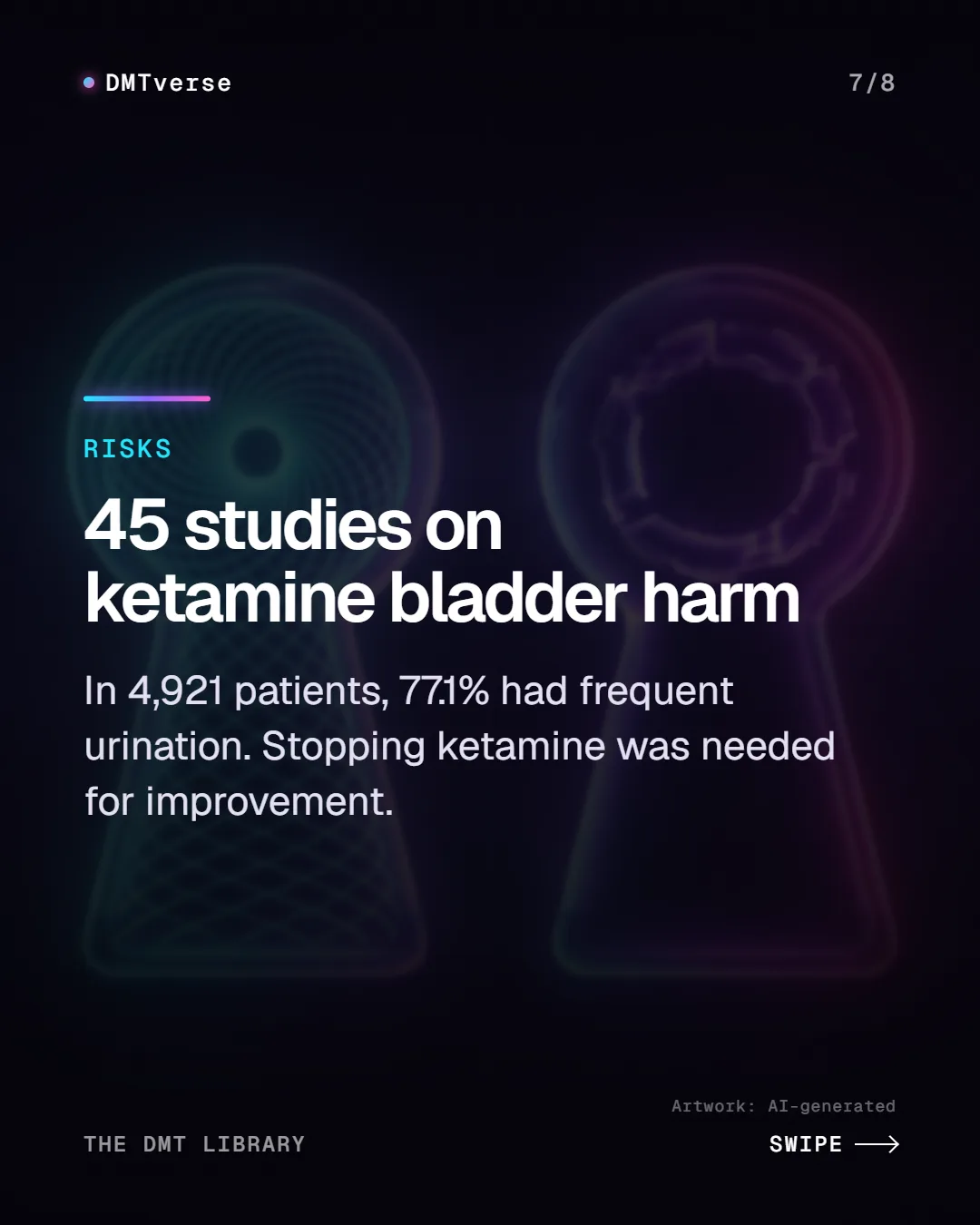
Bladder damage is the best-documented harm of heavy ketamine use. The Ketalar monograph reports severe urinary tract and bladder inflammation, including cystitis, in people with chronic ketamine use or misuse, and says dependence and tolerance may develop (Ketalar product monograph). A meta-analysis of 45 studies covering 4,921 patients with ketamine-associated bladder disease found frequent urination in 77.1%, urgency in 69.9% and pain above the pubic bone in 60.4%, and that stopping ketamine was necessary for improvement (Chan et al., 2022). Evidence: established.
A review for the UK Independent Scientific Committee on Drugs linked frequent, daily ketamine use with memory problems, and reported that many frequent users try but fail to stop (Morgan and Curran, 2012). Evidence: established for frequent use; most of this research is in people using ketamine outside medicine.
DMT: intense short-term effects, less long-term data
In controlled studies, DMT’s risks are mostly acute: a sense of loss of control, and anxiety alongside euphoria (Strassman et al., 1994). Those studies screened healthy, experienced volunteers and monitored them closely, so they say little about risks elsewhere. We found far less research on repeated DMT use than on ketamine. Evidence: established for the acute effects; long-term risks are unresolved. Our article on whether DMT is addictive covers dependence and dangerous drug interactions.
What about DMT and ketamine together?
Combining them is a risk. The same-person study above gave each drug on a separate day, never together, and we found no study of the combination. Its effects are unknown. If someone is in trouble after taking either drug, use the emergency numbers above.
Are DMT and ketamine legal in Canada?
Both are controlled under the Controlled Drugs and Substances Act. In the Justice Laws consolidation (current to 30 September 2026, last amended 18 July 2026), ketamine is listed in Schedule I under item 14, phencyclidine, its salts, derivatives and analogues. DMT is Schedule III, item 7. Section 4(1) bans possessing a Schedule I, II or III substance except as authorized under the regulations (CDSA). Evidence: established.
The practical difference is that ketamine and esketamine have approved medical uses with a prescription, while DMT has none (Spravato product monograph; Drug Product Database query). This is general information, not legal advice. For DMT in detail, see is DMT legal in Canada.
What is still unknown?
- Only one small within-person study, with 9 completers, has compared the DMT and ketamine states directly, so most comparisons are indirect (preliminary).
- Why ketamine reports read most like near-death narratives in text analysis, and whether that reflects the drug, the setting or who writes reports, is open (unresolved).
- Whether DMT has any effect in depression that a placebo-controlled trial can confirm is not yet known in the sources we read (unresolved).
- Long-term risks of repeated DMT use have far less data than ketamine’s documented bladder and dependence harms (unresolved).
- How two drugs with different receptor targets can both produce dissociation and entity reports is not explained (unresolved).
For another comparison of a non-serotonergic hallucinogen with DMT, see salvia vs DMT.
Common questions
What is the main difference between DMT and ketamine?
Their mechanism. DMT is a classic psychedelic that activates the serotonin 5-HT2A receptor. Ketamine is a dissociative anesthetic that blocks the NMDA glutamate receptor. In one double-blind study that gave both to the same volunteers, overall intensity was similar, but the kinds of effects differed.
Is ketamine a psychedelic?
Not a classic one. Researchers class ketamine as a glutamate-antagonist hallucinogen and dissociative anesthetic, separate from serotonergic hallucinogens such as LSD, psilocybin and DMT. It is sometimes called psychedelic in everyday writing because it changes perception.
Is DMT stronger than ketamine?
Studies do not support a simple ranking. In the only same-person comparison, with 9 completers, the overall intensity of psychological effects was similar for DMT and S-ketamine. DMT produced more thought-disorder-like effects; S-ketamine produced more body-perception and attention effects.
Does ketamine cause ego death like DMT?
Researchers call it ego dissolution. Both are linked to it in studies: in a DMT lab study, near-death scores tracked ego dissolution, and in a 2026 ketamine study of 10 volunteers, brain glutamate changes were linked to “anxious ego dissolution”. The two have not been compared on this measure directly.
Do ketamine and DMT both cause near-death experiences?
Both produce reports with near-death features. All 13 volunteers in one DMT lab study passed a near-death scale threshold, and in a study of about 15,000 written reports, ketamine reports were the most similar to near-death narratives. These are similarities in reports, not evidence about what happens at death.
Is ketamine approved in Canada for depression?
One form is. Health Canada approved esketamine nasal spray (Spravato) on 20 May 2020, by prescription, for adults with depression that has not responded to at least two antidepressants. Ordinary ketamine is approved as an anesthetic. DMT is not approved for any use.
Can you take DMT and ketamine together?
Combining them is a risk, and we found no study of the combination; the one same-person study gave them on separate days. If someone is in danger in Canada, call 911. The Ontario Poison Centre is at 1-800-268-9017, and 9-8-8 is the suicide crisis line.
Is ketamine more harmful than DMT?
They carry different documented risks. Ketamine has well-documented chronic harms with frequent use, including bladder damage and dependence. DMT’s studied risks are mostly short-term, such as anxiety and loss of control, but there is much less long-term data, so the two cannot be ranked.
Shroomverse sells mushroom products. This article is general information about research, medicine and Canadian law on DMT and ketamine. It is not medical, legal or purchasing advice, and it does not recommend any product.
SOURCES
- Controlled Drugs and Substances Act (S.C. 1996, c. 19), full text, Justice Laws Website, Government of Canada. Accessed . Full text read; consolidation current to 2026-09-30, last amended 2026-07-18. Supports ketamine in Schedule I under item 14 (phencyclidine, salts, derivatives and analogues, including ketamine), DMT as Schedule III item 7, and s. 4(1) possession of Schedule I, II or III substances except as authorized.
- Regulatory Decision Summary for Spravato (esketamine hydrochloride), Health Canada, Drug and Health Product Portal. Accessed . Page read. Supports date of decision 2020-05-20 (the page also records a new Notice of Compliance issued 10 January 2023 after a data-protection court ruling), prescription-only status and the indication for depression after at least two failed antidepressant courses.
- Spravato (esketamine nasal spray) product monograph, date of authorization 23 May 2025, Janssen Inc., approved by Health Canada (via Drug Product Database). Accessed . PDF text read. Supports both indications, the controlled distribution program, direct supervision, monitoring for at least 2 hours, the boxed warning (dissociation, sedation, respiratory depression, blood pressure peaking about 40 minutes post-dose), the contraindication, dissociation generally occurring and resolving on the day of dosing, the mechanism (non-competitive NMDA antagonist, antidepressant mechanism unknown), abuse and dependence potential, the reported withdrawal symptoms, and the cystitis warning.
- Ketalar (ketamine hydrochloride injection) product monograph, prepared 24 May 2023, Searchlight Pharma Inc., approved by Health Canada (via Drug Product Database). Accessed . PDF text read. Supports anesthetic-only indications, the “dissociative anesthesia” description, onset within 30 seconds and anesthetic effect usually five to ten minutes after an intravenous anesthetic dose, emergence reactions ordinarily lasting no more than a few hours, and the warnings on bladder and urinary tract inflammation, dependence and tolerance.
- Drug Product Database API: active ingredient search for dimethyltryptamine, Health Canada. Accessed . Query run 21 October 2026 returned an empty list; the same query for esketamine returned Spravato (drug code 98903), confirming the query works.
- Subanesthetic effects of the noncompetitive NMDA antagonist, ketamine, in humans (Krystal JH et al., Archives of General Psychiatry 51:199–214, 1994), American Medical Association (peer-reviewed); PMID 8122957. Accessed . Abstract read via Europe PMC. Supports ketamine as a phencyclidine derivative, dissociative anesthetic and noncompetitive NMDA antagonist; 19 healthy volunteers, randomized double-blind placebo-controlled, 40-minute infusions; perceptual changes, dissociative-like symptoms, positive- and negative-symptom-like effects, impaired delayed recall, small blood pressure rises.
- Psychological effects of (S)-ketamine and N,N-dimethyltryptamine (DMT): a double-blind, cross-over study in healthy volunteers (Gouzoulis-Mayfrank E et al., Pharmacopsychiatry 38:301–311, 2005), Thieme (peer-reviewed); PMID 16342002. Accessed . Abstract read via Europe PMC. Supports DMT as a 5-HT2A agonist and S-ketamine as an NMDA antagonist; glutamate-antagonist vs serotonergic hallucinogen classes; 15 enrolled, 9 completers; similar global intensity; stronger positive-symptom-like effects after DMT and stronger negative-symptom-like, attention, body-perception and catatonia-like effects after S-ketamine.
- Prepulse inhibition of the startle reflex and its attentional modulation in the human S-ketamine and N,N-dimethyltryptamine (DMT) models of psychosis (Heekeren K et al., Journal of Psychopharmacology 21:312–320, 2007), SAGE (peer-reviewed); PMID 17591658. Accessed . Abstract read via Europe PMC. Supports the double-blind crossover design, 9 completers, S-ketamine increasing prepulse inhibition and DMT having no significant effect on it.
- Neuronal correlates of visual and auditory alertness in the DMT and ketamine model of psychosis (Daumann J et al., Journal of Psychopharmacology 24:1515–1524, 2010), SAGE (peer-reviewed); PMID 19304859. Accessed . Abstract read via Europe PMC. Supports 14 volunteers, randomized double-blind crossover fMRI, DMT decreasing responses in extrastriate and temporal regions during alertness tasks, S-ketamine increasing activation in the left insula and precentral gyrus, and the authors’ statement that conclusions are preliminary.
- Dose-response study of N,N-dimethyltryptamine in humans. II. Subjective effects and preliminary results of a new rating scale (Strassman RJ et al., Archives of General Psychiatry 51(2):98–108, 1994), American Medical Association (peer-reviewed); PMID 8297217. Accessed . Abstract read via Europe PMC. Supports 12 volunteers, intravenous DMT, effects beginning almost immediately, peaking at 90 to 120 seconds and almost resolved by 30 minutes, the rush, loss of control, euphoria with anxiety, the visual display and effects that “completely replaced” ongoing experience.
- DMT Models the Near-Death Experience (Timmermann C et al., Frontiers in Psychology 9:1424, 2018), Frontiers (peer-reviewed, open access); PMID 30174629, PMC6107838. Accessed . Abstract and full text read via Europe PMC. Supports 13 healthy participants, within-subject placebo-controlled design, all participants at or above the conventional NDE scale threshold of 7 after DMT (one also scored 7 after placebo), significant rise in NDE features, links with ego dissolution and mystical-type experience, and overlap with a matched group of people with actual NDEs.
- Neurochemical models of near-death experiences: A large-scale study based on the semantic similarity of written reports (Martial C et al., Consciousness and Cognition 69:52–69, 2019), Elsevier (peer-reviewed); PMID 30711788. Accessed . Abstract read via Europe PMC. Supports about 15,000 reports, 165 substances, 625 NDE narratives; ketamine most similar, then Salvia divinorum and serotonergic psychedelics including DMT, described as an endogenous 5-HT2A agonist; ketamine suggested as a reversible experimental model.
- Near-Death Experience During Emergency Ketamine Use: A Case Report (Fritz P et al., Brain and Behavior 15:e70939, 2025), Wiley (peer-reviewed, open access); PMID 41134618, PMC12551671. Accessed . Abstract read via Europe PMC. Supports one 73-year-old patient, emergency intubation under ketamine anesthesia, profound hypoxia and hypercapnia, NDE Content scale criteria met, peacefulness, entities and bright light. Dose in the abstract not reproduced.
- Ego-Dissolution and Psychedelics: Validation of the Ego-Dissolution Inventory (EDI) (Nour MM et al., Frontiers in Human Neuroscience 10:269, 2016), Frontiers (peer-reviewed, open access); PMID 27378878, PMC4906025. Accessed . Abstract read via Europe PMC. Supports ego dissolution as a compromised sense of self and a key feature of the psychedelic experience.
- Ketamine-induced changes in accumbal glutamate and their association with altered states of consciousness (Gubser LP et al., Brain Research Bulletin 238:111842, 2026), Elsevier (peer-reviewed); PMID 41871813. Accessed . Abstract read via Europe PMC. Supports 10 healthy volunteers, no significant mean change in nucleus accumbens glutamate, and individual glutamate changes associated with anxious ego dissolution and reduced vigilance on the 5D-ASC. Dose not reproduced.
- A randomized trial of an N-methyl-D-aspartate antagonist in treatment-resistant major depression (Zarate CA et al., Archives of General Psychiatry 63(8):856–864, 2006), American Medical Association (peer-reviewed); PMID 16894061. Accessed . Abstract read via Europe PMC. Supports 18 participants, randomized placebo-controlled double-blind crossover, significant improvement within 110 minutes.
- Randomized trial of ketamine masked by surgical anesthesia in patients with depression (Lii TR et al., Nature Mental Health 1(11):876–886, 2023), Springer Nature (peer-reviewed); PMID 38188539, PMC10769130. Accessed . Abstract read via Europe PMC. Supports 40 surgical patients with major depression, triple-masked placebo-controlled design, no evidence of effect over placebo on days 1 to 3.
- Rapid and sustained antidepressant effects of vaporized N,N-dimethyltryptamine: a phase 2a clinical trial in treatment-resistant depression (Falchi-Carvalho M et al., Neuropsychopharmacology 50(6):895–903, 2025), Springer Nature (peer-reviewed); PMID 40258990, PMC12032144; NCT06094907. Accessed . Abstract read via Europe PMC. Supports open-label design, 14 patients, no serious adverse events, lower depression scores by day 7, and a short duration of action of 10 to 20 minutes. Doses in the abstract not reproduced.
- N,N-dimethyltryptamine elicits antidepressant and anxiolytic effects in helpless mice: a comparative study with S-ketamine (de Sousa-Silva AN et al., Neuropharmacology 292:110947, 2026), Elsevier (peer-reviewed); PMID 41881297. Accessed . Abstract read via Europe PMC. Supports a learned-helplessness stress model in mice, similar antidepressant-like effects of DMT and S-ketamine, and some DMT effects lasting longer. Doses not reproduced.
- Systematic review and meta-analysis of ketamine-associated uropathy (Chan EOT et al., Hong Kong Medical Journal 28(6):466–474, 2022), Hong Kong Academy of Medicine (peer-reviewed); PMID 36464318. Accessed . Abstract read via Europe PMC. Supports 45 studies, 4,921 patients, frequency 77.1%, urgency 69.9%, suprapubic pain 60.4%, and abstinence necessary for improvement; the search was built around ketamine abuse.
- Ketamine use: a review (Morgan CJ, Curran HV, Independent Scientific Committee on Drugs, Addiction 107:27–38, 2012), Wiley (peer-reviewed); PMID 21777321. Accessed . Abstract read via Europe PMC. Supports ulcerative cystitis linked to chronic frequent use, memory deficits with frequent daily use, and frequent users reporting failed attempts to stop.
- Ontario Poison Centre, Ontario Poison Centre. Accessed . Page read. Supports 24-hour, every-day availability and the number 1-800-268-9017.
- Mental health support: get help, Government of Canada, Public Health Agency of Canada. Accessed . Page read. Supports calling 9-1-1 for immediate danger or urgent medical support and calling or texting 9-8-8, 24 hours a day, 7 days a week.
CHANGES
- : Published.
- : Editorial review: summary opens with a direct answer and drops “sold as”; “lifts depression” replaced with the monograph’s neutral wording; the 2006 trial’s evidence label narrowed to preliminary; primary keyword added to keywords. Re-checked today: the Spravato Regulatory Decision Summary (date of decision 2020-05-20), CDSA Schedule I item 14(1) ketamine and Schedule III item 7 DMT, and the Gouzoulis-Mayfrank 2005, Timmermann 2018, Martial 2019, Gubser 2026, de Sousa-Silva 2026 and Chan 2022 abstracts.



