THE SHROOMVERSE JOURNAL ✳ 17 MIN READ
Ayahuasca vs DMT: how the Amazonian brew differs from the molecule
Topic: DMT
Published Updated
Listen: the 3-minute version
AI-narrated summary of this article
Short answer, checked 20 October 2026
DMT is a single molecule. Ayahuasca is a traditional Amazonian brew that contains DMT along with β-carbolines such as harmine and harmaline, which block the enzyme MAO-A and so let DMT act when swallowed. That changes almost everything: lab DMT given by injection peaks within minutes and fades within about half an hour, while ayahuasca peaks after about 1.5 to 2 hours and lasts around 4 hours, with frequent vomiting. The clinical evidence for either is small and early. The MAO inhibition makes combinations with SSRIs and other serotonergic drugs dangerous. In Canada, DMT and harmaline are Schedule III controlled substances (items 7 and 9).
THE SHORT VERSION · SWIPE
On this page 10 sections
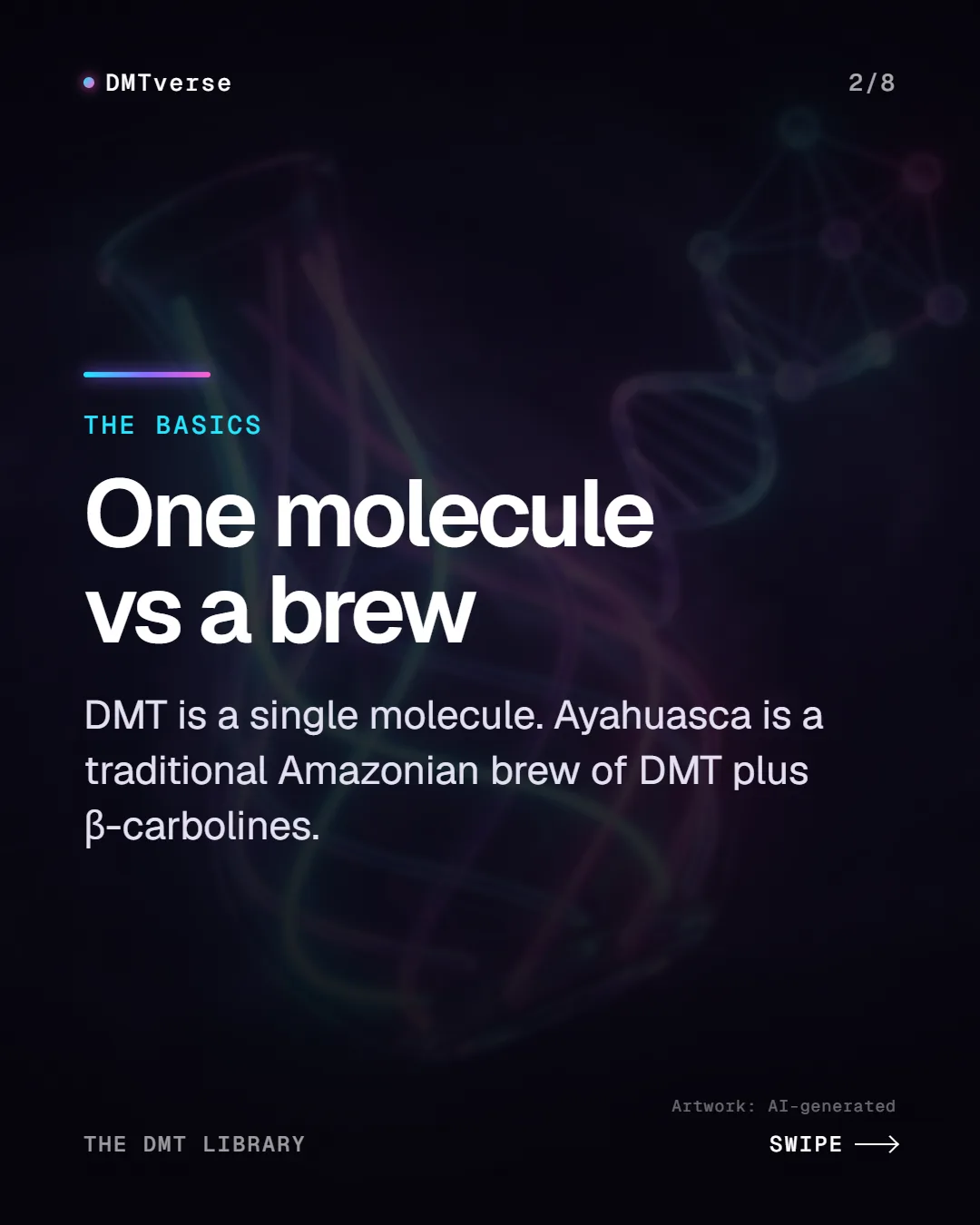
People often use “ayahuasca” and “DMT” as if they were the same thing. They are related, but they are not the same. DMT (N,N-dimethyltryptamine) is one chemical. Ayahuasca is a brew with a long history of ritual use in the Amazon, and DMT is only one of its active ingredients. For the brew’s history and research on its own, see what is ayahuasca.
This page compares the two: mechanism, timing, body effects, research, religious use, risks and Canadian law. For how DMT compares with psilocybin and LSD, see our guide to psilocybin, LSD and DMT.
Education only, not guidance
This article describes published research and Canadian law. It gives no amounts, no preparation details, no ways of taking anything and no advice on combinations, and it does not recommend any setting or retreat. It is not medical or legal advice. In an emergency, call 9-1-1. Our safety page lists more help.
How do ayahuasca and DMT compare at a glance?
The table sums up the main differences; each row is explained, with sources, below. The DMT column describes laboratory studies in which DMT was injected into a vein, where the cleanest timing data come from.
| Ayahuasca | DMT (lab studies, by injection) | |
|---|---|---|
| What it is | A traditional Amazonian brew containing DMT plus β-carbolines (harmine, harmaline, tetrahydroharmine). | A single tryptamine molecule. |
| Why it works | Harmine and harmaline block the enzyme MAO-A, so swallowed DMT is not broken down first in the gut and liver. | Acts directly; it is described as “orally labile”, broken down when swallowed on its own. |
| Peak effects | About 1.5 to 2 hours in a placebo-controlled study of 18 volunteers. | Within about 2 to 3 minutes. |
| How long | Acute psychological effects last around 4 hours, per trial authors. | Rated intensity above placebo for 17 minutes in one study; negligible by 30 minutes in another. |
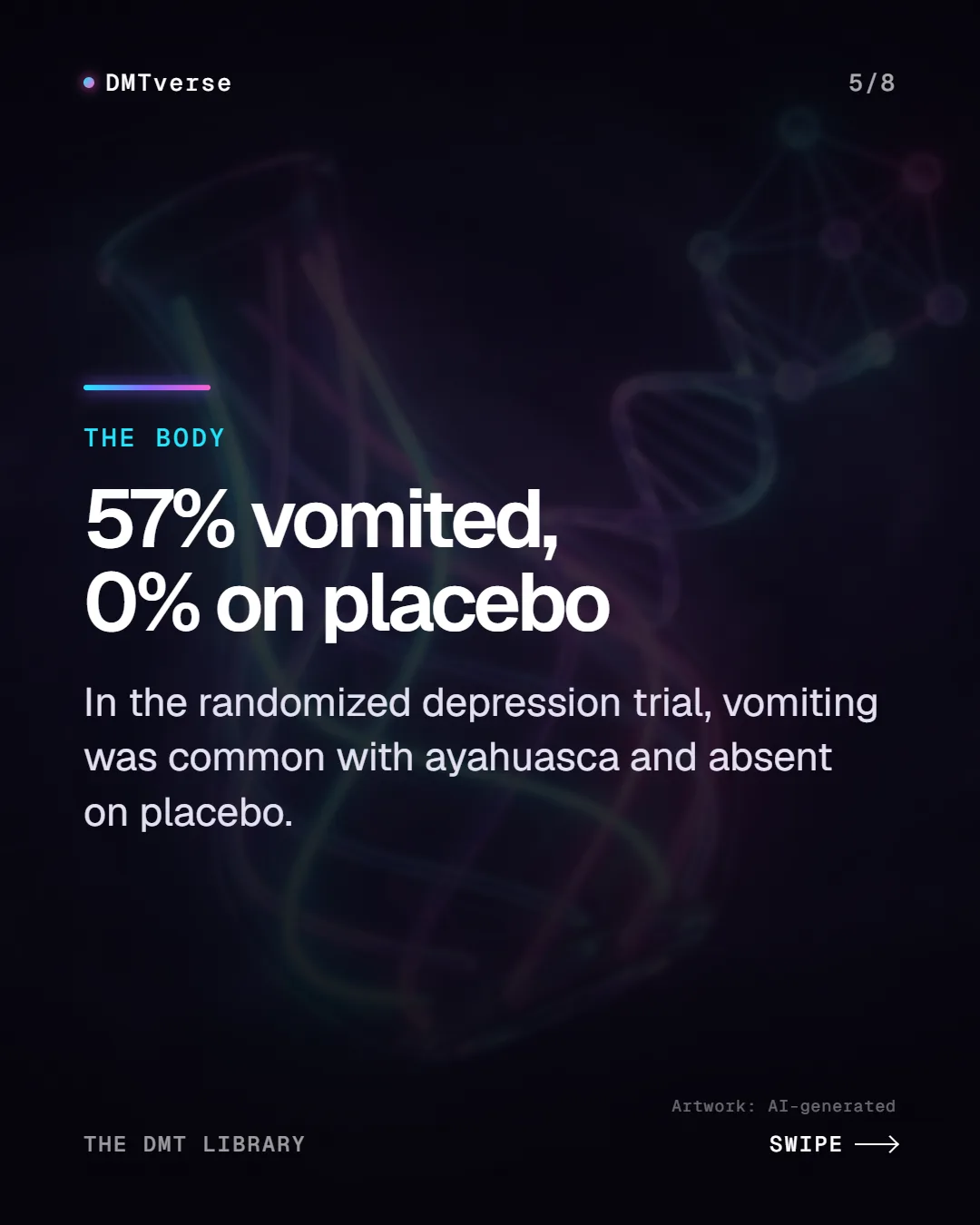
| Stomach | Vomiting in 57% of trial participants given ayahuasca (0% on placebo). | Not a defining feature in the studies we read. |
| Heart and blood pressure | Diastolic blood pressure rose significantly at the higher amount tested; heart rate rose moderately but not significantly. | Blood pressure, heart rate, pupil size and body temperature rose with the amount given. |
| Main controlled evidence | One randomized, placebo-controlled trial in treatment-resistant depression (29 people). | Mostly healthy-volunteer lab studies of timing and brain activity. |
| Canada (CDSA) | No separate entry for the brew. DMT and harmaline, two of its ingredients, are in Schedule III. | Schedule III, item 7. |
Why does ayahuasca work when DMT alone does not?
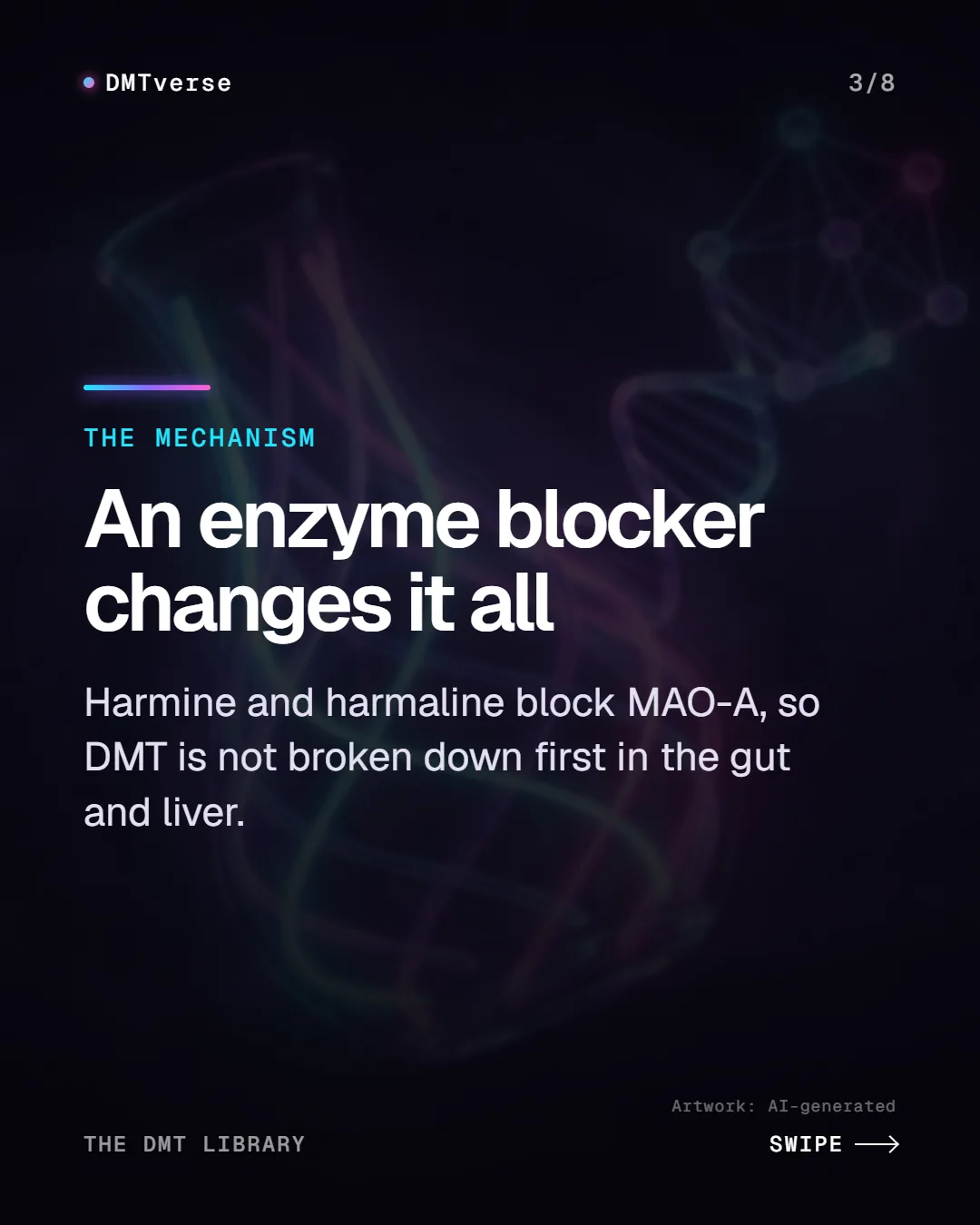
The short answer is an enzyme called monoamine oxidase A (MAO-A). A placebo-controlled study of ayahuasca describes DMT as “an orally labile psychedelic agent”, meaning it is broken down when swallowed on its own. Ayahuasca also contains β-carboline alkaloids (harmine, harmaline and tetrahydroharmine) that inhibit MAO (Riba et al., 2003). A pharmacokinetic study adds the detail: harmine and harmaline reversibly inhibit MAO-A, while tetrahydroharmine weakly inhibits serotonin uptake, and together these actions increase serotonergic activity while allowing DMT to act (Callaway et al., 1999).
Where does the blocking happen? Riba’s team found negligible harmine levels in the blood. They suggest harmine acts mainly in the gut and liver, and that MAO inhibition there “would suffice to prevent first-pass metabolism of DMT” and let it reach the circulation and the brain (Riba et al., 2003). A 2024 review summarises it the same way: the harmala alkaloids are MAO-A inhibitors that make DMT orally active and also raise serotonin and norepinephrine levels (White et al., 2024).
That matters for safety. Ayahuasca is not just “DMT, slower”: it adds MAO inhibitors, which change how the body handles other substances too. Evidence: established in outline; each alkaloid’s exact role is less certain.
How long do ayahuasca and DMT effects last in studies?
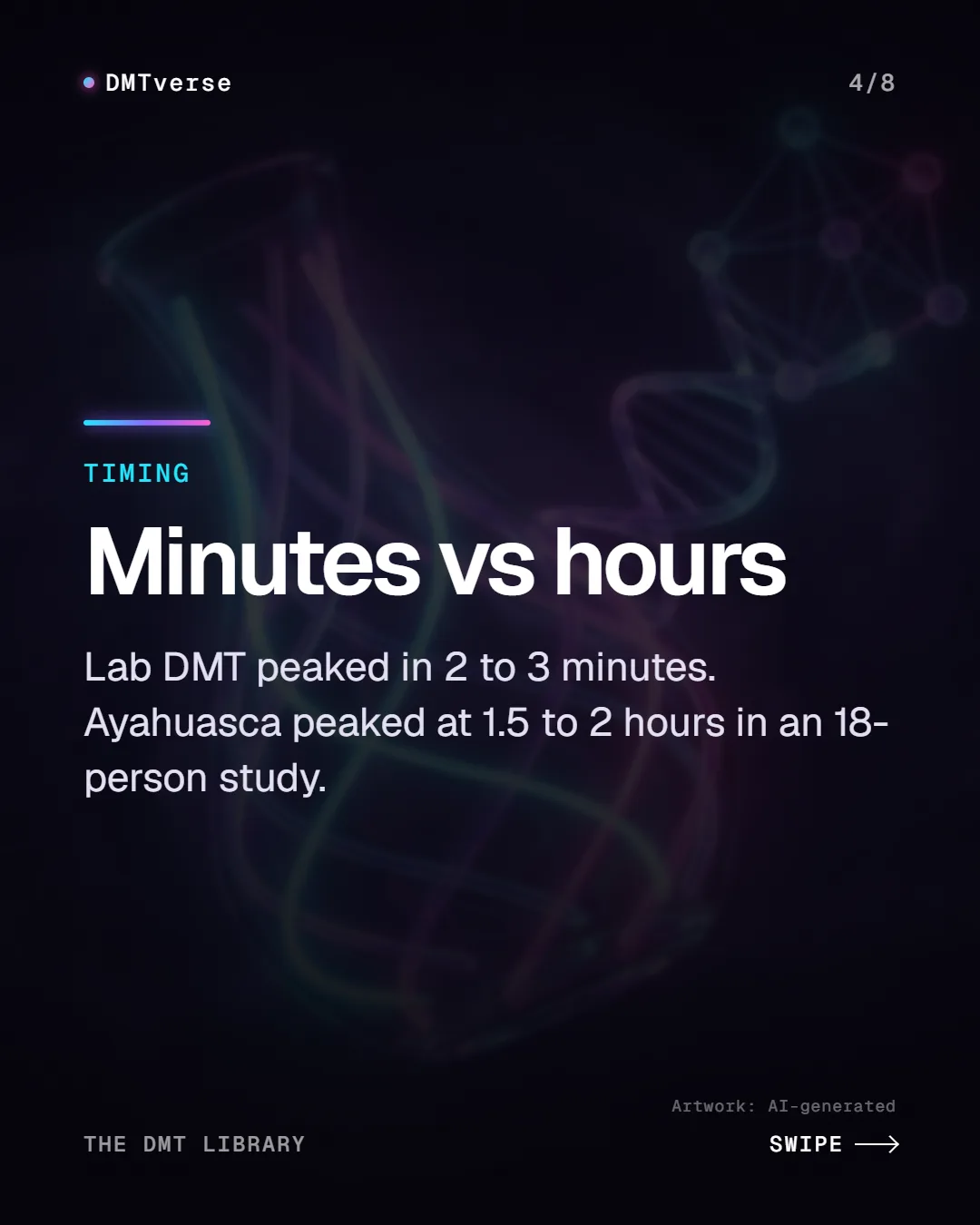
DMT given by injection in a lab is very fast. In a double-blind study of 11 experienced hallucinogen users, peak DMT blood levels and subjective effects came within 2 minutes and were negligible at 30 minutes (Strassman and Qualls, 1994). In a later study of 13 volunteers, rated intensity peaked 2 to 3 minutes after the injection and stayed significantly above placebo for 17 minutes (Timmermann et al., 2019).
Ayahuasca is far slower. In a double-blind, placebo-controlled study of 18 volunteers with previous psychedelic experience, subjective effects peaked between 1.5 and 2 hours, and DMT in the blood peaked at about 1.5 hours, matching the peak of effects (Riba et al., 2003). A study of 15 volunteers in a ceremonial setting found DMT peaked in the blood at an average of about 107 minutes, again lining up with peak effects (Callaway et al., 1999). The authors of the depression trial describe the acute psychological effects as lasting “around 4 h” (Palhano-Fontes et al., 2019).
These are averages from small groups of screened volunteers, not what any one person will experience. Evidence: established for the broad difference in time scale; preliminary for exact figures.
What are the physical effects: purging, heart rate and blood pressure?
Vomiting is the most visible physical difference. In the randomized depression trial, 57% of people given ayahuasca vomited, against 0% on placebo, and 71% reported nausea, against 26% (Palhano-Fontes et al., 2019). The authors note that in traditional use vomiting is not considered a side effect “but rather part of a purging process”. In the Global Ayahuasca Survey, an online survey of 10,836 people from more than 50 countries, 69.9% reported acute physical adverse effects, mainly vomiting, and 2.3% said they needed medical attention afterwards (Bouso et al., 2022). Evidence: established that vomiting is common; the survey figures are self-reported.
Both raise cardiovascular measures. Injected DMT raised blood pressure, heart rate, pupil size and rectal temperature, more so at higher amounts (Strassman and Qualls, 1994). With ayahuasca, diastolic blood pressure rose significantly at the higher of two amounts tested (by 9 mm Hg at 75 minutes), while systolic pressure and heart rate rose moderately but not significantly (Riba et al., 2003). Those volunteers were healthy. The studies tell us little about people with heart conditions, who are usually screened out. Evidence: established for healthy volunteers.
The experience is not necessarily pleasant. The depression trial’s authors write that the session “was not necessarily a pleasant experience” and that for some it came with much psychological distress, although all patients reported feeling safe in the supervised setting (Palhano-Fontes et al., 2019). Evidence: preliminary (one small trial).
What does research show about ayahuasca and DMT?
The randomized depression trial
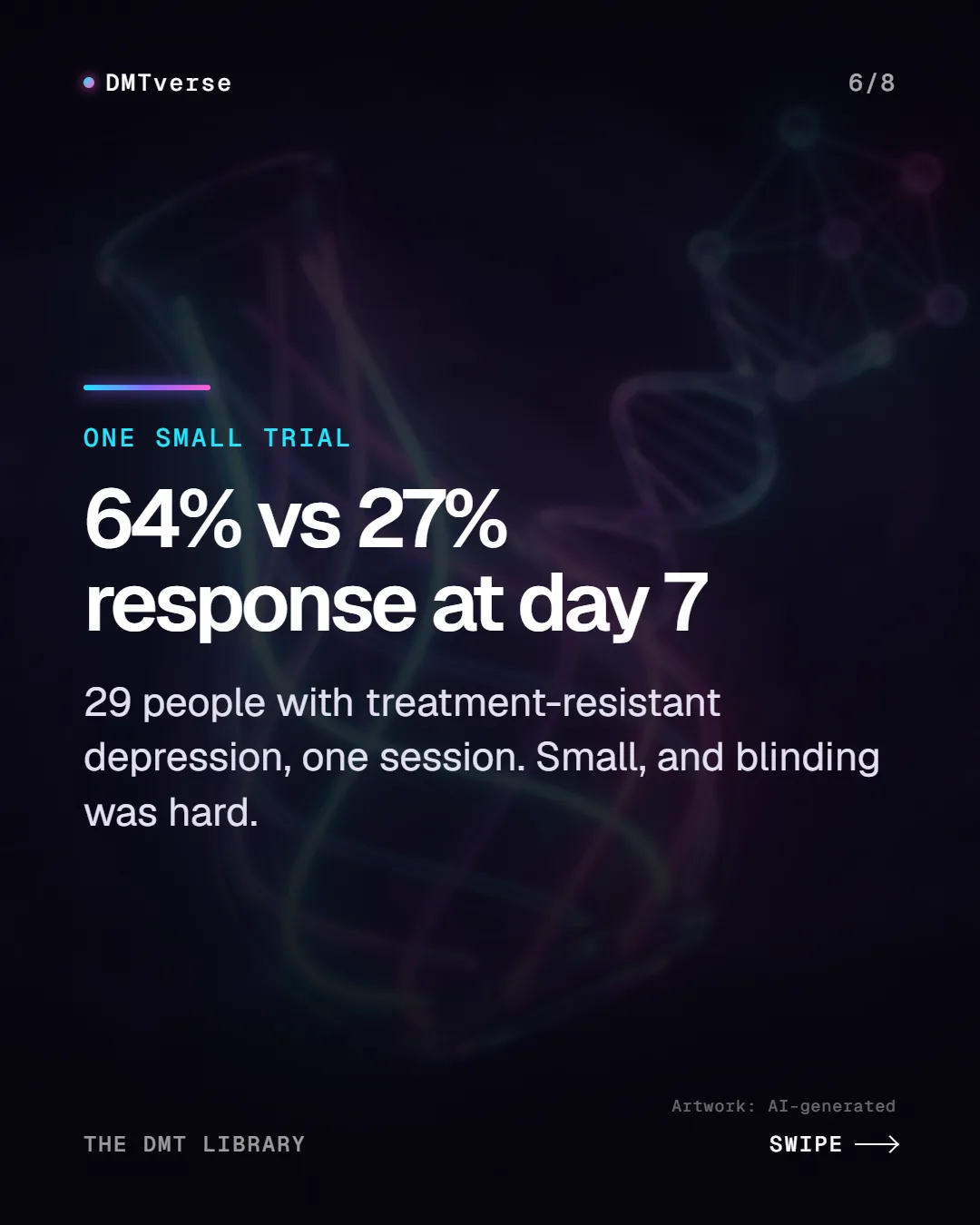
The main controlled study is a Brazilian trial in treatment-resistant depression. Of 218 people assessed between January 2014 and June 2016, 29 were analysed: 14 given ayahuasca and 15 given a placebo liquid made to look and taste similar, in a single session (Palhano-Fontes et al., 2019). The study was double-blind and everyone was new to ayahuasca. Depression scores on a clinician-rated scale (MADRS) were significantly lower with ayahuasca at days 1, 2 and 7. At day 7, 64% responded on ayahuasca versus 27% on placebo. Remission was 36% versus 7%, which fell just short of statistical significance.
The limits are real. The sample was small; the authors had planned for 42 participants. Patients had long-standing depression and high rates of personality disorder, so results may not apply to others. People with a personal or family history of psychosis, bipolar disorder or mania, substance use, suicidal risk or medical illness were excluded, and antidepressants were stopped beforehand under supervision. Blinding is also hard when vomiting is so common: the placebo contained zinc sulfate to cause mild stomach upset (Palhano-Fontes et al., 2019). Evidence: preliminary. One small trial is a signal, not proof. For psilocybin’s depression trials, see psilocybin depression trials.
Observational studies of ritual and retreat users
A Spanish study compared 127 regular ritual ayahuasca users with 115 people active in other religions, at baseline and a year later, and found “no evidence of psychological maladjustment, mental health deterioration or cognitive impairment” among the users (Bouso et al., 2012). Users chose to be users, though, so the groups may differ in ways the study could not measure. Evidence: preliminary.
A 2026 systematic review of 18 prospective studies, mostly of volunteers at retreat centres, found reported improvements in wellbeing and psychiatric symptoms at the group level, but also “subsets of participants with persisting psychiatric complications” linked to ayahuasca. The reviewers flag small samples, unstandardized amounts, missing control groups and non-randomized designs (Haupt et al., 2026). Evidence: preliminary.
How is ayahuasca used in traditional and religious settings?
Ayahuasca has a long history in the Amazon. In the 20th century it also became the sacrament of Brazilian syncretic churches, which have since spread to cities in Brazil, Europe and North America; their members typically take part in ceremonies at least twice a month (Bouso et al., 2012). The two best-known are Santo Daime and the União do Vegetal (UDV); see Santo Daime and UDV for their history. Evidence: established.
In the United States, the Supreme Court ruled on the UDV in February 2006. The Court’s syllabus describes members receiving communion by drinking hoasca, “a tea brewed from plants unique to the Amazon Rainforest that contains DMT”. It held that the government had failed to show, at the preliminary-injunction stage, a compelling interest in barring the church’s sacramental use (Gonzales v. O Centro Espírita Beneficente União do Vegetal, 2006). That case is US law and does not apply in Canada. Evidence: established.
In the Global Ayahuasca Survey, adverse mental health effects were less common among people who drank ayahuasca in religious settings, and physical ones were linked to non-supervised use and existing health conditions, among other factors (Bouso et al., 2022). That is an association in a self-selected online sample, not proof that any setting is safe. Evidence: preliminary.
What are the main safety risks and dangerous interactions?
MAO inhibition makes some combinations dangerous
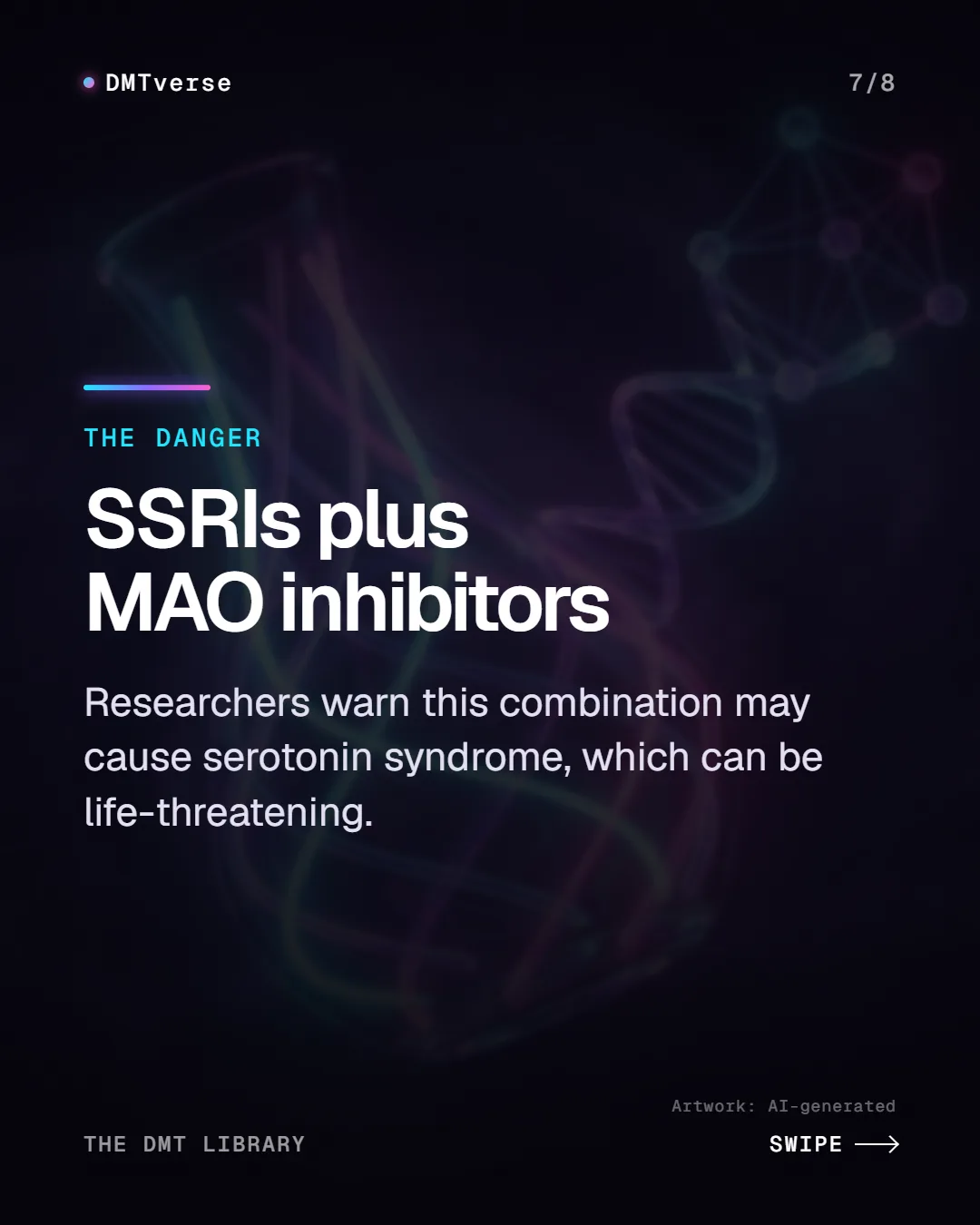
Because ayahuasca’s harmala alkaloids inhibit MAO-A, researchers warn that combining it with SSRI antidepressants “may induce a serotonin syndrome with potentially grave outcome” (Callaway and Grob, 1998). A 2024 review adds that the MAO inhibitors in ayahuasca stop the breakdown of tyramine, and that high tyramine can cause a hypertensive crisis (White et al., 2024). Do not stop or change prescribed medication on your own. Talk to a prescriber or pharmacist. This is not medical advice.
Serotonin syndrome happens when serotonin activity climbs too high. The 2024 review describes symptoms that overlap with the brew’s expected effects at first (confusion, nausea, vomiting) and can progress to convulsions, tremors, loss of consciousness and potentially death. It also says the risk with ayahuasca is a theoretical concern and that the authors found no clear, confirmed case linked to ayahuasca in the scientific literature (White et al., 2024). Both things can be true: the mechanism is well understood, and documented cases are rare or poorly recorded. Evidence: established for the mechanism; unresolved for how often it happens. For how psilocybin interacts with antidepressants, see magic mushrooms and antidepressants.
Deaths have been reported, but the record is incomplete. A 2013 review of such reports found that some lacked accurate forensic or toxicology data and others did not involve traditional ayahuasca. Even so, it concluded that the cases point to heart and liver disease and current serotonergic drugs or medications as contraindications, and to caution with analogues made from other plants or isolated alkaloids (dos Santos, 2013). Evidence: preliminary.
Single cases and press reports add little certainty. One published case report describes a 25-year-old man found dead the morning after taking herbal extracts containing β-carbolines and tryptamines, including 5-MeO-DMT, a different molecule from DMT; the medical examiner ruled the cause hallucinogenic amine intoxication (Sklerov et al., 2005). A 2019 CTV News article said, citing earlier news reports, that at least 11 tourists had died over the previous decade in incidents linked to traditional medicine in South America (CTV News, 2019). That is a press tally of incidents linked to traditional medicine generally, not a verified count of ayahuasca deaths. Evidence: unresolved for how many deaths there have been.
Other risks named in the research: psychological distress during the experience, adverse mental health effects in the weeks after (reported by 55.9% in the online survey, most of whom saw them as part of a positive process, and about 12% of whom sought professional support) (Bouso et al., 2022), and lasting psychiatric complications in a minority in retreat studies (Haupt et al., 2026). Animal studies at high amounts found harm to pregnancy and fetal development, and harmaline caused the most problems in lab models (White et al., 2024). Evidence: preliminary. Our safety page covers general risks of psychedelics.
If someone is in danger
Call 9-1-1 for severe symptoms such as seizures, confusion or agitation with a very high temperature, rigid muscles, chest pain or a severe headache. In Ontario, the Ontario Poison Centre is available 24 hours a day, every day of the year, at 1-800-268-9017 (Ontario Poison Centre). If you or someone you know is thinking about suicide, call or text 9-8-8, any time (Government of Canada). More numbers are on our safety page.
Is ayahuasca or DMT legal in Canada?
Both are controlled. The Controlled Drugs and Substances Act lists N,N-dimethyltryptamine (DMT) as item 7 of Schedule III, with harmaline as item 9 and the related harmalol as item 10. We did not find harmine named in the schedule text. The consolidation we read was current to 30 September 2026 (Justice Laws, CDSA). Ayahuasca itself has no separate entry; it is controlled because of what it contains. A 2019 CTV News report put it the same way: ayahuasca is otherwise illegal in Canada because it contains DMT and harmaline (CTV News, 2019). Offences, penalties and the newer federal regulations are covered in is DMT legal in Canada?. This is general information, not legal advice. Evidence: established.
Section 56 of the Act lets the Minister of Health exempt a person, a class of persons or a substance where the Minister considers it necessary for a medical or scientific purpose or otherwise in the public interest (Justice Laws, CDSA, section 56). That is the route used for a small number of religious groups. For how section 56 exemptions have worked for psilocybin, see section 56 exemptions for psilocybin. Evidence: established for the text of section 56.
The Santo Daime and UDV exemptions
According to an account by the leader of the Montreal Santo Daime church Céu do Montréal, the church worked with Health Canada’s Office of Controlled Substances from 2001. An exemption was granted in 2006 but would only be issued once Brazil allowed export, which did not happen; in 2012 the Health Minister refused the request; and in June 2017 the exemption was granted, for two years and renewable. The same account stresses that the exemption is for that church alone and does not make ayahuasca legal in Canada (Chacruna Institute, 2017). Evidence: preliminary (a participant’s account).
CTV News reported in May 2019 that Health Canada had by then granted five such exemptions: two in Montreal in 2017 (Céu do Montréal and a União do Vegetal centre) and three in 2018 (two in Quebec and one in Toronto), each valid for two years and renewable. A Health Canada spokesperson told CTV the exemptions let designated members possess, provide, transport, import, administer and destroy “Daime Tea (ayahuasca)” for their religious practice, subject to conditions, and that details are confidential (CTV News, 2019).
We could not find an official Health Canada page or court decision confirming this history or saying which exemptions are still in force, so treat it as reported, not confirmed. Section 56(1) lets the Minister exempt a person, a class of persons or a substance, on terms the Minister sets, so an exemption usually covers only the person or group named in it (Justice Laws, CDSA). This is general information, not legal advice. Evidence: preliminary.
What we still don’t know
- Whether ayahuasca has any lasting effect on depression. One trial of 29 people followed patients for a week, and blinding is hard (preliminary).
- How each alkaloid contributes. Harmine, harmaline and tetrahydroharmine act differently, and brews vary (unresolved).
- How common serious interactions are. The danger is clear from pharmacology, but confirmed case reports are scarce and some death reports lack toxicology (unresolved).
- Who is at risk of lasting psychiatric harm. Retreat studies report a minority with persisting problems, without control groups (preliminary).
- Effects in people the trials leave out, including those with heart or liver disease, psychiatric histories or pregnancy (unresolved).
The honest summary: ayahuasca and DMT share a molecule but differ in chemistry, timing, body effects, evidence and risk. The MAO inhibitors that make the brew work by mouth are also the main reason it interacts dangerously with other drugs. For background on the mushroom side of psychedelic research, start with what are magic mushrooms.
Common questions
Is ayahuasca the same as DMT?
No. DMT is one molecule. Ayahuasca is a traditional Amazonian brew that contains DMT plus β-carbolines such as harmine and harmaline. Those block the enzyme MAO-A, which lets DMT act when swallowed and makes the experience much longer than lab DMT.
Why does ayahuasca last longer than DMT?
In lab studies, injected DMT peaked within about 2 to 3 minutes and faded within about 30 minutes. In ayahuasca studies, effects peaked after about 1.5 to 2 hours and trial authors describe them lasting around 4 hours, tracking slower DMT levels in the blood.
Why does ayahuasca cause vomiting?
The studies we read report vomiting but do not settle the cause. In the randomized depression trial, 57% vomited on ayahuasca and none on placebo. In traditional practice, vomiting is seen as part of a purging process rather than a side effect.
Is it dangerous to mix ayahuasca with antidepressants?
Researchers warn that it can be. Ayahuasca’s MAO-inhibiting alkaloids combined with SSRIs may cause serotonin syndrome, which can be life-threatening. Do not stop or change prescribed medication on your own; talk to a prescriber or pharmacist. This is not medical advice.
Has ayahuasca been tested in clinical trials?
Yes, but evidence is thin. A double-blind randomized trial of 29 people with treatment-resistant depression found lower depression scores than placebo at one week. Most other studies are observational, without control groups.
Is ayahuasca legal in Canada?
No, as a rule. DMT and harmaline are Schedule III substances under the CDSA. Health Canada has reportedly granted section 56 exemptions to a few Santo Daime and UDV groups for religious use since 2017. We could not confirm their current status on an official page.
Have people died after taking ayahuasca?
Deaths have been reported, but many reports lack full toxicology or involve non-traditional preparations. A review suggests heart and liver disease and serotonergic drugs are contraindications. For an emergency in Canada, call 9-1-1.
Shroomverse sells mushroom products. This article is general information about ayahuasca and DMT research and Canadian law. It is not medical, legal or purchasing advice, and it does not recommend any product, substance, setting or retreat.
SOURCES
- Rapid antidepressant effects of the psychedelic ayahuasca in treatment-resistant depression: a randomized placebo-controlled trial (Palhano-Fontes F, et al., Psychological Medicine 49(4):655–663, 2019), Cambridge University Press (peer-reviewed); full text via PubMed Central, PMC6378413. Accessed . Abstract and open full text read. Supports the 29-patient design, MADRS results, response and remission figures, nausea and vomiting rates, the purging remark, distress, exclusions, the planned sample of 42, the zinc sulfate placebo and the “around 4 h” duration. Doses not reported here.
- Human pharmacology of ayahuasca: subjective and cardiovascular effects, monoamine metabolite excretion, and pharmacokinetics (Riba J, et al., Journal of Pharmacology and Experimental Therapeutics 306(1):73–83, 2003), American Society for Pharmacology and Experimental Therapeutics (peer-reviewed). Accessed . Abstract read (via Europe PMC). Supports 18 volunteers, peak effects at 1.5 to 2 hours, DMT peak at 1.5 hours, the diastolic blood pressure rise, DMT as “orally labile”, and harmine acting mainly in gut and liver to prevent first-pass breakdown.
- Pharmacokinetics of Hoasca alkaloids in healthy humans (Callaway JC, et al., Journal of Ethnopharmacology 65(3):243–256, 1999), Elsevier (peer-reviewed). Accessed . Abstract read (via Europe PMC). Supports harmine and harmaline as reversible MAO-A inhibitors, tetrahydroharmine as a weak serotonin uptake inhibitor, 15 volunteers in a ceremonial context and the average DMT peak of about 107 minutes.
- Ayahuasca preparations and serotonin reuptake inhibitors: a potential combination for severe adverse interactions (Callaway JC, Grob CS, Journal of Psychoactive Drugs 30(4):367–369, 1998), Taylor & Francis (peer-reviewed). Accessed . Abstract read (via Europe PMC). Source for the warning that harmala alkaloids combined with SSRIs may induce serotonin syndrome with a potentially grave outcome.
- Ayahuasca and Dimethyltryptamine Adverse Events and Toxicity Analysis: A Systematic Thematic Review (White E, et al., International Journal of Toxicology 43(3):327–339, 2024), SAGE (peer-reviewed); full text via PubMed Central, PMC11088222. Accessed . Abstract and full text read. Supports MAO-A inhibition making DMT orally active, tyramine and hypertensive crisis, serotonin syndrome as a theoretical concern with no confirmed ayahuasca case found, animal developmental toxicity and harmaline’s preclinical problems.
- Adverse effects of ayahuasca: Results from the Global Ayahuasca Survey (Bouso JC, et al., PLOS Global Public Health 2(11):e0000438, 2022), PLOS (peer-reviewed, open access). Accessed . Abstract read (via Europe PMC). Supports n = 10,836 from over 50 countries, 69.9% acute physical adverse effects (mainly vomiting), 2.3% needing medical attention, 55.9% later mental health effects, about 88% seeing them as positive, about 12% seeking support, and the setting associations.
- Personality, psychopathology, life attitudes and neuropsychological performance among ritual users of Ayahuasca: a longitudinal study (Bouso JC, et al., PLoS ONE 7(8):e42421, 2012), PLOS (peer-reviewed, open access). Accessed . Abstract read (via Europe PMC). Supports 127 users vs 115 controls over one year, the quoted finding of no maladjustment or impairment, and the spread and frequency of Brazilian syncretic church ceremonies.
- Preliminary effects of ayahuasca on mental and physical health: A systematic review of prospective studies (Haupt MJ, et al., Progress in Neuro-Psychopharmacology and Biological Psychiatry 145:111634, 2026), Elsevier (peer-reviewed). Accessed . Abstract read (via Europe PMC). Supports 18 prospective studies mostly of retreat volunteers, group-level improvements, subsets with persisting psychiatric complications, and the listed design limits.
- A critical evaluation of reports associating ayahuasca with life-threatening adverse reactions (dos Santos RG, Journal of Psychoactive Drugs 45(2):179–188, 2013), Taylor & Francis (peer-reviewed). Accessed . Abstract read (via Europe PMC). Supports the gaps in forensic data, non-traditional preparations, and heart and liver disease and serotonergic drugs as suggested contraindications.
- A fatal intoxication following the ingestion of 5-methoxy-N,N-dimethyltryptamine in an ayahuasca preparation (Sklerov J, et al., Journal of Analytical Toxicology 29(8):838–841, 2005), Oxford University Press (peer-reviewed). Accessed . Abstract read (via Europe PMC). Single case report: a 25-year-old man, herbal extracts with β-carbolines and tryptamines including 5-MeO-DMT, cause ruled hallucinogenic amine intoxication. Blood levels not reported here.
- Dose-response study of N,N-dimethyltryptamine in humans. I. Neuroendocrine, autonomic, and cardiovascular effects (Strassman RJ, Qualls CR, Archives of General Psychiatry 51(2):85–97, 1994), American Medical Association (peer-reviewed). Accessed . Abstract read (via Europe PMC). Supports 11 experienced users, peak within 2 minutes, negligible at 30 minutes, and dose-dependent rises in blood pressure, heart rate, pupil size and temperature.
- Neural correlates of the DMT experience assessed with multivariate EEG (Timmermann C, et al., Scientific Reports 9:16324, 2019), Springer Nature (peer-reviewed, open access); full text via PubMed Central, PMC6864083. Accessed . Abstract and full text read. Supports 13 volunteers given intravenous DMT, peak at 2 to 3 minutes and intensity above placebo for 17 minutes.
- Controlled Drugs and Substances Act (S.C. 1996, c. 19), current to 30 September 2026, Government of Canada, Justice Laws Website. Accessed . Full text read; section 56(1) re-read 24 October 2026. Supports Schedule III items 7 (DMT), 9 (harmaline) and 10 (harmalol), harmine not found by name, and the section 56 exemption power, including exemptions for a class of persons or a substance.
- Health Canada allows more religious groups to import psychedelic ayahuasca (CTV News, 8 May 2019), CTV News (news report). Accessed . News report quoting a Health Canada spokesperson. Supports the five exemptions (2017 and 2018), two-year renewable terms, the quoted scope and confidentiality, ayahuasca being otherwise illegal, and the press tally of tourist deaths. Not an official record.
- How Our Santo Daime Church Received Religious Exemption to Use Ayahuasca in Canada (Chacruna Institute, 17 July 2017), Chacruna Institute for Psychedelic Plant Medicines (account by the church’s leader). Accessed . First-hand account by an interested party. Supports the 2001 start, the 2006 conditional grant, the 2012 refusal, the June 2017 exemption and the statement that it does not make ayahuasca legal in Canada.
- Gonzales v. O Centro Espírita Beneficente União do Vegetal, No. 04-1084 (US Supreme Court, 21 February 2006), syllabus, Legal Information Institute, Cornell Law School. Accessed . Syllabus read. Supports the description of hoasca as containing DMT and the holding at the preliminary-injunction stage.
- Ontario Poison Centre, Ontario Poison Centre. Accessed . Source for the toll-free number 1-800-268-9017 and availability 24 hours a day, every day of the year.
- Get help with mental health, Government of Canada. Accessed . Source for calling or texting 9-8-8 at any time and calling 9-1-1 for immediate danger or urgent medical support.
CHANGES
- : Linked glossary definitions.
- : First published.
- : Editorial review: removed benefit wording (summary, open questions); split the deaths paragraph and stated the CTV tally and the 5-MeO-DMT case report more narrowly; added evidence labels, Schedule III item numbers, a not-legal-advice line and links to the ayahuasca, church and Canadian-law guides.
- : Added source links beside figures and legal statements.
- : Narrowed “an exemption covers only its holder”: section 56(1) lets the Minister exempt a person, a class of persons or a substance, so an exemption usually covers only the person or group named in it. Checked against the CDSA text on 24 October 2026.



