
THE SHROOMVERSE JOURNAL ✳ 14 MIN READ
Ayahuasca benefits: what research has and has not shown
Topic: DMT
Published Updated
Listen: the 3-minute version
AI-narrated summary of this article
Short answer, checked 20 October 2026
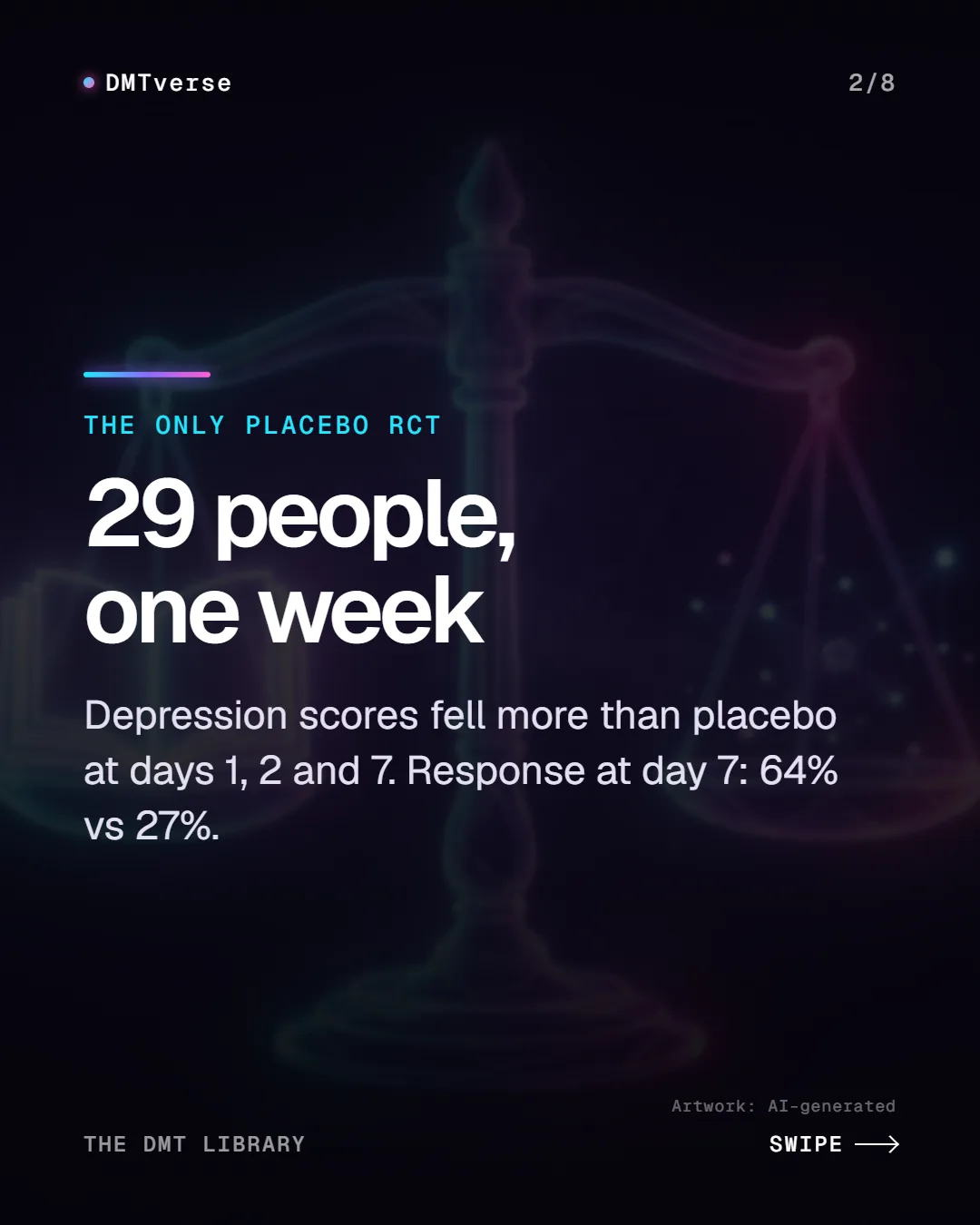
Claimed ayahuasca benefits are not proven: the research is early and small. One randomized, placebo-controlled trial in 29 people with treatment-resistant depression found lower depression scores than placebo at days 1, 2 and 7 after one session, and follow-up stopped there. Most other findings come from small studies with no placebo group, from comparisons of church members with non-users, and from self-selected surveys and retreat studies. Vomiting is common, some people report lasting psychological problems, and the brew can interact dangerously with some medicines. No study shows that ayahuasca is a proven treatment. This is not medical advice.
THE SHORT VERSION · SWIPE
On this page 13 sections
“Ayahuasca benefits” is a common search, and the honest answer is narrower than most results suggest. Researchers have studied ayahuasca, an Amazonian brew that contains DMT, in people with depression, people with substance use problems, grieving adults, long-term church members and visitors to retreats. In some of these studies, people’s scores improved. Almost every study was small, short, uncontrolled or hard to blind.
This page is a map of that research, area by area, with each study’s design, size and limits. For what ayahuasca is, start with what is ayahuasca; for the name itself, see ayahuasca meaning and pronunciation.
Education only, not guidance
This article describes published research. It gives no amounts, no preparation details, no plant sources and no ways of taking anything, and it does not recommend any ceremony, retreat or treatment. It is not medical advice. Evidence labels used below: established (shown in peer-reviewed studies or primary documents and not seriously disputed), preliminary (early, small, observational or indirect) and unresolved (an open question).
What does “benefit” mean in ayahuasca research?
In a study, a “benefit” is a change in a measured score, such as a depression rating scale, compared with something. The strongest comparison is a placebo group: people who take an inactive drink without knowing which they got, in a randomized controlled trial (RCT). Weaker designs compare people with themselves before and after (open-label or observational studies), compare users with non-users who chose a different life, or ask volunteers to report their own experience in a survey.
Each step down that list makes it harder to tell what caused a change. Expectations, the group setting, the support around a session, and who chose to take part can all move scores. A 2026 systematic review of 18 prospective ayahuasca studies concluded that most were limited by small samples, unstandardized amounts, no control groups and non-randomized designs (Haupt et al., 2026). Evidence: established for the limits.
Ayahuasca benefits: what has research found, area by area?
| Area | Key study and design | Placebo or control? | Main limit |
|---|---|---|---|
| Treatment-resistant depression | Palhano-Fontes et al., 2019: randomized, double-blind, 29 patients, one session | Placebo | One week of follow-up; vomiting makes blinding hard |
| Depression (observational) | van Oorsouw et al., 2022: 20 depressed adults attending a ceremony with an ayahuasca analogue | None | No control group; other treatments during the study |
| Substance use | Thomas et al., 2013: 12 participants in a First Nations community in British Columbia | None | Tiny sample; self-report; six months |
| Substance use | Rush et al., 2024: 52 people in a Peruvian treatment program, one year | None | Uncontrolled; many program elements |
| Church members | Bouso et al., 2012: 127 regular users vs 115 members of other religions | Comparison group, not randomized | People chose their religion |
| Retreat visitors | Pagni et al., 2026: 66 first-time participants, followed 12 months | None | No control group; volunteers |
| Grief | Soto-Angona et al., 2025: 84 bereaved adults, three arms | Therapy-only and no-treatment arms, not randomized | Open-label; sequential allocation |
| Adverse effects | Bouso et al., 2022: online survey, 10,836 people | None | Self-selected; self-report |
Ayahuasca for depression: what did the trials find?
The best-known study is a 2019 randomized, double-blind, placebo-controlled trial in Brazil of 29 people with treatment-resistant depression, meaning depression that had not improved with earlier treatments. Each received one session of ayahuasca or placebo. Clinician-rated depression scores were significantly lower with ayahuasca at days 1, 2 and 7. At day 7, 64% responded on ayahuasca against 27% on placebo; remission (36% against 7%) fell just short of statistical significance (Palhano-Fontes et al., 2019). Evidence: preliminary.
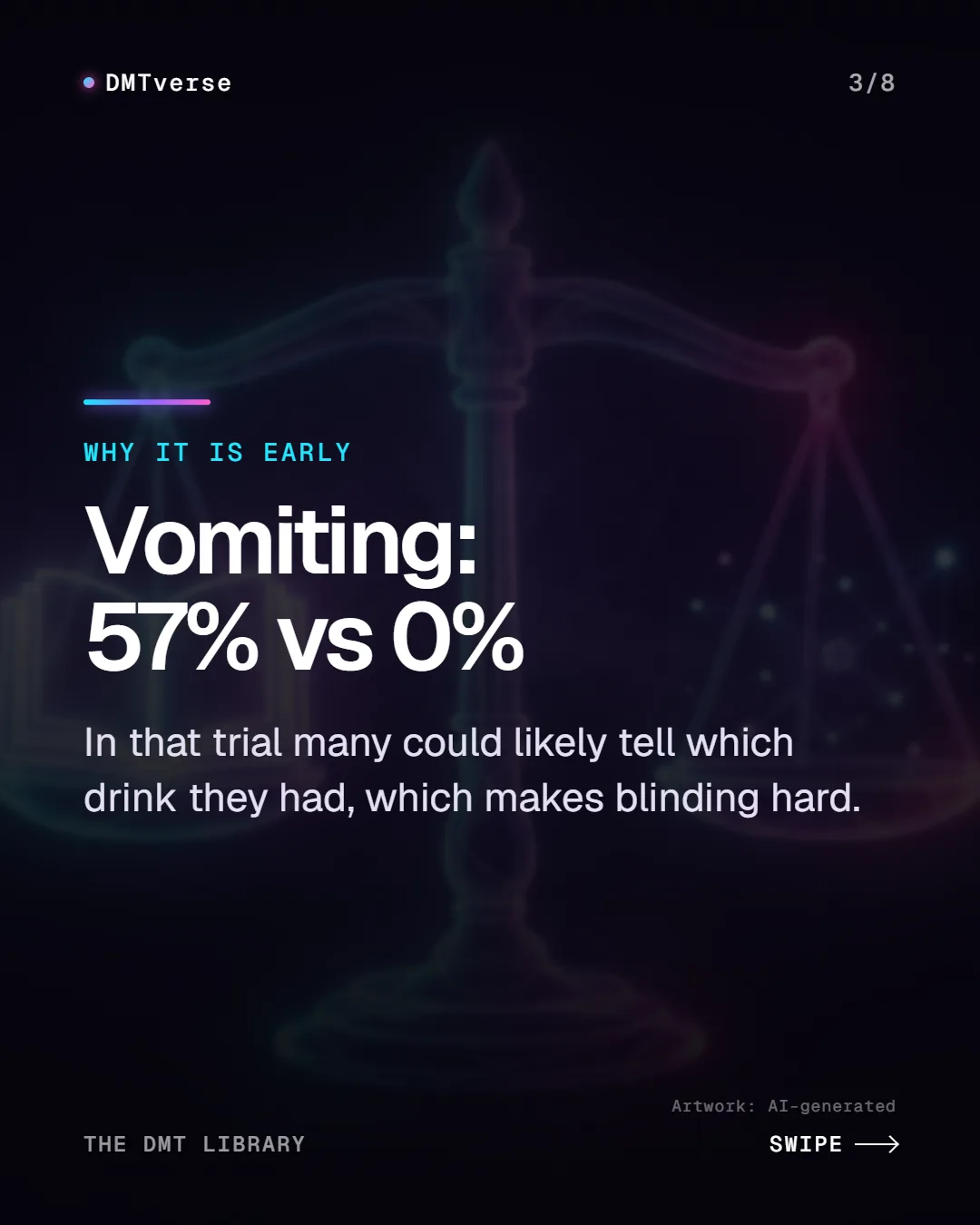
The trial has clear limits. It was small, and follow-up ended at one week, so it cannot say whether any change lasts. Vomiting occurred in 57% of the ayahuasca group and in none of the placebo group, which makes it likely that many people could tell which drink they had (Palhano-Fontes et al., 2019). The authors describe it as, to their knowledge, the first controlled trial of a psychedelic in treatment-resistant depression. Evidence: established for the design and limits.
Earlier work had no placebo group. The 2019 paper describes a prior open-label trial in which 17 patients with major depression attended one session, with lower depression scores for up to 21 days, and notes that such studies cannot control for the placebo effect (Palhano-Fontes et al., 2019). Evidence: preliminary.
Outside trials, a 2022 Dutch observational study followed 20 clinically depressed adults who attended a ceremony using an ayahuasca analogue, a preparation built to mimic the brew. Depression scores fell at one day, one month and one year, and 12 of the 17 people measured at one year were in remission. The authors note that other mental health treatments or other psychedelics during the year may have contributed (van Oorsouw et al., 2022). There was no control group. Evidence: preliminary.
A 2026 narrative review of psilocybin and ayahuasca in treatment-resistant depression found rapid symptom reductions for both, with psilocybin showing more robust evidence for lasting effects. It warns that trials systematically exclude people with other conditions, high suicide risk or several medications, so results reflect stable, selected patients rather than real-world ones (Civardi et al., 2026). For DMT itself, see DMT therapy research. Evidence: preliminary.
What about addiction and substance use?
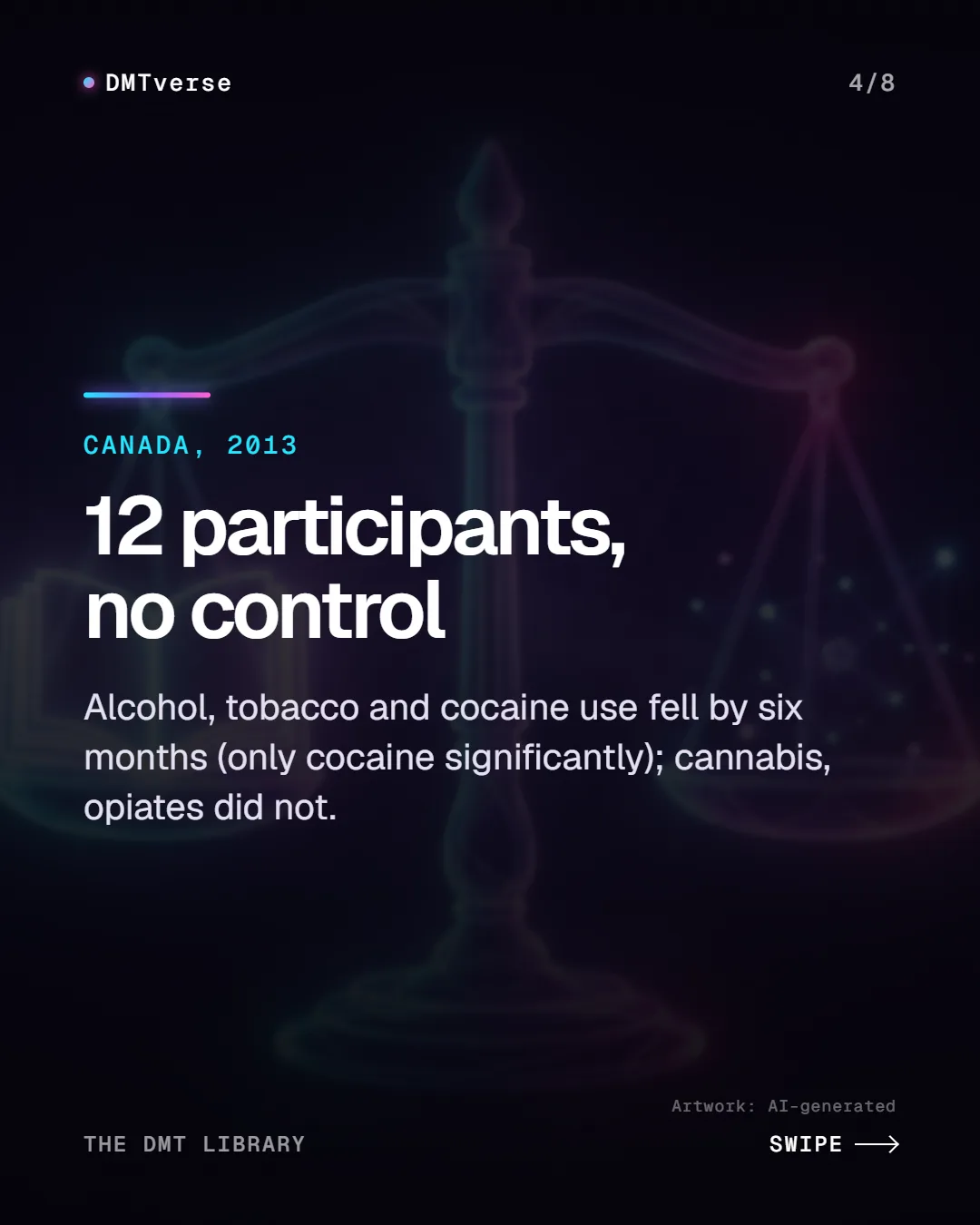
A Canadian study is often cited. In 2013, researchers reported on 12 participants in a rural First Nations community in British Columbia. The program studied combined four days of group counselling with two ayahuasca sessions. At six months, scores for hopefulness, empowerment, mindfulness and parts of quality of life had improved significantly. Self-reported alcohol, tobacco and cocaine use declined, but only the drop in problematic cocaine use was statistically significant, and cannabis and opiate use did not decline (Thomas et al., 2013). There was no control group. Evidence: preliminary.
A follow-up paper interviewed 11 of the participants. All reported less substance use and fewer cravings, and they described a greater sense of connection with themselves, others and nature as central (Argento et al., 2019). These are qualitative reports from a small group, valuable for understanding experience but not a test of whether ayahuasca caused the change. Evidence: preliminary, and a report.
In Peru, a 2024 study followed 52 people through an accredited therapeutic community for addiction that combines ayahuasca with other therapies. At one year, alcohol and drug use severity, depression and anxiety had fallen, with wide individual variation; the authors stress the uncontrolled design (Rush et al., 2024). A 2025 review of psychedelics for alcohol use disorder found that observational studies “nearly uniformly” look promising, while trials against placebo or standard care have been more inconsistent (Miller et al., 2025). Evidence: preliminary.
What do studies of ayahuasca church members show?
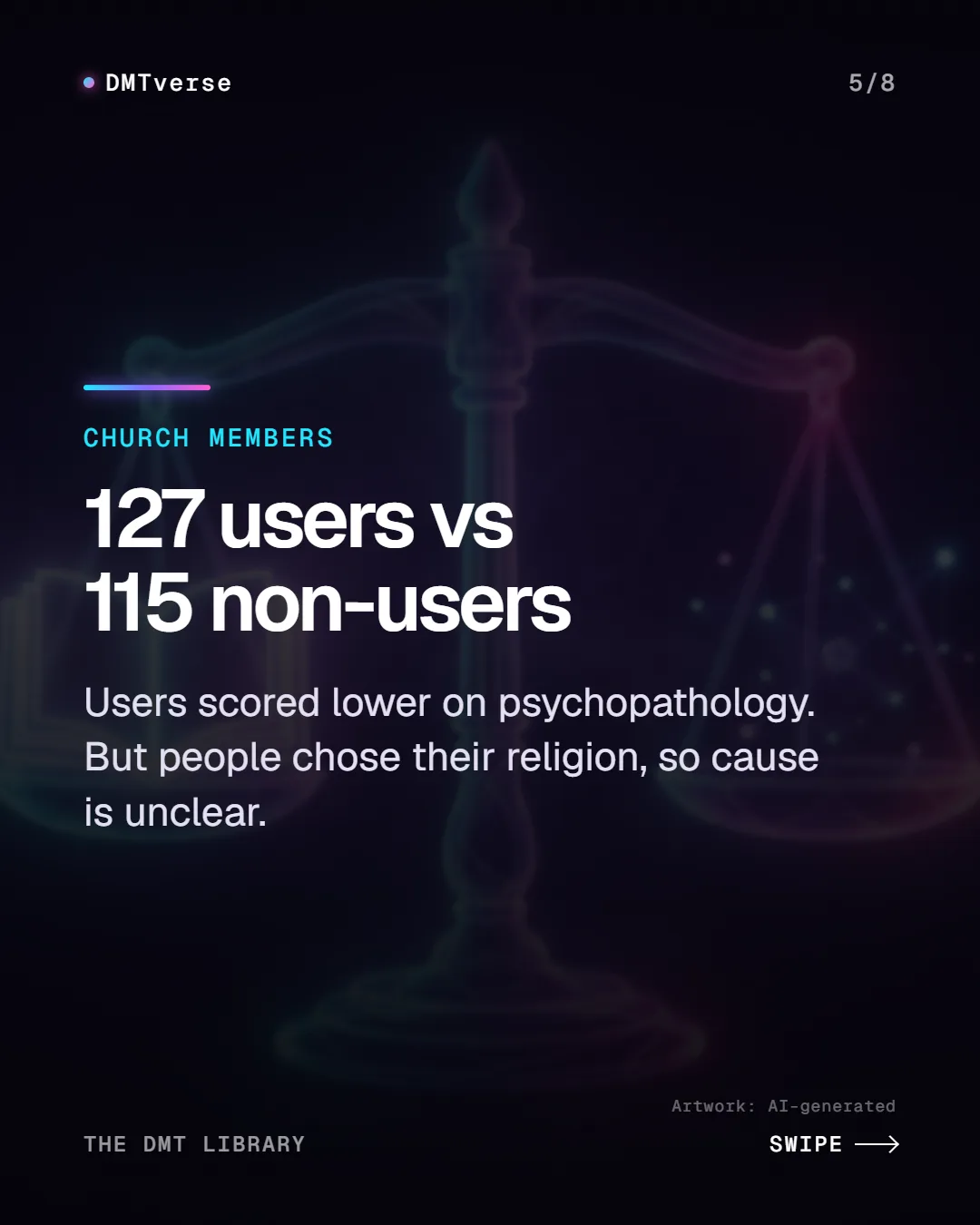
Some of the longest-term data come from members of Brazilian churches that use ayahuasca as a sacrament, described in Santo Daime and the UDV. A 2012 study compared 127 regular ritual users with 115 people active in other religions, at baseline and one year later. Users scored lower on all psychopathology measures and showed no sign of mental health deterioration or cognitive impairment (Bouso et al., 2012). Evidence: preliminary.
A 2010 study using the Addiction Severity Index found that ritual users, in jungle and urban groups, scored lower than controls on alcohol use and psychiatric status (Fábregas et al., 2010). A 2016 study of 30 members of a US branch of the União do Vegetal and 27 matched churchgoers found lower depression and confusion scores and less recent alcohol use among members (Barbosa et al., 2016). Evidence: preliminary.
The common limit is self-selection. People chose these churches, and those who had a bad time may have left, so differences cannot be credited to the brew rather than to community, belief or who stays. These studies are best read as evidence that long-term ritual use was not linked to obvious harm in these groups, not as proof of a treatment effect. Evidence: preliminary.
What do observational studies and surveys report?
A 2026 study followed 66 adults attending neo-shamanic ceremonies for the first time, for 12 months. Depression, anxiety and stress scores were lower at every follow-up, most clearly in people with a diagnosed depressive or anxiety disorder; drops in alcohol and cannabis use were seen only at one month (Pagni et al., 2026). Volunteers chose to attend, and there was no control group. Evidence: preliminary.
The 2026 systematic review found similar group-level improvements across 18 prospective studies, mostly of retreat volunteers. It also found subsets of participants with persisting psychiatric complications linked to their use (Haupt et al., 2026). Group averages can hide people who got worse. Evidence: preliminary.
Has ayahuasca been studied for grief?
Yes, once in a controlled design. A 2025 study in Spain allocated 84 adults with severe grief, within a year of losing a close relative, in sequence (not at random) to ayahuasca with meaning-reconstruction therapy, the therapy alone, or no treatment, 28 per group. Grief fell in all three groups, and more with ayahuasca plus therapy than in either other group. No serious adverse events were reported. The authors call it preliminary and say larger randomized trials are needed (Soto-Angona et al., 2025). Evidence: preliminary.
What does ayahuasca do in the body? Effects studies report
The 2019 trial paper summarises ayahuasca’s acute psychological effects as intense changes in perception, thinking and emotion lasting around four hours. Physical effects are hard to miss: in that depression trial, nausea was reported by 71% on ayahuasca and 26% on placebo, and vomiting by 57% against none (Palhano-Fontes et al., 2019). In a global online survey of 10,836 people, 69.9% reported acute physical adverse effects, mainly vomiting, and 2.3% needed medical attention afterwards (Bouso et al., 2022). Evidence: established that vomiting is common.
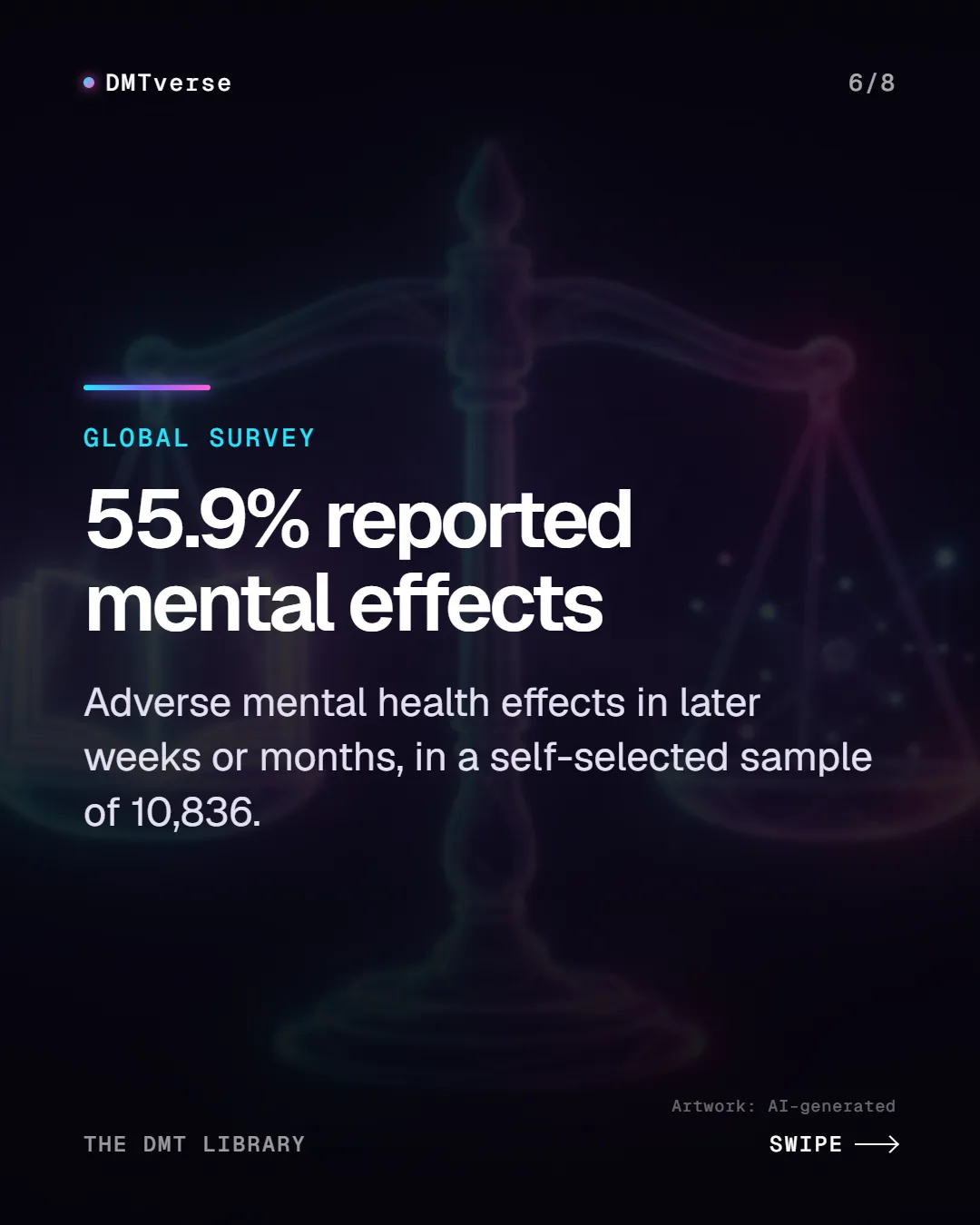
The same survey found that 55.9% reported adverse mental health effects in the following weeks or months. About 88% of those saw them as part of a positive process, and about 12% sought professional support (Bouso et al., 2022). Respondents chose to take part, so the numbers describe that group, not all users. Timing and body effects compared with DMT alone are in ayahuasca vs DMT. Evidence: preliminary.
Who has been excluded from ayahuasca trials?
Trial results only describe the kind of people who were allowed in. The 2019 depression trial excluded people with previous ayahuasca experience, current medical illness, pregnancy, neurological disorders, a personal or family history of schizophrenia, bipolar disorder, mania or hypomania, use of substances of abuse, and suicide risk (Palhano-Fontes et al., 2019). Evidence: established.
This pattern is the norm. A 2026 scoping review of 26 registered DMT and ayahuasca trials found conservative eligibility rules, favouring medically and psychiatrically healthy adults with extensive heart and psychiatric exclusions; most trials were phase I and focused on acute safety (Stojanović et al., 2026). The depression review makes the same point about suicide risk, other illnesses and multiple medications (Civardi et al., 2026). None of this is advice about who should or should not take anything. Evidence: established.
What risks and interactions have researchers described?
MAO inhibition makes some combinations dangerous
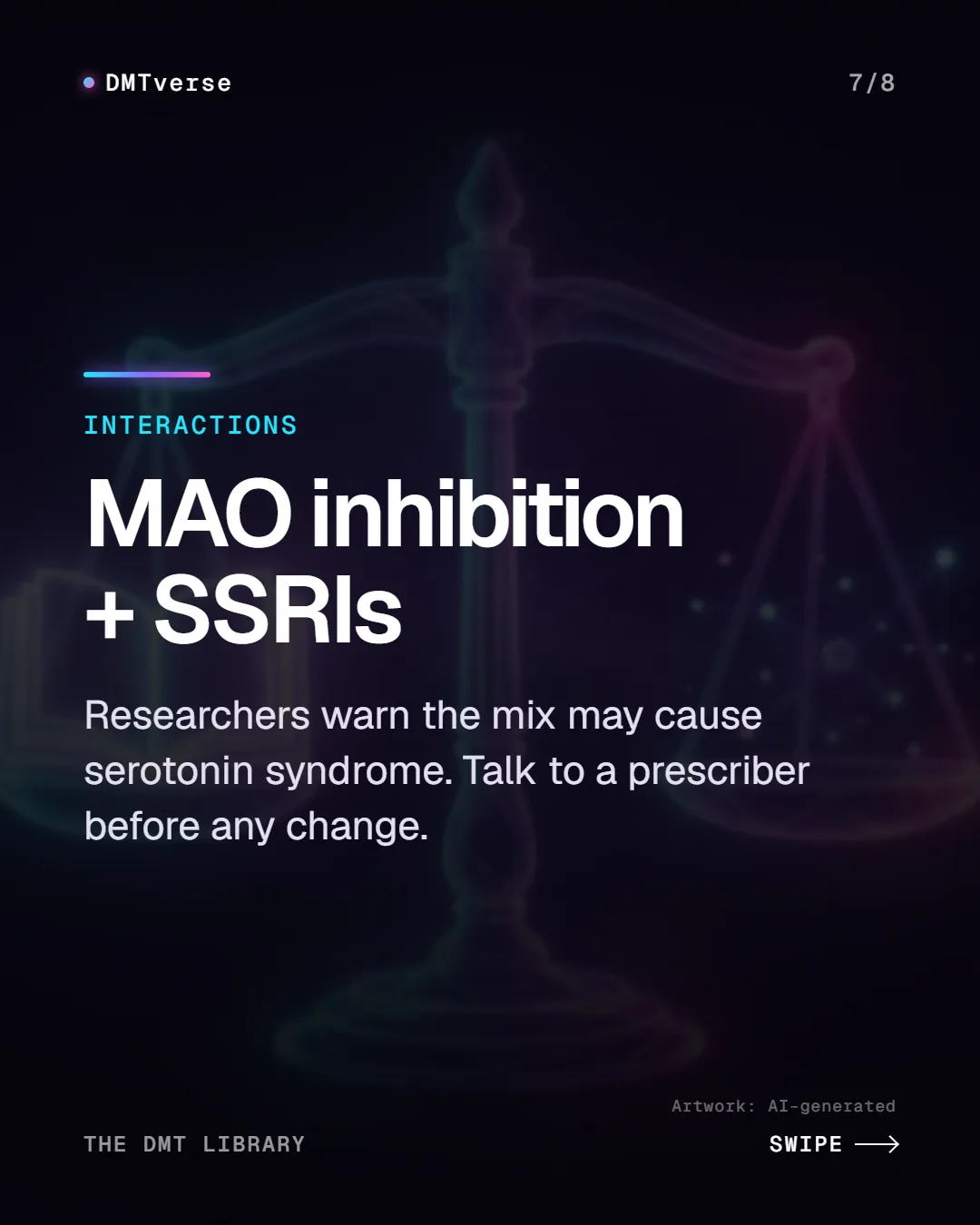
Ayahuasca contains alkaloids that block the enzyme monoamine oxidase (MAO). Researchers warn that combining them with SSRI antidepressants “may induce a serotonin syndrome with potentially grave outcome” (Callaway and Grob, 1998). Do not stop or change prescribed medication on your own; talk to a prescriber or pharmacist. This is not medical advice.
A 2024 review of 78 articles concluded that serious adverse effects are rarely reported in healthy people in controlled settings, but noted harm to pregnancy in animal studies at high amounts and potential toxicity of isolated alkaloids, which may increase with some medications (White et al., 2024). A 2013 review of reported life-threatening cases found that many lacked toxicology data, yet suggested heart disease, liver disease and current serotonergic medication as contraindications (dos Santos, 2013). Evidence: established for the mechanism; preliminary for how often harm occurs.
If someone is in danger
Call 911 for immediate danger or urgent medical help. In Ontario, the Ontario Poison Centre is at 1-800-268-9017; every province has a poison centre, listed by SickKids (AboutKidsHealth). If you or someone you know is thinking about suicide, call or text 9-8-8, any time (Government of Canada). See also our safety page and how to help someone having a bad trip.
Why is ayahuasca research still described as early?
- Only one placebo-controlled depression trial, with 29 people and one week of follow-up (preliminary).
- Most other studies have no control group, so improvement cannot be separated from expectation, setting or time (preliminary).
- Church and retreat studies involve people who chose to take part, and surveys rely on self-report (preliminary).
- Brews vary, so studies may not be testing the same thing (unresolved).
- Trials exclude many people with other illnesses or medications, so results may not apply to them (established).
- Research findings do not change the law: DMT is a controlled substance in Canada; see is DMT legal in Canada.
What is still unknown?
Whether any change in depression lasts beyond a week in a controlled trial. Whether the improvements seen in addiction and retreat studies would survive a placebo comparison. Who is at risk of lasting psychological harm, and how often serious drug interactions happen in practice. Evidence: unresolved. The fair summary is that small studies have produced early signals, alongside real risks, and that the research needed to call anything a treatment has not yet been done.
Common questions
What are the benefits of ayahuasca, according to research?
Research has not shown that ayahuasca is a proven treatment for anything. One small placebo-controlled trial found lower depression scores for seven days, and uncontrolled studies of addiction, grief, church members and retreat visitors report improvements. Most studies are small, lack control groups or rely on self-selected volunteers.
Does ayahuasca help with depression?
It has not been shown to. In a 2019 randomized, placebo-controlled trial of 29 people with treatment-resistant depression, scores were lower than placebo at days 1, 2 and 7. Follow-up ended at one week, and frequent vomiting made blinding hard, so this is a preliminary signal.
What does ayahuasca do to you?
Studies describe strong changes in perception, thought and emotion, and physical effects such as nausea and vomiting. In one trial, 57% vomited on ayahuasca and none on placebo. In a large survey, 55.9% reported adverse mental health effects in the following weeks or months.
Has ayahuasca been studied for addiction?
Yes, but only in small studies without control groups. A 2013 Canadian study of 12 participants reported less alcohol, tobacco and cocaine use at six months (only the cocaine drop was statistically significant), but not less cannabis or opiate use. A 2024 Peruvian study of 52 people reported lower use severity at one year. Neither had a comparison group.
Is ayahuasca safe?
Reviews say serious adverse effects are rarely reported in healthy people in controlled settings, but vomiting is common and some people report lasting psychological problems. Ayahuasca blocks the enzyme MAO, and researchers warn that combining it with SSRI antidepressants may cause serotonin syndrome. Talk to a prescriber before changing any medication.
Who is excluded from ayahuasca trials?
Trials usually exclude people with medical illness, pregnancy, neurological disorders, a personal or family history of psychosis, bipolar disorder or mania, substance use problems or suicide risk. That means results describe screened, healthy volunteers or stable patients, not everyone.
Is ayahuasca an approved treatment in Canada?
No study cited here led to an approved treatment, and DMT is a controlled substance in Canada. Our article on DMT and Canadian law explains the rules. This is not legal or medical advice.
Shroomverse sells mushroom products. This article is general information about ayahuasca research. It is not medical, legal or purchasing advice, and it does not recommend any product.
SOURCES
- Rapid antidepressant effects of the psychedelic ayahuasca in treatment-resistant depression: a randomized placebo-controlled trial (Palhano-Fontes F, et al., Psychological Medicine 49(4):655–663, 2019), Cambridge University Press (peer-reviewed); PMC6378413. Accessed . Full text read via Europe PMC. 29 patients, double-blind, one session; MADRS lower at D1, D2, D7; response 64% vs 27% at D7; remission 36% vs 7% (p = 0.054); nausea 71% vs 26%, vomiting 57% vs 0%; exclusion criteria; earlier open-label trial of 17 patients with effects to 21 days, not placebo-controlled; “first controlled trial” claim (dose not reproduced here).
- Therapeutic effect of an ayahuasca analogue in clinically depressed patients: a longitudinal observational study (van Oorsouw K, Toennes SW, Ramaekers JG, Psychopharmacology 239(6):1839–1852, 2022), Springer (peer-reviewed); PMC8785027. Accessed . Abstract read via Europe PMC. 20 depressed adults; follow-up at 1 day, 1 month, 1 year; 12/17 in remission at 1 year; possible contribution of other treatments or psychedelics; no control group.
- Psilocybin and ayahuasca in treatment-resistant depression: clinical evidence, methodological constraints and ethical challenges: a narrative review (Civardi SC, et al., Frontiers in Psychiatry 17:1858319, 2026), Frontiers (peer-reviewed, open access); PMC13621360. Accessed . Abstract read via Europe PMC. Rapid reductions for both; psilocybin more robust for sustained effects; trials exclude comorbidity, high suicide risk and polypharmacy; evidence reflects selected subpopulations.
- Ayahuasca-assisted therapy for addiction: results from a preliminary observational study in Canada (Thomas G, Lucas P, Capler NR, Tupper KW, Martin G, Current Drug Abuse Reviews 6(1):30–42, 2013), Bentham Science (peer-reviewed). Accessed . Abstract read via Europe PMC. 12 participants, rural First Nations community in British Columbia; four days of group counselling with two ceremonies; six-month follow-up; improvements in hopefulness, empowerment, mindfulness and quality-of-life subscales; alcohol, tobacco and cocaine use declined, with only the reduction in problematic cocaine use statistically significant; cannabis and opiates did not decline. The study calls the program “retreats”; we describe it as a program.
- Exploring ayahuasca-assisted therapy for addiction: A qualitative analysis of preliminary findings among an Indigenous community in Canada (Argento E, Capler R, Thomas G, Lucas P, Tupper KW, Drug and Alcohol Review 38(7):781–789, 2019), Wiley (peer-reviewed). Accessed . Abstract read via Europe PMC. Interviews with 11 participants at six months; all reported reduced use and cravings; connectedness described as key.
- Ayahuasca Treatment Outcome Project (ATOP): One-Year Results (Rush B, et al., Journal of Studies on Alcohol and Drugs 85(5):607–618, 2024), Rutgers (peer-reviewed); PMC11533928. Accessed . Abstract read via Europe PMC. 52 participants in an accredited Peruvian therapeutic community; one-year reductions in alcohol and drug use severity, depression and anxiety; considerable individual variation; uncontrolled observational design. Centre not named here on purpose.
- Psychedelics for Alcohol Use Disorder: A Narrative Review with Candidate Mechanisms of Action (Miller EA, et al., CNS Drugs 39(9):843–864, 2025), Springer (peer-reviewed); PMC13300890. Accessed . Abstract read via Europe PMC. Observational studies nearly uniformly promising; placebo- or standard-of-care-controlled trials more inconsistent.
- Personality, psychopathology, life attitudes and neuropsychological performance among ritual users of Ayahuasca: a longitudinal study (Bouso JC, et al., PLoS ONE 7(8):e42421, 2012), PLOS (peer-reviewed, open access); PMC3414465. Accessed . Abstract read via Europe PMC. 127 users vs 115 members of other religions, baseline and one year; users lower on all psychopathology measures; no evidence of deterioration or impairment.
- Assessment of addiction severity among ritual users of ayahuasca (Fábregas JM, et al., Drug and Alcohol Dependence 111(3):257–261, 2010), Elsevier (peer-reviewed). Accessed . Abstract read via Europe PMC. Jungle (56 vs 56) and urban (71 vs 59) users vs controls; lower ASI alcohol use and psychiatric status scores; one-year follow-up.
- Psychological and neuropsychological assessment of regular hoasca users (Barbosa PC, et al., Comprehensive Psychiatry 71:95–105, 2016), Elsevier (peer-reviewed). Accessed . Abstract read via Europe PMC. 30 members of a US UDV branch vs 27 matched churchgoers; lower depression and confusion scores; less recent alcohol use.
- Preliminary effects of ayahuasca on mental and physical health: A systematic review of prospective studies (Haupt MJ, Carra S, Boehnke KF, Aday JS, Progress in Neuro-Psychopharmacology and Biological Psychiatry 145:111634, 2026), Elsevier (peer-reviewed). Accessed . Abstract read via Europe PMC. 18 prospective studies, mostly retreat volunteers; population-level improvements; subsets with persisting psychiatric complications; limits (small samples, unstandardized amounts, no controls, non-randomized).
- Long-Term Mental Health and Wellbeing Outcomes Associated with Naturalistic Ayahuasca Consumption (Pagni BA, et al., Journal of Psychoactive Drugs 58(4):441–451, 2026), Taylor & Francis (peer-reviewed); PMC12353293. Accessed . Abstract read via Europe PMC. 66 ayahuasca-naive adults at neo-shamanic ceremonies; follow-up to 12 months; lower depression, anxiety and stress; largest change in people with a diagnosis; alcohol and cannabis decreases only at month 1.
- Adverse effects of ayahuasca: Results from the Global Ayahuasca Survey (Bouso JC, et al., PLOS Global Public Health 2(11):e0000438, 2022), PLOS (peer-reviewed, open access); PMC10021266. Accessed . Abstract read via Europe PMC. 10,836 respondents, more than 50 countries; 69.9% acute physical adverse effects (mainly vomiting); 2.3% medical attention; 55.9% adverse mental health effects, about 88% seeing them as positive, about 12% sought support.
- Ayahuasca-assisted meaning reconstruction therapy as an early resource for bereavement: a non-randomized clinical trial (Soto-Angona O, et al., Scientific Reports 15:32158, 2025), Springer Nature (peer-reviewed, open access); PMC12402194. Accessed . Abstract read via Europe PMC. 84 adults, three sequentially allocated open-label arms of 28; grief fell in all arms, more with ayahuasca plus therapy; no serious adverse events; replication in larger randomized trials needed.
- Registered Clinical Trials of Ayahuasca and DMT: A Scoping Review (Stojanović T, et al., Clinical Pharmacology and Therapeutics 120:94–108, 2026), Wiley (peer-reviewed); PMC13264465. Accessed . Abstract read via Europe PMC. 26 registered trials; mostly phase I; conservative eligibility with extensive cardiovascular and psychiatric exclusions; acute safety outcomes prioritized.
- Ayahuasca and Dimethyltryptamine Adverse Events and Toxicity Analysis: A Systematic Thematic Review (White E, et al., International Journal of Toxicology 43(3):327–339, 2024), SAGE (peer-reviewed, open access); PMC11088222. Accessed . Abstract read via Europe PMC. 78 articles; serious adverse effects rare in healthy people in controlled settings; abortifacient and teratogenic effects in animals at higher amounts; harmala alkaloid toxicity that may increase with some medications.
- Ayahuasca preparations and serotonin reuptake inhibitors: a potential combination for severe adverse interactions (Callaway JC, Grob CS, Journal of Psychoactive Drugs 30(4):367–369, 1998), Taylor & Francis (peer-reviewed). Accessed . Abstract read via Europe PMC. Source of the quoted SSRI and serotonin syndrome warning.
- A critical evaluation of reports associating ayahuasca with life-threatening adverse reactions (dos Santos RG, Journal of Psychoactive Drugs 45(2):179–188, 2013), Taylor & Francis (peer-reviewed). Accessed . Abstract read via Europe PMC. Reports lack forensic or toxicology data; cardiac and hepatic disease and serotonergic medication suggested as contraindications.
- Mental health support: get help, Government of Canada, Public Health Agency of Canada. Accessed . Read. Call 9-1-1 in immediate danger or for urgent medical support; call or text 9-8-8 if thinking about suicide, at any time.
- Poison information centres in Canada, AboutKidsHealth, The Hospital for Sick Children (SickKids). Accessed . Read. Provincial poison centre list, including Ontario toll-free 1-800-268-9017.
CHANGES
- : Linked glossary definitions.
- : Published. All sources opened and checked on this date.
- : Editorial review: summary opening rewritten so it answers the question without benefit framing in our own voice, and states the trial’s day 1, 2 and 7 time points; Thomas et al. 2013 corrected to say only the cocaine reduction was statistically significant; retreat wording reduced outside study descriptions; “interesting” removed. Palhano-Fontes, Thomas, van Oorsouw, Bouso 2022, Haupt and Soto-Angona abstracts re-checked on Europe PMC.
- : Added source links beside figures and legal statements.



