THE SHROOMVERSE JOURNAL ✳ 12 MIN READ
Is DMT neuroprotective? What cell and animal studies show, and what they don’t
Topic: DMT
Published Updated
Short answer, checked 20 October 2026
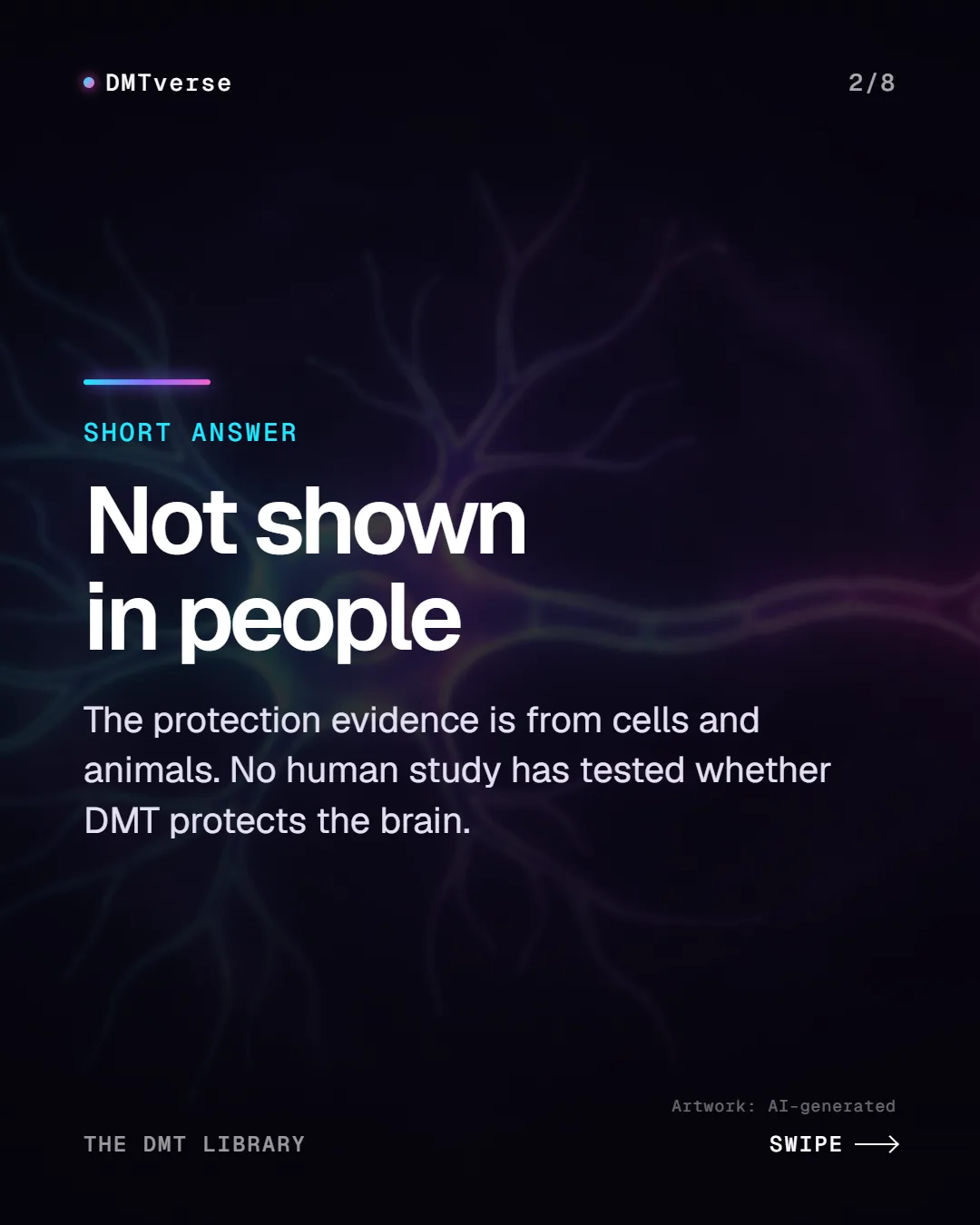
Not in people, as far as anyone knows. The idea comes from laboratory and animal work: in rats, a single dose of DMT increased connections on brain cells a day later; in dishes, DMT helped human stem-cell-derived neurons and immune cells survive severe oxygen loss through the sigma-1 receptor; and in rat stroke models, DMT-treated animals had smaller brain injuries. No study has shown that DMT protects the human brain. The only human work so far is a safety study in healthy volunteers, done as groundwork for possible stroke research. This is preclinical science, not a benefit, and not a reason to use DMT.
THE SHORT VERSION · SWIPE
On this page 9 sections
Search for DMT and you will soon meet the claim that it is “neuroprotective”: that it shields brain cells from damage. The claim is not invented: there is laboratory research behind it. But almost all of it is in cells and rats, much of it comes from one network of collaborating researchers, and the conditions in those experiments are very different from anything in a human brain. This article sets out what was actually tested, how, and what it can and cannot tell us.
Preclinical research, not a health claim
Everything below describes cell-culture and animal experiments, plus one human safety study. None of it shows that DMT protects, repairs or benefits the human brain, and nothing here is advice to use it. DMT is a controlled substance in Canada. Evidence labels used below: established (shown in peer-reviewed studies and not seriously disputed), preliminary (early, small, animal-only or indirect) and unresolved (an open question).
Is DMT neuroprotective, and what would that mean?
In medicine, a neuroprotective treatment is one that reduces the death or damage of nerve cells after an injury such as a stroke, or slows it in a disease. A result in a dish or in rodents is only a first step; a treatment has to be tested in people before anyone can say it protects the human brain.
So the useful question is not “has anyone called DMT neuroprotective?” but “in what system, with what design, and has it been tested in people?” For DMT, the claims fall into three groups: plasticity (growing connections), cell survival under stress via the sigma-1 receptor, and injury size in animal stroke models.
Plasticity: the 2018 rat spine study
A widely cited paper is not about protection at all but about growth. In 2018, a University of California, Davis team reported that several psychedelics, DMT among them, increased the branching of nerve-cell extensions (dendrites), the growth of dendritic spines (small bumps where connections form) and the formation of synapses in cultured rat neurons (Ly et al., 2018). Evidence: preliminary (cells in a dish).
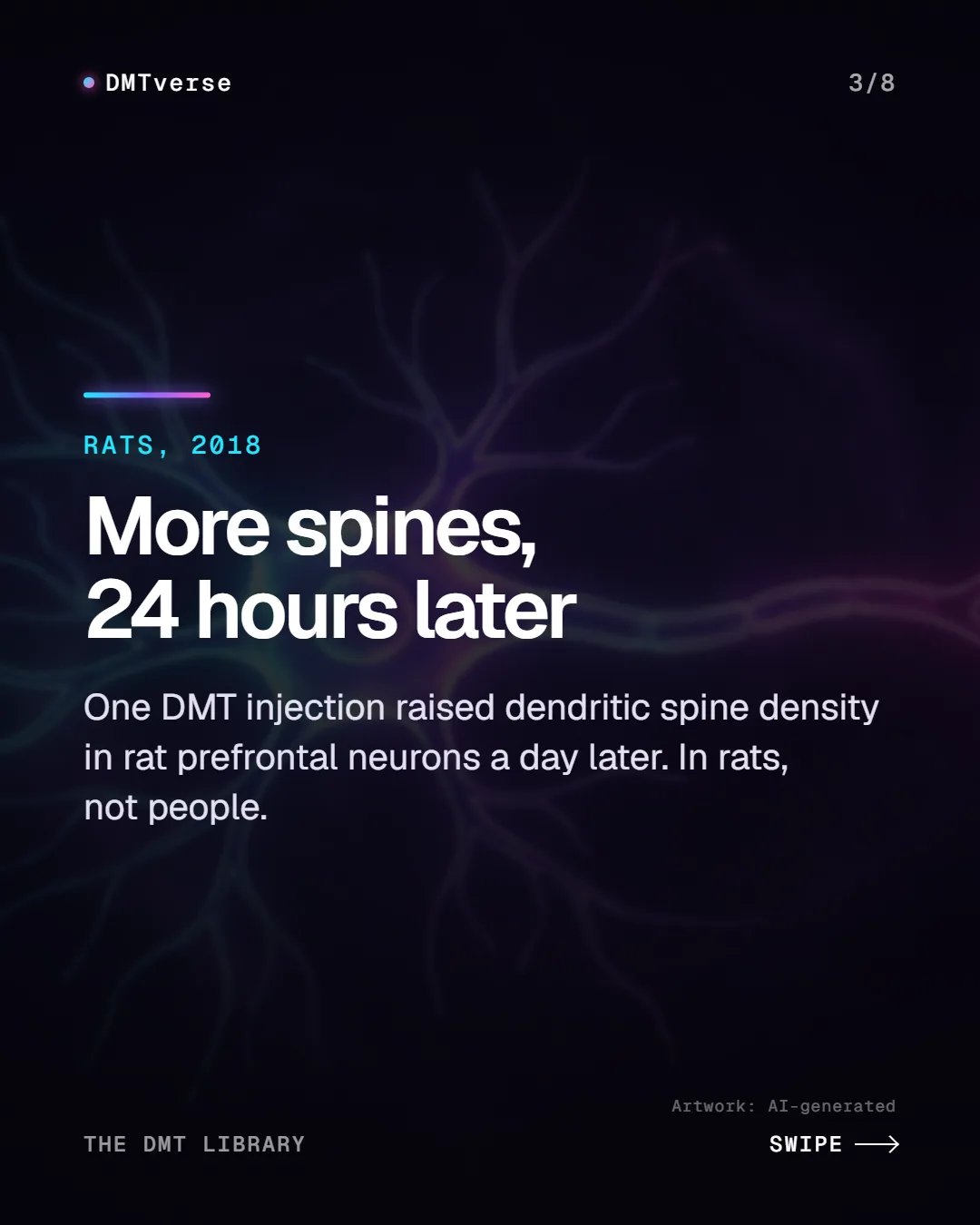
The researchers then gave adult rats a single injection of DMT (dose not reproduced here) and, using a staining method, found a significant increase in dendritic spine density on pyramidal neurons in the prefrontal cortex 24 hours later. Recordings from brain slices showed more frequent and larger spontaneous excitatory currents, a sign that the new connections were functional (Ly et al., 2018). For a plain-language walk-through, see the DMT rat brain study explained. Evidence: preliminary (rats).
In the dish, blocking the serotonin 5-HT2A receptor with ketanserin “completely abrogated” the growth effects of DMT, LSD and DOI, which points to 5-HT2A as the route (Ly et al., 2018). Note where that blocking test was done: in cultured neurons, not in the living rats. Evidence: preliminary.
The limits are substantial. The cell experiments used DMT at a high concentration that the authors chose to mimic brain levels in rats given a dose from earlier rat behavioural studies (Ly et al., 2018); that is roughly a thousand times the effect-site concentration a human pharmacology model linked to half-maximal intensity (Eckernäs et al., 2022). The animal work was in rats. And spine growth is plasticity, not protection from injury. Nobody has measured DMT-induced plasticity in a human brain. Evidence: preliminary.
A common mix-up: TrkB
A 2023 Nature Neuroscience paper reported that psychedelics bind the BDNF receptor TrkB. It tested LSD and psilocin, not DMT (Moliner et al., 2023). It is sometimes cited as if it applied to DMT. It does not, as far as that paper goes.
Sigma-1: what the cell studies found
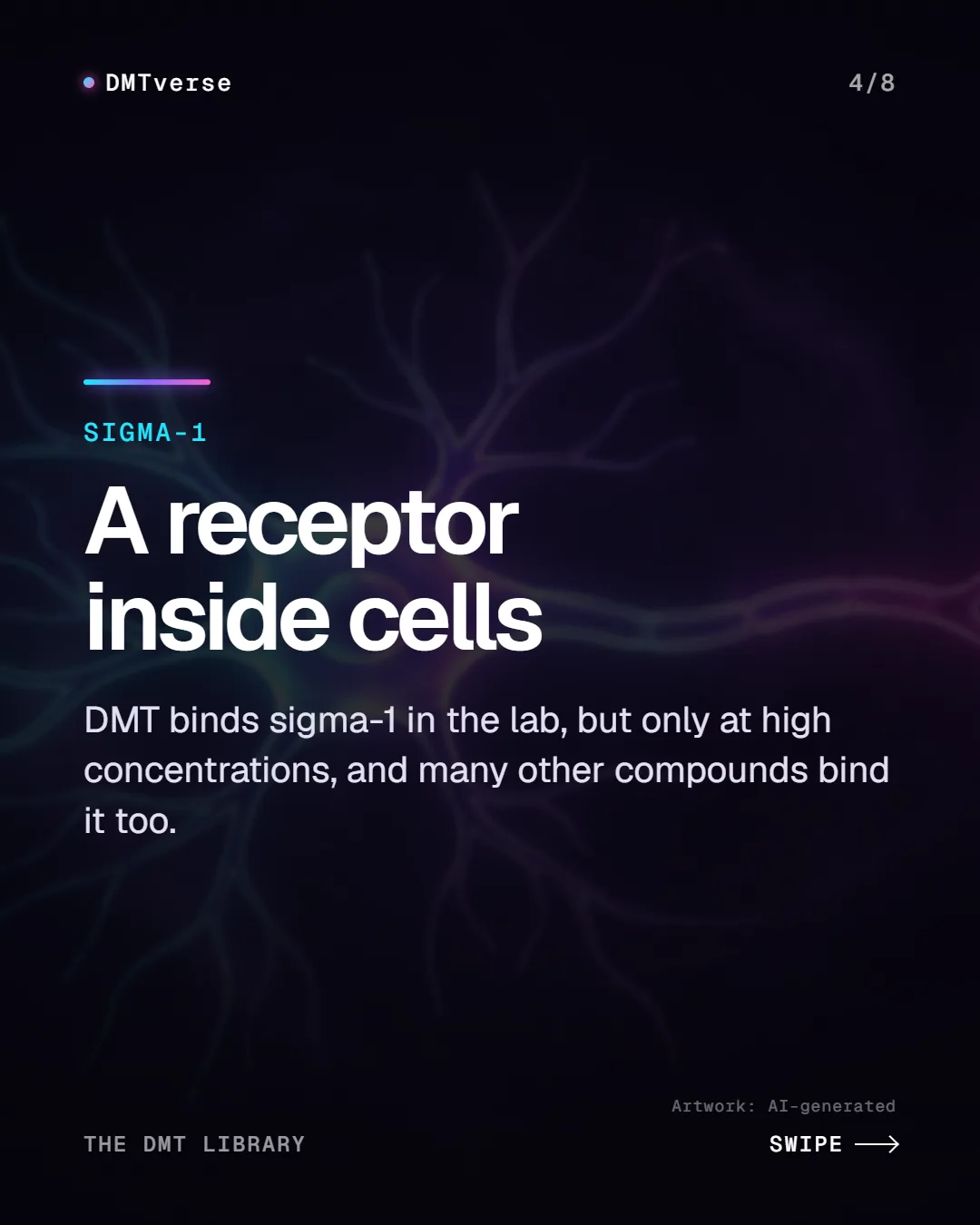
The sigma-1 receptor is a protein that sits inside cells, at the junction between the endoplasmic reticulum and the mitochondria, where it helps manage cellular stress. In 2009, a Science paper reported that DMT binds sigma-1 receptors, and that DMT made normal mice more active but not mice lacking sigma-1. The authors proposed DMT as a natural activator of the receptor (Fontanilla et al., 2009). Our DMT and the sigma-1 receptor guide covers that debate in more depth. Evidence: established that DMT binds sigma-1 in the lab.
Two caveats from a 2018 review: DMT binds sigma-1 only at what “should be considered as a high concentration”, far above what it needs at 5-HT2A, and both psychedelic and non-psychedelic compounds bind sigma-1, which makes it hard to attribute DMT’s actions to this receptor (Barker, 2018). Evidence: unresolved whether that binding matters in the human body.
Building on the 2009 finding, researchers in Hungary tested DMT on human immune cells. In 2014, DMT and 5-MeO-DMT reduced the release of inflammatory signalling molecules from human monocyte-derived dendritic cells (a type of immune cell grown from blood donations) stimulated in the dish, and gene silencing confirmed that the effect depended on sigma-1 (Szabo et al., 2014). The same group had earlier set out the broader hypothesis that DMT may have a general role in cell protection, regeneration and immunity through sigma-1 (Frecska et al., 2013). Evidence: preliminary.
Hypoxia: cells kept alive without oxygen
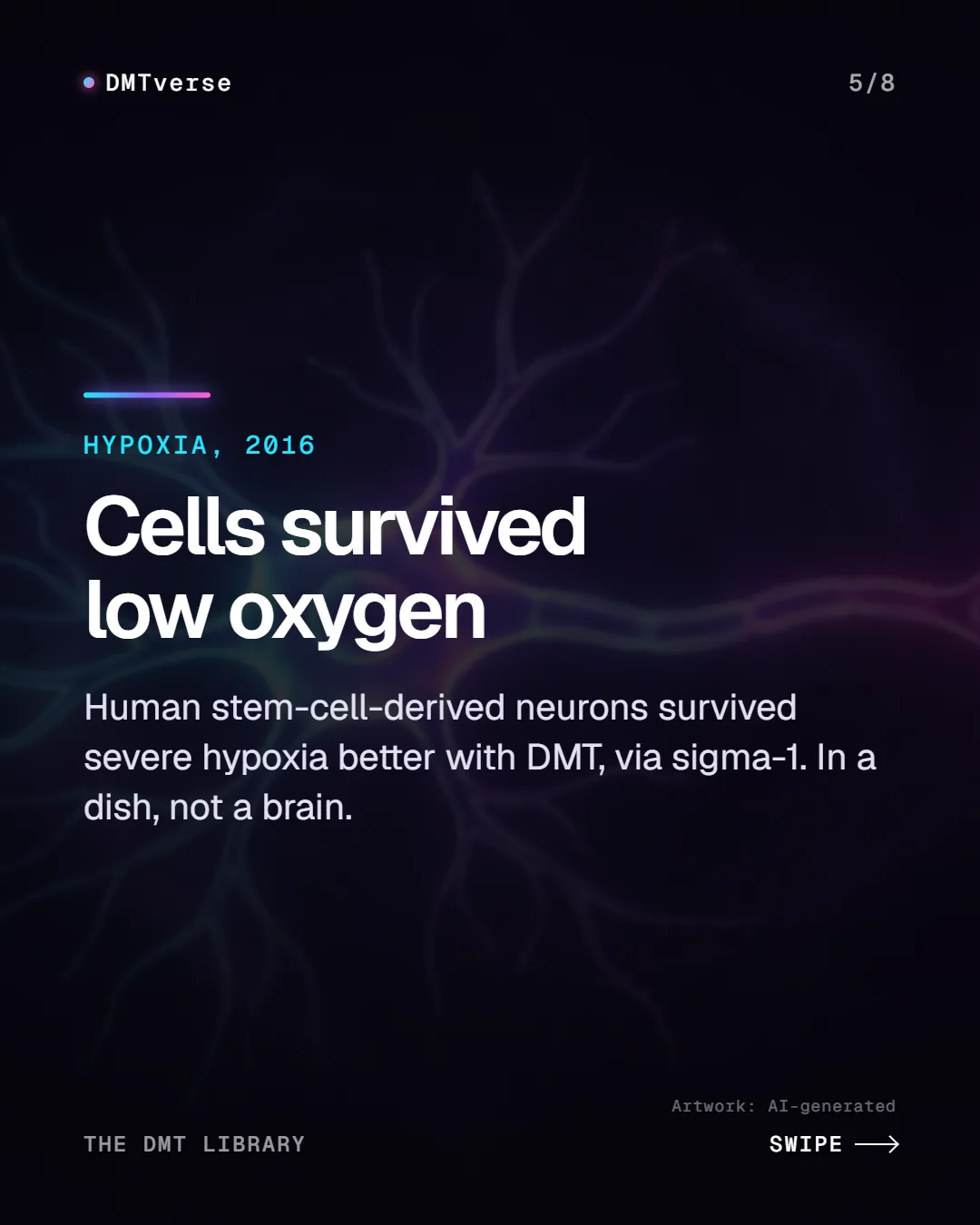
The source of most “DMT protects the brain from oxygen loss” headlines is a 2016 study (Szabo et al., 2016). The team grew human cortical neurons from induced pluripotent stem cells (adult cells reprogrammed to behave like stem cells), along with macrophages and dendritic cells derived from blood, and exposed them to severe hypoxia, meaning very low oxygen (0.5%). DMT “robustly” increased the survival of all three cell types, the effect ran through sigma-1, and it was associated with lower expression and function of HIF-1α, a protein that drives the cell’s hypoxia response (Szabo et al., 2016). Evidence: preliminary.
The authors postulated that the body might make DMT in situations of stress to limit hypoxic or ischemic injury to the brain (Szabo et al., 2016). Evidence: unresolved (a hypothesis).
However careful, a cell experiment is still a cell experiment. Cells in a dish lack blood flow, the blood-brain barrier, the liver and the processes that clear DMT from human blood very quickly (Eckernäs et al., 2022). The idea that the body releases its own DMT to protect the brain is the authors’ hypothesis, not a finding. Evidence: unresolved for any role in people.
Stroke: what happened in rats
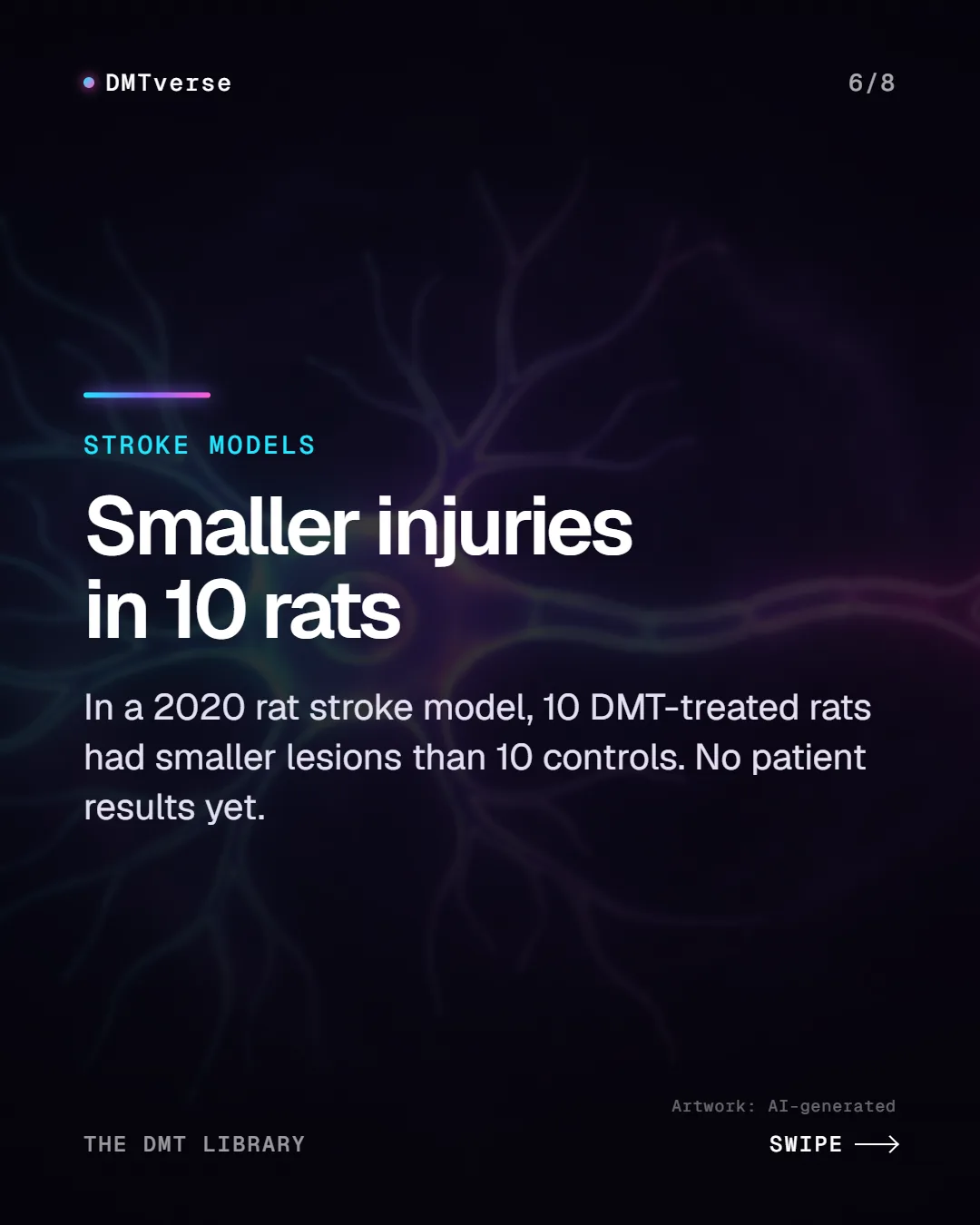
The next step was living animals. In 2020, rats had a brain artery blocked for 60 minutes to model an ischemic stroke. Ten rats received DMT and ten received a placebo solution; a third group received DMT plus a sigma-1 blocker. DMT-treated rats had smaller lesions on MRI a day later and better recovery of a trained reaching task over 30 days (in separate groups of eight). The sigma-1 blocker hindered the effect on lesion size, and markers of inflammation and cell death were lower in DMT-treated rats (Nardai et al., 2020). Evidence: preliminary (rats).
A 2021 study by a partly overlapping team used a different model, global forebrain ischemia in anaesthetised rats, made worse by triggering spreading depolarisations (waves of electrical silencing that damage tissue). DMT mitigated those waves, an effect countered by a sigma-1 blocker, and reduced the number of dying cells (Szabó et al., 2021). Evidence: preliminary (rats).
In 2025, the 2020 group reported in Science Advances that, in the same rat stroke model, DMT reduced brain swelling, restored blood-brain barrier function in cell and animal tests and reduced inflammation, partly via sigma-1 (László et al., 2025). Evidence: preliminary (rats and cells).
- 2009DMT binds and activates sigma-1; mouse activity effect needs sigma-1System Cells and miceSource Fontanilla et al.
- 2014Lower inflammatory signals from immune cells, via sigma-1System Human immune cells in a dishSource Szabo et al.
- 2016Better survival under severe hypoxia, via sigma-1System Human stem-cell-derived neurons and immune cellsSource Szabo et al.
- 2018More dendritic spines 24 hours after one doseSystem Rat neurons and ratsSource Ly et al.
- 2020Smaller lesions, better task recovery after artery blockageSystem Rats (10 per group)Source Nardai et al.
- 2021Fewer spreading depolarisations and dying cells in global ischemiaSystem Anaesthetised ratsSource Szabó et al.
- 2025Less swelling, steadier blood-brain barrier, less inflammationSystem Rats and cellsSource László et al.
How to read this: the findings point the same way, but several of these papers share authors, and we found no fully independent replication of the rat stroke results in the sources we read. A 2025 review by the core group concludes that DMT may have therapeutic potential against brain ischemia and neurodegeneration (Frecska et al., 2025); that is the authors’ interpretation of their own preclinical programme. Evidence: preliminary.
Other models are appearing. A 2026 study reported reduced neuroinflammation and behavioural improvements after DMT in a preclinical model of Parkinson’s disease (Calleja-Conde et al., 2026). We read only its abstract, which does not let us judge the design in detail. Evidence: preliminary.
Has DMT been tested for neuroprotection in people?
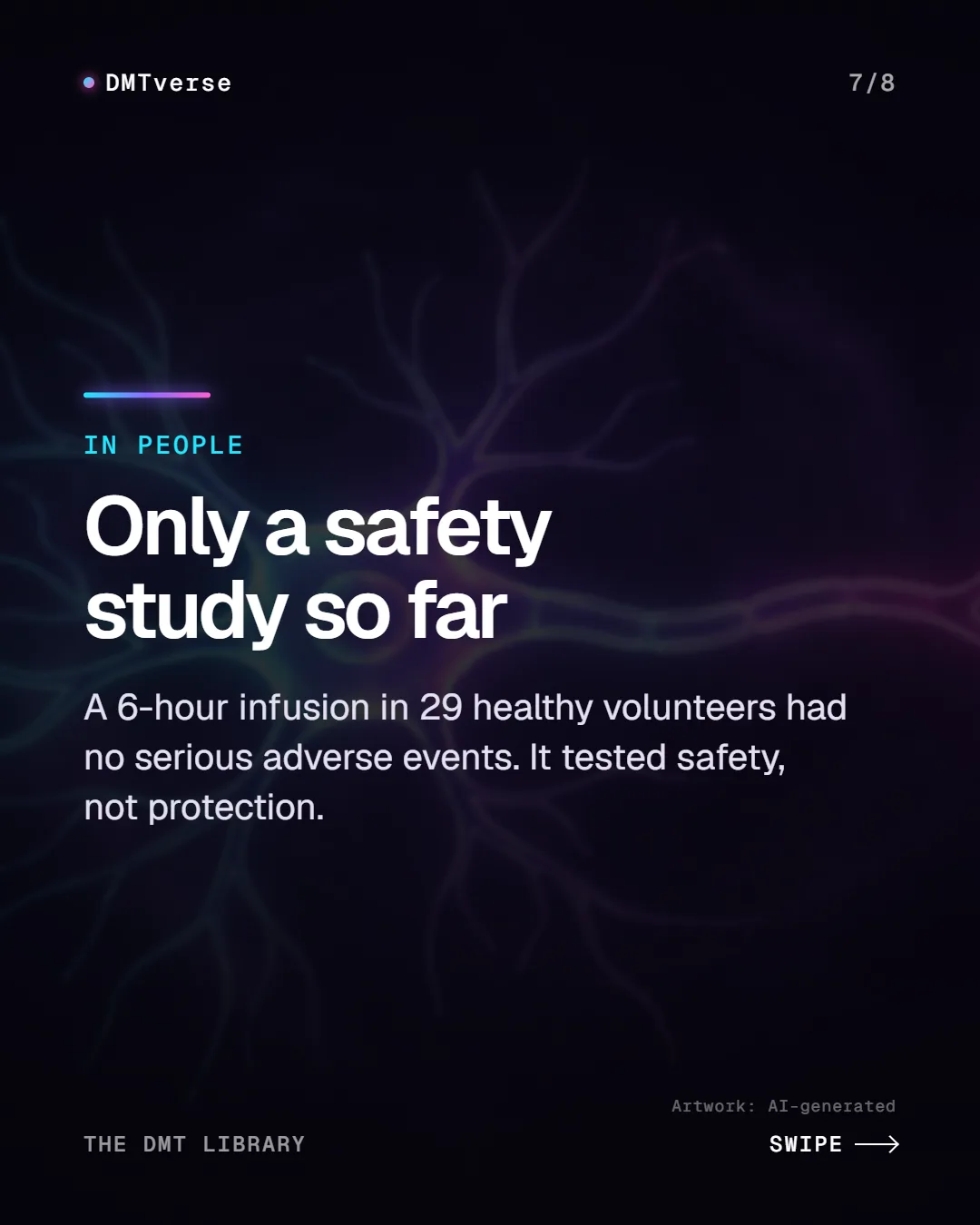
No. The closest step is safety groundwork. A randomized, double-blind, placebo-controlled study at the Centre for Human Drug Research in Leiden gave 29 healthy volunteers a short injection followed by a 6-hour intravenous DMT infusion at three ascending levels (van der Heijden et al., 2025). Evidence: established for the design.
The authors framed it as preparation for possible use in acute ischemic stroke, reasoning that DMT “presumably” stimulates plasticity. There were no serious adverse events, all adverse events were mild and self-limiting, and psychedelic effects were mild (van der Heijden et al., 2025). That study measured safety and blood levels, not any protective effect. Evidence: preliminary (one small safety study).
It is registered on ClinicalTrials.gov as a phase 1 trial in healthy people with “Stroke” listed as the condition. When we checked the record on 20 October 2026, its status was “active, not recruiting”, every primary outcome was a safety or tolerability measure, and the record had last been updated in January 2025 (ClinicalTrials.gov, NCT05559931). The 2025 Science Advances paper says DMT is under clinical evaluation in post-stroke recovery (László et al., 2025); we found no published human result on stroke outcomes. Evidence: established that no human neuroprotection data have been published, in the sources we searched.
Why the gap between rats and people matters
- Concentration. Cell studies often use levels far above anything measured in human studies, and DMT binds sigma-1 only at high concentrations (Barker, 2018; Ly, 2018).
- Timing. In the rat stroke studies DMT was given around the time of the injury, under anaesthesia and monitoring, not hours or days later.
- Clearance. In people, DMT is cleared from the blood very quickly (Eckernäs, 2022), which is why the human study used a continuous infusion.
- Independence. Much of the sigma-1 and stroke evidence comes from collaborating groups; independent replication would strengthen it.
- Outcome. Spine growth, cell survival and lesion size are laboratory measures, not proof of better function, health or wellbeing in a person.
What we still don’t know
- Whether DMT protects the human brain from any injury or disease. No human data exist (unresolved).
- Whether the body’s own DMT plays any protective role, as some researchers hypothesise (unresolved).
- Whether sigma-1 is engaged at concentrations reached in human studies (unresolved).
- Whether the rat stroke results replicate in independent laboratories (preliminary).
- Whether 5-HT2A-driven plasticity and sigma-1-driven protection can be separated from the psychedelic experience (unresolved).
The fair summary: “DMT is neuroprotective” is a laboratory hypothesis with cell and rat evidence behind it, not a property shown in people. For how DMT acts on its receptors, see what is DMT; for human clinical trials, see DMT therapy research; and for the same question about mushrooms, does psilocybin rewire the brain.
Common questions
Is DMT neuroprotective?
Not as far as anyone has shown in people. In cells and rats, DMT improved cell survival under oxygen loss and reduced injury in stroke models, largely through the sigma-1 receptor. No human study has tested whether it protects the brain.
Does DMT grow new brain cells or connections?
A 2018 study found more dendritic spines (connection points) on rat prefrontal neurons 24 hours after one DMT injection, and growth in cultured rat neurons that a 5-HT2A blocker prevented. That is plasticity in rats, not new neurons, and it has not been measured in people.
What is the sigma-1 receptor and why does it matter for DMT?
Sigma-1 is a protein inside cells that helps manage stress. DMT binds it in the lab, and several cell and rat studies link DMT’s protective effects to it. But DMT binds sigma-1 only at high concentrations, and many other compounds bind it too.
Can DMT protect the brain after a stroke?
In rats, DMT-treated animals had smaller lesions and better recovery after an artery was blocked. In people, the only work so far is a safety study of a 6-hour infusion in 29 healthy volunteers. No result on stroke patients has been published.
Does the body make DMT to protect itself during hypoxia?
That is a hypothesis proposed by the researchers behind the 2016 hypoxia study. It has not been demonstrated, and none of the studies covered here measured DMT in a living human brain.
Does the TrkB study apply to DMT?
No. The 2023 study showing psychedelics bind the BDNF receptor TrkB tested LSD and psilocin, not DMT.
Should anyone use DMT for brain health?
No study supports that. The evidence is preclinical, and DMT is a controlled substance in Canada. Questions about brain health belong with a doctor.
Shroomverse sells mushroom products. This article is general information about preclinical research on DMT and brain-cell protection. It is not medical, legal or purchasing advice, and it does not recommend any product.
SOURCES
- Psychedelics Promote Structural and Functional Neural Plasticity (Ly C, et al., Cell Reports 23(11):3170–3182, 2018), Cell Press (peer-reviewed, open access); full text via Europe PMC, PMC6082376. Accessed . Full text read. Neuritogenesis and spinogenesis in cultured rat neurons; single DMT injection in adult rats increased PFC dendritic spine density at 24 h, with increased sEPSC frequency and amplitude; ketanserin completely blocked effects in cultured neurons; the culture concentration was chosen to mimic rat brain levels after a dose used in earlier rat behavioural (antidepressant-model) studies. Doses and concentrations not reproduced.
- The hallucinogen N,N-dimethyltryptamine (DMT) is an endogenous sigma-1 receptor regulator (Fontanilla D, et al., Science 323(5916):934–937, 2009), American Association for the Advancement of Science (peer-reviewed). Accessed . Abstract read (Europe PMC). DMT bound sigma-1; hypermobility in wild-type but not sigma-1 knockout mice; proposed as an endogenous sigma-1 agonist.
- N, N-Dimethyltryptamine (DMT), an Endogenous Hallucinogen: Past, Present, and Future Research to Determine Its Role and Function (Barker SA, Frontiers in Neuroscience 12:536, 2018), Frontiers (peer-reviewed, open access); full text via Europe PMC, PMC6088236. Accessed . Full text read. Sigma-1 as an ER–mitochondria chaperone; DMT binds sigma-1 at a high concentration compared with 5-HT2A; hallucinogens and non-hallucinogens both bind sigma-1.
- Psychedelic N,N-dimethyltryptamine and 5-methoxy-N,N-dimethyltryptamine modulate innate and adaptive inflammatory responses through the sigma-1 receptor of human monocyte-derived dendritic cells (Szabo A, Kovacs A, Frecska E, Rajnavolgyi E, PLoS One 9(8):e106533, 2014), PLOS (peer-reviewed, open access); PMC4149582. Accessed . Abstract read (Europe PMC). Reduced IL-1β, IL-6, TNFα and IL-8, increased IL-10 in stimulated human moDCs; sigma-1 dependence confirmed by gene silencing.
- The Endogenous Hallucinogen and Trace Amine N,N-Dimethyltryptamine (DMT) Displays Potent Protective Effects against Hypoxia via Sigma-1 Receptor Activation in Human Primary iPSC-Derived Cortical Neurons and Microglia-Like Immune Cells (Szabo A, et al., Frontiers in Neuroscience 10:423, 2016), Frontiers (peer-reviewed, open access); PMC5021697. Accessed . Abstract read (Europe PMC). iPSC-derived human cortical neurons, moMACs and moDCs; increased survival in 0.5% O2 via sigma-1; decreased HIF-1α; authors postulate endogenous generation under stress (hypothesis).
- A possibly sigma-1 receptor mediated role of dimethyltryptamine in tissue protection, regeneration, and immunity (Frecska E, Szabo A, Winkelman MJ, Luna LE, McKenna DJ, Journal of Neural Transmission 120(9):1295–1303, 2013), Springer (peer-reviewed). Accessed . Abstract read (Europe PMC). Literature overview proposing a universal cell-protective role for DMT via sigma-1; cited as a hypothesis.
- The protective effect of DMT against neurodegeneration (Frecska E, Kovács A, Szabo A, International Review of Neurobiology 181:395–420, 2025), Elsevier (peer-reviewed book series). Accessed . Abstract read (Europe PMC). The authors’ summary of their preclinical in vitro and in vivo programme on ischemia-reperfusion injury; cited for their interpretation only.
- N,N-dimethyltryptamine reduces infarct size and improves functional recovery following transient focal brain ischemia in rats (Nardai S, et al., Experimental Neurology 327:113245, 2020), Elsevier (peer-reviewed). Accessed . Abstract read (Europe PMC). 60-minute MCAO in male Wistar rats; DMT n=10, vehicle n=10, DMT plus sigma-1 antagonist n=10; lower lesion volume on MRI at 24 h and better staircase recovery over 30 days (n=8 per group); antagonist hindered the lesion effect; lower APAF1, higher BDNF, lower TNF-α, IL-1β, IL-6. Doses not reproduced.
- N,N-Dimethyltryptamine attenuates spreading depolarization and restrains neurodegeneration by sigma-1 receptor activation in the ischemic rat brain (Szabó Í, et al., Neuropharmacology 192:108612, 2021), Elsevier (peer-reviewed). Accessed . Abstract read (Europe PMC). Global forebrain ischemia in anaesthetised rats with induced spreading depolarisations; DMT mitigated SDs (countered by NE-100) and reduced apoptotic and ferroptotic cells.
- N,N-dimethyltryptamine mitigates experimental stroke by stabilizing the blood-brain barrier and reducing neuroinflammation (László MJ, et al., Science Advances 11(33):eadx5958, 2025), AAAS (peer-reviewed, open access); PMC12346280. Accessed . Abstract read (Europe PMC). Rat tMCAO model: reduced edema, attenuated astrocyte dysfunction, restored BBB function in vitro and in vivo, reduced cytokines and microglial activation via sigma-1; states DMT is under clinical evaluation in post-stroke recovery.
- Therapeutic properties of ayahuasca component N,N-Dimethyltryptamine in a pre-clinical model of Parkinson's disease (Calleja-Conde J, et al., Experimental Neurology 403:115822, 2026), Elsevier (peer-reviewed). Accessed . Abstract read (Europe PMC). Reduced neuroinflammation, neuronal preservation and behavioural improvement in a preclinical Parkinson’s model; species and design details not given in the abstract.
- Safety, Pharmacokinetics, and Pharmacodynamics of a 6-h N,N-Dimethyltryptamine (DMT) Infusion in Healthy Volunteers: A Randomized, Double-Blind, Placebo-Controlled Trial (van der Heijden KV, et al., Clinical and Translational Science 18(5):e70234, 2025), Wiley (peer-reviewed, open access); PMC12070030. Accessed . Abstract read (Europe PMC). 29 healthy volunteers, three ascending bolus-plus-6-hour infusion regimens; framed as groundwork for acute ischemic stroke; no serious adverse events, mild self-limiting adverse events, mild psychedelic effects; registered as NCT05559931. Regimens not reproduced.
- Single and Repeat Doses of DMT in Healthy Subjects (NCT05559931), ClinicalTrials.gov, U.S. National Library of Medicine. Accessed . Registry record read via the ClinicalTrials.gov API. Phase 1, randomized, double-masked, healthy subjects, condition listed as Stroke; Centre for Human Drug Research, Leiden; status active, not recruiting; primary outcomes all safety and tolerability; last update posted 2025-01-28.
- Psychedelics promote plasticity by directly binding to BDNF receptor TrkB (Moliner R, et al., Nature Neuroscience 26(6):1032–1041, 2023), Springer Nature (peer-reviewed, open access); PMC10244169. Accessed . Abstract read (Europe PMC). TrkB binding shown for LSD and psilocin; DMT not among the compounds named.
- Population pharmacokinetic/pharmacodynamic modeling of the psychedelic experience induced by N,N-dimethyltryptamine – Implications for dose considerations (Eckernäs E, et al., Clinical and Translational Science 15(12):2928–2937, 2022), Wiley (peer-reviewed, open access); PMC9747126. Accessed . Abstract read (Europe PMC), rechecked 20 October 2026. Effect-site concentration for half-maximal intensity in 13 healthy volunteers, and a very high estimated clearance; used for the order-of-magnitude comparison with the Ly 2018 culture concentration (Ly’s maximum culture concentration, from its full text, is roughly a thousand times higher) and for fast clearance.
CHANGES
- : Linked glossary definitions.
- : Published. All sources opened and checked on this date (Europe PMC abstracts and full text; ClinicalTrials.gov record).
- : Editorial review: removed evaluative wording (“encouraging”, “interesting”, “well-designed”) not supported by abstract-only reading; sourced the fast-clearance point to Eckernäs 2022 and softened an unsourced FAQ claim; matched the Ly 2018 concentration wording to its full text; split long paragraphs, defined terms, added evidence labels and links to the sigma-1 and rat-study guides; put the primary keyword in an H2.



