THE SHROOMVERSE JOURNAL ✳ 13 MIN READ
Ayahuasca, ibogaine and peyote: how three traditional psychedelics differ in chemistry, culture, law and risk
Topic: DMT
Published Updated
Listen: the 3-minute version
AI-narrated summary of this article
Short answer, checked 20 October 2026
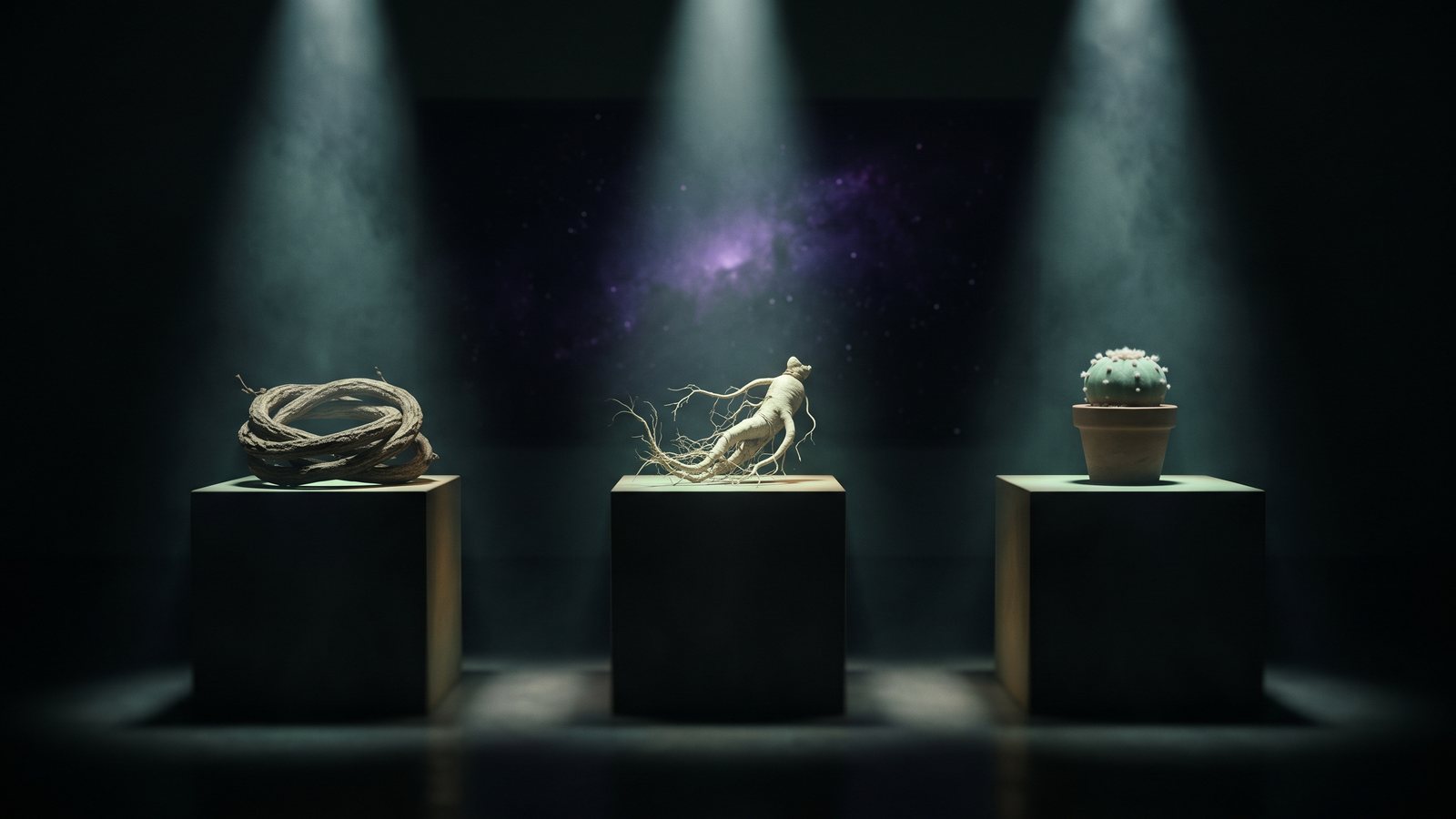
Ayahuasca, ibogaine and peyote are three different things. Ayahuasca is an Amazonian brew whose DMT acts at serotonin receptors; ibogaine is a single alkaloid tied to the Bwiti tradition of Gabon that acts on many targets; peyote is a cactus whose mescaline acts at the 5-HT2A receptor. Their legal status in Canada differs, and ibogaine stands apart for a documented risk of dangerous heart-rhythm changes and reported deaths.
THE SHORT VERSION · SWIPE
On this page 9 sections
People often lump these three together as “plant medicines”. Chemically, culturally and legally they have little in common beyond producing powerful altered states. This guide compares them side by side, using peer-reviewed studies and the text of Canadian law. Each factual paragraph ends with an evidence label. For the basics of the brew itself, read what is ayahuasca first.
Education only, not guidance
This article describes published research, traditions and law. It gives no amounts, no preparation and no advice on use, and it does not describe any effect as a benefit. Plants are named only where a tradition or a law names them. Evidence labels: established (shown in peer-reviewed studies and not seriously disputed), preliminary (early, small, animal-only or indirect) and unresolved (an open question).
Ayahuasca vs ibogaine vs peyote: what are the active compounds?
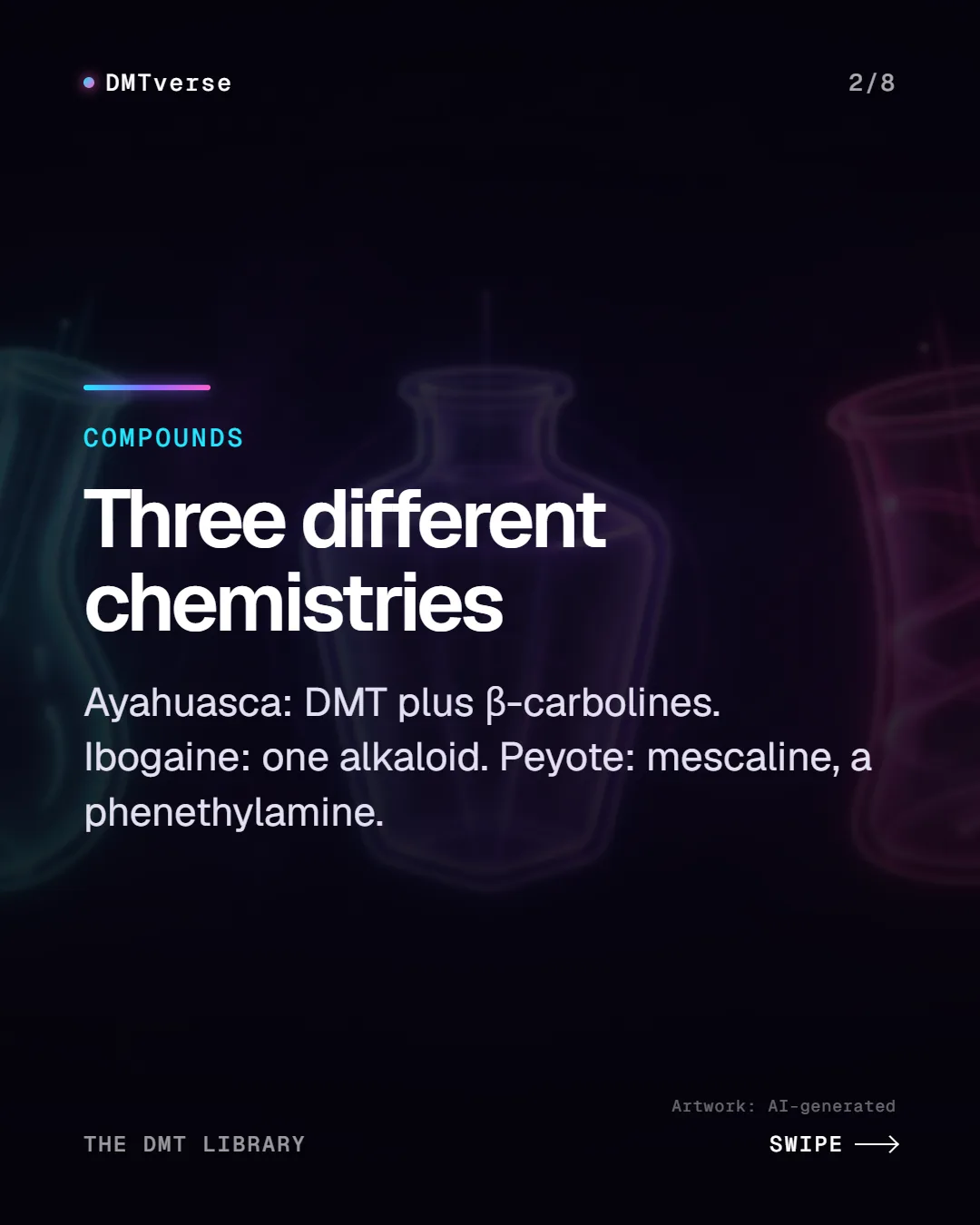
Ayahuasca combines DMT (N,N-dimethyltryptamine, a short-acting psychedelic) with β-carbolines (beta-carbolines), a family of alkaloids that includes harmine, harmaline and tetrahydroharmine. On its own, swallowed DMT is broken down by the enzyme monoamine oxidase (MAO) before it reaches the brain. The β-carbolines inhibit MAO, which in a controlled trial appeared to act mainly in the gut and liver, letting DMT reach the circulation (Riba et al., 2003). Evidence: established.
Ibogaine is a single indole alkaloid, not a brew. Its effects are complicated by its main breakdown product, noribogaine, which is also psychoactive and is longer lived; long-lasting effects are attributed to it (Koenig and Hilber, 2015; Brunt, 2026). Mescaline is a phenethylamine, a different chemical family from DMT and ibogaine, and is the main psychoactive alkaloid of peyote, which also contains other alkaloids (Doesburg-van Kleffens et al., 2023). Evidence: established.
| Ayahuasca | Ibogaine | Peyote | |
|---|---|---|---|
| What it is | A multi-compound brew | A single alkaloid | A cactus |
| Key compounds | DMT plus β-carbolines | Ibogaine and its metabolite noribogaine | Mescaline, with other alkaloids |
| Main target reported | 5-HT2A (DMT); MAO inhibition (β-carbolines) | Many: kappa-opioid, NMDA, transporters, nicotinic | 5-HT2A |
| Timing in studies | Peak effects at 1.5–2 hours | Plasma half-life 4–7 hours; QT effects can last days | Mean effect duration 11.1 hours |
| Tradition | Amazonian; Brazilian churches | Bwiti, Gabon | Native American Church |
| Canada (CDSA) | DMT, harmaline, harmalol in Schedule III | Not in the CDSA; on the Prescription Drug List | Mescaline in Schedule III, “but not peyote” |
| Signature risk | Vomiting; drug interactions via MAO | QT prolongation, arrhythmia, deaths | Nausea, vomiting, blood pressure rise |
Which receptors do they act on, and how long do effects last?
DMT is a 5-HT2A agonist, meaning it activates the serotonin 2A receptor that classic psychedelics share. In a double-blind, placebo-controlled trial in 18 experienced volunteers, ayahuasca’s subjective effects peaked between 1.5 and 2 hours, and the peak matched the time of highest DMT in the blood (Riba et al., 2003). Doses are not reproduced here. Evidence: established.
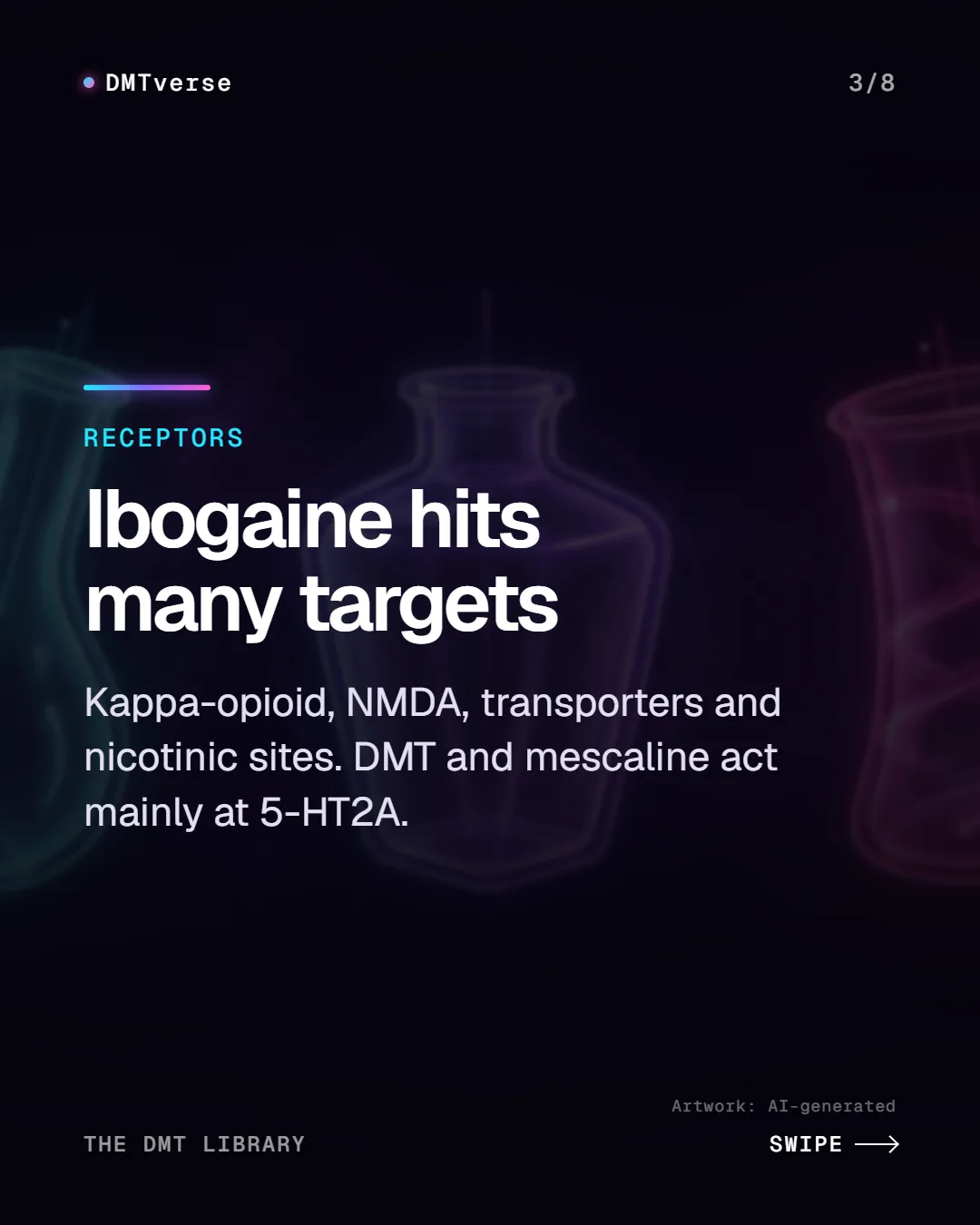
Ibogaine is different in kind. Reviews describe it acting at the kappa-opioid receptor (an opioid receptor linked to dysphoria and altered perception), as a blocker of the NMDA glutamate receptor (the target of ketamine), at serotonin and dopamine transporters and at nicotinic receptors (Mitchell and Anderson, 2024; Brunt, 2026). One review notes it has moderate-to-weak affinity for a wide spectrum of targets (Wasko et al., 2018). Evidence: established that it is multi-target; which target drives which effect is preliminary.
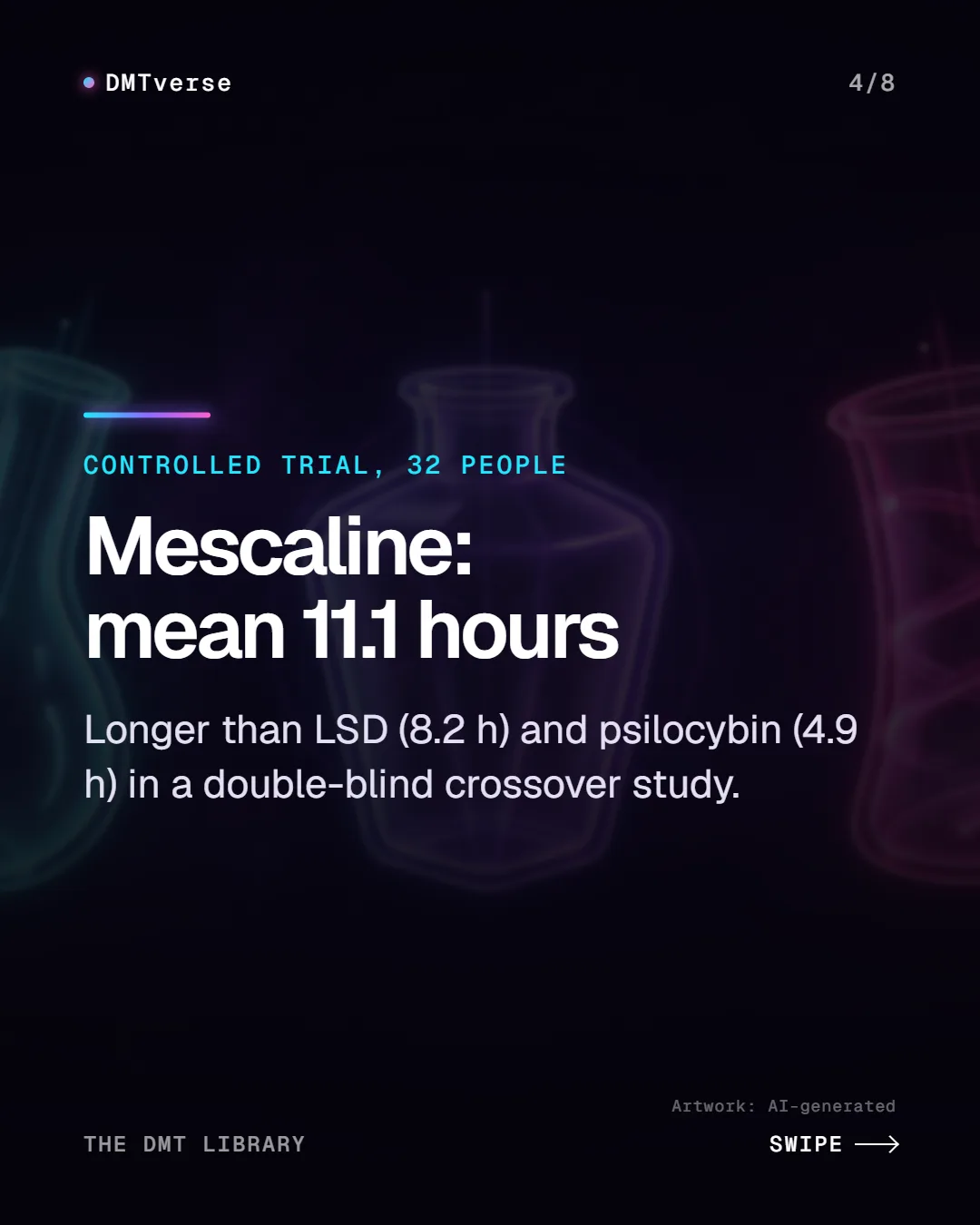
Ibogaine’s plasma half-life is about 4 to 7 hours, but heart-rhythm changes after a single intake have lasted several days (Koenig and Hilber, 2015). Mescaline, like DMT, activates 5-HT2A (Doesburg-van Kleffens et al., 2023). In a randomized, double-blind crossover trial in 32 healthy people, mescaline’s effects lasted longest (mean 11.1 hours), against 8.2 for LSD and 4.9 for psilocybin, with no clear difference in the kind of altered state (Ley et al., 2023). Evidence: established for these study conditions.
Where do these traditions come from?
Ayahuasca in the Amazon and beyond
A 2024 review describes ayahuasca as used ceremonially in the Amazon Basin for at least hundreds of years, and widely today in shamanic and religious settings in and beyond South America (Mitchell and Anderson, 2024). How far back drinking goes is debated by historians; our ayahuasca explainer covers that history, and Santo Daime and the UDV covers the Brazilian churches. Evidence: established for current use; its age is unresolved.
Iboga and the Bwiti tradition of Gabon
Iboga, a West African shrub, is central to Bwiti, a spiritual tradition of Gabon and Cameroon. A review describes its use by Bwiti and Mbiri groups for centuries in religious ceremonies (Wasko et al., 2018), and other reviewers describe initiation rituals at the high end of use (Koenig and Hilber, 2015). Ibogaine itself was later sold as a medicine in France before being withdrawn, and from the 1960s it was promoted in the United States as an addiction treatment (Wasko et al., 2018). Evidence: established.
Peyote and the Native American Church
Peyote use spread among Indigenous peoples of North America from the 1870s and is central to the rituals of the Native American Church, founded in 1914, where the cactus is understood as a teacher rather than a drug (Doesburg-van Kleffens et al., 2023). In the United States, federal law states that use, possession or transport of peyote by an Indian for bona fide traditional ceremonial purposes is lawful and cannot be prohibited by the federal government or any state (42 U.S.C. §1996a). Evidence: established.
Are ayahuasca, ibogaine and peyote legal in Canada?
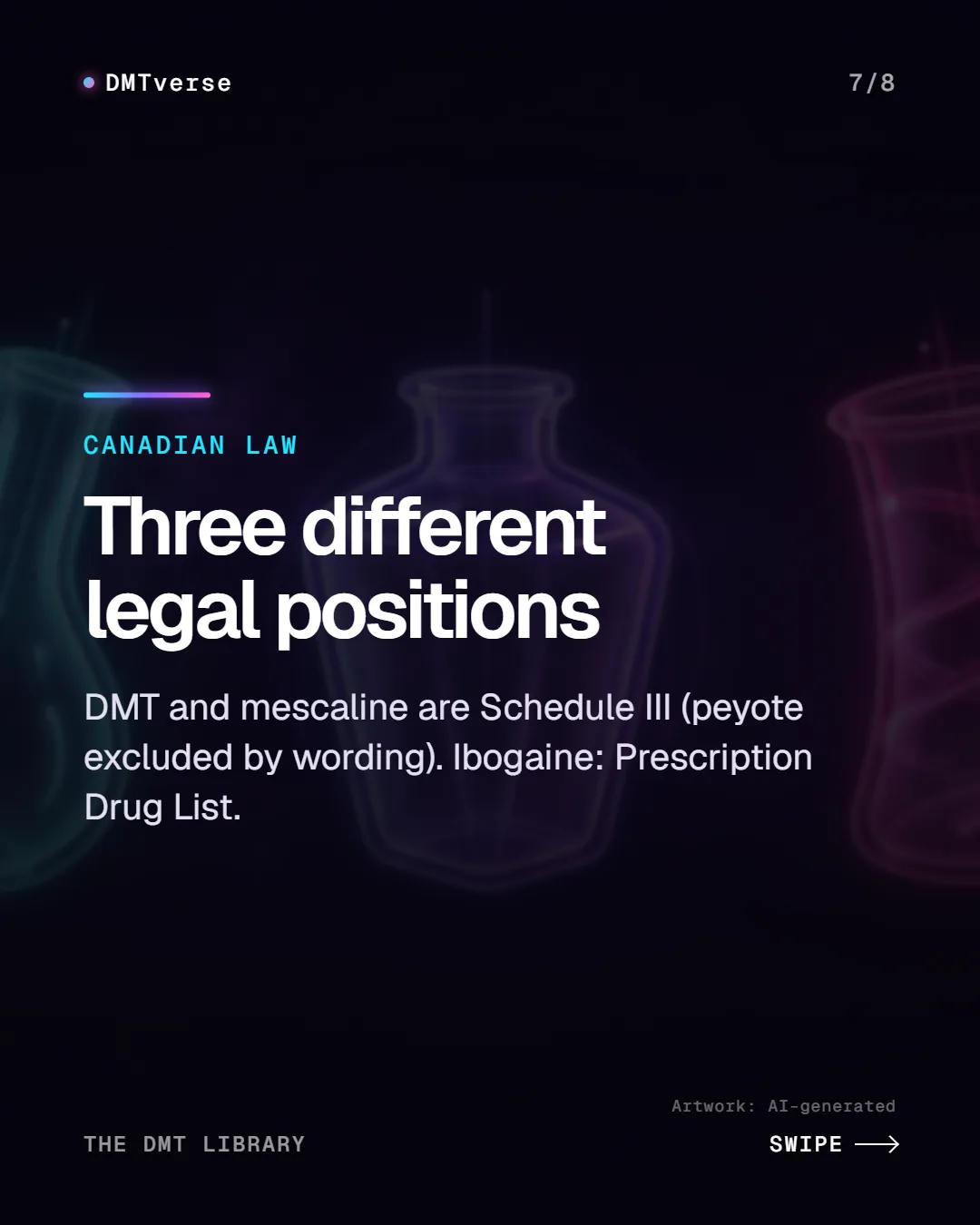
They sit in three different places. Schedule III of the Controlled Drugs and Substances Act lists DMT as item 7, harmaline as item 9 and harmalol as item 10, each with any salt. Harmine, the main β-carboline measured in ayahuasca, is not named in the Act (Justice Laws, CDSA). Because DMT is scheduled, ayahuasca falls under the Act; religious groups have sought section 56 exemptions, covered in our DMT and Canadian law guide. Evidence: established.
Mescaline is Schedule III item 17, worded “and any salt thereof, but not peyote (lophophora)”. Ibogaine is not in the Act at all. Instead, “ibogaine or its salts or derivatives or analogues” has been on Health Canada’s Prescription Drug List since 16 May 2017 (Prescription Drug List), and a search of Health Canada’s Drug Product Database on 20 October 2026 returned no product with ibogaine as an active ingredient (Drug Product Database). The Act we read was current to 30 September 2026 (Justice Laws, CDSA). This is general information, not legal advice. Evidence: established.
What does the research show so far?
Ayahuasca has the deepest clinical record of the three. In a double-blind, placebo-controlled trial in 29 people with treatment-resistant depression, depression scores were lower in the ayahuasca group at days 1, 2 and 7 (Palhano-Fontes et al., 2019). A 2026 review of 26 registered trials of DMT, ayahuasca and DMT combined with harmine found most were phase I safety studies in healthy volunteers (Stojanović et al., 2026). Evidence: preliminary, from one small controlled trial.
Ibogaine evidence comes mostly from case reports, open-label and observational studies, with a few placebo-controlled trials of noribogaine (Brunt, 2026). A 2023 systematic review found some efficacy for substance use disorders but called its cardiotoxicity and mortality worrying (Mosca et al., 2023). Evidence: preliminary.
A Stanford study gave magnesium with ibogaine to 30 veterans with brain injuries and reported large changes on disability, PTSD and depression scales; it had no control group, and the authors say controlled trials are needed (Cherian et al., 2024). A 2026 critique argues the study was methodologically weak and departed from its registration (Gorman, 2026). Evidence: preliminary.
Mescaline research is thinner still. A 2026 systematic review found 66 relevant studies but only 10 suitable for analysis, and called the literature limited and of highly variable quality (Shaw et al., 2026). The best-controlled modern data come from healthy volunteers, not patients (Ley et al., 2023). Evidence: preliminary.
What are the documented risks of each?
For ayahuasca, the largest dataset is the Global Ayahuasca Survey of 10,836 self-selected people. Acute physical effects, mainly vomiting, were reported by 69.9%, and 2.3% reported needing medical attention afterwards. Adverse mental health effects in the following weeks or months were reported by 55.9%, and about 12% sought professional support for them (Bouso et al., 2022). Because the β-carbolines inhibit MAO, interactions with other drugs are a separate concern, covered in our ayahuasca guide. Evidence: preliminary, from a self-selected survey.
Why is ibogaine’s heart risk different?
The QT interval is the stretch of the heartbeat, seen on an electrocardiogram (ECG), in which the ventricles recharge. When a drug prolongs it, the risk rises of torsades de pointes, a chaotic rhythm that can become fatal. Lab studies show ibogaine blocks hERG potassium channels, which carry the current that ends each heartbeat; reviewers propose this as the mechanism for the QT prolongation seen in case reports (Koenig and Hilber, 2015). Evidence: established for the channel block; the clinical link is supported by case reports.
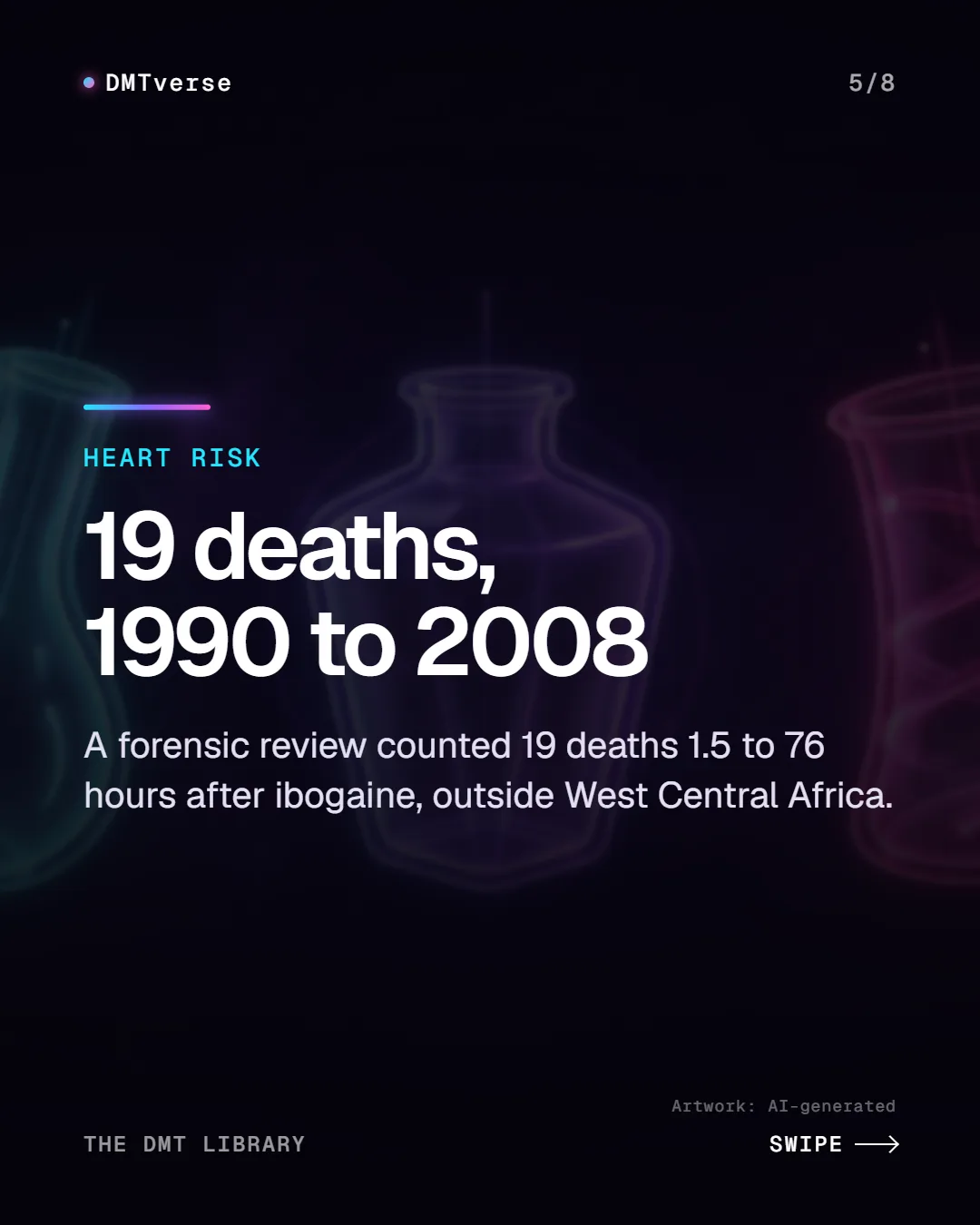
Deaths are documented. A forensic review of every known fatality outside West Central Africa from 1990 to 2008 counted 19 people who died 1.5 to 76 hours after taking ibogaine. Pre-existing illness, mainly cardiovascular, or other substances explained or contributed to 12 of the 14 deaths with adequate post-mortem data (Alper et al., 2012). Evidence: established.
A 2026 review adds that case reports show these events in people without known heart conditions, and that genetic differences in the liver enzyme CYP2D6 may raise risk for some (Brunt, 2026). Evidence: established that deaths and arrhythmias are associated; individual causation is not always clear.
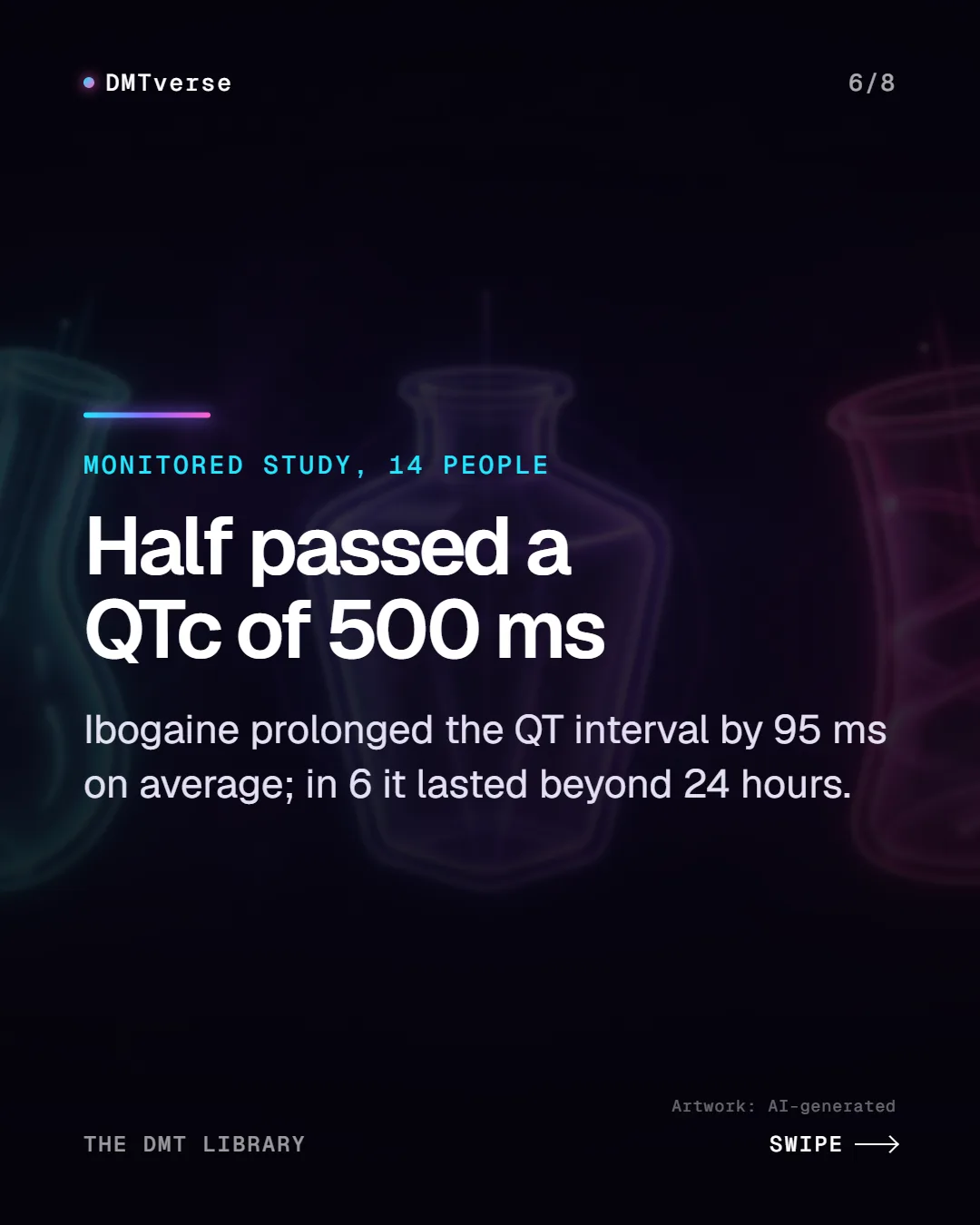
Even under hospital monitoring the effect is large. In a Dutch open-label study of 14 people with opioid use disorder, the QTc (heart-rate corrected QT) rose by 95 milliseconds on average, half the participants passed 500 milliseconds, and in six the prolongation lasted beyond 24 hours. No torsades de pointes occurred, but all had severe transient ataxia, losing the ability to walk unaided (Knuijver et al., 2022). Evidence: preliminary, from one small study.
Mescaline’s profile looks more like other classic psychedelics. In the healthy-volunteer trial, tolerability was comparable to LSD and psilocybin, with slightly more adverse effects 12 to 24 hours later (Ley et al., 2023). Across older and naturalistic reports, raised blood pressure, headache, nausea and vomiting were frequently reported (Shaw et al., 2026). Evidence: preliminary.
If someone is in danger
Call 911 for immediate danger or urgent medical help, including if someone is unconscious, not breathing or having a seizure. In Ontario, the Ontario Poison Centre is at 1-800-268-9017; every province has a poison centre, listed by SickKids (AboutKidsHealth). If you or someone you know is thinking about suicide, call or text 9-8-8, 24 hours a day (Government of Canada). See also our safety page and how to help someone having a bad trip.
Is peyote endangered?
Peyote is listed as Vulnerable on the IUCN Red List and is protected in Mexico, according to a population study by cactus ecologists. They list the main threats in the United States as habitat loss, over-harvesting through the legal trade that supplies the Native American Church, and poaching, while noting that the impacts have never been quantified. Harvested plants take at least 6 to 8 years to regenerate, and up to 10 years to grow from seed to harvestable size (Ermakova et al., 2020). The study is a preprint, not peer reviewed. Evidence: preliminary.
That creates a real tension: the plant at the centre of a protected religious practice grows slowly in a small range, and demand has grown. The same authors call for conservation and restoration involving Native Americans and local landowners (Ermakova et al., 2020). Evidence: preliminary.
What we still don’t know
- Whether ayahuasca’s depression findings hold up in larger, independent controlled trials.
- Which of ibogaine’s many targets produce which effects, and whether its heart risk can be reliably screened out.
- Whether ibogaine’s reported benefits survive placebo-controlled trials; the recent veteran study had no control group.
- How mescaline compares with other psychedelics in patients rather than healthy volunteers.
- How fast wild peyote populations are declining; nobody has measured it.
For how ayahuasca relates to DMT on its own, read ayahuasca vs DMT. For DMT’s chemistry, start with the pillar guide, what is DMT.
Common questions
What is the difference between ayahuasca and ibogaine?
Ayahuasca is an Amazonian brew combining DMT with β-carbolines that block the enzyme that would break DMT down; DMT acts mainly at the serotonin 5-HT2A receptor. Ibogaine is a single alkaloid from the Bwiti tradition of Gabon that acts on many targets, including kappa-opioid and NMDA receptors. Ibogaine also carries a documented risk of dangerous heart-rhythm changes.
How is peyote different from ayahuasca?
Peyote is a cactus whose main psychoactive alkaloid is mescaline, a phenethylamine. Ayahuasca’s main psychedelic is DMT, a tryptamine. Both act at the 5-HT2A receptor, but in a controlled trial mescaline’s effects lasted a mean of 11.1 hours, while ayahuasca’s effects peaked at 1.5 to 2 hours in another trial.
Why is ibogaine considered dangerous for the heart?
Ibogaine blocks hERG potassium channels in heart cells, which can prolong the QT interval and lead to torsades de pointes, a potentially fatal arrhythmia. A forensic review counted 19 deaths linked in time to ibogaine between 1990 and 2008, and a monitored Dutch study found half of 14 patients passed a QTc of 500 milliseconds.
Is ibogaine legal in Canada?
Ibogaine is not listed in the Controlled Drugs and Substances Act. It has been on Health Canada’s Prescription Drug List since 16 May 2017, and a search of the Drug Product Database on 20 October 2026 found no product with it as an active ingredient. This is general information, not legal advice.
Is peyote legal in Canada?
Mescaline is item 17 of Schedule III of the Controlled Drugs and Substances Act, but the entry’s wording excludes “peyote (lophophora)”. What that means in any particular situation is a legal question; this is general information, not legal advice.
Who uses peyote religiously?
Peyote is central to the rituals of the Native American Church, founded in 1914. In the United States, federal law protects use, possession and transport of peyote by an Indian for bona fide traditional ceremonial purposes.
Is peyote endangered?
Peyote is listed as Vulnerable on the IUCN Red List, according to a population study by cactus ecologists that names habitat loss, over-harvesting and poaching as threats. Harvested plants take years to regrow. That study is a preprint, and the actual rate of decline has never been measured.
Which of the three has the strongest research?
Ayahuasca, narrowly: one small double-blind, placebo-controlled trial in treatment-resistant depression, plus a growing set of mostly early-phase trials. Ibogaine research is mainly open-label and observational, and mescaline research is limited and of variable quality. None is an approved treatment in Canada.
Shroomverse sells mushroom products. This article is general information about ayahuasca, ibogaine and peyote. It is not medical, legal or purchasing advice, and it does not recommend any product.
SOURCES
- Controlled Drugs and Substances Act (S.C. 1996, c. 19), full text, Schedule III, Government of Canada, Justice Laws Website. Accessed . Full text read. Schedule III item 7 DMT, item 9 harmaline, item 10 harmalol, item 17 mescaline “but not peyote (lophophora)”; harmine and ibogaine not named anywhere in the Act. Consolidation current to 2026-09-30, last amended 2026-07-18.
- Prescription Drug List: Human Use, Health Canada. Accessed . Listing read: “Ibogaine or its salts or derivatives or analogues”, effective date 2017-05-16. The page states the list does not include ingredients in the CDSA schedules.
- Drug Product Database API, active ingredient search: ibogaine, Health Canada. Accessed . Record query: returned an empty result (no product with ibogaine as an active ingredient) on 2026-10-20.
- 42 U.S. Code § 1996a: Traditional Indian religious use of peyote, Cornell Law School, Legal Information Institute. Accessed . Statute text read: subsection (b)(1) makes use, possession or transportation of peyote by an Indian for bona fide traditional ceremonial purposes lawful.
- Human pharmacology of ayahuasca: subjective and cardiovascular effects, monoamine metabolite excretion, and pharmacokinetics (Riba J, et al., J Pharmacol Exp Ther 306(1):73–83, 2003), American Society for Pharmacology and Experimental Therapeutics (peer-reviewed). Accessed . Abstract read via Europe PMC. Double-blind placebo-controlled, 18 experienced volunteers; DMT plus MAO-inhibiting β-carbolines (harmine, harmaline, tetrahydroharmine); effects peaking at 1.5–2 h; MAO inhibition mainly peripheral. Doses not reproduced.
- Rapid antidepressant effects of the psychedelic ayahuasca in treatment-resistant depression: a randomized placebo-controlled trial (Palhano-Fontes F, et al., Psychological Medicine 49(4):655–663, 2019), Cambridge University Press (peer-reviewed); PMC6378413. Accessed . Abstract read via Europe PMC. Parallel-arm double-blind RCT, 29 patients; MADRS lower than placebo at days 1, 2 and 7.
- Registered Clinical Trials of Ayahuasca and DMT: A Scoping Review (Stojanović T, et al., Clinical Pharmacology and Therapeutics, 2026), Wiley (peer-reviewed); PMC13264465. Accessed . Abstract read via Europe PMC. 26 registered trials of DMT, ayahuasca and DMT with harmine; mostly phase I in healthy volunteers.
- Adverse effects of ayahuasca: Results from the Global Ayahuasca Survey (Bouso JC, et al., PLOS Global Public Health 2(11):e0000438, 2022), PLOS (peer-reviewed, open access); PMC10021266. Accessed . Abstract read via Europe PMC. Online survey, n=10,836; acute physical adverse effects 69.9% (mainly vomiting), 2.3% needing medical attention; adverse mental health effects 55.9%, about 12% sought professional support.
- Psychedelic therapies reconsidered: compounds, clinical indications, and cautious optimism (Mitchell JM, Anderson BT, Neuropsychopharmacology 49(1):96–103, 2024), Springer Nature (peer-reviewed); PMC10700471. Accessed . Full text read. Ibogaine and the Bwiti tradition of Gabon; ibogaine’s targets (dopamine and serotonin sites, NMDA and α3β4 nicotinic antagonism, kappa-opioid agonism); ayahuasca used ceremonially in the Amazon Basin for at least hundreds of years.
- DARK Classics in Chemical Neuroscience: Ibogaine (Wasko MJ, Witt-Enderby PA, Surratt CK, ACS Chemical Neuroscience 9(10):2475–2483, 2018), American Chemical Society (peer-reviewed). Accessed . Abstract read via Europe PMC. Centuries of ceremonial use by Bwiti and Mbiri groups; sold in France then withdrawn; 1960s US addiction claims; moderate-to-weak affinity for many targets; linked to deaths by cardiac arrest.
- Rare but relevant: Ibogaine and cardiovascular complications: prolonged QT interval and ventricular arrhythmias (Brunt TM, Addiction 121(6):1616–1621, 2026), Wiley (peer-reviewed, open access); PMC13155281. Accessed . Full text read. Evidence base mainly observational and open-label with limited RCTs of noribogaine; kappa-opioid, NMDA and transporter actions; QTc prolongation and torsades in case reports including people without cardiac disease; CYP2D6 variability. Doses not reproduced.
- The anti-addiction drug ibogaine and the heart: a delicate relation (Koenig X, Hilber K, Molecules 20(2):2208–2228, 2015), MDPI (peer-reviewed, open access); PMC4382526. Accessed . Full text read. hERG channel inhibition as proposed mechanism of QT prolongation; plasma half-life 4–7 h; QT prolongation lasting several days; noribogaine long-lived; initiation rituals in West Central Africa.
- Fatalities temporally associated with the ingestion of ibogaine (Alper KR, Stajić M, Gill JR, Journal of Forensic Sciences 57(2):398–412, 2012), Wiley (peer-reviewed). Accessed . Abstract read via Europe PMC. 19 known fatalities outside West Central Africa, 1990–2008, 1.5–76 h after intake; comorbidity or other substances explained or contributed in 12 of 14 with adequate data.
- Safety of ibogaine administration in detoxification of opioid-dependent individuals: a descriptive open-label observational study (Knuijver T, et al., Addiction 117(1):118–128, 2022), Wiley (peer-reviewed, open access); PMC9292417. Accessed . Abstract read via Europe PMC. n=14; mean maximum QTc prolongation 95 ms; 50% exceeded 500 ms; prolongation above 450 ms beyond 24 h in 6 of 14; no torsades; severe transient ataxia in all. Dose not reproduced.
- Magnesium-ibogaine therapy in veterans with traumatic brain injuries (Cherian KN, et al., Nature Medicine 30(2):373–381, 2024), Springer Nature (peer-reviewed); PMC10878970. Accessed . Abstract read via Europe PMC. Prospective observational, open-label, 30 male special-operations veterans; improvements on disability, PTSD, depression and anxiety scales; authors call for controlled trials.
- Non-adherence to registration further undermines the methodologically weak Stanford University Magnesium-Ibogaine Study (Gorman DM, International Journal of Drug Policy 155, 2026), Elsevier (peer-reviewed). Accessed . Crossref record read (no abstract available); cited only for the existence and stated position of the critique, from its title.
- Ibogaine/Noribogaine in the Treatment of Substance Use Disorders: A Systematic Review of the Current Literature (Mosca A, et al., Current Neuropharmacology 21(11):2178–2194, 2023), Bentham Science (peer-reviewed); PMC10556383. Accessed . Abstract read via Europe PMC. 31 articles reviewed; some efficacy, but cardiotoxicity and mortality called worrying.
- Comparative acute effects of mescaline, lysergic acid diethylamide, and psilocybin in a randomized, double-blind, placebo-controlled cross-over study in healthy participants (Ley L, et al., Neuropsychopharmacology 48(11):1659–1667, 2023), Springer Nature (peer-reviewed); PMC10517157. Accessed . Abstract read via Europe PMC. 32 healthy participants; mean effect duration mescaline 11.1 h, LSD 8.2 h, psilocybin 4.9 h; comparable tolerability, slightly more subacute adverse effects with mescaline; no qualitative difference in altered states. Doses not reproduced.
- An Overview on the Hallucinogenic Peyote and Its Alkaloid Mescaline: The Importance of Context, Ceremony and Culture (Doesburg-van Kleffens M, et al., Molecules 28(24):7942, 2023), MDPI (peer-reviewed, open access); PMC10746114. Accessed . Abstract and full text read. Mescaline acts via 5-HT2A; other alkaloids present; spread of peyote use from the 1870s; Native American Church founded 1914; plant understood as a teacher; AIRFA 1978 and 1994 amendments.
- The Ethnopharmacological Use of Mescaline for Psychiatric Disorders: A Systematic Review (Shaw J, et al., International Journal of Molecular Sciences 27(7):3081, 2026), MDPI (peer-reviewed, open access); PMC13072975. Accessed . Abstract read via Europe PMC. 66 studies met inclusion, 10 suitable for analysis; literature limited and of highly variable quality; hypertension, headache, nausea and vomiting frequently reported.
- Densities, plant sizes, and spatial distributions of six wild populations of Lophophora williamsii (Cactaceae) in Texas, U.S.A. (Ermakova A, et al., bioRxiv, 2020), bioRxiv (preprint, not peer reviewed). Accessed . Full text read on bioRxiv. IUCN Red List status Vulnerable; CITES Appendix II; Mexican protection; threats of habitat loss, over-harvesting through legal trade and poaching, impacts never quantified; 6–8 years to regenerate after harvest; up to 10 years from seed. No peer-reviewed version found in Europe PMC on 2026-10-20.
- Mental health support: get help, Government of Canada, Public Health Agency of Canada. Accessed . Source for calling 9-1-1 in immediate danger or for urgent medical support, and the 9-8-8 Suicide Crisis Helpline (call or text, 24/7).
- Poison information centres in Canada, AboutKidsHealth, The Hospital for Sick Children (SickKids). Accessed . Source for the provincial poison centre list, including Ontario toll-free 1-800-268-9017, and for calling 911 if someone is unconscious, not breathing or having a seizure.
CHANGES
- : Linked glossary definitions.
- : Published. Sources opened and checked on this date, including Schedule III of the Controlled Drugs and Substances Act consolidation current to 30 September 2026, Health Canada’s Prescription Drug List and Drug Product Database, and 42 U.S.C. §1996a.



