THE JOURNAL · TORONTO
Psychedelic Toronto: a history.
In October 1969, a federal drug inquiry held a public hearing in a Yorkville coffee house. That’s one moment in a long story. Toronto has been a folk scene, a free university, a research laboratory, a stock-market boom and, in 2026, a museum exhibition. Here’s the timeline, with a source for every entry.
This is a history page. It isn’t medical or legal advice.
Walk the history.
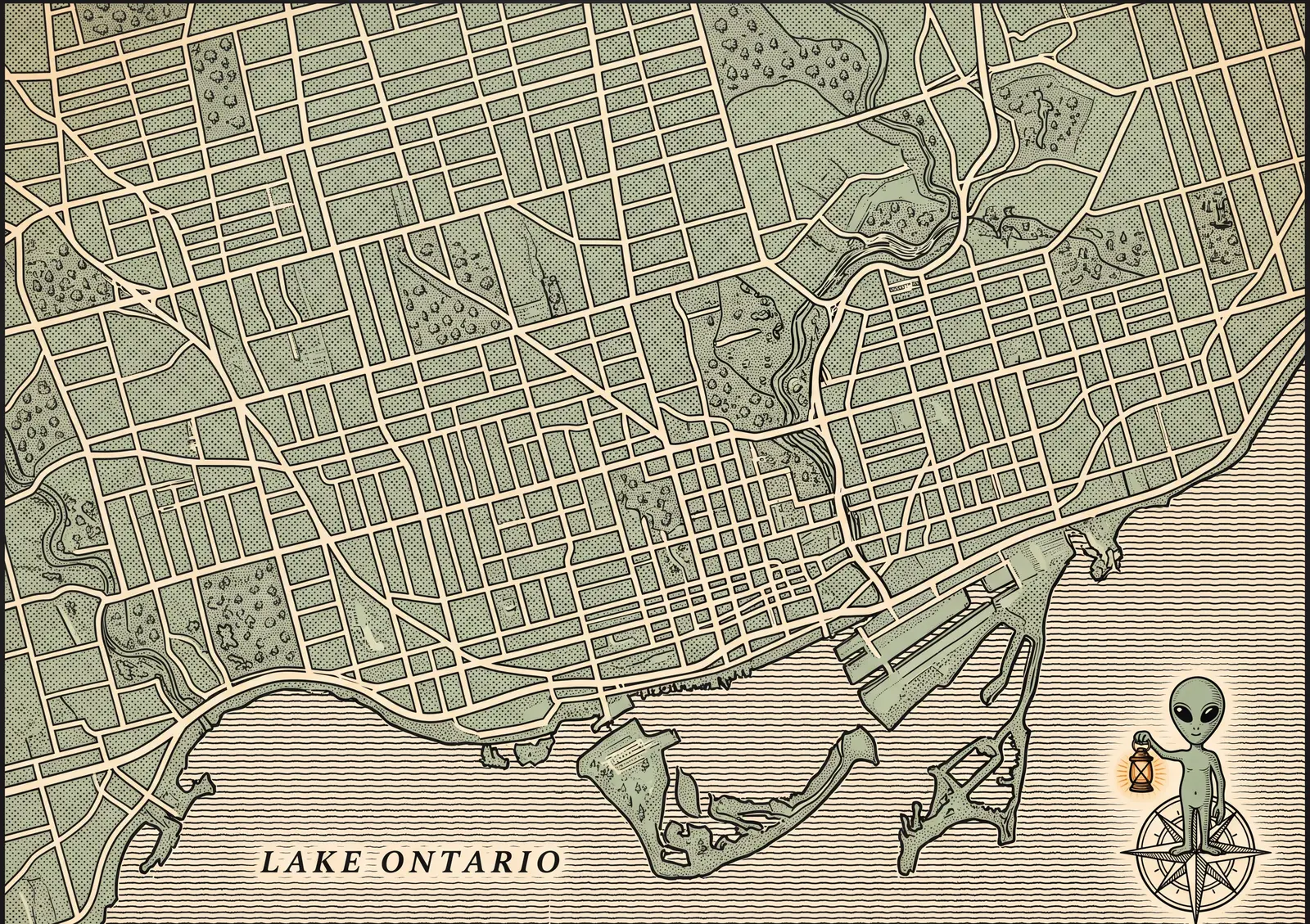
- Yorkville Avenue: The coffee-house scene of the 1960s. The Riverboat was at 134 Yorkville Ave.
- The Penny Farthing, Yorkville: A folk club, and in 1969 a stop for a federal drug inquiry.
- Bloor and Huron: Rochdale College, 1968–1975, now the Senator David A. Croll Apartments.
- St. Lawrence Hall: Where the Le Dain Commission heard from Torontonians in October 1969.
- Queen Street West: The old Queen Street mental hospital, which became part of CAMH in 1998.
- Bay Street: Shorthand for Toronto’s financial industry, and the 2020–21 wave of psychedelic companies listing on the city’s NEO Exchange.
- The Royal Ontario Museum: Psychedelics: Art. Culture. Science., 2026.
The Village, 1958–1968
The bohemians move north
Pushed out of the Gerrard Street area by hospital redevelopment, Toronto’s small bohemian community settled in Yorkville. For roughly ten years it was the crossroads of the city’s youth culture.
Source: Henderson, Journal of the Canadian Historical Association, 2006
The Penny Farthing opens
John and Marilyn McHugh opened the Penny Farthing coffee house. In early 1965 it became the first to feature Joni Mitchell’s own songs.
Source: The Canadian Encyclopedia
The Riverboat
Bernie Fiedler opened the Riverboat in a basement at 134 Yorkville Avenue. Neil Young, Joni Mitchell, Gordon Lightfoot, Bruce Cockburn and Murray McLauchlan all played there. It ran until 1978.
Source: The Canadian Encyclopedia
City Hall pushes back
City Council froze new coffee-house licences and sent police onto Yorkville’s streets.
Source: Henderson, Journal of the Canadian Historical Association, 2006
The Summer of Love, and “a festering sore”
A provincial politician called Yorkville “a festering sore in the middle of the city”. That summer, record crowds arrived, and a sit-in to close Yorkville Avenue to cars ended with about 50 arrests.
Sources: Henderson, Journal of the Canadian Historical Association, 2006; The Canadian Encyclopedia
- 1960S
The Diggers
The Toronto Diggers fed and sheltered the Village’s young people. They ran a soup kitchen at St. Paul’s Avenue Road United Church, and later opened Digger House on Spadina Avenue.
Source: City of Toronto, Bloor-Yorkville Historic Context Statement, 2025
The hepatitis panic
After a street clinic saw an unusual number of hepatitis cases, the story broke on 3 August. The province asked the public to stay away, and crowds on Yorkville Avenue fell to about a tenth of normal.
Source: Henderson, Journal of the Canadian Historical Association, 2006
The epidemic that wasn’t
Ontario’s health department reported that 30 of the 32 people hospitalised had injected drugs. At Women’s College Hospital, 24 of 25 hepatitis patients had injected amphetamines. The psychedelic crowd took the blame, but the cases were among people injecting drugs, mostly speed. The panic is often called the beginning of the end for the Village.
Source: Henderson, 2006, citing the Ontario Department of Health’s 1969 report
The tower, 1968–1979
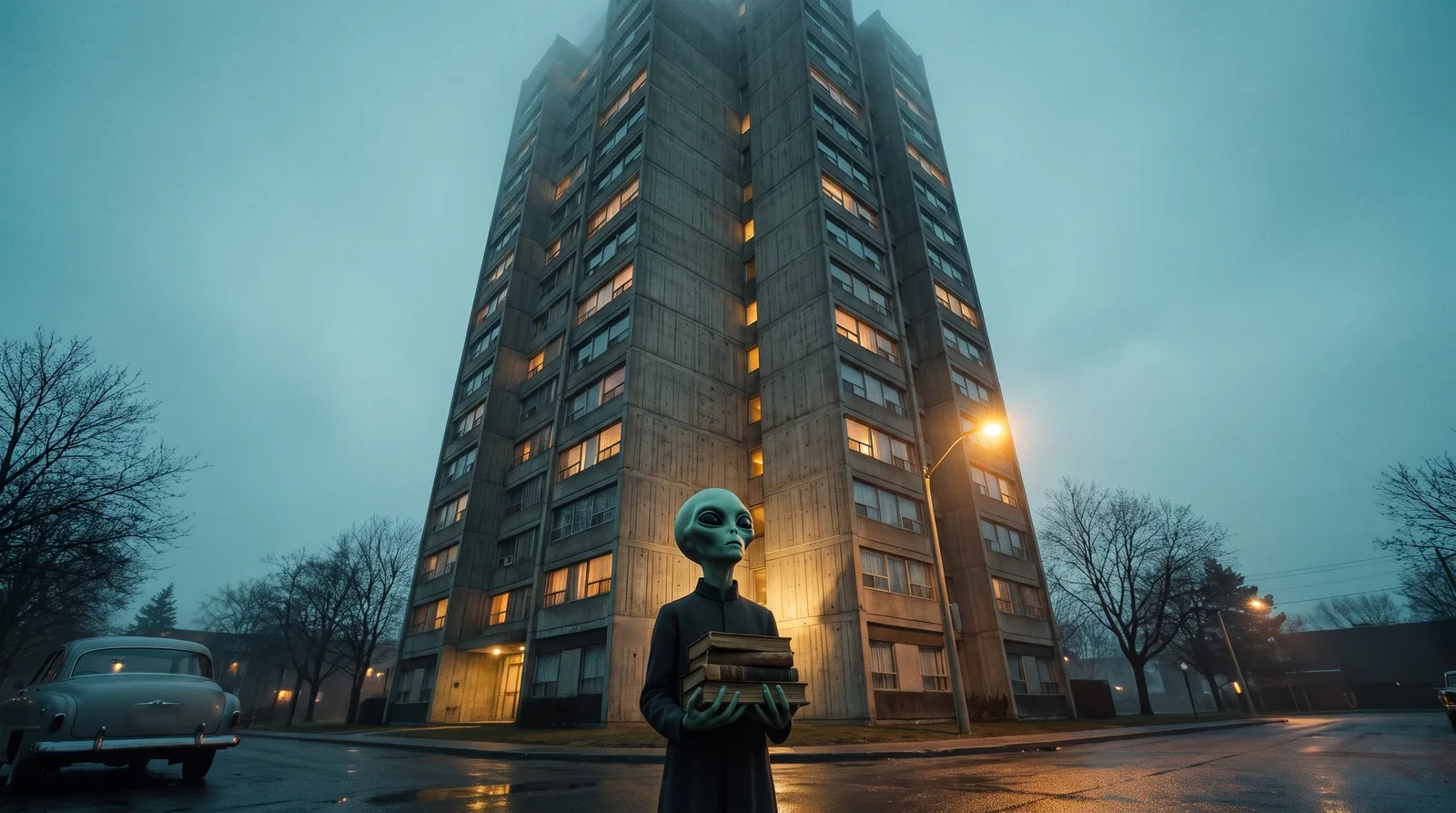
Rochdale College opens
Students moved into the unfinished 18-storey building at Bloor and Huron: a free university for 840 residents, with no curriculum, exams or degrees.
Source: Toronto Public Library
- 1968–1975
“Canada’s largest illicit drug market”
That’s how Toronto Public Library’s historians describe Rochdale’s reputation. The Le Dain Commission’s report lists a “Rochdale Klinic (Toronto)” among Canada’s street clinics.
Sources: Toronto Public Library; Le Dain Commission, Final Report, 1973
The doors are welded shut
Unable to pay its mortgage, Rochdale was cleared after years of effort and several police raids. The last residents were removed by force at the end of May 1975.
Source: Spacing Toronto
A second life
The building reopened as the Senator David A. Croll Apartments, home to seniors and people with disabilities.
Source: Toronto Public Library
Ottawa comes to listen, 1969–1973
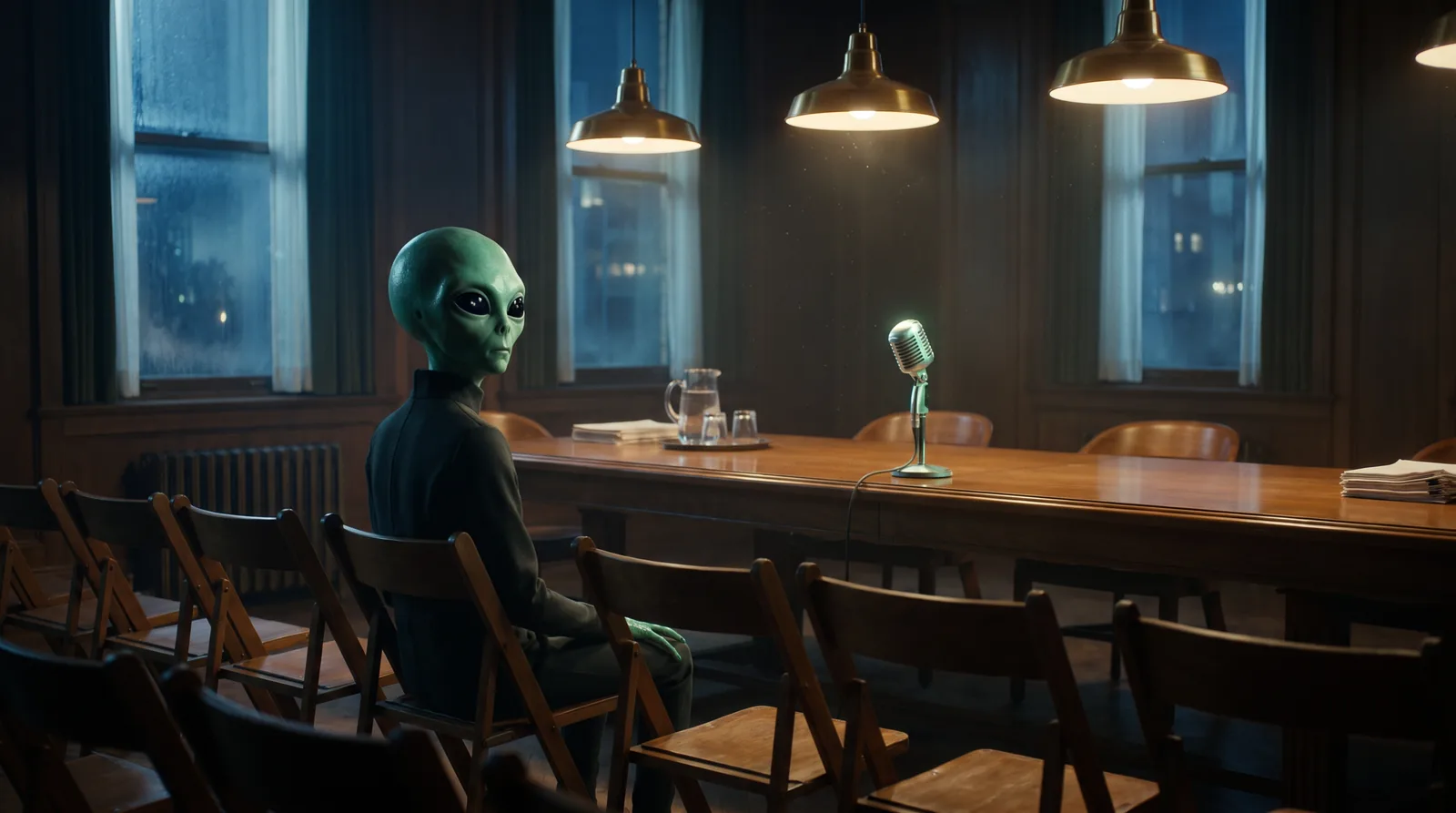
The Le Dain Commission
Ottawa appointed a Commission of Inquiry into the Non-Medical Use of Drugs, chaired by Gerald Le Dain.
LSD possession becomes a crime
Ottawa had controlled LSD’s medical and research use since 1963. In August 1969 it created a “restricted drugs” category, and possessing LSD without authorization became a criminal offence.
The hearings come to Toronto
The Commission heard from Torontonians at St. Lawrence Hall, York University and the University of Toronto. On 17 October it heard them at the Penny Farthing Coffee House in Yorkville. It returned to St. Lawrence Market in October 1970.
Source: Le Dain Final Report, Appendix Q
What the Commission found
Psilocybin wasn’t yet on any Canadian drug schedule. Magic mushrooms, the report said, had been eaten by “only a few exceptional experimenters”. Of 32 street samples sold as psilocybin, the drug was tentatively found in just one, and 15 were LSD. On therapy, controlled studies hadn’t shown that LSD added to conventional psychotherapy.
Toronto’s laboratory, 1966–1999

An LSD trial at the Addiction Research Foundation
Toronto researchers tested LSD for alcoholism against an active placebo and no drug, with ten patients in each group. Abstinence improved in all three groups, with no significant difference between them.
Source: Smart et al., Quarterly Journal of Studies on Alcohol, 1966
Studying the scene itself
The Foundation published a study of life in Yorkville, built from a researcher’s field notes.
Source: Cited in Henderson, 2006
- 1969–1970
What was really on the street
The Foundation’s chemists analysed street drugs collected in Ontario. None of the 58 samples sold as mescaline contained mescaline; about half were LSD.
Psilocybin is restrictedLIMITED EVIDENCE
By most accounts, psilocybin and psilocin were added to Canada’s restricted drugs in 1974.
Sources: Vancouver Mycological Society; Cannabis & Psychedelics Law Group
R. v. Dunn
In a case from British Columbia, the Supreme Court of Canada held that knowingly possessing mushrooms containing psilocybin was unlawful.
Source: Courthouse Libraries BC
The Controlled Drugs and Substances Act
The new Act came into force, listing LSD, psilocin and psilocybin in Schedule III.
Source: Justice Laws Website
CAMH is born
The Addiction Research Foundation merged with the Queen Street Mental Health Centre, the Clarke Institute of Psychiatry and the Donwood Institute to form the Centre for Addiction and Mental Health.
Source: CAMH
- 1995–1999
A signal in the student survey
Ontario’s student drug survey found that hallucinogens “such as mescaline and psilocybin” were the only drug type whose use rose significantly from 1995 to 1997, and they rose again by 1999.
Source: Adlaf & Ivis, CMAJ, 1998
Research and a boom, 2019–2026

CAMH joins an international trial
CAMH became a Toronto site in a psilocybin trial for treatment-resistant depression that ran across ten countries.
Source: ClinicalTrials.gov, NCT03775200
Bay Street catches the wave
MindMed began trading on Toronto’s NEO Exchange, billed as the world’s first publicly traded psychedelic pharmaceutical company. The next day, Field Trip Health opened its first clinic, in Toronto.
Sources: OPEN MINDS; Field Trip release
Cybin lists
The Toronto-headquartered company began trading on the NEO Exchange.
A psychedelics ETF
The Horizons Psychedelic Stock Index ETF, billed as the first of its kind, began trading on the NEO Exchange.
Source: Horizons/NEO release (archived)
A research centre at UHN
A $5 million gift launched the Nikean Psychedelic Psychotherapy Research Centre at the University Health Network.
Source: UHN
A global summit in Toronto
CAMH co-hosted “From Research to Reality”, a global summit on psychedelic-assisted therapies, at the Toronto Hilton.
Source: CAMH
Canada’s first federal psilocybin grant
CAMH received federal funding for a trial asking whether psilocybin needs the psychedelic experience to work.
Source: CAMH release
- 2022–2023
The comedown
Field Trip split in two in August 2022. In March 2023 its clinic business sought creditor protection.
Source: Psychedelic Alpha
- 2008–2023
The other side of the ledger
Emergency-department visits in Ontario involving hallucinogens roughly doubled, from 3.3 to 6.5 per 100,000 people.
Source: Myran et al., Addiction, 2026
- JANUARY–OCTOBER 2026
New names
MindMed became Definium Therapeutics (January), and Cybin became Helus Pharma (1 October).
Source: SEC EDGAR filings
Results pending
CAMH’s trial finished, and its researchers say they’re analysing the results.
Source: CAMH
Behind glass at the ROM
The Royal Ontario Museum opened Psychedelics: Art. Culture. Science., with 90 objects. Among CAMH’s loans is a medicine tray from the Queen Street Mental Health Centre. One artwork is built from a 1967 Toronto Star photograph. The museum says it “does not recommend or encourage the use of psychedelics”.
Sources: ROM; ROM exhibition page (dates)
Still asking
The public trial registry lists 23 psilocybin studies with a Toronto site.
Source: ClinicalTrials.gov
Keep reading.
- Psychedelic Toronto: a self-guided walking tour
- Yorkville in the 1960s: The Hippie Village
- Rochdale College: Toronto’s Free University
- The Le Dain Commission in Toronto, 1969
- Shroomverse documentary films
- Safety guide and Toronto help lines
- Toronto hippies and beyond: 12 sourced stories
- How magic mushrooms became illegal in Canada
- The Shroomverse journal
Last checked . Spotted an error? Tell us on Instagram