
THE SHROOMVERSE JOURNAL ✳ 12 MIN READ
DMT and the sigma-1 receptor: what the 2009 discovery does and doesn’t show
Topic: DMT
Published Updated
Short answer, checked 20 October 2026
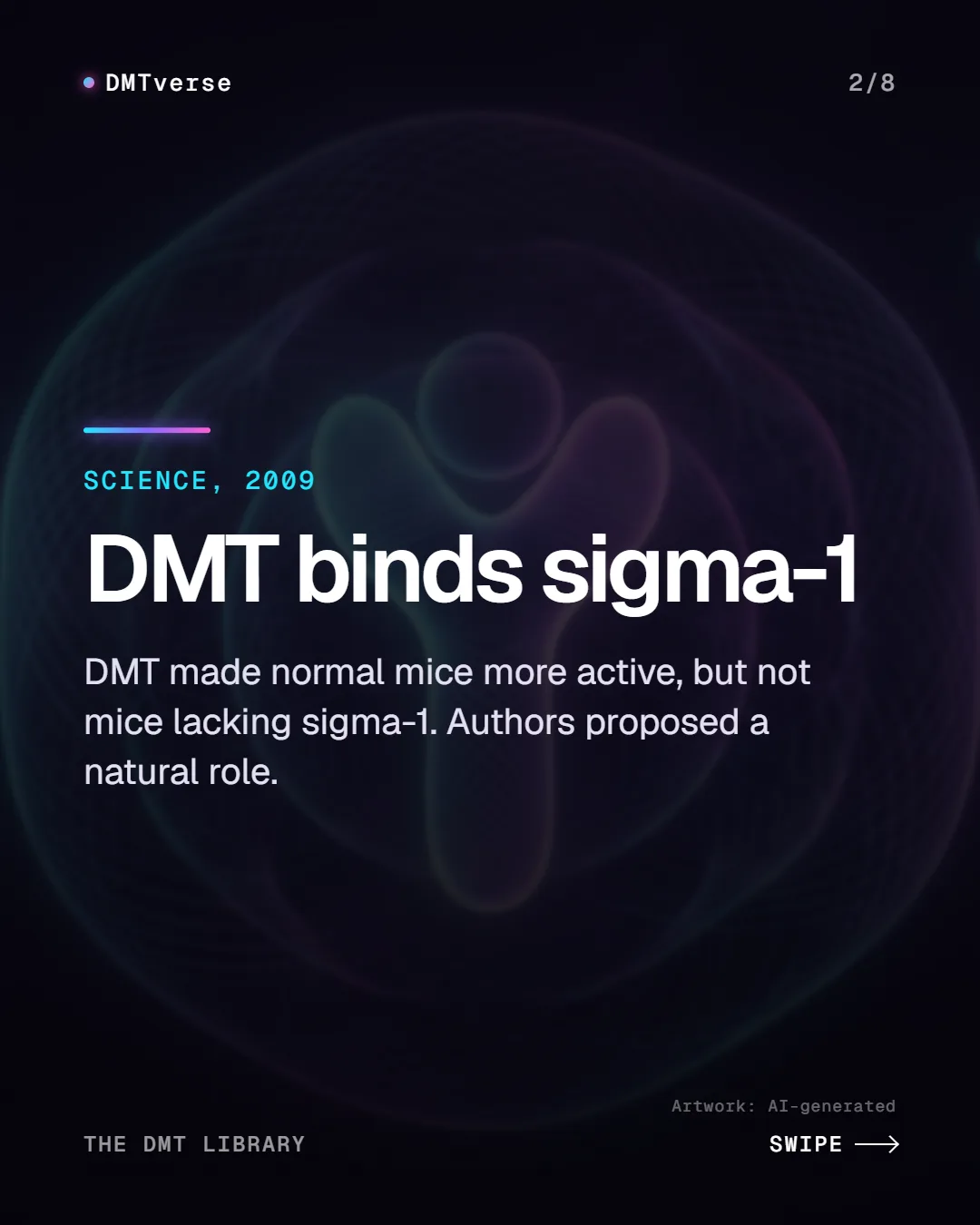
DMT does bind the sigma-1 receptor, a ‘chaperone’ protein inside cells, but only at high concentrations. A 2009 Science paper showed the binding and found DMT made normal mice more active but not mice lacking sigma-1; the authors proposed DMT as the body’s own sigma-1 activator. The catch is concentration: DMT needs roughly 100 to 190 times more to act at sigma-1 than at its main target, 5-HT2A, and well above the levels measured in human studies or living rat brains. Later lab work reported that DMT protected human cells from oxygen loss and calmed immune cells, and that it reduced damage in rats after experimental stroke, partly via sigma-1. None of this has been tested in people, and no human study has shown sigma-1 contributes to the DMT experience.
THE SHORT VERSION · SWIPE

On this page 8 sections
Sigma-1 is the receptor that turns up whenever people argue DMT is more than a psychedelic: a natural protector of brain cells, perhaps, or the key to why the body makes it at all. This article separates what was actually shown, in which species and at what concentration, from what has been proposed. For the receptor most researchers think drives the psychedelic effects, see DMT and the 5-HT2A receptor; for the molecule itself, what is DMT.
Education only, not guidance
This article describes published research. It gives no amounts, no instructions and no advice on use, and it does not describe any effect as a benefit. Findings in cells or rats are not evidence of the same effect in people. DMT is a controlled substance in Canada. Evidence labels: established (shown in peer-reviewed studies and not seriously disputed), preliminary (early, small, animal-only or indirect) and unresolved (an open question).
What is the sigma-1 receptor?
Despite the name, sigma-1 is unlike most receptors. It was originally mischaracterized as an opioid receptor; it binds a vast number of synthetic compounds but not the body’s opioid peptides, and in 2009 it was still considered an “orphan” receptor with no known natural partner. It is widely distributed in the central nervous system and the rest of the body (Fontanilla et al., 2009). Evidence: established.
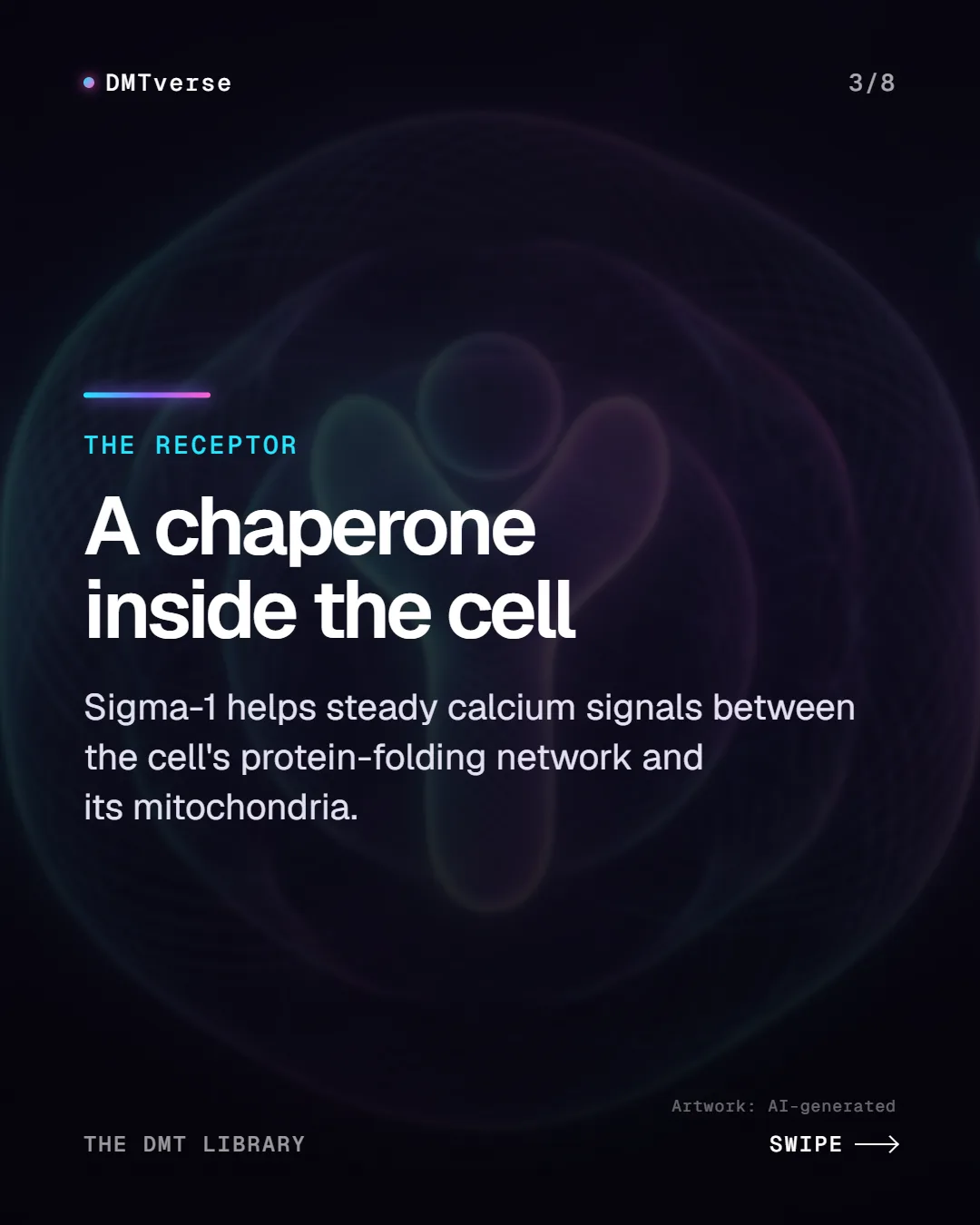
Its main home is inside the cell. A 2007 study found sigma-1 sits on the endoplasmic reticulum, the cell’s protein-folding network, at the contact points with mitochondria, where it acts as a calcium-sensitive “chaperone” that helps steady calcium signalling into the mitochondria. In cells, more sigma-1 counteracted stress responses in the endoplasmic reticulum, and less sigma-1 increased cell death (Hayashi and Su, 2007). That is why it is often linked to cell survival and neuroprotection. Evidence: established as cell biology.
What did the 2009 DMT sigma-1 receptor study find?
A team at the University of Wisconsin noticed that DMT carries a chemical feature common to sigma-1 binders. They found that tryptamine itself bound sigma-1 poorly, but adding methyl groups to the nitrogen made binding tighter, and DMT bound sigma-1 receptors. DMT inhibited voltage-gated sodium channels in heart muscle cells and in cells engineered to carry sigma-1, and it made wild-type mice hypermobile but had no such effect in mice lacking sigma-1. They concluded DMT is an endogenous agonist for the sigma-1 receptor (Fontanilla et al., 2009). Evidence: established as a lab and mouse finding.
Why heart cells? Sigma-1 activation is known to inhibit several ion channels, and sodium channels in heart muscle were a convenient, measurable target. The team confirmed sigma-1 dependence by comparing heart cells from normal mice with cells from mice bred without sigma-1 (Fontanilla et al., 2009). A review notes that sigma-1 can move toward the cell surface to interact with ion channels when it is stimulated with higher concentrations of activators (Carbonaro and Gatch, 2016), which ties back to the concentration question below. Evidence: established as a cell finding.
Note what the study measured. Hypermobility in mice is a behaviour, not a psychedelic effect, and the sodium-channel work was in isolated cells. The same paper says there were no conclusive measurements of how much DMT the body makes, because it is broken down so fast (Fontanilla et al., 2009). A commentary in the same year proposed a hypothetical signalling scheme by which sigma-1 might partly mediate DMT’s effects, framed as a possibility (Su et al., 2009). Evidence: preliminary.
Is there ever enough DMT to activate sigma-1?
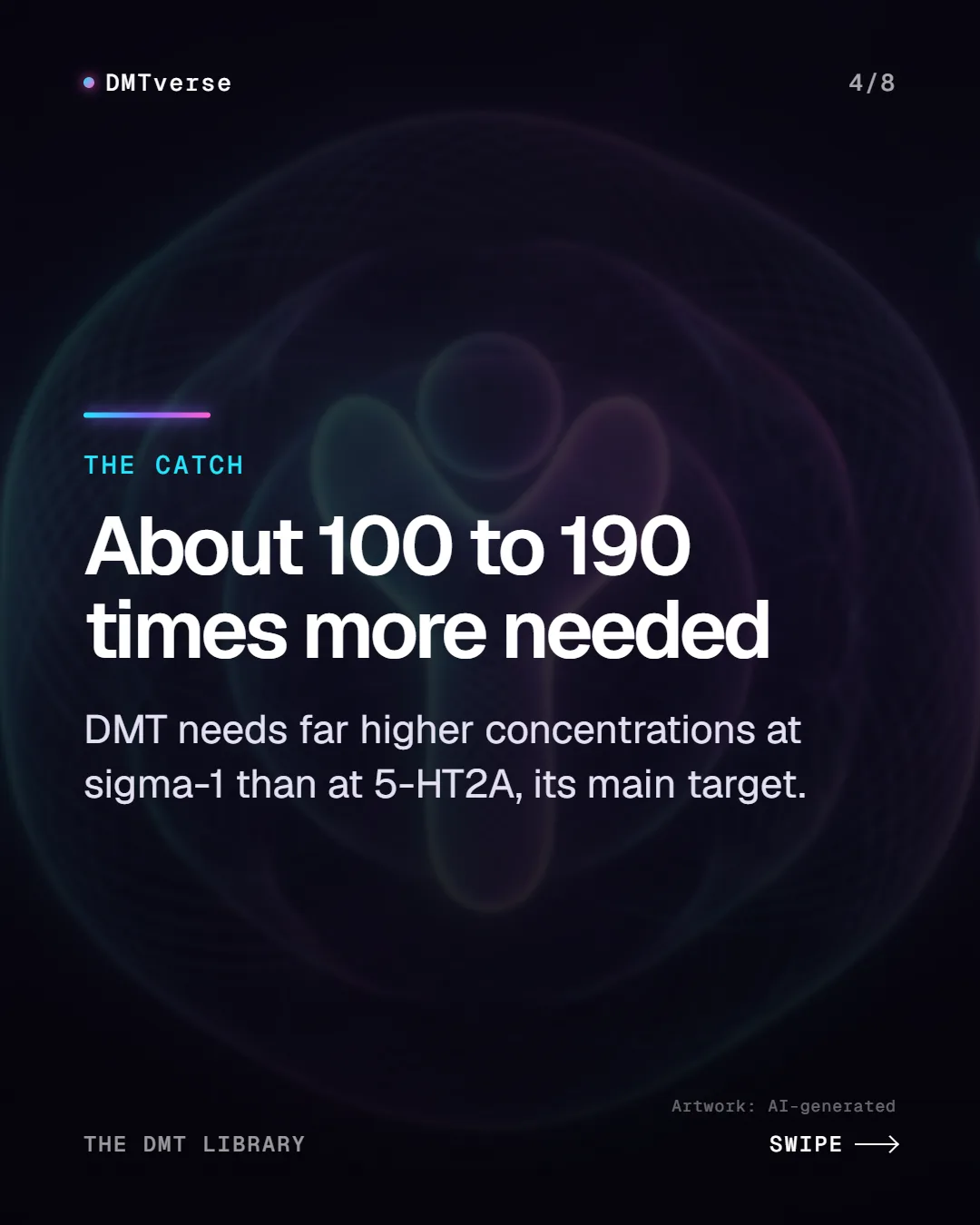
This is the central weakness. A review notes that DMT binds sigma-1 only at “what should be considered as a high concentration”, in the micromolar range, against the nanomolar range for 5-HT2A, a gap of roughly 190-fold, and that both hallucinogens and non-hallucinogens bind sigma-1, which complicates treating it as DMT’s main site of action (Barker, 2018). A 2009 drug-target study put DMT’s potency at 5-HT2A about 100-fold better than at sigma-1, and concluded 5-HT2A is the primary target for its hallucinogenic effects (Keiser et al., 2009). Evidence: established.
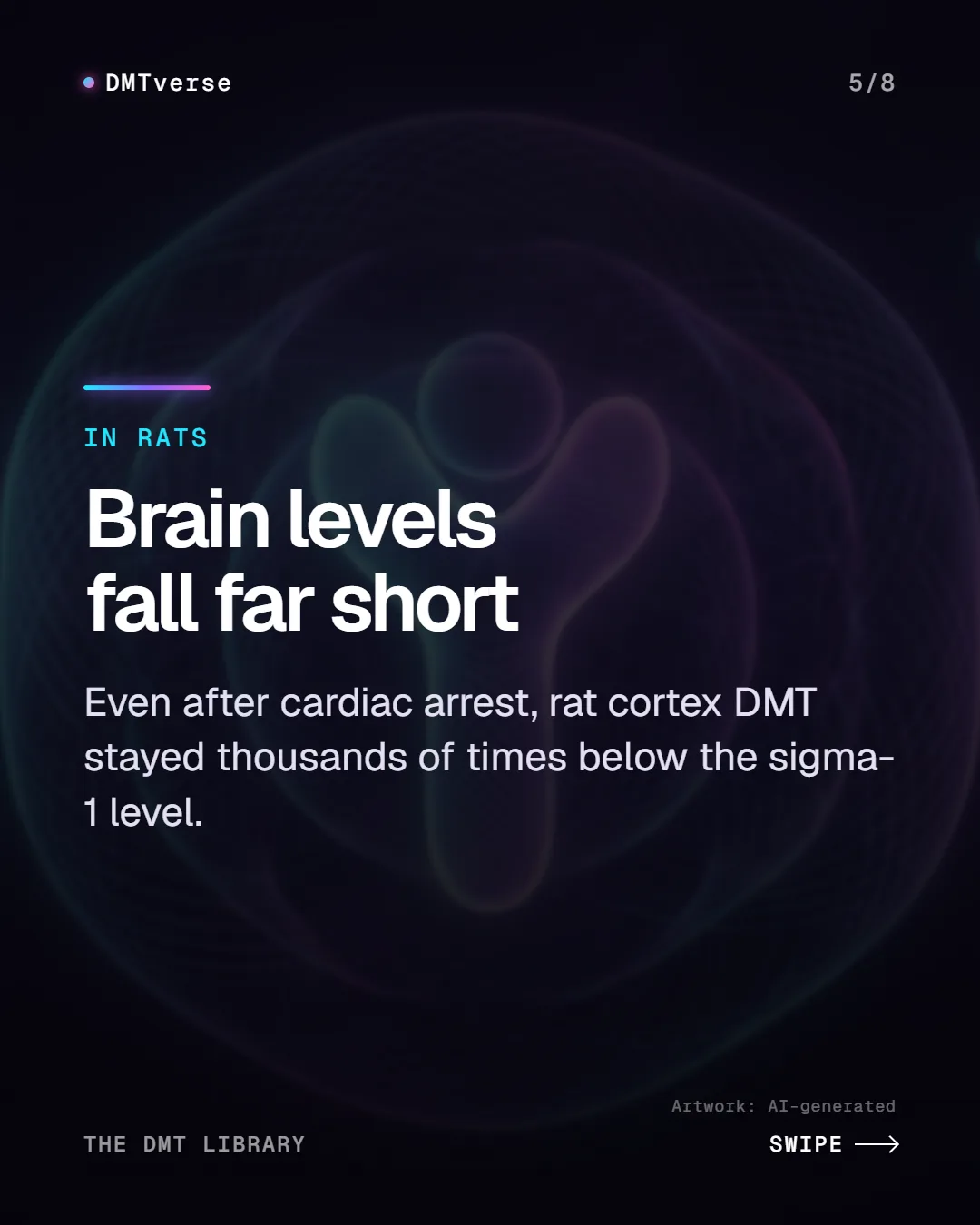
Another review calls this “the main problem” with the theory: DMT needs micromolar concentrations, whereas selective sigma-1 drugs work in the nanomolar range (Carbonaro and Gatch, 2016). Compare the levels actually measured. Modelling of human lab data estimated the blood concentration at which DMT produced half its maximum intensity, and that figure is roughly 150 times lower than the sigma-1 activity level (Eckernäs et al., 2022; Barker, 2018). In living rats, average DMT in the cortex was 0.56 nanomolar with a pineal gland and 1.02 without one, and even the highest values recorded after experimental cardiac arrest were thousands of times below that level (Dean et al., 2019). The rat study is explained in full in the DMT rat brain study, explained. Evidence: established for the gap; whether local concentrations could ever close it is unresolved.
| Comparison | Approximate gap | Source |
|---|---|---|
| Sigma-1 vs 5-HT2A in lab tests | About 100 to 190 times more DMT needed at sigma-1 | Keiser 2009; Barker 2018 |
| Sigma-1 vs modelled human blood level at half-maximum intensity | About 150 times higher | Barker 2018; Eckernäs 2022 |
| Sigma-1 vs living rat cortex, including after cardiac arrest | Thousands of times higher | Barker 2018; Dean 2019 |
Could local levels be much higher?
Supporters of the sigma-1 idea argue they might be. In mouse motor neurons, the enzyme long credited with making DMT, INMT, sits right beside sigma-1 at certain synapses, and the authors suggest DMT is made locally to activate sigma-1 there (Mavlyutov et al., 2012). A review also describes evidence that DMT can be taken up and stored in vesicles inside cells, and says high vesicle concentrations would be needed for sigma-1 activation (Carbonaro and Gatch, 2016). Both are proposals: no one has measured DMT at sigma-1-activating levels inside living neurons. Gene-knockout studies have since questioned whether INMT makes DMT in rodents at all; see INMT: the enzyme said to make DMT. Evidence: unresolved.
Does sigma-1 explain the DMT experience?
There is no human evidence that it does. One review concludes that, at best, sigma-1 receptors may partially mediate DMT’s subjective effects (Carbonaro and Gatch, 2016). We found no published study that blocked sigma-1 before giving people DMT, and the animal and receptor evidence points to 5-HT2A as the main driver (Keiser et al., 2009). Evidence: unresolved.
Does DMT protect cells through sigma-1?
Most of what is said online about DMT “protecting the brain” traces back to a small set of lab studies, several of them sharing authors. They are listed here with what each model can and cannot show. None involved people taking DMT.
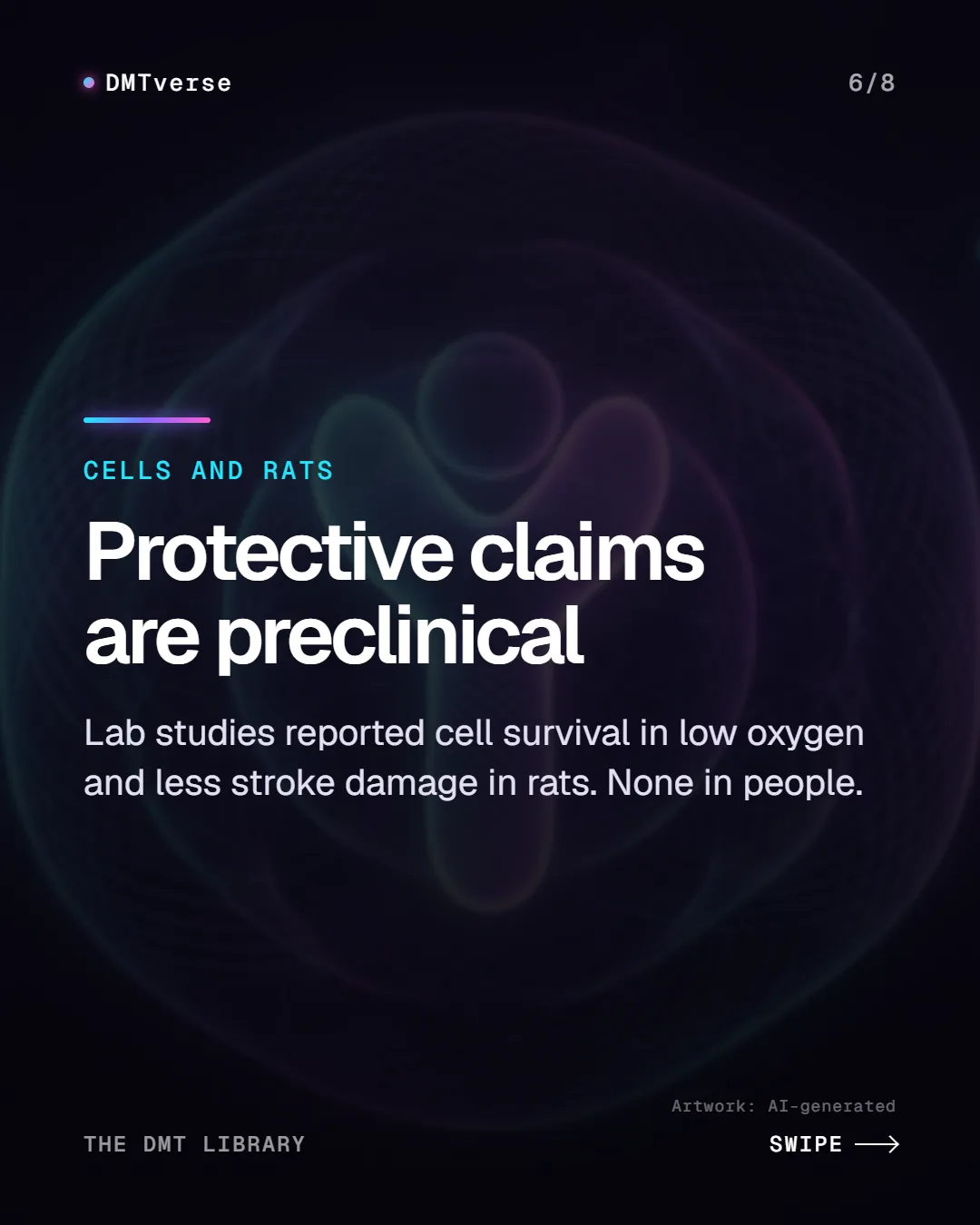
In human immune cells in a dish (monocyte-derived dendritic cells), DMT and 5-MeO-DMT reduced the release of several inflammatory signals and increased an anti-inflammatory one when the cells were provoked, and gene silencing confirmed a sigma-1 role (Szabo et al., 2014). In 2016, the same group reported that DMT robustly increased the survival of human stem-cell-derived cortical neurons and immune cells kept in severe oxygen shortage in culture, through sigma-1 (Szabo et al., 2016). Evidence: preliminary, from cells.
In anaesthetised rats with experimentally induced global brain ischaemia (loss of blood flow), DMT reduced spreading depolarizations, waves of electrical shutdown that damage tissue, and reduced the number of dying cells; a sigma-1 blocker counteracted the effect (Szabó et al., 2021). In a rat stroke model, DMT had previously reduced the volume of damaged tissue, and a 2025 study added that it reduced brain swelling, helped restore the blood-brain barrier, and reduced inflammatory activity in brain immune cells via sigma-1 (László et al., 2025). Evidence: preliminary, from rats.
| Study | Model | Reported finding | What it does not show |
|---|---|---|---|
| Szabo et al., 2014 | Human immune cells in a dish | Less inflammatory signalling, via sigma-1 | Any effect in a living body |
| Szabo et al., 2016 | Human stem-cell neurons and immune cells in low oxygen | Higher cell survival, via sigma-1 | Protection of a human brain |
| Szabó et al., 2021 | Anaesthetised rats, global ischaemia | Fewer spreading depolarizations and dying cells | Effect in people or at human-relevant levels |
| László et al., 2025 | Rat stroke model plus cell work | Less swelling and inflammation; barrier restored | Any human clinical outcome |
The researchers behind this work have framed DMT as an agent of adaptive, protective mechanisms rather than mainly a hallucinogen (Frecska et al., 2013). That is an interpretation, not a finding. Lab concentrations, animal models and anaesthesia all differ from human physiology. Evidence: unresolved.
It also matters that DMT is not unique here. In the 2014 immune-cell study, 5-MeO-DMT, a related but different psychedelic, had similar sigma-1-dependent effects, and a synthetic, high-affinity sigma-1 drug was used as a comparison (Szabo et al., 2014). The rat ischaemia study likewise compared DMT with a selective synthetic sigma-1 activator, and both reduced spreading depolarizations (Szabó et al., 2021). What these studies show, then, is mainly that activating sigma-1 can protect cells in these models, and that DMT is one of several molecules that can do it at lab concentrations. For how 5-MeO-DMT differs from DMT, see 5-MeO-DMT vs DMT. Evidence: preliminary.
What has been tested in people?
Only safety groundwork, and none of it on sigma-1. A randomized, double-blind, placebo-controlled study in the Netherlands gave 29 healthy volunteers a six-hour intravenous DMT infusion (amounts not reproduced here) as a basis for future studies in stroke patients. No serious adverse events occurred, and effects were mild (van der Heijden et al., 2025). That study measured safety, blood levels and mild drug effects in healthy people. It did not test whether DMT protects the brain, and it did not measure sigma-1. Whether any of the rat findings apply to people is unknown; our DMT therapy research overview tracks the clinical studies, and is DMT neuroprotective? covers the claim in full. Evidence: established that no human sigma-1 or efficacy data exist in the sources we read.
What is still unknown?
- Whether DMT ever reaches sigma-1-activating concentrations anywhere in a living body, including inside cells (unresolved).
- Whether sigma-1 contributes anything to the DMT experience in people; no human blocking study exists that we found (unresolved).
- Whether the cell and rat protective findings replicate in independent labs and apply to humans (unresolved).
- Whether sigma-1 is a natural role for DMT made in the body, as proposed in 2009 (unresolved).
The fair summary: DMT does bind and activate sigma-1, in cells and mice, but only at concentrations far above those seen in human studies or living rat brains. The protective findings are real lab results in cells and rats, not evidence of anything in people. Evidence: established for binding; preliminary for protection; unresolved for any role in people. For the wider receptor picture, see psilocybin, LSD and DMT: how they differ.
Common questions
Does DMT bind the sigma-1 receptor?
Yes. A 2009 Science paper found DMT binds sigma-1, inhibits sodium channels through it in cells, and makes normal mice more active but not mice lacking sigma-1. The authors proposed DMT as a natural sigma-1 activator.
What does the sigma-1 receptor do?
It is a chaperone protein mainly inside cells, at contact points between the endoplasmic reticulum and mitochondria, where it helps regulate calcium signalling and cell survival under stress. It was once mistaken for an opioid receptor.
Why do scientists doubt sigma-1 matters for DMT?
Because of concentration. DMT needs roughly 100 to 190 times more to act at sigma-1 than at 5-HT2A, and far more than the levels seen in human blood in lab studies or in living rat brains.
Is sigma-1 why DMT causes visions?
There is no evidence for that in people. Mouse and receptor studies point to 5-HT2A as the main driver, and one review says sigma-1 might at best partly contribute. No human study has blocked sigma-1 before DMT.
Does DMT protect brain cells?
In lab dishes and in rats, several studies reported protective effects via sigma-1, such as cell survival in low oxygen and less damage after experimental stroke. None has shown this in people.
Has DMT been tested for stroke in humans?
Only safety groundwork so far, in the sources we read: a six-hour infusion study in 29 healthy volunteers reported no serious adverse events and mild effects. It did not test brain protection or sigma-1.
Is DMT the body’s natural sigma-1 partner?
That was the 2009 proposal. It remains unresolved because nobody has shown DMT reaching sigma-1-activating levels in a living body, and recent knockout studies question how DMT is made.
Shroomverse sells mushroom products. This article is general information about DMT and the sigma-1 receptor. It is not medical, legal or purchasing advice, and it does not recommend any product.
SOURCES
- The Hallucinogen N,N-Dimethyltryptamine (DMT) Is an Endogenous Sigma-1 Receptor Regulator (Fontanilla D, et al., Science 323(5916):934–937, 2009), American Association for the Advancement of Science (peer-reviewed); author manuscript via NCBI PMC, PMC2947205. Accessed . Abstract read via Europe PMC and author manuscript read via NCBI PMC. Sigma-1 originally mischaracterized as opioid, orphan, widely distributed; methylation increased sigma-1 affinity; DMT inhibited Na+ channels in cardiac myocytes and sigma-1-expressing cells; hypermobility in wild-type but not knockout mice; no conclusive quantitative measures of endogenous DMT.
- Sigma-1 receptor chaperones at the ER-mitochondrion interface regulate Ca2+ signaling and cell survival (Hayashi T, Su TP, Cell 131(3):596–610, 2007), Cell Press (peer-reviewed). Accessed . Abstract read via Europe PMC. Sigma-1 as a Ca2+-sensitive, ligand-operated chaperone at mitochondrion-associated ER membranes; prolongs Ca2+ signalling into mitochondria; increasing it counteracts ER stress, decreasing it enhances apoptosis.
- When the endogenous hallucinogenic trace amine N,N-dimethyltryptamine meets the sigma-1 receptor (Su TP, Hayashi T, Vaupel DB, Science Signaling 2(61):pe12, 2009), American Association for the Advancement of Science (peer-reviewed perspective); PMC3155724. Accessed . Abstract read via Europe PMC. Proposes a hypothetical signalling scheme by which sigma-1 might partly mediate DMT's action.
- N,N-Dimethyltryptamine (DMT), an Endogenous Hallucinogen: Past, Present, and Future Research to Determine Its Role and Function (Barker SA, Frontiers in Neuroscience 12:536, 2018), Frontiers (peer-reviewed, open access); full text via Europe PMC, PMC6088236. Accessed . Full text read. DMT binds sigma-1 at a high concentration (EC50 about 14 μM vs about 75 nM at 5-HT2A, the basis of the ratios given); hallucinogens and non-hallucinogens bind sigma-1; summaries of Szabo 2014 and 2016 and of INMT near sigma-1.
- Neuropharmacology of N,N-dimethyltryptamine (Carbonaro TM, Gatch MB, Brain Research Bulletin 126(Pt 1):74–88, 2016), Elsevier (peer-reviewed); full text via NCBI PMC, PMC5048497. Accessed . Full text read. 'The main problem' with the sigma-1 theory is the micromolar requirement vs nanomolar selective agonists; vesicle storage proposed to reach the needed levels; at best sigma-1 may partially mediate subjective effects.
- Predicting new molecular targets for known drugs (Keiser MJ, et al., Nature 462(7270):175–181, 2009), Springer Nature (peer-reviewed); full text via NCBI PMC, PMC2784146. Accessed . Abstract read via Europe PMC and full text checked via NCBI PMC. DMT's EC50 at 5-HT2A about 100-fold better than at sigma-1; 5-HT2A knockout mice lacked the head-twitch response; supports 5-HT2A as the primary hallucinogenic target.
- Population pharmacokinetic/pharmacodynamic modeling of the psychedelic experience induced by N,N-dimethyltryptamine (Eckernäs E, et al., Clinical and Translational Science 15(12):2928–2937, 2022), Wiley (peer-reviewed, open access); PMC9747126. Accessed . Abstract read via Europe PMC. 13 healthy subjects; modelled effect-site concentration for half-maximum intensity of 95 nM, used here only as a ratio against the sigma-1 value. Model-derived. Doses deliberately not reproduced.
- Biosynthesis and Extracellular Concentrations of N,N-dimethyltryptamine (DMT) in Mammalian Brain (Dean JG, et al., Scientific Reports 9:9333, 2019), Springer Nature (peer-reviewed, open access); full text via Europe PMC, PMC6597727. Accessed . Full text read. Rat visual-cortex DMT averaged 0.56 nM (pineal intact) and 1.02 nM (pineal removed) at baseline, with maxima around 5 nM after cardiac arrest; used here only as a ratio against the sigma-1 value.
- Development of the sigma-1 receptor in C-terminals of motoneurons and colocalization with the N,N'-dimethyltryptamine forming enzyme, indole-N-methyl transferase (Mavlyutov TA, et al., Neuroscience 206:60–68, 2012), Elsevier (peer-reviewed); PMC3321351. Accessed . Abstract read via Europe PMC. In mouse motoneurons, INMT localized near sigma-1 at C-terminals; authors suggest local DMT synthesis to activate sigma-1.
- Psychedelic N,N-dimethyltryptamine and 5-methoxy-N,N-dimethyltryptamine modulate innate and adaptive inflammatory responses through the sigma-1 receptor of human monocyte-derived dendritic cells (Szabo A, et al., PLoS One 9(8):e106533, 2014), PLOS (peer-reviewed, open access); PMC4149582. Accessed . Abstract read via Europe PMC. In cultured human dendritic cells, DMT and 5-MeO-DMT reduced IL-1β, IL-6, TNFα and IL-8, increased IL-10, and reduced T-cell activation; sigma-1 role confirmed by gene silencing.
- The Endogenous Hallucinogen and Trace Amine N,N-Dimethyltryptamine (DMT) Displays Potent Protective Effects against Hypoxia via Sigma-1 Receptor Activation in Human Primary iPSC-Derived Cortical Neurons and Microglia-Like Immune Cells (Szabo A, et al., Frontiers in Neuroscience 10:423, 2016), Frontiers (peer-reviewed, open access); PMC5021697. Accessed . Abstract read via Europe PMC. DMT increased survival of cultured human iPSC-derived cortical neurons, macrophages and dendritic cells in severe hypoxia through sigma-1.
- N,N-Dimethyltryptamine attenuates spreading depolarization and restrains neurodegeneration by sigma-1 receptor activation in the ischemic rat brain (Szabó Í, et al., Neuropharmacology 192:108612, 2021), Elsevier (peer-reviewed). Accessed . Abstract read via Europe PMC. Anaesthetised rats with global forebrain ischaemia; DMT mitigated spreading depolarizations (counteracted by the sigma-1 antagonist NE-100) and reduced apoptotic and ferroptotic cells.
- N,N-dimethyltryptamine mitigates experimental stroke by stabilizing the blood-brain barrier and reducing neuroinflammation (László MJ, et al., Science Advances 11(33):eadx5958, 2025), American Association for the Advancement of Science (peer-reviewed, open access); PMC12346280. Accessed . Abstract read via Europe PMC. Rat transient middle cerebral artery occlusion model; earlier reduction of infarct volume; reduced oedema, restored barrier integrity, reduced microglial activation via sigma-1.
- A possibly sigma-1 receptor mediated role of dimethyltryptamine in tissue protection, regeneration, and immunity (Frecska E, et al., Journal of Neural Transmission 120(9):1295–1303, 2013), Springer (peer-reviewed review). Accessed . Abstract read via Europe PMC. Review proposing DMT as an agent of adaptive, protective mechanisms; cited as an interpretation.
- Safety, Pharmacokinetics, and Pharmacodynamics of a 6-h N,N-Dimethyltryptamine (DMT) Infusion in Healthy Volunteers: A Randomized, Double-Blind, Placebo-Controlled Trial (van der Heijden KV, et al., Clinical and Translational Science 18(5):e70234, 2025), Wiley (peer-reviewed, open access); PMC12070030. Accessed . Abstract read via Europe PMC. 29 healthy participants; no serious adverse events; mild effects; framed as a basis for future studies in patients after stroke (NCT05559931). No sigma-1 or efficacy measures. Doses deliberately not reproduced.
CHANGES
- : Linked glossary definitions.
- : Published. Sources re-checked against Europe PMC and NCBI PMC records on this date; concentration comparisons given as ratios only.
- : Editorial review: summary opens with a direct answer; rat cortex DMT now given as the study’s two group averages (0.56 and 1.02 nanomolar) to match the rest of the DMT library; linked the rat study explainer; H2s rewritten as questions, one carrying the primary keyword.



