THE SHROOMVERSE JOURNAL ✳ 17 MIN READ
What is ayahuasca? The Amazonian brew, its contested history, and what science knows
Topic: DMT
Published Updated
Listen: the 3-minute version
AI-narrated summary of this article
Short answer, checked 20 October 2026
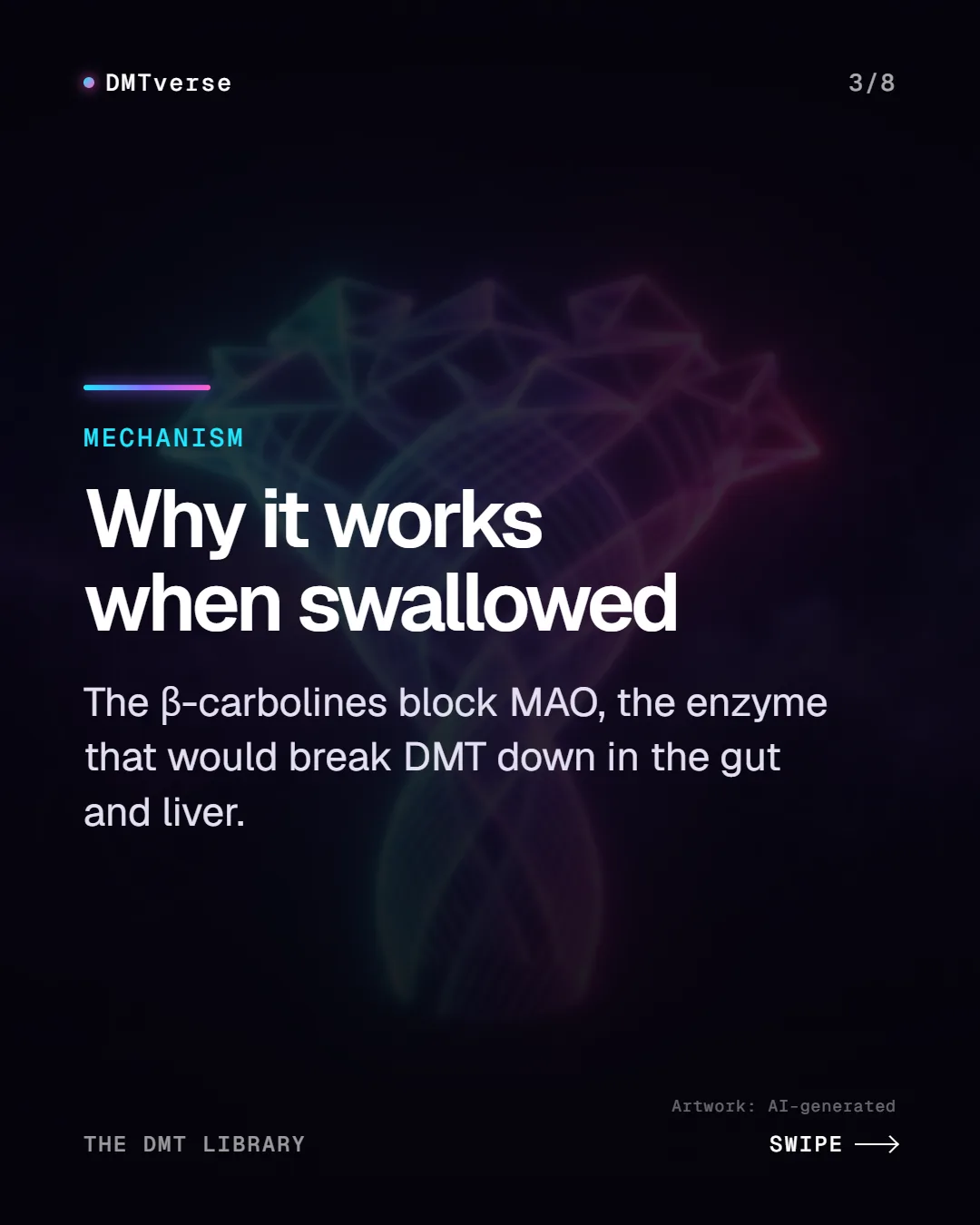
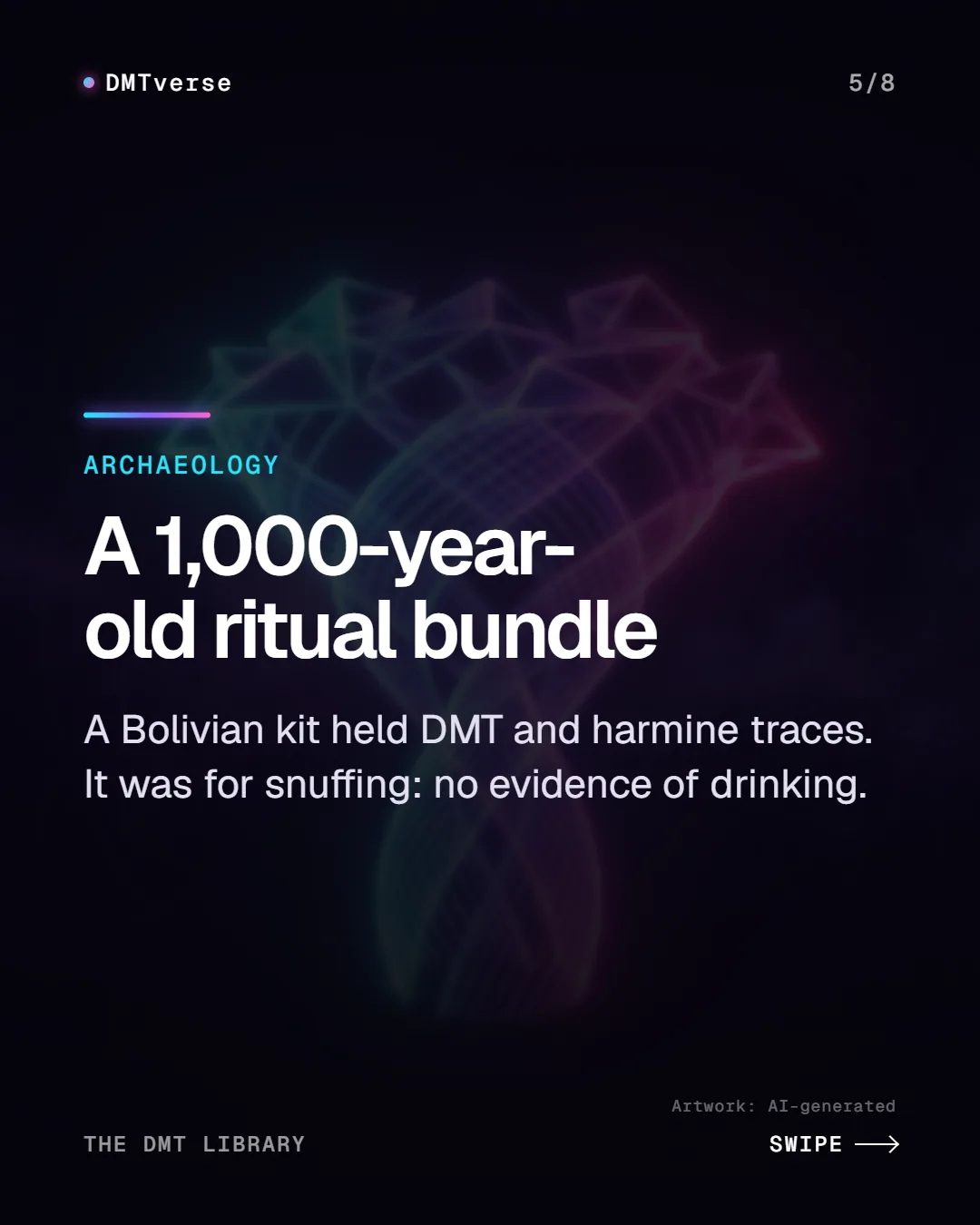
Ayahuasca is a psychoactive brew from the western Amazon that contains DMT together with β-carboline alkaloids that block the enzyme MAO, which would otherwise destroy DMT in the gut and liver. It is used in Indigenous and Mestizo traditions, in Brazilian churches and, more recently, at retreats around the world. How old the practice is remains disputed: a 1,000-year-old Bolivian ritual bundle held traces of both key compounds, but it was a snuffing kit, and some anthropologists argue that drinking ayahuasca for “healing” is a recent development. Research is small and early, and is not proof of any treatment. Its MAO inhibition makes combinations with some medicines, including SSRI antidepressants, potentially dangerous. In Canada, DMT and harmaline are Schedule III controlled substances (items 7 and 9).
THE SHORT VERSION · SWIPE
On this page 9 sections
Ayahuasca is often described in a single breath as ancient, sacred and healing. Each of those words hides a debate. This guide explains what ayahuasca is, what archaeology and anthropology actually say about its age, how its chemistry works in general terms, what controlled research has and has not shown, and why it carries interaction risks that DMT on its own does not. For a side-by-side table of ayahuasca and DMT (timing, body effects, purging), see ayahuasca vs DMT.
Education only, not guidance
This article describes published research, history and law. It gives no amounts, no preparation details, no plant sources and no ways of taking anything, and it does not recommend any ceremony, setting or retreat. It is not medical or legal advice. In an emergency, call 911. Evidence labels used below: established (shown in peer-reviewed studies or primary documents and not seriously disputed), preliminary (early, small, observational or indirect) and unresolved (an open question).
What is ayahuasca?
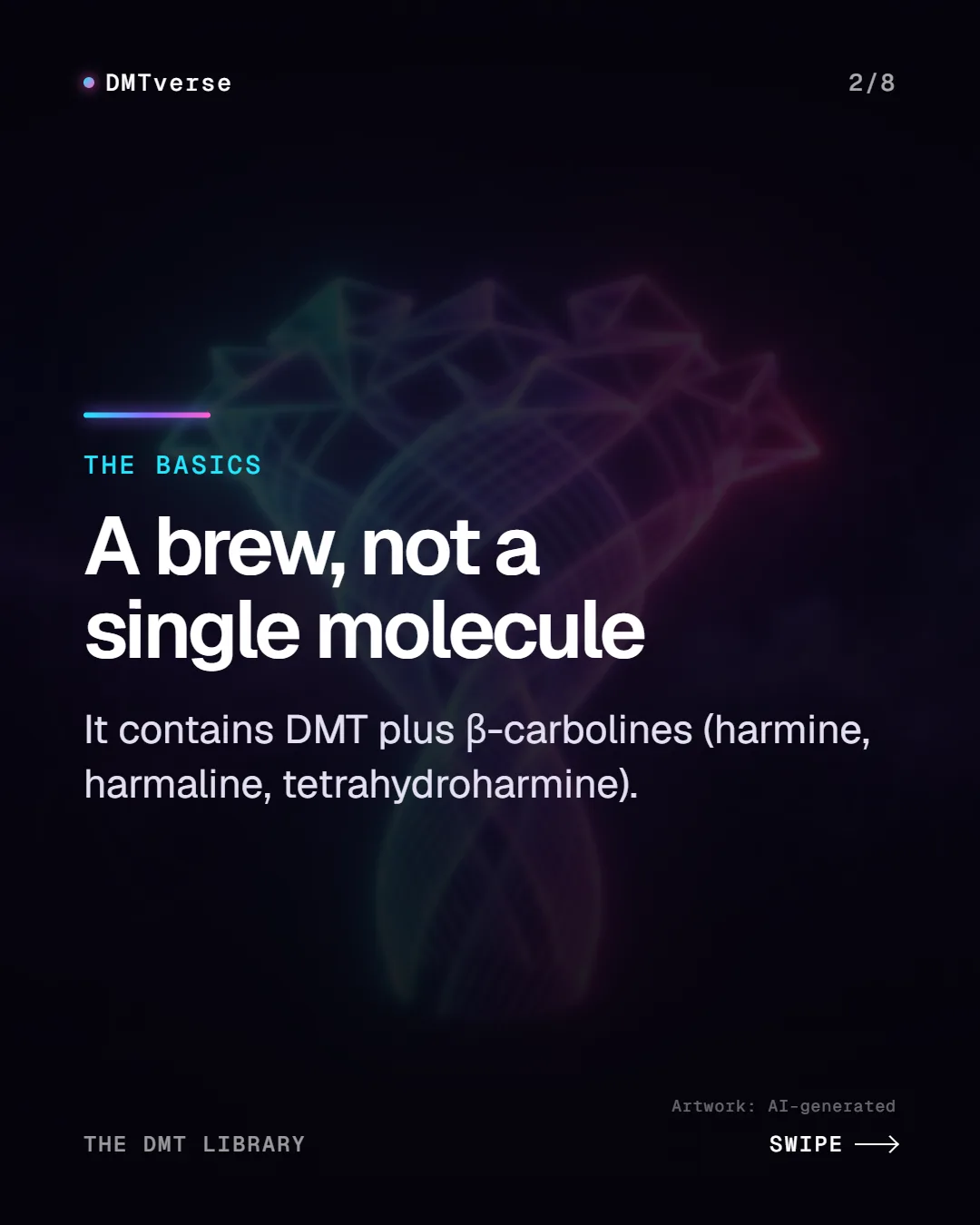
Ayahuasca is a brew from the Amazon basin that combines DMT (N,N-dimethyltryptamine) with β-carboline alkaloids, chiefly harmine, harmaline and tetrahydroharmine (McKenna, Towers and Abbott, 1984; Riba et al., 2003). The International Narcotics Control Board describes it as a preparation made from plants indigenous to the Amazon basin, containing a number of psychoactive alkaloids, including DMT (INCB, 2010). We do not name the plants or describe how the brew is made. Evidence: established.
It has many names. Among the Shipibo-Konibo of the Peruvian Ucayali it is ayawaska or oni, and other Indigenous nations call it yage, caapi or camaranti, among other names (Favaron, Williams and Bédard, 2026). In the United States, the União do Vegetal church calls its sacramental tea hoasca (Gonzales v. O Centro Espírita, 2006). Evidence: established.
Who uses it has changed. The anthropologist Bernd Brabec de Mori describes three large, overlapping groups today: Indigenous and Mestizo people within their own communities; “neo-shamanic” and recreational users all over the world; and patients in modern medical and psychiatric research (Brabec de Mori, 2021). Each group understands what ayahuasca is, and what it does, in a different way. Evidence: established as a description; the framing is the author’s.
How old is ayahuasca? What the evidence says
You will often read that ayahuasca has been drunk for thousands of years. The evidence is less certain than that. Archaeology shows that psychoactive plants containing DMT-type compounds have been used in South American ritual for a very long time. What it has not yet shown is ancient drinking of ayahuasca itself. Evidence: unresolved for the age of the drinking practice.
The strongest find is a ritual bundle from a rock shelter in the Lípez Altiplano of southwestern Bolivia, radiocarbon dated to approximately 1,000 CE. Mass spectrometry of residues found traces of bufotenine, DMT, harmine and cocaine, suggesting at least three plants were part of the kit. The authors note it is a documented case of a bundle containing both harmine and DMT, “the two primary ingredients of ayahuasca” (Miller et al., 2019). The bundle was a snuffing kit, so it is evidence that both compounds were carried and used together in ritual, not proof that anyone drank a brew. Evidence: established for the residues; how they were used is unresolved.
Older still, a 2025 study of Chavín de Huántar in the Peruvian Andes, a ceremonial centre of roughly 1200 to 400 BCE, analysed bone tubes sealed in an underground gallery. Microbotanical and chemical analyses gave direct evidence of psychoactive plants in tubes used as inhalers, including the northernmost direct evidence of vilca and tobacco use in the pre-Hispanic Andes (Rick et al., 2025). Again, this is snuff, not a drink. For more on these finds, see ancient DMT snuffs and archaeology. Evidence: established for the residues.
On the drinking practice itself, anthropologists disagree. Brabec de Mori argues that many writers repeat “un-referenced and never tested assumptions” that Indigenous people used ayahuasca for healing over millennia. In his reading of the ethnography, Indigenous and Mestizo people historically used it mainly for divination, counter-witchcraft, warfare and communal ritual (Brabec de Mori, 2021).
He argues that the idea of ayahuasca as a cure probably dates to the rubber boom and its violent exploitation of Indigenous people, and that its framing as “healing” was built in the second half of the 20th century. He adds that the words “ceremony” and “shaman” came into use in the 1990s for sessions involving visitors (Brabec de Mori, 2021). This is one scholar’s argument from circumstantial evidence; other researchers write of centuries of use (Haupt et al., 2026). Evidence: unresolved.
- c. 1200–400 BCEBone inhaler tubes at Chavín de Huántar, Peru, hold residues of psychoactive plants, including vilca and tobacco.Limit Snuff, not a brew.Source Rick et al., 2025
- c. 1000 CEA Bolivian ritual bundle holds traces of DMT, harmine, bufotenine and cocaine.Limit A snuffing kit; no evidence of drinking.Source Miller et al., 2019
- 20th centuryBrazilian syncretic churches adopt ayahuasca as a sacrament, later spreading to Europe and North America.Limit Describes religious use, not traditional Indigenous use.Source Bouso et al., 2012
- 1984Lab analysis shows ayahuasca strongly inhibits MAO in vitro, in proportion to its β-carboline content.Limit Test-tube work; the oral-activity mechanism was proposed, not yet confirmed in people.Source McKenna, Towers and Abbott, 1984
- 1990s“Ceremony” and “shaman” come into use for sessions with visitors, per one anthropologist.Limit One scholar’s account.Source Brabec de Mori, 2021
- 2006US Supreme Court rules for the UDV church at the preliminary-injunction stage.Limit A narrow religious-freedom ruling for one church.Source Gonzales v. O Centro Espírita, 2006
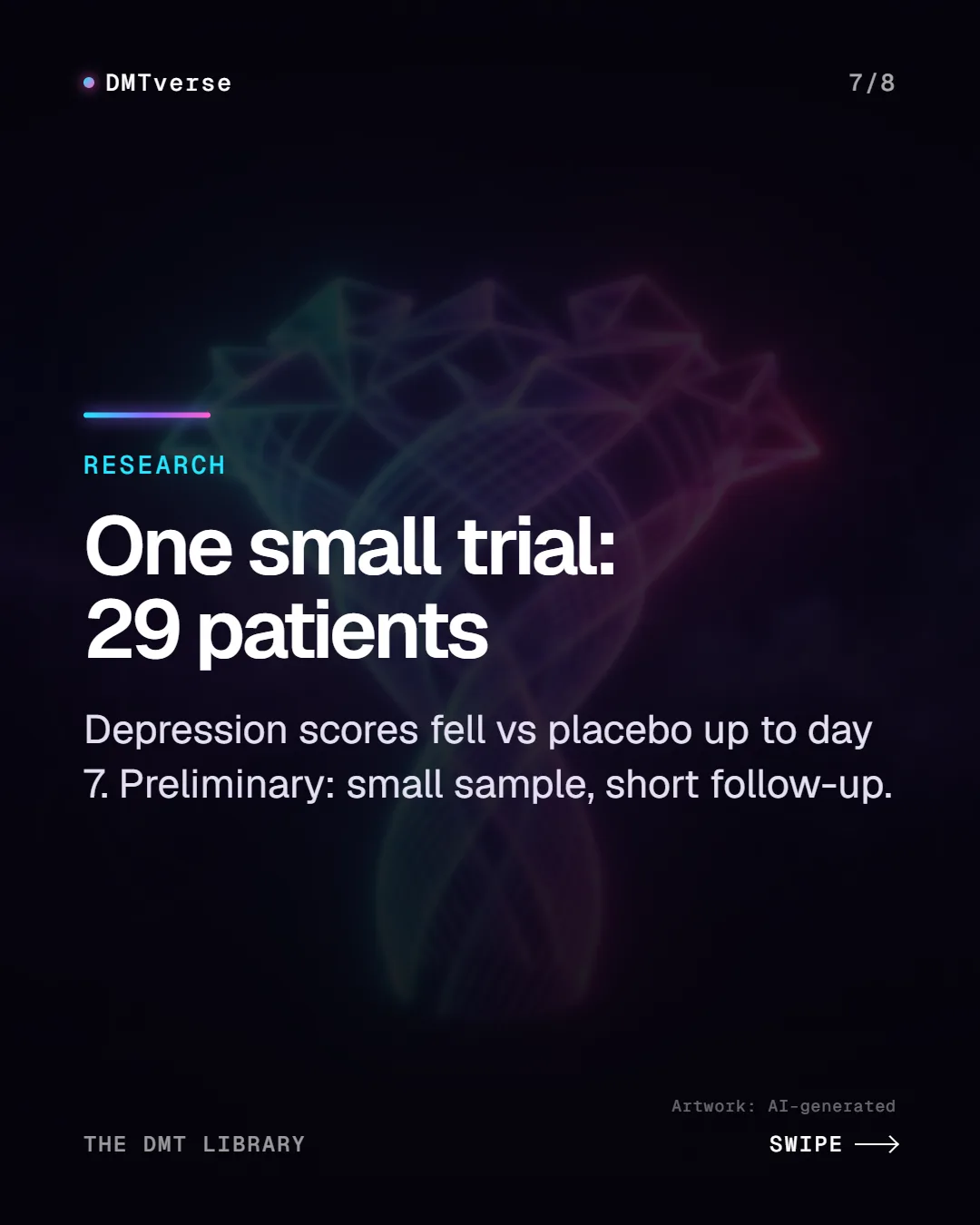
- 2019Randomized, placebo-controlled trial of ayahuasca in treatment-resistant depression; its authors call it the first controlled trial of a psychedelic in that condition.Limit 29 patients; one week of follow-up.Source Palhano-Fontes et al., 2019
How does ayahuasca work? The MAO mechanism in general terms
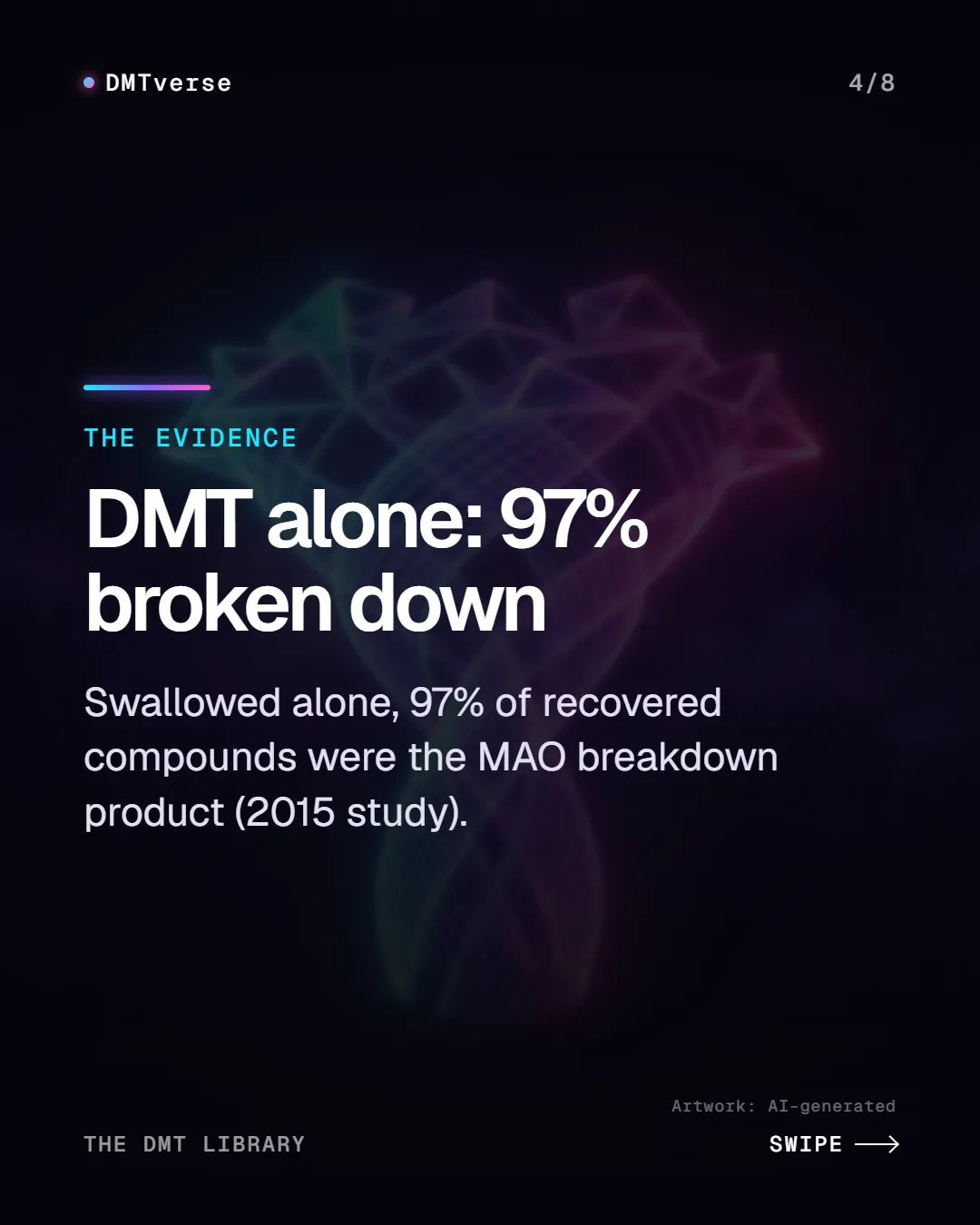
The key is an enzyme, monoamine oxidase (MAO). On its own, swallowed DMT does nothing noticeable. In a study of six experienced users, DMT taken by mouth produced no psychotropic effects and no DMT was recovered in urine; 97% of the recovered compounds were the MAO breakdown product, indole-3-acetic acid (Riba et al., 2015). The enzyme destroys it first. For more on that enzyme, see why DMT breaks down so fast. Evidence: established.
Ayahuasca’s β-carbolines are reversible MAO inhibitors. A 1984 laboratory study found ayahuasca samples were “extremely effective” inhibitors of MAO in vitro, that inhibition rose with the concentration of β-carbolines, and that their effects in combination were additive. At the time, the authors noted that this mechanism had been proposed to explain the brew’s oral activity but had not been experimentally confirmed (McKenna, Towers and Abbott, 1984). Evidence: established for the laboratory finding.
Later human work filled the gap: in a double-blind, placebo-controlled study of 18 volunteers, harmine was barely detectable in blood, which suggested it acts mainly in the gut and liver, where blocking MAO “would suffice to prevent first-pass metabolism of DMT” and let it reach the brain (Riba et al., 2003). Evidence: established in outline; the exact role of each alkaloid is less certain.
Two consequences follow. First, ayahuasca acts far more slowly and for longer than injected DMT; our ayahuasca vs DMT comparison sets out the timing. Second, because MAO also breaks down other substances, an MAO-inhibiting brew changes how the body handles some foods and medicines, which is the root of its main interaction risks below. For why DMT is cleared so quickly in the first place, see what is DMT.
Medicine, sacrament or something else?
In Indigenous use, Brabec de Mori writes, ayahuasca is understood mainly as an amplifying power for dealing with non-human beings in the animal, plant or spirit realms; its efficacy is not thought to depend on the drug but on correct communication between the healer, or sorcerer, and those powers. Modern medicine, by contrast, treats MAO inhibition and DMT activity as triggers for psychological and bodily responses. He argues the two views are so different that neither can be used to confirm the other (Brabec de Mori, 2021).
Writing from 15 years of fieldwork among the Shipibo-Konibo, Favaron and colleagues similarly argue that Indigenous use cannot be separated from its linguistic, cosmological and spiritual framework, and warn against reducing it to psychological projection (Favaron, Williams and Bédard, 2026). Evidence: these are interpretations, attributed to their authors, not settled findings.
In the 20th century, ayahuasca became the sacrament of Brazilian syncretic churches that have since expanded to urban Brazil, Europe and North America; members typically take part in ceremonies at least twice a month (Bouso et al., 2012). Their history and legal battles are covered in Santo Daime and UDV: the ayahuasca churches. Evidence: established.
Where does the name “Mother Ayahuasca” fit? Brabec de Mori notes that neo-animist renderings of “mother ayahuasca”, and of “teacher” or “master” plants, are very popular among Westerners, and that in the ceremonies he observed in Central Europe the substance itself was often worshipped as “mother”, “teacher” or “master” (Brabec de Mori, 2021). The figure also turns up in DMT reports: in 3,778 coded online accounts, “Gaia, Mother Ayahuasca, or Mother Nature” made up 34 of 1,719 entity encounters, or 2.0% (Lawrence et al., 2022). Evidence: established that the term is widely used; what, if anything, it refers to is a question of belief, not research.
What has research found, and what are its limits?
The research base is small and young. A 2026 scoping review found 26 registered interventional trials of DMT, ayahuasca or DMT combined with harmine on ClinicalTrials.gov. Most were phase I, mostly in medically and psychiatrically healthy adults, and primary outcomes were mostly about acute safety rather than treating a disorder (Stojanović et al., 2026). For trials of DMT itself, see DMT therapy research. Evidence: established for the count.
| Study | Design and sample | What it found | Main limit |
|---|---|---|---|
| Palhano-Fontes et al., 2019 | Double-blind, placebo-controlled; 29 people with treatment-resistant depression; one session. | Depression scores lower than placebo at days 1, 2 and 7; response at day 7, 64% vs 27%. | Small; one week of follow-up; remission difference not significant. |
| Bouso et al., 2012 | 127 regular ritual users vs 115 members of other religions, assessed twice a year apart. | No evidence of psychological maladjustment, mental health deterioration or cognitive impairment in users. | Users chose their religion; groups may differ in unmeasured ways. |
| Haupt et al., 2026 | Systematic review of 18 prospective studies, mostly retreat volunteers. | Group-level improvements in wellbeing and symptoms; subsets with persisting psychiatric complications. | Small samples, no control groups, non-randomized, unstandardized amounts. |
| Bouso et al., 2022 | Global online survey, 10,836 people from more than 50 countries. | 69.9% reported acute physical adverse effects, mainly vomiting; 2.3% needed medical attention afterwards. | Self-selected respondents; self-report. |
The depression trial is the best-known controlled study; its authors call it the first controlled trial of a psychedelic in treatment-resistant depression. Ayahuasca significantly lowered clinician-rated depression scores compared with placebo at one, two and seven days; at day 7, 64% responded on ayahuasca against 27% on placebo, and remission (36% against 7%) fell just short of significance (Palhano-Fontes et al., 2019). It is one small trial with a short follow-up, and vomiting is common enough to make blinding hard. Evidence: preliminary.
Observational studies of retreat-goers report improvements at the group level, but the 2026 review’s authors stress small samples, missing control groups and non-randomized designs, and note that some participants had persisting psychiatric complications linked to their use (Haupt et al., 2026). None of this shows that ayahuasca is a treatment. Evidence: preliminary.
What are the serious risks and interactions?
MAO inhibition makes some combinations dangerous
Researchers warn that combining ayahuasca’s MAO-inhibiting alkaloids with SSRI antidepressants “may induce a serotonin syndrome with potentially grave outcome” (Callaway and Grob, 1998). A 2024 review adds that MAO inhibitors stop the breakdown of tyramine, and that high tyramine can cause a hypertensive crisis (White et al., 2024). Do not stop or change prescribed medication on your own; talk to a prescriber or pharmacist. This is not medical advice.
How often these interactions happen is less clear than the mechanism. The 2024 review, covering 78 articles, describes serotonin syndrome with ayahuasca as a theoretical concern, reported only in extremely rare case studies with no confirmed case found; it also concludes that serious adverse effects are rarely reported in healthy people in controlled settings (White et al., 2024). Evidence: preliminary for how often harm occurs.
A 2013 review of reports linking ayahuasca to life-threatening reactions found that some lacked accurate forensic or toxicology information and others did not involve traditional ayahuasca. Even so, it concluded the cases suggest that heart disease, liver disease and current use of serotonergic drugs or medications are contraindications (dos Santos, 2013). Evidence: established for the mechanism; preliminary for how often harm occurs.
Adverse effects short of emergencies are common. In the Global Ayahuasca Survey, 55.9% reported adverse mental health effects in the weeks or months afterwards, although about 88% of them saw these as part of a positive process, and about 12% sought professional support. Physical adverse effects were associated with having a physical health condition and with use in a non-supervised context, among other factors (Bouso et al., 2022). Those are associations in a self-selected online sample. Evidence: preliminary.
Animal studies at high amounts have shown harm to pregnancy and fetal development (White et al., 2024). Evidence: preliminary. Our safety page covers general psychedelic risks, and magic mushrooms and antidepressants explains serotonin interactions more broadly.
If someone is in danger
Call 911 for immediate danger or urgent medical help, including if someone is unconscious, not breathing or having a seizure. In Ontario, the Ontario Poison Centre is at 1-800-268-9017; every province has a poison centre, listed by SickKids (AboutKidsHealth). If you or someone you know is thinking about suicide, call or text 9-8-8, 24 hours a day (Government of Canada). See also our safety page and how to help someone having a bad trip.
Is ayahuasca legal?
In Canada, the brew has no separate entry in the Controlled Drugs and Substances Act, but N,N-dimethyltryptamine is item 7 of Schedule III and harmaline is item 9, so a preparation containing them is controlled (consolidation current to 30 September 2026) (Justice Laws, CDSA). This is general information, not legal advice. A 2024 report by the Information Commissioner of Canada describes an application to Health Canada for a religious exemption to serve ayahuasca under section 56 of the Act (Information Commissioner, 2024). The details are in is DMT legal in Canada. Evidence: established.
Internationally, the picture is ambiguous. DMT is controlled under the 1971 UN Convention on Psychotropic Substances, but the International Narcotics Control Board said in its 2010 report that no plants are controlled under that convention and that preparations made from them, such as decoctions for oral use, are also not under international control, naming ayahuasca as an example (INCB, 2010). The US Supreme Court, by contrast, said in 2006 that it did not agree with a lower court that the convention does not cover hoasca, while still ruling for the church at that preliminary stage (Gonzales v. O Centro Espírita, 2006). Evidence: established for what each document says.
What we still don’t know
- How old the drinking of ayahuasca is. Ancient residues come from snuff kits and inhalers, not drinking vessels (unresolved).
- Whether ayahuasca has any lasting effect on depression. The randomized trial described here had 29 people and one week of follow-up (preliminary).
- Who is at risk of lasting psychiatric harm, since retreat studies lack control groups (preliminary).
- How common serious drug interactions are. The pharmacology is clear; confirmed cases are scarce and death reports often lack toxicology (unresolved).
- How each alkaloid contributes, given that brews vary (unresolved).
- How far research findings, made in screened volunteers, apply to the wider world of ceremonies and retreats (unresolved).
The fair summary: ayahuasca is a chemical combination with a real but debated history, a small and early evidence base, and specific risks that come from the very mechanism that makes it work. For the molecule at its centre, read what is DMT.
Common questions
What is ayahuasca?
Ayahuasca is a psychoactive brew from the western Amazon that contains DMT together with β-carboline alkaloids (harmine, harmaline and tetrahydroharmine). The β-carbolines block the enzyme MAO, which would otherwise break down DMT before it reaches the brain.
Is ayahuasca the same as DMT?
No. DMT is one molecule; ayahuasca is a brew that contains DMT plus MAO-inhibiting alkaloids, which changes its timing, body effects and interaction risks. Our ayahuasca vs DMT article compares them side by side.
How old is ayahuasca?
Nobody knows for sure. A Bolivian ritual bundle from about 1,000 CE held traces of DMT and harmine, but it was a snuffing kit, not evidence of drinking. Some anthropologists argue that the use of ayahuasca for healing is a relatively recent development, while other researchers describe centuries of use.
Why does ayahuasca work when swallowed DMT does not?
Swallowed alone, DMT is broken down by the enzyme MAO before it reaches the brain; in one study, 97% of the recovered compounds were the MAO breakdown product. Ayahuasca’s β-carbolines inhibit MAO, mainly in the gut and liver, so DMT can reach the circulation.
Does ayahuasca treat depression?
It has not been shown to. One randomized, placebo-controlled trial of 29 people with treatment-resistant depression found lower depression scores than placebo for up to seven days. That is a preliminary signal from a small study, not proof of a treatment.
Is ayahuasca dangerous with antidepressants?
It can be. Because ayahuasca inhibits MAO, researchers warn that combining it with SSRI antidepressants may cause serotonin syndrome, and MAO inhibition also affects tyramine, which can raise blood pressure dangerously. Confirmed cases are rare, but the mechanism is well understood. Do not change medication without a prescriber.
Is ayahuasca legal in Canada?
Not without authorization. The brew has no separate listing, but DMT and harmaline are Schedule III controlled substances under the Controlled Drugs and Substances Act. Health Canada has treated religious ayahuasca use as needing a section 56 exemption from the federal Minister of Health; our article on DMT and Canadian law covers what is known. This is not legal advice.
What is the ayahuasca purge?
“The purge” is the name many traditions give to the vomiting that often comes with ayahuasca, which they treat as cleansing and meaningful. Vomiting is common: in a placebo-controlled depression trial, 57% of people given ayahuasca vomited, against none on placebo. The cleansing view is cultural and untested as a health effect; see what does ayahuasca feel like for more.
Who is Mother Ayahuasca?
“Mother Ayahuasca” is a name that treats the brew as a feminine being rather than a drink. The anthropologist Bernd Brabec de Mori describes this “mother” framing, along with “teacher” and “master” plants, as a neo-animist idea that is very popular among Westerners, and reports that in ceremonies he observed in Central Europe the brew itself was worshipped as “mother”. In one large set of online DMT reports, Gaia, Mother Ayahuasca or Mother Nature appeared in 2.0% of entity encounters. Research describes the belief; it does not test it.
Shroomverse sells mushroom products. This article is general information about the history, pharmacology and research of ayahuasca. It is not medical, legal or purchasing advice, and it does not recommend any product.
SOURCES
- Phenomenology and content of the inhaled N,N-dimethyltryptamine (N,N-DMT) experience (Lawrence DW, Carhart-Harris R, Griffiths R, Timmermann C, Scientific Reports 12:8562, 2022), Springer Nature (peer-reviewed, open access); full text via Europe PMC, PMC9130218. Accessed . Full text read 24 October 2026 via Europe PMC. Supports 3,778 coded online DMT reports; entity encounters in 1,719 (45.5%); “Gaia, Mother Ayahuasca, or Mother Nature” in 34 encounters (2.0% of encounters), within the archetypal feminine group (24.2%). Inhaled DMT reports, not ayahuasca ceremonies. Dose figures not reproduced.
- Chemical evidence for the use of multiple psychotropic plants in a 1,000-year-old ritual bundle from South America (Miller MJ, Albarracin-Jordan J, Moore C, Capriles JM, PNAS 116(23):11207–11212, 2019), National Academy of Sciences (peer-reviewed); PMC6561276. Accessed . Abstract read via Europe PMC. Bundle radiocarbon dated to about 1,000 CE, Lípez Altiplano, Bolivia; traces of bufotenine, DMT, harmine and cocaine; at least three plants; harmine and DMT described as the two primary ingredients of ayahuasca. It was a snuffing kit (per the DMTverse ledger, claim H9); no evidence of drinking.
- Pre-Hispanic ritual use of psychoactive plants at Chavín de Huántar, Peru (Rick JW, et al., PNAS 122:e2425125122, 2025), National Academy of Sciences (peer-reviewed); PMC12088378. Accessed . Abstract read via Europe PMC. Middle-Late Formative Chavín (about 1200–400 BCE); 23 artifacts, especially bone tubes, in a sealed gallery; direct evidence of psychoactive plants in tubes used as inhalers; northernmost direct evidence of vilca and Nicotiana use in the pre-Hispanic Andes.
- The Power of Social Attribution: Perspectives on the Healing Efficacy of Ayahuasca (Brabec de Mori B, Frontiers in Psychology 12:748131, 2021), Frontiers (peer-reviewed, open access); PMC8581211. Accessed . Full text read via Europe PMC (re-read 2026-10-24 for the “mother ayahuasca” passage: neo-animist renderings of “mother ayahuasca” and “teacher”/“master” plants popular among Westerners; substance worshipped as “mother”, “teacher” or “master” in Central European ceremonies he observed). Three overlapping user groups; Indigenous understanding as amplifying power for dealing with non-human beings; historical uses for divination, counter-witchcraft, warfare and communal ritual (citing Gow 1994 and others); curing idea probably dating to the rubber boom; healing framing constructed in the second half of the 20th century; “ceremony” and “shaman” used for visitor sessions from the 1990s; millennia-of-healing claims called untested.
- Oni pae mera: Ayawaska among the Shipibo-Konibo and the crisis of western universalism (Favaron P, Williams M, Bédard D, Journal of Psychedelic Studies 10(2):173–188, 2026), Akadémiai Kiadó (peer-reviewed). Accessed . Abstract read via the Crossref record. Names for the brew (ayawaska, yage, oni, caapi, camaranti); 15 years of fieldwork among the Shipibo-Konibo; argument that Indigenous use cannot be separated from its cultural framework.
- Monoamine oxidase inhibitors in South American hallucinogenic plants: tryptamine and beta-carboline constituents of ayahuasca (McKenna DJ, Towers GH, Abbott F, Journal of Ethnopharmacology 10(2):195–223, 1984), Elsevier (peer-reviewed). Accessed . Abstract read via Europe PMC. β-carbolines as reversible MAO inhibitors; ayahuasca an extremely effective MAO inhibitor in vitro, correlated with β-carboline concentration; combined effects additive; oral-activity mechanism proposed but not then confirmed. Plant names and quantities in the abstract deliberately not reproduced.
- Metabolism and urinary disposition of N,N-dimethyltryptamine after oral and smoked administration: a comparative study (Riba J, McIlhenny EH, Bouso JC, Barker SA, Drug Testing and Analysis 7(5):401–406, 2015), Wiley (peer-reviewed). Accessed . Abstract read via Europe PMC. Six users; DMT taken orally alone produced no psychotropic effects and no urinary DMT; MAO-dependent indole-3-acetic acid was 97% of recovered compounds (dose not reproduced here).
- Human pharmacology of ayahuasca: subjective and cardiovascular effects, monoamine metabolite excretion, and pharmacokinetics (Riba J, et al., Journal of Pharmacology and Experimental Therapeutics 306(1):73–83, 2003), American Society for Pharmacology and Experimental Therapeutics (peer-reviewed). Accessed . Abstract read via Europe PMC. Double-blind, placebo-controlled, 18 experienced volunteers; constituent alkaloids; negligible harmine plasma levels suggesting a gut and liver site of action that would prevent first-pass metabolism of DMT (doses not reproduced here).
- Rapid antidepressant effects of the psychedelic ayahuasca in treatment-resistant depression: a randomized placebo-controlled trial (Palhano-Fontes F, et al., Psychological Medicine 49(4):655–663, 2019), Cambridge University Press (peer-reviewed); PMC6378413. Accessed . Abstract read via Europe PMC. Parallel-arm, double-blind RCT, 29 patients, single session; MADRS lower at D1, D2 and D7; response at D7 64% vs 27%; remission 36% vs 7% (p = 0.054); the authors describe it as, to their knowledge, the first controlled trial of a psychedelic in treatment-resistant depression (rechecked 20 October 2026).
- Preliminary effects of ayahuasca on mental and physical health: A systematic review of prospective studies (Haupt MJ, Carra S, Boehnke KF, Aday JS, Progress in Neuro-Psychopharmacology and Biological Psychiatry 145:111634, 2026), Elsevier (peer-reviewed). Accessed . Abstract read via Europe PMC. 18 prospective studies, mostly unselected retreat volunteers; population-level improvements; subsets with persisting psychiatric complications; limits (small samples, unstandardized amounts, no controls, non-randomized); describes use over centuries.
- Personality, psychopathology, life attitudes and neuropsychological performance among ritual users of Ayahuasca: a longitudinal study (Bouso JC, et al., PLoS ONE 7(8):e42421, 2012), PLOS (peer-reviewed, open access); PMC3414465. Accessed . Abstract read via Europe PMC. Brazilian syncretic churches expanding to urban Brazil, Europe and North America, ceremonies at least twice a month; 127 users vs 115 controls at baseline and one year; no evidence of maladjustment, deterioration or impairment.
- Adverse effects of ayahuasca: Results from the Global Ayahuasca Survey (Bouso JC, et al., PLOS Global Public Health 2(11):e0000438, 2022), PLOS (peer-reviewed, open access); PMC10021266. Accessed . Abstract read via Europe PMC. 10,836 respondents, 2017–2019, more than 50 countries; 69.9% acute physical adverse effects, 2.3% medical attention; 55.9% adverse mental health effects, about 88% seeing them as positive, about 12% sought support; associations with physical conditions and non-supervised use.
- Registered Clinical Trials of Ayahuasca and DMT: A Scoping Review (Stojanović T, et al., Clinical Pharmacology and Therapeutics 120:94–108, 2026), Wiley (peer-reviewed); PMC13264465. Accessed . Abstract read via Europe PMC. 26 registered interventional trials; mostly phase I; healthy-adult eligibility; acute safety outcomes prioritized.
- Ayahuasca preparations and serotonin reuptake inhibitors: a potential combination for severe adverse interactions (Callaway JC, Grob CS, Journal of Psychoactive Drugs 30(4):367–369, 1998), Taylor & Francis (peer-reviewed). Accessed . Abstract read via Europe PMC. Source of the quoted warning on SSRIs and serotonin syndrome.
- Ayahuasca and Dimethyltryptamine Adverse Events and Toxicity Analysis: A Systematic Thematic Review (White E, Kennedy T, Ruffell S, Perkins D, Sarris J, International Journal of Toxicology 43(3):327–339, 2024), SAGE (peer-reviewed, open access); PMC11088222. Accessed . Abstract and full text read via Europe PMC. 78 articles; tyramine and hypertensive crisis risk with MAOIs; serotonin syndrome a theoretical concern with no confirmed cases found; animal teratogenic and abortifacient effects at higher amounts; serious adverse effects rare in healthy people in controlled settings.
- A critical evaluation of reports associating ayahuasca with life-threatening adverse reactions (dos Santos RG, Journal of Psychoactive Drugs 45(2):179–188, 2013), Taylor & Francis (peer-reviewed). Accessed . Abstract read via Europe PMC. Reports lack forensic or toxicology data or concern non-traditional preparations; cardiac and hepatic disease and serotonergic drugs suggested as contraindications.
- Gonzales v. O Centro Espírita Beneficente União do Vegetal, No. 04-1084 (US Supreme Court, decided 21 February 2006), syllabus, Legal Information Institute, Cornell Law School. Accessed . Syllabus read. Hoasca described as a tea containing DMT; the Court disagreed with the District Court that the 1971 Convention does not cover hoasca, but held the government had not shown a compelling interest at the preliminary-injunction stage.
- Report of the International Narcotics Control Board for 2010, paragraphs 284–287, International Narcotics Control Board. Accessed . PDF read. No plants controlled under the 1971 or 1988 Conventions; preparations such as decoctions for oral use not under international control; ayahuasca named as an example and described as containing DMT.
- Controlled Drugs and Substances Act (S.C. 1996, c. 19), Schedule III, Government of Canada, Justice Laws Website. Accessed . Full text read; consolidation current to 2026-09-30, last amended 2026-07-18. Schedule III item 7 (DMT) and item 9 (harmaline).
- Health Canada (Re), 2024 OIC 10 (date modified 2024-05-17), Office of the Information Commissioner of Canada. Accessed . Report read. Supports the existence of an access request about an application for a religious exemption to serve ayahuasca under section 56 of the CDSA.
- Mental health support: get help, Government of Canada, Public Health Agency of Canada. Accessed . Supports calling 9-1-1 in immediate danger or for urgent medical support, and calling or texting 9-8-8, 24 hours a day.
- Poison information centres in Canada, AboutKidsHealth, The Hospital for Sick Children (SickKids). Accessed . Supports the provincial poison centre list, including Ontario toll-free 1-800-268-9017, and calling 911 if someone is unconscious, not breathing or having a seizure.
CHANGES
- : Added a paragraph and an FAQ on the term “Mother Ayahuasca”, sourced to Brabec de Mori 2021 (re-read) and Lawrence et al. 2022 (full text read); added related search terms to keywords.
- : Added an FAQ on the ayahuasca purge, from the article's existing trial source, linked to what does ayahuasca feel like.
- : Linked glossary definitions.
- : Published. All sources opened and checked on this date, including the CDSA consolidation current to 30 September 2026.
- : Editorial review: removed benefit wording from the summary; corrected the “only randomized trial” and “first trial” wording to match the trial authors’ own claim; split long paragraphs; added evidence labels, the Schedule III item numbers, a not-legal-advice line on the Canadian paragraph and a link to the MAO explainer.



