
THE SHROOMVERSE JOURNAL ✳ 14 MIN READ
What happens at an ayahuasca ceremony? What anthropologists and researchers have documented
Topic: DMT
Published
Listen: the 3-minute version
AI-narrated summary of this article
Short answer, checked 24 October 2026
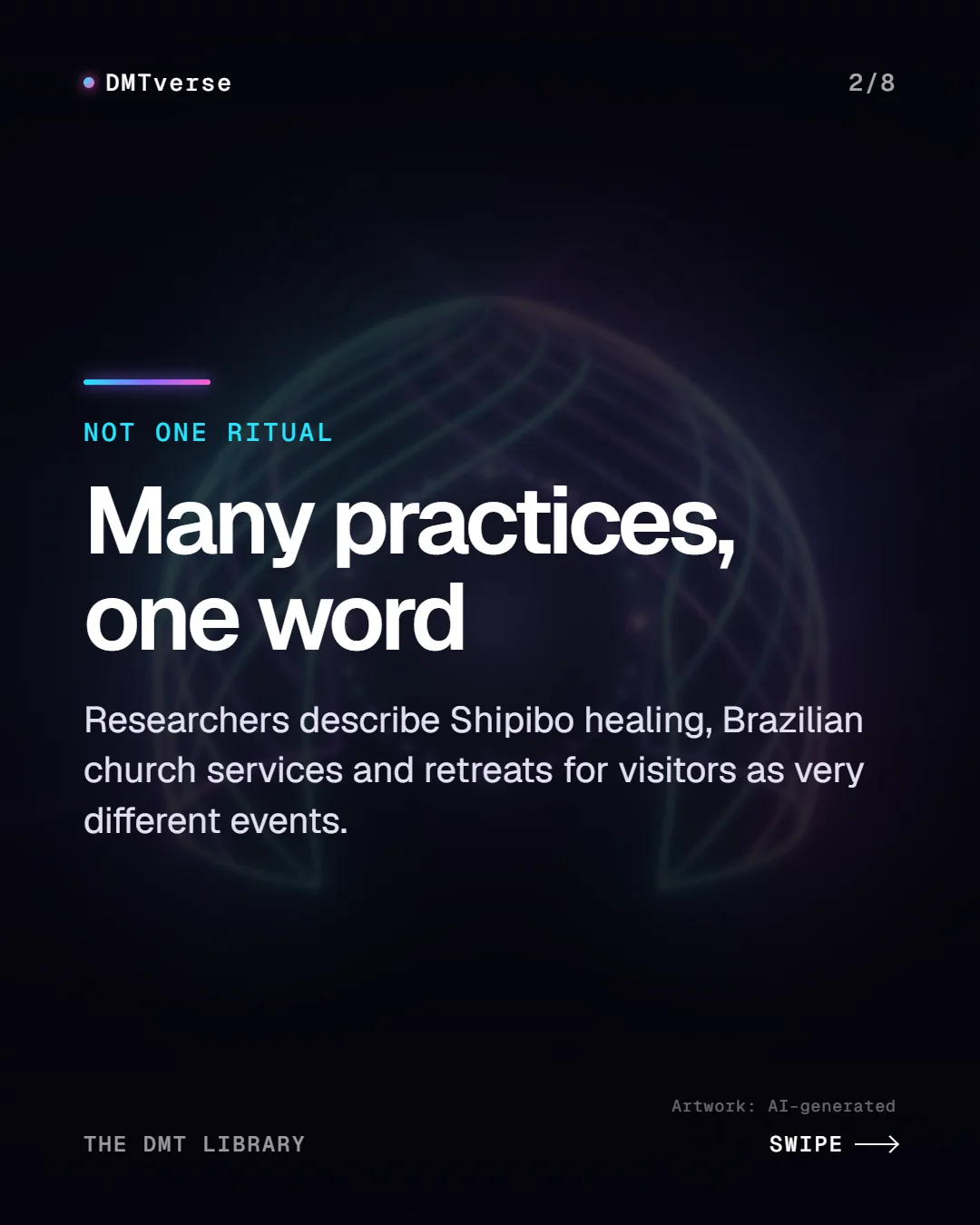
It depends on the tradition, and researchers describe very different events under one word. In Shipibo-Konibo healing in Peru, a healer sings songs called icaros, and fieldwork shows that historically the healer, not the patient, often drank. In the Brazilian churches, members sing hymns during services that can last most of a night. Retreats for visitors hold group sessions, often at night, led by facilitators with music. Studies report frequent vomiting and some serious harms, and drug interactions are a known danger. In Canada, DMT is a Schedule III controlled substance.
THE SHORT VERSION · SWIPE
On this page 8 sections
“Ayahuasca ceremony” sounds like one thing. In the research it is several. Anthropologists have studied healing sessions in Amazonian communities, sociologists and courts have described church services in Brazil and abroad, and health researchers have surveyed the retreats that now host visitors. This page sets out what they documented, where they disagree, and what the risks and the law are in Canada.
Education only, not a guide
This article describes what researchers have recorded. It is not a guide to attending a ceremony, and it gives no amounts, preparation details, places or advice on taking part. It is not medical or legal advice. Evidence labels used below: established (documented in peer-reviewed studies, court records or official text and not seriously disputed), preliminary (one study, small, observational or self-reported) and unresolved (an open question).
Is there one kind of ayahuasca ceremony?
No. A 2023 review lists many names for ayahuasca practitioners, including taita, vegetalista, ayahuasquero, maestro, onaya and curandero, and notes that in certain groups only the healer drank the brew, to diagnose illness and decide on treatment (Ruffell et al., 2023). The same review records a scholarly debate on origins: some propose that today’s ceremonial forms took shape around 300 years ago in a Spanish missionary context and spread through rubber camps, pointing to shared terms, musical structure and the ritual use of tobacco smoke, while allowing that some elements are older. Evidence: established that practices vary; their history is unresolved.
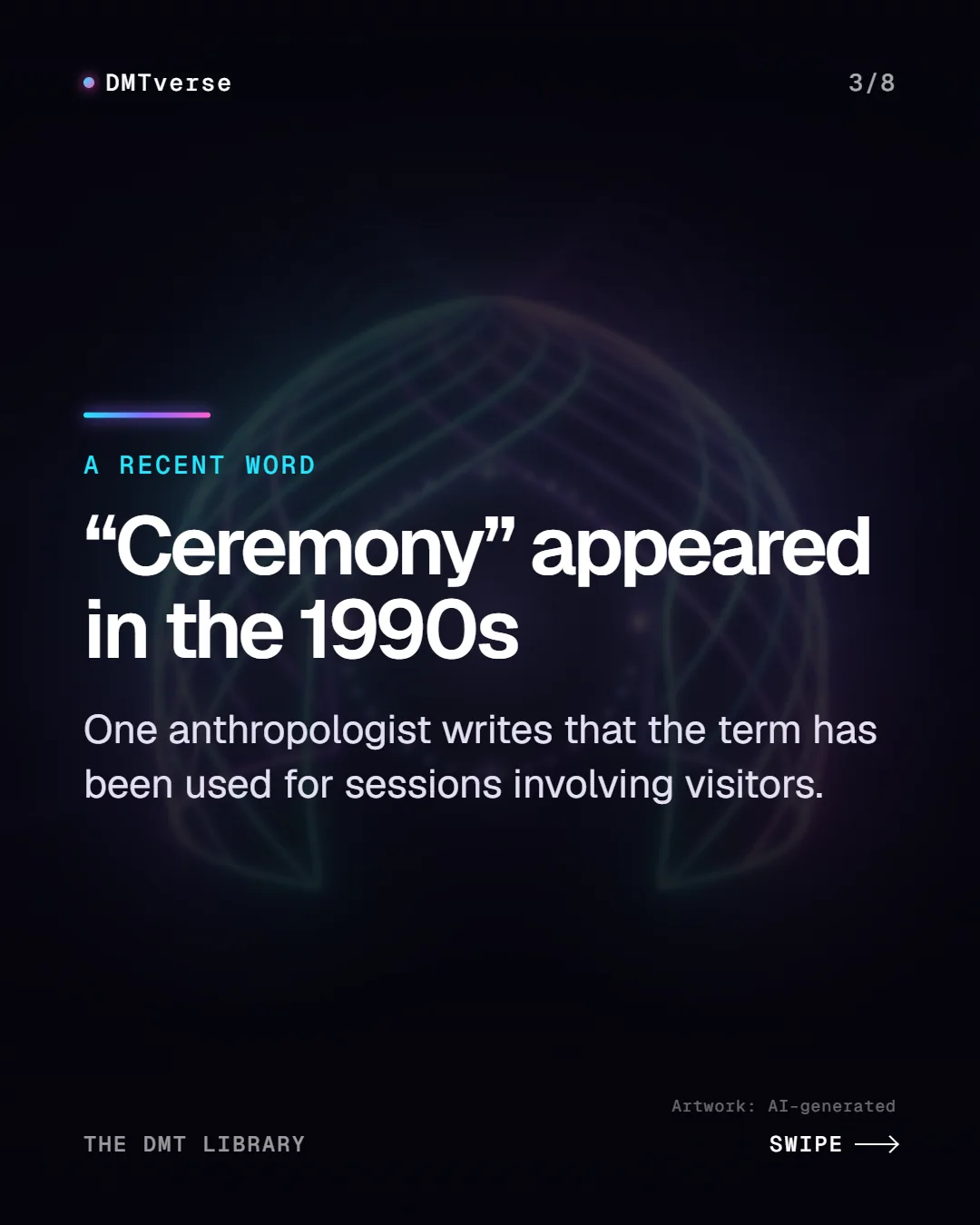
Even the word “ceremony” has a history. The anthropologist Bernd Brabec de Mori, who did fieldwork among the Shipibo-Konibo from 2000 to 2006, writes that the term appeared in the 1990s and has been used for sessions involving visitors, and that communal drinking sessions developed after researchers and tourists arrived (Brabec de Mori, 2021). Evidence: one anthropologist’s account, from long fieldwork.
What happens in Shipibo-Konibo healing sessions?
The Shipibo-Konibo are an Indigenous nation of the Ucayali region of Peru. Writing from 15 years of fieldwork, Favaron, Williams and Bédard argue that Shipibo use of the brew cannot be understood apart from its linguistic, cosmological and spiritual framework, and they warn against reducing it to Western psychology. Their article centres the words of Shipibo visionary healers, the onanyabo (Favaron, Williams and Bédard, 2026). Evidence: established as published scholarship.
The healer and the songs
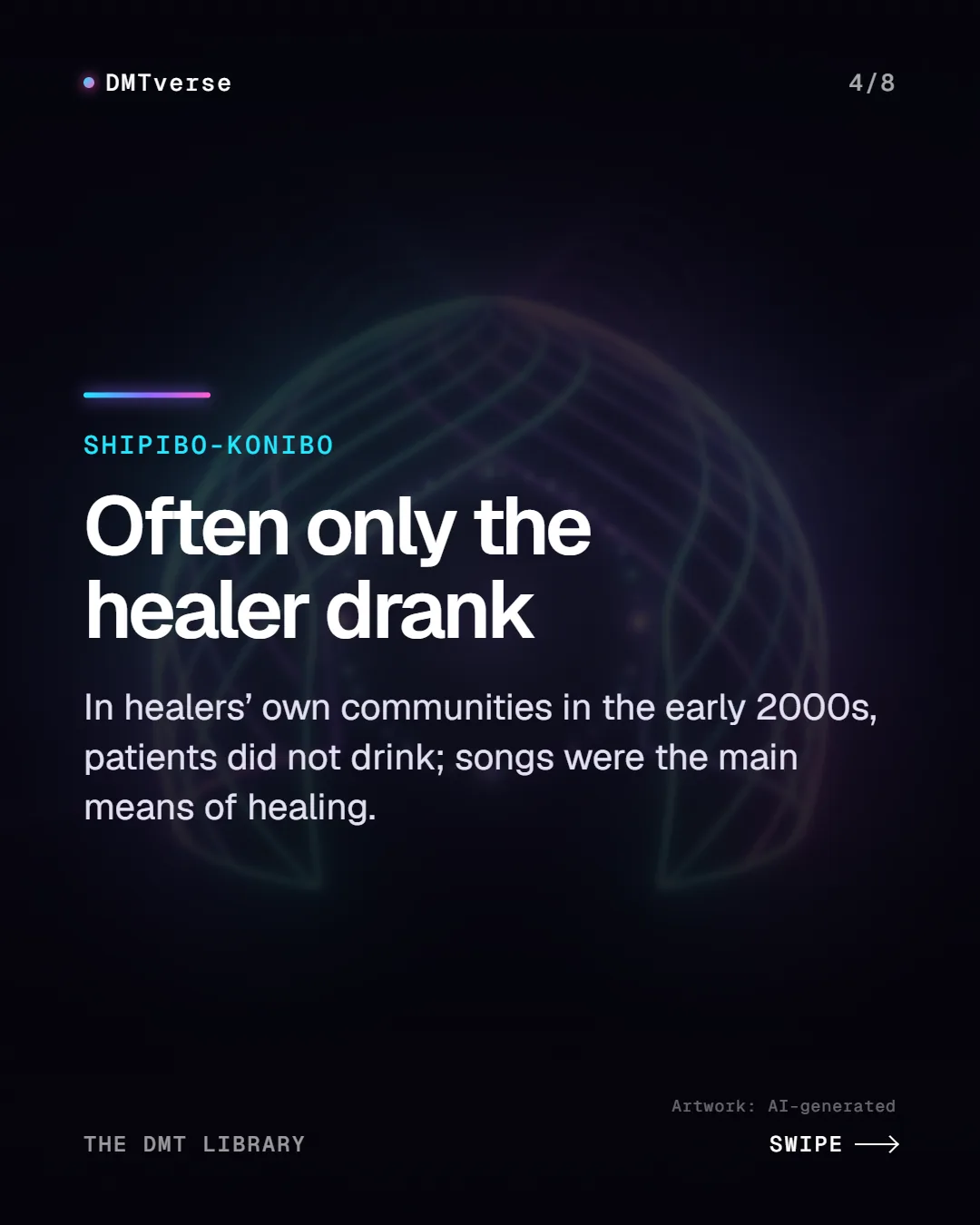
In Brabec de Mori’s account of healers working in their own communities in the early 2000s, songs were the main means of healing. A healer’s standing rested on long periods of training with plants, relationships with non-human allies, and a large repertoire of songs. He writes that drinking ayahuasca was optional and restricted to the specialist, that patients did not drink it, and that the most powerful healers, the meraya, did not use it at all (Brabec de Mori, 2021). Evidence: established as one fieldworker’s observation.
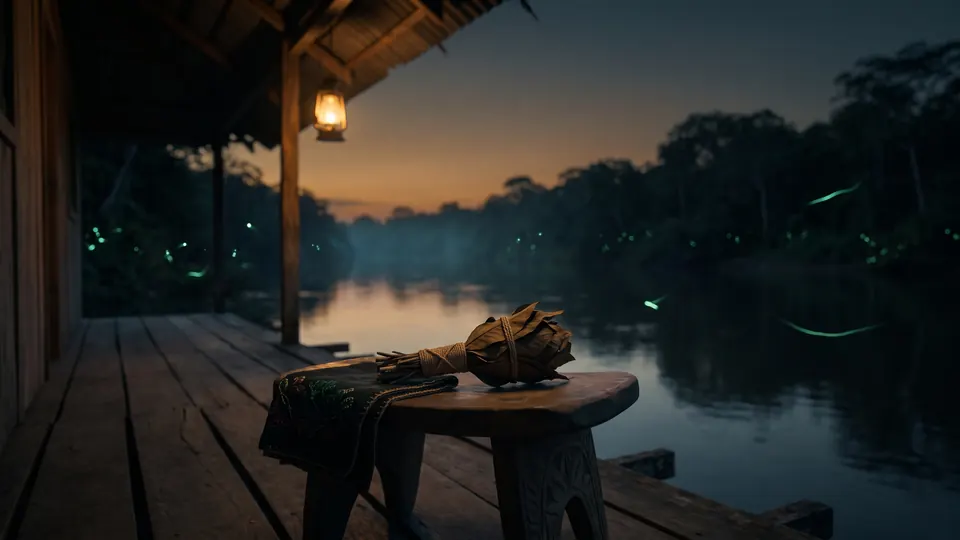
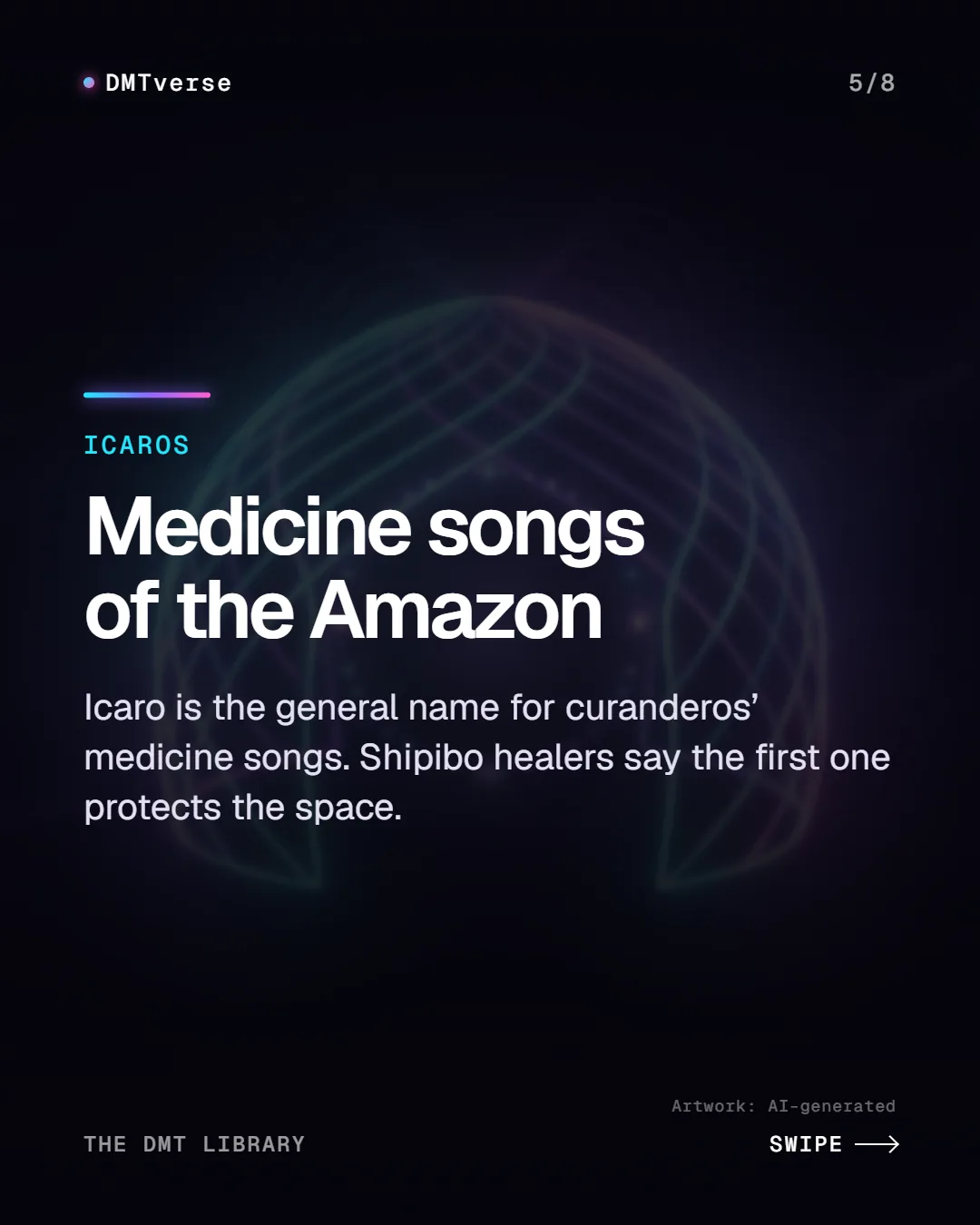
Icaro is the general name for the medicine songs used by curanderos in the Peruvian Amazon. A 2021 study of a Shipibo-led healing program for Western visitors recorded how the healers described their own work: the first icaro of a ceremony is meant to set up a protective structure around the space, the first ceremony in a series is diagnostic, later ones aim to clear what the healers call dense energies, and a final ceremony seals the work. The healers also used tobacco smoke and, outside ceremonies, plant and flower baths (Gonzalez et al., 2021). Evidence: established as the healers’ own description; these are beliefs, not tested mechanisms.
That program shows how tradition has adapted. Its ceremonies were run by five Shipibo onanyabo with two Western facilitators, and the authors say they were rooted in Shipibo medicine but adapted for Western participants. The authors add that, within this system, separating the brew’s effects from the healers’ work is not even conceived (Gonzalez et al., 2021). Evidence: established as described.
Is purging part of the tradition?
Researchers disagree. Fotiou and Gearin, drawing on the literature and on interviews or surveys with 227 people in Peruvian shamanic tourism and Australian neo-shamanic networks between 2003 and 2015, conclude that purging has been integral to the therapeutic use of ayahuasca across and beyond Amazonia, and argue it should not be dismissed as a mere side effect (Fotiou and Gearin, 2019). The 2023 review notes that some practitioners call the brew “la purga” and that vomiting is traditionally seen as expelling physical toxins and psychological trauma (Ruffell et al., 2023).
Brabec de Mori reports something different from the community setting he studied: in around 100 sessions among traditional Shipibo healers, he saw no healer vomit, and vomiting “was not a topic” (Brabec de Mori, 2021). Both can be true. Purging may matter a great deal in some settings, especially those with visitors drinking, and little in others. Evidence: unresolved as a general claim about “the tradition”.
What happens at Santo Daime and UDV services?
The Brazilian ayahuasca religions run ceremonies as church services. A 2023 review says ayahuasca entered urban Brazil within religious contexts in the 1930s, and that churches such as Santo Daime, Barquinha and the União do Vegetal (UDV) incorporated it (Ruffell et al., 2023). A 2012 study describes members as typically taking part at least twice a month (Bouso et al., 2012). Their founders, beliefs and court cases are covered in Santo Daime and the UDV. Evidence: established.
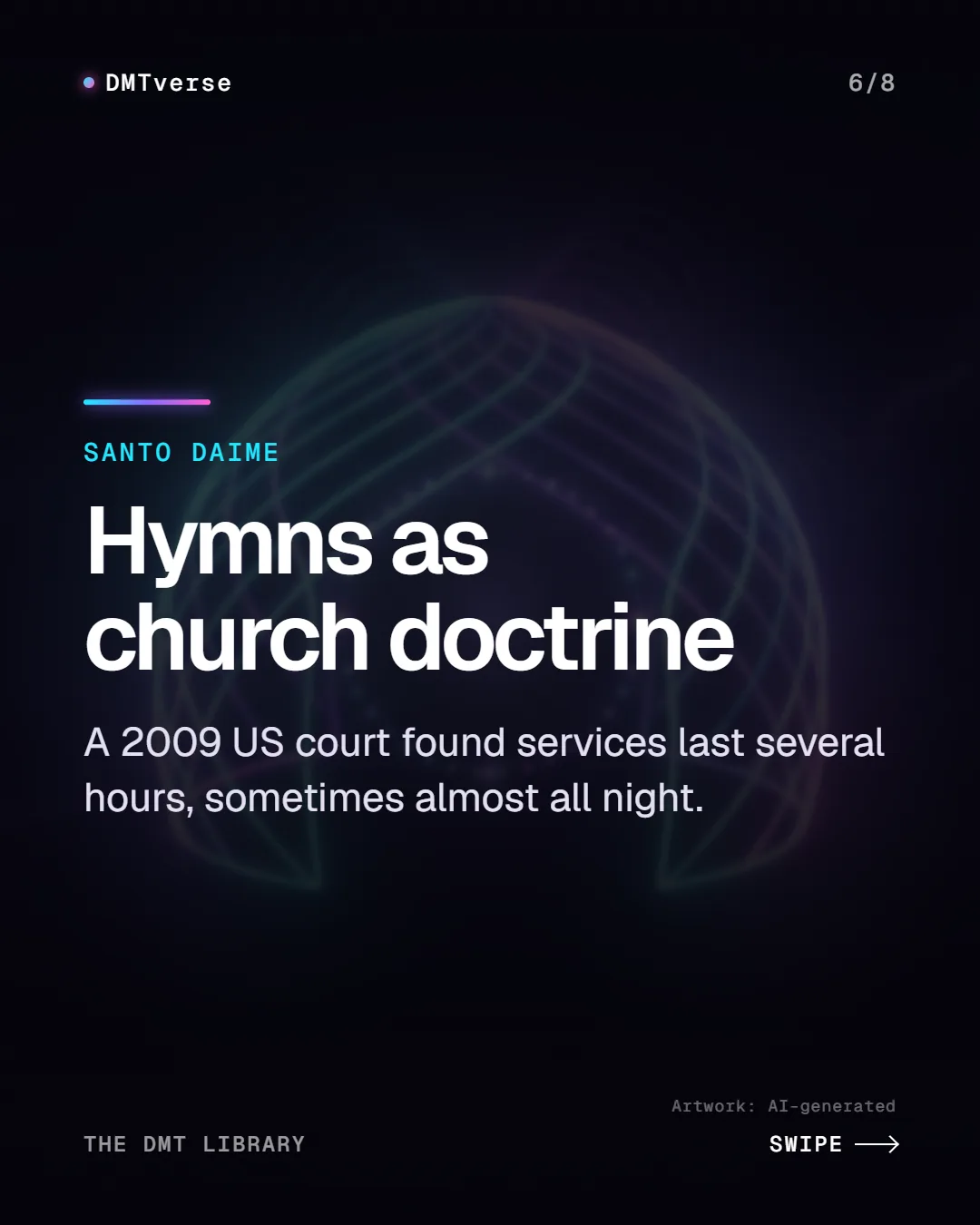
A 2009 US federal court opinion gives a rare detailed record of one Santo Daime church in Oregon. The court described the church’s spiritual leader as its “padrinho”, and found that hymns constitute church doctrine and are sung at most services, that members were expected to attend three or four times a month at services lasting several hours and sometimes almost all night, and that members learn some Portuguese to understand the hymns. It recorded that members may sit quietly with eyes half-closed, that they view vomiting and diarrhea as a beneficial purging or cleansing, and that the church screened out thrill-seekers and people who might be too physically weak or mentally unstable (Church of the Holy Light of the Queen v. Mukasey, 2009). Evidence: established as the court’s findings about one church.
Settings shape experience. A 2023 study in Uruguay compared one neo-shamanic group with one Santo Daime group, including an ethnographic description of both rituals. The neo-shamanic group scored higher on bodily and perceptual effects, which the authors relate to its “high-arousal ritual setting”, while the Santo Daime group scored lower on several anxiety-related personality measures (Apud et al., 2023). Evidence: preliminary (two small groups).
What happens at retreat-style ceremonies?
Retreats for visitors are the newest form. Brabec de Mori writes that most such sessions are held for non-Indigenous people, run by neo-shamans who either trained with Amazonian practitioners or created their own eclectic styles (Brabec de Mori, 2021). One published description comes from a 2025 study of a four-day retreat with 36 participants: ceremonies began at 9 pm and lasted six hours, with music, guided meditations and interfaith elements, and morning sessions for sharing experiences (Sznitman et al., 2025). Evidence: established for that retreat; formats vary widely.
Safety practice varies too. In 2023 researchers interviewed 49 organizations advertising psychedelic retreats in English, all offering ayahuasca, psilocybin or both. All collected medical histories and 36 (73.5%) excluded people with certain health conditions; 43 (87.8%) required or recommended stopping medications for periods that varied widely; and 34 (69.4%) worked with a licensed health professional or someone with emergency training. The authors found “substantial variability” and said some practices may increase risk, and called for guidelines developed with Indigenous and non-clinical communities (McGuire et al., 2026). Evidence: established for those organizations; self-reported by them.

| Shipibo-Konibo healing (fieldwork) | Brazilian churches (Santo Daime, UDV) | Contemporary retreats | |
|---|---|---|---|
| Who leads | A healer (onanyabo among the Shipibo; also called curandero) trained through long periods with plants | Church leaders (in Santo Daime, a padrinho) | Facilitators, sometimes Indigenous healers with Western staff |
| Who drinks | Historically often the healer only, in Brabec de Mori’s account | Members, at services | Participants, usually as a group |
| Setting and time | Healing sessions in the community | Services lasting several hours, sometimes most of the night | Night-time sessions; one study records 9 pm for six hours |
| Music | Icaros sung by the healer | Hymns that carry church doctrine | Icaros in some; music and guided meditations in others |
| Purging | Debated: integral in some accounts, “not a topic” in another | Seen by members as cleansing | Common; vomiting is the most reported effect |
| Legal context in Canada | DMT is Schedule III under the CDSA | Some groups reportedly hold section 56 exemptions | No general exemption |
What concerns do researchers raise about ceremonies?
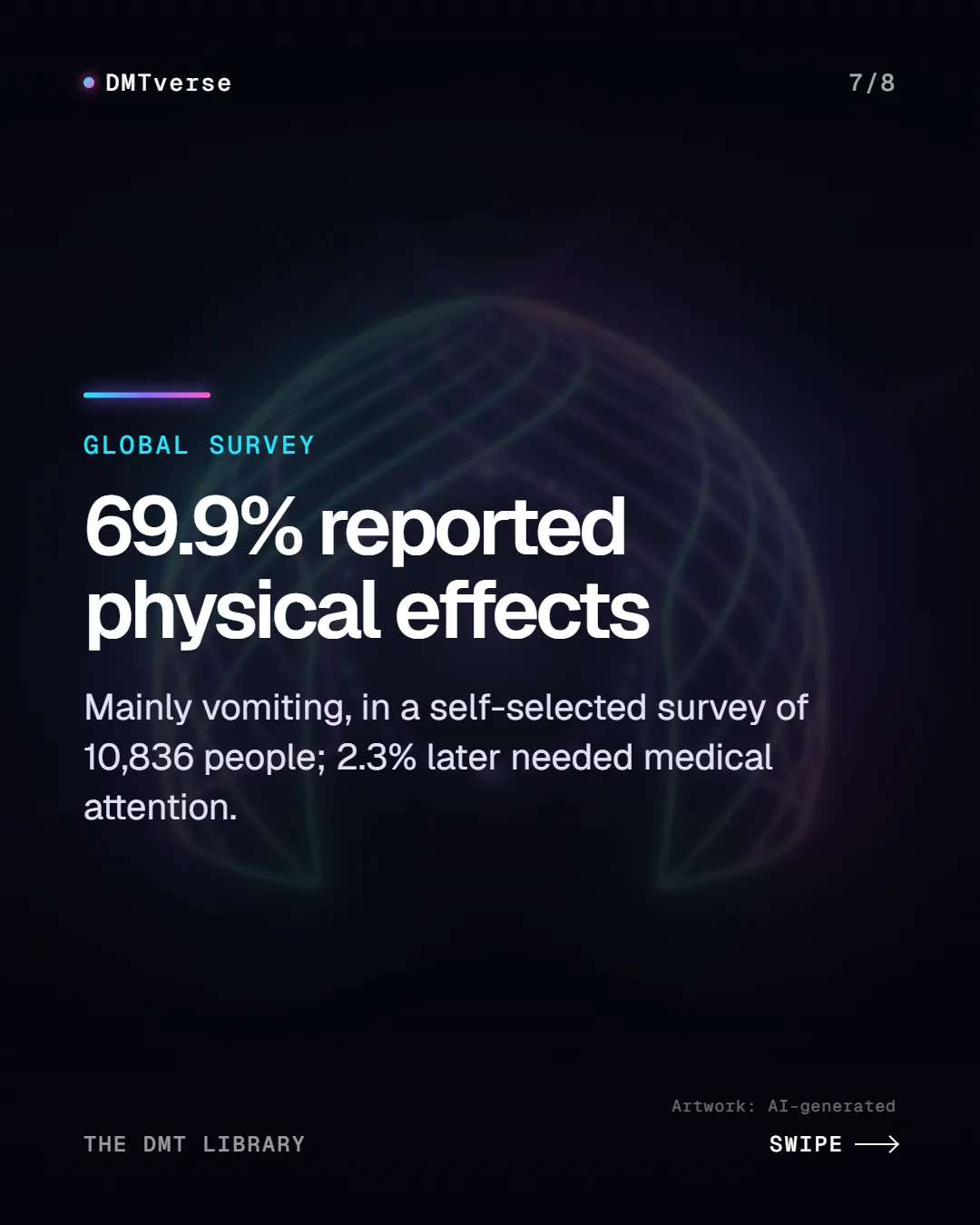
Physical effects are common. In the Global Ayahuasca Survey of 10,836 people from more than 50 countries, 69.9% reported acute physical adverse effects, mainly vomiting, and 2.3% said they later needed medical attention. Adverse mental health effects in the following weeks or months were reported by 55.9%, though most saw them as part of a positive process; about 12% sought professional support. Taking ayahuasca in a non-supervised context was linked to more physical effects, and religious settings to fewer mental health effects (Bouso et al., 2022). Evidence: preliminary (self-selected, self-reported).
Abuse is a documented concern in psychedelic settings generally. In an anonymous survey of 1,221 people who had used psychedelics, 8% said they or someone they knew had experienced inappropriate sexual contact by a sitter, guide or practitioner (Kruger et al., 2025). The survey covered all psychedelics and settings, not ayahuasca alone. Evidence: preliminary.
Official advice is blunt. Canada’s travel advice for Peru, last updated 15 October 2026, says ceremonies offered by shamans and others have led to serious illness, injury, assault and even the death of several tourists, often take place far from medical care, are not regulated, and advises Canadians to avoid them (Government of Canada, travel advice for Peru). The advisory gives no count of cases. Evidence: established for what the advisory says.
Anthropologists add a cultural critique. Fotiou, from fieldwork around Iquitos, argues that Western engagement often rests on romanticised ideas of Indigenous shamanism, and that this is “not benign”: it hides the injustices Indigenous people face, including the commercialisation of their spirituality (Fotiou, 2016). Brabec de Mori calls for the “deep coloniality” in the appropriation of Indigenous practice to be questioned in any use of ayahuasca (Brabec de Mori, 2021). Evidence: established as published positions.
Medication interactions
Ayahuasca contains MAO-inhibiting alkaloids. Researchers warn that combining it with SSRI antidepressants “may induce a serotonin syndrome with potentially grave outcome” (Callaway and Grob, 1998), and a 2024 review notes that serious adverse events are rarely reported in healthy people but that harmala alkaloids may be more toxic alongside certain medications (White et al., 2024). Do not stop or change prescribed medication on your own; talk to a prescriber or pharmacist. This is not medical advice.
Are ayahuasca ceremonies legal in Canada?
As a rule, no. DMT and harmaline, two of the brew’s constituents, are items 7 and 9 of Schedule III of the Controlled Drugs and Substances Act. Section 56(1) lets the Minister of Health exempt a person, a class of persons or a substance if the exemption is necessary for a medical or scientific purpose or is otherwise in the public interest (Justice Laws, CDSA). The consolidation we read on 24 October 2026 was current to 30 September 2026. Evidence: established.
Religious exemptions have reportedly been granted. The founder of a Montreal Santo Daime church wrote that, after working with Health Canada since 2001 and a refusal in 2012, the church received a section 56 exemption in June 2017 (Chacruna, 2017). In 2019, CTV News reported five exemptions for religious groups in Quebec and Ontario, granted in 2017 and 2018, each valid for two years and renewable, with a Health Canada spokesperson saying details are confidential (CTV News, 2019). We found no official list of which are in force today. An exemption covers the group named in it, not anyone else. This is general information, not legal advice. For more, see is DMT legal in Canada?. Evidence: preliminary.
If someone is in danger
Call 911 for immediate danger or urgent medical help, including if someone is unconscious, not breathing or having a seizure. In Ontario, the Ontario Poison Centre is at 1-800-268-9017; every province has a poison centre, listed by SickKids (AboutKidsHealth). If you or someone you know is thinking about suicide, call or text 9-8-8, 24 hours a day (Government of Canada). See also our safety page.
What we still don’t know
- How common each ceremony format is; no study counts ceremonies or attendees across traditions (unresolved).
- How much of the reported benefit or harm comes from the brew, the music, the leader or the group; ceremonial studies are naturalistic and rarely have control groups (unresolved).
- How purging is understood across Amazonian groups, since fieldworkers report different things (unresolved).
- How often abuse and serious medical incidents happen in ceremonies specifically (unresolved).
- Which Canadian religious exemptions are in force and on what terms (unresolved).
The fair summary: an ayahuasca ceremony is not one ritual but a family of practices, from a healer singing for a patient to a church singing hymns to a group of visitors at a retreat. For the brew itself, see what is ayahuasca; for what people report feeling, see what does ayahuasca feel like; and for how it differs from DMT alone, see ayahuasca vs DMT.
Common questions
What happens at an ayahuasca ceremony?
It depends on the tradition. Researchers describe Shipibo healing sessions built around a healer’s songs (icaros), Brazilian church services built around hymns, and retreat ceremonies for visitors, usually at night with a facilitator and music. Vomiting is common in many settings.
What are icaros?
Icaro is the general name for the medicine songs used by curanderos in the Peruvian Amazon. Shipibo healers describe using them to protect the ceremonial space, diagnose and heal. In one anthropologist’s account, songs, not the brew, were the healer’s main means of healing.
Why do people vomit at ayahuasca ceremonies?
Vomiting is the most commonly reported physical effect. Some researchers and practitioners describe purging as integral and cleansing, and Santo Daime members see it as cleansing; one anthropologist saw no traditional Shipibo healer vomit in around 100 sessions. Researchers still debate its role.
Who leads an ayahuasca ceremony?
In Amazonian traditions, a healer known by names such as curandero, ayahuasquero, maestro or, among the Shipibo, the onanyabo (the plural form). In the Brazilian churches, church leaders. At retreats, facilitators, sometimes Indigenous healers working with Western staff. Training and safety practices vary widely.
Is it dangerous to take ayahuasca with antidepressants?
Researchers warn that combining ayahuasca, which contains MAO inhibitors, with SSRI antidepressants may cause serotonin syndrome with a potentially grave outcome. Never stop or change medication without a prescriber. This is not medical advice.
Are ayahuasca ceremonies legal in Canada?
As a rule, no. DMT and harmaline are Schedule III substances under the Controlled Drugs and Substances Act. A few religious groups have reportedly received section 56 exemptions since 2017, which cover only those groups. This is not legal advice.
Shroomverse sells mushroom products. This article is general information about what researchers have documented at ayahuasca ceremonies, their risks and the law. It is not medical, legal or purchasing advice, and it does not recommend any product.
SOURCES
- The Power of Social Attribution: Perspectives on the Healing Efficacy of Ayahuasca (Brabec de Mori B, Frontiers in Psychology 12:748131, 2021), Frontiers (peer-reviewed, open access); PMC8581211. Accessed . Full text read via Europe PMC. Fieldwork among the Shipibo-Konibo 2000–2006; songs as the healer’s main means; ayahuasca optional and drunk by the specialist, not patients; meraya did not use it; no healer vomited in around 100 sessions; “ceremonies” a 1990s term for visitor sessions; communal drinking a newer style; neo-shamans; deep coloniality.
- The Shipibo Ceremonial Use of Ayahuasca to Promote Well-Being: An Observational Study (Gonzalez D, et al., Frontiers in Pharmacology 12:623923, 2021), Frontiers (peer-reviewed, open access); PMC8131827. Accessed . Full text read via Europe PMC. Ceremonies run by five Shipibo onanyabo with two Western facilitators, adapted for Western participants; icaro as the generic name for medicine songs; protective first icaro, diagnostic first ceremony, clearing and sealing; tobacco smoke and plant baths; naturalistic, no placebo. The centre is deliberately not named here.
- Ayahuasca: A review of historical, pharmacological, and therapeutic aspects (Ruffell SGD, et al., PCN Reports 2(4):e146, 2023), Wiley (peer-reviewed, open access); PMC11114307. Accessed . Full text read via Europe PMC. Names for practitioners; in certain groups only the shaman drank; debate on a missionary-era origin of ceremonial forms (terms, musical structure, tobacco smoke); 1930s urban religious use in Brazil; Santo Daime, Barquinha, UDV; “la purga” and the traditional view of vomiting.
- Purging and the body in the therapeutic use of ayahuasca (Fotiou E, Gearin AK, Social Science & Medicine 239:112532, 2019), Elsevier (peer-reviewed). Accessed . Abstract read via Europe PMC. Ethnographic data 2003–2015, 227 people interviewed or surveyed in Peruvian shamanic tourism and Australian neo-shamanic networks; purging integral to therapeutic use across and beyond Amazonia.
- The Globalization of Ayahuasca Shamanism and the Erasure of Indigenous Shamanism (Fotiou E, Anthropology of Consciousness 27(2):151–179, 2016), Wiley, for the American Anthropological Association (peer-reviewed). Accessed . Abstract read via the Crossref record. Fieldwork around Iquitos; romanticisation of Indigenous shamanism not benign; erasure of injustices; commercialisation of Indigenous spirituality.
- Oni pae mera: Ayawaska among the Shipibo-Konibo and the crisis of western universalism (Favaron P, Williams M, Bédard D, Journal of Psychedelic Studies 10(2):173–188, 2026), Akadémiai Kiadó (peer-reviewed). Accessed . Abstract read via the Crossref record. Shipibo-Konibo of Ucayali, Peru; 15 years of fieldwork; use cannot be separated from its cultural framework; warns of ethnographic thinness in Western approaches; centres the onanyabo.
- Church of the Holy Light of the Queen v. Mukasey, 615 F. Supp. 2d 1210 (D. Or. 2009), findings of fact and conclusions of law, US District Court, District of Oregon, via the Caselaw Access Project (Harvard Law School Library). Accessed . Full opinion read. Hymns constitute doctrine and are sung at most services; attendance three or four times a month at services of several hours, sometimes almost all night; members learn Portuguese; sitting quietly; vomiting viewed as purging or cleansing; screening. Amounts and individuals’ names deliberately not reproduced.
- Personality, psychopathology, life attitudes and neuropsychological performance among ritual users of Ayahuasca: a longitudinal study (Bouso JC, et al., PLoS One 7(8):e42421, 2012), PLOS (peer-reviewed, open access); PMC3414465. Accessed . Abstract read via Europe PMC. Members of Brazilian syncretic churches typically take part at least twice a month.
- Ayahuasca, Personality and Acute Psychological Effects in Neo-Shamanic and Religious Settings in Uruguay (Apud I, et al., Journal of Psychoactive Drugs 55:581–591, 2023), Taylor & Francis (peer-reviewed). Accessed . Abstract read via Europe PMC. One neo-shamanic and one Santo Daime group; ethnographic description of both rituals; higher somesthesia and perception scores in the neo-shamanic group, related to a high-arousal ritual setting; lower anxiety-related personality scores in Santo Daime.
- A prospective ecological momentary assessment study of an ayahuasca retreat (Sznitman SR, et al., Psychopharmacology, 2025), Springer (peer-reviewed, open access); PMC11861408. Accessed . Abstract and methods read via Europe PMC. Four-day retreat, 36 participants; ceremonies from 9 pm for six hours with music, guided meditations and interfaith elements; morning sharing sessions.
- Reported Safety Practices of Publicly Advertised Psychedelic Retreats (McGuire AL, et al., JAMA Network Open 9:e2552505, 2026), American Medical Association (peer-reviewed, open access); PMC12780929. Accessed . Abstract read via Europe PMC. 49 organizations interviewed (July–October 2023); all collected medical histories; 36 (73.5%) excluded some conditions; 43 (87.8%) required or recommended medication washout of varying length; 34 (69.4%) worked with licensed or emergency-trained staff; substantial variability; guidelines to be codeveloped with Indigenous and non-clinical communities.
- Adverse effects of ayahuasca: Results from the Global Ayahuasca Survey (Bouso JC, et al., PLOS Global Public Health 2(11):e0000438, 2022), PLOS (peer-reviewed, open access); PMC10021266. Accessed . Abstract read via Europe PMC. 10,836 respondents from more than 50 countries; 69.9% acute physical effects, mainly vomiting; 2.3% medical attention; 55.9% adverse mental health effects; about 12% sought support; non-supervised context linked to physical effects; religious settings negatively associated with mental health effects.
- Psychedelic Therapist Sexual Misconduct and Other Adverse Experiences Among a Sample of Naturalistic Psychedelic Users (Kruger DJ, et al., Psychedelic Medicine 3(1):41–47, 2025), Mary Ann Liebert (peer-reviewed); PMC12056679. Accessed . Abstract read via Europe PMC. 1,221 participants; 8% reported that they or someone they knew experienced inappropriate sexual contact by a sitter, guide or practitioner. Not ayahuasca-specific.
- Ayahuasca preparations and serotonin reuptake inhibitors: a potential combination for severe adverse interactions (Callaway JC, Grob CS, Journal of Psychoactive Drugs 30(4):367–369, 1998), Taylor & Francis (peer-reviewed). Accessed . Abstract read via Europe PMC. MAO-inhibiting harmala alkaloids with SSRIs may induce serotonin syndrome with potentially grave outcome.
- Ayahuasca and Dimethyltryptamine Adverse Events and Toxicity Analysis: A Systematic Thematic Review (White E, et al., International Journal of Toxicology 43(3):327–339, 2024), SAGE (peer-reviewed, open access); PMC11088222. Accessed . Abstract read via Europe PMC. Serious adverse effects rarely reported in healthy populations; harmala alkaloid toxicity may increase with certain medications.
- Peru travel advice (last updated 15 October 2026), Government of Canada, travel.gc.ca. Accessed . Page read. Ayahuasca ceremonies section: serious illness, injury, assault and the death of several tourists; remote locations; lack of first aid; not regulated; advice to avoid.
- Controlled Drugs and Substances Act (S.C. 1996, c. 19), Schedule III and section 56, Government of Canada, Justice Laws Website. Accessed . Full text read; consolidation current to 2026-09-30. Schedule III item 7 (DMT) and item 9 (harmaline); section 56(1) exemptions for a person, class of persons or substance, for a medical or scientific purpose or otherwise in the public interest.
- How Our Santo Daime Church Received Religious Exemption to Use Ayahuasca in Canada (17 July 2017), Chacruna Institute for Psychedelic Plant Medicines. Accessed . Article read; a participant’s account by the church’s founder. Work with Health Canada since 2001; refusal in 2012; section 56 exemption in June 2017.
- Health Canada allows more religious groups to import psychedelic ayahuasca (8 May 2019), CTV News. Accessed . Article body read from the page’s structured data. Five exemptions in Quebec and Ontario granted in 2017 and 2018, two-year renewable terms, details confidential. Not an official record.
- Mental health support: get help, Government of Canada, Public Health Agency of Canada. Accessed . Supports calling 9-1-1 in immediate danger or for urgent medical support, and calling or texting 9-8-8, 24 hours a day, 7 days a week.
- Poison information centres in Canada, AboutKidsHealth, The Hospital for Sick Children (SickKids). Accessed . Supports the provincial poison centre list, including Ontario toll-free 1-800-268-9017, and calling 911 if someone is unconscious, not breathing or having a seizure.
CHANGES
- : Published. All sources opened and checked on this date, including the CDSA consolidation current to 30 September 2026 and Canada’s travel advice for Peru as updated 15 October 2026.



