THE SHROOMVERSE JOURNAL ✳ 13 MIN READ
The 2019 DMT rat brain study, explained: what it measured and what it didn’t
Topic: DMT
Published Updated
Short answer, checked 20 October 2026
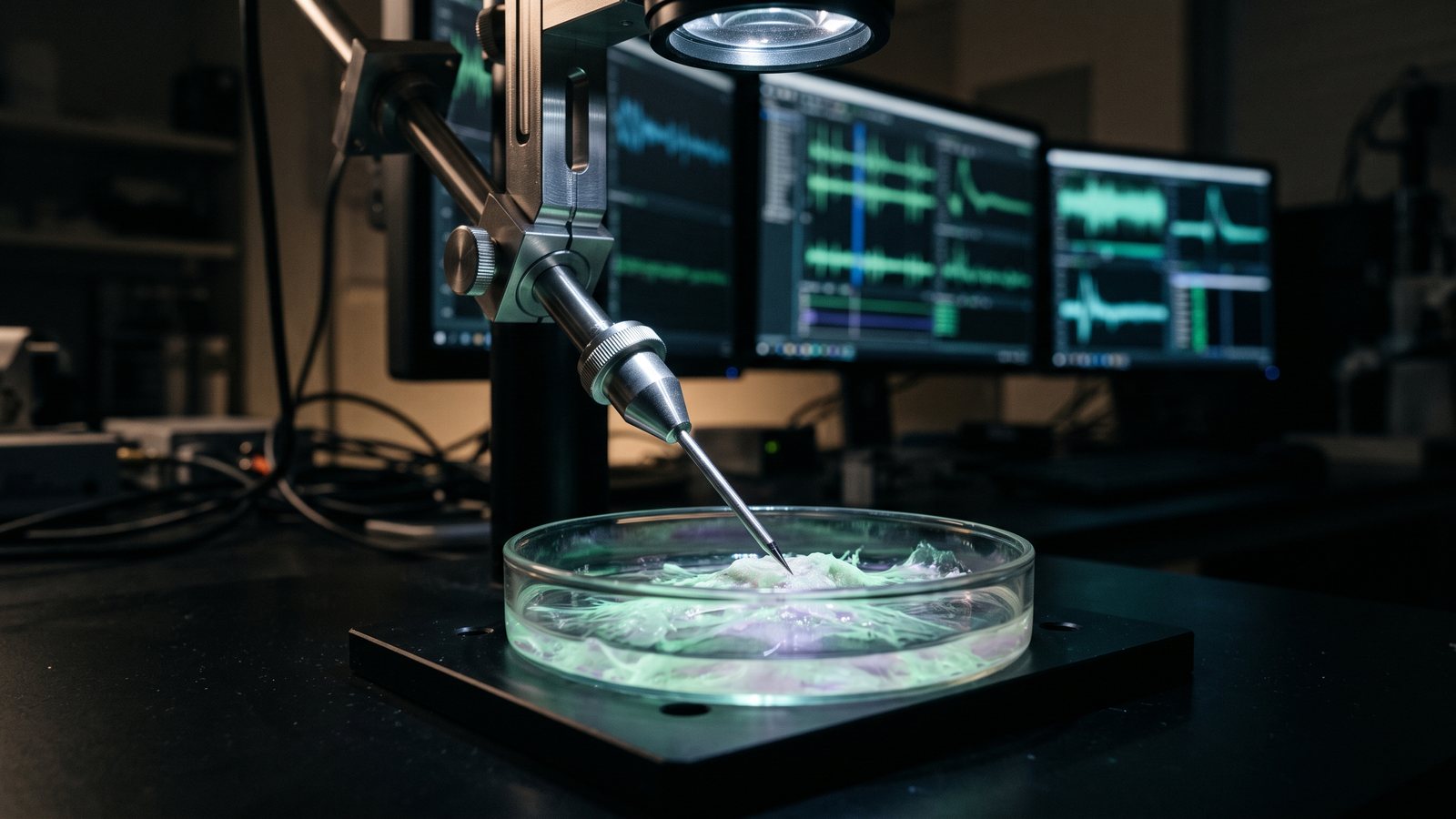
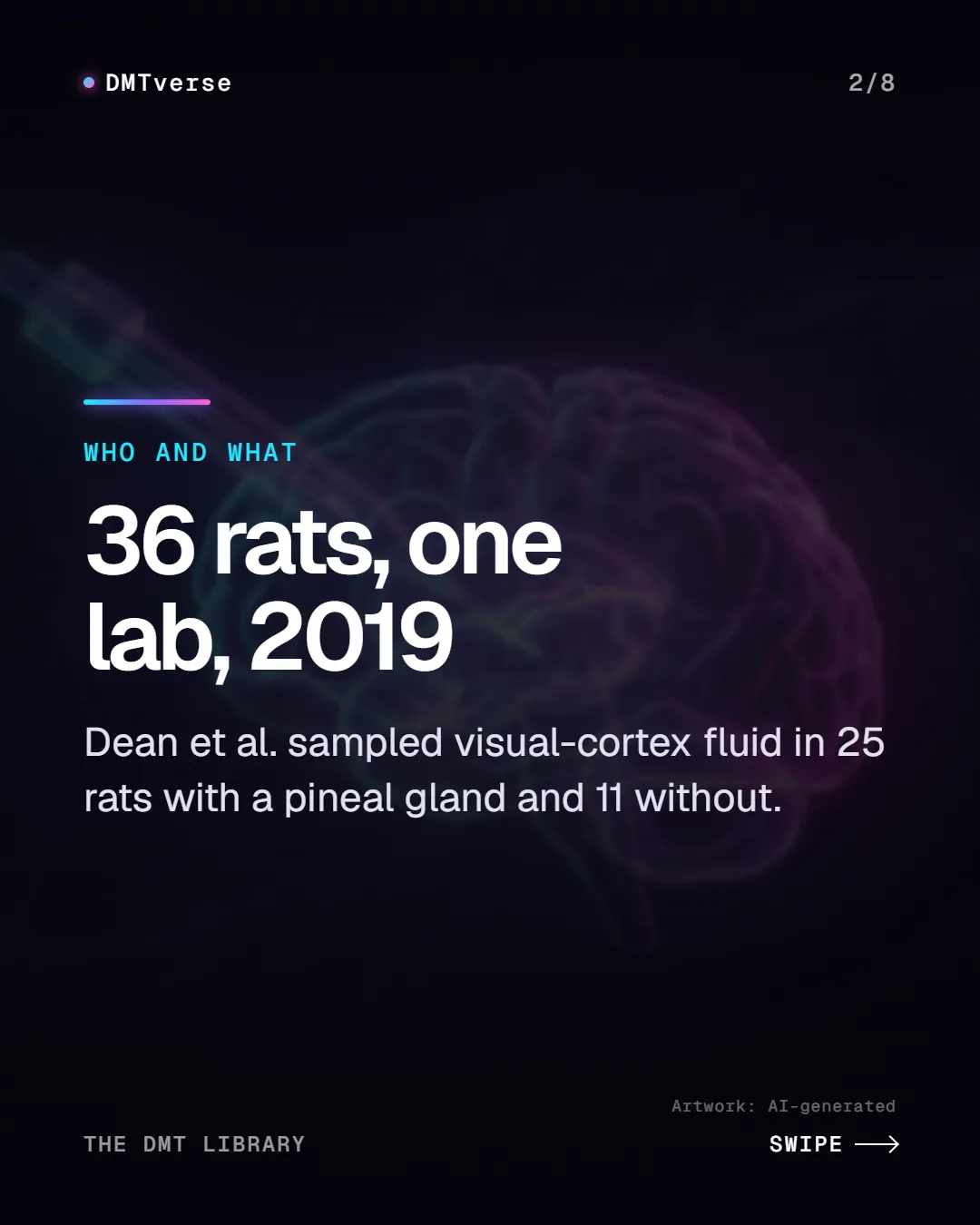
In 2019, a University of Michigan team (Dean and colleagues, Scientific Reports) measured DMT in fluid sampled from the visual cortex of 36 living rats. Average levels were in the low nanomolar range, comparable to serotonin, dopamine and noradrenaline measured the same way, with or without a pineal gland. DMT rose after the researchers stopped the rats’ hearts, though not in every rat. The team also found INMT messenger RNA in rat and human brain tissue. It was a rat study from one lab, using a fluorescence-based method; it did not measure DMT in any human brain, and the authors said it is unknown whether the cardiac-arrest levels could have psychedelic effects or happen in people.
THE SHORT VERSION · SWIPE

On this page 9 sections
If you have read that “scientists found DMT in the brain” or that “the brain makes DMT as you die”, the study behind it is almost certainly this one: Dean and colleagues, published in Scientific Reports on 27 June 2019 (Dean et al., 2019). It is a careful, interesting piece of work. It is also a rat study, from one laboratory, with limits its own authors spelled out.
This explainer goes through what the team did, the actual numbers, what the coverage said, and what later studies changed. For the wider human picture, see does the brain make DMT?.
Education only, not guidance
This article describes an animal study. It gives no amounts of any drug, no instructions and no advice on use. DMT is a controlled substance in Canada; for risks and help, see our safety page. Evidence labels: established (shown in peer-reviewed studies and not seriously disputed), preliminary (early, small, animal-only or indirect) and unresolved (an open question).
What question was the study trying to answer?
By 2019, DMT had been reported in rats and in human body fluids, but whether it is made in the mammalian brain was, in the authors’ words, unknown. The enzyme credited with making it, INMT, had been found at high levels in body tissues such as lung, but at very low levels in rabbit brain and not at all in human brain in earlier surveys, and no study had found it in the cerebral cortex of any species. Their own lab had detected DMT in 2013 near the rat pineal gland, but had not measured how much, and could not say whether it came from the pineal or the surrounding cortex (Dean et al., 2019; Barker et al., 2013). Evidence: established as the state of knowledge the paper describes.
What did the researchers actually do?
- Stained thin slices of rat brain and archived human autopsy brain tissue with RNAscope, a sensitive in situ hybridisation method, to look for INMT messenger RNA.
- Ran double staining on rat tissue to see whether INMT and AADC (the enzyme that turns tryptophan into tryptamine) messages sat in the same cells, in the brain and in the adrenal gland, kidney, lung and heart.
- Implanted microdialysis probes in 36 adult male Wistar rats: 25 with the pineal gland intact and 11 whose pineal gland had first been surgically removed. The rats recovered for a week (Dean et al., 2019).
- Sampled fluid from the visual cortex of freely moving rats every 15 or 30 minutes for hours or days, analysed online by liquid chromatography with fluorescence detection (Dean et al., 2019).
- Euthanised the rats with an injection to the heart, and compared DMT before and after what the paper calls experimentally induced cardiac arrest (Dean et al., 2019).
- For the 11 rats without a pineal gland, also measured serotonin in the same samples for comparison (Dean et al., 2019).
Each step is from the methods section (Dean et al., 2019). Two details matter later. First, DMT was identified by its retention time against reference standards and its natural fluorescence, not by mass spectrometry. Second, the rats were not given anything to block monoamine oxidase, the enzyme that rapidly breaks DMT down, so what was measured is DMT that survived normal breakdown. Evidence: established for the design.
How much DMT was in the rat brain?
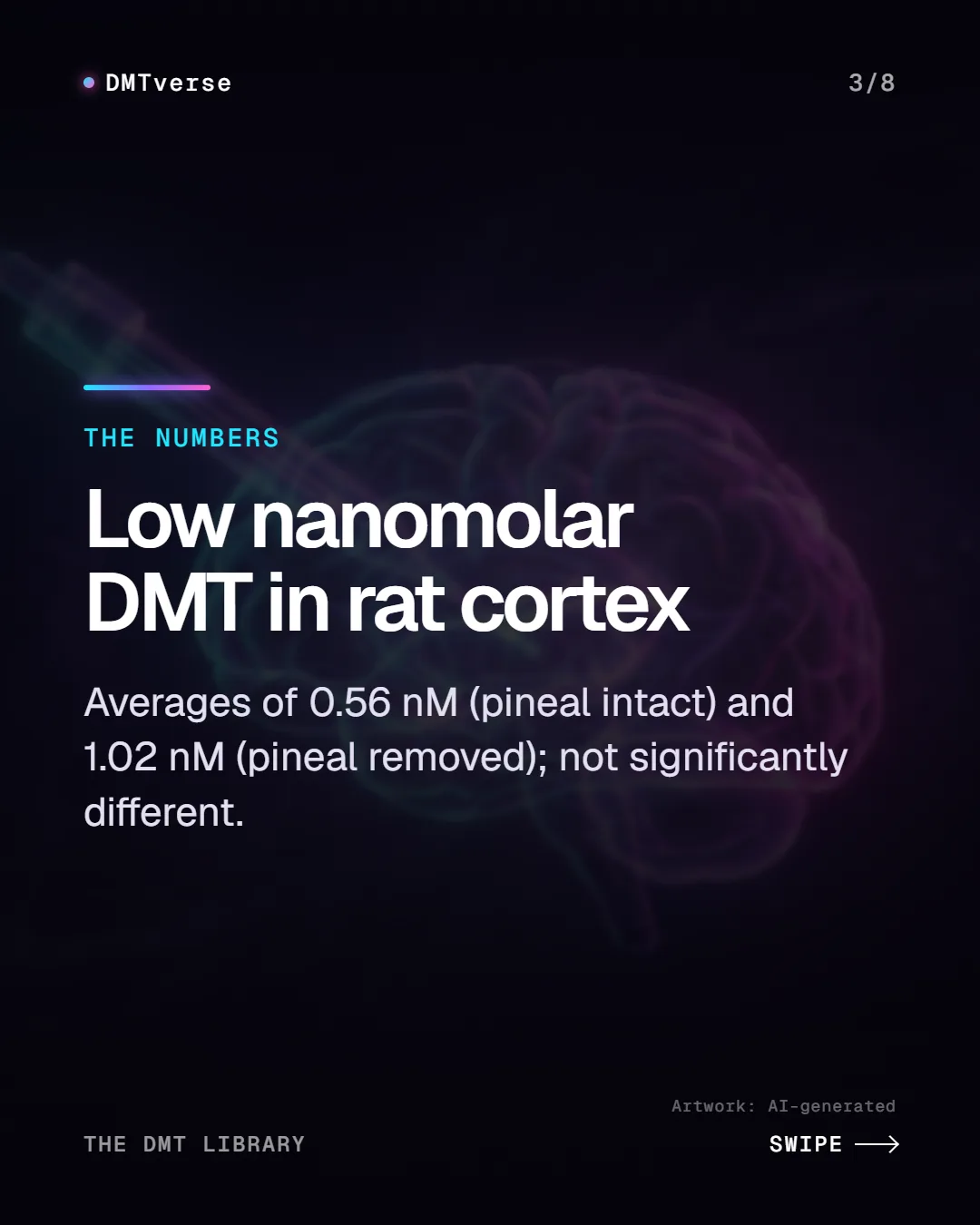
Concentrations below are in nanomolar (nM), billionths of a mole per litre of fluid, the usual unit for brain chemicals sampled this way. Rats with a pineal gland averaged 0.56 nM and rats without one 1.02 nM (Dean et al., 2019); these are the figures our other DMT articles use.
| Group | Baseline average (range) | After cardiac arrest: average (maximum) |
|---|---|---|
| Pineal intact, 25 rats | 0.56 (0.05–1.8) | 1.35 (5.01) |
| Pineal removed, 11 rats | 1.02 (0.25–2.2) | 1.83 (5.11) |
- The baseline difference between the two groups was not statistically significant (p = 0.05 on the test used), and neither was the difference after cardiac arrest (Dean et al., 2019).
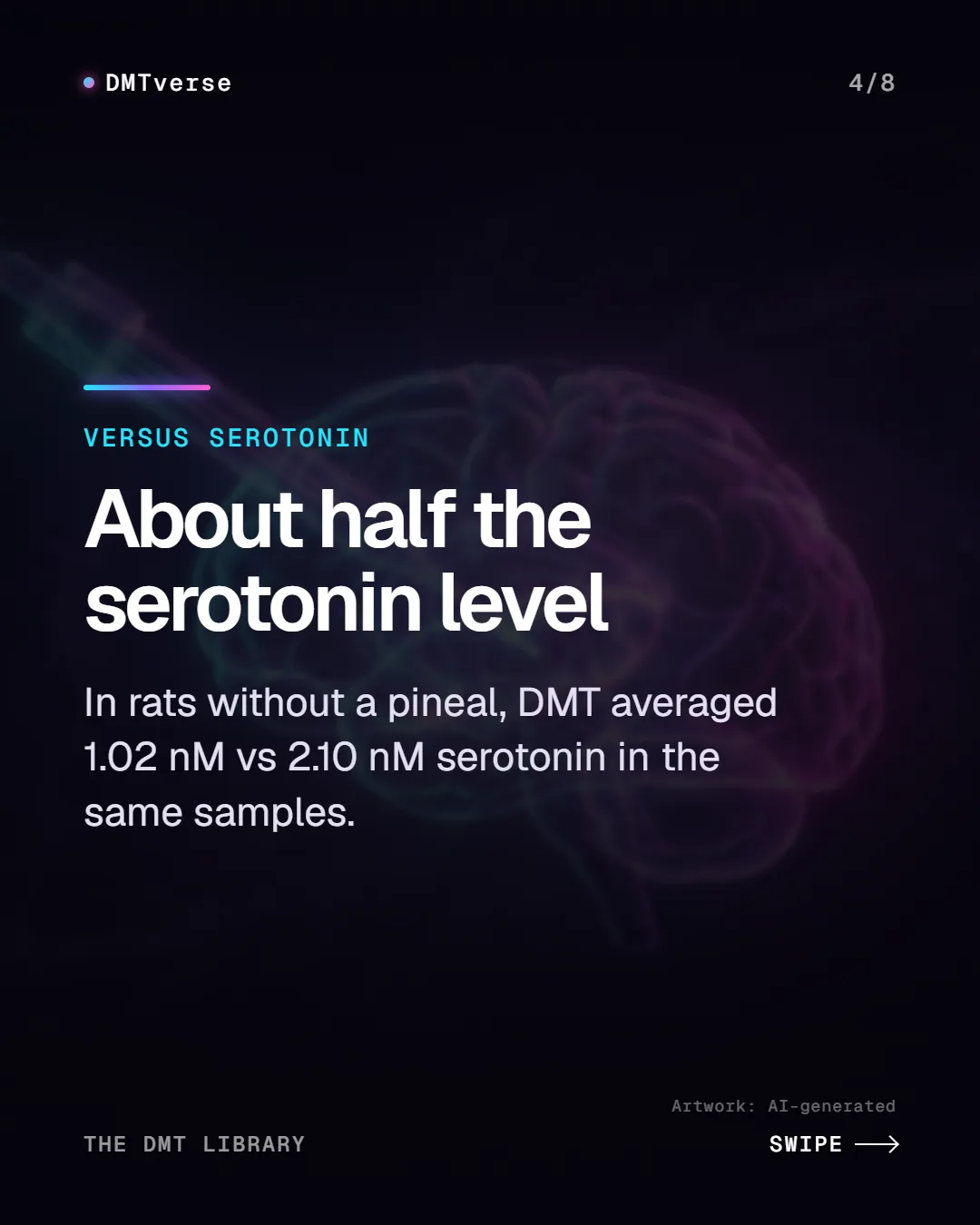
- In the 11 rats without a pineal gland, average serotonin in the same samples was 2.10 nM, so DMT was about half the serotonin level (Dean et al., 2019).
- The authors compared their DMT figures with published microdialysis averages for serotonin (0.87 nM), noradrenaline (1.77 nM) and dopamine (1.5 nM) in rat brain, and concluded DMT is in the same range (Dean et al., 2019).
- INMT messenger RNA was found in rat visual cortex, human medial frontal cortex, and the pineal gland and choroid plexus of both species. In rat brain it overlapped extensively with AADC messages, including in the hippocampus; in rat lung, heart, kidney and adrenal gland the two rarely overlapped.
All figures are from the paper’s results, figure legends and discussion (Dean et al., 2019). One small wrinkle for careful readers: in one passage the discussion attributes the 1.02 nM average to the pineal-intact panel, while the results and figure legend give 0.56 nM for those rats and 1.02 nM for rats without a pineal gland. We use the figure-legend values. Evidence: preliminary. Measured in rats, by one lab.
DMT, rats with a pineal gland
Baseline average 0.56 nM across 25 rats (Dean et al., 2019).
DMT, rats without a pineal gland
Baseline average 1.02 nM across 11 rats; not significantly different from rats with the gland (Dean et al., 2019).
Serotonin, published average
Average 0.87 nM in rat brain microdialysis, as cited by the authors (Dean et al., 2019).
Dopamine, published average
Average 1.5 nM, as cited by the authors (Dean et al., 2019).
Noradrenaline, published average
Average 1.77 nM, as cited by the authors (Dean et al., 2019).
DMT values are from the study’s rats; the other three are the published rat microdialysis averages the authors compared against. Rats only.
What exactly did the cardiac-arrest result show?
This is the finding that travelled furthest, so it is worth stating precisely. After the researchers stopped the rats’ hearts, DMT in visual-cortex fluid rose significantly in both groups, within about an hour. In rats with a pineal gland, 15 of 25 (60%) showed more than a two-fold rise, while 8 of 25 (32%) changed by less than 1.5-fold. In rats without one, 5 of 11 showed more than a two-fold rise and 6 of 11 showed minimal change. The average rise was 2.84-fold with the pineal and 1.84-fold without (Dean et al., 2019). Evidence: preliminary. One rat study.
The authors linked this, cautiously, to near-death experiences. They pointed to a human study in which DMT given in the lab produced experiences resembling near-death experiences (Timmermann et al., 2018), and noted that not every rat showed a surge, just as fewer than 20% of people who survive cardiac arrest report a near-death experience. Then they set out the limits themselves (Dean et al., 2019):
- It is unknown whether the DMT concentrations seen at cardiac arrest can produce the effects of a psychedelic dose of DMT.
- It is unknown whether a similar surge happens in humans.
- Several other neurotransmitters also surge at cardiac arrest in rats, and these may contribute to near-death states.
What the cardiac-arrest finding does not show
It does not show that the human brain floods with DMT at death, that DMT causes near-death experiences, or anything about what dying is like for a person. It shows a rise in DMT in rat cortex fluid within an hour of an experimentally induced cardiac arrest, in some rats more than others. For the full death claim, see does the brain release DMT when you die?
What are the study’s main limits?
- Species and sample: 36 male rats of one strain. No females, no other species, and no human brain measurement (Dean et al., 2019).
- Method of identification: DMT was identified by fluorescence and retention time, not mass spectrometry. In a 2023 paper the same lab describes the 2019 work this way, and contrasts it with its 2013 study, which used mass spectrometry to confirm DMT (Glynos et al., 2023). A 2018 review treats mass-spectrometry evidence as the standard that separated reliable reports of human DMT from earlier misidentifications (Barker, 2018).
- One laboratory: the 2013 detection, the 2019 measurements and the 2023 knockout study all come from the same Michigan group, and authors of the 2019 paper include Steven Barker and Rick Strassman, long associated with the endogenous-DMT hypothesis (Dean et al., 2019).
- Messenger RNA is not enzyme activity: the human evidence is INMT messenger RNA in autopsy tissue, not DMT, and not proof the enzyme was active (Dean et al., 2019).
- The authors themselves said INMT-deficient animals would be needed to show INMT makes the DMT (Dean et al., 2019). When that was done, the result raised new questions (next section).
None of this means the study is wrong. Its authors reported p-values, confidence intervals and their own uncertainties, and they declared no competing interests (Dean et al., 2019). It means the result is a strong first measurement in rats that still needs independent confirmation. Evidence: preliminary.
How did the headlines describe it?
The University of Michigan’s own news release was headlined “‘Mystical’ psychedelic compound found in normal brains”, without saying rat in the headline. The body was more careful: it described rat experiments, quoted the lab’s leader, Jimo Borjigin, saying “We don’t know what it’s doing in the brain”, and noted that whether the human brain makes DMT the same way remained open (University of Michigan release). The lab’s own news page summarises the work as finding DMT “in lab rat brains” under a headline about “mammal brains” (Borjigin lab). Evidence: established for what the coverage said.
Inverse, a science news site, headlined its story “A Natural Source of DMT Has Been Discovered in Mammal Brains”, described the paper as primarily a rat study, and reported that Borjigin told the outlet the evidence was “very strong in rats and humans”, while adding that the idea of human levels reaching that point is still contested (Inverse, 2019). The gap is worth noticing: the paper measured DMT in rat brains and found only enzyme messages in human tissue, and its own conclusion was that the results “raise the possibility” that this happens in human brains (Dean et al., 2019). Evidence: established for the wording; the human claim is unresolved.
| Often repeated | What the paper actually showed |
|---|---|
| “Scientists found DMT in the human brain” | DMT was measured in rat cortex fluid. In human autopsy tissue, only INMT messenger RNA was found. |
| “Your brain makes as much DMT as serotonin” | In rats without a pineal gland, DMT averaged about half the serotonin level in the same samples. |
| “The brain floods with DMT when you die” | DMT rose in rat cortex after induced cardiac arrest, not in every rat; authors said human relevance and psychedelic potency are unknown. |
| “The pineal gland makes DMT” | Removing the pineal did not significantly change cortical DMT in rats. |
What did later studies change?
In 2023, the same lab made rats with the INMT gene knocked out. Brain and lung tissue from those rats still methylated tryptamine at the same level as normal tissue, but the products were neither N-methyltryptamine nor DMT, and rat INMT made in the lab could not methylate tryptamine at all, unlike rabbit and human INMT. The authors concluded that an alternative pathway likely makes DMT in rats (Glynos et al., 2023). In 2025, a different team reported that INMT-knockout mice showed no obvious decrease in endogenous psychedelic levels (Hatzipantelis et al., 2025). Evidence: preliminary. The 2019 enzyme maps still stand as maps; what they mean for DMT production is now less clear.
The interpretation debate also continued. Steven Barker, a 2019 co-author, argues the rat levels place DMT in the normal range of the brain’s established transmitters (Barker, 2022). David Nichols argues the very small concentrations detected in the brain are not enough to produce psychoactive effects (Nichols, 2018). Both positions are about the same small body of rodent data. Evidence: unresolved. See also our INMT enzyme explainer and is DMT in the pineal gland?
The bottom line
The 2019 rat brain study is the best direct measurement of brain DMT we have, and it is a rat measurement. It showed DMT in living rat cortex at low nanomolar levels, independent of the pineal gland, rising after cardiac arrest in many but not all rats. It did not measure DMT in any human, did not show what DMT does in the brain, and did not show what happens when a person dies. Read with its limits, it is a reason to keep asking the question, not an answer to it.
Common questions
What did the 2019 DMT rat brain study find?
Dean and colleagues measured DMT in fluid sampled from the visual cortex of 36 living rats, at low nanomolar levels comparable to serotonin, dopamine and noradrenaline. Levels were similar with or without the pineal gland and rose after induced cardiac arrest. They also found INMT messenger RNA in rat and human brain tissue.
Did the study find DMT in human brains?
No. It measured DMT only in rats. In human autopsy brain tissue it found messenger RNA for INMT, an enzyme long credited with making DMT, which is not the same as finding DMT.
Does the brain release DMT during cardiac arrest?
In this rat study, DMT in cortex fluid rose after experimentally induced cardiac arrest, with more than a two-fold rise in 60% of rats with a pineal gland. The authors said it is unknown whether those levels could have psychedelic effects or whether this happens in humans.
Is brain DMT as high as serotonin?
In rats without a pineal gland, average DMT was about half the serotonin level measured in the same samples. The authors described it as comparable to known monoamine neurotransmitters measured by microdialysis.
Has the 2019 study been replicated?
Not by an independent lab in the sources we read. The same Michigan lab’s 2023 knockout study raised doubts about the enzyme involved, and a separate 2025 mouse study also found that removing INMT did not obviously lower endogenous psychedelic levels.
Who did the DMT rat brain study?
Jon Dean and colleagues in Jimo Borjigin’s lab at the University of Michigan, with co-authors including Steven Barker and Rick Strassman. It was published in Scientific Reports in June 2019.
Shroomverse sells mushroom products. This article is general information about a 2019 animal study of DMT in the brain. It is not medical, legal or purchasing advice, and it does not recommend any product.
SOURCES
- Biosynthesis and Extracellular Concentrations of N,N-dimethyltryptamine (DMT) in Mammalian Brain (Dean JG, Liu T, Huff S, Sheler B, Barker SA, Strassman RJ, Wang MM, Borjigin J, Scientific Reports 9:9333, 2019), Springer Nature (peer-reviewed, open access); full text via Europe PMC, PMC6597727. Accessed . Full text read, including methods and figure legends; methods re-read 24 October 2026. Supports the background; RNAscope in rat and human autopsy tissue; double staining in brain and periphery; 36 adult male Wistar rats (25 intact, 11 pinealectomized), one-week recovery; online HPLC with fluorescence detection, retention time vs standards, no MAO inhibition; euthanasia by injection to the heart and, in separate sentences, the experimentally induced cardiac arrest; all concentrations, ranges, fold-changes, proportions and p-values quoted; 5-HT 2.10 nM; literature monoamine averages; the 1.02/0.56 discussion wrinkle; the authors’ three caveats; NDE comparison; no competing interests; author list.
- LC/MS/MS analysis of the endogenous dimethyltryptamine hallucinogens, their precursors, and major metabolites in rat pineal gland microdialysate (Barker SA, Borjigin J, Lomnicka I, Strassman R, Biomedical Chromatography 27(12):1690–1700, 2013), Wiley (peer-reviewed); abstract via Europe PMC. Accessed . Abstract read. Supports the 2013 qualitative mass-spectrometry detection of DMT in rat pineal microdialysate.
- N,N-Dimethyltryptamine (DMT), an Endogenous Hallucinogen: Past, Present, and Future Research to Determine Its Role and Function (Barker SA, Frontiers in Neuroscience 12:536, 2018), Frontiers (peer-reviewed, open access); full text via Europe PMC, PMC6088236. Accessed . Full text read. Supports the view that mass-spectrometry evidence is what established DMT as endogenous in human body fluids, after many earlier misidentifications.
- Indolethylamine N-methyltransferase (INMT) is not essential for endogenous tryptamine-dependent methylation activity in rats (Glynos NG, Carter L, Lee SJ, et al., Scientific Reports 13:280, 2023), Springer Nature (peer-reviewed, open access); full text via Europe PMC, PMC9822953. Accessed . Full text read. Supports its description of Dean 2019 as HPLC with fluorescence detection and of Barker 2013 as LC–MS/MS confirmation; INMT-knockout rats with equal tryptamine methylation but products neither NMT nor DMT; rat INMT inactive while rabbit and human INMT made NMT and DMT; likely alternative pathway.
- Indolethylamine N-Methyltransferase Deletion Impacts Mouse Behavior without Disrupting Endogenous Psychedelic Tryptamine Production (Hatzipantelis CJ, et al., ACS Chemical Neuroscience 16(20):4011–4024, 2025), American Chemical Society (peer-reviewed); abstract via Europe PMC. Accessed . Abstract read. Supports INMT-knockout mice with no obvious decrease in endogenous psychedelic levels.
- Administration of N,N-dimethyltryptamine (DMT) in psychedelic therapeutics and research and the study of endogenous DMT (Barker SA, Psychopharmacology 239(6):1749–1763, 2022), Springer (peer-reviewed, open access); full text via Europe PMC, PMC8782705. Accessed . Full text read (endogenous DMT section). Supports Barker’s reading of Dean 2019 as placing rat brain DMT in the range of canonical neurotransmitters.
- N,N-dimethyltryptamine and the pineal gland: Separating fact from myth (Nichols DE, Journal of Psychopharmacology 32(1):30–36, 2018), SAGE (peer-reviewed); abstract via Europe PMC. Accessed . Abstract read. Supports the view that minute brain DMT concentrations are not sufficient to produce psychoactive effects.
- DMT Models the Near-Death Experience (Timmermann C, Roseman L, Williams L, et al., Frontiers in Psychology 9:1424, 2018), Frontiers (peer-reviewed, open access); full text via Europe PMC, PMC6107838. Accessed . Introduction read; cited only as the human study Dean et al. point to on NDE-like states after administered DMT.
- ‘Mystical’ psychedelic compound found in normal brains (University of Michigan / Michigan Medicine news release, 27 June 2019, republished by Neuroscience News), Neuroscience News, reproducing the University of Michigan release. Accessed . Read in full. Supports the headline wording, the description of rat experiments, Borjigin’s quote “We don’t know what it’s doing in the brain”, and the open question of human production. The original Michigan Medicine page refused automated access on this date.
- A Natural Source of DMT Has Been Discovered in Mammal Brains (Betuel E, Inverse, 27 June 2019), Inverse. Accessed . Read. Supports the headline, the description of the paper as primarily a rat study, Borjigin’s quoted “very strong in rats and humans”, and the note that human levels remain contested.
- Naturally-occurring “mystical” psychedelic found in mammal brains (Borjigin Lab news page, University of Michigan), Borjigin Lab, University of Michigan Medical School. Accessed . Read. Supports the headline and the one-line summary of DMT found in “lab rat brains”. The page carries no publication date.
CHANGES
- : Linked glossary definitions.
- : Published. All sources opened and checked on this date.
- : Editorial review: defined nanomolar and stated the two baseline averages up front; numbers H2 rewritten as a search question. All figures re-checked against the Dean et al. 2019 full text.
- : Added source links beside figures and legal statements.
- : Reworded the cardiac-arrest step to match Dean 2019: the paper reports euthanasia by an injection to the heart and, separately, experimentally induced cardiac arrest, rather than saying in one sentence that they were the same event.



