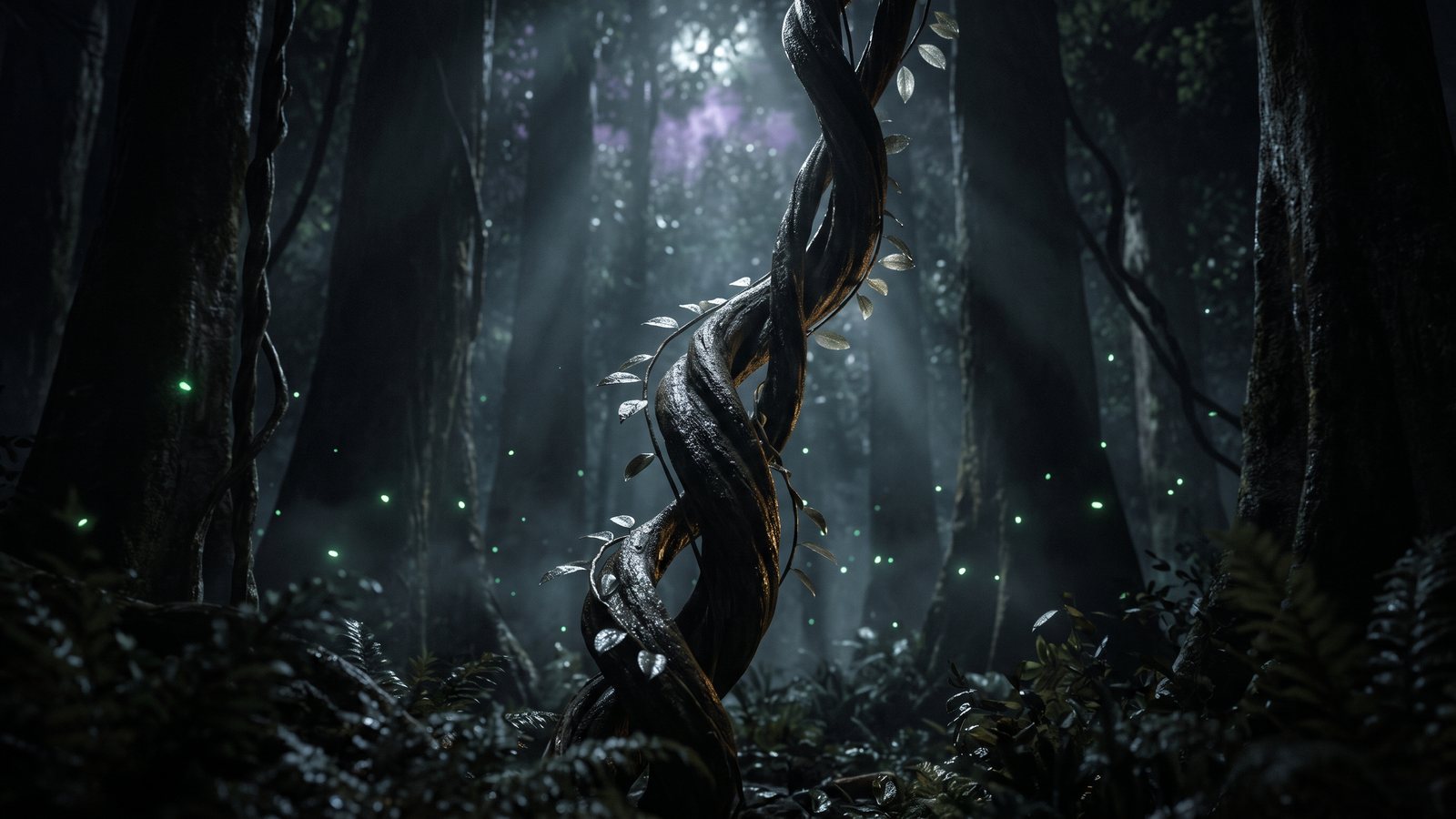
THE SHROOMVERSE JOURNAL ✳ 16 MIN READ
Banisteriopsis caapi, the ayahuasca vine: botany, history, harmine and what the research shows
Topic: DMT
Published Updated
Listen: the 3-minute version
AI-narrated summary of this article
Short answer, checked 21 October 2026
Banisteriopsis caapi is a woody Amazonian vine in the Malpighiaceae family, the plant the word “ayahuasca” originally named. It contains β-carboline alkaloids, mainly harmine, harmaline and tetrahydroharmine, not DMT. Harmine and harmaline reversibly block the enzyme MAO-A, which is why the vine matters to ayahuasca chemistry and why it carries real drug-interaction risks. The botanist Richard Spruce collected it in the 1850s; three early alkaloid names, telepathine, yageine and banisterine, all turned out to be harmine. Harmine research is mostly in cells and mice, and the first human safety study of pure harmine was small and open-label. Peoples of the Amazon recognise many kinds of the vine, and a 2023 study found heavily harvested wild populations in Peru declining.
THE SHORT VERSION · SWIPE


On this page 13 sections
Most writing about ayahuasca focuses on DMT. This article is about the other half of the story: the vine. It covers the plant’s botany and names, the people who documented it, its alkaloids, harmine research, the vine’s types and its conservation. For the brew as a whole, start with what is ayahuasca; for the molecule, our pillar what is DMT.
Ethnobotany only, not guidance
This article describes botany, history, ethnography and published research. It gives no preparation, sourcing, growing or harvesting information, no amounts of any alkaloid and no advice on use, and it does not describe any effect as a benefit. Evidence labels used below: established (shown in peer-reviewed studies or primary records and not seriously disputed), preliminary (early, small, animal-only, cell-only or indirect) and unresolved (an open question).
What kind of plant is Banisteriopsis caapi?
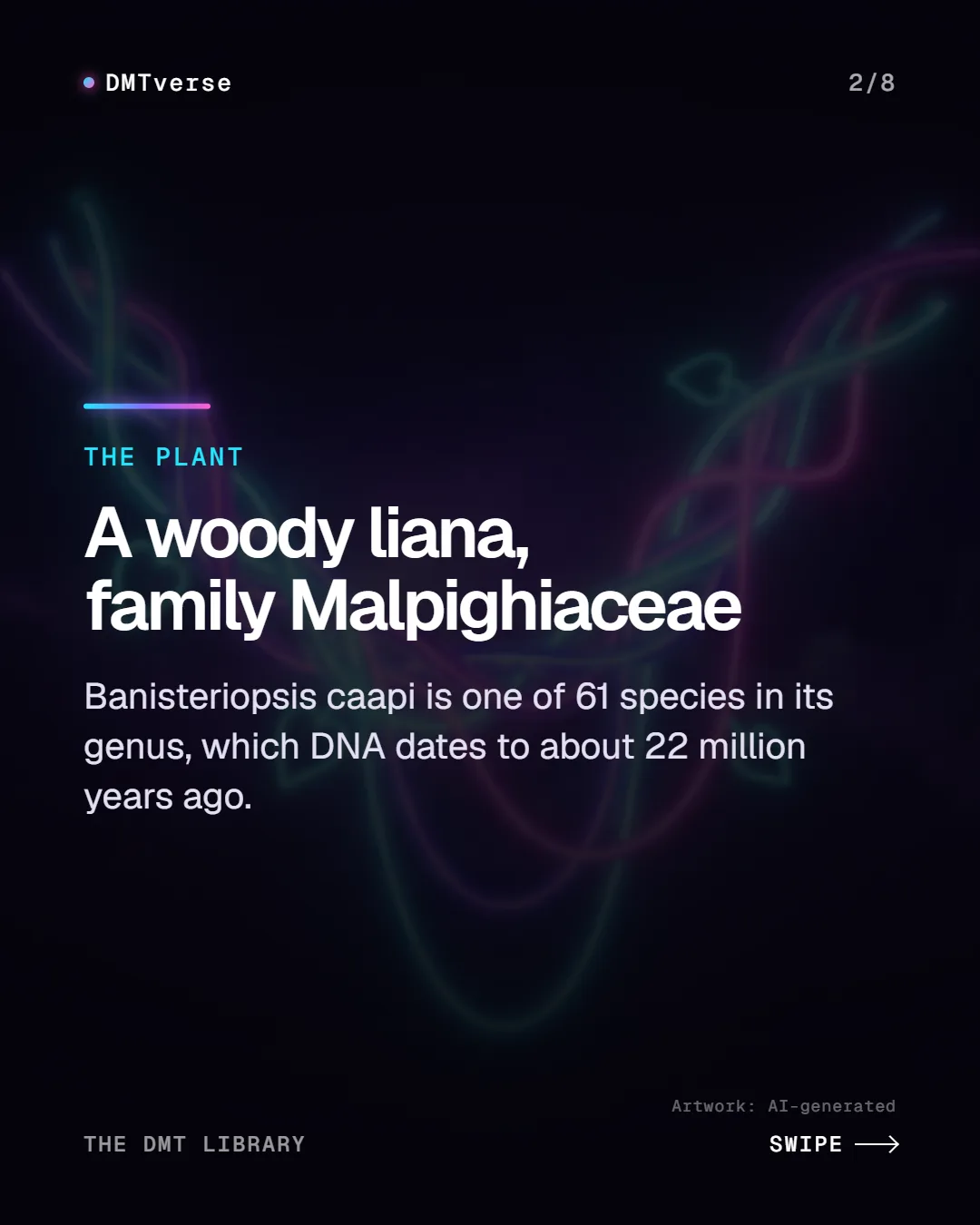
Banisteriopsis caapi is an Amazonian liana, a woody climbing vine (Chavarro-Mesa et al., 2024). It belongs to Banisteriopsis, a genus of the Malpighiaceae family with 61 species; most are South American, seven reach Central America and one is found only in Cuba. Its full scientific name is Banisteriopsis caapi (Spruce ex Griseb.) C.V. Morton (Santos et al., 2025). A 2018 genome paper calls it a native South American vine used for centuries by peoples of the Amazon basin (Ramachandran et al., 2018). Evidence: established.
It is the plant the word ayahuasca first referred to. A 2023 review notes that the vine is “also referred to as ayahuasca independently” of the brew (Ruffell et al., 2023), and a 2023 history paper shows that the “ayahuasca” described by 19th-century explorers was the vine itself, as distinct from the brew that spread to cities with the Brazilian churches from the 1960s (Lima and Marinho, 2023). Today, ayahuasca is a brew usually combining this vine with a DMT-containing plant; see what is ayahuasca. Evidence: established.
Where does the name Banisteriopsis caapi come from?
The species was first classified in the 19th century by the German botanist August Grisebach, from material the British botanist Richard Spruce had collected near the Uaupés River, under the name Banisteria caapi (Lima and Marinho, 2023). Under the conventions of botanical naming, the “Spruce ex Griseb.” in the full name records that link, and “C.V. Morton” names the botanist credited with placing the species in Banisteriopsis (Santos et al., 2025). The species name, caapi, is itself an Indigenous name: the 2023 history lists caapi as the Baniwa name for the drink (Lima and Marinho, 2023). Evidence: established.
Where the species first arose is harder. A 2025 dated family tree of 38 Banisteriopsis species, built from plastid and nuclear DNA, places the genus’s origin in the Miocene, about 22 million years ago. The authors note that most herbarium records of B. caapi come from plants cultivated by Indigenous peoples, which makes its native range hard to pin down, but their results point to an ancient, probably Amazonian, origin with no evidence that human selection shaped the species’ divergence (Santos et al., 2025). Evidence: preliminary (one phylogenetic study).
Why is it called the “vine of the soul”? Names for the ayahuasca vine
Ayahuasca is a Quechua word, from aya and waska, usually glossed as “vine of the soul” or “vine of the dead”; our ayahuasca meaning and pronunciation guide sets out which sources give which reading. The 2018 paper that sequenced the vine’s chloroplast genome is even titled “Sequencing the Vine of the Soul” (Ramachandran et al., 2018). Evidence: established that both translations are in print.
Other peoples use other names. Along the Uaupés River in the upper Rio Negro, the Desana call the plant gaapi, and Gaapi is also a divinity in their creation story from whom the Desana descend (Lima and Marinho, 2023). In Brazil, the vine is known as mariri or jagube (Chavarro-Mesa et al., 2024). The Brazilian religions that institutionalised ayahuasca use in the 20th century, including the União do Vegetal and Santo Daime, also recognise named types of the vine (below) (Biazatti et al., 2026); their history is in Santo Daime and UDV: the ayahuasca churches. Evidence: established.
“Yagé vine” comes from yagé, which the 2023 history gives as the Siona name, and older scientific writing called it yagé or caapi more often than ayahuasca (Lima and Marinho, 2023). Uses varied too: a 2021 study describes the Awajún of Peru using the vine on its own in an initiation rite (Politi et al., 2021). Evidence: established as the ethnographic accounts; preparation and amounts are not reproduced here.
Who first described the ayahuasca vine? Richard Spruce and the explorers
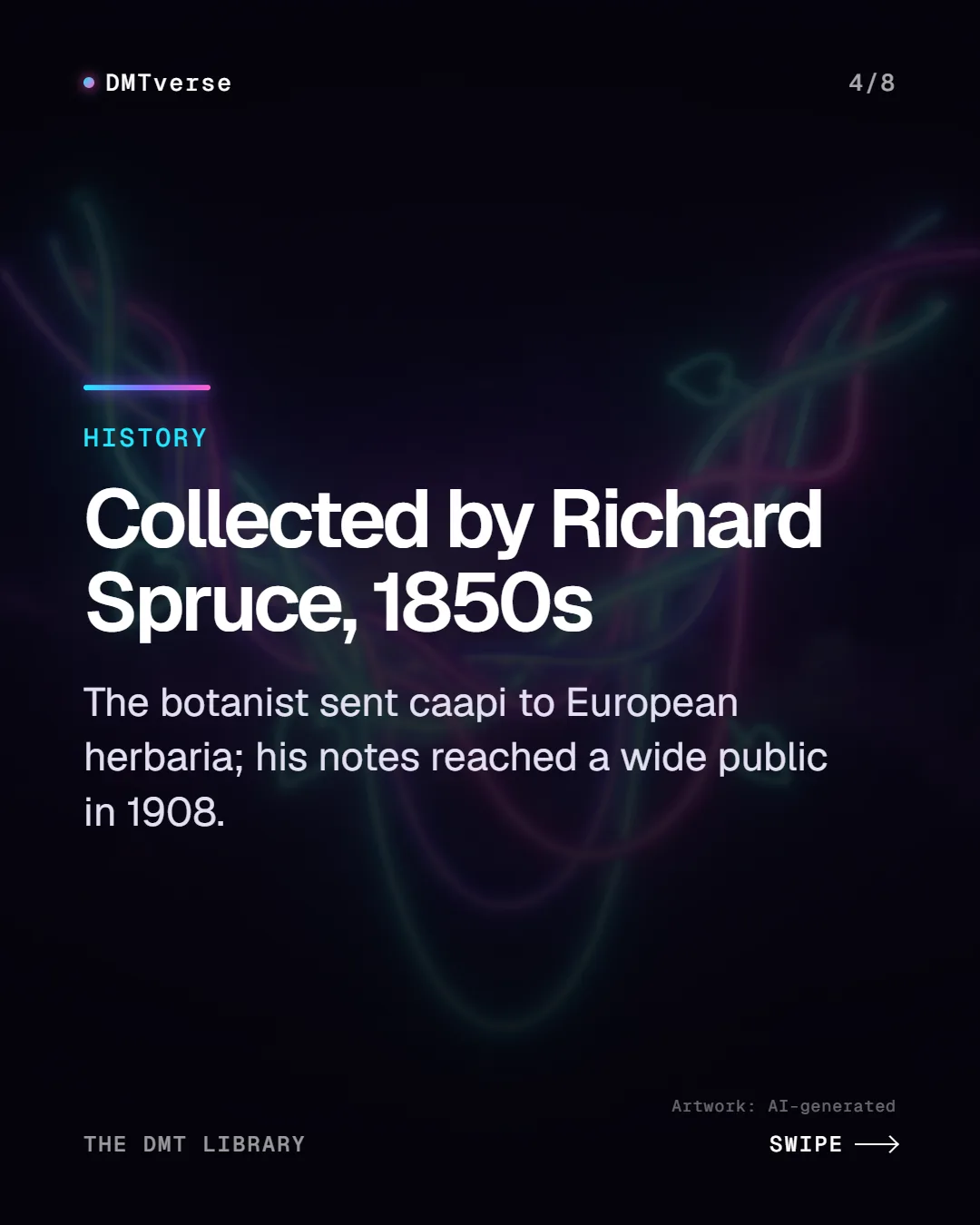
Richard Spruce spent 15 years travelling in the Amazon, stayed among peoples including the Tukano, and is thought to be the first to collect caapi and send it to European herbaria, in the early 1850s. Sources give 1851 or 1853. His observations were reported in 1873 and reached a wide public in 1908, in his two-volume Notes of a Botanist on the Amazon and Andes, edited by Alfred Russel Wallace (Lima and Marinho, 2023). A 2023 review dates the documented history of ayahuasca in the Amazon to about 150 years ago, to Spruce (Ruffell et al., 2023). Evidence: established; the collection year is unresolved.
These accounts have limits. The 2023 history argues that explorers’ reports often misrepresented Indigenous uses and meanings. Spruce mentioned the Dabucuri, an exchange ritual of the north-west Amazon in which caapi is shared, without analysing it; 23 ethnic groups from four language families still practise it (Lima and Marinho, 2023). Evidence: established as the paper’s account; the critique is the authors’.
What did Richard Evans Schultes find?
Richard Evans Schultes (1915–2001) was a 20th-century ethnobotanist whose research centred on hallucinogenic plants of the Amazon (Sheldrake, 2020). In 1957 he published a 56-page study in Harvard’s Botanical Museum Leaflets titled “The identity of the malpighiaceous narcotics of South America” (Schultes, 1957). He and the anthropologist Gerardo Reichel-Dolmatoff noted that older reports often gave only the genus name, so it can be unclear which Banisteriopsis species they meant (Lima and Marinho, 2023). Evidence: established for the publications; we read the 1957 study’s record, not its text.
A 2020 history of science paper examines what it calls Schultes’s “enigma”: Amazonian people could tell apart local varieties of the vine that he, a trained botanist, could not distinguish. The paper also discusses his writing about Spruce and his own accounts of altered states, and argues that the enigma shows the limits of what ethnobotany can learn from outside a culture (Sheldrake, 2020). Evidence: established as a historical interpretation; the conclusions are the author’s.
- Early 1850sRichard Spruce collects caapi for European herbariaSource Lima and Marinho, 2023
- 1908Spruce’s Notes of a Botanist publishedSource Lima and Marinho, 2023
- 1923An alkaloid is named telepathine (later yageine, 1925)Source Lima and Marinho, 2023
- 1927Louis Lewin names an alkaloid banisterineSource Lima and Marinho, 2023
- 1957Schultes’s study of the malpighiaceous narcoticsSource Schultes, 1957
- 1984β-carbolines shown to be reversible MAO inhibitorsSource McKenna et al., 1984
- 2015Harmine drives beta-cell replication in cell and mouse modelsSource Wang et al., 2015
- 2025Genus dated to about 22 million years agoSource Santos et al., 2025
What were telepathine, yageine and banisterine?
Three early names for one molecule. In 1923 the Colombian physician Fischer Cárdenas isolated an alkaloid from the vine and named it telepatina, “telepathine”, after a naturalist who had linked the plant to telepathy. In 1925 the Colombian researcher Antonio María Barriga Villalba isolated two alkaloids he called yageína and yaginina. Two years later the pharmacologist Louis Lewin, in Europe, named one banisterina. Telepathine, yageine and banisterine all proved to be harmine; whether yaginine was one of the vine’s other alkaloids was left to later chemistry (Lima and Marinho, 2023). Evidence: established.
What are harmine, harmaline and tetrahydroharmine?
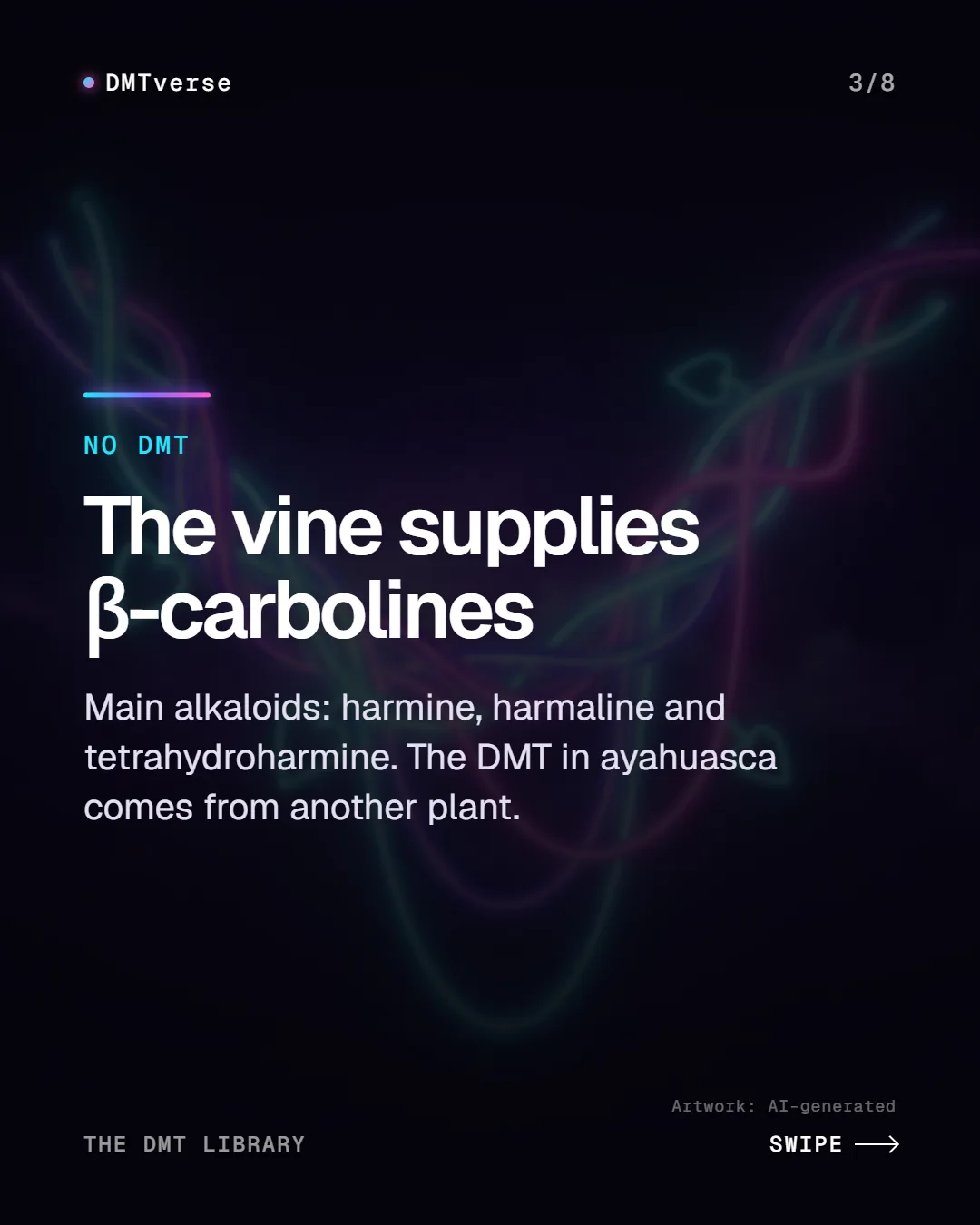
They are β-carbolines (beta-carbolines), a group of plant alkaloids. A 1984 analysis reported that B. caapi contains harmine, harmaline and tetrahydroharmine, while the DMT in ayahuasca comes from other plants. It found that β-carbolines are highly active, reversible inhibitors of monoamine oxidase (MAO) in a test-tube assay, and that their effects in mixtures were additive (McKenna, Towers and Abbott, 1984). Evidence: established.
The three do not act alike. A 1999 study of 15 volunteers in a ceremonial setting describes harmine and harmaline as reversible inhibitors of MAO-A, while tetrahydroharmine weakly blocks the reuptake of serotonin (Callaway et al., 1999). In a double-blind, placebo-controlled study of 18 volunteers, harmine was barely detectable in blood, which suggested it acts mainly in the gut and liver (Riba et al., 2003). How that lets swallowed DMT survive is explained in why DMT breaks down so fast. Evidence: established in outline.
“Reversible” matters. A 2022 review explains that an older class of antidepressants inhibits MAO-A and MAO-B completely and irreversibly, while reversible, competitive inhibitors such as β-carbolines can almost never achieve complete inhibition. It adds that β-carbolines also occur in many foods and in tobacco, and that the level of MAO inhibition needed to affect brain chemistry has not been established (Berlowitz, Egger and Cumming, 2022). Evidence: established for the mechanism; unresolved for the threshold.
Does Banisteriopsis caapi contain DMT?
Not according to the analyses we read. The 1984 study lists the vine’s alkaloids as harmine, harmaline and tetrahydroharmine and attributes ayahuasca’s DMT to other plants (McKenna, Towers and Abbott, 1984); a 2024 genome paper likewise describes the vine as supplying the β-carbolines and another plant supplying the DMT (Chavarro-Mesa et al., 2024). That is the whole point of the pairing, and why the vine alone is not “DMT”. For where DMT does occur in nature, see where does DMT come from in nature. Evidence: established.
MAO inhibition creates real drug-interaction risks
Because harmine and harmaline block MAO-A, which also breaks down serotonin, researchers warn that combining these alkaloids with SSRI antidepressants “may induce a serotonin syndrome with potentially grave outcome” (Callaway and Grob, 1998). A 2024 systematic review of 78 articles found that isolated harmala alkaloids showed potential toxicity at higher amounts, possibly increased with some medications, and that harmaline raised the most concerns in animal models (White et al., 2024). Do not stop, start or change any prescribed medicine on your own; ask a prescriber or pharmacist. This is not medical advice.
What does research on harmine show?
Harmine is studied well beyond ayahuasca, largely because it also blocks DYRK1A, a kinase (an enzyme that switches other proteins on or off) that regulates cell proliferation and brain development (Dakic et al., 2016). Almost all of this work is in cells or animals. None of the studies below shows that the vine or the brew treats anything. Evidence: preliminary.
In 2015, a high-throughput screen of small molecules found that harmine and its analogues make human pancreatic beta cells, the cells that make insulin, divide. In three mouse and human-islet models, harmine increased beta-cell proliferation and islet mass and improved blood-sugar control in mice (Wang et al., 2015). Beta cells barely divide after early childhood, which is why the finding drew attention. Evidence: preliminary (cells and mice).
In the brain, two cell studies point the same way. Human neural progenitor cells, grown from stem cells, multiplied when treated with harmine, and a DYRK1A blocker did the same while a pure MAO inhibitor did not, suggesting DYRK1A rather than MAO is involved (Dakic et al., 2016). In cells taken from adult mouse brains, harmine, harmaline, tetrahydroharmine and the metabolite harmol all stimulated stem-cell proliferation and the formation of new neurons (Morales-García et al., 2017). Evidence: preliminary (in cells).
Human data on harmine alone are thin. In the first phase 1 study of pure, pharmaceutical-grade harmine, 25 healthy adults took a single oral dose in an open-label, ascending-dose design (doses not reproduced here). Side effects such as vomiting and drowsiness rose with dose, psychoactive effects were limited, and there were no serious adverse events (Ables et al., 2024). For what ayahuasca research has found overall, see ayahuasca benefits: what research shows. Evidence: preliminary.
Are there different types of caapi?
Yes, as recognised by the people who use it. Brazilian ayahuasca religions first registered two folk types, Caupuri and Tucunaca, and later sampling added others such as Arara, Pajezinho and Ourinho. In a 2026 study of 47 vine plants, mostly B. caapi folk types, machine-learning models trained on photographs of dried herbarium leaves sorted them with about 70% accuracy overall and over 90% for the types Hybrid and Arara, but did worse for Cabi and Quebrador, which overlap in leaf form. The results only partly matched earlier ethnobotanical classifications (Biazatti et al., 2026). Evidence: preliminary.
Genetics and chemistry show variation too. A 2024 sequencing of the vine’s mitochondrial genome confirmed its sample as the Tucunacá type, matching its identification by form (Chavarro-Mesa et al., 2024). A chemical survey its authors describe as the largest of its kind analysed 159 B. caapi samples from several Brazilian regions and found high variability in their β-carboline content; samples from native plants had significantly more harmine than cultivated ones, and some regions differed in tetrahydroharmine (Santos et al., 2020). The authors call this variability a challenge for standardised research (amounts not reproduced here). Evidence: preliminary; why types differ is unresolved.
Is the ayahuasca vine under threat?
Wild populations are under pressure in at least one region studied. A 2023 demographic study of B. caapi in the Peruvian Amazon modelled populations under high and low harvest pressure. Heavy harvesting raised the death rate of the largest vines. Over the long term, heavily harvested populations were projected to shrink by 1.3% a year while lightly harvested ones grew by 3.2%; in the short term, all the populations studied were declining. The authors recommend protecting the largest vines (Coe and Gaoue, 2023). Evidence: preliminary (one region, model projections).
The concern is also cultural. The 2026 folk-type study notes that growing global use of ayahuasca has led Peruvian shamans to denounce what they call “spiritual extractivism” of the plants, and that only about 10% of ayahuasca users worldwide are estimated to belong to Indigenous populations (Biazatti et al., 2026). Evidence: preliminary (estimates reported by the authors from other studies).
Is Banisteriopsis caapi legal in Canada?
In the Controlled Drugs and Substances Act, harmaline (item 9) and harmalol (item 10) are listed in Schedule III, while harmine and the vine itself are not named in the Act (consolidation current to 30 September 2026) (Justice Laws, CDSA). This is general information, not legal advice; for the brew, see what is ayahuasca. Evidence: established for what the Act lists.
If someone is in danger
Call 911 for immediate danger or urgent medical help, including if someone is unconscious, not breathing or having a seizure. In Ontario, the Ontario Poison Centre is at 1-800-268-9017; every province has a poison centre, listed by SickKids (AboutKidsHealth). If you or someone you know is thinking about suicide, call or text 9-8-8, 24 hours a day (Government of Canada). See also our safety page.
What we still don’t know
- Where B. caapi is truly native (unresolved).
- Whether named folk types are distinct lineages, chemical forms, or both (unresolved).
- Whether any harmine finding in cells or mice holds in people. The first human study of pure harmine was small and open-label (unresolved).
- How much MAO inhibition is needed to change brain chemistry, and how that varies between people (unresolved).
- How fast wild populations are declining outside the one Peruvian region studied (unresolved).
The fair summary: Banisteriopsis caapi is a woody Amazonian vine with a long cultural history and a short scientific one. Its harmine and related alkaloids are reversible MAO inhibitors, with documented interaction risks and an early research literature. For how the vine’s chemistry changes the experience of DMT, read ayahuasca vs DMT.
Common questions
What is Banisteriopsis caapi?
A woody climbing vine (liana) of South America in the Malpighiaceae family. It is the plant the word ayahuasca originally named, and it contains the β-carboline alkaloids harmine, harmaline and tetrahydroharmine.
Does Banisteriopsis caapi contain DMT?
Not according to the analyses we read. The vine supplies β-carbolines that block the enzyme MAO-A; in ayahuasca, the DMT comes from a different plant.
What family is Banisteriopsis caapi in?
Malpighiaceae. Its genus, Banisteriopsis, has 61 species and, according to a 2025 DNA study, originated about 22 million years ago.
What is harmine?
A β-carboline alkaloid and the main alkaloid of the vine. It reversibly inhibits the enzyme MAO-A and also blocks a kinase called DYRK1A. Early researchers named it telepathine, yageine and banisterine before these were shown to be the same compound.
What is the difference between harmine, harmaline and tetrahydroharmine?
All three are β-carbolines from the vine. Harmine and harmaline reversibly inhibit MAO-A; tetrahydroharmine weakly blocks serotonin reuptake. In Canada, harmaline is listed in Schedule III of the Controlled Drugs and Substances Act; harmine is not named.
Why is ayahuasca called the vine of the soul?
The Quechua word combines aya, glossed as soul, spirit or dead, and waska, vine or rope. Sources give both “vine of the soul” and “vine of the dead”.
Is caapi the same as yagé?
Both are older names. Caapi is the Baniwa name and the vine’s species name; yagé is the Siona name for the drink. Early-20th-century science used yagé and caapi more often than ayahuasca.
Who discovered Banisteriopsis caapi?
Amazonian peoples knew it long before science. The British botanist Richard Spruce is thought to have been the first to collect it for European herbaria, in the early 1850s; August Grisebach described it from his material.
Shroomverse sells mushroom products. This article is general information about Banisteriopsis caapi, the ayahuasca vine. It is not medical, legal or purchasing advice, and it does not recommend any product.
SOURCES
- Reports by explorers and travelers and the first scientific studies on ayahuasca (dating from 1850 to 1950) within the current debate on the “psychedelic renaissance” (Lima VM, Marinho MGSMC, História, Ciências, Saúde-Manguinhos 30:e2023023, 2023), Fundação Oswaldo Cruz (peer-reviewed, open access); PMC10395591. Accessed . Full text read via Europe PMC (English version). Supports: explorers’ “ayahuasca” was the vine; Spruce’s 15 years, peoples visited, first collection early 1850s (1851 vs 1853 disputed), 1873 report, 1908 book edited by Wallace; Grisebach’s classification as Banisteria caapi from Spruce’s Uaupés material; caapi as the Baniwa name; Desana gaapi as divinity; Dabucuri ritual and 23 groups; critique of explorer reports; Schultes and Reichel-Dolmatoff on genus-name confusion; telepatina (1923, Fischer Cárdenas), yageína and yaginina (1925, Barriga Villalba), banisterina (1927, Lewin), all harmine.
- Ayahuasca: A review of historical, pharmacological, and therapeutic aspects (Ruffell SGD, et al., PCN Reports 2(4):e146, 2023), Wiley (peer-reviewed, open access); PMC11114307. Accessed . Full text read via Europe PMC. Supports: the vine is also referred to as ayahuasca independently; documented history dates back about 150 years to Spruce. Admixture plant names in the paper deliberately not reproduced.
- Dated Phylogeny of Banisteriopsis (Malpighiaceae) Suggests an Ancient Colonization of the Cerrado and No Evidence of Human Manipulation in the Origin of B. caapi (Santos TAC, et al., Plants 14(7):1149, 2025), MDPI (peer-reviewed, open access); PMC11990928. Accessed . Abstract and full text read via Europe PMC. Supports: genus of 61 species in Malpighiaceae, seven reaching Central America, one exclusive to Cuba; full name B. caapi (Spruce ex Griseb.) C.V. Morton; 38 species sampled; Miocene origin about 22 million years ago; most herbarium records from cultivated plants, making the native range hard to determine; probable Amazonian, ancient origin; no evidence of human manipulation in its diversification.
- The mitogenomic landscape of Banisteriopsis caapi (Malpighiaceae), the sacred liana used for ayahuasca preparation (Chavarro-Mesa E, et al., Genetics and Molecular Biology 47(2):e20230301, 2024), Sociedade Brasileira de Genética (peer-reviewed, open access); PMC11234496. Accessed . Abstract read via Europe PMC. Supports: Brazilian names mariri and jagube; the vine provides β-carboline MAO inhibitors while another plant provides DMT; mitochondrial genome sequenced; sample placed in the Tucunacá ethnovariety, matching morphological identification. The other plant’s name is deliberately not reproduced.
- Sequencing the Vine of the Soul: Full Chloroplast Genome Sequence of Banisteriopsis caapi (Ramachandran P, et al., Genome Announcements 6(25):e00203-18, 2018), American Society for Microbiology (peer-reviewed, open access); PMC6013603. Accessed . Abstract read via Europe PMC. Supports: native South American vine used for centuries by peoples of the Amazon basin; the title’s use of “Vine of the Soul”; chloroplast genome sequenced.
- The ‘enigma’ of Richard Schultes, Amazonian hallucinogenic plants, and the limits of ethnobotany (Sheldrake M, Social Studies of Science 50(3):345–376, 2020), SAGE (peer-reviewed). Accessed . Abstract read via Europe PMC. Supports: Schultes’s dates (1915–2001) and research on hallucinogenic plants; the “enigma” of Amazonians distinguishing vine varieties he could not tell apart; his writings on Spruce and accounts of his own altered states; the author’s argument about the limits of ethnobotany.
- The Identity of the Malpighiaceous Narcotics of South America (Schultes RE, Botanical Museum Leaflets, Harvard University 18(1):1–56, 1957), Harvard University Botanical Museum; record via Crossref (Biodiversity Heritage Library). Accessed . Crossref record read (author, title, journal, volume 18, issue 1, pages 1–56, 1957). The full text on the Biodiversity Heritage Library was blocked by a bot check, so we cite it only for the fact of publication and its title.
- Machine learning recovers folk classification of Banisteriopsis caapi from herbarium leaves of an ayahuasca liana (Biazatti SC, et al., iScience 29(5):115753, 2026), Cell Press (peer-reviewed, open access); PMC13145879. Accessed . Abstract and full text read via Europe PMC. Supports: 47 vine plants; about 70% overall accuracy, over 90% for Hybrid and Arara, lower for Cabi and Quebrador; partial agreement with earlier classifications; Caupuri and Tucunaca first registered by Brazilian religious groups, later Arara, Pajezinho, Ourinho and others; institutionalisation by UDV and Santo Daime; Peruvian healers’ “spiritual extractivism” complaint; estimate that about 10% of users are Indigenous (reported from other studies). The outgroup species’ name is deliberately not reproduced.
- Biodiversity of β-Carboline Profile of Banisteriopsis caapi and Ayahuasca, a Plant and a Brew with Neuropharmacological Potential (Santos BWL, et al., Plants 9(7):870, 2020), MDPI (peer-reviewed, open access); PMC7411993. Accessed . Abstract read via Europe PMC. Supports: 159 B. caapi samples from Brazilian regions; high variability in β-carbolines; native samples had significantly more harmine than cultivated ones; regional differences in tetrahydroharmine; variability as a challenge for standardisation. All concentrations deliberately not reproduced.
- Traditional Use of Banisteriopsis caapi Alone and Its Application in a Context of Drug Addiction Therapy (Politi M, Friso F, Saucedo G, Torres J, Journal of Psychoactive Drugs 53(1):76–84, 2021), Taylor & Francis (peer-reviewed). Accessed . Abstract read via Europe PMC. Supports only the ethnographic point that the vine is used on its own as an initiation rite among the Awajún of Peru. The clinical part of the study is not used here.
- Monoamine oxidase inhibitors in South American hallucinogenic plants: tryptamine and beta-carboline constituents of ayahuasca (McKenna DJ, Towers GH, Abbott F, Journal of Ethnopharmacology 10(2):195–223, 1984), Elsevier (peer-reviewed). Accessed . Abstract read via Europe PMC. Supports: Malpighiaceous liana; B. caapi contains harmine, harmaline and tetrahydroharmine while other plants contain DMT; β-carbolines are highly active reversible MAO inhibitors; in-vitro assay; additive effects in mixtures; cultivars compared for alkaloid content. Plant names and amounts deliberately not reproduced. (Dennis McKenna; not a quotation of Terence McKenna.)
- Pharmacokinetics of Hoasca alkaloids in healthy humans (Callaway JC, et al., Journal of Ethnopharmacology 65(3):243–256, 1999), Elsevier (peer-reviewed). Accessed . Abstract read via Europe PMC. Supports: 15 volunteers in a ceremonial context; harmine and harmaline reversibly inhibit MAO-A; tetrahydroharmine weakly inhibits serotonin uptake. Amounts deliberately not reproduced.
- Human pharmacology of ayahuasca: subjective and cardiovascular effects, monoamine metabolite excretion, and pharmacokinetics (Riba J, et al., Journal of Pharmacology and Experimental Therapeutics 306(1):73–83, 2003), American Society for Pharmacology and Experimental Therapeutics (peer-reviewed). Accessed . Abstract read via Europe PMC. Supports: 18 volunteers, double-blind, placebo-controlled; negligible harmine plasma levels suggesting a predominantly gut and liver site of action. Doses deliberately not reproduced.
- Monoamine Oxidase Inhibition by Plant-Derived β-Carbolines; Implications for the Psychopharmacology of Tobacco and Ayahuasca (Berlowitz I, Egger K, Cumming P, Frontiers in Pharmacology 13:886408, 2022), Frontiers (peer-reviewed, open access). Accessed . Abstract read via Europe PMC. Supports: β-carbolines occur in foods, medicinal plants, tobacco and B. caapi; an antidepressant class causes complete, irreversible MAO-A/B inhibition, almost unattainable with reversible, competitive β-carbolines; threshold of MAO inhibition for neurotransmission effects not established.
- A high-throughput chemical screen reveals that harmine-mediated inhibition of DYRK1A increases human pancreatic beta cell replication (Wang P, et al., Nature Medicine 21(4):383–388, 2015), Springer Nature (peer-reviewed); PMC4690535. Accessed . Abstract read via Europe PMC. Supports: high-throughput screen; harmine analogues as beta-cell mitogens; DYRK1A as likely target; three mouse and human-islet in vivo models; increased proliferation, islet mass and glycaemic control; beta-cell replication barely detectable after early childhood; potency and specificity as future challenges.
- Harmine stimulates proliferation of human neural progenitors (Dakic V, et al., PeerJ 4:e2727, 2016), PeerJ (peer-reviewed, open access); PMC5144684. Accessed . Abstract read via Europe PMC. Supports: human neural progenitor cells from pluripotent stem cells; 71.5% increase in proliferating cells after 4 days; a DYRK1A inhibitor but not a pure MAO inhibitor reproduced the effect.
- The alkaloids of Banisteriopsis caapi, the plant source of the Amazonian hallucinogen Ayahuasca, stimulate adult neurogenesis in vitro (Morales-García JA, et al., Scientific Reports 7:5309, 2017), Springer Nature (peer-reviewed, open access); PMC5509699. Accessed . Abstract read via Europe PMC. Supports: harmine, tetrahydroharmine, harmaline and harmol stimulated proliferation, migration and differentiation of neural stem cells in neurospheres from adult mouse brains (in vitro).
- A Phase 1 single ascending dose study of pure oral harmine in healthy volunteers (Ables JL, et al., Journal of Psychopharmacology 38(10):911–923, 2024), SAGE (peer-reviewed, open access); PMC11549898. Accessed . Abstract read via Europe PMC. Supports: open-label phase 1; 25 eligible healthy adults; dose-related gastrointestinal and neurological adverse events; vomiting, drowsiness and limited psychoactivity; no serious adverse events; described as the first systematic characterisation of pharmaceutical-grade harmine. Doses deliberately not reproduced.
- Ayahuasca and Dimethyltryptamine Adverse Events and Toxicity Analysis: A Systematic Thematic Review (White E, Kennedy T, Ruffell S, Perkins D, Sarris J, International Journal of Toxicology 43(3):327–339, 2024), SAGE (peer-reviewed). Accessed . Abstract read via Europe PMC. Supports: 78 articles; isolated harmala alkaloids show potential toxicity at higher amounts, which may increase with some medications; harmaline revealed the most issues in preclinical models.
- Ayahuasca preparations and serotonin reuptake inhibitors: a potential combination for severe adverse interactions (Callaway JC, Grob CS, Journal of Psychoactive Drugs 30(4):367–369, 1998), Taylor & Francis (peer-reviewed). Accessed . Abstract read via Europe PMC. Supports the quoted warning that MAO-inhibiting harmala alkaloids combined with SSRIs may induce a serotonin syndrome with potentially grave outcome.
- Increased clonal growth in heavily harvested ecosystems failed to rescue ayahuasca lianas from decline in the Peruvian Amazon rainforest (Coe MA, Gaoue OG, Journal of Applied Ecology 60(10):2105–2117, 2023), British Ecological Society / Wiley (peer-reviewed). Accessed . Abstract read via Crossref. Supports: integral projection model of B. caapi in the Peruvian Amazon; higher mortality of large lianas under high harvest; long-term projections of −1.3% a year (high harvest) and +3.2% (low harvest); all populations declining in the short term; management recommendation to protect large and vegetatively reproducing lianas.
- Controlled Drugs and Substances Act (S.C. 1996, c. 19), Schedule III, Justice Laws Website, Government of Canada. Accessed . Full text read 21 October 2026 (current to 30 September 2026). Schedule III item 9 harmaline and item 10 harmalol, each with any salt; the word “harmine” does not appear anywhere in the Act, and neither does Banisteriopsis.
- Mental health support: get help, Government of Canada, Public Health Agency of Canada. Accessed . Page read 21 October 2026. Supports calling 9-1-1 in immediate danger or for urgent medical support, and calling or texting 9-8-8, 24 hours a day, 7 days a week.
- Poison information centres in Canada, AboutKidsHealth, The Hospital for Sick Children (SickKids). Accessed . Page read 21 October 2026. Supports Ontario toll-free 1-800-268-9017 and calling 911 if someone is unconscious, not breathing or having a seizure.
CHANGES
- : Published. Sources opened and checked on this date.
- : Renamed the botany section to say what kind of plant the vine is; its text is unchanged.



