THE SHROOMVERSE JOURNAL ✳ 14 MIN READ
What are magic mushrooms? A plain-English guide
Topic: Mushrooms: history and science
Published Updated
Listen: the 3-minute version
AI-narrated summary of this article
Short answer, checked 4 October 2026
Magic mushrooms is an everyday name for fungi that make psilocybin. Health Canada counts over 200 species. Psilocybe cubensis is one species; a strain is only a brand-style label for a line of one species, not a scientific group. The body converts psilocybin to psilocin, which acts on serotonin receptors. Research is early and mixed, and in Canada the mushrooms are controlled.
On this page 11 sections
Search for what magic mushrooms are and you get slang, folklore and sales talk. This guide sticks to what published sources show. In short, magic mushrooms are mushrooms that contain psilocybin and its relative psilocin; Health Canada says these are the active ingredients, and that there are over 200 species (Health Canada).
This is the hub page for our cluster on the history and science of magic mushrooms. It covers the words people use, the chemistry in plain English, where the fungi grow, what researchers are studying and the basics of the law in Canada. Each part points to a deeper article. It is not a guide to using, finding, growing or identifying mushrooms.
How we label the evidence
Established: shown in peer-reviewed studies or official sources and not seriously disputed. Preliminary: early, small, indirect or mixed. Unresolved: an open question, where the data are missing or point different ways.
What does “magic mushrooms” actually mean?
It is an everyday name, not a scientific one. Researchers talk about psilocybin-producing fungi instead. A 2022 survey of the literature lists the genera in which psychotropic mushrooms are found: Psilocybe, Panaeolus, Pluteus, Gymnopilus, Pholiotina, Galerina and Inocybe, spread across the world (Gotvaldová et al., 2022). A genus is a group of related species.
Psilocybe is the genus most people mean. A 2024 study of its family tree concluded that psilocybin first arose in Psilocybe, with four or five possible transfers of the genes to other mushrooms between 40 and 9 million years ago (Bradshaw et al., 2024). Evidence: preliminary, since the gene cluster had been worked out in only five of about 165 Psilocybe species.
Counts of species vary with how the genus is drawn. A 2022 paper says the genus in the broad sense is estimated at 277 to 326 species, and 144 turn blue when damaged (Bradshaw et al., 2022). That study also found that some older Psilocybe names belong to Deconica, a genus it calls nonpsychoactive. Health Canada’s “over 200 species” sits inside these estimates (Health Canada).
A 1957 Life magazine story used the phrase in its title (see below). The point here is simpler: “magic mushroom” tells you what a mushroom is said to contain, not what it is.
Species, and what a “strain” is
A species has a two-part Latin name. Psilocybe cubensis is the best-studied one, and many of the papers we cite worked on it. A 2023 genome study says it was domesticated from its niche in livestock dung for the production of psilocybin (McTaggart et al., 2023).
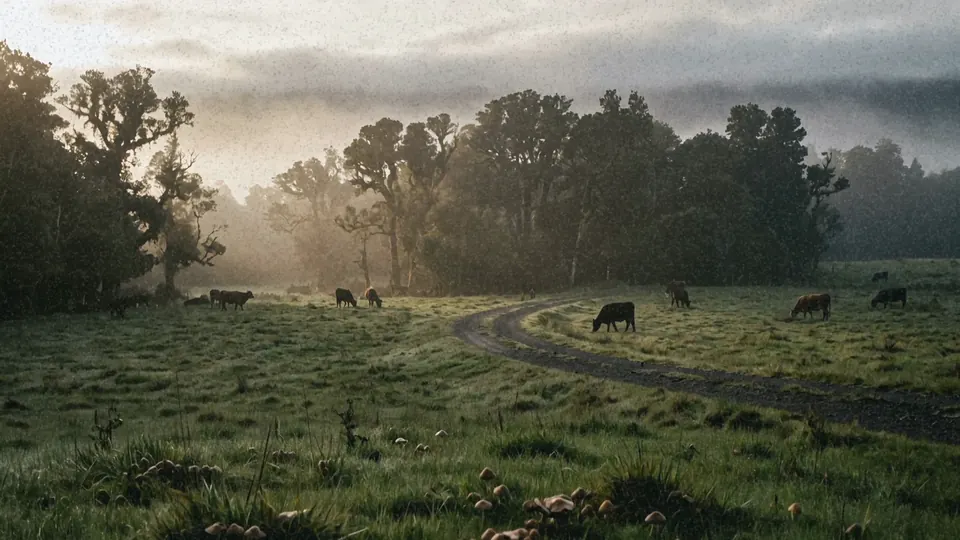
“Strain” is not a scientific rank. In the papers, strains are named lines of one species. A 2026 study grew 14 P. cubensis strains obtained from commercial suppliers, then checked by DNA sequencing that they were all the same species (Sharchaton et al., 2026). A 2023 study compared the genomes of 86 commercially available cultivars with 38 Australian isolates, and found the cultivars had low genetic diversity, with hallmarks of selfing and clonal propagation (McTaggart et al., 2023). Evidence: established for what these studies found.
In other words, a strain name is a label that growers and sellers use. There is no formal registry behind it that we could find. The story of one famous label is in our guide to the Penis Envy strain name.
| Term | What it means | Example |
|---|---|---|
| Magic mushrooms | Everyday name for mushrooms that contain psilocybin. Not a scientific group. | Health Canada counts over 200 species |
| Genus | A group of related species. | Psilocybe, Panaeolus |
| Species | One kind of fungus, with a two-part Latin name. | Psilocybe cubensis |
| Strain | A named line of one species, as labelled by growers and suppliers. Not a scientific rank. | Strain labels used in the 2026 study, such as “Oak Ridge light” and “Mak IND” |
| Psilocybin | The main compound stored in the mushroom. | Converted to psilocin in the body |
| Psilocin | The compound psilocybin turns into. It is the form that acts on receptors. | Also made by the mushroom when it is damaged |
What are psilocybin and psilocin?
Psilocybin and psilocin are the two main hallucinogenic compounds of these mushrooms (Dinis-Oliveira, 2017). A short chemistry lesson helps here. Psilocybin carries a phosphate group, a small chemical tag. In the body, an enzyme called alkaline phosphatase removes the tag and leaves psilocin (Dinis-Oliveira, 2017).
That is why the same review calls psilocybin primarily a prodrug: a compound that has to be converted before it is active. Evidence: established. The mushroom can run the same step itself. In Psilocybe cubensis, an enzyme called PsiP strips the phosphate off, and the authors suggest the tag may serve a protective function (Lenz et al., 2020).
How do they act on the brain?
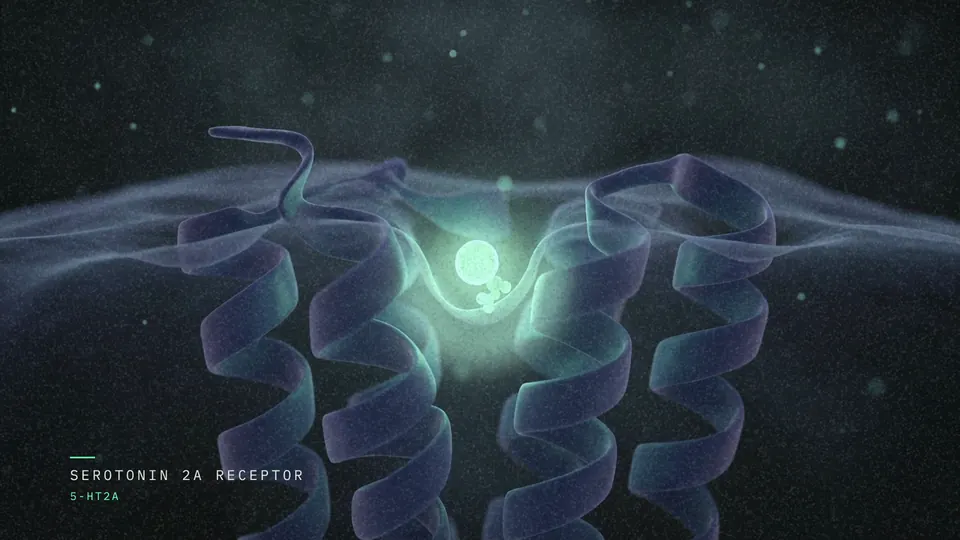
A receptor is a docking site on a cell. The reviews describe psilocybin and psilocin as agonists or partial agonists at the serotonin 2A receptor, also called 5-HT2A (Dinis-Oliveira, 2017). “Agonist” means the compound switches the receptor on, fully or partly. A 2016 review says there is now a consensus that psychedelics act this way at 5-HT2A receptors in the brain (Nichols, 2016). Evidence: established as the leading explanation.
Mushrooms hold more than these two. A 2026 study measured six related compounds in P. cubensis, among them psilocybin, psilocin, baeocystin and norpsilocin (Sharchaton et al., 2026). We do not describe the experience here: this page is not an effects or dosing guide.
Where do magic mushrooms grow?
Widely. The 2022 survey says psychotropic mushrooms are distributed throughout the world. Most feed on dead material (they are saprotrophic), and some live in partnership with other organisms (Gotvaldová et al., 2022).
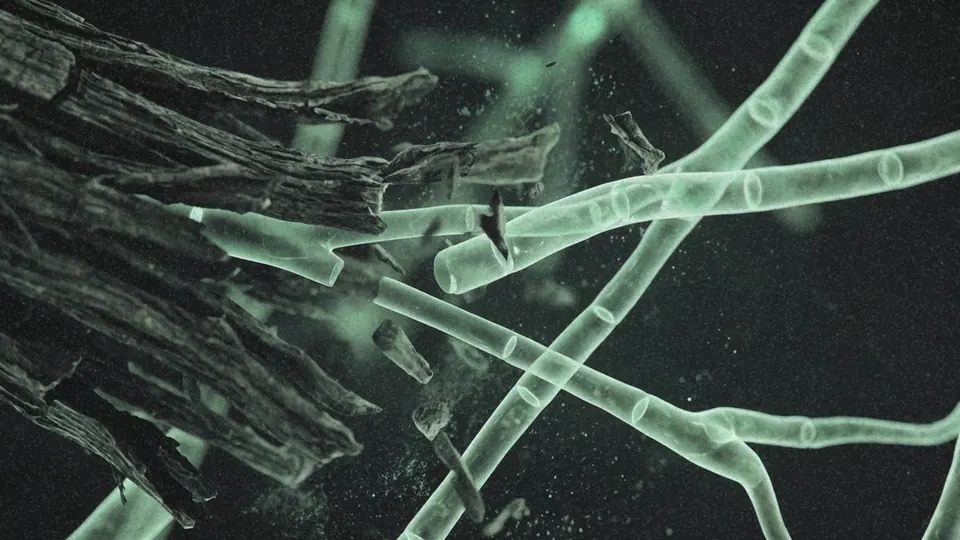
Habitats differ by lineage. The 2024 family-tree study suggests Psilocybe began as a wood-decomposing group that moved to soil, with two separate lines that later specialized on herbivore dung. It lists P. cubensis and Panaeolus cyanescens as dung-loving (Bradshaw et al., 2024). Evidence: preliminary. The authors say key species still need adding.
P. cubensis also travels. The 2023 genome study found that the Australian population is naturalized: it was introduced from an unknown centre of origin and is now established (McTaggart et al., 2023). This section is a map of the science, not a field guide. See the warning below.
Not an identification guide
Health Canada warns that many species look alike and that people can eat poisonous mushrooms by mistake, thinking they are magic mushrooms (Health Canada). The Ontario Poison Centre says only a mushroom expert, a mycologist, can tell safe from toxic mushrooms (Ontario Poison Centre). Even museum labels fail: a DNA study found widespread misidentification in fungaria (Bradshaw et al., 2022). Our safety page has the essentials.
How were magic mushrooms named and used?
Long before any lab, Indigenous peoples had their own relationships with these mushrooms. A 2024 annotated bibliography gathers 49 texts on psilocybin mushroom practices developed by Indigenous peoples, including contemporary practices and evidence of historical uses in Mexico and other regions (Spiers et al., 2024).
Outsiders came later. The 13 May 1957 issue of Life magazine carried a story titled “Seeking the Magic Mushroom”, by the banker R. Gordon Wasson (Life, 1957). In March 1958, Albert Hofmann and colleagues reported psilocybin from the Mexican mushroom Psilocybe mexicana in the journal Experientia (Hofmann et al., 1958). Evidence: established for these dates and titles.
Who discovered what, who was credited and who paid the cost is a bigger story. Our history of magic mushrooms follows it from Mesoamerica to María Sabina, the chemists, prohibition and modern trials. For Canada’s side, read surprising stories of psychedelic Toronto.
Why do magic mushrooms turn blue?
Damage lets two enzymes get to the psilocybin. One removes the phosphate to make psilocin; the other oxidizes psilocin, and the pieces link into blue chains (Lenz et al., 2020). Evidence: established for P. cubensis.
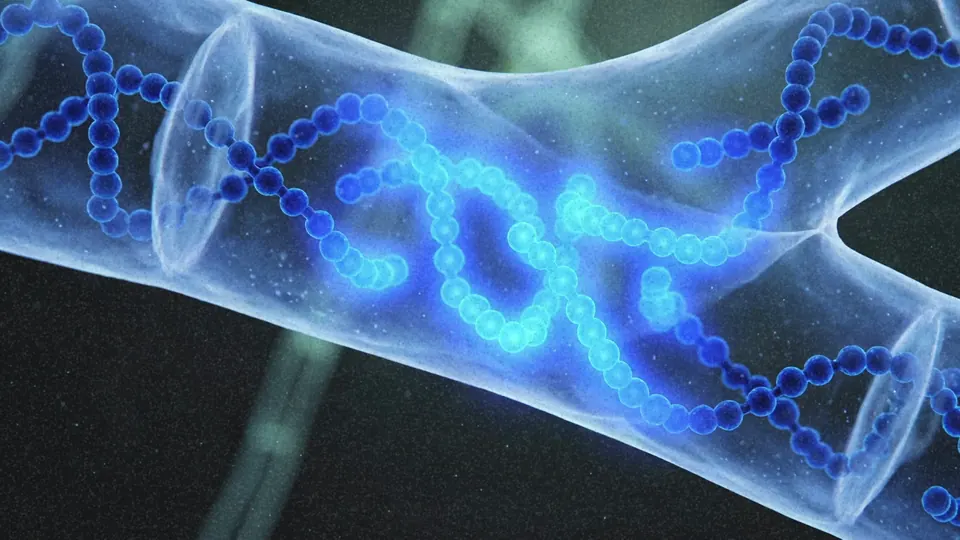
The colour is a weak guide to anything else. In a 2025 study, frozen mushrooms turned deep blue on thawing, but the authors wrote that this bluing does not necessarily correlate with psilocin levels (Windsor et al., 2025). Many other mushrooms bruise blue through unrelated chemistry. The full story is in why do magic mushrooms turn blue.
Do strain names tell you how strong a mushroom is?
Not reliably. Evidence: established. Compound levels vary even inside one species. A 1982 study of cultivated P. cubensis found psilocybin varied by a factor of four across harvests from one culture, and by over a factor of ten between samples from outside sources (Bigwood and Beug, 1982).
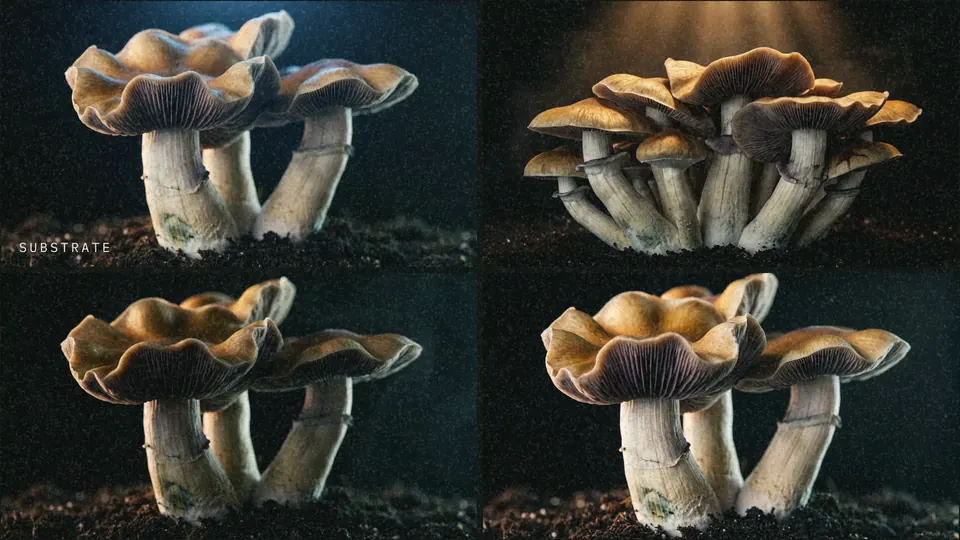
A 2026 study repeated the test with modern strains. Grown under identical lab conditions, the 14 strains differed more than 7.8-fold in total tryptamines. Single mushrooms of the same strain also differed, by between 12.81% and 23.39% (as a coefficient of variation) in psilocybin. The authors concluded that species and strain identification alone cannot predict the psychoactive content (Sharchaton et al., 2026).
That is why we do not rank, compare or recommend strains. A label describes a line a seller says it grew. It does not tell you what is in the next mushroom.
What are researchers studying, and what is proven?
Psilocybin is being studied as a possible treatment for conditions such as depression. That is not the same as proof. Health Canada says clinical trials are the most appropriate and effective way to advance research with psilocybin, and that there are no approved therapeutic products containing psilocybin in Canada or elsewhere (Health Canada).
The results so far are mixed. In a phase 2 trial of treatment-resistant depression, the highest dose beat a control dose on the main measure at 3 weeks, but not on the sustained-response measure at 12 weeks. Adverse events occurred in 77% of participants, and suicidal thoughts, behaviour or self-injury appeared in all dose groups. The authors called for larger and longer trials (Goodwin et al., 2022).
A German trial published in 2026 did not show a significant difference on its first main comparison, though the authors describe exploratory signals (Mertens et al., 2026). And one review argues that effect sizes in these trials are likely over-estimated, because participants often work out whether they got the drug, and expectations colour their reports (Muthukumaraswamy et al., 2021).
| Question | What the sources say | Evidence |
|---|---|---|
| Does psilocybin turn into psilocin in the body? | Yes: psilocybin is primarily a prodrug that an enzyme converts to psilocin. | Established |
| Do these compounds act on serotonin 2A receptors? | Reviews describe them as agonists or partial agonists there, and call it the consensus mechanism for psychedelics. | Established |
| Does a strain name predict what is in a mushroom? | No. Levels vary between and within strains, even under lab conditions. | Established |
| Does blue bruising show strength? | In the few observations so far, it did not track psilocin levels. | Preliminary |
| Is psilocybin an approved medicine in Canada? | No. Health Canada says there are no approved therapeutic products containing it. | Established |
| Does psilocybin work as a treatment? | Early trials give mixed results, with limits in design and safety signals. | Preliminary |
| Why do mushrooms make psilocybin at all? | The natural role is still described as a mystery. | Unresolved |
The last row comes from the 2022 DNA study, which says even the functional role of psilocybin and psilocin under natural conditions remains a mystery (Bradshaw et al., 2022).
Are magic mushrooms legal in Canada?
Psilocin and psilocybin are listed in Schedule III of the Controlled Drugs and Substances Act (Justice Laws). Health Canada says the production, sale and possession of magic mushrooms are illegal in Canada, and lists clinical trials and the Special Access Program as legal routes for therapeutic access (Health Canada).
The Special Access Program is a medical-access route, not a way to buy mushrooms. Through it, a health or dental practitioner can request a drug that is not for sale in Canada, for a serious or life-threatening condition where conventional treatments have failed or are unsuitable or unavailable (Health Canada, Special Access Program).
This is general information, not legal advice. Rules and enforcement change, so check the official pages linked here before relying on any summary, including ours.
Safety at a glance
If someone may have eaten a wild mushroom
Call the Ontario Poison Centre at 1-800-268-9017, 24 hours a day, or 911 in an emergency. Do not wait for symptoms: the centre advises acting before the person feels sick, because poisoning can take hours to appear (Ontario Poison Centre).
Health Canada lists risks of these substances, including anxiety, panic and paranoia, and notes that mixing them with other substances can have serious consequences (Health Canada). Our safety page keeps the key numbers and information in one place. We do not give use or dosing guidance.
Where to go next
- The history of magic mushrooms: from Mesoamerica and María Sabina to Life magazine, Hofmann’s psilocybin, prohibition and today’s trials.
- Why do magic mushrooms turn blue?: the two enzymes, the blue chains and why colour is no guide to strength or safety.
- The Penis Envy strain name: how one strain label got its name, and what the genetics studies do and do not show.
- Surprising stories of psychedelic Toronto: the city’s research, street scene and public inquiry.
Stay curious, and check the date on this page. We update it when the sources change.
Common questions
What are magic mushrooms?
An everyday name for mushrooms that contain psilocybin and psilocin. Health Canada says there are over 200 species. Researchers name genera such as Psilocybe, Panaeolus, Pluteus and Gymnopilus. “Magic mushroom” is not a scientific category.
Are magic mushrooms and psilocybin the same thing?
No. Magic mushrooms are the fungi. Psilocybin is a compound they contain, and psilocin is the compound psilocybin is converted into. Health Canada calls psilocybin and psilocin psychoactive substances that are controlled internationally.
What is the difference between psilocybin and psilocin?
Psilocybin carries a phosphate group. An enzyme removes it in the body to make psilocin, so psilocybin is described as primarily a prodrug. Reviews describe both as agonists or partial agonists at the serotonin 2A receptor, and psilocin is the active form.
Is Psilocybe cubensis the only magic mushroom?
No. It is one well-studied species. Psilocybe has well over a hundred species by most counts, and psilocybin has also been reported in other genera such as Panaeolus, Pluteus and Gymnopilus.
What is a magic mushroom strain?
A named line of one species, as labelled by growers and suppliers. It is not a scientific rank. In a 2026 study, 14 strains of Psilocybe cubensis grown under identical conditions still differed more than 7.8-fold in total tryptamines, so a strain name does not predict content.
Are magic mushrooms legal in Canada?
Psilocin and psilocybin are in Schedule III of the Controlled Drugs and Substances Act, and Health Canada says the production, sale and possession of magic mushrooms are illegal. Clinical trials and the Special Access Program are medical routes. This is not legal advice and details change, so check the official Government of Canada pages.
Is psilocybin an approved medicine?
Not in Canada. Health Canada says there are no approved therapeutic products containing psilocybin in Canada or elsewhere. Researchers are studying it, and trial results so far are early and mixed.
What should I do if someone has eaten a wild mushroom?
In Ontario, call the Ontario Poison Centre at 1-800-268-9017, 24 hours a day, or 911 in an emergency, without waiting for symptoms. Only a mycologist can tell safe from toxic mushrooms. Our safety page has more.
Shroomverse sells mushroom products. This article is general information about what magic mushrooms are. It is not medical, legal or identification advice, and it does not recommend any product.
SOURCES
- Psilocybin and psilocin (magic mushrooms) (page modified 20 October 2026), Health Canada. Accessed . Source for: over 200 species; the active ingredients; production, sale and possession illegal; no approved therapeutic products; clinical trials and the Special Access Program named as legal routes; the look-alike warning; the risks listed.
- Special Access Program - Drugs, Health Canada. Accessed . Source for what the program is and who can request access.
- Controlled Drugs and Substances Act, S.C. 1996, c. 19, Schedule III, items 11 (psilocin) and 12 (psilocybin), Justice Laws Website, Government of Canada. Accessed .
- Mushrooms (public information page), Ontario Poison Centre, operated by The Hospital for Sick Children (SickKids), Toronto. Accessed . Source for: only a mycologist can tell safe from toxic mushrooms; call before symptoms; 24-hour toll-free number 1-800-268-9017.
- Ontario Poison Centre: get help, Ontario Poison Centre. Accessed . Source for the 24-hour, toll-free number 1-800-268-9017.
- Metabolism of psilocybin and psilocin: clinical and forensic toxicological relevance (Dinis-Oliveira RJ, Drug Metabolism Reviews, 2017, pp. 84–91), Taylor & Francis (peer-reviewed review); record on PubMed, PMID 28074670. Accessed . Abstract consulted; full text not open. Source for the two main compounds, the prodrug description, dephosphorylation by alkaline phosphatase and activity at 5-HT2A receptors.
- Psychedelics (Nichols DE, Pharmacological Reviews, 2016, pp. 264–355), American Society for Pharmacology and Experimental Therapeutics (peer-reviewed review); full text via PubMed Central, PMC4813425. Accessed . Abstract consulted; cited only for the stated consensus on 5-HT2A receptors.
- Injury-Triggered Blueing Reactions of Psilocybe “Magic” Mushrooms (Lenz C, Wick J, Braga D, et al., Angewandte Chemie International Edition, 2020), Wiley (peer-reviewed, open access). Accessed . Abstract consulted. Source for the PsiP and PsiL enzymes, blue oligomers and the suggested protective role of the phosphate group.
- Development of Psilocybe Mushroom Species Reference Material—Cultivation Parameters and Chemical Profiles (Windsor C, et al., Journal of AOAC International, 2025), Oxford University Press (peer-reviewed); full text via PubMed Central, PMC12733971. Accessed . Source for the statement that bluing does not necessarily correlate with psilocin levels.
- Extensive Collection of Psychotropic Mushrooms with Determination of Their Tryptamine Alkaloids (Gotvaldová K, et al., International Journal of Molecular Sciences, 2022), MDPI (peer-reviewed, open access); full text via PubMed Central, PMC9693126. Accessed . Source for the list of genera, world distribution and mostly saprotrophic lifestyle.
- DNA Authentication and Chemical Analysis of Psilocybe Mushrooms Reveal Widespread Misdeterminations in Fungaria and Inconsistencies in Metabolites (Bradshaw AJ, et al., Applied and Environmental Microbiology, 2022), American Society for Microbiology (peer-reviewed); full text via PubMed Central, PMC9764976. Accessed . Source for species-count estimates, the 144 blue-reacting species, Deconica, misidentification and the statement that the natural role of psilocybin remains a mystery.
- Phylogenomics of the psychoactive mushroom genus Psilocybe and evolution of the psilocybin biosynthetic gene cluster (Bradshaw AJ, et al., PNAS, 2024), Proceedings of the National Academy of Sciences (peer-reviewed); full text via PubMed Central, PMC10801892. Accessed . Source for the origin of psilocybin synthesis in Psilocybe, the transfers to other mushrooms, the ~165 species figure and the habitat reconstruction.
- Domestication through clandestine cultivation constrained genetic diversity in magic mushrooms relative to naturalized populations (McTaggart AR, et al., Current Biology, 2023), Cell Press (peer-reviewed); record on PubMed, PMID 38052161. Accessed . Abstract consulted; full text not open. Source for the dung habitat, the naturalized Australian population and the low diversity of 86 commercial cultivars.
- Surprising Variability in Tryptamine Profiles of Psilocybe cubensis Fruiting Bodies: Inter- and Intra-Strain Differences Across 14 Strains Cultivated Under Controlled Conditions (Sharchaton A, et al., Journal of Fungi, 2026), MDPI (peer-reviewed, open access); full text via PubMed Central, PMC13412672. Accessed . Source for strains from commercial suppliers, DNA species check, the 7.8-fold range, intra-strain variation and the six compounds measured.
- Variation of psilocybin and psilocin levels with repeated flushes (harvests) of mature sporocarps of Psilocybe cubensis (Earle) Singer (Bigwood J, Beug MW, Journal of Ethnopharmacology, 1982), Elsevier (peer-reviewed); record on PubMed, PMID 7201054. Accessed . Abstract consulted; full text not open.
- Indigenous psilocybin mushroom practices: An annotated bibliography (Spiers et al., Journal of Psychedelic Studies, 2024), Akadémiai Kiadó (peer-reviewed); record via Crossref. Accessed . Abstract consulted; cited only for the scope of the bibliography (49 texts).
- Psilocybin, ein psychotroper Wirkstoff aus dem mexikanischen Rauschpilz Psilocybe mexicana Heim (Hofmann A, Heim R, Brack A, Kobel H, Experientia 14(3):107–109, March 1958), Springer (peer-reviewed). Accessed . Bibliographic record consulted (Crossref); cited only for its date and subject.
- Life, vol. 42, no. 19, 13 May 1957 (contains “Seeking the Magic Mushroom” by R. Gordon Wasson), Time Inc., via the Internet Archive. Accessed . Issue date and the article’s title and author checked in the Internet Archive’s text of the issue.
- Single-Dose Psilocybin for a Treatment-Resistant Episode of Major Depression (Goodwin GM, et al., New England Journal of Medicine, 2022), Massachusetts Medical Society (peer-reviewed); funded by COMPASS Pathfinder. Accessed . Abstract consulted; full text not open. Industry-funded trial.
- Efficacy and Safety of Psilocybin in Treatment-Resistant Major Depression: The EPISODE Randomized Clinical Trial (Mertens et al., JAMA Psychiatry, 2026), American Medical Association (peer-reviewed). Accessed . Abstract consulted; full text not open.
- Blinding and expectancy confounds in psychedelic randomized controlled trials (Muthukumaraswamy SD, Forsyth A, Lumley T, Expert Review of Clinical Pharmacology, 2021), Taylor & Francis (peer-reviewed review). Accessed . Abstract consulted; full text not open.
CHANGES
- : Added links to the DMT Library.
- : First published. Every source opened and checked on this date. Claims not backed by a source we could open were left out.
- : Re-read Health Canada’s psilocybin page, updated on 20 October 2026, and corrected its date here. The statements this article cites from it are unchanged.



