THE SHROOMVERSE JOURNAL ✳ 13 MIN READ
María Sabina: the Mazatec healer and the cost of the West’s discovery
Topic: Mushrooms: history and science
Published
Listen: the 3-minute version
AI-narrated summary of this article
Short answer, checked 4 October 2026
María Sabina (born in the mid-1890s, died 1985) was a Mazatec sabia, or wise woman, from Huautla de Jiménez in Oaxaca, Mexico. In June 1955 she led a night vigil that R. Gordon Wasson described in Life on 13 May 1957. Outsiders then came to her town in large numbers, and scholars report that she was blamed and stigmatised there. Whether Wasson broke a promise of confidentiality, and who has benefited since, remain disputed.
On this page 8 sections
María Sabina was a Mazatec healer, a sabia or “wise woman”, from Huautla de Jiménez in the mountains of Oaxaca, Mexico. Her name is known around the world because of one night in June 1955, when she led a vigil, a velada, that an American banker, R. Gordon Wasson, attended and then described in Life magazine in 1957.
Her story is often told as a discovery. Many scholars since, including Mazatec researchers, describe something closer to a loss. This article sets out who she was, what a velada is, what Wasson’s visit set in motion, and what is still argued about, including whether the Mazatec people were ever properly credited or repaid. We link each claim to a source we opened, and we say where we could read only a summary or a secondary account.
How this article is written
The velada is a Mazatec religious and healing practice, and we describe it as culture and history, not as something to copy. Nothing here is guidance on using any substance. For safety information, see our safety page.
Who was María Sabina?
Wikidata records her birth in Huautla de Jiménez on 22 July 1894 and her death there in 1985 (Wikidata). A scholarly bibliography gives her years as 1895 to 1985 (Spiers et al., 2024). We cannot settle the birth year, so we say the mid-1890s. That bibliography describes a sabia raised in a mushroom-using home and community in Huautla, who called the mushrooms “saint children” (Spiers et al., 2024).
One of her few widely quoted statements, from the life story she told, is that “the mushrooms are saints; they give me wisdom” (Seale-Feldman, 2026, quoting Estrada). The words come to us through interviews, translation and quotation. See the section below on her own voice.
The main biography is by Álvaro Estrada, a Mazatec writer and journalist from Huautla who interviewed her in Mazatec (Spiers et al., 2024). Catalogue records show a Spanish edition, Vida de María Sabina: la sabia de los hongos, published in Mexico in 1977 (Spanish edition record), and an English translation by Henry Munn with a retrospective essay by Wasson, published in Santa Barbara in 1981 (English edition record). We checked these records only. We did not read either book.
What is a velada?
A velada is a night vigil. In the account Wasson published, it was a gathering with a purpose: people consulted the mushrooms about illness, a stolen donkey or a relative far away. He added that the Mazatec people he met treated the mushrooms as sacred, never sold them in the market, and called their use muy delicado, a Spanish phrase meaning perilous (Life, 1957).
His description of the 1955 night is of an evening gathering of about 20 people, an altar table with Christian images, resin incense, a candle snuffed out before midnight, and a healer chanting in the dark until dawn, with an invocation in the name of Christ and the saints. He wrote that the Mazatec blended Christian and older religious elements (Life, 1957).
That is one visitor’s account of one night, written by an outsider with a theory of his own. Wasson believed psychoactive mushrooms lay at the origin of religion, and scholars say his portrait cast María Sabina as a living relic of an ancient rite and paid little attention to her as a person (Spiers et al., 2024). It is not a full description of Mazatec practice.
What happened when Gordon Wasson visited in 1955?
The Wassons had first travelled to Huautla in August 1953, with their daughter and the anthropologist Robert Weitlaner, where they were received by a bilingual teacher, Herlinda Martínez Cid (García de Teresa, 2022). The velada with María Sabina followed on the night of 29–30 June 1955. Wasson and the photographer Allan Richardson attended (Life, 1957).
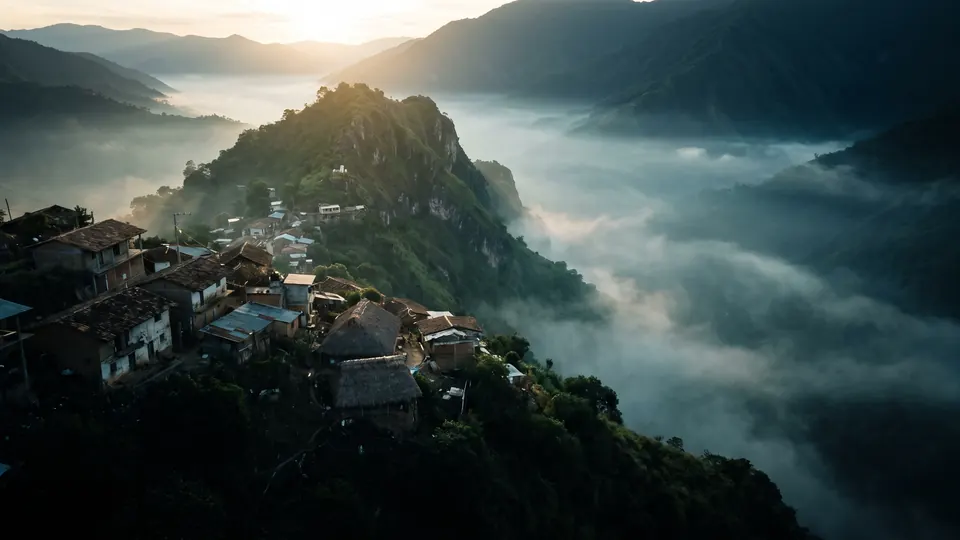
Two years later, “Seeking the Magic Mushroom” ran in Life on 13 May 1957. It gave her a pseudonym, “Eva Mendez”, and captioned the photographs with it (Life, 1957). It did not name the town (Haro-Luna et al., 2025). The same year the Wassons published a book, and Valentina Wasson wrote a piece for This Week magazine six days after the Life article; it was the Life article that brought the subject to mass attention in the West (Spiers et al., 2024). We tell the wider story in our history of magic mushrooms.
Wasson wrote that he and Richardson were “the first white men in recorded history to eat the divine mushrooms” (Life, 1957). Scholars disagree. Spiers and colleagues point out that earlier researchers had already reached the Mazatec highlands and conclude that Wasson was less of a pioneer than he often claimed (Spiers et al., 2024). They also note that Valentina Wasson is credited with inspiring her husband’s interest in mycology.
One source reports, citing the Wassons’ own book, that Wasson paid María Sabina 50 pesos for the 1955 velada, a little more than her usual fee of 20 pesos (García de Teresa, 2022). We did not open that book.
What happened to María Sabina and her community afterwards?
The sources we read agree on the outline and differ on the details. Gerber and colleagues write that the pseudonym was dropped, and her identity revealed, in the Wassons’ 1957 book (Gerber et al., 2021). Magar and colleagues write that Wasson’s publications revealed her identity and location and brought a wave of outsiders to her community, disrupting local life and leading to her ostracisation (Magar et al., 2026).
The Life article led many people to travel to the Sierra Mazateca. In the first half of the 1960s, visitors arrived in Huautla without major trouble, and a Mexican journalist’s 1964 book about his ceremonies with her added to her fame. In those years she held ceremonies at a hotel for a fee (García de Teresa, 2022). By the mid-1960s Huautla had become a countercultural pilgrimage destination, and she was stigmatised in her own community for the changes that followed (Spiers et al., 2024).
Government officials and conservative sectors of the community held her responsible for incidents involving foreign visitors, and her house was burned down on several occasions (García de Teresa, 2022). Another paper says she was briefly jailed and her house set on fire, and adds that details vary between accounts (Gerber et al., 2021). We could not find a primary record of the arrest, so we report it as one source’s statement.
The state also acted against the visitors. In September 1967 the Ministry of the Interior sent judicial police and immigration agents to Huautla and 32 Americans were deported. A 1969 operation by the attorney general’s office, with soldiers in helicopters, captured 15 people, nine of them Mexican (García de Teresa, 2022). The article dates Mexico’s listing of psilocybin mushrooms as illicit to 1971, with traditional ceremonial use tolerated. The 1971 UN convention is covered in our history article.
The shift was cultural as well as legal. A study of a Zapotec community, drawing on earlier work, says the publicity displaced ceremonial use and allowed recreational use to spread (Haro-Luna et al., 2025). Today the mushroom tourism that exists in Huautla is a modest income for a few families (García de Teresa, 2022).
She died in 1985 (Wikidata). Retellings add dramatic detail about her family and her last years. We left out anything we could not trace to a source we opened.
What did María Sabina say herself?
Less than the internet suggests, and with a chain of translation in between. Estrada interviewed her in Mazatec (Spiers et al., 2024), and the words we can read have passed through Spanish and English and were then quoted by other scholars. We opened neither book. The words we could verify through such papers are these.
- She called the mushrooms saints, and said they gave her wisdom (Seale-Feldman, 2026).
- One paper, quoting the Spanish edition, has her saying that a wise person should not charge for her services or profit from her wisdom (García de Teresa, 2022). The same paper notes that she did take payment for ceremonies in the 1960s, so the sources do not tell a simple story.
Many other quotations attributed to her circulate online, often about what the visitors did to the mushrooms and to her town. We did not include any we could not trace to a source we opened and read.
Who gets the credit, and who was harmed?
The questions that have grown around her case are about credit, consent and benefit.
- Credit for the “discovery”. The practice was never lost to the people who held it, and earlier outsiders had been there before Wasson (Spiers et al., 2024).
- Consent and confidentiality. Three papers say Wasson published about her without her consent, or after promising confidentiality (Magar et al., 2026; Gerber et al., 2021; Mycological Society of America committee, 2025). We could not read a primary account of what was agreed. Life did use a pseudonym and left the town unnamed.
- Reparations and benefit. Spiers and colleagues report that Mazatec researchers have criticised the exploitation María Sabina and her people suffered and called for reparations. Gerber and colleagues, including an author affiliated with an archive of Mazatec histories in Huautla, argue that the Mazatec are not party to psilocybin patent processes and that no one has sought reciprocity with the community (Gerber et al., 2021). That was their position in 2021, and it is an argument, not a legal finding.
- Current standards. Magar and colleagues call for consent procedures, benefit-sharing agreements and Indigenous leadership in psychedelic research (Magar et al., 2026). The Mycological Society of America renamed its “Gordon and Tina Wasson Award” the “Community Mycologist Award” because of concerns that the Wassons’ actions harmed Indigenous communities and breached research ethics (Mycological Society of America committee, 2025).
- Mazatec voices. The linguistic anthropologist Paja Faudree describes Mazatec authors working to manage a “representational hangover” from outsiders’ accounts (Faudree, 2015).
Wasson himself later wrote, according to one study, that he had nightmares about having unleashed a commercial exploitation of the vilest kind on Huautla (García de Teresa, 2022). The same study argues that commerce and sacred use were not necessarily opposites, and notes that payment for healers long predates the visitors. The disagreement is over how to read the same history.
What is disputed, and how sure are we?
| Question | What the sources say | How firm |
|---|---|---|
| When was she born? | Wikidata: 1894. Spiers and colleagues: 1895. Her death in 1985 is not disputed in what we read. | Unresolved |
| Did Wasson break a promise of confidentiality? | Gerber et al. and the Mycological Society of America paper say yes; Magar et al. say he published without consent. Life used a pseudonym and omitted the town. | Limited evidence: primary account not seen |
| Was Wasson the first outsider? | He said so in Life. Spiers et al. say earlier researchers had reached the highlands. | Contested claim |
| How did her community see her? | Stigmatised and blamed by officials and conservative groups. One informant, reported by García de Teresa, said some Mazatecs were angry at her for selling secrets. | Accounts differ |
| Was she jailed, and was her house burned? | García de Teresa: house burned several times. Gerber et al.: briefly jailed, house set on fire, details vary. | Limited evidence |
| Did commercialisation desecrate the practice? | A local informant and a Mexican mycologist, quoted by García de Teresa, saw sale as a corruption of the rite. García de Teresa argues sale and sacred use were not necessarily contradictory. | Debated |
| Who benefits today? | Gerber et al. (2021) say no reciprocal agreements exist with Mazatec communities. We did not check later developments. | Contested; may have changed |
Her case matters beyond Oaxaca. When people talk about psilocybin research today, in our guide to what psilocybin is or the trial evidence on depression, they are building on knowledge that came, in part, from Mazatec people and from a night in Huautla. Where research is heading, and who shares in it, is not settled.
Common questions
Who was María Sabina?
A Mazatec sabia, or wise woman, from Huautla de Jiménez in Oaxaca, Mexico, who died in 1985. She led the 1955 velada that R. Gordon Wasson described in Life magazine in 1957.
What is a velada?
A night vigil in Mazatec religious and healing practice. In Wasson’s account, people used it to seek guidance about illness and serious worries. It was treated as sacred and never sold in the market. This site does not give instructions for it.
Did María Sabina give permission for the Life article?
Several scholarly papers say Wasson published about her without her consent, or after promising confidentiality. We could not read a primary account of what was agreed. Life gave her a pseudonym, and the town was unnamed.
What happened to María Sabina after the article?
Outsiders came to Huautla in large numbers. Scholars report she was stigmatised and blamed in her community, and that her house was burned. One paper says she was briefly jailed. Accounts of the details differ.
Was Gordon Wasson the first outsider to take part in a Mazatec velada?
He said so in Life, but a scholarly bibliography concludes he was less of a pioneer than he claimed, because earlier researchers had reached the Mazatec highlands before him.
Did the Mazatec people benefit from psilocybin research?
A 2021 paper argued that no pharmaceutical psilocybin developers had reached reciprocal agreements with the Mazatec, and called for reparations. We did not check later developments. Researchers today call for consent and benefit-sharing.
Is this article medical or safety advice?
No. It is history and cultural context. For safety information, see our safety page at /safety, and in an emergency contact local emergency services or a poison control centre.
Shroomverse sells mushroom products. This article is general information about history. It is not medical, legal or purchasing advice, and it does not encourage anyone to use drugs.
SOURCES
- Seeking the Magic Mushroom (R. Gordon Wasson), Life, vol. 42, no. 19, 13 May 1957, Time Inc., via the Internet Archive. Accessed . Supports the 29–30 June 1955 date, the pseudonym “Eva Mendez”, the description of the vigil, the “first white men” claim and the statements that the mushrooms are never sold and are used to consult about illness.
- Indigenous psilocybin mushroom practices: An annotated bibliography (Spiers et al.), Journal of Psychedelic Studies 8(1):3–25, 2024. Accessed . Read through the open-access copy. Supports her birth and death years (1895–1985), her naming of the mushrooms as “saint children”, Estrada’s biography, stigma in her community, Mazatec critiques and reparations calls, and Wasson’s claim to pioneering.
- Indigenous Knowledge Systems & Psychedelic Science: Towards Ethical and Reciprocal Collaboration (Magar et al.), Journal of Psychopharmacology 40(1):179–188, 2026. Accessed . Read through the Europe PMC full text. Supports publication without consent, the revealing of her identity and location, ostracisation and the calls for consent and benefit-sharing.
- Ethical Concerns about Psilocybin Intellectual Property (Gerber et al.), ACS Pharmacology & Translational Science, 2021. Accessed . Supports the claim that Wasson revealed her identity in the 1957 book, that she was briefly jailed and her house burned, that details vary, and the authors’ arguments on patents and reparations. We did not open the Wassons’ book.
- Selling the Priceless Mushroom: A History of Psilocybin Mushroom Trade in the Sierra Mazateca (Oaxaca) (García de Teresa), Journal of Illicit Economies and Development 4(2):177–190, 2022. Accessed . Supports the 1953 trip, the payment figures, her hotel ceremonies, blame by officials, the burning of her house, the 1967 and 1969 operations, the 1971 listing, the quotation attributed to her on charging, Wasson’s later remarks and the argument that commerce and sacred use were not opposites.
- 10 years of advancing diversity within the Mycological Society of America, IMA Fungus 16:e155609, 2025. Accessed . Read through the Europe PMC full text. Supports the renaming of the Wasson award and the stated reasons.
- Current use of holy mushrooms of the genus Psilocybe in a Zapotec community in Oaxaca, Mexico (Haro-Luna et al.), IMA Fungus 16:e148070, 2025. Accessed . Supports the statements that Life omitted the town’s name and that publicity displaced ceremonial use.
- Secular Mysticism: Entanglements of Science and Religion in Psychedelic Medicine (Seale-Feldman), Culture, Medicine and Psychiatry 50:30, 2026. Accessed . Source of the quotation “the mushrooms are saints; they give me wisdom”, which it cites to Estrada’s account as translated in a 2003 selection. We did not open that book.
- Tales from the Land of Magic Plants: Textual Ideologies and Fetishes of Indigeneity in Mexico’s Sierra Mazateca (Faudree), Comparative Studies in Society and History, 2015. Accessed . Abstract read. Supports the description of Mazatec authors managing a “representational hangover”.
- María Sabina: her life and chants (Álvaro Estrada; translation by Henry Munn), catalogue record, Open Library. Accessed . Catalogue record only: Santa Barbara, Ross-Erikson, 1981, translated from the Spanish, with a retrospective essay by R. Gordon Wasson. The book was not read.
- Vida de María Sabina: la sabia de los hongos (Álvaro Estrada), catalogue record, Open Library. Accessed . Catalogue record only: Mexico, Siglo Veintiuno Editores, 1977. The book was not read.
- María Sabina (Wikidata item Q442467), Wikidata. Accessed . Birth date and place, death year and place. Used for orientation, with the scholarly bibliography as the second source.
- R. Gordon Wasson (Wikidata item Q1347053), Wikidata. Accessed . Identifies the entity for the article’s structured data.
CHANGES
- : Published.



