SHROOMVERSE FILMS · TRANSCRIPT
Tidal Wave: the documentary.
In 2021, one bag of mushrooms was tested in a competition in Oakland, California. The label said Tidal Wave. This is the story of that test result, the legends behind the strain, why these mushrooms turn blue, and why a strain name can’t tell you how strong a mushroom is.
It’s an educational film. It isn’t about our products, and there’s no growing, sourcing or dosing advice in it. Some scenes are AI-generated illustrations, and the narration is a synthetic voice.
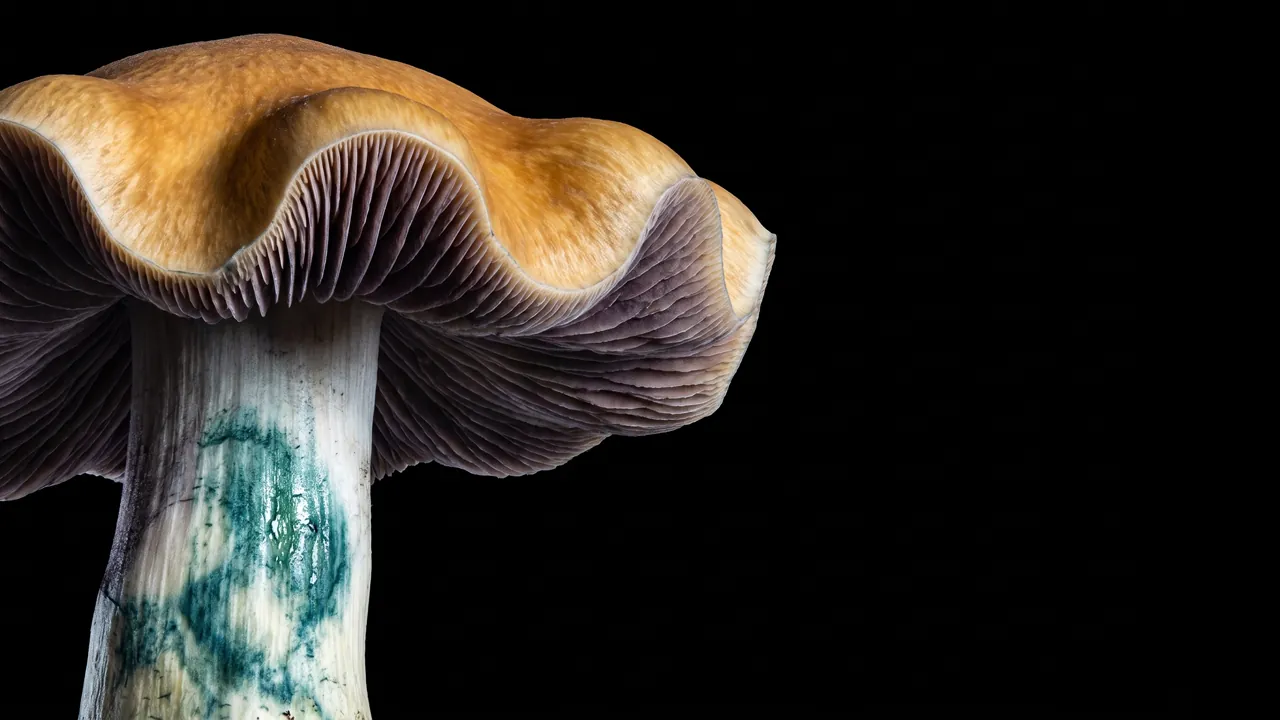
FULL TRANSCRIPT
The bag from Oakland
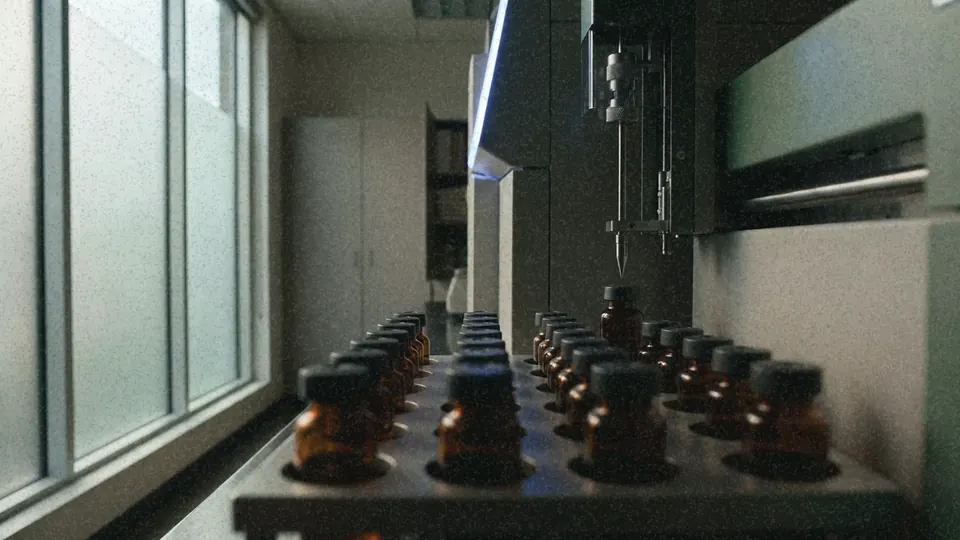
A bag of dried mushrooms, sent to a lab to be measured. In 2021, a competition in Oakland, California, tested every sample growers sent in. Most samples landed near the average. One didn't. More than four times the average concentration of psychedelic compounds. The label said Tidal Wave. But what that number really means is far stranger than a trophy.
What is Tidal Wave?
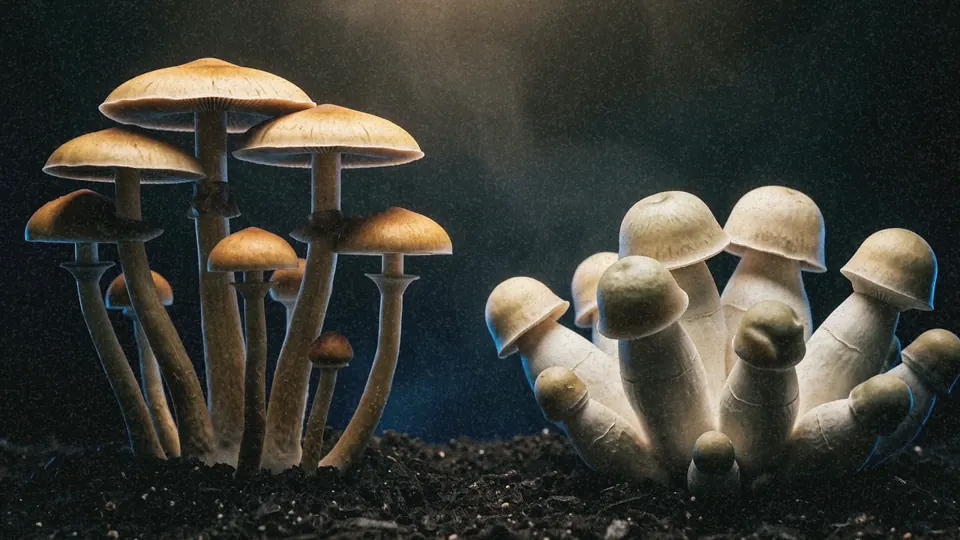
Tidal Wave is a variety of Psilocybe cubensis, the most widely cultivated psychedelic mushroom on Earth. Look closely and it's easy to recognize. Thick, pale stems. Dense, heavy caps. Edges that often curl and ripple outward, like a wave breaking back on itself. That shape is where most growers say the name came from. It's a young variety. It appears in grower communities around 2020, and it's usually described as a cross between two older, almost mythical lines: B+, and Penis Envy.
Crossing two cubensis lines isn't exotic. Growers pair spores and cultures, select the offspring they like, and repeat. What made Tidal Wave different was the claim attached to it. That it wasn't just a new look. It was stronger. To understand why that claim spread so fast, you have to meet the parents.
The legendary parents
Penis Envy is the stuff of legend in mushroom culture. The most repeated story says its spores were collected in the Amazon, passed through the hands of the ethnobotanist Terence McKenna, and cultivated in the 1970s by a Texas physician named Steven Pollock. It's a good story. It's also very hard to verify. What is documented is the mushroom itself: squat, thick, oddly shaped, often reluctant to open its caps, and with a long reputation for unusual strength.
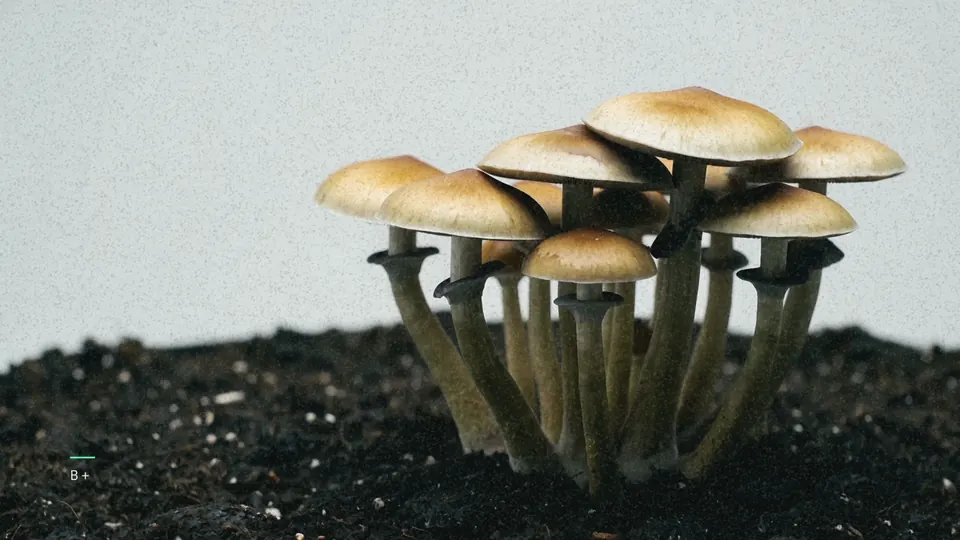
B+ is almost the opposite. Attributed to a grower in the 1990s known only as "Mr. G," it's famous not for potency but for reliability. Big fruit bodies. Forgiving growth. A mushroom beginners could actually grow. So the pitch for Tidal Wave was simple. Take the strength of one parent, the vigor of the other, and combine them. For years, a pitch like that would have lived and died on reputation. Forum posts. Trip reports. Word of mouth. There was no scoreboard. Then someone built one.
The Psilocybin Cup
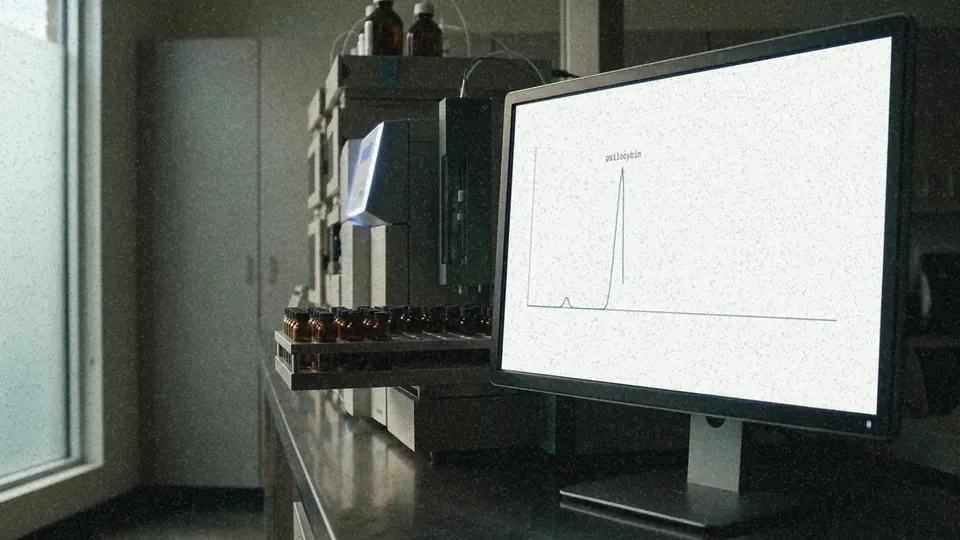
The Psilocybin Cup was organized by Oakland Hyphae, a mycology group in California, after Oakland decriminalized natural psychedelics in 2019. The idea came from cannabis culture. Submit your harvest. Send it to an analytical lab. Let chemistry, not reputation, decide. Labs measured the key compounds: psilocybin, psilocin, and related tryptamines, as a percentage of dry weight. Across the 2021 competitions, the average total came in under one percent.
The winning Tidal Wave sample, grown by a cultivator called Magic Myco, came in at three point eight two. Two point two six percent psilocybin. One point five six percent psilocin. Online, that number did what numbers do. It became the strain. Spore vendors, blogs, and forums began describing Tidal Wave as one of the most potent mushrooms in the world. Except there was one problem. The test measured one sample. Not a strain.
Why magic mushrooms turn blue
To see why that distinction matters, it helps to understand what's being measured. Psilocybin itself is mostly a delivery molecule. It carries a phosphate group, a small chemical tag. After it's swallowed, the body strips that tag off, turning psilocybin into psilocin. Psilocin is the molecule that reaches the brain. There, its psychedelic effects run mainly through a receptor called serotonin 2A, found in high density across the cortex.
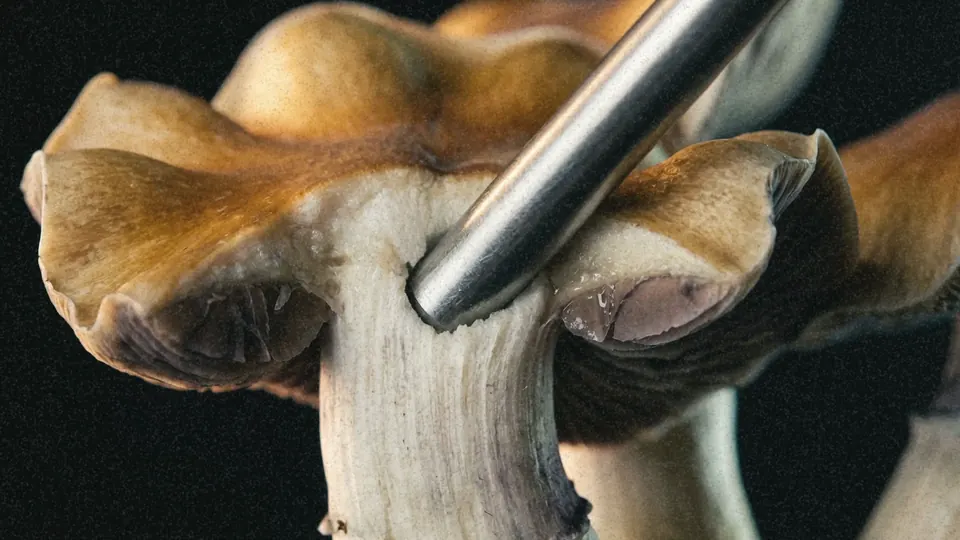
Block that receptor with another drug, and in human studies, most of the psychedelic effect disappears. Now here's the strange part. The mushroom does the same conversion on its own. When its tissue is cut or bruised, enzymes remove the phosphate, and a second enzyme links psilocin molecules into chains. Those chains are blue. In 2020, German researchers identified the chemistry behind this bruising.
That familiar blue stain on a damaged mushroom is psilocin being consumed. Which means psilocin is fragile. It breaks down with handling, with air, with drying and storage. So a psilocin reading of one point five six percent is unusual. It depends on how that sample was grown, dried, packed and stored as much as on its genetics. And that leads to a much bigger question.
What is a “strain”, really?
What exactly is a strain? In biology, Psilocybe cubensis is a species. Tidal Wave is not. Neither is Penis Envy, or B+, or the hundreds of other names sold online. These are cultivar labels, names given by growers and vendors, with no formal registry and no official standard behind them. In 2021, scientists at Medicinal Genomics published one of the first high-quality genome assemblies of Psilocybe cubensis.
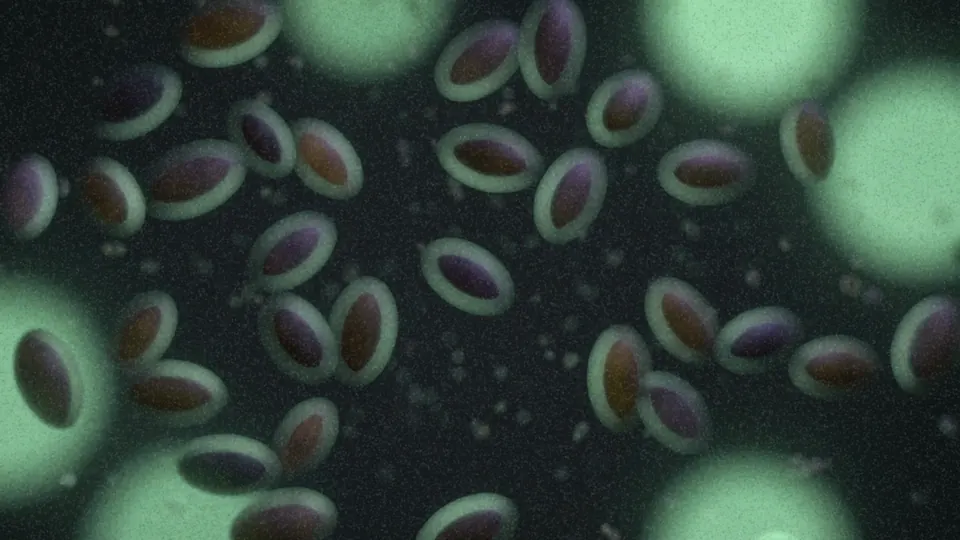
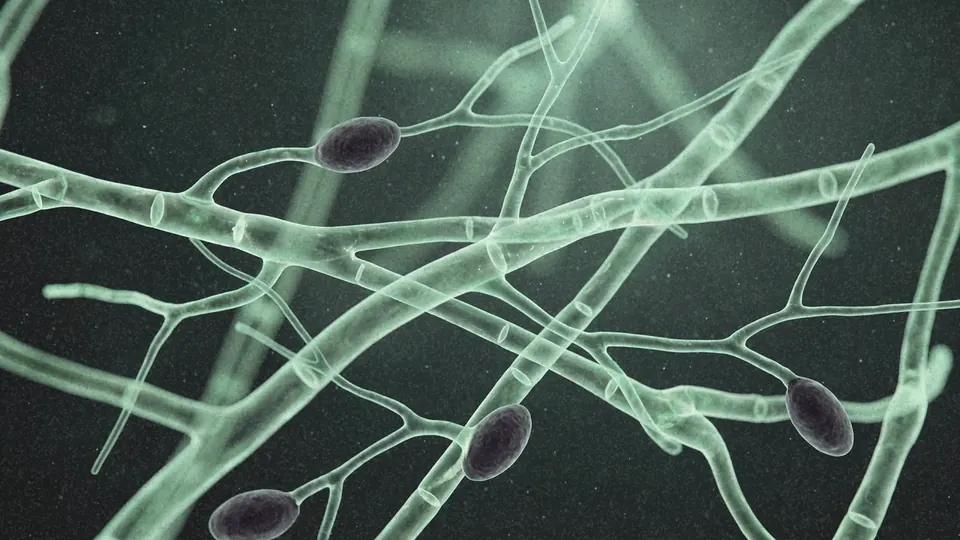
Sequencing more samples, they ran into a basic problem: they often couldn't confirm that a strain was what its label said. The name came from a spore vendor, and that was all. Spores add another layer. Every spore is genetically unique, a new combination of its parents. A syringe labeled Tidal Wave holds a population of possibilities, not a copy of the champion.
Then there's growing itself. Substrate, temperature, light, the flush a mushroom comes from, even the difference between one fruit body and its neighbor. Studies of cubensis potency have found variation of several times between mushrooms that share a name. So when one bag scores three point eight, it tells us something real. That particular sample, from that particular grower, was exceptionally potent. What it can't tell us is what the next bag will hold.
From folklore to data
For most of modern history, none of this mattered to science. Psilocybin mushrooms were illegal almost everywhere, and research focused on pure, synthetic psilocybin in carefully measured doses. But that's changing. In 2023, Oregon opened the first state-licensed psilocybin services in the United States. Colorado followed with its own program. In these systems, mushroom products are lab-tested, and potency isn't gossip. It's a regulated number on a label.

Suddenly the gap between a name and a measurement has real consequences. For facilitators trying to give consistent experiences. For researchers studying whole mushrooms instead of isolated molecules. And for anyone who assumes that a strain name tells them how strong a mushroom is. Tidal Wave sits right in the middle of that gap. Its reputation was built on one of the first public potency tests in mushroom culture.
It's part of a shift from folklore toward data. But it's also a warning about what happens when a single data point becomes a legend.
What the number really means
Go back to that bag of dried mushrooms in Oakland. The number on its lab report was real. Someone grew something remarkable. But the mushroom inside it has already changed. Its psilocin has been slowly breaking down since the day it was harvested. The spores sold under its name are rolling new genetic dice every time they germinate. And the name itself now belongs to thousands of growers it was never tested against.
That may be the most honest thing about Tidal Wave. Not that it's the strongest mushroom in the world. But that it shows how little a name can hold, and how much we still have to measure. Fungi have been making psilocybin for millions of years. We've only just started counting.
SOURCES
- Psilocybin Cup results (Spring 2021, as reported; archived copy, the page is gone)
- Oakland Hyphae
- McKernan et al. (2021), draft genome of Psilocybe cubensis, F1000Research
- McKernan et al. (2021), whole-genome atlas of 81 Psilocybe genomes
- Lenz et al. (2020), injury-triggered blueing reactions of Psilocybe mushrooms, Angewandte Chemie
- Vollenweider et al. (1998), psilocybin and serotonin-2 receptors, NeuroReport
- Bigwood & Beug (1982), variation of psilocybin and psilocin across flushes, Journal of Ethnopharmacology
- Gotvaldová et al. (2021), stability of psilocybin and its analogs in P. cubensis biomass, Drug Testing and Analysis
- Goff et al. (2024), psilocybin and psilocin in five P. cubensis strains by LC-MS/MS, Analytica Chimica Acta
- Kurzbaum et al. (2025), Exploring Psilocybe cubensis strains, Journal of Fungi
- Maps made with Natural Earth (public domain)
- Where P. cubensis has been recorded since 2000: GBIF.org (29 September 2026) GBIF Occurrence Search, Psilocybe cubensis, 377 records with coordinates dated 2000 or later (CC0 and CC BY 4.0 only), binned to 2-degree cells. Records from 28 datasets published through GBIF; the full list is on that page.
Keep exploring.
- All Shroomverse films
- DMT: The Molecule Beyond Reality: documentary and full transcript
- Penis Envy: The Mushroom Behind the Myth: documentary and full transcript
- Amazonian: what the name can and can’t tell us: documentary and full transcript
- Blue Meanie: one nickname, two mushrooms: documentary and full transcript
- Albino Penis Envy: no pigment, so why is it blue?: documentary and full transcript
- Tidal Wave mushrooms: what contest records document, and what they cannot show
- Why do magic mushrooms turn blue? The chemistry of the bruise
- What are magic mushrooms? A plain-English guide
- What is psilocybin, and how does it work? What the science shows and what it doesn’t
- Psychedelic Toronto: a history
- Toronto help lines