SHROOMVERSE FILMS · TRANSCRIPT
Amazonian: what the name can and can’t tell us
By December 1977, the name “Amazonian” was on sale with no origin given. We followed every dated record we could find, from that ad to the only “Amazon” genome we found, to see what the name actually documents.
It’s an educational film. It isn’t about our products, and there’s no growing, sourcing or dosing advice in it. Some scenes are AI-generated illustrations, and the narration is a synthetic voice.
FULL TRANSCRIPT
No origin given
By December 1977, a Seattle mail-order ad was already selling spores under the name 'Amazonian'. It gave no origin. Today, seller descriptions tell a rainforest origin story. None we found cites a source. So we checked the name against specimens, adverts, genome data and lab tests. 'Amazonian' is a strain name growers use, not a scientific name. The species is Psilocybe cubensis, first described from Cuba in 1906.
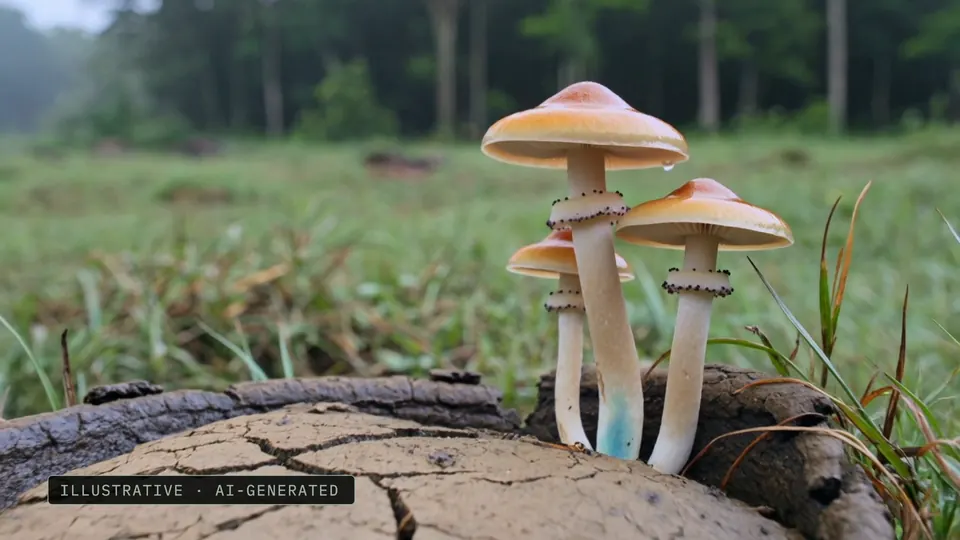
This species does grow in the Amazon region. Where the records note the setting: dung, pasture, farms, roadsides. That's a fact about the species. Behind the lines sold under the name, we found no collector, date or place. Where the paper trail stops, can DNA and lab tests say more?
Described from Cuba, recorded in Amazon pasture
This is an educational documentary. Psilocybin is a Schedule I drug under US federal law and a Schedule III substance in Canada. There is no growing, dosing or buying information here. The species was described from a specimen collected in Cuba in June 1904. That is where the record of its scientific name begins, not evidence of where the species first arose.
In this film, a strain, or cultivar, means a cultivated line kept and sold under a name, and that name is a commercial label, not a scientific one. GBIF, the global biodiversity database, held about 3,900 records of this species in October 2026. Seventy-three came from provinces we counted as Amazon region, in five countries: about one in fifty. Counts like these reflect where people looked, not how common the mushroom is.
And museum identifications in Psilocybe are often wrong: close relatives look the same, and telling them apart takes a microscope or DNA. Mistaking a poisonous mushroom for a psilocybin one is a real risk. In the Amazon region, the oldest dated specimen we found is from Ecuador's Andean foothills, in 1975. The oldest dated lowland specimen we found is from Loreto, Peru, in May 1977.
In Brazil's Amazon, the oldest dated one we located is from Acre, in October 1980. These are dated specimens, not first records, and we have not re-checked their identifications. Local observers have recorded it on cow dung in Amazon-region pastures. We did not locate documentation of it fruiting inside closed rainforest. That matches how the species is described elsewhere: on cattle dung in open pasture.
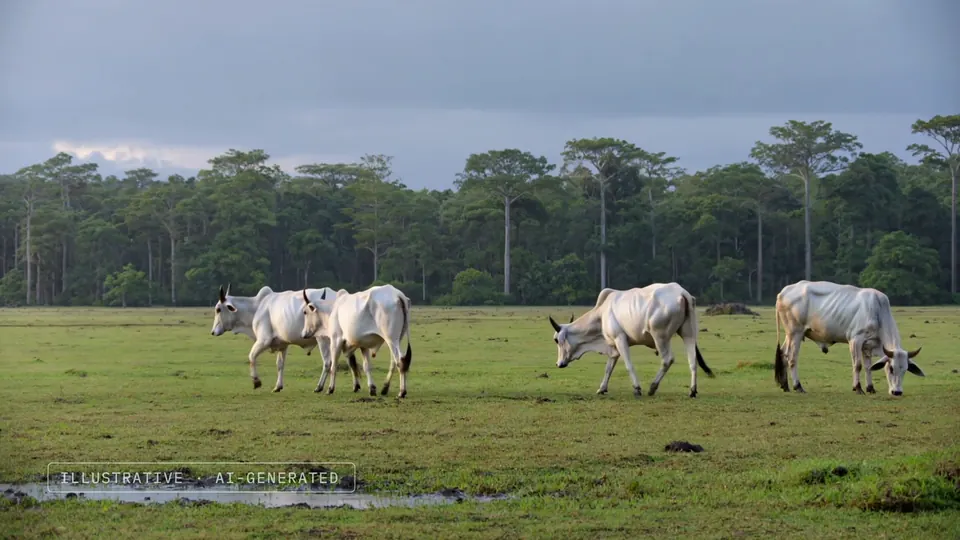
By 2022, nearly two-thirds of the cleared land in the Amazon biome was pasture. Our reading: in the Amazon region it turns up mostly on cattle pasture, much of it cleared from forest. How the species reached the Americas is a separate question. For decades, the leading idea was that it came with European livestock, around the year 1500. In 2026, a study found its closest known wild relative on herbivore dung in Africa; the two lineages parted roughly one and a half million years ago.
Two of the authors later wrote that arrival with livestock remains possible, perhaps more than once. Whether it was in the Americas before Europeans is not known. The research reopens the question, but does not answer it. Two timelines run side by side here. In May 1977, a museum specimen was collected in Loreto, in the Peruvian Amazon. Later that year, a Seattle ad was selling spores as 'Amazonian'. No record we found connects the two.
A name on sale, 1977–1986
That ad ran in High Times magazine in December 1977, placed by a Seattle company called Rain Magic. Among its kits was one called 'Amazonian'. Beside 'Amazonian' it printed two words: smaller, stronger. That is a sales line; the ad names no collector, no place and no test. Proceedings published in 1978 mention a widely grown strain 'from the western Amazon': a region, not a specific place.
In the mid-1980s, classified ads ran under the heading 'Amazonian strain'. In 2022, the historian John W. Allen wrote that it is 'presently not known' where one mid-1980s vendor's 'Amazonian' spore prints came from. The name was on sale before any document we could read named the place an 'Amazon' culture came from.
The one culture with a stated place: Pucallpa, 1982
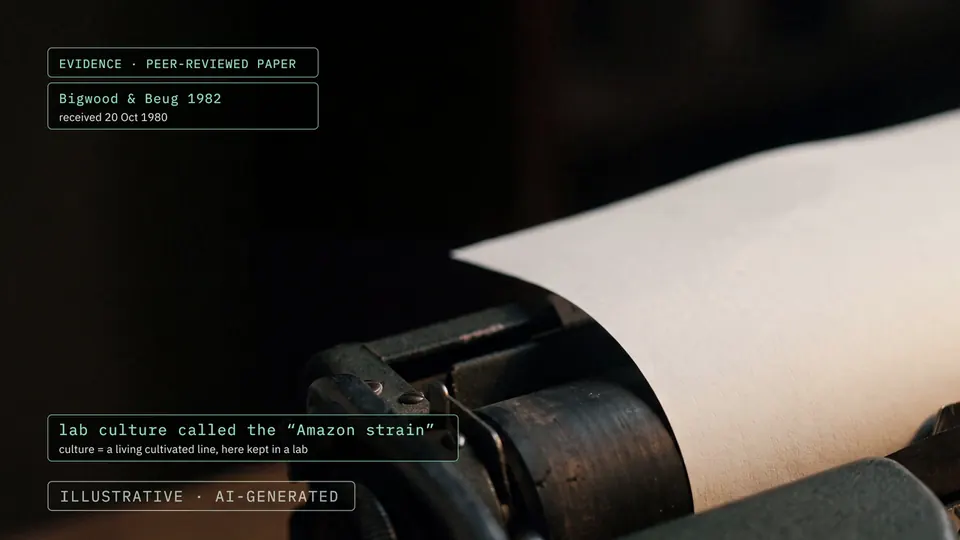
The first document we could read that names a place is a scientific paper, received by its journal in October 1980 and published in 1982. Its authors, Jeremy Bigwood and Michael Beug, tested a lab culture they called the 'Amazon strain'. They wrote that it traced back to a spore print taken near Pucallpa, in the Peruvian Amazon. It is the earliest peer-reviewed use of an 'Amazon' strain name we found.
The paper gives no collector, date or voucher number for that print. Nor did we find the vouchers it mentions among the herbarium's records in GBIF. The paper's two other strains, 'M.R.' and 'Equadorian', were grown by other people, with no origin stated. A 2025 review attaches the Pucallpa origin to all three strains, even after a correction; the paper gives it for one.
The 1982 paper also reports lab numbers for the Amazon strain. In its first harvest, the strain tested at about 5.7 milligrams of psilocybin per gram: one sample, one lab, 1982 methods. The authors grew that strain in three lab cultures. Over successive harvests, psilocybin ranged from about 3 to 13 milligrams per gram of dried mushroom. That's about fourfold across the three cultures, and up to about threefold within a single one. We found no record linking this research culture to the 1977 kits, or to the 'Amazon' strains sold today.
Origin stories, and a name that forked (“PES Amazon”)
Some seller pages invoke shamanic traditions. In the sources we reviewed, we did not locate any ethnographic record of an Amazonian people using these mushrooms, or any record that the name borrows from a people's practice. The only colonial-era report we located is in a Jesuit mission history not printed until 1901. It gives a hostile account of the Yurimagua making a very strong drink with fungi from fallen trees.
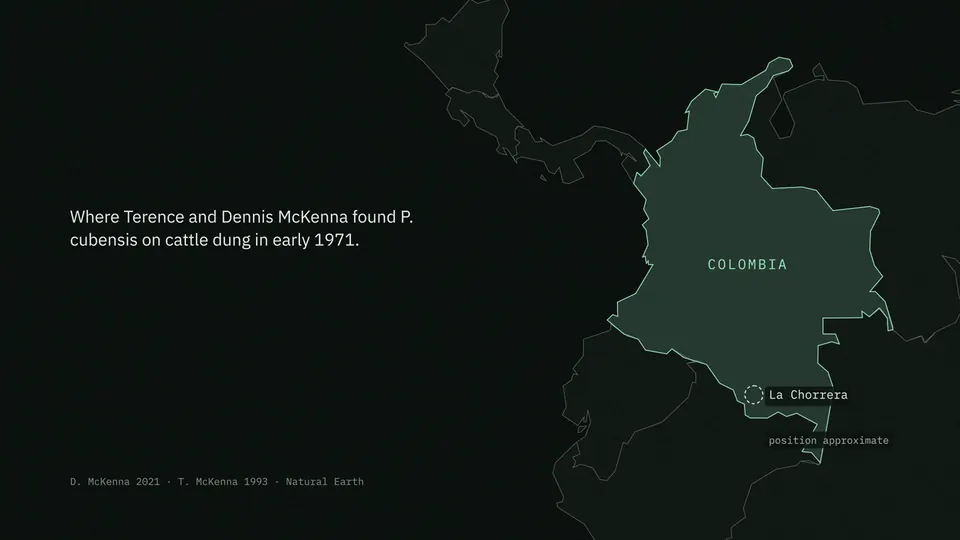
That fungus was never identified, and the report describes wood-growing fungi, not this dung species. In early 1971, the brothers Terence and Dennis McKenna found this species on cattle dung at La Chorrera, in the Colombian Amazon. Both say they brought spores home and later grew them; these are first-person accounts, written decades later. From at least 1989, a Hawaii seller called Syzygy advertised spores 'collected from Amazonian strains'.
The historian John W. Allen calls it a McKenna-family business; if so, it would be one possible route from La Chorrera to the market. We found no McKenna statement or business record confirming that. Lore says the strain Penis Envy came from an 'Amazonian' culture. The cultivator Rich Gee says his mushrooms were called 'Amazons' in 1977 and came, through friends, from Terence McKenna's collection; that can't be independently checked.
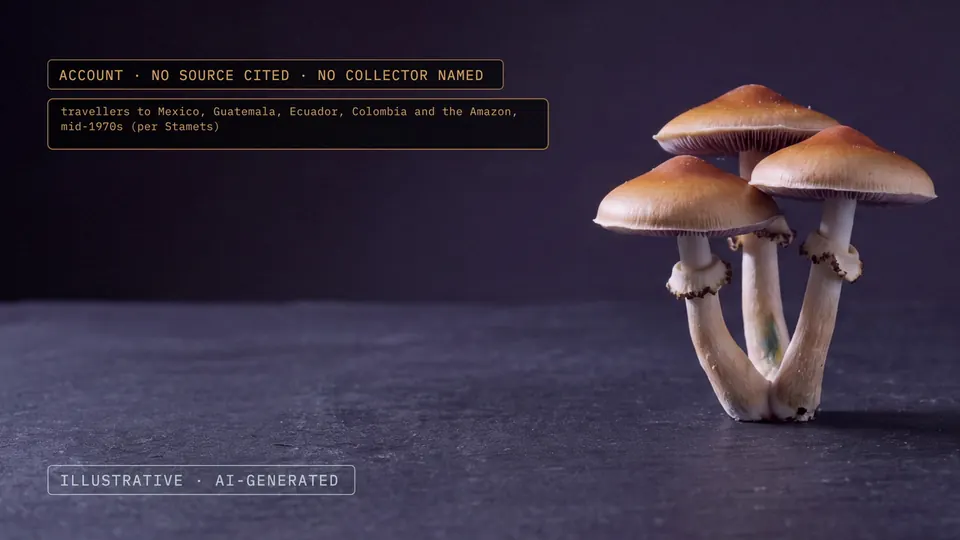
A 2009 magazine version of the story was later disputed by its own sources. Two peer reviewers of a 2021 genome paper called the story 'anecdotal at best'. We found no paper trail from the McKennas' 1971 spores to any named strain on sale today. In 1996, the mycologist Paul Stamets wrote that mid-1970s travellers brought spores back from Latin America, the Amazon included.
Strains, he wrote, took the names of those places. He cites no source and names no collector. Between 1996 and 2001, one early seller's culture went by at least three names, 'Amazonian' among them. The Hawaii company Pacific Exotic Spora, the 'PES' in 'PES Amazon', listed an 'Amazonian' by 1999, with no word on its origin. In the early 2000s, growers could not agree whether 'Amazon', 'Amazonian' and 'PES Amazon' were one strain or several.
A long-time seller now calls the origin unclear. Since the 1970s, the name has been attached to several strains and cultures, and no documented chain we found shows how, or whether, they are related. So the question shifts: not only where 'Amazonian' came from, but which 'Amazonian' a test describes. Cultivars sold under one name by different vendors are not always genetically the same, so a DNA result describes the sample tested, not the name.
One genome called “Amazon”
We started with the public DNA archives. As of October 2026, we found no Psilocybe record in the main international archives with 'Amazon' in the fields for a sample's name or where it was collected. Control searches for names we knew were there did return hits. Three records mention the Amazon for other reasons: two through a university's name, and one a wild Psilocybe from an Amazonian hardwood in Peru, identified only to genus.
The one 'Amazon' genome we found is a record in a commercial genome database. It names a spore vendor as the DNA source, and gives no place where the original mushrooms were collected. Its date, 13 July 2022, is when the record was registered, not when the mushrooms were sampled. A file of its DNA variants is public; the full raw sequence data are open only to authorised accounts.
The study's data table places the genome in the cluster the authors named the Golden Teacher population. Golden Teacher is another strain name, and being in that cluster does not mean this genome descends from it. By our measurement of the study's figure, its genetic signature is assigned almost entirely to that group. Yet a second method, which maps how closely the genomes are related, places it between that cluster and another group, beside a cultivar called A-plus-plus, and the authors mark its placement as ambiguous.
The authors say names like 'Amazon' might point to a collection site, or might mean nothing about origin. Cultivar pedigrees, they write, exist in lore but are not authenticated. In their data, samples from a single vendor fell into three different genetic groups. So one vendor's genome cannot settle stories about other lots, the Penis Envy lore included. The study had no wild South American genomes, and we located no public genome of wild cubensis from the Amazon.
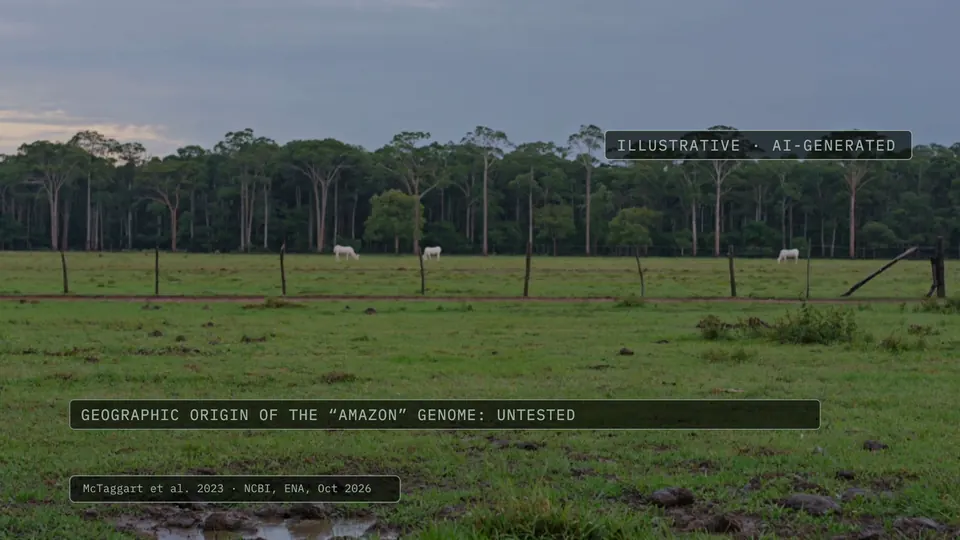
The nearest are two samples from Andean Colombia, made public in 2026, that no study we found has compared with cultivars. So the 'Amazon' genome's geographic origin remains untested.
What lab numbers can and can’t say
Beyond the 1982 paper, the modern figures we could read under the name come from the Psilocybin Cup, where growers enter their own samples for testing. In the first Cup, in 2021, one grower entered a sample labelled 'Amazonian': one hand-picked sample. The 2022 entry was another single sample. The five 2023 entries were anonymous. The labels are the growers' own, and results were revised more than once.
Units and methods also changed between events, so these figures cannot be ranked or compared across years. A 2026 study grew 14 named cultivars under one standardised lab protocol; Amazonian wasn't among them. In that one lab, the 14 differed more than sevenfold in total tryptamines. Each was grown only once, so the study cannot show how much of that gap would hold up in another grow.
Six cultivars were also tested mushroom by mushroom, from the same chamber on the same day, and every one varied: in one, the highest-testing mushroom had about 1.8 times the psilocybin of the lowest. We found no modern peer-reviewed study that grew Amazonian alongside other cultivars under the same conditions. Nor did we locate measurements from wild Amazonian collections. Sellers call Amazonian intensely visual, cite no tests, and disagree on how strong it is.
On forums, users argue both ways. We found no controlled study showing that any cubensis cultivar, Amazonian included, feels different at the same dose. The 'entourage' idea, that other mushroom compounds shape the experience, rests on animal and computer-model work; a 2026 review says human validation is lacking. Dose, expectation and setting are other plausible reasons that experiences differ. Health Canada warns that strength varies greatly from mushroom to mushroom.
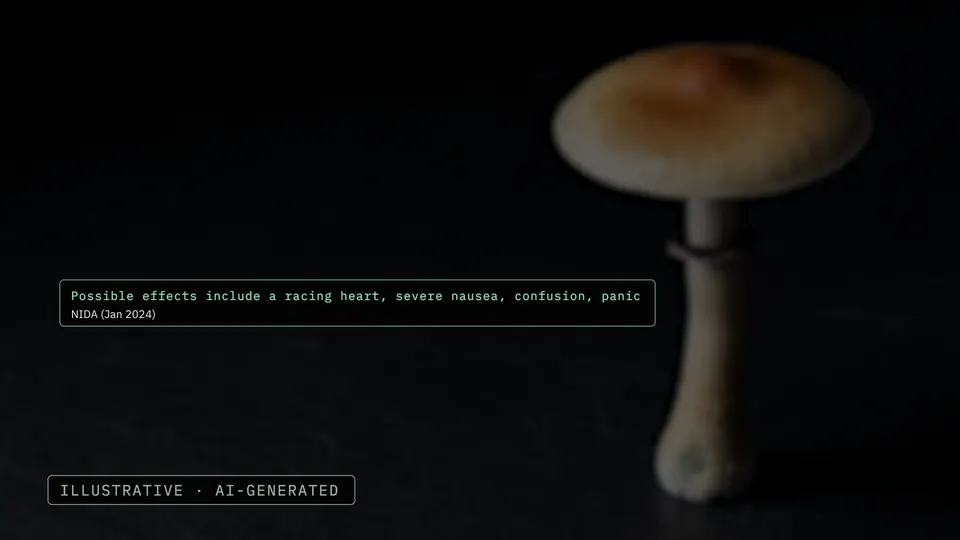
The US National Institute on Drug Abuse lists effects that can include a racing heart, severe nausea, confusion and panic. Supervised trials report low rates of serious mental-health harm; outside them, the risks may be higher. Research suggests psilocybin does not typically lead to addiction. Labels on mushroom products, such as gummies and chocolates, have repeatedly turned out to be wrong, sometimes dangerously.
Calls to US poison centres about psilocybin in young people rose sharply after 2019. The 1977 ad's sales line was 'stronger'. A single number cannot characterise a strain. On the evidence we found, the name doesn't tell you how strong a given mushroom will be, and we found no controlled evidence that it tells you how one will feel.
What the name tells you
Here is what the name can tell you. The name tells you that by 1977 someone associated these spores with the Amazon. The name doesn't tell you where they came from. The species does grow in the Amazon region, recorded mostly on dung in pasture. Behind the strains sold under the name, we found no collector, date or place, and the one name has covered several strains.
The one 'Amazon' genome we found clusters with commercial cultivars, though its exact placement is ambiguous, and we located no wild Amazonian genome to compare it against. Two trails run through this story, specimens from the Amazon and a name on sale, and in the records we found they do not meet. That could change. Three sources we have not yet been able to read in full might name a collector or place for an early culture.
The people closest to these events have not yet been asked. The dated specimens might be sequenced, or the one 'Amazon' genome compared with the Colombian samples. Even then, a documented origin would need its own evidence to reach the strains sold today. By December 1977, the name was on sale with no origin given. Behind the strains sold under it today, we found none. For another strain name put to the same question, our Golden Teacher film is the next step.
KEY SOURCES
- Index Fungorum; NYBG type record via GBIF
- GBIF.org occurrence search, Psilocybe cubensis, accessed 2 Oct 2026; herbarium specimens at the Field Museum and LSU (duplicates INPA, NY)
- Albán-J. G et al. 2021, Lilloa 58:86–94
- Bradshaw AJ et al. 2022, Appl Environ Microbiol 88:e01498-22
- Bradshaw AJ et al. 2026, Proc R Soc B 293:20252270
- High Times no. 28 (Dec 1977) p. 144; no. 78 (Feb 1982) p. 28; classifieds 1984–86; no. 168 (Aug 1989) p. 58 (Internet Archive scans)
- Stamets & Chilton 1983, The Mushroom Cultivator (strain list), Agarikon Press
- Bigwood J & Beug MW 1982, J Ethnopharmacol 5(3):287–291
- Kurzbaum E et al. 2025, J Fungi 11:99
- Badham 1984, J Ethnopharmacol 10:249–254
- D. McKenna 2021, La Chorrera retrospective, McKenna Academy; T. McKenna 1993, True Hallucinations, p. 264
- H. Morris, Vice, 1 Feb 2009; K. Mandrake (Rich Gee), DoubleBlind, 22 Feb 2021
- Henry & Goncalves da Silva 2021, review of F1000Research 10:281 v1
- McTaggart AR et al. 2023, Curr Biol 33:5147–5159.e7
- McKernan K et al. 2021, F1000Research 10:961
- Psilocybin Cup organiser documents, 2021–23 (Hyphae Labs; Tryptomics): growers’ own labels, not comparable across events
- Matthews Nicholass KJ et al. 2026, Ecol Evol 16:e73522
- Sharchaton A et al. 2026, J Fungi 12:486
- Gotvaldová K et al. 2021, Drug Test Anal 13:439–446
- Goff R et al. 2024, Anal Chim Acta 1288:342161
- 21 CFR 1308.11(d); Controlled Drugs and Substances Act, Sch. III; Health Canada (8 Oct 2025); NIDA (Jan 2024)
Keep exploring.
- All Shroomverse films
- DMT: The Molecule Beyond Reality: documentary and full transcript
- Tidal Wave: documentary and full transcript
- Penis Envy: The Mushroom Behind the Myth: documentary and full transcript
- Blue Meanie: one nickname, two mushrooms: documentary and full transcript
- Albino Penis Envy: no pigment, so why is it blue?: documentary and full transcript
- Amazonian mushrooms: why a geographic name is not proof of origin
- What are magic mushrooms? A plain-English guide
- Penis Envy mushroom history: the true story behind the name
- Why do magic mushrooms turn blue? The chemistry of the bruise
- Do magic mushrooms grow in Ontario? What the records show
- Psychedelic Toronto: a history
- Toronto help lines