
THE SHROOMVERSE JOURNAL ✳ 13 MIN READ
Tidal Wave mushrooms: what contest records document, and what they cannot show
Topic: Mushroom names and species
Published
Listen: the 3-minute version
AI-narrated summary of this article
Short answer, checked 4 October 2026
Tidal Wave is an informal cultivar-style label, not a species. In the records we read it appears in two dated contest tables from Oakland Hyphae, in 2021 and in Fall 2022, and the Fall 2022 table gives Psilocybe cubensis in the species field. Those records show how entries were labelled and what a laboratory reported for each submitted sample. They do not show ancestry, the first use of the name, or what any other material sold or shared under it contains. This article is about the name, not about any product.
On this page 9 sections
Search for Tidal Wave and you will mostly find claims. This guide goes the other way: it lists the dated records in which the name appears, says what each one documents, and says where the evidence stops. It is a note on a name, in the same spirit as our guides to Golden Teacher and Penis Envy.
About the name, not any product
Shroomverse also uses the name Tidal Wave for part of its own product range. This article is about the name as it appears in public records. It says nothing about the contents, origin or effects of any product, ours included, and it does not link to one. A product sold under a name is not the sample that a record lists under that name.
What kind of name is Tidal Wave?
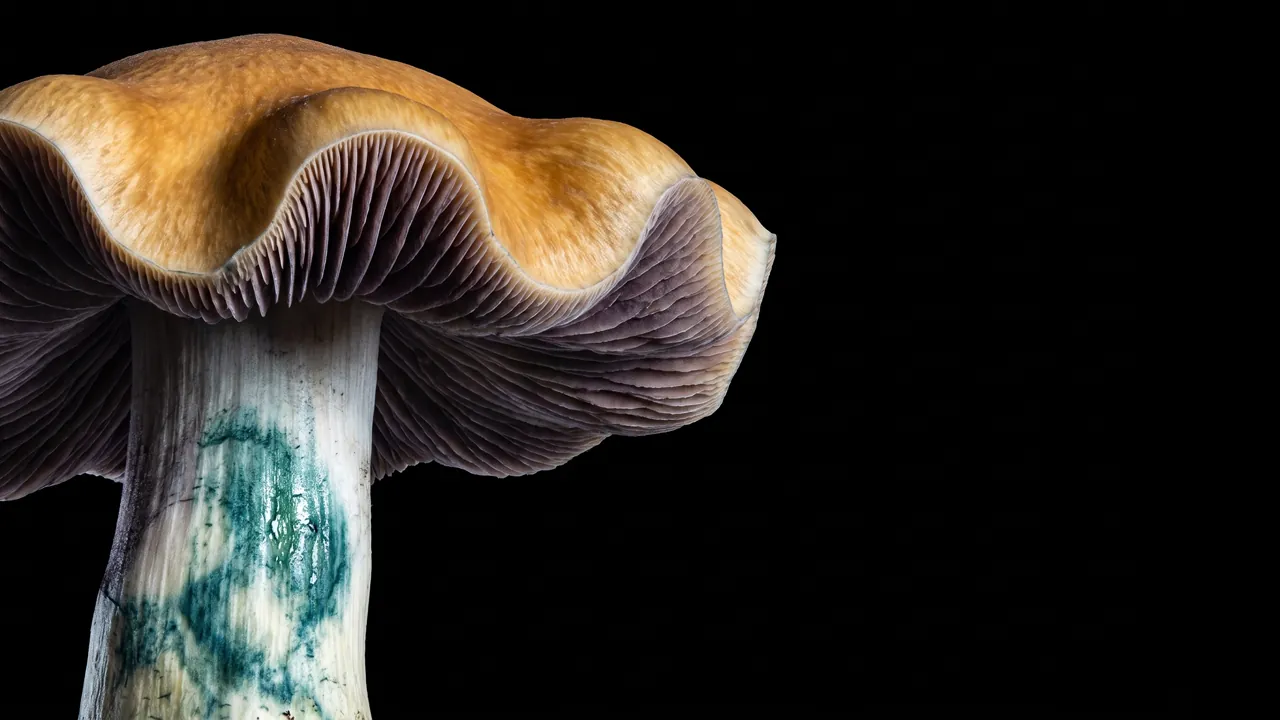
It is a label for cultivated material, of the kind growers and sellers call a strain or cultivar. It is not a species and not a botanical variety. In the Fall 2022 contest table below, Psilocybe cubensis, the species, sits in one column and “Tidalwave” sits in a separate cultivar column (Oakland Hyphae, 2022). A 2021 news report on the same contest series notes that people often say “strain” where “cultivar” is the technical term (Inverse, 2021).
The difference matters because a species name is governed by taxonomy, while a label like this is not. We found no formal registry or published description for Tidal Wave in the records read for this article. For the general vocabulary, see our guide to magic mushroom names.
Where does the name Tidal Wave appear in dated records?
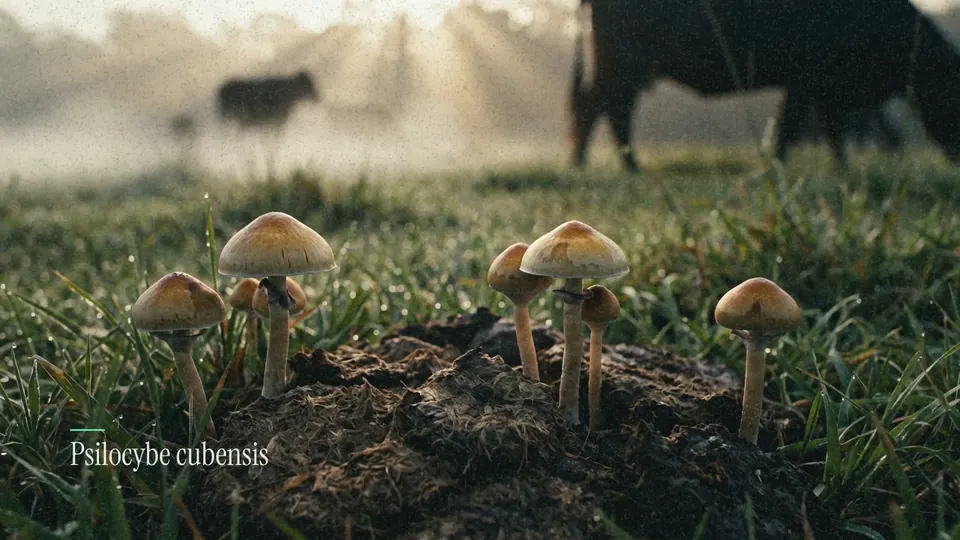
Four records matter, and they are not equal. Oakland Hyphae's own pages call the contest both the Psilocybin Cup and the Hyphae Cup, and the table sets out what each record documents and what it leaves out.
| Record | Date | What it lists under the name | What it does not show |
|---|---|---|---|
| Inverse news report on the Psilocybin Cup | Published 23 April 2021 | Magic Myco Farm named as an entrant with its cultivar “Tidalwave”, in a report on a contest of more than 50 growers whose samples were analysed by liquid chromatography | Any measured figure, the sample's ancestry, or whether this was the name's first use |
| Tripsitter's table of Cup results (secondary report, page updated 16 January 2024) | Spring 2021 contest | Two entries from one entrant, Magic Myco Farm, listed as Tidal Wave, with different reported results | The organizers' own table, which we could not find; how the site defined its totals |
| Fall 2022 Hyphae Cup Awards Announcement (slide deck, file created 17 December 2022) | Fall 2022 contest | Two entries, CUP290 and CUP302, with “Tidalwave” in the cultivar field and Psilocybe cubensis in the species field | Any check of those fields, or the corrections made after this file |
| Oakland Hyphae post about the full report | 2 January 2023, updated 16 January 2023 | A notice that the full report corrected table order errors, added late entrants and corrected name errors | The full report itself, which we could not open |
The earliest dated record we read is the April 2021 news report. Our film says the name appeared in grower communities around 2020. We did not find a dated record from that period in the sources opened for this article, so we treat April 2021 as the earliest record we read, not as the first use.

What does the Fall 2022 Hyphae Cup table say about Tidal Wave?
The file the table comes from is titled “Fall 2022 Hyphae Cup Awards Announcement”. It is a 12-slide deck whose metadata gives 17 December 2022 as its creation date. Its main table runs across four slides and lists 55 rows. Two rows carry “Tidalwave” in the cultivar column: CUP290 (sample name “TW3 MMF”) and CUP302 (sample name “Tidal Wave Bob”), submitted by different entrants. Both have Psilocybe cubensis in the “Species of Origin” column (Oakland Hyphae, 2022).
Those fields are what the report records for each entry. The slides we read contain no statement that anyone checked the species or cultivar fields independently, and several other rows carry the table's own “NEEDS CONFIRMATION” flag in those fields. The two Tidalwave rows do not carry that flag, but the absence of a flag is not a confirmation.
A version note belongs here. The post that offers the full report names it Fall22HC_v3 and lists two corrections: “Corrected Table Order Errors” and “Added Late Entrants & Corrected Name Errors” (Oakland Hyphae post). The file we read is the earlier slide deck, not that report, and we could not open the full report file. We therefore cannot say whether either Tidalwave row changed. Anyone quoting a number or a name from this contest should say which file it came from rather than circulating a screenshot.
Any numbers in a table need the same care, and this article does not quote them for any entry carrying the name. The announcement reports each entry's compounds in mass-per-mass units, and for the two Tidalwave rows the printed compound columns add up, within rounding, to that row's own total column. That total therefore covers every compound column printed, not a single compound. We do not interpret the column abbreviations, which the slides we read do not define, and we do not rank the entries.
Does a contest result show what a name stands for?
No, and the records themselves show why. In Tripsitter's table of the Spring 2021 results, one entrant has two entries listed as Tidal Wave, and the two reported results differ substantially from each other (Tripsitter). We do not reproduce those results, because this article gives no figure or placement for any entry carrying the name. The point is the pattern: the same label, the same entrant and the same contest produced clearly different reports.
The Fall 2022 rows add a second caution. The two contests do not report in the same way: the Fall 2022 announcement reports in mass-per-mass units, while Tripsitter's Spring 2021 table reports as percentages, and the slides do not state a dry-weight basis, so the two cannot simply be converted into one another. The totals are also built differently: in Tripsitter's Spring 2021 rows the total is made up of fewer compound columns than the total in the Fall 2022 rows. A comparison across the two contests needs the same compounds, units, material and method. None of this is evidence that one record is wrong. It shows that a label is not a measurement.
Peer-reviewed work finds the same kind of spread. A 1982 study of cultivated Psilocybe cubensis found psilocybin varied over a factor of four across harvests from one culture, and by over ten times between samples from outside sources (Bigwood and Beug, 1982). In a 2026 study of 14 named strains grown under identical laboratory conditions, total tryptamines still varied more than 7.8-fold between strains, and psilocybin also varied between individual fruiting bodies of the same strain (Sharchaton et al., 2026). Neither study examined Tidal Wave. Both show why one sample cannot stand for a name.
Replication does not fix this. Oakland Hyphae says its numbers are the mean of replicates (Oakland Hyphae post). Repeated measurements make one sample's number more reliable. They do not add more mushrooms to the population the number describes. A headline like “strongest” needs a defined comparison of samples, compounds, units, method and period. Our guide to mushroom potency claims sets out how to read those pieces, and this one gives no name a ranking.
Is Tidal Wave a cross of two other names?
It is often described that way. Tripsitter's page calls it a cross between Penis Envy and B+ (Tripsitter), and our film says it is “usually described” so. In the sources we opened we found no breeder's record, no dated first-hand account and no genetic comparison documenting that cross. This article therefore treats the parentage as a repeated description, not as a documented fact.
What would count? Traceable original records, such as a dated account from the person who made the cross or lab data comparing the named material with the others. It would also need a clear account of how the material was authenticated. A later recollection is testimony, which is useful but different from a contemporaneous record. Our guide to researching origin stories sets out the same tests for any name.
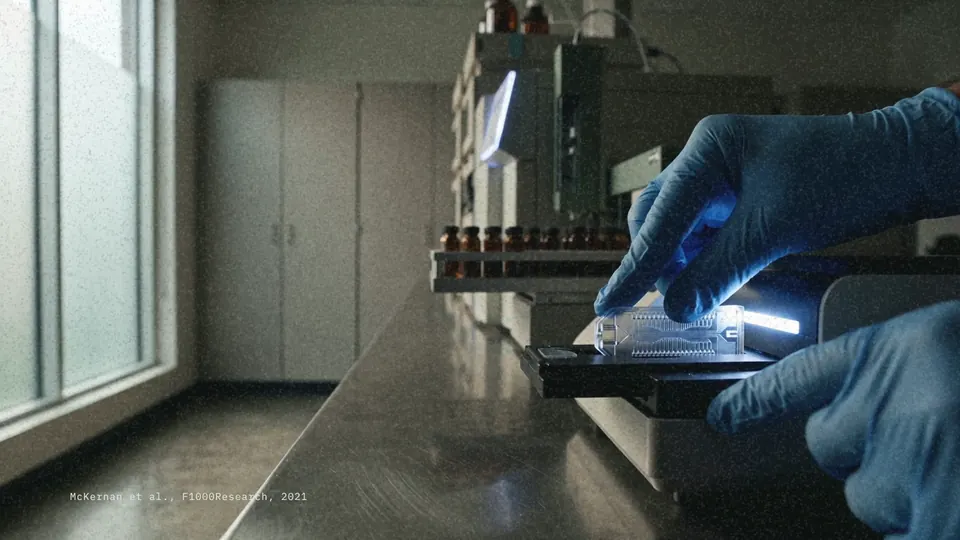
Genetic evidence on labels is mixed, and neither of the two sources below mentions Tidal Wave in the text we searched. An 81-genome study of spores bought from commercial vendors says that, because of the legal status of culturing these fungi, verifiable biobanks do not exist, so its data rely on commercial naming. In its tree, many genomes sharing a strain name but bought from different spore banks clustered together “as expected”, while one sample labelled as a different genus carried P. cubensis sequence and was likely mislabelled (McKernan et al., 2021). A 2025 review summarises that work as showing commercially labelled cultivars often lack genetic similarity across suppliers (Kurzbaum et al., 2025). Those two descriptions of one dataset are not identical, which is a reason to read the paper, not just a summary of it.
Are Tidal Wave and Tidalwave the same thing?
The Fall 2022 table spells the cultivar field “Tidalwave” and one sample name “Tidal Wave Bob”, and the 2021 news report also writes “Tidalwave”. The spacing difference is a spelling variation inside the records, and it is reasonable to read them together. It is not a reason to merge unrelated records automatically. A suffix such as the one in “Tidal Wave Bob”, or a code such as “TW3”, may be a sample name, a selection name or a submitter's note. Each needs its own documentation.
We give no description of how the mushroom looks. Descriptions circulate in grower communities, and our film gives one, but no record we read documents a diagnostic appearance, and nothing here is an identification guide. A generated image or a loosely matching photograph would not authenticate a name.
How does this article relate to our Tidal Wave film?
Our documentary Tidal Wave follows one reported contest result. It does not rank or promote the name, and neither does this article. Its point is the same as ours: one sample is not a strain. This article adds the Fall 2022 entries and the version problem, and it is more cautious than the film on three points: the date the name arose, how the mushroom looks and how far the genetic evidence on labels goes.
What is still not known about Tidal Wave?
- When and by whom the name was first used. The earliest dated record we read is April 2021.
- Whether the two Fall 2022 rows, or the two Spring 2021 rows, share any lineage with each other or with any other material carrying the name.
- Whether the species and cultivar fields in the contest tables were independently verified.
- Whether the Fall 2022 rows changed in the corrected full report (version 3), which we could not open.
- Any parentage, breeder attribution or origin date. We found no original record, so we state none.
- What any material sold, shared or grown under the name contains. Records of submitted samples do not answer that.
A name cannot identify a mushroom
This guide compares records and terminology. It cannot identify an unknown mushroom, and nothing here is a basis for eating one: mistaking a poisonous mushroom for another is a real hazard. Read our safety page, which keeps the help contacts. In Ontario, the Ontario Poison Centre is available 24 hours a day on 1-800-268-9017 (toll-free). For how the law arrived at its present form, see how magic mushrooms became illegal in Canada; this is a naming guide, not legal advice.
Common questions
What is Tidal Wave in mushroom naming?
An informal cultivar-style label for Psilocybe cubensis material, found in dated contest records, not a species or a formally described variety. We found no registry or published description of it in the sources read for this article.
Where is the name Tidal Wave documented?
In an April 2021 news report on the Oakland Hyphae Psilocybin Cup, in a secondary report of the Spring 2021 results, and in two rows of the Fall 2022 Hyphae Cup Awards Announcement. The full Fall 2022 report was corrected in January 2023, and we could not open that file.
Does a competition result prove anything about a name?
No. A result describes one submitted sample under one contest's conditions. In the Spring 2021 table, one entrant's two entries under the same name reported substantially different results, and peer-reviewed studies find wide differences within named strains too.
Is Tidal Wave a cross of Penis Envy and B+?
It is often described that way, including by a secondary source and in our film, but we found no original breeder record or genetic comparison. We treat the parentage as a repeated description, not a documented fact.
Are the competition table's species and cultivar fields verified?
The slides we read give no statement that they were independently checked, and other rows carry a “NEEDS CONFIRMATION” flag. We treat them as the labels the entries were submitted under.
Is this article about a Shroomverse product?
No. Shroomverse also uses the name Tidal Wave for part of its product range, but this article is about the name in public records. It says nothing about the contents, origin or effects of any product.
Can I identify a mushroom from the name Tidal Wave?
No. A name is not an identification method, and this guide gives no appearance traits. For safety information and poison-help contacts, see our safety page.
Shroomverse sells mushroom products. This article is general information about mushroom names and the limits of competition records. It is not medical, legal or identification advice, and it does not recommend any product.
SOURCES
- Fall 2022 Hyphae Cup Awards Announcement (PDF slide deck, 12 slides; metadata creation date 17 December 2022), Oakland Hyphae (file hosted on its site). Accessed . Rows CUP290 (TW3 MMF, Magic Myco Fam) and CUP302 (Tidal Wave Bob, Bob's Farms), cultivar field “Tidalwave”, species field Psilocybe cubensis; in each of these rows the printed compound columns add up, within rounding, to the row's own total column; 55 rows on slides 4 to 7; “NEEDS CONFIRMATION” flags on other rows; no statement of independent verification. This is the announcement deck, not the full report version 3.
- Fall 2022 Hyphae Cup Full Report (post, 2 January 2023, updated 16 January 2023), Oakland Hyphae. Accessed . Offers the full report as Fall22HC_v3 (138.99 MB, not opened); lists two corrections, “Corrected Table Order Errors” and “Added Late Entrants & Corrected Name Errors”; says the numbers are the mean of replicates.
- What Is the Psilocybin Cup? (McElroy C, last updated 16 January 2024; Internet Archive copy of 28 February 2026), Tripsitter (secondary report). Accessed . Table rows for the Spring 2021 contest: two entries from Magic Myco Farm (CUP 39 and CUP38) listed as Tidal Wave, with different reported results that this article does not quote; the description of Tidal Wave as a Penis Envy and B+ cross, which we treat as an unverified description. Secondary: the organizers' table was not found.
- How an expert psilocybin tester chooses award-winning mushrooms (MacBride K, originally published 23 April 2021, updated 20 February 2024), Inverse. Accessed . Magic Myco Farm named with its cultivar “Tidalwave”; more than 50 growers; samples analysed by high-performance liquid chromatography; cultivar and strain wording. It gives no sample figures.
- Variation of psilocybin and psilocin levels with repeated flushes (harvests) of mature sporocarps of Psilocybe cubensis (Earle) Singer (Bigwood J, Beug MW, Journal of Ethnopharmacology 5(3):287–291, 1982), Elsevier (peer-reviewed); record on PubMed, PMID 7201054. Accessed . Abstract consulted; full text not open. Psilocybin variable over a factor of four across flushes in controlled culture, and by over a factor of ten between samples from outside sources.
- Surprising Variability in Tryptamine Profiles of Psilocybe cubensis Fruiting Bodies: Inter- and Intra-Strain Differences Across 14 Strains Cultivated Under Controlled Conditions (Sharchaton A, et al., Journal of Fungi 12(7):486, 2026), MDPI (peer-reviewed, open access); full text via PubMed Central, PMC13412672. Accessed . 14 strains under uniform laboratory conditions; total tryptamines varied more than 7.8-fold among strains; psilocybin also varied between individual fruiting bodies of the same strain. Tidal Wave is not among the strains.
- A whole genome atlas of 81 Psilocybe genomes as a resource for psilocybin production (McKernan K, Kane L, Helbert Y, et al., F1000Research 10:961, version 2, 17 December 2021), F1000Research (open peer review: one approved with reservations, one not approved). Accessed . Spores from commercial vendors; verifiable biobanks do not exist, so data rely on commercial nomenclature; many same-named genomes from different spore banks cluster together; one sample labelled as a different genus carried a P. cubensis ITS sequence and was likely mislabelled. Tidal Wave is not mentioned.
- Exploring Psilocybe cubensis Strains: Cultivation Techniques, Psychoactive Compounds, Genetics and Research Gaps (Kurzbaum E, et al., Journal of Fungi 11(2):99, 2025), MDPI (peer-reviewed review, open access); full text via PubMed Central, PMC11856550. Accessed . Review sentence that a genomic analysis of commercially labelled cultivars found they often lack genetic similarity across suppliers (citing the F1000Research atlas). Tidal Wave is not mentioned.
- Ontario Poison Centre, Ontario Poison Centre. Accessed . Source for the toll-free number 1-800-268-9017 and 24-hour availability.
- Tidal Wave (documentary, 10:41), Shroomverse on YouTube. Accessed . Our own film, which follows one reported contest result and does not rank or promote the name. Cited only for its wording on parentage (“usually described”), the date (“around 2020”) and appearance, which this article compares with the sources above.
CHANGES
- : Published. Checked against the contest file, Oakland Hyphae's post, a secondary report of the Spring 2021 results and the cited studies. The full Fall 2022 report (version 3) could not be opened.



