
THE SHROOMVERSE JOURNAL ✳ 12 MIN READ
The Penis Envy mushroom genome: what the name and the records show
Topic: Mushroom names and species
Published Updated
Listen: the 3-minute version
AI-narrated summary of this article
Short answer, checked 4 October 2026
Penis Envy is an informal name used for Psilocybe cubensis, not a separate species. One public genome carries the label: a 2021 data note sequenced dried stems it calls “strain P.envy”, while calling that strain name anecdotal. NCBI files the same assembly under the lab code MGC-MH-2018 and only added “Penvy” to the assembly name in February 2022. Together these records show how one sample was labelled. They do not show where the name came from, or that other material sold or discussed as Penis Envy matches it.
On this page 10 sections
Search for the Penis Envy mushroom genome and you find a short chain of public records: a 2021 data note, a handful of NCBI entries and a genome-browser page. They are real and traceable. They also show something the nickname hides: the label was attached to one sample by the people who submitted it, in text that the paper itself calls anecdotal.
This guide reads those records line by line. It is about the name and the paper trail, not the legend. For the McKenna and Pollock story and the 2026 lab comparison, read Penis Envy mushroom history and watch our film Penis Envy: The Mushroom Behind the Myth. Here we make no claim about who first grew the mushroom, where it came from or what it descends from. Those questions are unresolved.
We label findings as we go. Established means the record shows it directly. Preliminary means one study or one account. Unresolved means the records do not say.
Not for identifying a mushroom
A genome record cannot identify a wild or unlabelled mushroom, and a name on a label is not proof of what is inside. Health Canada warns that people can eat poisonous mushrooms by mistake, thinking they are magic mushrooms, and states that producing, selling and possessing magic mushrooms are illegal in Canada. If anyone has eaten a wild mushroom, do not wait for symptoms: call the Ontario Poison Centre (1 800 268 9017, toll-free) or your local emergency number. See also our safety guide.
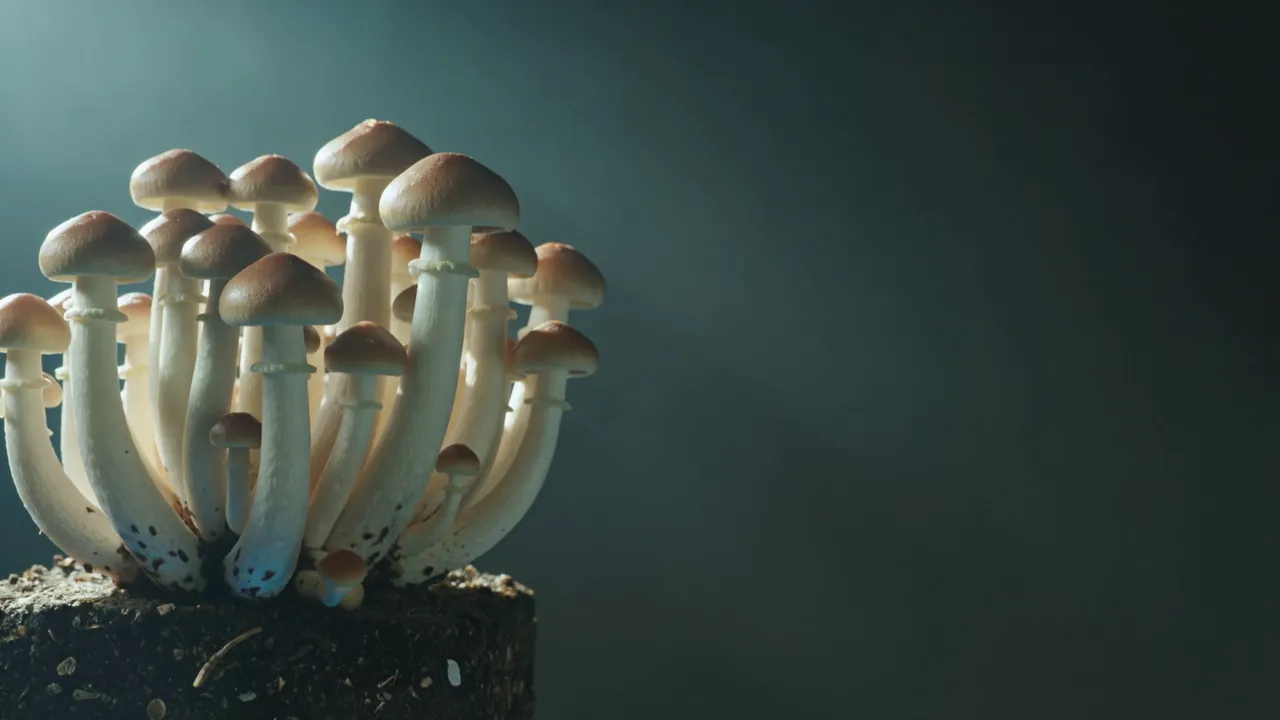
Is Penis Envy a species or a strain?
Neither, in any formal sense. GBIF accepts Psilocybe cubensis as the species and lists Penis Envy only among its English common names, a list it takes from the Catalogue of Life (GBIF). “Strain” is a convenient word in conversation, but it does not give a name a taxonomic rank. The 2021 data note itself says “The strain name is anecdotal” (McKernan et al., 2021). Evidence: established that it is an informal name for P. cubensis.
For how species, variety, strain and cultivar are used (and misused) in this field, see magic mushroom names explained and Psilocybe cubensis taxonomy.
Which genome record is labelled Penis Envy?
One assembly, described in a 2021 data note by Kevin McKernan and colleagues at Medicinal Genomics, a sequencing company. The authors report a 46.6 Mb genome in 32 contigs with an N50 of 3.3 Mb, 97.6% BUSCO completeness, and the psilocybin gene cluster on a single 3.2 Mb contig (McKernan et al., 2021). The data note reports no chemical measurements of the sample. The table shows where the label does, and does not, appear.
| Record | What it says | What it does not say |
|---|---|---|
| 2021 data note, version 2 (F1000Research, 15 June 2021) | DNA from dried stems of “Psilocybe cubensis strain P.envy”; the strain name is called anecdotal; reportedly grown axenically (conditions unknown) and obtained in Somerville, Massachusetts | No voucher specimen, grower, acquisition date or history for the name (we found no mention of a voucher) |
| NCBI BioProject PRJNA700437 and BioSample SAMN17831733 | Strain: MGC-MH-2018. Collection date 14 January 2018, USA: Massachusetts, sample type stem. Submitted by Medicinal Genomics | No common name in the strain field |
| NCBI assembly GCA_017499595.2 (RefSeq copy GCF_017499595.1) | Assembly name MGC_Penvy_1, released 4 February 2022. It replaced version 1, named MGC_Pcub_v3 (24 March 2021) | Why the name was changed |
| CoGe genome 60487 | Name “Psilocybe cubensis P.envy”; version field “Penis Envy”; description “HiFi Assembly using Peregrine Assembler. 3.3Mb N50. 32 contigs. 46Mb” | A date. It is the only genome record we found that spells the name out in full |
| NCBI BioProject PRJNA687911 | Raw Illumina reads titled “Psilocybe cubensis”, three sequencing experiments, registered 26 December 2020 | Not the Penis Envy assembly: the data note uses it as comparison data from a P. cubensis of unknown strain name |
The label therefore travels with the sample as text supplied by the submitters. In NCBI’s formal strain field the sample is MGC-MH-2018, a lab code. The nickname reaches the assembly name only in a February 2022 revision (NCBI assembly record; revision history). Of the 42 P. cubensis assembly records NCBI Datasets returned on 4 October 2026 (the GenBank and RefSeq copies of one assembly count separately), only that pair carries “Penvy” in its name. The others are listed under codes such as BRIP75061 or CM-UDEA-H106 (NCBI Datasets). Evidence: established.
How should the accession numbers be read?
An accession number identifies a submission to a public database. It does not certify the name of the material behind it. Four points keep the numbers straight:
- PRJNA700437 is a Medicinal Genomics project umbrella. Besides the P. cubensis assembly it lists assemblies of other Psilocybe species, so it names a project, not a variety (NCBI BioProject).
- PRJNA687911 holds Illumina reads from other samples. The data note’s abstract lists both project numbers, but its text uses the reads as a comparison from “a different P. cubensis (strain name unknown)”, so a reader of the abstract alone could assume both belong to the Penis Envy sample (NCBI BioProject).
- The data note cites the first WGS version, JAFIQS000000000.1 (McKernan et al., 2021). NCBI’s current record is the revised assembly, with 42 contigs in 20 scaffolds and a contig N50 of 2.8 Mb, so today’s statistics do not match the paper’s (NCBI assembly record). The records do not explain the revision.
- The species identity was checked by alignment: the authors aligned the assembly to three other public P. cubensis datasets and one P. cyanescens dataset to verify taxonomic identification, and 96 to 98.75% of the P. cubensis sequences aligned (McKernan et al., 2021). That supports the species, not the name.
A second accession shows the same limit. A 2025 study of 42 strains lists a sample called “Psilocybe cubensis PE”, whose ITS barcode matched P. cubensis at 99.73% identity (Cohen et al., 2025). Its GenBank record, PV069806, is a 277-base ITS fragment labelled isolate “PE”, from a fruiting body collected in Israel in January 2024 (NCBI record). A short barcode like that supports the species. It cannot show lineage.
What do the dated records show about the name?
- 22 March 2021: NCBI registers BioProject PRJNA700437, titled with the lab code MGC-MH-2018 (NCBI BioProject).
- 24 March 2021: the first public assembly version is released under the name MGC_Pcub_v3 (NCBI revision history).
- 9 April 2021: data note version 1 is published. A reviewer’s report of 26 April 2021 on that version refers to “the P. envy strain” (F1000Research).
- 15 June 2021: version 2, the latest version we found, is published (F1000Research). Crossref and the journal’s version list show no version 3.
- 4 February 2022: the NCBI assembly is renamed MGC_Penvy_1 (NCBI revision history).
These records establish documented research use of the label by April 2021. They do not establish the name’s first use or its history. For earlier informal uses, see Penis Envy mushroom history. The data note’s open peer review is public (reviewer report, 21 May 2021). Its authors disclose that Medicinal Genomics offers sequencing services in the cannabis space and may offer similar services for P. cubensis if demand grows, which is context, not a criticism.
What do “P.envy”, “PE” and “APE” mean in these records?
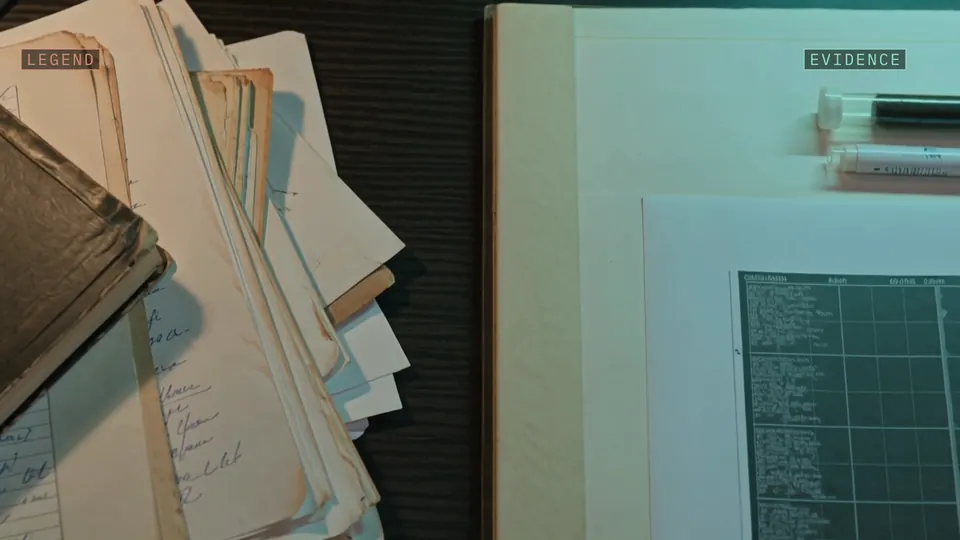
Each is a label as written by whoever supplied the sample. The data note says “P.envy”, CoGe’s version field says “Penis Envy”, and the 2025 study says “PE”. In the Fall 2022 Hyphae Cup results PDF, a sample named “APE RL” has “Albino Penis Envy” in the cultivar column. The same PDF has eight entries from eight different submitters whose cultivar column includes “Penis Envy” in some form, among them “Old Dirty Penis Envy” and “Shepperd’s Penis Envy” (Hyphae Cup).
That documents how entrants described their samples in that report. It does not show that APE and Penis Envy are interchangeable, that the entries share a parent, or that any cross is what its label says. We do not give abbreviations separate pages for that reason: a new page would need its own traceable records.
Does the genome show where Penis Envy came from?
No. The open peer review of version 1 includes a request that the authors add background on the alleged origin of the Penis Envy “mutation”. The reviewers retold a story about it and called it “anecdotal at best” (reviewer report, 21 May 2021). A reviewer’s discussion of a story does not make it a result, and the revised data note we read contains no origin account. This article assigns no discoverer, expedition, place of origin or ancestry to the name. Evidence: unresolved.
To publish a fuller origin account, you would need a traceable sequence of dated records linking material, people and the label. Retellings can document how a story spread, but repeating a story is not independent confirmation. Our guide to researching magic mushroom origin stories sets out that method.
Can one genome tell you what other “Penis Envy” samples are?
Not by name alone. A genome assembly represents sequence data from one studied sample. It is valuable for later comparison, but it is not a family tree of every similarly labelled sample. That broader claim needs appropriately sampled comparisons and provenance records.
The same group’s 2021 atlas of 81 Psilocybe genomes used this assembly as its “P.envy” reference. It also shows how shaky names are. Reviewers Dentinger and Bradshaw did not approve the paper, writing that its interpretation depends on identifications from the retail vendors that supplied the spores, with no voucher material (reviewer report, 19 October 2021). The paper’s text says samples sharing a strain name from different spore banks “cluster together as expected”, while the authors’ reply to reviewers says one named strain showed lower genotype agreement between vendors, and calls the field’s nomenclature “very nascent and unvalidated” (McKernan et al., 2021, atlas). Evidence: preliminary, from one team’s data.
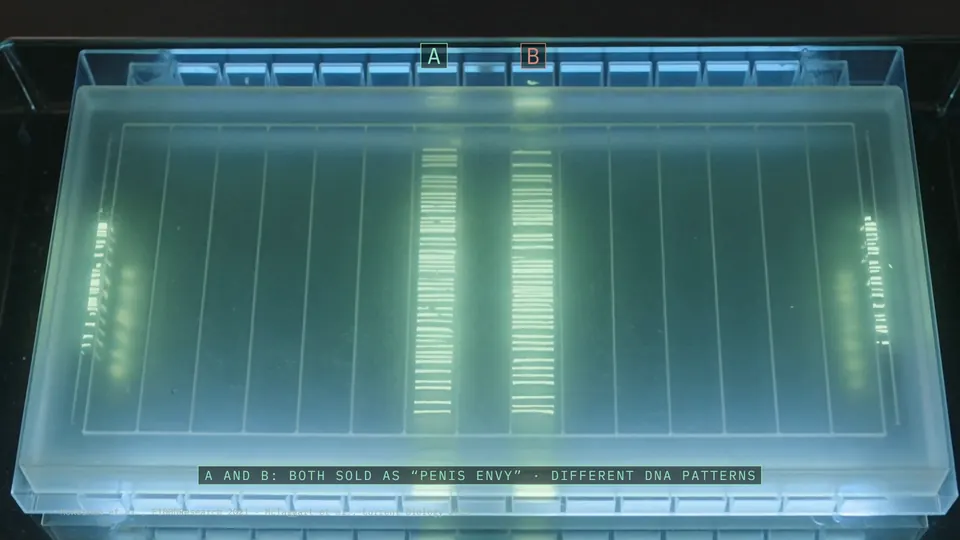
Population genetics adds context. A 2023 study compared 86 commercial cultivar genomes with 38 Australian isolates and reported hallmarks of selfing and clonal propagation in cultivars, most founded from related populations (McTaggart et al., 2023, abstract). A 2025 review adds that its strain descriptions come mostly from “non-academic, community-based reports” (Kurzbaum et al., 2025). See what can be compared across cubensis names for how to compare such records.
Does a genome record say anything about strength or effects?
No. The data note reports sequence and assembly statistics, and no chemical measurements. A structural difference it describes, an extra stretch of about 4.6 kb extending the end of a gene for an N-methyltransferase enzyme, compared with Illumina reads from a different P. cubensis, comes with the authors’ comment that further work is needed to understand its biological significance. Nothing in the records gives a universal multiplier or characteristic experience for the name. The question for any laboratory result is what material was tested and how representative it was. Our potency evidence guide explains why a named result should not become a fixed property of a label.
What would make a labelled genome record more useful?
- A voucher specimen or culture lodged in a collection, so others can re-examine the material.
- The source and date the sample was acquired, and who supplied the label.
- The accession numbers for the sequence tied to that specimen in one place.
- An identification method, and a rights statement for any photograph.
Appearance is not a substitute. A photograph can show what one documented sample looked like, but visual resemblance cannot establish lineage. We keep this article free of any shape checklist for that reason.
Common questions
Is Penis Envy a species of mushroom?
No. GBIF lists Psilocybe cubensis as the species and Penis Envy only among its English common names. In the records we checked it is an informal name for P. cubensis material.
Is there a Penis Envy mushroom genome?
One public assembly carries the label. A 2021 data note describes DNA from dried stems it calls “strain P.envy”, while saying the strain name is anecdotal. NCBI files the assembly under the lab code MGC-MH-2018 and named it MGC_Penvy_1 in February 2022.
Does a DNA record prove another sample is Penis Envy?
Not by name alone. The relationship between two samples would need evidence: comparison data and provenance records for both. A genome shows what one studied sample contained.
Why does the NCBI record say MGC-MH-2018?
That is the strain code the submitter, Medicinal Genomics, gave the sample. The “Penvy” in the assembly name appeared in a February 2022 revision, and the records do not say why.
Does the genome show where the mushroom came from?
No. Reviewers of the data note called the origin story anecdotal at best, and the revised paper includes no origin account. The origin remains unresolved, and this article makes no ancestry claim.
Are PE, APE and Albino Penis Envy the same thing?
The records only show labels. A 2022 competition PDF lists an entry whose sample name “APE RL” has “Albino Penis Envy” as its cultivar. That documents the usage in that report. It does not show the names are interchangeable.
Does the genome say how strong the mushroom is?
No. The data note reports sequence statistics only, no chemical measurements. See our guide to potency claims for what laboratory studies can and cannot establish.
Shroomverse sells mushroom products. This article is general information about mushroom names and taxonomy. It is not medical, legal or purchasing advice, and it does not recommend any product.
SOURCES
- A draft reference assembly of the Psilocybe cubensis genome (McKernan K, Kane LT, Crawford S, Chin C-S, Trippe A, McLaughlin S, F1000Research 10:281, 2021, version 2), F1000Research; full text also via Europe PMC, PMC8220353. Accessed . Primary source. Assembly statistics, the “strain P.envy” and “strain name is anecdotal” wording, the Somerville source, the GenBank and BioProject accessions, the identity check by alignment, the structural-variation passage and the competing-interests statement. The article page lists two versions only (9 April and 15 June 2021); Crossref has no version 3. The text has no voucher, origin account or chemical data.
- Peer review report for A draft sequence reference of the Psilocybe cubensis genome, version 1 (Goncalves da Silva A and Henry P, 21 May 2021), F1000Research open peer review. Accessed . Reviewers, status Approved. Cited only for their request for background on the alleged origin of the “mutation”, which they called “anecdotal at best”. It is a reviewer’s remark, not a finding. The article page also shows Slot’s reports (26 April 2021, 22 June 2021).
- Genome record 60487: Psilocybe cubensis P.envy (version: Penis Envy), CoGe (Comparative Genomics), genomevolution.org. Accessed . The page and its API record give the genome name, the version field “Penis Envy”, the description (HiFi assembly, Peregrine, 3.3Mb N50, 32 contigs) and the Medicinal Genomics link. The page carries no date.
- BioProject PRJNA700437: Psilocybe cubensis strain:MGC-MH-2018, National Center for Biotechnology Information (NCBI). Accessed . Project title, submitter Medicinal Genomics, registration date 22 March 2021, and the linked assemblies, which include other Psilocybe species.
- BioProject PRJNA687911: Psilocybe cubensis (raw sequence reads), National Center for Biotechnology Information (NCBI). Accessed . Raw Illumina reads, three sequencing experiments, registered 26 December 2020. The data note treats these as comparison data from a P. cubensis of unknown strain name.
- NCBI Datasets assembly record GCF_017499595.1 (paired with GenBank GCA_017499595.2), including its BioSample SAMN17831733, NCBI Datasets API. Accessed . Assembly name MGC_Penvy_1, release 4 February 2022, strain MGC-MH-2018, BioSample collection date 2018-01-14, USA: Massachusetts, sample type stem, current statistics, and the RefSeq category “reference genome”. We read the API record because the web page needs scripts.
- NCBI Datasets revision history for GCA_017499595.2, NCBI Datasets API. Accessed . Version 1 (24 March 2021, name MGC_Pcub_v3, contig level) and version 2 (4 February 2022, name MGC_Penvy_1).
- NCBI Datasets: genome assemblies for Psilocybe cubensis (taxon 181762), NCBI Datasets API. Accessed . Returned 42 assembly records on 4 October 2026. Only the MGC_Penvy_1 pair has a common-name label in its assembly name; the others are listed under lab strain or isolate codes. A point-in-time query, so the count will change.
- A whole genome atlas of 81 Psilocybe genomes as a resource for psilocybin production (McKernan K, et al., F1000Research 10:961, 2021, version 2), F1000Research. Accessed . Use of the “P.envy” reference genome, the passage that same-named samples from different spore banks cluster together, and the authors’ reply on vendor differences and unvalidated nomenclature. Review status: one approved with reservations, one not approved.
- Peer review report for the 81-genome atlas, version 1 (Dentinger BTM and Bradshaw A, 19 October 2021), F1000Research open peer review. Accessed . Status Not Approved. Reviewers wrote that interpretation depends on the retail vendors’ identifications and that no voucher material is mentioned.
- Domestication through clandestine cultivation constrained genetic diversity in magic mushrooms relative to naturalized populations (McTaggart AR, et al., Current Biology 33:5147–5159, 2023), Cell Press (peer-reviewed); abstract read via Europe PMC. Accessed . Abstract only (full text blocked to us): 38 Australian isolates compared with 86 commercial cultivar genomes; cultivars show hallmarks of selfing and clonal propagation, and most are founded from related populations. McKernan is a co-author, so the 2021 and 2023 papers are not independent.
- Comprehensive analysis of 42 psilocybin-producing fungal strains reveals metabolite diversity and species-specific clusters (Cohen J, et al., Scientific Reports 15:13822, 2025), Springer Nature; full text via PubMed Central, PMC12015540. Accessed . Table 1, row 28: strain “PE”, ITS classification Psilocybe cubensis, 99.73% identity, 97% query cover, GenBank PV069806. Competing interests declared: one author co-founded Cannasoul Analytics, a shareholder in PsygaBio, and three are PsygaBio employees.
- GenBank record PV069806: Psilocybe cubensis isolate PE, ITS2, partial sequence, NCBI (nuccore summary via E-utilities). Accessed . Isolate “PE”, 277 bases, fruiting body, Israel, collected January 2024, record created 11 February 2025. The web page was blocked to us, so we read the summary API.
- Fall 2022 Hyphae Cup Awards Announcement (results PDF), Hyphae Cup. Accessed . The sample table lists “APE RL” with cultivar “Albino Penis Envy” and eight entries whose cultivar column includes “Penis Envy”. We read it only for labels and report no measurements. The draft called it “version 3”; the PDF carries no version number.
- Exploring Psilocybe cubensis Strains: Cultivation Techniques, Psychoactive Compounds, Genetics and Research Gaps (Kurzbaum E, et al., Journal of Fungi 11(2):99, 2025), MDPI (peer-reviewed review); full text via PubMed Central, PMC11856550. Accessed . Cited only for its statement that its strain examples come predominantly from “non-academic, community-based reports”.
- Psilocybe cubensis (Earle) Singer: vernacular names, Global Biodiversity Information Facility (GBIF), from the Catalogue of Life. Accessed . The accepted species record, with “Penis Envy” listed among English vernacular names (source: Catalogue of Life). Read through GBIF’s public API.
- Psilocybin and psilocin (magic mushrooms) (page modified 20 October 2026), Health Canada. Accessed . States that production, sale and possession of magic mushrooms are illegal in Canada, and warns that poisonous mushrooms can be mistaken for them.
- Mushrooms (common poisons), Ontario Poison Centre, operated by The Hospital for Sick Children (SickKids), Toronto. Accessed . Only a mycologist can tell safe from poisonous mushrooms; call before symptoms start; toll-free number 1 800 268 9017.
CHANGES
- : First published. Converted from an editor’s draft and every source re-opened and checked on this date; corrections to the draft are recorded in our editorial notes.
- : Added source links beside figures and legal statements.
- : Re-read Health Canada’s psilocybin page, updated on 20 October 2026, and corrected its date here. The statements this article cites from it are unchanged.



