
THE SHROOMVERSE JOURNAL ✳ 12 MIN READ
How to research magic mushroom origin stories: a reader’s guide
Topic: Mushroom names and species
Published
Listen: the 3-minute version
AI-narrated summary of this article
Short answer, checked 4 October 2026
A magic mushroom origin story can be answering several different questions: when a name was published, where a specimen was collected, where a commercial label first appeared, or where a species evolved. Each needs different evidence, and one answer rarely settles the others. Check the dated record behind the exact claim, who is speaking, and whether anything links the same material from start to finish.
On this page 10 sections
Most magic mushroom origin stories sound like one story but are really several claims folded together. A scientist names a species, a collector finds a specimen, a grower passes on a culture, a seller adopts a label, and a legend joins them into one tidy line. A trustworthy history pulls those threads apart before it tries to answer anything.
This is a reader’s method, not a verdict on any one name. We use three real cases from our own research to show where the evidence stops: a species description with exact dates, a species whose name points to Cuba, and a strain name whose popular story rests on later retellings. For the individual cases, follow the links to the names guides.
About this guide
This is about names and records. It is not an identification guide, it says nothing about effects or strength, and it does not recommend any product. See safety information for anything about wild mushrooms.
What does “origin” mean in a mushroom story?
It can mean at least five different things. The table sets out what evidence fits each question and the overreach to avoid. If a story does not say which question it is answering, that is the first thing to ask.
| Question | Useful evidence | Common overreach |
|---|---|---|
| When was a species name published? | The original description and the nomenclatural record. | Treating publication as the first human knowledge of the organism. |
| Where was a particular specimen found? | A preserved specimen and its collection documentation. | Applying one locality to the whole species’ evolutionary origin. |
| When did a commercial name appear? | A dated original record that uses the name. | Calling the earliest record you located the proven first use. |
| What is a sample’s ancestry? | Traceable provenance and suitable genetic comparisons. | Inferring parentage from similar names. |
| How did a community understand a fungus? | Relevant historical and community sources, carefully attributed. | Replacing many traditions with one universal narrative. |
Why are the collection date and the publication date different?
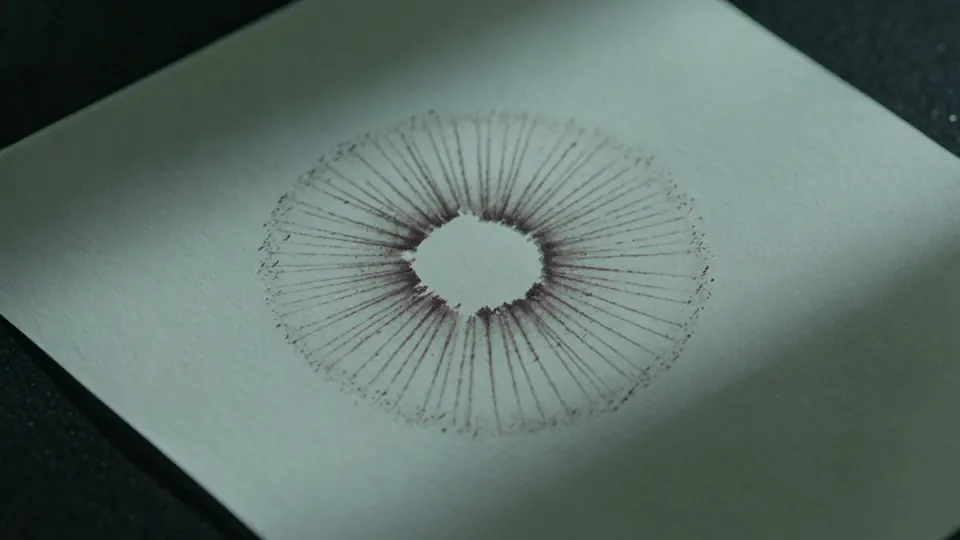
Because they record different events. The original description of Psilocybe tampanensis is a good model. It was published in the journal Mycotaxon in July to September 1978 by Gastón Guzmán and Steven Pollock. Its “Material examined” line gives the type as collected near Tampa, Florida, southeast of Brandon, on 3 September 1977 by Pollock (Guzmán and Pollock, 1978).
An accurate account needs both dates, and neither is the date “the mushroom was discovered”. The paper itself says the species was known only from that type locality at the time, and that mycelia were obtained from a spore print of the type and grown in culture in San Antonio (Guzmán and Pollock, 1978). That documents the link between the type and the paper’s own cultures. It does not document what happened to later material, or show that anything later sold under the name descends from that one collection.
A good profile states the milestone precisely and leaves unsupported connections open. That is how our P. tampanensis guide is built.
Does a place in a name, or the first record, show where a mushroom came from?
No. Psilocybe cubensis shows why. A 2026 paper in Proceedings of the Royal Society B notes that it was described initially from Cuba in 1906, and that there has been substantial debate about its origin (Bradshaw et al., 2026). A 2023 population-genomics paper puts it more bluntly: the center of origin is unknown, and the epithet means “from Cuba”, yet ethnobotanists and taxonomists hypothesize the species is not native to South and Central America, where there is no record of cultural practice (McTaggart et al., 2023).
The Cuban type is where a scientist first collected and described the species. It was a first publication, and it carries no claim about ancestry. The same applies to a place in a strain name, a country on a spore-print label, or the country of the earliest paper. Geography tells you where something was found or sold, not where it started.
The Proceedings B authors also report DNA evidence from type specimens of African species, which led them to recognize African specimens originally identified as P. cubensis as a new species, Psilocybe ochraceocentrata (Bradshaw et al., 2026). We could read only the paper’s abstract, so we do not go further than that. The point for this guide is how a history should handle it: an earlier identification and a later revision are both part of the record, and the account should say which is which. Our natalensis and ochraceocentrata guide shows how careful that wording has to be.
Can genetics settle an origin story?
It can settle some questions and leave others open. The 2023 study sequenced 38 isolates from Australia and compared them with 86 genomes of commercially available cultivars. It concluded that the Australian population is naturalized and that most cultivars are founded from related populations (McTaggart et al., 2023). Those are findings about population relationships. The study does not trace the history of every commercial label, and it is not a ruling on who first used any name.
On names, the authors are direct. They write that the provenance and pedigrees of different cultivars “exist in lore but are not authenticated”, and they describe an earlier sequencing study as finding that cultivars sold under similar names were not genetically similar among different US-based spore providers (McTaggart et al., 2023). In their discussion they add that cultivar names that may indicate provenance, such as Amazon, Burma or Thailand, may reflect collection from natural populations, or the cultivars may be closely related genotypes that lost diversity, or the names “do not indicate provenance” (McTaggart et al., 2023).
That is a useful guide to what a shared label can and cannot prove. Names can be reused, shortened, translated or attached to material with incomplete provenance. Similar names are not evidence of shared parentage. Our guide to what can be compared across cubensis names and our overview of species, strains and cultivars explain the terms.
How do you test a compelling origin story?
Work through four checks, in this order.
- Write down the exact claim. “A researcher worked with material bearing this label in 2021” is narrower than “the researcher established the label’s ancestry”. Look for the original record that supports the narrow claim before repeating the broad one.
- Find who is speaking and when. A contemporaneous notebook, a later interview and a commercial biography are different kinds of source. A first-person recollection can be important testimony and still need attribution and corroboration.
- Count independent sources, not websites. Ten pages repeating one account can be one source. Trace each retelling back until you reach something that was not itself a retelling.
- Check continuity. Does anything connect the same material from the first step in the story to the last? Without that, a shared label is only a shared label.
A worked example: the Penis Envy story
Our Penis Envy history applies these checks in full; this is the short version. A Vice article by Hamilton Morris tells a chain that includes Steven Pollock mailing a spore print labelled “Pénis”, and it records Dennis McKenna saying the strain was news to him when Morris contacted him (Vice, Portuguese edition). Morris later wrote in the notes to a 2022 podcast episode that “many apocryphal origin stories have been disseminated (sometimes by me)” (The Hamilton Morris Podcast, 2022).
On dating, the earliest use of the name that we could verify is a Shroomery forum thread opened on 16 November 2005, in which posters already treat the strain’s name as familiar (Shroomery, 2005). That is the earliest we found, not proof of the first use: a thread that discusses a hybrid of the strain shows the name was already in circulation. It is a date, and the history before it remains open. Our genome and records guide covers the genetics and the name’s documented history.
Is a peer reviewer’s comment a research finding?
No. The 2021 genome paper for a strain labelled “P.envy” describes the strain name as anecdotal (McKernan et al., 2021). In an open review of that paper, two reviewers recounted the strain’s lore and described it as “anecdotal at best” (Goncalves da Silva and Henry, 21 May 2021).
That exchange helps readers understand the uncertainty. It is not evidence that the story is true, and it is not evidence that it is false. A comment from a reviewer is a data point about how a field regards a claim, not a result. Cite it as that.
How should cultural attribution be handled?
Attribute the account to a named person, community or document, and say what the source is. Do not stretch one tradition into a universal explanation, and do not credit a community with a claim its own sources do not make. A single narrative that replaces many traditions is itself an overreach. For examples of source-by-source attribution, see our timeline of magic mushroom history and our profile of María Sabina.
The same rule applies to strain names that suggest a place or a people. Our guide to a geographic label that is not proof of origin applies it to one such name, and our documentary Amazonian takes up the question of where a name like this comes from.
How do you write what is not known?
Precisely. “The sources reviewed do not establish the first use of this name” describes a research boundary. “Nobody knows its origin” makes an unsupported claim about everything anyone knows.
Use “reported by” to keep the attribution on an unconfirmed account, and reserve “proved by” for a conclusion the evidence actually supports. When two reliable sources disagree, explain the disagreement and the type of evidence each uses, rather than quietly choosing the more memorable version.
How do you keep a history honest after it is published?
Keep a record of each source, the claim it supports, its date and the questions still open. When new evidence turns up, add it through an update that says what changed, and do not retell a corrected story without noting the correction. A history that can be revised is stronger than one that cannot, and the same goes for this guide.
If you want to see names sorted by how much evidence they have, start with our species and names directory.
Common questions
Does the date a species was published tell you when it was first known?
No. Publication of a scientific name records a formal description, not the first human knowledge of the organism. For P. tampanensis, the original paper gives a type collection date of 3 September 1977 and appeared in 1978. They are two different events.
Does the name “cubensis” show where the species came from?
No. The species was described initially from Cuba in 1906, but a 2023 genomics paper says its center of origin is unknown and that it is hypothesized not to be native to South and Central America. A 2026 paper reports that debate over its origin is substantial.
Do two mushrooms sold under the same strain name share ancestry?
Not necessarily. A 2023 paper says cultivar provenance and pedigrees exist in lore but are not authenticated, and it describes an earlier study finding that cultivars with similar names were not genetically similar across US-based spore providers.
Is the earliest record you can find the first use of a name?
No. It is the earliest record you located. A forum thread from 16 November 2005, for example, already treats the Penis Envy name as familiar, so the name predates it. Say “the earliest we found”, not “the first”.
If ten websites tell the same story, is it well confirmed?
Not on that basis alone. Ten sites repeating one account may be one source. Look for a primary record, an independent source, or a dated document that predates the retellings.
Is a peer reviewer’s comment evidence that an origin story is true?
No. Reviewers of a 2021 genome paper described one strain’s lore as “anecdotal at best”. That shows how the claim was regarded, not whether it is true or false.
Can this guide help me identify a mushroom or judge what a strain does?
No. It covers names, dates and sources only. It cannot identify a wild mushroom and says nothing about effects. See our safety page, and call a poison centre or emergency services about any suspected poisoning.
Shroomverse sells mushroom products. This article is general information about mushroom names and history. It is not medical, legal or identification advice, and it does not recommend any product.
SOURCES
- A new blueing species of Psilocybe from Florida, U.S.A. (Guzmán G, Pollock SH, Mycotaxon 7(2):373–376, July–September 1978), Mycotaxon; scanned copy hosted by the MAPS psychedelic bibliography. Accessed . Primary record. Gives the type as collected near Tampa, SE of Brandon, on 3 Sept. 1977 by Pollock; states the species was known only from the type locality; says mycelia were obtained from a spore print of the type and fruited in culture in San Antonio. Crossref lists the journal, volume and pages. Scanned PDF read via its text layer.
- Domestication through clandestine cultivation constrained genetic diversity in magic mushrooms relative to naturalized populations (McTaggart AR, et al., Current Biology 33:5147–5159, 2023), Cell Press (peer-reviewed); full text read from the author-posted PDF. Accessed . 38 Australian isolates compared with 86 cultivar genomes; center of origin of P. cubensis unknown; cultivar provenance and pedigrees “exist in lore but are not authenticated”; cultivar names may not indicate provenance. Declared interests: two authors own a company that grows psilocybin mushrooms for medicine, and one founded Medicinal Genomics.
- Discovery of the closest free-living relative of the domesticated ‘magic mushroom’ Psilocybe cubensis in Africa (Bradshaw AJ, et al., Proceedings of the Royal Society B, 2026, article 20252270), Royal Society; abstract read via Europe PMC (PMID 41818815). The journal page returned HTTP 403, so the full text was not read.. Accessed . Abstract only: P. cubensis described initially from Cuba in 1906; substantial debate about its origin; African specimens originally identified as P. cubensis recognized as the new species P. ochraceocentrata. Europe PMC gives a first-publication date of 2026-03-01.
- A draft sequence reference of the Psilocybe cubensis genome (McKernan K, et al., F1000Research 10:281, 2021), F1000Research (version 1 page, with referee reports). Accessed . The paper describes the sample as strain “P.envy” and says the strain name is anecdotal and was obtained in Somerville, MA.
- Open peer-review report on McKernan et al., 2021 (Goncalves da Silva A and Henry P, 21 May 2021), F1000Research referee report. Accessed . The reviewers recount the Penis Envy lore and describe it as “anecdotal at best”. It is a reviewer’s comment, not a finding, and does not confirm the account.
- Penis Envy 6..whats the real deal? (Shroomery forum thread, first post 16 November 2005), Shroomery.org (community forum; a dated post, not a peer-reviewed source). Accessed . Used only as a dated record: posters discuss PE and a PE hybrid as familiar strains on 16 November 2005, so the name was already in use. It is the earliest dated use we verified, not proven first use.
- Penis envy mushroom feature (Hamilton Morris, Vice, Portuguese edition), Vice (Portuguese-language page; the page shows a 2014 date, so we do not use it to date the English original). Accessed . Tells the Pollock spore-print chain and records Dennis McKenna saying the strain information was news to him. Used as an example of an origin story whose chain we could not corroborate.
- The True Story of the Penis Envy Mushroom (The Hamilton Morris Podcast, released 1 April 2022), Apple Podcasts episode page. Accessed . Episode notes say “many apocryphal origin stories have been disseminated (sometimes by me)”. We did not assess the interview itself here; see our Penis Envy guides.
CHANGES
- : Published. Every source opened and checked on this date, except that the full text of the 2026 Proceedings B paper could not be opened (abstract only). Specialist review is still pending.



