THE SHROOMVERSE JOURNAL ✳ 15 MIN READ
Psilocybe cubensis: the species name, its history and what research covers
Topic: Mushroom names and species
Published Updated
Listen: the 3-minute version
AI-narrated summary of this article
Short answer, checked 4 October 2026
Psilocybe cubensis is a scientific species name. Franklin Earle’s 1906 name Stropharia cubensis was moved to Psilocybe by Rolf Singer in 1948. Databases and papers disagree on its family, its origin is still debated, and a 2026 study split off a close African relative. Genetics and chemistry studies describe the samples they tested. None of them turns a name into proof of identity, strength or effect.
On this page 10 sections
Psilocybe cubensis turns up everywhere in this topic, and it is easy to treat it as a brand. It is not. It is a two-part Latin name for a species of fungus, and behind it sits a paper trail of names, specimens, databases and studies that point in slightly different directions. This profile follows that trail and marks where it runs out. It does not help anyone identify a wild mushroom, and it says nothing about dose or effects.
If you want the general picture first, start with what magic mushrooms are. For how species, strains and trade names differ, see our guide to magic mushroom names. This page is the species profile: the name, the history and the research.
How we label the evidence
Established: stated in a source we opened, and not disputed there. Preliminary: a single study, a small sample, or a result the authors call open. Unresolved: the sources disagree or say the work has not been done.
What does the name Psilocybe cubensis mean?
Psilocybe is the genus. Cubensis is the species epithet, and it indicates “from Cuba” (McTaggart et al., 2023). The authority after the name, “(Earle) Singer”, records two people: Earle, who first published the epithet, and Singer, who made the combination with Psilocybe. Parentheses around the first author are the convention for a name that has changed genus.
| Element | What the records give | Where |
|---|---|---|
| Accepted name | Psilocybe cubensis (Earle) Singer | GBIF |
| Where published | Singer, Sydowia 2(1-6): 37, 1948 | GBIF; Albán-J. et al., 2021 |
| Original name (basionym) | Stropharia cubensis Earle, Informe Anual de la Estación Central Agronómica de Cuba 1: 240, 1906 | GBIF; Albán-J. et al., 2021 |
| Type specimen | Collected by F. S. Earle, 19 June 1904, Santiago de las Vegas, Cuba; record number 109; held at the New York Botanical Garden herbarium | GBIF specimen record; Albán-J. et al., 2021 |
These two names, Stropharia cubensis and Psilocybe cubensis, belong to one documented naming history. They are not two separate strains or products.
How did Stropharia cubensis become Psilocybe cubensis?
The specimen record on GBIF is dated 19 June 1904, and the name was published in 1906. So “first described in 1906” is correct for the publication, but the material it rests on was gathered two years earlier. Earle’s own 1906 paper was not available to us, so we rely on the citation as given by GBIF and by Albán-J. et al. (2021), which agree. Evidence: established for the dates and citations; we did not read the original description.
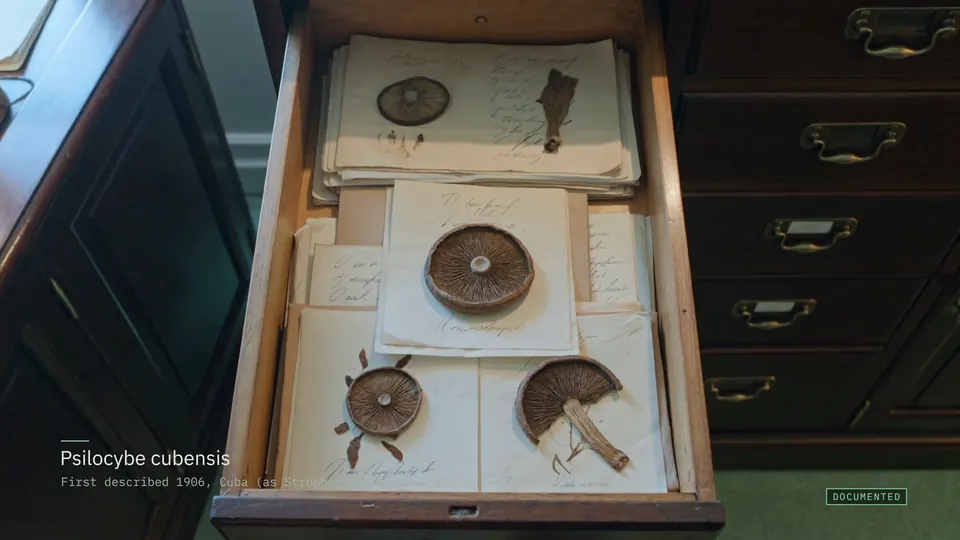
The move into Psilocybe is the 1948 combination by Singer. Our sources give the citation but not Singer’s reasoning, so we do not describe it. Later treatments also placed the species inside Psilocybe differently. The 2021 paper notes that it sits in Section Cubensae in Guzmán’s 1983 treatment, but in section Caerulescentes, tribe Cubensis, in Singer and Smith’s 1958 and Singer’s 1986 work (Albán-J. et al., 2021).
GBIF, which draws on Catalogue of Life, also lists several older or variant names as synonyms of the same species. A name containing “caerulescens” appears among them, yet GBIF separately accepts a different species, Psilocybe caerulescens Murrill. A similar-looking name is a lead to check, not proof of identity.
| Synonym | Published |
|---|---|
| Stropharia cubensis Earle (the original name) | 1906 |
| Naematoloma caerulescens Pat. | 1907 |
| Hypholoma caerulescens (Pat.) Sacc. & Trotter | 1912 |
| Stropharia cyanescens Murrill | 1941 |
| Psilocybe cubensis var. caerulescens (Pat.) Singer & A.H.Sm. | 1958 |
| Psilocybe cubensis var. cyanescens (Murrill) Singer & A.H.Sm. | 1958 |
Which family does Psilocybe cubensis belong to?
It depends on the reference and its date. Catalogue of Life data shown by GBIF place the species in Hymenogastraceae. The 2021 Lilloa paper uses Strophariaceae as a keyword. And a March 2026 phylogenomic study by Niskanen and colleagues proposes a new family, Agrocybaceae, with Agrocybe and Psilocybe as its currently included genera (Niskanen et al., 2026).
| Reference | Family given | Note |
|---|---|---|
| GBIF / Catalogue of Life, checked 4 October 2026 | Hymenogastraceae | Species-level record for P. cubensis |
| Albán-J. et al., 2021 | Strophariaceae (keyword) | Species-level paper |
| Niskanen et al., 2026 | Agrocybaceae (new family) | Genus-level: lists Agrocybe and Psilocybe; Psilocybe semilanceata is the type species given for Psilocybe |
The 2026 paper says its new clade draws on genera previously placed in Strophariaceae and Hymenogastraceae, and that the older limits of those two families were not monophyletic (they did not each form a single natural group) (Niskanen et al., 2026). It classifies genera, not P. cubensis by name. We follow it for the family because it is the newest treatment we could read, and we date it so that older material is easy to place. We do not know whether the databases will adopt it.
Where did Psilocybe cubensis come from?
A naming date is not an origin story. The epithet points to Cuba, but a 2023 genome study states that the species’ centre of origin is unknown (McTaggart et al., 2023). A 2026 paper in Proceedings of the Royal Society B describes “substantial debate” about its origin and diversification (Bradshaw et al., 2026).
Two ideas have been in play. The 2021 paper repeats the view that the species reached the Americas with cattle brought by the Spanish from Africa, while noting it was not known from Africa (Albán-J. et al., 2021). The 2026 paper says the prevailing view is introduction with cattle around 1500 CE, from an African progenitor. It then reports a cryptic species, Psilocybe ochraceocentrata, from sub-Saharan Africa. Using DNA from type specimens, it recognises African specimens originally identified as P. cubensis as this new species, which it estimates shared an ancestor with P. cubensis about 1.5 million years ago (a 95% range of roughly 710,000 to 2.55 million years), long before cattle were domesticated (Bradshaw et al., 2026). Evidence: preliminary. It is one new study, and its dating and species boundaries need testing by others.
Two cautions follow. First, the finding is a reason to recheck older identifications, not a reclassification of every mushroom carrying a familiar label. Second, it shows how a species name can quietly absorb related organisms; see Psilocybe natalensis and ochraceocentrata.
Population genetics adds a different kind of evidence. Sequencing 38 Australian isolates against 86 commercially available cultivar genomes, McTaggart and colleagues found the Australian population to be naturalized (introduced, then established), with relatively high genetic diversity. The cultivars showed low diversity, low heterozygosity and hallmarks of selfing and clonal propagation, and most seemed founded from related populations (McTaggart et al., 2023). That describes the samples and populations studied. It is not a universal family tree for every name in circulation. Evidence: established for those samples.
Is Psilocybe cubensis the same as similar-looking species?
Not necessarily, and this is where the research is thin. The 2021 Ecuador study records the species from highland grasslands, gives macroscopic and microscopic descriptions, and deposits reference material in a fungal collection. It also states that P. cubensis cannot be told apart by eye from its closest relatives, P. subcubensis and P. aquamarina, and that they are separated by microscopic features. It adds that no studies of sexual compatibility or phylogeny could show whether the three are independent species, and that an earlier analysis placed P. cubensis and P. subcubensis in one well-supported clade using only three specimens (Albán-J. et al., 2021). Evidence: unresolved as of that 2021 paper; we did not search for later work that may have settled it.
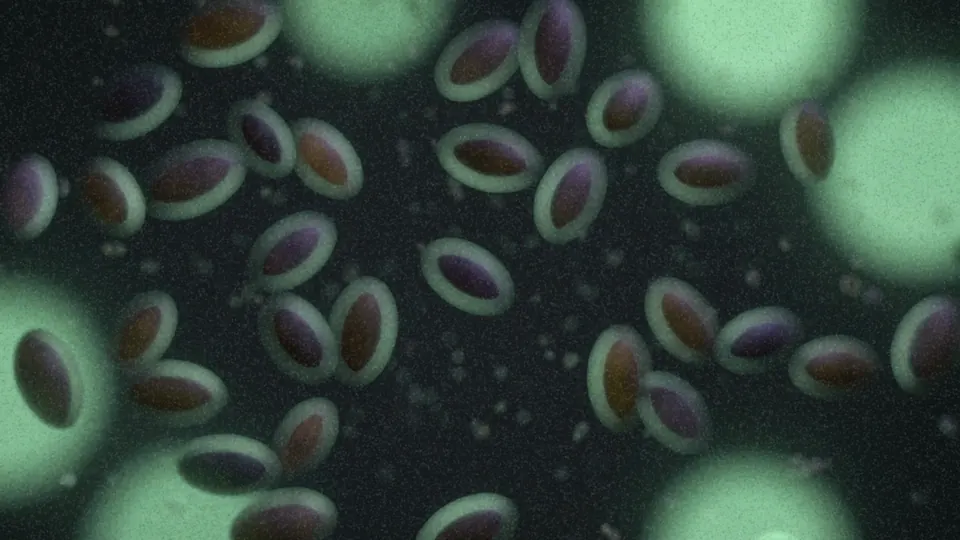
Laboratory work shows the same problem from the other side. In a 2025 study of 42 strains from nine species, six samples whose species label included natalensis (one was labelled “natalensis x cubensis”) were all classified as P. cubensis by ITS sequencing, a DNA barcode region, and the authors report that the chemical clustering matched the ITS identification better than the morphological one (Cohen et al., 2025). A label, a photograph or a description is a claim about identity. Sequence and a preserved specimen are better evidence.
What has research on Psilocybe cubensis actually studied?
Different studies answer different questions, and a name alone cannot answer all of them. The table sorts the work we verified by the question it can address.
| Question | Study | What it reports | What it cannot tell you |
|---|---|---|---|
| What is this documented specimen? | Albán-J. et al., 2021 | A regional record with a preserved reference collection and type citation. | Whether other material carrying the same name is the same species. |
| How are sampled organisms related? | McTaggart et al., 2023; Bradshaw et al., 2026 | Naturalized Australian population versus low-diversity cultivars; a distinct African relative. | A single family tree for every cultivated name. |
| How do strain labels line up with species? | Cohen et al., 2025 | 42 strains, 9 species; ITS sequencing checked each label. | That every product with the same label matches the tested sample. |
| What was measured in grown mushrooms? | Sharchaton et al., 2026; Bigwood and Beug, 1982 | Tryptamine levels vary between strains, within strains and across harvests. | What any other mushroom with the same name contains. |
| How does the mushroom make and break down its compounds? | Lenz et al., 2020 | Two P. cubensis enzymes that process psilocybin and lead to blue products. | Anything about strength or human response. |
On chemistry, Sharchaton and colleagues grew 14 named P. cubensis strains under uniform laboratory conditions and measured six tryptamines. Total tryptamine concentration varied more than 7.8-fold among strains, and psilocybin was the dominant compound. Among individual fruiting bodies of the same strain, the coefficient of variation for psilocybin ranged from 12.81% to 23.39% (Sharchaton et al., 2026). Their strains came from two suppliers and were confirmed as one species by ITS sequencing. An older study of cultured P. cubensis found psilocybin varied by a factor of four across harvests from one culture, and by over a factor of ten between collections from outside sources (Bigwood and Beug, 1982). Evidence: established for the tested material.
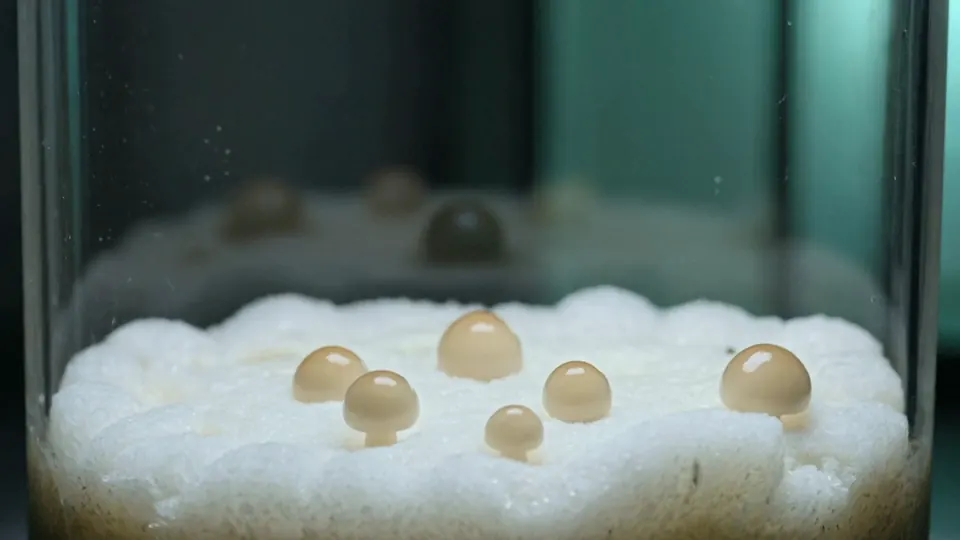
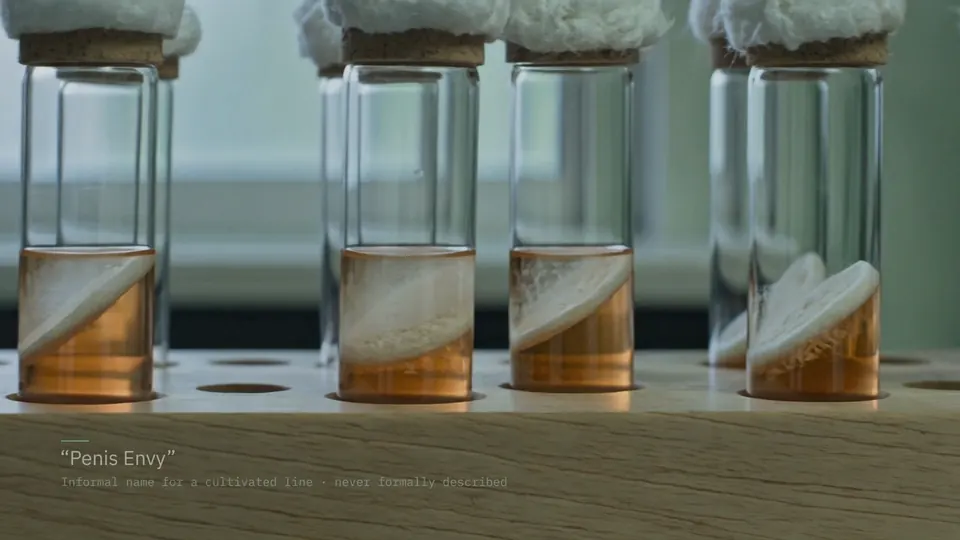
A measurement describes what was tested. It cannot guarantee the composition of another mushroom bearing the same name, and the 2026 authors conclude that species and strain identification alone cannot predict psychoactive content. When you read any chemical comparison, check whether individual mushrooms or pooled material were measured, which compounds were included and how many independent samples there were. This page does not rank any mushroom by strength. For the blue bruising, see why magic mushrooms turn blue; for the wider story, the history of magic mushrooms and the Penis Envy name.
Is Psilocybe cubensis a strain, and what do names like Golden Teacher add?
No. Psilocybe cubensis is a species. “Strain” is not a formal taxonomic rank, and a study, a community or a business may use it with different, sometimes loosely documented meanings. Read the source’s definition before treating two uses as equivalent.
In Cohen and colleagues’ Table 1, “Golden Teacher”, “B +” and “Blue Meanies” appear as strain labels for samples whose ITS sequences were classified as P. cubensis (Cohen et al., 2025). That supports a link between those labels and the species for those samples. It does not authenticate all material carrying the names, and it does not make them formal varieties. How to compare cultivated names responsibly is covered in what can be compared across cubensis names; our film Tidal Wave looks at one headline-making lab result attached to a strain name. If an origin story has no traceable source, we say so, and two similar spellings are a research lead, not proof of one lineage.
What has research not shown about Psilocybe cubensis?
- Where the species began. The centre of origin is described as unknown or debated, and the 2026 African-relative result is new and untested by others.
- Whether its closest relatives are separate species. The 2021 paper said the studies needed were missing; we did not check whether later work has filled the gap.
- A settled family. References currently disagree, and a 2026 reclassification is recent.
- The full phylogeny of the genus. A 2024 study called Psilocybe phylogeny and taxonomy “substantially incomplete”, with the biosynthesis gene cluster known for only five of about 165 species at that time (Bradshaw et al., 2024).
- Anything about human response tied to a name. Genetic difference or a chemical measurement is not a demonstration of a particular human experience, and we did not find evidence that links a cultivated name to a clinical outcome.
Clinical research is a separate question altogether. Findings from a controlled study of psilocybin do not transfer to an uncharacterized mushroom product. Health Canada says clinical trials are the most appropriate and effective way to advance research with unapproved drugs such as psilocybin (Health Canada). For what trials have and have not shown, see our evidence pieces on psilocybin and depression and what psilocybin is.
What are the safety and legal limits of a species profile?
This is not an identification guide
A species name, a photograph or a written description cannot tell you that an unknown mushroom is safe. Poison Control says lookalikes are common, that identification skill from one region may not transfer to another, and that symptoms of poisoning can be delayed for many hours. If someone may have eaten a wild mushroom, call a poison centre promptly instead of waiting: the Ontario Poison Centre answers 24 hours a day on 1-800-268-9017, and US readers can call 1-800-222-1222. In an emergency, call 911. See also our safety page.
Canada, as of 24 October 2026: Health Canada states that the production, sale and possession of magic mushrooms are illegal in Canada. It describes clinical trials, the Special Access Program and individual exemptions under subsection 56(1) of the Controlled Drugs and Substances Act as the legal pathways, so an exemption or research authorization is not general legalization (Health Canada). The page was last modified on 20 October 2026, so check it for changes.
United States, as of 4 October 2026: the Oregon Health Authority says psilocybin is still a Schedule I substance under the federal Controlled Substances Act, even alongside Oregon’s regulated psilocybin services (Oregon Health Authority). One jurisdiction’s programme does not describe the law elsewhere in the US. This article is general information, not legal advice.
Common questions
Who named Psilocybe cubensis, and when?
F. S. Earle published the epithet as Stropharia cubensis in 1906, from material GBIF records as collected in Cuba on 19 June 1904. Rolf Singer made the combination Psilocybe cubensis in 1948 (Sydowia 2: 37), according to GBIF and a 2021 Lilloa paper.
Is Psilocybe cubensis the same as Stropharia cubensis?
Yes, as a naming history. Stropharia cubensis Earle is the original name (basionym) of Psilocybe cubensis (Earle) Singer. The two names refer to one species, not to two products or strains.
What family is Psilocybe cubensis in?
References differ. GBIF, drawing on Catalogue of Life, lists Hymenogastraceae. A March 2026 phylogenomic paper proposes the new family Agrocybaceae for the genera Agrocybe and Psilocybe. We follow the 2026 paper and date it, but databases may not have adopted it.
Is Psilocybe cubensis a strain?
No. It is a species. A strain is a named line of one species, and the term has no formal taxonomic status. In a 2025 study, labels such as Golden Teacher and Blue Meanies were attached to samples assigned to P. cubensis by DNA sequencing.
Did Psilocybe cubensis originate in Cuba?
Not established. The name comes from a Cuban specimen, but a 2023 genome study says the centre of origin is unknown, and a 2026 study describes its origin as long debated while recognising a close African relative as a separate species.
Does the species name tell you how strong a mushroom is?
No. In a 2026 study, 14 P. cubensis strains grown under identical conditions still differed more than 7.8-fold in total tryptamines, and individual mushrooms of one strain varied too. A species name is an identity label, not a measurement.
Can a photograph or description identify a wild mushroom?
No, and this page is not an identification guide. Lookalikes exist and symptoms can be delayed. For poisoning concerns call the Ontario Poison Centre (1-800-268-9017) or your local poison centre, and see our safety page.
Is Psilocybe cubensis legal in Canada?
Health Canada states that production, sale and possession of magic mushrooms are illegal in Canada, with limited exemptions such as the Special Access Program and subsection 56(1) exemptions. Check the Health Canada page for current wording.
Shroomverse sells mushroom products. This article is general information about mushroom names and taxonomy. It is not medical, legal or identification advice, and it does not recommend any product.
SOURCES
- Psilocybe cubensis (Earle) Singer: GBIF Backbone Taxonomy species record, GBIF (classification from Catalogue of Life). Accessed . Accepted name and authority, Singer 1948 (Sydowia 2: 37), basionym Stropharia cubensis Earle (1906, Inf. An. Estac. Cent. Agr. Cuba 1: 240), the synonym list, the Hymenogastraceae placement and the separate accepted species Psilocybe caerulescens Murrill. Read through the GBIF API; the Index Fungorum page cited by the draft returned HTTP 403.
- Stropharia cubensis Earle, type specimen record (New York Botanical Garden), GBIF occurrence record, NYBG Steere Herbarium. Accessed . Type-flagged specimen, collector F. S. Earle, 19 June 1904, Santiago de las Vegas, Cuba, record number 109.
- Psilocybe cubensis (Agaricales, Basidiomycota) en Ecuador (Albán-J. G, et al., Lilloa 58(2): 86-94, 2021), Lilloa, Fundación Miguel Lillo. Accessed . Spanish-language note. Supports the citations (Sydowia 2: 37, 1948; Inf. An. Estac. Cent. Agr. Cuba 1: 240, 1906), the type citation (Earle 109), the Cubensae/Caerulescentes classification, the statement that P. cubensis, P. subcubensis and P. aquamarina are not distinguishable macroscopically, the missing compatibility and phylogenetic studies, and the cattle-from-Africa hypothesis. The draft’s morphological details were removed.
- Re-shaping the family-level classification of Agaricineae (Agaricales, Basidiomycota) using a phylogenomic approach (Niskanen T, et al., Studies in Mycology 113: 115-134, 2026), Studies in Mycology (full text via PubMed Central). Accessed . Supports Agrocybaceae as a new family whose currently included genera are Agrocybe and Psilocybe, Psilocybe semilanceata as the type species of Psilocybe in its Table 1, and the statement that the clade draws on genera formerly in Strophariaceae and Hymenogastraceae. Genus-level only.
- Discovery of the closest free-living relative of the domesticated 'magic mushroom' Psilocybe cubensis in Africa (Bradshaw AJ, et al., Proceedings of the Royal Society B 293, 2026), PubMed / Royal Society. Accessed . Abstract read via Europe PMC (DOI 10.1098/rspb.2025.2270, checked in Crossref). Supports the debate on origin, the prevailing cattle-introduction view, Psilocybe ochraceocentrata and the divergence estimate. Full text not read.
- Domestication through clandestine cultivation constrained genetic diversity in magic mushrooms relative to naturalized populations (McTaggart AR, et al., Current Biology 33: 5147-5159, 2023), Current Biology. Accessed . Read from the authors’ PDF. Supports the 38 Australian isolates against 86 cultivar genomes, naturalized versus low-diversity cultivars, the unknown centre of origin and the epithet meaning “from Cuba”.
- Phylogenomics of the psychoactive mushroom genus Psilocybe and evolution of the psilocybin biosynthetic gene cluster (Bradshaw AJ, et al., PNAS 121, 2024), Proceedings of the National Academy of Sciences. Accessed . Abstract read via Europe PMC. Supports phylogeny and taxonomy of Psilocybe being substantially incomplete, and the gene cluster known for five of about 165 species.
- Comprehensive analysis of 42 psilocybin-producing fungal strains reveals metabolite diversity and species-specific clusters (Cohen J, et al., Scientific Reports, 2025), Scientific Reports (full text via PubMed Central). Accessed . Supports 42 strains from 9 species, the ITS check of each label, the six samples with natalensis in their species label that ITS classified as cubensis, metabolic clustering matching ITS better than morphology, and the labels Golden Teacher, B + and Blue Meanies in Table 1.
- Surprising Variability in Tryptamine Profiles of Psilocybe cubensis Fruiting Bodies: Inter- and Intra-Strain Differences Across 14 Strains Cultivated Under Controlled Conditions (Sharchaton A, et al., Journal of Fungi, 2026), Journal of Fungi (MDPI). Accessed . Full text read. Supports 14 strains, six tryptamines, the more than 7.8-fold range, psilocybin coefficients of variation of 12.81% to 23.39%, ITS confirmation of species, and the authors’ conclusion that species and strain identification alone cannot predict content.
- Variation of psilocybin and psilocin levels with repeated flushes (harvests) of mature sporocarps of Psilocybe cubensis (Earle) Singer (Bigwood J, Beug MW, Journal of Ethnopharmacology, 1982), PubMed. Accessed . Abstract. Supports psilocybin varying by a factor of four across harvests of one culture and over a factor of ten between outside samples.
- Injury-Triggered Blueing Reactions of Psilocybe “Magic” Mushrooms (Lenz C, et al., Angewandte Chemie, 2020), Angewandte Chemie International Edition. Accessed . Abstract read via Europe PMC. Supports two enzymes from P. cubensis (PsiP and PsiL) that process psilocybin and lead to blue products.
- Psilocybin and psilocin (magic mushrooms): legal status and information, Health Canada. Accessed . Live page re-read 24 October 2026 (last modified 20 October 2026 per the page). Supports illegality of production, sale and possession, the Special Access Program and subsection 56(1) exemptions, and the statement on clinical trials.
- Mushroom Poisoning: Key Warnings (wild mushroom warning), America’s Poison Centers (poison.org). Accessed . Supports lookalikes, regional identification knowledge not transferring, delayed symptoms and the US poison help line number.
- Ontario Poison Centre: get help, Ontario Poison Centre. Accessed . Source for the 24-hour, toll-free number 1-800-268-9017.
- Psilocybin: what are psilocybin services?, Oregon Health Authority. Accessed . Supports psilocybin remaining a federal Schedule I substance alongside Oregon’s regulated programme.
CHANGES
- : Published. Converted from an editorial draft; every source re-opened and checked on this date. Draft morphology details and the Index Fungorum citation were replaced as described in the source notes.
- : Re-read Health Canada’s psilocybin page, updated on 20 October 2026, and corrected its date here. Added clinical trials to the legal pathways the page names, which our summary had left out.



