THE SHROOMVERSE JOURNAL ✳ 13 MIN READ
Magic truffles vs magic mushrooms: what sclerotia are, what labs found and how the law treats them
Topic: Mushrooms: history and science
Published Updated
Listen: the 3-minute version
AI-narrated summary of this article
Short answer, checked 20 October 2026
“Magic truffles” are not truffles. They are sclerotia: compact, hardened masses of fungal mycelium that store nutrients, formed by a few Psilocybe species such as P. mexicana and P. tampanensis. A true truffle is a spore-bearing fruiting body that grows underground. Lab work since 1959 has found psilocybin in sclerotia, but comparisons with mushrooms point different ways and use different methods. They became famous because the Netherlands put psilocybin mushrooms under its Opium Act on 1 December 2008 while the government said sclerotia were not covered. Canada has no such gap: psilocybin and psilocin are controlled in any substance that contains them.
On this page 8 sections
People often say “truffles” and “mushrooms” as if they were two kinds of the same thing, or two different drugs. Neither is quite right. The difference is biological first: which part of the fungus you are looking at. It became a legal difference in one country, by a quirk of how a law was written. And it is not a legal difference in Canada at all.
This guide explains what sclerotia are, what laboratory studies have measured in them compared with mushrooms (in relative terms only), why the Netherlands made them famous, and what Canadian law says. It does not describe how to grow, find, prepare or use anything.
Not legal, medical or purchasing advice
This article is general information. It does not tell anyone what is lawful for them to do, and it gives no amounts or instructions. For the law in Canada, read the official text linked below or ask a lawyer.
What are magic truffles, biologically?
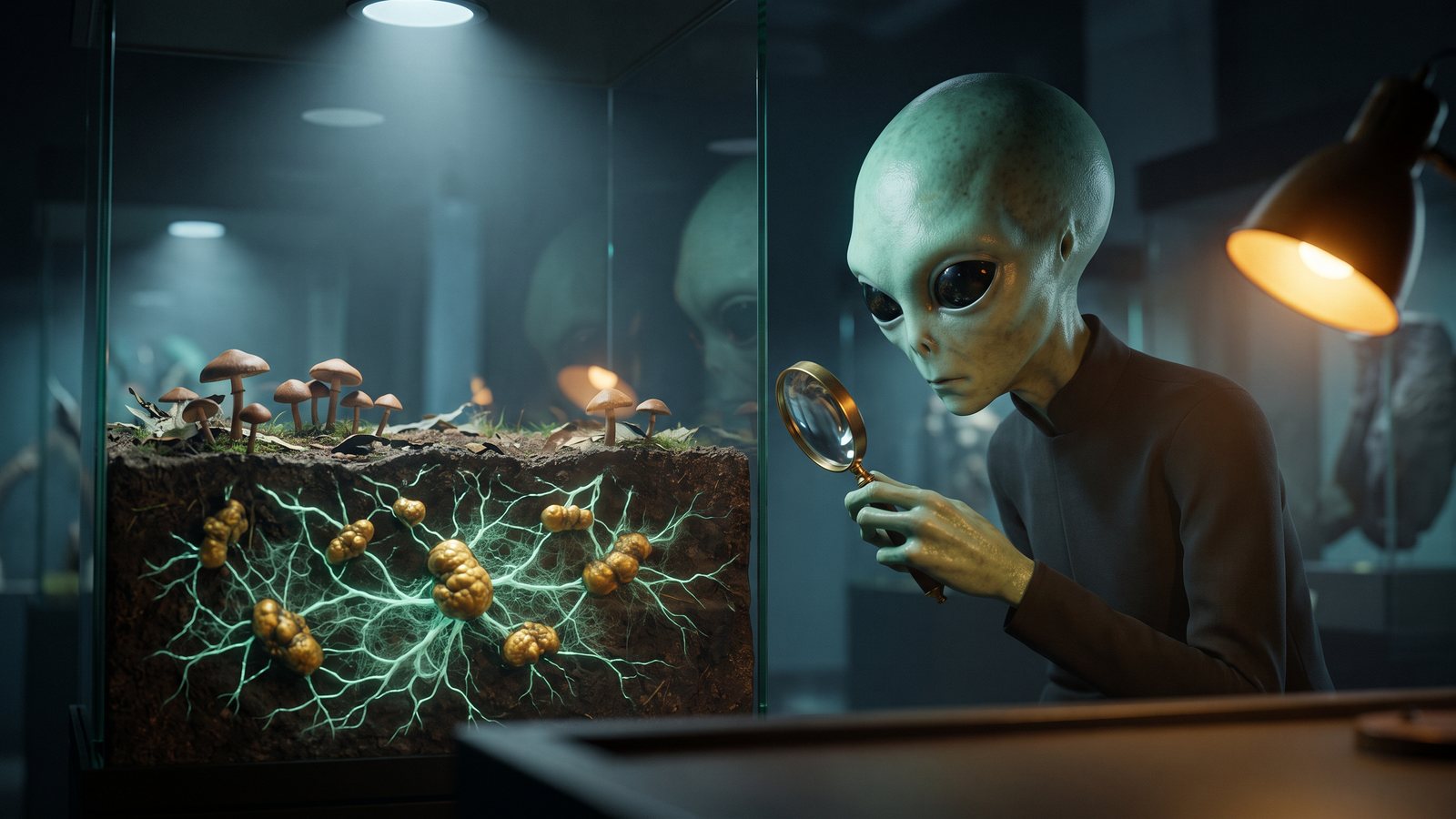
A sclerotium (plural sclerotia) is a compact mass of hardened fungal mycelium that contains nutrient reserves, including carbohydrates and lipids (Wang et al., 2025; Wikidata). Mycelium is the network of fine threads that makes up the main body of a fungus. A mushroom is a different structure: the fruiting body, which the fungus builds to release spores.
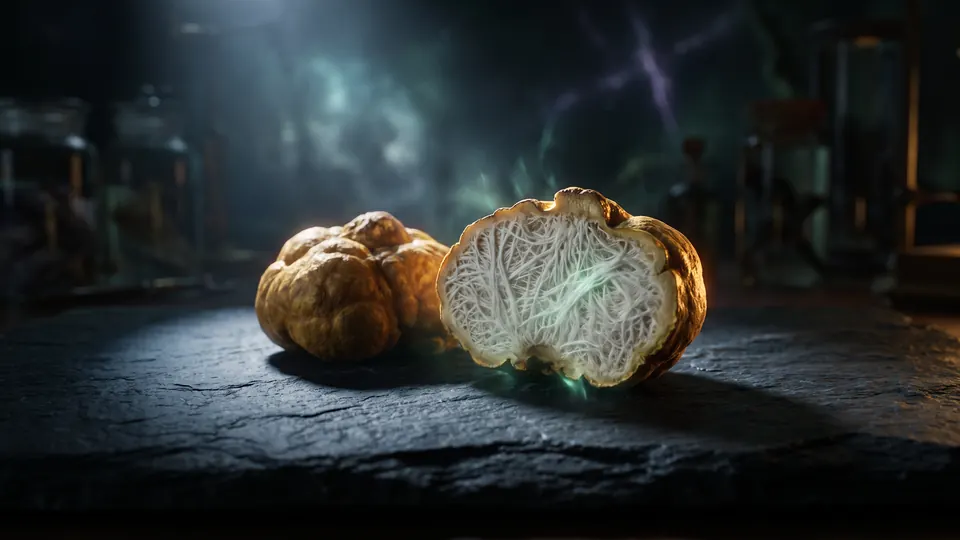
Sclerotia work as a kind of storage and survival body. In a review of the soil fungus Cenococcum geophilum, an unrelated species, Wang and colleagues describe melanized sclerotia that resist decomposition by soil microbes and can stay viable for decades in harsh conditions (Wang et al., 2025). Many different fungi form sclerotia, so the word names a structure, not a group of related species.
A few Psilocybe species are known to form them. The 1978 paper that named Psilocybe tampanensis says that, up to then, sclerotia in Psilocybe had been reported for three species: P. mexicana, P. caerulescens and P. tampanensis. It notes that sclerotia of P. mexicana had been produced in culture in the 1950s, and that Guzmán had reported them in wild conditions in P. caerulescens (Guzmán and Pollock, 1978). A 1958 French paper by Heim, Hofmann and colleagues dealt with how fruit bodies and sclerotia form in cultures of P. mexicana (Heim et al., 1958). For how those two species were named, see our references on Psilocybe tampanensis and Psilocybe mexicana.
Are magic truffles real truffles?
No. In mycology a truffle is a fruiting body that stays entirely underground. Kennedy and colleagues describe truffles as the belowground sporocarps (spore-producing bodies) of certain ectomycorrhizal fungi, which have lost the ability to shoot their spores into the air and depend on animals that dig them up and eat them to spread (Kennedy et al., 2026). Culinary truffles belong to this group.
A sclerotium is not a fruiting body and does not exist to release spores. It is a dense knot of the fungus’s own threads, packed with reserves. The two can look alike, lumpy and rounded, which is likely where the nickname came from, but the resemblance is skin deep.
| Structure | What it is | Role for the fungus | Example |
|---|---|---|---|
| Mushroom (fruiting body) | Above-ground spore-bearing body | Releases spores | Psilocybe mushrooms |
| True truffle | Below-ground spore-bearing body | Holds spores until an animal eats it | Culinary truffles |
| Sclerotium (“magic truffle”) | Compact mass of hardened mycelium with nutrient reserves | Stores reserves and helps the fungus survive | Sclerotia of P. mexicana or P. tampanensis |
What have lab studies found in sclerotia compared with mushrooms?
The basic finding is old. In 1959 Albert Hofmann and colleagues reported that psilocybin and psilocin, the two compounds they had just isolated from P. mexicana, were present in the fruit bodies, in mycelium grown in the lab, and in the sclerotia (Hofmann et al., 1959). So sclerotia are not chemically empty, and they are not a different drug. For how the two compounds relate, see psilocin vs psilocybin.
How sclerotia compare with mushrooms is less settled. The few comparisons we could verify point in different directions:
| Source | What was compared | Relative finding | Main limits |
|---|---|---|---|
| Dutch Food and Consumer Product Safety Authority (VWA), 2002, as reported by the Dutch health minister in 2009 | Sclerotia of P. tampanensis vs several mushroom species | Sclerotia contained less of the hallucinogenic compounds than the mushrooms tested | A government summary of an unpublished report; species and methods not described |
| Pellegrini et al., 2013 | Sclerotia samples only | Only psilocybin was detected, not psilocin; content varied nearly threefold between samples | Read as an abstract; small, unspecified set of fresh samples |
| Seibold et al., 2024, citing two earlier analyses | Dried P. mexicana sclerotia vs P. mexicana fruiting bodies | Highest reported psilocybin value was higher for sclerotia than for fruiting bodies | Second-hand; compares maximums from different studies and labs |
In 2009 the Dutch health minister told Parliament that a 2002 study by the VWA had found lower levels of hallucinogenic substances in samples of P. tampanensis sclerotia than in the other mushroom species it examined. In the same answer he said that, although sclerotia are a different thing from mushrooms, their effect is comparable (Dutch government answer, 2009). Pellegrini and colleagues, who developed a lab method for sclerotia known as “magic truffles”, found only psilocybin, not psilocin, in the samples they examined, with a wide spread between samples (Pellegrini et al., 2013). A 2024 paper from a German lab, setting up its own experiments, cited earlier analyses in which dried P. mexicana sclerotia reached a higher top value than the species’ fruiting bodies (Seibold et al., 2024).
Why the disagreement? Part of it is basic method. Results reported for fresh material include the water in it and cannot be set beside results for dried material without conversion. Different species, growing conditions and lab methods also differ. And the part of the fungus matters: a 2023 study of Psilocybe found that fruiting bodies preferentially accumulated psilocybin compared with mycelium grown in the lab (Waldbillig et al., 2023). Sclerotia are made of mycelium, but that study did not test them, so it cannot settle the question either.
The honest summary: sclerotia contain psilocybin, the amount varies a lot from sample to sample, and published comparisons with mushrooms are few, small and inconsistent. Neither the word “truffle” nor the word “mushroom” tells you how strong a given sample is. Our guide to what lab potency studies establish explains why a single figure rarely transfers from one sample to another.
Why did magic truffles become famous in the Netherlands?
Because of a gap in a list. In a letter to Parliament dated 19 October 2007, the Dutch Minister of Health, writing also for the Minister of Justice, announced that unprocessed (fresh) mushrooms would be placed on List II of the Opium Act. The active substances in processed (dried) mushrooms were already on List I. One of the reasons he gave was that there is little or no difference in health risk between dried and fresh mushrooms. He noted that the decision departed from the advice of the Dutch drug-assessment body, the CAM (Dutch government letter, 2007).
The listing took effect on 1 December 2008, when 186 species of hallucinogenic mushrooms were placed on List II. In a written answer received on 28 December 2011, the Health Minister said psychedelic truffles, or sclerotia, are not covered by the Opium Act, and that this was known when the mushrooms were listed. She called them legal products that fall under the Commodities Act (Warenwet) rather than the Opium Act (Dutch government answer, 2011). An earlier answer, in February 2009, had already confirmed that hallucinogenic truffles were not covered by the mushroom ban (Dutch government answer, 2009).

The 2011 answer also accepted that some shift from mushrooms to truffles after the ban could not be ruled out. It gave Amsterdam figures for health incidents (ambulance call-outs) linked to hallucinogens, mainly mushrooms and sclerotia, falling from 149 in 2007 to 69 in 2010 (Dutch government answer, 2011). Those are the government’s figures as given; the answer does not separate mushrooms from sclerotia or show what caused the drop.
The same gap reached the scientific literature. Pellegrini and colleagues opened their 2013 paper by noting that sclerotia had become a source of psilocybin because they were not specifically included in laws banning the mushrooms (Pellegrini et al., 2013).
These Dutch statements are dated
The most recent government statement we opened is from 2011. Laws and policies change, and this article is not travel advice. Our guide to psilocybin laws around the world covers the current Dutch Opium Act text and what we could and could not confirm.
Are magic truffles legal in Canada?
No. Canada has no truffle gap. The Controlled Drugs and Substances Act (CDSA) lists psilocin and psilocybin, and any salt of them, in Schedule III (CDSA, Schedule III, items 11 and 12). Unlike the Dutch law, it does not work through a list of mushroom species. Section 2(2) says that a reference to a controlled substance includes any substance that contains a controlled substance, and all synthetic and natural forms of it (CDSA, section 2(2)). The law names the chemicals, not the structure that contains them.
Health Canada says the same in plain terms. Under the CDSA, activities with magic mushrooms, psilocybin and psilocin, such as sale, possession and production, are illegal unless authorized by Health Canada, for example through a licence, an exemption or the regulations. The page adds that there are no approved therapeutic products containing psilocybin in Canada or elsewhere (Health Canada; page modified 20 October 2026).
Health Canada’s page does not mention sclerotia or truffles by name, and we found no Canadian rule that treats them differently. Because sclerotia contain psilocybin, as studies since 1959 have found, the wording of section 2(2) means the label “truffle” does not move anything outside the Act. For the full Canadian picture, including the narrow legal routes such as clinical trials and the Special Access Program, see are magic mushrooms legal in Canada? and psilocybin penalties in Canada.
| Netherlands | Canada | |
|---|---|---|
| How the law is built | Active substances on List I; mushrooms containing them listed separately on List II | Psilocin and psilocybin in Schedule III; any substance containing them is included |
| Mushrooms | Fresh and dried covered (listing from 1 December 2008) | Covered |
| Sclerotia (“truffles”) | Not covered, according to ministerial answers of 2009 and 2011 | No separate status found; covered as a substance containing psilocybin |
| Most recent source opened | Parliamentary answer, 28 December 2011 | CDSA current to 30 September 2026; Health Canada page modified 20 October 2026 |
Does the form change the risks?
The sources here give no reason to think so. The Dutch minister told Parliament in 2009 that the effect of sclerotia is comparable to that of mushrooms (Dutch government answer, 2009). Health Canada lists effects of magic mushrooms that include anxiety, panic, confusion, raised heart rate and blood pressure, and “bad trips”, and warns that risks rise when they are combined with substances such as alcohol or cannabis (Health Canada). Its page also notes that the strength of magic mushrooms varies greatly, and the studies above show the same is true of sclerotia.
If someone is unwell
Call 911 for a medical emergency, such as trouble breathing, a seizure, chest pain or unresponsiveness. In Ontario, the Ontario Poison Centre answers at 1-800-268-9017, 24 hours a day (Ontario Poison Centre). For a mental-health or suicide crisis anywhere in Canada, call or text 9-8-8, any time (9-8-8). If a pet has eaten something, contact an emergency veterinarian. See our safety page for more.
What we still don’t know
- How sclerotia and mushrooms of the same species compare when measured side by side in one lab with one method. We found no such open study.
- Which species and strains the samples in the Dutch 2002 study and the 2013 study came from, beyond what their summaries state.
- Whether the Dutch government has restated its position on sclerotia since 2011.
- Whether sclerotia carry any risks that differ from mushrooms. No source we opened reports one.
Common questions
What are magic truffles?
They are sclerotia: compact, hardened masses of fungal mycelium that store nutrients. Some Psilocybe species, including P. mexicana and P. tampanensis, form them. They are not mushrooms and not true truffles.
Are magic truffles the same as real truffles?
No. A real truffle is a spore-bearing fruiting body that grows underground and is spread by animals. A sclerotium is a storage mass of the fungus’s threads. The shared name comes from a loose resemblance.
Do magic truffles contain psilocybin?
Yes. Studies since 1959 have found psilocybin in Psilocybe sclerotia. One 2013 study found psilocybin but no psilocin in the samples it tested, with a wide spread between samples.
Are magic truffles weaker or stronger than mushrooms?
The evidence is mixed. A 2002 Dutch government study reported lower levels in sclerotia than in the mushrooms it tested, while earlier analyses cited in a 2024 paper found a higher top value in P. mexicana sclerotia. Methods differ, and content varies widely between samples.
Why are magic truffles legal in the Netherlands?
When the Netherlands listed 186 psilocybin mushroom species under its Opium Act from 1 December 2008, the government said sclerotia were not covered. A 2011 ministerial answer called them legal products. That statement is dated; check a current source.
Are magic truffles legal in Canada?
No. Canada’s Controlled Drugs and Substances Act controls psilocybin and psilocin themselves, including any substance that contains them. We found no Canadian rule that gives sclerotia a separate status.
Shroomverse sells mushroom products. This article is general information about fungal biology, lab research and law. It is not medical, legal or purchasing advice, and it does not recommend any product.
SOURCES
- Biology, genetics, and ecology of the cosmopolitan ectomycorrhizal ascomycete Cenococcum geophilum (Wang H, Kohler A, Martin FM, Frontiers in Microbiology, 2025), Frontiers in Microbiology; full text read via Europe PMC (PMC11799279). Accessed . Definition of a sclerotium as a compact mass of hardened fungal mycelium with nutrient reserves (carbohydrates and lipids); melanized sclerotia resist decomposition and stay viable for decades. Used for the definition only; the paper is about a different fungus.
- Is aerial dispersal an overlooked pathway for ectomycorrhizal truffle fungi? (Kennedy PG et al., Mycorrhiza, 2026), Mycorrhiza (Springer); full text read via Europe PMC (PMC13407476). Accessed . Introduction: truffles are hypogeous (belowground) sporocarps of ectomycorrhizal fungi that have lost forcible spore discharge and rely on animals for dispersal. Used only for what a true truffle is.
- A new bluing species of Psilocybe from Florida, U.S.A. (Guzmán G, Pollock SH, Mycotaxon 7(2): 373-376, 1978), PDF hosted by the MAPS bibliography, Mycotaxon (copy hosted by MAPS). Accessed . Read in full (OCR text). Sclerotia reported in Psilocybe for P. mexicana, P. caerulescens and P. tampanensis; P. mexicana sclerotia produced in culture (Heim and Cailleux 1957; Heim et al. 1958); Guzmán reported sclerotia in wild conditions in P. caerulescens.
- Determinism of carpophore and sclerote formation in culture of Psilocybe mexicana Heim (Heim R, Brack A, Kobel H, Hofmann A, Cailleux R, Comptes rendus 246: 1346-1351, 1958), Comptes rendus de l’Académie des sciences; record read via Europe PMC (PMID 13537389). Accessed . Bibliographic record and indexed title only (no abstract): the paper concerns fruit-body and sclerotium formation in culture of P. mexicana and the demonstration of psilocybin and psilocin.
- Psilocybin und Psilocin, zwei psychotrope Wirkstoffe aus mexikanischen Rauschpilzen (Hofmann A et al., Helvetica Chimica Acta 42(5): 1557-1572, 1959), Helvetica Chimica Acta; abstract read via Crossref. Accessed . English abstract: psilocybin and psilocin isolated from P. mexicana and present in the fruit bodies, the artificially cultivated mycelium and the sclerotia. Content figures in the abstract deliberately not reproduced.
- Magic truffles or Philosopher’s stones: a legal way to sell psilocybin? (Pellegrini M et al., Drug Testing and Analysis 5: 182-185, 2013), Drug Testing and Analysis (Wiley); abstract read via Europe PMC (PMID 22887928). Accessed . Abstract only. Sclerotia called magic truffles became a psilocybin source because they were not specifically included in laws banning the mushrooms; LC-MS/MS method; only psilocybin detected in the sclerotia examined; content varied nearly threefold across fresh samples (our ratio from the range given; amounts not reproduced).
- Genetic regulation of L-tryptophan metabolism in Psilocybe mexicana supports psilocybin biosynthesis (Seibold PS et al., Fungal Biology and Biotechnology, 2024), Fungal Biology and Biotechnology (BMC); full text read via Europe PMC (PMC11046786). Accessed . States that previous investigations of dried P. mexicana sclerotia and carpophores found a higher maximum psilocybin content for sclerotia than for carpophores, citing Gotvaldová et al. 2022 and Gartz 1995. Second-hand comparison; amounts not reproduced.
- Exploring Psilocybe spp. mycelium and fruiting body chemistry for potential therapeutic compounds (Waldbillig A et al., Frontiers in Fungal Biology, 2023), Frontiers in Fungal Biology; abstract read via Europe PMC (PMC10716206). Accessed . Chemical composition differed among mycelia, grain mycelia and fruiting bodies; psilocybin preferentially accumulated in fruiting bodies. Sclerotia were not tested. Used to show that tissue type matters.
- Kamerstuk 24077, nr. 199: letter from the Minister of Health, Welfare and Sport, 19 October 2007, Tweede Kamer, via officielebekendmakingen.nl (Government of the Netherlands). Accessed . Read in Dutch. Decision, with the Minister of Justice, to place unprocessed mushrooms on List II; active substances of processed mushrooms already on List I; reason that there is little or no difference in health risk between dried and fresh mushrooms; departs from the CAM’s advice.
- Kamervragen (Aanhangsel) 2008-2009, nr. 1509: written answer on hallucinogenic truffles, received 10 February 2009, Tweede Kamer, via officielebekendmakingen.nl (Government of the Netherlands). Accessed . Read in Dutch. Minister Klink: truffles not covered by the mushroom ban; a 2002 VWA study (report SAZD/01/30/21) found lower hallucinogenic content in P. tampanensis sclerotia than in the other mushroom species examined; sclerotia are different from mushrooms but their effect is comparable. Percentages not reproduced.
- Kamervragen (Aanhangsel) 2011-2012, nr. 1032: written answer on psychedelic truffles, received 28 December 2011, Tweede Kamer, via officielebekendmakingen.nl (Government of the Netherlands). Accessed . Read in Dutch. Minister Schippers, also for the Minister of Security and Justice: truffles or sclerotia not covered by the Opium Act, known when 186 species were placed on List II on 1 December 2008; a shift to truffles could not be ruled out; Amsterdam hallucinogen-related incidents fell from 149 (2007) to 69 (2010); truffles are legal products under the Commodities Act.
- Controlled Drugs and Substances Act (S.C. 1996, c. 19), current to 30 September 2026, Justice Laws Website, Government of Canada. Accessed . Schedule III items 11 (psilocin) and 12 (psilocybin), each with any salt; section 2(2): a reference to a controlled substance includes any substance that contains it and all synthetic and natural forms. Last amended 18 July 2026.
- Psilocybin and psilocin (Magic mushrooms), Health Canada. Accessed . Page modified 20 October 2026; re-read 24 October 2026. Activities with magic mushrooms, psilocybin and psilocin are illegal unless authorized; no approved psilocybin products; listed effects and risks; strength varies greatly; higher risk when combined with other substances. Does not mention sclerotia.
- Ontario Poison Centre, Ontario Poison Centre (The Hospital for Sick Children). Accessed . Toll-free number 1 800 268 9017, available 24 hours a day, every day of the year.
- 9-8-8: Suicide Crisis Helpline, 9-8-8: Suicide Crisis Helpline. Accessed . Call or text 9-8-8, 24/7/365; call 9-1-1 if safety is at risk.
- Wikidata: sclerotium (Q837377), Wikidata. Accessed . Description: a compact mass of hardened fungal mycelium containing food reserves. Corroboration and entity identifier only.
CHANGES
- : Published.
- : Re-read Health Canada’s psilocybin page, updated on 20 October 2026, and corrected its date here. The statements this article cites from it are unchanged.



