
THE SHROOMVERSE JOURNAL ✳ 19 MIN READ
Can you overdose on magic mushrooms? What the toxicology literature says
Topic: Safety and risk
Published Updated
Short answer, checked 4 October 2026
Can you overdose on magic mushrooms? Published reviews describe psilocybin as having low physiological toxicity, and fatal poisoning from psilocybin itself is reported as extremely rare. But “overdose” can mean several things, and mushrooms still put people in hospital: overwhelming anxiety or panic, injuries, mixing with other drugs or medicines, poisonous look-alikes mistaken for magic mushrooms, and products whose contents are unknown. In an emergency, call 911. The Ontario Poison Centre is 1-800-268-9017, 24 hours a day.
On this page 10 sections
“Overdose” is a word with more than one meaning, and that is why the answer to this question is not a simple yes or no. In the toxicology literature, a drug overdose usually means a toxic amount that damages the body or kills. Reviews of psilocybin, the compound magic mushrooms are known for, describe a very different pattern from opioids or sedatives. A 2016 review in Pharmacological Reviews called psychedelics “generally considered physiologically safe” (Nichols, 2016).
That does not mean nothing can go wrong. This guide separates the four things people usually mean when they ask the question, says what the sources found for each, and says what is not known. It gives no doses or thresholds, and it is not a guide to using, choosing or identifying mushrooms. Our safety page keeps the numbers to call.
If someone may be in danger now
Call 911 right away if the person stops breathing, collapses or has a seizure, the three signs the Ontario Poison Centre lists (Ontario Poison Centre, first aid). For poison advice, call the Ontario Poison Centre at 1-800-268-9017, toll-free, 24 hours a day, every day of the year. If someone ate a wild mushroom, do not wait for symptoms before calling (Ontario Poison Centre, mushrooms). If you or someone you know is thinking about suicide, call or text 9-8-8, the Suicide Crisis Helpline, 24 hours a day. This page is general information, not medical or legal advice.
How we label the evidence: Established means shown in peer-reviewed work or an official source and not seriously disputed. Preliminary means small, indirect, self-reported or based on case reports. Unresolved means the data are missing or point different ways.
Can you overdose on magic mushrooms?
It depends which kind of overdose you mean. This table gives the short version, and the sections below give the detail.
| What people mean | What the sources report | Evidence |
|---|---|---|
| A toxic, life-threatening effect of psilocybin itself | Reviews describe low physiological toxicity. One review is aware of a single documented death likely caused by psilocybin, in a person with a transplanted heart. US poison-centre data over nine years logged one death, with the cause unclear. | Established that it is rare; the lack of reports is not proof of zero |
| Overwhelming fear, panic or confusion that leads to risky behaviour or injury | The most likely risk named in the 2008 safety review. Survey and case-report data show people can put themselves or others at risk, and some seek hospital care. | Established as a risk; how often it happens is preliminary |
| Poisoning from a different mushroom mistaken for a magic mushroom | Health Canada warns it can happen. Some look-alikes carry deadly toxins, and serious symptoms can be delayed by days. | Established |
| Mixing with other drugs or medicines, or eating a product whose contents are unknown | Health Canada says combinations raise the risk of serious side effects. A US report found undisclosed psilocybin in several mushroom gummies, plus other unlabelled ingredients such as ephedrine and a kratom compound. Patients in the same report had been evaluated in hospital after eating similar gummies, but their own products were not tested. | Established for the principle; how common it is in Canada is unresolved |
What does “overdose” mean here?
In plain language, an overdose means taking too much of a substance and being harmed by the amount. For psilocybin that definition is awkward, because most of the harm described in the literature is not a poisoning of the body. It is about the mind and what a person does while their perception and judgment are altered.
Canadian law uses a different word. Section 4.1 of the Controlled Drugs and Substances Act speaks of a “medical emergency”, defined as a physiological event caused by taking a psychoactive substance that results in a life-threatening situation, where there are reasonable grounds to believe the person needs emergency medical or law-enforcement help (Controlled Drugs and Substances Act). Health Canada calls the protection that goes with it the Good Samaritan Drug Overdose Act (Health Canada). We return to it below.
What do toxicology reviews say about psilocybin?
Evidence: established, with limits. Nichols wrote that psychedelics are among the physiologically safest known classes of drugs that act on the brain and do not cause addiction, and that no overdose deaths had occurred after ingestion of “typical doses” of LSD, psilocybin or mescaline. Note the qualifier. He also stressed that users’ judgment is impaired, a particular concern in unsupervised settings (Nichols, 2016).
A safety review by Johnson and colleagues in 2008 reached a similar view for research settings: classical hallucinogens carry relatively low physiological risk and no dependence potential, but real psychological risk. The main worry is severe distress during the experience, which can lead to dangerous behaviour such as leaving the study site. Less often, prolonged psychotic episodes can follow (Johnson et al., 2008).
A 2011 review for the Dutch Ministry of Health used somewhat different wording. It concluded that the dependence potential of magic mushrooms was low, acute toxicity “moderate”, chronic toxicity low, and the public-health and criminal aspects negligible. It judged use “relatively safe” because few and relatively mild adverse effects had been reported, but flagged unpredictable panic attacks and flashbacks. It named combined use with alcohol and the quality of the setting as concerns (van Amsterdam et al., 2011). Reviews do not all use the same labels, so read the reasoning and not just the adjective.
A 2018 review of psilocybin’s abuse potential also describes a low risk of overdose toxicity from breathing problems, cardiovascular events or other causes of death seen with opioids and sedatives. It reports that animal studies and a theoretical human estimate exist, and that the estimate points to an amount unlikely to be eaten in mushroom form. We do not repeat those figures here, because they are not guidance for anyone (Johnson et al., 2018).
The same review says its authors knew of only one documented case of acute overdose death likely caused by psilocybin. It involved a young woman who had received a heart transplant years earlier and went into cardiac arrest hours after eating psilocybin mushrooms; testing found psilocin and THC. The authors concluded the only known acute fatal overdose appeared to involve a medically compromised person. They also note US poison centres logged 5,559 mentions of psilocybin or psilocin from 2007 to 2015, with one death in 2012, and that a mention does not mean the substance caused the poisoning. Whether that death was caused by psilocybin or other drugs is unknown (Johnson et al., 2018).

Why “rare” is not the same as “safe”
- Most of the controlled evidence comes from screened, prepared and supervised people. A 2026 commentary notes that trial conditions exclude many risk factors, so adverse events there may be less frequent than elsewhere, and that people outside trials face uncertain source and potency (Black, 2026). Evidence: preliminary.
- Poison-centre data count reports, not causes. They show who called, not why a person became ill (Johnson et al., 2018).
- Health Canada states that no studies have evaluated the long-term effects of repeated use of magic mushrooms (Health Canada). Evidence: unresolved.
Rare physical complications have been reported. In 2019, clinicians including staff of the Ontario Poison Centre described a 15-year-old who developed acute kidney injury about 36 hours after eating Psilocybe cubensis mushrooms, which a sample confirmed to contain psilocin. He was admitted to hospital, discharged five days after admission, and his kidney function had fully recovered at a three-month follow-up. The authors hypothesised that the injury was related to the mushrooms because they found no other cause, but they could not prove it: others who ate from the same crop did not become ill, and no kidney biopsy was done. The authors noted that most reported adverse effects are benign and self-limited, and that the rare deaths linked to Psilocybe seem related to co-ingestion of another drug, often alcohol, or to trauma (Austin et al., 2019). Evidence: preliminary, from a single case report.
Can a “bad trip” be dangerous?
Yes, and this is where most of the documented danger lies. Health Canada says a “bad trip” may occur, particularly at high doses, and may be frightening, with paranoia, loss of boundaries and a distorted sense of self (Health Canada). The research literature describes the physical danger as indirect: a person who is terrified or disoriented may take risks they would not otherwise take (Johnson et al., 2008). Health Canada makes the same link: impaired judgment may lead to risk-taking behaviour, which may lead to traumatic injuries or even death (Health Canada). A 2026 commentary adds that in the rare deaths involving psychedelics, physical trauma rather than toxicity is the common cause (Black, 2026).
A survey of 1,993 people who described their most difficult experience with psilocybin mushrooms gives a sense of scale. About 11% said they put themselves or others at risk of physical harm, 2.6% behaved aggressively or violently, and 2.7% got help at a hospital or emergency department. Risk was linked to factors including the estimated dose, the length and difficulty of the experience, and the lack of physical comfort and social support. The authors also point out that rates in laboratory studies of screened, prepared and supported people are far lower (Carbonaro et al., 2016).

Read those percentages with care. The respondents chose a survey about a challenging experience and were not a random sample of mushroom users, so the figures describe this group and are not a rate across everyone who has used mushrooms (preliminary).
Case reports show what the worst outcomes can look like. A 2025 report describes a fatal self-inflicted injury in a 21-year-old who was in acute distress after eating psilocybin mushrooms at home. The authors attribute the death to the injury, not to poisoning (Blanton et al., 2025). A single case cannot say how often such events happen. It does show why “no one dies of a toxic overdose” is not the same as “nothing can go wrong”.
Texas poison-centre records point the same way. Of 486 intentional exposures to hallucinogenic mushrooms from 2000 to 2018, most patients were young men and most were at or on the way to a healthcare facility when the centre was contacted. Neurological effects were the most common (72%), followed by cardiovascular (25%) and gastrointestinal (23%) ones (Forrester, 2020). Health Canada adds that short-term rises in blood pressure and heart rate could be harmful for people with heart disease (Health Canada).
We do not give coping instructions here. For support information see our safety page, and for the research context see our guides on psychosis risk and helping someone in distress.
Can a poisonous mushroom be mistaken for a magic mushroom?
Yes. This is a different kind of poisoning, it has nothing to do with psilocybin, and it can be far more dangerous. Health Canada says that because many species look alike, it is hard to tell them apart, and that it is possible to eat poisonous mushrooms mistaking them for magic mushrooms (Health Canada). The Ontario Poison Centre says poisonous and non-poisonous mushrooms grow beside each other and only a mycologist can tell the difference (Ontario Poison Centre). Evidence: established.
Delay is part of the danger. After eating a poisonous mushroom a person may not become ill for many hours, which makes it hard to link the illness to the mushroom (Ontario Poison Centre). A 2021 study of little brown mushrooms collected in western British Columbia found deadly amatoxins in 24 of 70 samples, all from one group of Galerina species. It notes that serious illness has followed when Galerina was confused with edible or hallucinogenic mushrooms, and that serious symptoms appear two to four days after eating, when the liver and other organs are already damaged (Landry et al., 2021). For a fuller guide to what to do after a suspected mix-up, see magic mushroom misidentification and where to get help. On why bruising is not a safety test, see why magic mushrooms turn blue.
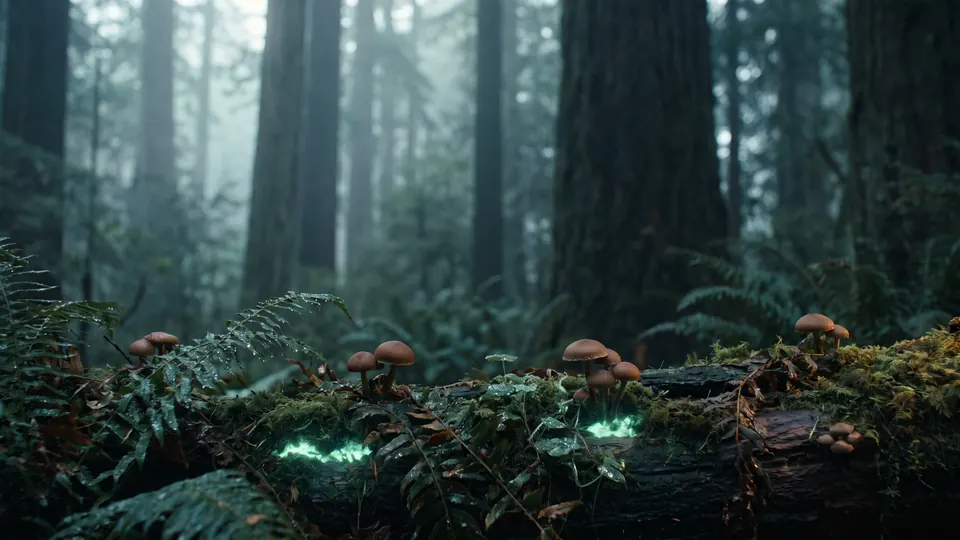
This site does not teach identification or foraging, and no article can substitute for an expert. The advice from the poison centre is the one to remember: if wild mushrooms were eaten, call before anyone feels sick.
Do other drugs, medicines or products change the risk?
Health Canada says using magic mushrooms with substances such as cannabis, amphetamines or alcohol raises the risk of serious side effects, and that mushrooms should never be injected, citing case reports of septic shock and multi-system organ failure (Health Canada). Evidence: established as official guidance.
Medicines matter too. A 2026 commentary describes “serotonergic toxicity” as possible when serotonin-raising drugs are combined, with the greatest risk when an MAO inhibitor is one of them, and notes that people who do not know a product’s potency risk toxic effects when a prescribed serotonin-raising medicine is still in their system (Black, 2026). That commentary is brief and covers psychedelics in general. See our guide to magic mushrooms and antidepressants, and talk to a pharmacist or doctor. Evidence: preliminary for psilocybin specifically.
Unknown contents are a separate problem. A 2024 report in the CDC’s MMWR describes five people in Virginia, four adults and a child, who were evaluated in hospital between September 2023 and June 2024 after eating gummies labelled to contain Amanita muscaria. The patients’ own brands were not available, so the investigators bought six packages of five brands from nearby gas stations and smoke shops and tested them. Two of those brands were labelled only as mushroom “nootropics”. The report states the result in two ways. Its summary box says that three of the five brands contained unlabeled psilocybin and psilocin. Its text says that mushroom gummies in four of the six bags tested did. The report’s table reconciles the two: one brand appears twice, as two different products, so the four positive packages came from three of the five brands. (The text itself does not spell this out.) Other unlabelled substances were also found, including caffeine, ephedrine and mitragynine, which the report describes as an opioid agonist commonly known as kratom. Because the patients’ own products were not tested, the report does not show what the patients ate. Its authors advise that people who experience symptoms after consuming such products seek immediate medical attention (Michienzi et al., 2024). This is a US sample of a few products and does not describe the Canadian market. Evidence: preliminary.
What signs need emergency help?
We found no official checklist written for magic mushrooms, so we limit this section to what official sources actually say. The Ontario Poison Centre says to call 911 right away if someone stops breathing, collapses or has a seizure (Ontario Poison Centre, first aid). Health Canada’s page on the Good Samaritan Act tells people to call 911 or their local emergency number in case of an overdose (Health Canada).
- Stops breathing, collapses or has a seizure: call 911 (Ontario Poison Centre).
- Possible poisoning from a wild mushroom, even if the person feels fine: call the Ontario Poison Centre at 1-800-268-9017 right away, because illness can start many hours later.
- Not sure whether it is an emergency: the Poison Centre line is staffed 24 hours a day, every day of the year, and the centre is run by The Hospital for Sick Children (SickKids) in Toronto.
- Thinking about suicide, or worried about someone who is: call or text 9-8-8, the Suicide Crisis Helpline, 24 hours a day (988.ca).
We found no official Canadian checklist of warning signs written for the psychological and situational risks described above, which is why this list is short and we have not added signs of our own. This section covers Ontario. Elsewhere in Canada, call 911 or your local emergency number in an emergency, and check your province’s poison centre number on its official site.
Does the Good Samaritan Drug Overdose Act protect someone who calls 911?
Partly. As of 4 October 2026, this is what we could verify. The Act became law on 4 May 2017. Health Canada describes it as giving some legal protection to people who seek emergency help during an overdose, including the person overdosing and anyone else at the scene when help arrives. It adds that the person who seeks help is protected whether they stay or leave before help arrives (Health Canada; Justice Laws, 2017).
The 2017 Act added section 4.1 to the Controlled Drugs and Substances Act, and its words have since changed. The 2017 text spoke of an “overdose” and a “controlled substance”; the current consolidation (current to 21 September 2026, last amended 18 July 2026) speaks of a “medical emergency” and a “psychoactive substance”. In the current text, section 4.1 says a person who seeks emergency medical or law-enforcement help for a medical emergency is not to be charged or convicted of simple possession under subsection 4(1), if the evidence was obtained or discovered because they sought help or stayed at the scene. This also covers anyone at the scene when help arrives, including the person in the emergency. Related conditions of pre-trial release, probation, conditional sentences or parole are deemed not to be violated (Controlled Drugs and Substances Act). Psilocin and psilocybin are listed in Schedule III of that Act, and Health Canada states that possession of magic mushrooms is illegal in Canada (Controlled Drugs and Substances Act; Health Canada).
The protection is narrow. Health Canada says the Act does not protect against more serious offences, including outstanding warrants, production or trafficking of controlled substances and other crimes not covered (Health Canada). Whether a particular situation counts as a “medical emergency” under the definition is a question for a lawyer or court, not for this page, and nothing here is legal advice. For the wider law, see are magic mushrooms legal in Canada and psilocybin penalties in Canada.
What don’t we know yet?
- How often serious harm happens outside research. Surveys are self-selected and poison-centre records count mentions, so we have no reliable rate (unresolved).
- Whether rare physical complications such as the kidney case have a mechanism or are coincidence. They rest on single case reports (unresolved).
- How common unlabelled or mislabelled psilocybin products are in Canada. The report we found is from Virginia (unresolved).
- Long-term effects of repeated use. Health Canada says no studies have evaluated them (unresolved).
- How medicines interact with psilocybin in real-world use. The 2026 commentary describes the concern in general terms (preliminary).
The honest summary is that the main risks are not where most people look. A toxic overdose from psilocybin itself is reported as very rare. The documented harm comes from panic and injury, from poisonous look-alikes, and from mixing and unknown products. Check the date on this page, and read our safety page and the pillar guide to magic mushrooms next.
Common questions
Can you die from an overdose of magic mushrooms?
Reviews report fatal poisoning from psilocybin itself as extremely rare. One 2018 review knew of a single documented case likely caused by psilocybin, in a person with a transplanted heart. Other reports link rare deaths mainly to injury or to other drugs, such as alcohol. Rare is not the same as impossible. In an emergency, call 911.
What does it mean to overdose on magic mushrooms?
It can mean a toxic effect of psilocybin, an overwhelming and frightening experience, poisoning from a look-alike mushroom, or harm from mixing with other drugs or from products of unknown content. The literature describes these as different problems, and most of the documented harm is not toxic overdose.
Who do I call in Ontario if someone ate a mushroom and might be poisoned?
Call the Ontario Poison Centre at 1-800-268-9017, toll-free, 24 hours a day, even before symptoms start. Call 911 right away if the person stops breathing, collapses or has a seizure.
Can a poisonous mushroom be mistaken for a magic mushroom?
Yes. Health Canada warns that many species look alike and that people have eaten poisonous mushrooms thinking they were magic mushrooms. Some look-alikes carry deadly toxins, and serious symptoms can appear days later. Only a mycologist can reliably tell mushrooms apart, according to the Ontario Poison Centre.
Does the Good Samaritan Drug Overdose Act protect me if I call 911?
It gives some protection from a simple possession charge under the Controlled Drugs and Substances Act, for people who seek help for a medical emergency or are at the scene when help arrives. It does not cover more serious offences such as trafficking, production or outstanding warrants. This is general information, not legal advice.
Are magic mushrooms safe?
Reviews describe low physiological toxicity but real psychological and situational risks, and the evidence outside research settings is limited. Health Canada says production, sale and possession are illegal in Canada. See our safety page and our guide are magic mushrooms safe for more.
Shroomverse sells mushroom products. This article is general information about overdose and poisoning risks. It is not medical, legal or identification advice, and it does not recommend any product.
SOURCES
- 9-8-8 Suicide Crisis Helpline, 988.ca. Accessed . Supports: call or text 9-8-8, 24 hours a day, for anyone thinking about suicide or worried about someone who is.
- Psychedelics (Nichols DE, Pharmacological Reviews 68(2):264–355, 2016), American Society for Pharmacology and Experimental Therapeutics (peer-reviewed review); full text via PubMed Central, PMC4813425. Accessed . Supports: psychedelics described as generally considered physiologically safe and non-addictive; no overdose deaths after ingestion of typical doses of LSD, psilocybin or mescaline; users’ impaired judgment in unsupervised settings.
- Human hallucinogen research: guidelines for safety (Johnson M, Richards W, Griffiths R, Journal of Psychopharmacology 22(6):603–620, 2008), SAGE (peer-reviewed); full text via PubMed Central, PMC3056407. Accessed . Supports: relatively low physiological risk and no dependence potential; the main risk is severe distress that can lead to dangerous behaviour; rare prolonged psychoses.
- Harm potential of magic mushroom use: a review (van Amsterdam J, Opperhuizen A, van den Brink W, Regulatory Toxicology and Pharmacology 59(3):423–429, 2011), Elsevier (peer-reviewed); record on PubMed, PMID 21256914. Accessed . Abstract consulted; full text not open. Supports: the Dutch assessment’s wording on dependence, acute and chronic toxicity, and concerns about alcohol co-use and setting.
- The abuse potential of medical psilocybin according to the 8 factors of the Controlled Substances Act (Johnson MW, Griffiths RR, Hendricks PS, Henningfield JE, Neuropharmacology 142:143–166, 2018), Elsevier (peer-reviewed review); full text via PubMed Central, PMC6791528. Accessed . Supports: low risk of overdose toxicity; the single documented probable psilocybin overdose death in a medically compromised person; US poison-centre mentions 2007 to 2015 and the meaning of a mention. Numeric toxicity estimates in the paper are deliberately not reproduced.
- Survey study of challenging experiences after ingesting psilocybin mushrooms: Acute and enduring positive and negative consequences (Carbonaro TM, Bradstreet MP, Barrett FS, MacLean KA, Jesse R, Johnson MW, Griffiths RR, Journal of Psychopharmacology 30(12):1268–1278, 2016), SAGE (peer-reviewed); full text via PubMed Central, PMC5551678. Accessed . Supports: the survey figures (1,993 respondents; risk of physical harm, aggression, hospital help), the associated factors, and the self-selected design.
- Hallucinogenic mushroom misuse reported to Texas poison centers (Forrester MB, Journal of Addictive Diseases 38(4):482–488, 2020), Taylor & Francis (peer-reviewed); record on PubMed, PMID 32627708. Accessed . Abstract consulted; full text not open. Supports: 486 intentional exposures reported to Texas poison centres 2000 to 2018 and the proportions with neurological, cardiovascular and gastrointestinal effects.
- Acute renal injury cause by confirmed Psilocybe cubensis mushroom ingestion (Austin E, Myron HS, Summerbell RK, Mackenzie CA, Medical Mycology Case Reports 23:55–57, 2019), Elsevier (peer-reviewed, open access); full text via PubMed Central, PMC6322052. Accessed . Supports: the single case of kidney injury with full recovery, and the authors’ statement on adverse effects and on rare fatalities. Case-report details beyond those used are not repeated.
- Self-inflicted transorbital intracranial foreign body following ingestion of hallucinogenic psilocybin mushrooms (Blanton AM, Parikh P, Zhou S, Mohamed M, Ufret-Vincenty RL, Mancini R, American Journal of Ophthalmology Case Reports, 2025), Elsevier (peer-reviewed, open access); full text via PubMed Central, PMC12175717. Accessed . Supports: a fatal self-inflicted injury in acute distress after eating psilocybin mushrooms, attributed by the authors to the trauma. Injury details are deliberately not given.
- Risks from self-medicating with psychedelic drugs (Black JC, World Psychiatry 25(3):477–479, 2026), Wiley for the World Psychiatric Association (peer-reviewed commentary); full text via PubMed Central, PMC13576959. The DOI (10.1002/wps.70099) did not yet resolve at doi.org on 4 October 2026, so the PubMed Central page is linked.. Accessed . Supports: trauma rather than toxicity as the common cause in rare deaths; fatal overdose described as extremely rare; trial conditions versus uncontrolled settings; serotonergic toxicity with certain drug combinations.
- Phylogenetic analysis of the distribution of deadly amatoxins among the little brown mushrooms of the genus Galerina (Landry B, et al., PLOS ONE 16(2):e0246575, 2021), PLOS (peer-reviewed, open access); full text via PubMed Central, PMC7875387. Accessed . Supports: amatoxins found in 24 of 70 British Columbia samples, all in one Galerina group; confusion with edible or hallucinogenic mushrooms; serious symptoms two to four days after eating.
- Notes from the Field: Schedule I Substances Identified in Nootropic Gummies Containing Amanita muscaria or Other Mushrooms, Charlottesville, Virginia, 2023–2024 (Michienzi A, Hamlin J, Farah R, Bazydlo L, MMWR 73(28):628–630, 2024), Centers for Disease Control and Prevention (MMWR). Accessed . Read in full via the Europe PMC copy of the same report, because cdc.gov refused automated access. Supports: five patients (four adults, one child) evaluated; six packages of five brands bought and tested; the summary box says three of five brands contained unlabeled psilocybin and psilocin, the text says four of six bags, and the table lists one brand twice; other unlabelled substances; the patients’ own products were not tested; advice to seek immediate medical attention.
- Psilocybin and psilocin (magic mushrooms), Health Canada (page last modified 20 October 2026). Accessed . Supports: bad-trip description; added risk with other substances; heart-rate and blood-pressure note; look-alike poisoning warning; intravenous injection warning; no studies of long-term repeated use; illegality of production, sale and possession.
- About the Good Samaritan Drug Overdose Act, Health Canada (page modified 27 May 2026). Accessed . Supports: what the Act is, who it covers (including people who stay at or leave the scene), the offences it covers and does not cover, the advice to call 911 or the local emergency number, and that it became law on 4 May 2017.
- Good Samaritan Drug Overdose Act (S.C. 2017, c. 4), Justice Laws Website, Government of Canada. Accessed . Archived page of the 2017 Act. Supports: short title, assent on 2017-05-04, and the original wording of section 4.1 (“overdose”, “controlled substance”), which differs from the current consolidation.
- Controlled Drugs and Substances Act, sections 4(1) and 4.1; Schedule III, Justice Laws Website, Government of Canada (consolidation current to 21 September 2026, last amended 18 July 2026). Accessed . Supports: the definition of “medical emergency” and the exemptions in section 4.1; the possession offence in 4(1); psilocin and psilocybin listed in Schedule III.
- First aid, Ontario Poison Centre, operated by The Hospital for Sick Children (SickKids), Toronto. Accessed . Supports: call 911 right away if someone stops breathing, collapses or has a seizure; the toll-free number.
- Mushrooms (public information page), Ontario Poison Centre. Accessed . Supports: only a mycologist can tell poisonous from non-poisonous mushrooms; illness can start many hours after eating; do not wait for symptoms before calling.
- Ontario Poison Centre: home page and get help now, Ontario Poison Centre. Accessed . Supports: the number 1-800-268-9017, available 24 hours a day, every day of the year; operated by SickKids. The get-help page repeats the number and hours.
CHANGES
- : Published. Every source opened and checked on this date.
- : Re-read Health Canada’s psilocybin page, updated on 20 October 2026, and corrected its date here. The statements this article cites from it are unchanged.



