THE SHROOMVERSE JOURNAL ✳ 14 MIN READ
Humphry Osmond, Abram Hoffer and the Saskatchewan experiments that gave us the word “psychedelic”
Topic: Mushrooms: history and science
Published Updated
Listen: the 3-minute version
AI-narrated summary of this article
Short answer, as of 19 October 2026
Humphry Osmond was a British psychiatrist who moved to the Weyburn Mental Hospital in Saskatchewan in 1951. With Abram Hoffer in Saskatoon, he ran some of the most widespread LSD and mescaline studies of the 1950s, many of them on alcoholism. Osmond coined “psychedelic” in a 1956 letter to Aldous Huxley and introduced it publicly in 1957. The work faded in the 1960s because its studies lacked randomized controls and because LSD became politically toxic. It involved LSD and mescaline, not psilocybin; today’s psilocybin trials for alcohol use disorder, some of them in Canada, are its distant descendants.
On this page 10 sections
Humphry Osmond is the reason a word coined on the Canadian prairies is now used around the world. A historian of medicine at the University of Saskatchewan, Erika Dyck, puts it plainly: in 1957, she writes, “psychedelic” entered the English language from an asylum superintendent working in one of Saskatchewan’s provincial mental hospitals.
This guide tells that story from the sources we could read: who Osmond and Abram Hoffer were, what they did at Weyburn and Saskatoon, how Aldous Huxley and an architect named Kiyoshi Izumi came into it, why later researchers criticized the studies, and how the work ended. It closes with what links the 1950s to today’s trials. For the wider timeline, see the history of magic mushrooms.
History, not guidance
This is a history article. It gives no instructions and does not suggest that anyone use LSD, mescaline or psilocybin. The 1950s studies would not meet today’s research standards. For risks and emergency information, read our safety guide.
Who was Humphry Osmond?
Osmond was born in Surrey, England, in 1917 and trained at Guy’s Hospital Medical School, according to his obituary in the BMJ. He served as a ship’s psychiatrist in the Second World War. Afterwards, at St George’s Hospital in London, he and John Smythies became interested in the idea that schizophrenia might come from a metabolic error producing something like the effects of mescaline or LSD.
In 1951 he moved to Canada, to the Weyburn Mental Hospital in Saskatchewan, where the obituary says he had research funding from the Canadian government and the Rockefeller Foundation. A 2020 review of his published letters calls him the hospital’s clinical director; Dyck describes him as a superintendent. Either way, he ran clinical research there for about a decade (Lett and Dyck, 2023).
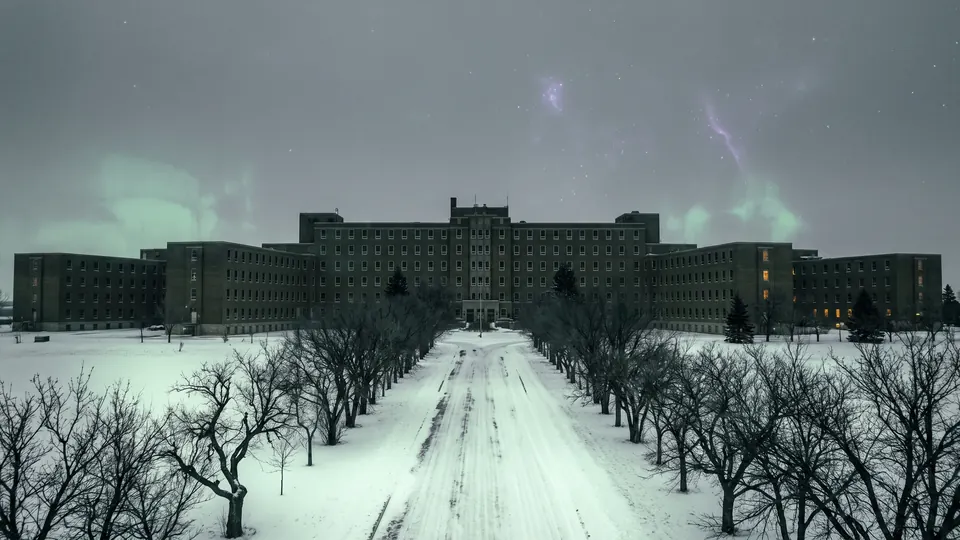
Weyburn was not a gentle place to start. Dyck and Patrick Farrell call it one of the most notorious mental hospitals in North America. A 2025 architecture article notes that when the Saskatchewan Hospital at Weyburn opened in 1921 it was the largest building in the British Commonwealth, with long, crowded, hard-surfaced corridors.
Abram Hoffer and the Saskatoon side of the work
Abram Hoffer was the other half of the partnership. A review of Dyck’s 2008 book *Psychedelic Psychiatry* describes him as a Saskatchewan-born psychiatrist with a background in agricultural chemistry who shared Osmond’s belief that much mental illness was biochemical. Dyck’s 2005 paper places the two men in different cities: Osmond in Weyburn and Hoffer in Saskatoon.
Their first big idea was about schizophrenia, not addiction. In 1952 they set out what became known as the adrenochrome hypothesis, that a faulty breakdown of adrenaline could produce a mescaline-like substance in the body (Mills, 2010). They began with mescaline and soon moved to LSD, which was more available (Carstairs, 2010). Researchers were first drawn to LSD because it seemed to produce a “model psychosis”.
The Saskatchewan research was larger than two men. Colleagues included the psychologist Duncan Blewett and the psychiatrist Nick Chwelos, who by 1959 had written a handbook on running these sessions, based on trials at several sites in the province (Lett and Dyck, 2023). A 1964 paper on LSD and alcoholism came from Colin M. Smith, listed as deputy director of psychiatric research at Saskatchewan’s Department of Public Health.
The LSD and alcoholism studies
Weyburn had many patients with alcoholism who had not improved with other treatments. Osmond’s first theory, as the BMJ obituary tells it, was that hallucinogens produced something like delirium tremens, the most severe form of alcohol withdrawal, and that a frightening artificial delirium might push a patient to change. A 2025 review describes the same idea as an attempt to produce the “hitting bottom” of Alcoholics Anonymous literature in a “controlled” form.
What patients reported was often different. Hoffer later recalled that many patients found the experience interesting rather than terrible, and the researchers came to describe its effects as ego deflation, improved self-insight and a reordering of values (Srivastava and Gold, 2025). According to the obituary, Osmond and Hoffer treated about 2,000 people with alcoholism between 1954 and 1960 and reported that 40% to 45% had not returned to drinking a year later. Those are the researchers’ own figures, reported in an obituary; we could not check them against the original papers.
Osmond also paid attention to the room. An unpublished 1952 report with Ben Stefaniuk, studied by historians, recommended a comfortable room with a couch and artwork, close to a private washroom (Lett and Dyck, 2023). That attention to surroundings is part of the background to what later came to be called set and setting; see our guide to set and setting.
LSD and mescaline, not psilocybin
The Saskatchewan studies used LSD and mescaline. Psilocybin was only reported by Albert Hofmann’s team at Sandoz in 1958, years after the work began; see how Hofmann isolated psilocybin. Results from one drug do not transfer automatically to another.
Aldous Huxley, mescaline and the word “psychedelic”
In the spring of 1953 the novelist Aldous Huxley wrote to Osmond after reading his work on mescaline. In May 1953 Osmond travelled to Los Angeles for the American Psychiatric Association meeting, stayed at Huxley’s home, and led Huxley and his wife Maria through their first mescaline experience. The two men wrote to each other for eleven years, until Huxley’s death in 1963. Huxley recounted his mescaline experience in *The Doors of Perception* (Brar et al., 2026).
They also discussed what to call these drugs. The BMJ obituary says Huxley proposed “phanerothyme”, from Greek words for “to show” and “spirit”, and sent a rhyming couplet. Osmond preferred “psychedelic”, from Greek words for mind and for showing, and answered with his own couplet: “To fathom Hell or soar angelic / Just take a pinch of psychedelic”. We have this exchange only as the obituary quotes it.
The dates depend on what you count. A review of the published Huxley–Osmond letters says Osmond coined the term in a letter to Huxley in 1956. The public debut came in 1957: the obituary says he announced it at a New York Academy of Sciences meeting, and his paper “A Review of the Clinical Effects of Psychotomimetic Agents” appeared in the Annals of the New York Academy of Sciences in March 1957. We read that paper’s bibliographic record, not its text. Dyck’s CMAJ essay gives the meaning as a “mind-manifesting” response. For more on the word, see psilocybin’s word origins.
Kiyoshi Izumi and the hospital designed with LSD
One of the stranger chapters involved an architect. Kiyoshi Izumi (1921–1996), born in Vancouver to Japanese immigrant parents, avoided the British Columbia internment camps and settled in Regina; in 1954 he co-founded the firm Izumi Arnott and Sugiyama (Canadian Architect, 2024). He worked with Osmond and Hoffer on a new design for psychiatric hospitals in Saskatchewan, the first of which was built in Yorkton.
To understand how patients perceived space, Izumi took LSD under the supervision of Osmond and Hoffer. In a 1970 article he wrote that “the object was to understand some of the experiences and problems of the mentally ill, so these problems could be considered in the building design.” The Yorkton Psychiatric Centre, finished in 1964, is described as the “anti-Weyburn”: smaller treatment areas, short corridors, daylit common rooms, bay windows angled to avoid night reflections, and no closets that might feel threatening.

The method drew critics then and now (Canadian Architect, 2024). The 2025 article that marked the building’s national architecture award calls the LSD experiments “a somewhat naïve attempt” to approximate patients’ minds, as well as a bold one. Dyck’s 2010 paper argues that the architect, psychiatrist and psychologist behind these designs could not hold back the wider post-war changes that were moving care out of large hospitals.
Why the studies were criticized
The main criticism is design. A 2025 review describes Osmond and Hoffer’s alcoholism work as uncontrolled, observational studies, often with a therapist present who sometimes took LSD too. Dyck’s 2005 paper concludes that the Saskatchewan researchers had failed to construct randomized controlled trials just as such trials were becoming the standard. Blinding was debated even then: some investigators argued that the drug’s obvious effects made blinding pointless, and Hoffer published a paper on double-blind design in 1967.
Other researchers ran controlled studies. One came from Toronto’s Alcoholism and Drug Addiction Research Foundation in 1966; we read its record, not its results. A 2012 meta-analysis pooled six randomized trials of LSD for alcoholism with 536 participants and found an odds ratio of 1.96 in favor of LSD (Krebs and Johansen, 2012). The 2025 review warns that those trials used unstandardized comparisons, loose outcome measures and very different therapy (Srivastava and Gold, 2025).
Hoffer’s schizophrenia theory has fared worse. A 2010 history paper argues that his diagnostic approach and his treatment theory depended on a tautology, meaning they assumed what they set out to prove. Dyck and Gregory Marchildon add a broader caution: 1950s psychedelic science relied heavily on self-experimentation and performed poorly in randomized controlled trials.
| Claim | What the sources say | Strength |
|---|---|---|
| Osmond coined “psychedelic” | Letter in 1956; public paper and meeting in 1957 (review of the letters, BMJ obituary, Crossref record) | Well supported |
| About 2,000 patients treated, 40–45% abstinent at a year | Researchers’ own figures, reported in a 2004 obituary | Unverified; uncontrolled studies |
| LSD helped alcoholism in randomized trials | Meta-analysis of six trials (536 people) found a benefit | Mixed; old trials with loose methods |
| Adrenochrome theory of schizophrenia | Historians describe it as circular and unsupported | Not supported |
| Izumi’s LSD-informed hospital design | Yorkton centre built in 1964; method debated | Documented; method contested |
How the Saskatchewan work ended
Dyck gives two reasons. The scientific one was the missing randomized trials. The cultural one was that LSD became tied to student protest, antiwar demonstrations and the counterculture, and governments stepped in, first restricting and then ending formal research. By the mid-1960s, she writes in the CMAJ, research into LSD had come to a decided halt.
Canada’s regulatory turn began in 1962, during the thalidomide scandal, when regulators considered whether LSD should face similar restrictions. Doctors at first defended their right to judge a drug’s value. A few years later, under pressure from the Senate led by Senator Hartland Molson of the brewing family, physicians gave way. Dyck notes the irony that the leading therapeutic use was treating alcoholism. The later story of drug scheduling in Canada is in how magic mushrooms became illegal in Canada.
Osmond had left by then. He moved to head research at the New Jersey Psychiatric Institute in Princeton and later to the University of Alabama, retiring in 1992; he died on 6 February 2004 (BMJ, 2004). “The money dried up,” one psychiatrist told the obituary writer.
- 1951Osmond moves from England to the Weyburn Mental HospitalSource BMJ obituary, 2004; Lett and Dyck, 2023
- 1952Adrenochrome hypothesis; Osmond and Stefaniuk report on the session roomSource Mills, 2010; Lett and Dyck, 2023
- May 1953Osmond gives Huxley his first mescaline experience in Los AngelesSource Abraham, 2020 (review of the letters)
- 1954Izumi Arnott and Sugiyama foundedSource Canadian Architect, 2024
- 1954–1960About 2,000 alcoholism patients treated, by the researchers’ countSource BMJ obituary, 2004
- 1956Osmond coins “psychedelic” in a letter to HuxleySource Abraham, 2020
- March 1957Osmond’s paper in the Annals of the New York Academy of SciencesSource Crossref record
- 1959Blewett and Chwelos handbook on session practiceSource Lett and Dyck, 2023
- 1962Canadian regulators first consider restricting LSDSource Dyck, CMAJ 2015
- 1964Yorkton Psychiatric Centre completedSource Canadian Architect, 2025
- 1966Controlled LSD study published from TorontoSource Crossref record
From Saskatchewan to today’s psilocybin trials
The alcoholism question returned decades later with a different drug and stricter designs. In a double-blind randomized trial published in 2022, 95 adults with alcohol use disorder at two US centers received psychotherapy plus either psilocybin or an active placebo. Over 32 weeks, the psilocybin group had heavy drinking on 9.7% of days, against 23.6% in the placebo group, with no serious adverse events reported among those given psilocybin (Bogenschutz et al., 2022). It is one trial, and a 2025 review notes that in psychedelic trials 80–90% of participants correctly guess which group they are in (Srivastava and Gold, 2025).
Canada is back in the registry. The University of Calgary lists a Phase 2 randomized trial of psilocybin-assisted psychotherapy for alcohol use disorder, recruiting with an estimated 128 participants and completion estimated for October 2027. The Centre for Addiction and Mental Health in Toronto lists a planned Phase 2 trial for people with both depression and alcohol use disorder, not yet recruiting as of its last update in February 2026. Neither has results. For the full evidence picture, see psilocybin and alcohol use disorder trials.
Health Canada says the production, sale and possession of magic mushrooms are illegal in Canada, that no therapeutic product containing psilocybin is approved, and that clinical trials are the most appropriate way to advance research. Dyck’s 2015 essay frames the revival as an old question asked again, with better neuroscience and a different culture (Dyck, 2015).
If you need help now
In an emergency or immediate danger, call 9-1-1. If you or someone you know is thinking about suicide, call or text 9-8-8, Canada’s Suicide Crisis Helpline, available 24 hours a day, 7 days a week, in English and French (Government of Canada). More contacts are on our safety page.
What we could not confirm
- The patient numbers and abstinence rates for 1954–1960. They come from an obituary quoting the researchers, not from papers we read.
- The exact wording of Osmond’s 1957 paper and of Huxley’s letters. We used the paper’s bibliographic record and secondary accounts of the letters.
- The results of the 1966 Toronto controlled study. We read only its bibliographic record.
- When exactly Osmond left Saskatchewan. The sources say he spent about a decade there.
Common questions
Who was Humphry Osmond?
A British psychiatrist (1917–2004) who moved to the Weyburn Mental Hospital in Saskatchewan in 1951 and studied LSD and mescaline there for about a decade, including as a treatment for alcoholism. He later worked in New Jersey and Alabama.
Who coined the word psychedelic?
Humphry Osmond. A review of his letters says he coined it in a 1956 letter to Aldous Huxley; he introduced it publicly in 1957 at the New York Academy of Sciences, and Dyck describes it as meaning mind-manifesting.
Who was Abram Hoffer?
A Saskatchewan-born psychiatrist with a background in agricultural chemistry, based in Saskatoon. He worked with Osmond on LSD studies of alcoholism and on a biochemical theory of schizophrenia that later historians criticized.
Did the Saskatchewan researchers use magic mushrooms?
No. Their work used LSD and mescaline. Psilocybin was only reported by Albert Hofmann’s team in 1958. Modern trials for alcohol use disorder use psilocybin, which is a different drug.
Did LSD cure alcoholism in the 1950s?
The researchers reported high abstinence rates, but their studies were uncontrolled. A 2012 meta-analysis of six later randomized trials found a benefit, while a 2025 review points to loose methods in those trials. The question remains open.
Why did the research stop?
Historian Erika Dyck gives two reasons: the studies lacked randomized controls, and LSD became linked with the counterculture, leading governments to restrict and then end formal research by the late 1960s.
What was Huxley’s connection to Osmond?
Huxley wrote to Osmond in 1953 and, in May of that year, Osmond led Huxley and his wife through their first mescaline experience in Los Angeles. They corresponded until Huxley’s death in 1963.
Shroomverse sells mushroom products. This article is general information about the history of psychiatric research. It is not medical, legal or purchasing advice, it does not encourage anyone to use drugs, and it does not recommend any product.
SOURCES
- Humphry Osmond (obituary, Janice Hopkins Tanne), BMJ 328(7441):713, 20 March 2004. Accessed . Full text read on PMC. Supports his birth, training and war service; the 1951 move to Weyburn and funding; the delirium tremens theory; about 2,000 patients and 40–45% abstinence (the researchers’ figures); the 1953 mescaline session; the phanerothyme and psychedelic couplets; the 1957 New York Academy of Sciences announcement; his later posts and death.
- Flashback: psychiatric experimentation with LSD in historical perspective (Dyck), Canadian Journal of Psychiatry 50(7):381–388, 2005. Accessed . Abstract read via Europe PMC. Supports Osmond in Weyburn and Hoffer in Saskatoon, the model-psychosis interest, the missing randomized trials and the cultural and legal end of the research.
- LSD: a new treatment emerging from the past (Dyck), CMAJ 187(14):1079–1080, 2015. Accessed . Full text read on PMC. Supports the “mind-manifesting” meaning, the mid-1960s halt, the 1962 thalidomide context, the Senate pressure led by Senator Molson and the irony about alcoholism.
- Psychedelics and psychotherapy in Canada: Humphry Osmond and Aldous Huxley (Dyck and Farrell), History of Psychology 21(3):240–253, 2018. Accessed . Abstract read via Europe PMC. Supports the description of Weyburn as one of the most notorious mental hospitals in North America.
- Prairies, psychedelics and place: the dynamics of region in psychiatric research (Dyck), Health & Place 15(3):888–894, 2009. Accessed . Abstract read via Europe PMC. Supports the 1957 entry of “psychedelic” into English from a Saskatchewan asylum superintendent.
- Spaced-out in Saskatchewan: modernism, anti-psychiatry, and deinstitutionalization, 1950–1968 (Dyck), Bulletin of the History of Medicine 84(4):640–666, 2010. Accessed . Abstract read via Europe PMC. Supports the architect–psychiatrist–psychologist group, the use of LSD and the failure of their designs to stem wider changes.
- Tune in, Turn on: Religious Music and Spiritual Power in the History of Psychedelic Therapy (Lett and Dyck), Social History of Medicine 36(1):62–79, 2023. Accessed . Full text read via Europe PMC. Supports the decade in Saskatchewan, the 1952 Stefaniuk report on the session room, the 1953 Huxley meeting and the 1959 Blewett and Chwelos handbook.
- Review of Erika Dyck, Psychedelic Psychiatry: LSD from Clinic to Campus (Carstairs), Medical History 54(4):561–562, 2010. Accessed . Full text read on PMC. Supports Hoffer’s background, the move from mescaline to LSD and the focus on alcoholism.
- Review of Psychedelic Prophets: The Letters of Aldous Huxley and Humphry Osmond (Abraham), Medical History 64(1):142–143, 2020. Accessed . Full text read on PMC. Supports Osmond as Weyburn’s clinical director, the May 1953 Los Angeles visit and mescaline session, the eleven-year correspondence and the 1956 letter coining “psychedelic”.
- A Review of the Clinical Effects of Psychotomimetic Agents (Osmond), Annals of the New York Academy of Sciences 66(3):418–434, March 1957. Accessed . Crossref bibliographic record checked; the paper itself was not read.
- Hallucinogens as hard science: the adrenochrome hypothesis for the biogenesis of schizophrenia (Mills), History of Psychology 13(2):178–195, 2010. Accessed . Abstract read via Europe PMC. Supports the 1952 adrenochrome hypothesis and the argument that Hoffer’s approach depended on a tautology.
- Exploratory and Controlled Studies of Lysergide in the Treatment of Alcoholism (Smith), Quarterly Journal of Studies on Alcohol 25(4):742–747, 1964. Accessed . Crossref record checked. Supports the author’s Saskatchewan Department of Public Health affiliation; the paper was not read.
- A Controlled Study of Lysergide in the Treatment of Alcoholism. I. The Effects on Drinking Behavior (Smart et al.), Quarterly Journal of Studies on Alcohol 27(3):469–482, 1966. Accessed . Crossref record checked. Supports the Toronto affiliation and the 1966 date; results not read and not reported.
- A theoretical examination of double-blind design (Hoffer), Canadian Medical Association Journal 97(3):123–127, 1967. Accessed . PMC record checked (scanned pages, not read). Supports only that Hoffer published on double-blind design in 1967.
- Lysergic acid diethylamide (LSD) for alcoholism: meta-analysis of randomized controlled trials (Krebs and Johansen), Journal of Psychopharmacology 26(7):994–1002, 2012. Accessed . Abstract read via Europe PMC. Supports six trials, 536 participants and the odds ratio of 1.96.
- A Tragedy of Errors: The State of Psychedelic Research in the Treatment of Alcohol Use Disorder (Srivastava and Gold), Brain Sciences 15(11):1190, 2025. Accessed . Full text read via Europe PMC. Supports the controlled-delirium idea, ego deflation and self-insight, the 80–90% correct-guess figure, the description of the studies as uncontrolled and observational, the blinding debate and the criticisms of the 2012 meta-analysis.
- Percentage of Heavy Drinking Days Following Psilocybin-Assisted Psychotherapy vs Placebo in the Treatment of Adult Patients With Alcohol Use Disorder (Bogenschutz et al.), JAMA Psychiatry 79(10):953–962, 2022. Accessed . Abstract read via Europe PMC. Supports the design, 95 participants, 9.7% vs 23.6% heavy drinking days and no serious adverse events with psilocybin. Doses omitted on purpose.
- Psilocybin-Assisted Psychotherapy for Alcohol Use Disorder (NCT05995769), University of Calgary, ClinicalTrials.gov. Accessed . Record read through the API v2. Supports Phase 2, randomized, 128 estimated, recruiting, completion estimated October 2027 (last update May 2024).
- Psilocybin-assisted Therapy for Comorbid Major Depressive Disorder and Alcohol Use Disorder (NCT07405606), Centre for Addiction and Mental Health, ClinicalTrials.gov. Accessed . Record read through the API v2. Supports Phase 2, randomized, placebo-controlled, not yet recruiting at the last update on 12 February 2026.
- A history and future of psychedelics: The case of the Canadian military (Dyck and Marchildon), Journal of Military, Veteran and Family Health 9(5):71–79, 2023. Accessed . Full text read on PMC. Supports the reliance on self-experimentation and poor performance in randomized trials in 1950s psychedelic science.
- The intersection between psychedelics and schizophrenia spectrum disorders: Reevaluating risk and therapeutic potential (Brar et al.), Journal of Psychopharmacology, 2026. Accessed . Full text read via Europe PMC. Supports only that Huxley’s mescaline experience is recounted in The Doors of Perception.
- 2025 RAIC Awards: Yorkton Psychiatric Centre (Bernard Flaman), Canadian Architect, 1 May 2025. Accessed . Page read. Supports Weyburn’s 1921 opening and size, the 1964 Yorkton centre and its features, Izumi’s LSD use under Osmond and Hoffer, his 1970 quote and the “somewhat naïve attempt” assessment.
- Spring on the Prairie (Bernard Flaman and Tak Pham), Canadian Architect, 1 October 2024. Accessed . Page read. Supports Izumi’s dates and background, the 1954 firm, the collaboration with Osmond and Hoffer, Yorkton as the first such hospital and the criticism of his method.
- Magic mushrooms, Health Canada (date modified 2026-10-20). Accessed . Supports the illegality of production, sale and possession, the absence of approved psilocybin products and clinical trials as the most appropriate route for research.
- Mental health support: get help, Government of Canada (2026-01-14). Accessed . Supports call or text 9-8-8, 24 hours a day, 7 days a week, bilingual; 9-1-1 for immediate danger.
- Wikidata entities for the article’s “about” markup: Humphry Osmond (Q1275370), Abram Hoffer (Q1645006), Aldous Huxley (Q81447), Wikidata. Accessed . Each label checked through Special:EntityData (also https://www.wikidata.org/wiki/Special:EntityData/Q1645006.json and https://www.wikidata.org/wiki/Special:EntityData/Q81447.json).
CHANGES
- : Published.
- : Re-read Health Canada’s psilocybin page, updated on 20 October 2026, and corrected its date here. The statements this article cites from it are unchanged.



