PSYCHEDELIC TORONTO · PART 2
Rochdale College: the free university.
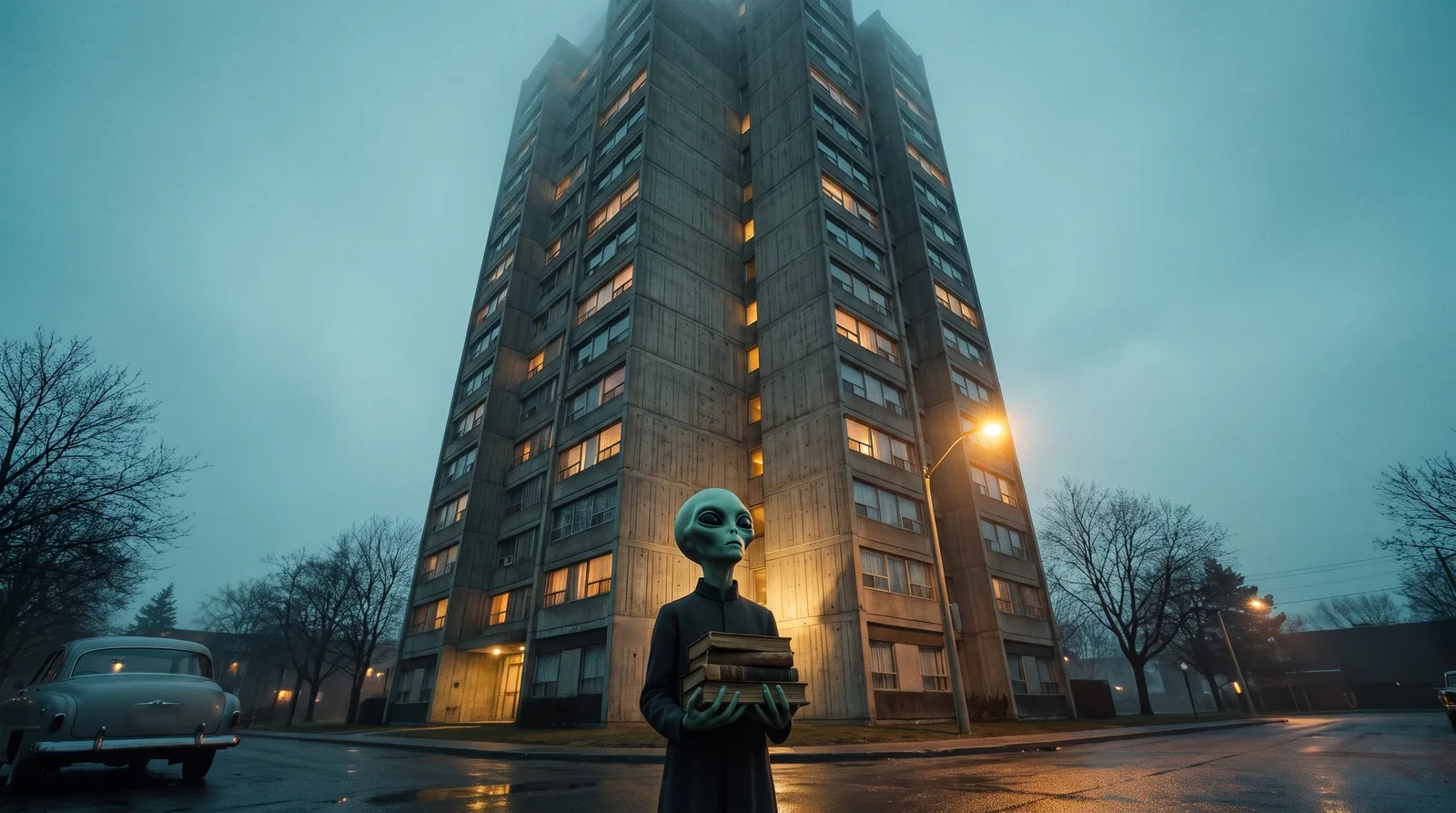
For seven years, an 18-storey tower at Bloor and Huron was one of the most talked-about buildings in Canada. Here’s what the record shows about Rochdale College, and what it doesn’t.
How it started
Rochdale began as student housing. The University of Toronto’s Campus Co-op incorporated it in 1964 to ease a shortage of rooms, Toronto Public Library’s historians write. Then the co-op learned that the building’s yearly property tax of $175,000 would be waived if it housed a functioning educational system, so the residence took on a college’s mandate.
What it was
In September 1968, students moved into Rochdale College before it was even finished. The 18-storey building offered free tuition and cheap rent to 840 residents. It ran as a free university with no curriculum, no exams, no degrees and no conventional faculty. The Canadian Encyclopedia calls it the largest of more than 300 tuition-free universities in North America.
How the classes worked
Instead of lectures, “resource people” led informal discussion groups, listed in a catalogue and on a daily board, TPL says. Topics ran from reading Hesse without secondary sources to drama, poetry, art therapy, filmmaking, ceramics and publishing. Students planned their own courses and evaluations and set the college’s policies.
Whether Rochdale gave degrees is unresolved. The Canadian Encyclopedia says it offered none; TPL says that “if necessary, students could buy a degree from the college”.
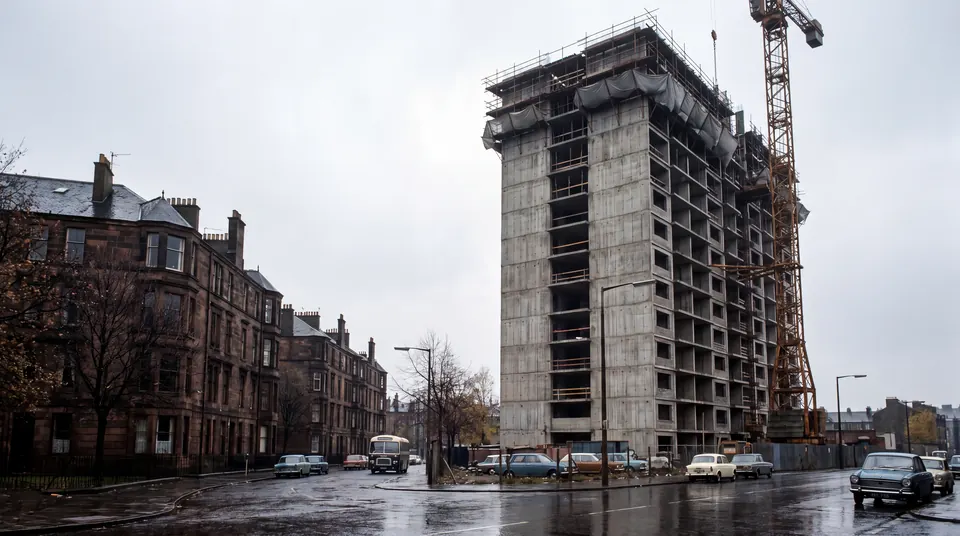
The Village moves in
As the Yorkville scene came apart after the summer of 1968, Rochdale took in many of its people (read about 1960s Yorkville).
A reputation
Toronto Public Library’s local historians write that Rochdale “developed a reputation as Canada’s largest illicit drug market”. The Canadian Encyclopedia describes squatters, drug dealers and bikers moving in. The building also had its own street clinic: the federal Le Dain Commission’s 1973 report lists the “Rochdale Klinic (Toronto)” among Canada’s street clinics.
What started at Rochdale
The building held more than rooms. TPL lists groups that began at Rochdale and outlived it: This Magazine, the Hassle Free Clinic, Coach House Books, Theatre Passe Muraille, House of Anansi Press and the Huron Playschool Cooperative. The science fiction writer Judith Merril’s library, kept at Rochdale, later went to Toronto Public Library and became the founding collection of its Merril Collection of Science Fiction, Speculation & Fantasy.
Why it closed
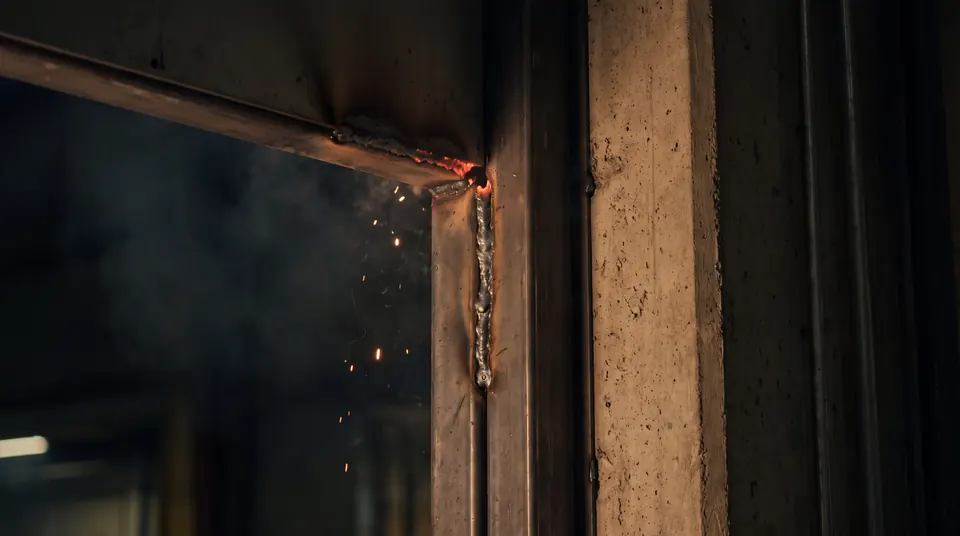
Rochdale lost money and couldn’t pay its mortgage. In 1972 a court-appointed receiver took over; a Toronto Star caption from that year, reproduced by TPL, says the college was “more than $4 million behind in payments on mortgages and taxes”. Clearing the building out took years and several police raids. At the end of May 1975, the last residents were removed by force and the doors were welded shut. The building stood empty until 1979.
The building today
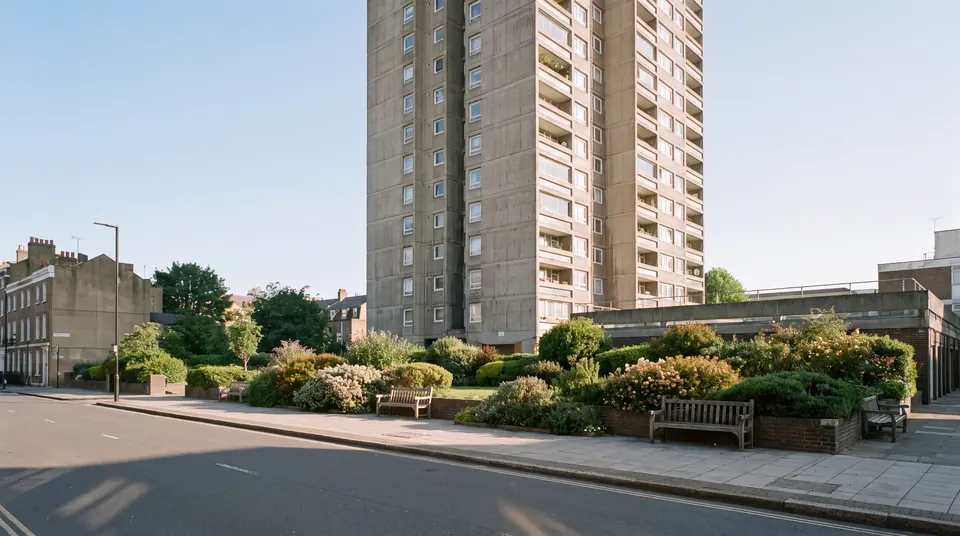
Since 1979 it has been the Senator David A. Croll Apartments, home to seniors and people with disabilities. The Canadian Encyclopedia notes that the Unknown Student sculpture still stands on the site.
Often repeated, not confirmed
You’ll find these in many retellings. We couldn’t confirm them from a primary source, so treat them as lore:
- A 1971 CBC description of Rochdale as “North America’s largest drug distribution warehouse”. We couldn’t open the original broadcast.
- That the final eviction was on exactly 30 May 1975. The sources we checked say only “the end of May 1975”.
- That the federal housing agency held the mortgage.
- That hiring bikers as security in 1971 was the turning point.
Questions people ask
What was Rochdale College?
An 18-storey co-operative residence at Bloor and Huron, near the University of Toronto, that ran as a tuition-free “free university” from 1968 to 1975 for 840 residents.
Why did Rochdale College close?
Money. It couldn’t pay its mortgage and taxes, a receiver took over in 1972, and after years of legal fights and police raids the last residents were removed at the end of May 1975.
What is the Rochdale College building now?
The Senator David A. Croll Apartments, a residence for seniors and people with disabilities, since 1979.
Could you get a degree at Rochdale?
Sources disagree: The Canadian Encyclopedia says no degrees were offered, while TPL says students could buy one if they needed it.
For more stories from the building and its neighbours, read 12 surprising stories from psychedelic Toronto, and for the federal drug inquiry that listed Rochdale’s street clinic, the Le Dain Commission in Toronto.
Watch further
Ron Mann’s documentary Dream Tower (National Film Board, 1994) is about Rochdale. Historian Stuart Henderson cites it.
SOURCES
Walk it: the self-guided Psychedelic Toronto walking tour, with a route map and nine stops.
Keep reading.
- Psychedelic Toronto: the full timeline, 1963–2026
- Psychedelic Toronto: a self-guided walking tour
- Yorkville in the 1960s: The Hippie Village
- The Le Dain Commission in Toronto, 1969
- Shroomverse documentary films
- Safety guide and Toronto help lines
- Toronto hippies and beyond: 12 sourced stories
- The Shroomverse journal
This is a history page. It isn’t medical or legal advice. Last checked .