shroomverse
Explore products
Account

PSYCHEDELIC TORONTO · WALKING TOUR

Walk the history, stop by stop.

Nine places where Toronto’s psychedelic history happened, in two walks you can do on the same day or on different days: Yorkville and Bloor Street, then Queen Street West to King Street East. Each stop has its address, what happened there and a link to the full story.

Walk 1: Yorkville and Bloor
The Penny Farthing to The Addiction Research Foundation: about 1.6 km, about 20 min plus stops
Walk 2: Queen West to King East
The Queen Street hospital to St. Lawrence Hall: about 5.6 km, about 1 h 05 min plus stops

Distances are estimates: the straight line between stops × 1.3 for the streets, at about 5 km/h. This is a history walk. It isn’t medical or legal advice.

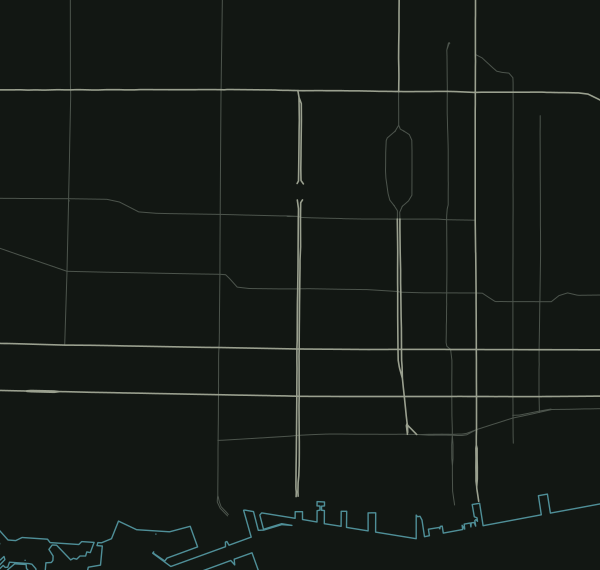
BLOOR STQUEEN STKING STYONGE STSPADINA AVELAKE ONTARIO
Walk 1 (stops 1–5) and walk 2 (stops 6–9) in walking order. Lines join the stops directly; follow the streets. Map data © OpenStreetMap contributors.

Walk 1: Yorkville and Bloor

Stops 1–5 · about 1.6 km · about 20 min on foot

  1. Stop 1: The Penny Farthing

    110–112 Yorkville Avenue
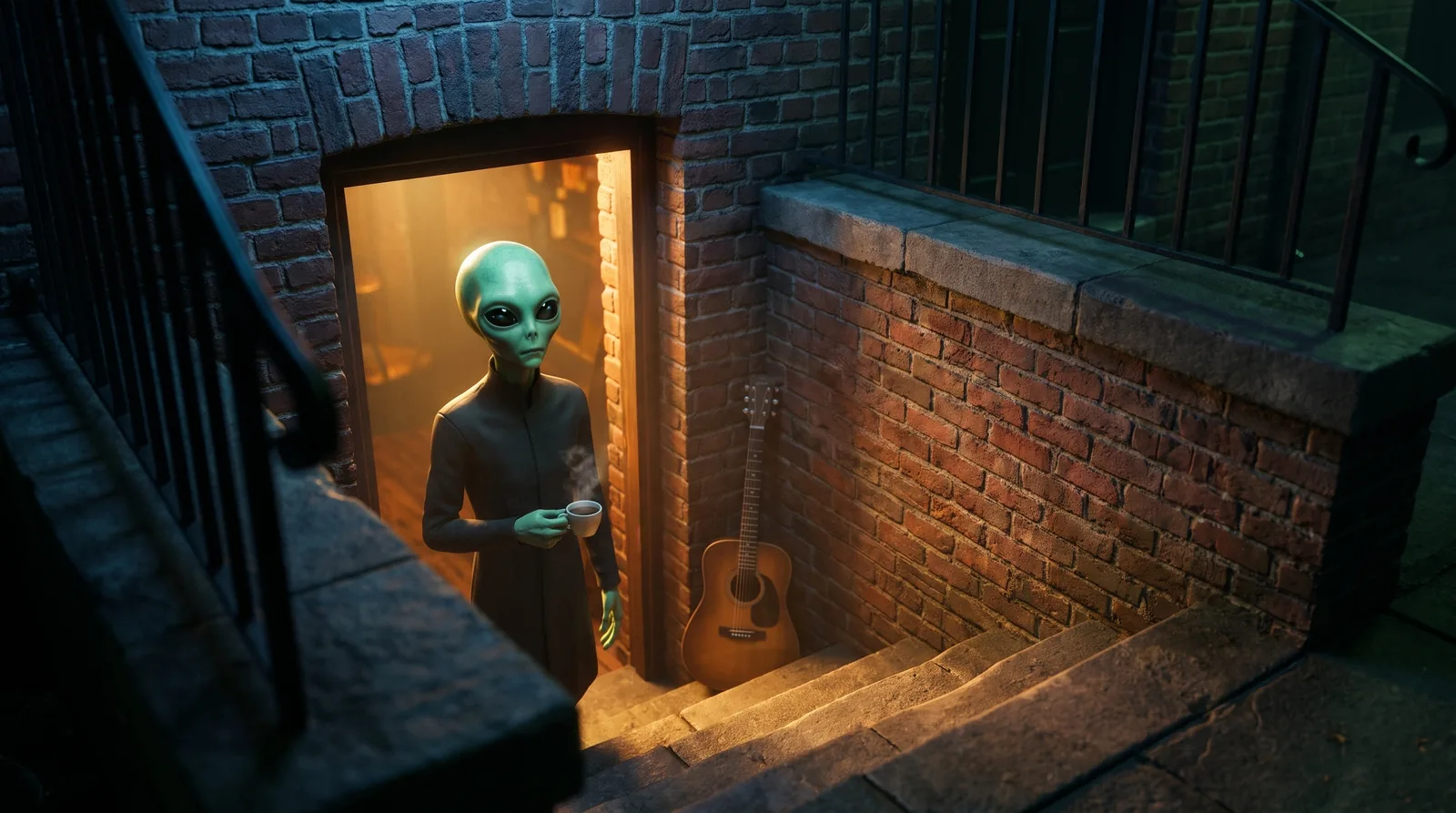
    The alien standing in a glowing basement folk-club doorway at the foot of stone steps, holding a coffee cup, a guitar leaning on the brick wall beside it.

    1963–1969

    John and Marilyn McHugh opened the Penny Farthing coffee house here in the spring of 1963, and in early 1965 it became the first to feature Joni Mitchell’s own songs. On 17 October 1969, Canada’s federal drug inquiry, the Le Dain Commission, held a public hearing in the club. Read more: Yorkville in the 1960s

    What’s there today: The Penny Farthing’s house still stands; the City’s 2025 heritage study lists it as extant. (City of Toronto, Bloor-Yorkville Historic Context Statement, 2025)

    Homes and businesses line this street: view from the sidewalk and keep doorways clear.

    Open in maps

    Sources: The Canadian Encyclopedia; Le Dain Final Report, Appendix Q; City of Toronto, Bloor-Yorkville Historic Context Statement, 2025
  2. From stop 1: about 130 m, about 2 min on foot

    Stop 2: The Riverboat

    134 Yorkville Avenue

    1964–1978

    Bernie Fiedler opened the Riverboat in a basement here in October 1964. Neil Young, Joni Mitchell, Gordon Lightfoot, Bruce Cockburn and Murray McLauchlan all played it, and it ran until 1978. On this street in 1967, a sit-in to close Yorkville Avenue to cars ended with about 50 arrests. Read more: Yorkville in the 1960s

    Homes and businesses line this street: view from the sidewalk and keep doorways clear.

    Open in maps

    Sources: The Canadian Encyclopedia; City of Toronto, Bloor-Yorkville Historic Context Statement, 2025; Henderson, Journal of the Canadian Historical Association, 2006

  3. From stop 2: about 440 m, about 5 min on foot

    Stop 3: The Royal Ontario Museum

    100 Queen’s Park

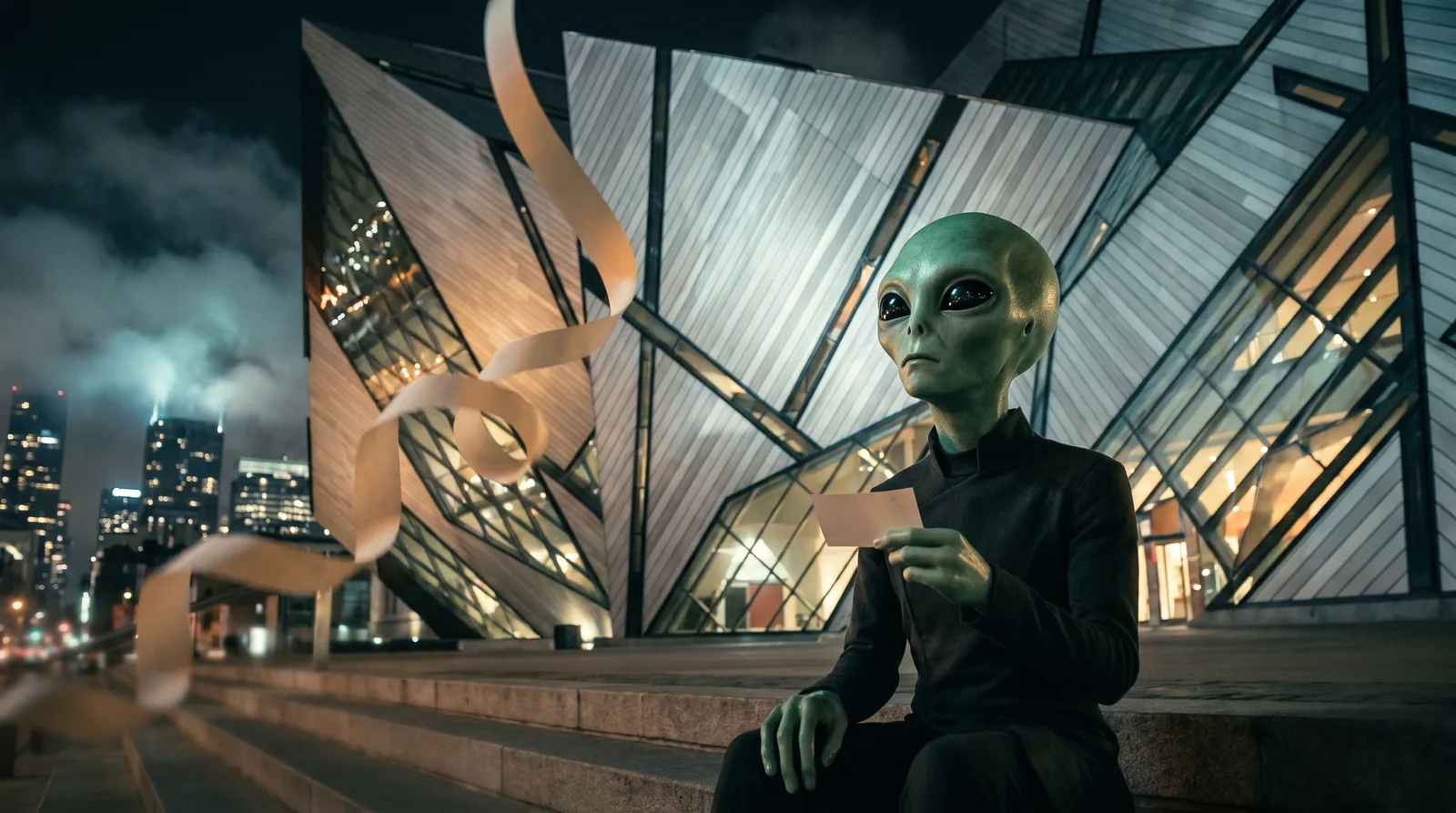
    The alien on museum steps holding a ticket as ticker tape loops past a crystalline museum building.

    6 JUNE 2026 – 3 JANUARY 2027

    The museum’s exhibition Psychedelics: Art. Culture. Science. runs from 6 June 2026 to 3 January 2027, with 90 objects. Among CAMH’s loans is a medicine tray from the old Queen Street Mental Health Centre, stop 6 on this walk. The museum says it “does not recommend or encourage the use of psychedelics”. Read more: our guide to the ROM exhibition

    Open in maps

    Sources: ROM; ROM exhibition page (dates)

  4. From stop 3: about 630 m, about 8 min on foot

    Stop 4: Rochdale College

    341 Bloor Street West, at Huron Street

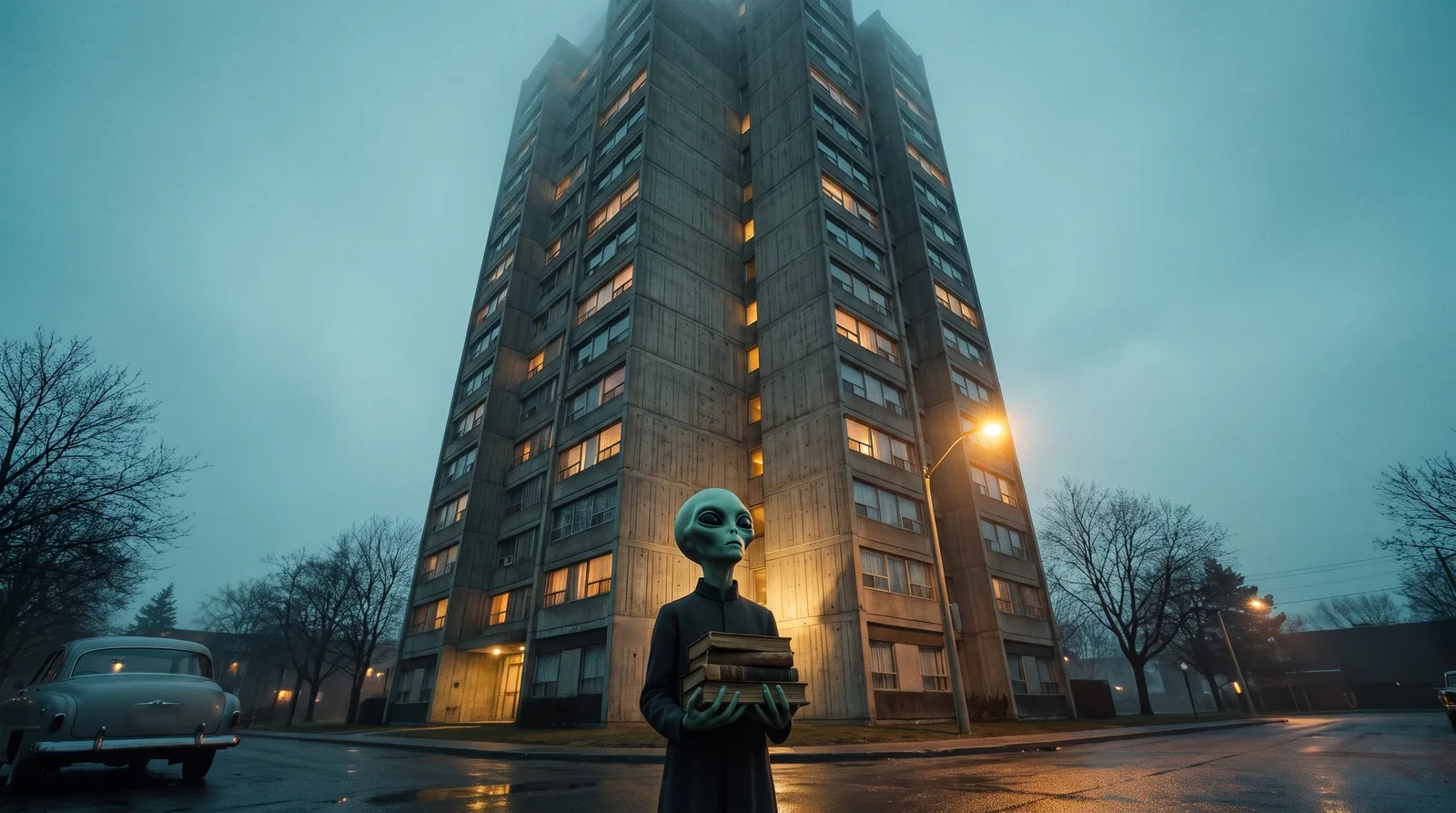
    The alien holding a stack of books at the foot of a tall concrete tower lit floor by floor.

    1968–1975

    In September 1968, students moved into this unfinished 18-storey tower: a free university for 840 residents, with no curriculum, exams or degrees. Unable to pay its mortgage, it was cleared after years of effort and several police raids, and the last residents were removed at the end of May 1975. Read more: Rochdale College: Toronto’s free university

    What’s there today: Since 1979, the Senator David A. Croll Apartments, home to seniors and people with disabilities. (Toronto Public Library)

    A residence today: look from the public sidewalk, don’t go in, and keep your voice down.

    Open in maps

    Sources: Toronto Public Library; Spacing Toronto

  5. From stop 4: about 390 m, about 5 min on foot

    Stop 5: The Addiction Research Foundation

    344 Bloor Street West

    The alien in a lab coat holding a sample envelope up to the lamp light at a 1960s lab bench with glass flasks and a brass balance.

    1966–1967

    In 1967 the foundation’s LSD research team gave this address (their 1966 paper gives 24 Harbord Street). Their controlled trial for alcoholism compared LSD, an active placebo and no drug, ten patients in each group: abstinence improved in all three, with no significant difference between them. In 1998 the foundation became part of CAMH. Read more: Toronto’s Addiction Research Foundation and its LSD trial

    Homes and businesses line this street: view from the sidewalk and keep doorways clear.

    Open in maps

    Sources: Smart et al., reply, 1967 (address); Smart et al., 1966; CAMH

Walk 2: Queen West to King East

Stops 6–9 · about 5.6 km · about 1 h 05 min on foot

  1. Stop 6: The Queen Street hospital

    1001 Queen Street West

    1998

    Toronto’s old Queen Street mental hospital, the Queen Street Mental Health Centre, merged in 1998 with the Addiction Research Foundation, the Clarke Institute of Psychiatry and the Donwood Institute to form the Centre for Addiction and Mental Health (CAMH). In 2019, CAMH became a Toronto site in an international psilocybin trial for treatment-resistant depression. Read more: Toronto’s laboratory, 1966–1999

    What’s there today: CAMH’s Queen Street site, a working hospital. (OpenStreetMap: Centre for Addiction and Mental Health, Queen Street Site)

    A working hospital: stay on the public sidewalk, don’t go in, and don’t photograph people.

    Open in maps

    Sources: CAMH; ClinicalTrials.gov, NCT03775200

  2. From stop 6: about 3.9 km, about 45 min on foot

    Stop 7: City Hall

    100 Queen Street West

    1967–1968

    In 1967 the Diggers, political hippies from Yorkville, faced city councillors in what historian Stuart Henderson calls “farcical face-offs”; former mayor Allan Lamport said some young onlookers “haven’t been washed for weeks”. The National Film Board’s 1968 film Flowers on a One-Way Street centres on a council meeting at City Hall. Read more: Hippies versus City Hall, caught on film

    What’s there today: This City Hall opened on 13 September 1965 and is still the seat of Toronto’s government. (City of Toronto)

    Open in maps

    Sources: Henderson, Journal of the Canadian Historical Association, 2006; National Film Board

  3. From stop 7: about 820 m, about 10 min on foot

    Stop 8: Bay Street

    Bay Street at King Street West

    2020–2023

    Bay Street is shorthand for Toronto’s financial industry, and nothing marks this corner. On 3 March 2020, MindMed began trading on Toronto’s NEO Exchange, billed as the world’s first publicly traded psychedelic pharmaceutical company; the next day, Field Trip Health opened its first clinic, in Toronto. By March 2023, Field Trip’s clinic business had sought creditor protection. Read more: Bay Street catches the wave

    Homes and businesses line this street: view from the sidewalk and keep doorways clear.

    Open in maps

    Sources: OPEN MINDS; Field Trip release; Psychedelic Alpha

  4. From stop 8: about 860 m, about 10 min on foot

    Stop 9: St. Lawrence Hall

    157 King Street East

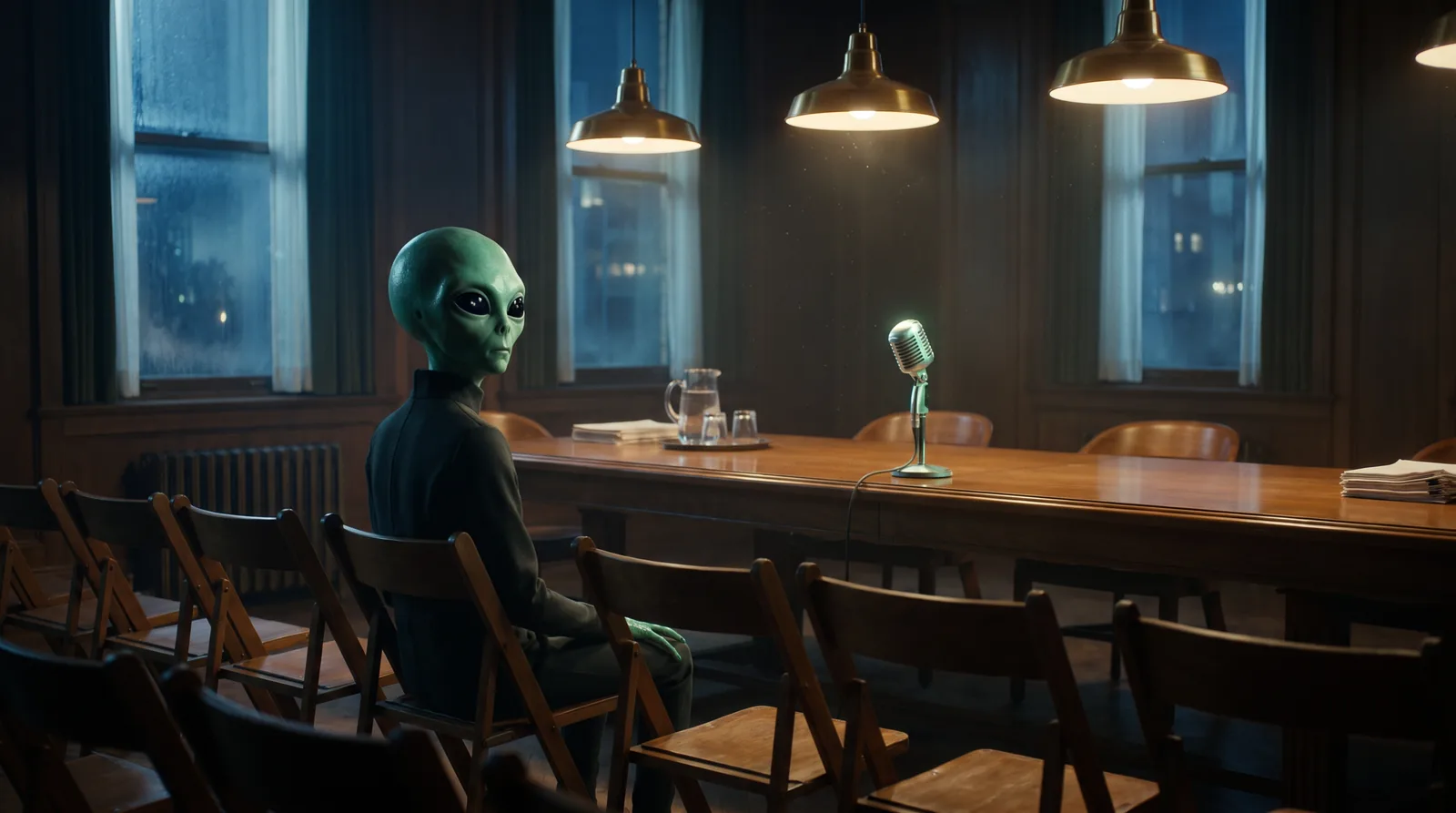
    The alien sitting among wooden folding chairs in a wood-panelled 1969 hearing room, beside a long table with a chrome microphone and a water jug.

    16–18 OCTOBER 1969

    The Le Dain Commission heard from Torontonians here over three days in October 1969, and returned to the St. Lawrence Market in October 1970. Its final report, in 1973, found psilocybin wasn’t yet on any Canadian drug schedule, and that controlled studies hadn’t shown LSD added anything to conventional psychotherapy. Read more: The Le Dain Commission in Toronto

    Open in maps

    Sources: Le Dain Final Report, Appendix Q; Le Dain Commission, Final Report, 1973